Discover Exceptional Products and Unmatched Service.
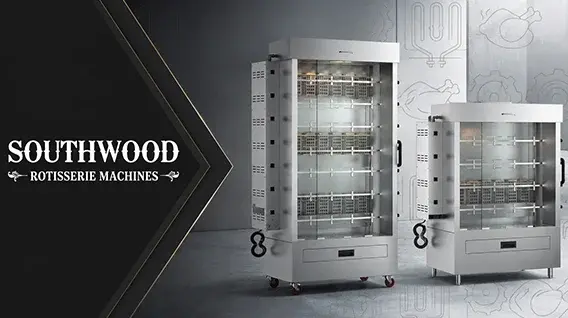

Southwood 20 Chicken Commercial Rotisserie Oven Machine, Liquid Propane, 110V
Model No: RG4-LP
⚡ Fast DeliveryShipping Fee
Mostly Ships in 5 to 7 Days
Southwood 20 Chicken Commercial Rotisserie Oven Machine, Natural Gas, 110V
Model No: RG4-NG
⚡ Fast DeliveryShipping Fee
Mostly Ships in 5 to 7 Days
Southwood 28-35 Chicken Commercial Rotisserie Oven Machine, Liquid Propane, 110V
Model No: RG7-LP
⚡ Fast DeliveryShipping Fee
Mostly Ships in 5 to 7 Days
Southwood 28-35 Chicken Commercial Rotisserie Oven Machine, Natural Gas, 110V
Model No: RG7-NG
⚡ Fast DeliveryShipping Fee
Mostly Ships in 5 to 7 Days
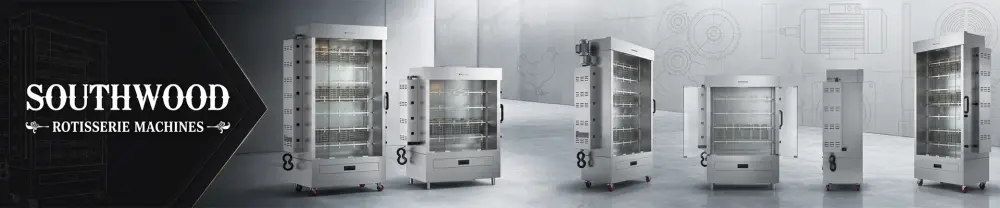
Southwood rotisserie ovens are built for businesses that want consistent, visually appealing roasted food without making the cooking line harder to manage. At The Horeca Store, this category is suited to buyers comparing rotisserie cooking equipment for chickens, meats, vegetables, and grab-and-go menu items where presentation, capacity, and repeatable results matter.
A rotisserie oven is a commercial oven that rotates food on spits, baskets, or racks while controlled heat cooks it evenly. The constant movement helps expose the product to heat from multiple angles, supporting even browning, self-basting, and a strong display effect for front-of-house selling.
Look for the configuration that matches your menu volume, available space, fuel preference, and service style. A compact counter model may suit a café or convenience store, while a larger floor-standing unit is more appropriate for restaurants, supermarkets, hotels, and catering operations that need higher output across lunch and dinner service.
The right choice is not only about how many chickens or portions the oven can hold. It is also about how fast your team can load, cook, clean, monitor, and present food during busy periods. When customers read southwood reviews or compare commercial oven cooking equipment, they should focus on operational fit rather than only the purchase price.
Southwood rotisserie ovens may be considered in several broad configurations, depending on the model range available through your supplier. Each option serves a different business need, so The Horeca Store can help buyers narrow the choice by kitchen layout, menu type, and expected daily production.
A good buying decision connects specifications to daily work. Instead of choosing by size alone, consider how each feature affects speed, labor, food quality, and service reliability.
Southwood rotisserie ovens can support different hospitality environments when matched carefully to output and layout. For a small café, cooking with rotisserie may add a premium lunch item without requiring a broad hot-food line. For a supermarket or deli, the same equipment can act as both production tool and sales display.
Restaurants may use rotisserie ovens to prepare signature chicken, lamb, pork, or vegetables with consistent browning. Hotels and catering kitchens may value batch production for buffets, banquets, and prepared service. Food trucks and compact QSRs need to be more selective, choosing smaller units only when utility access, ventilation, and counter space are realistic.
Match requirements to equipment choices this way:
A countertop electric rotisserie is typically the easiest category to consider for smaller spaces. It is suited to cafés, bars, convenience stores, and low-to-medium volume food counters that want the theatre of rotating food without dedicating a full production zone to it. The main consideration is capacity: it may not keep up if roasted items become a core revenue driver.
A larger freestanding rotisserie is better for restaurants, hotels, caterers, and supermarkets with predictable demand. It can support heavier production, but it needs more floor space, stronger utility planning, and a clearer workflow for loading and unloading hot food safely. This type makes sense when rotisserie cooking is central to the menu or display offer.
Display-focused models are strongest where visual appeal affects sales. They are practical for delis and takeaway counters because customers see the food cooking, not just sitting in a warmer. Production-focused models are stronger for back-of-house use where the priority is output, staff efficiency, and consistent oven cooking across repeated batches.
Good equipment performs best when the process is consistent. Staff should load similar-sized items together so cooking times stay predictable. Avoid overcrowding, because too much product can reduce airflow and create uneven browning.
Use marinades, seasoning, and resting procedures that suit the product and service window. Monitor food safety temperatures according to your local procedures, and train staff to clean drip areas before buildup affects appearance or performance. These simple rotisserie tips help protect food quality and make the oven easier to operate during busy service.
Choose the model that fits your volume, space, utilities, and menu ambition rather than buying the largest unit by default. If your requirement is compact lunch production → consider a countertop electric rotisserie. If your requirement is high-volume chicken sales → consider a floor-standing model with larger capacity and strong display value.
If your requirement is customer-facing merchandising → consider a glass-front configuration with lighting and a clean stainless finish. If your requirement is flexible menu development → consider spit, basket, or rack options that support more than whole poultry. To compare suitable Southwood rotisserie ovens, speak with The Horeca Store and review capacity, installation needs, and service style before placing an order.