Discover Exceptional Products and Unmatched Service.
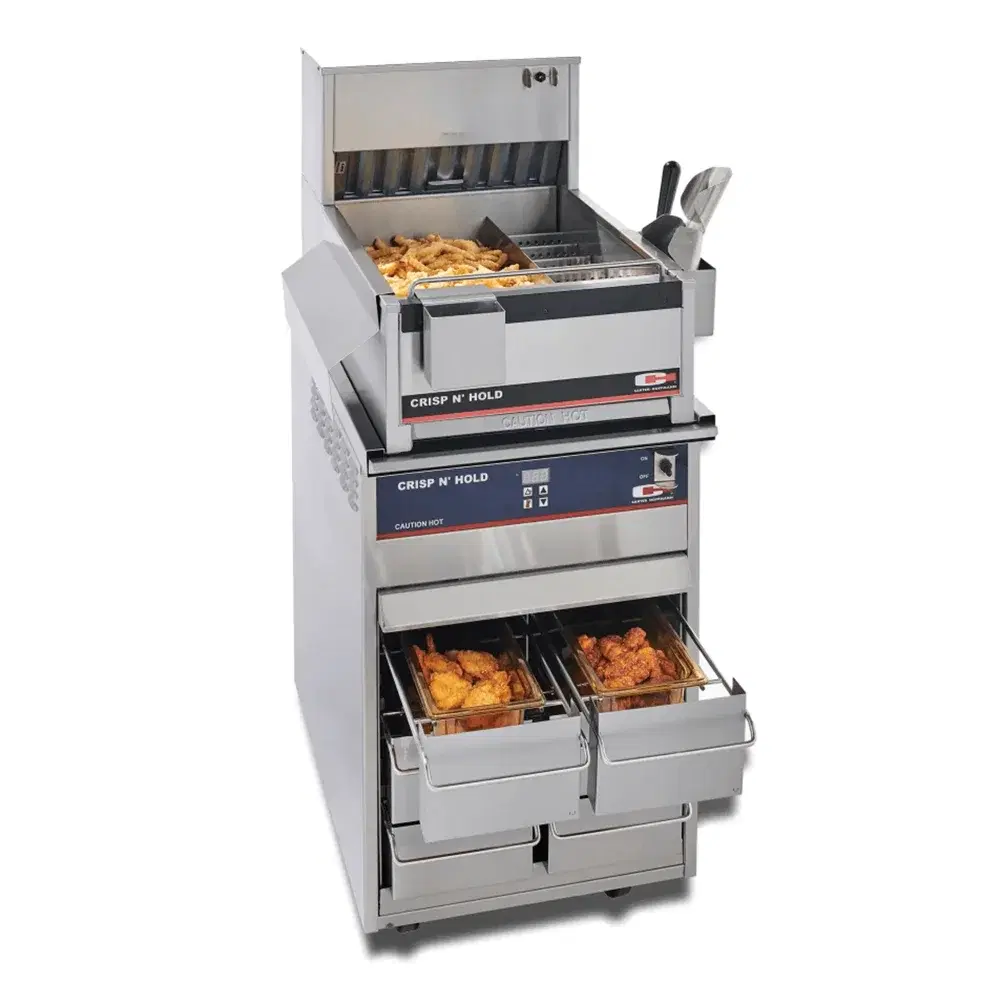
Carter-Hoffmann FFSTKPKG 20" Crisp 'N Hold Fried Food Warmer, Floor Model, 120V
Model No: CNH18XD
⚡ Fast DeliveryShipping Fee
Mostly Ships in 5 to 7 Days
Carter-Hoffmann fry dump stations are built for commercial kitchens that need a controlled landing zone for hot fried foods after they leave the fryer. The right fry station setup helps staff drain, season, portion, and hold fries, chicken, seafood, appetizers, and sides without slowing the cook line. For operators comparing fry dump stations, The Horeca Store is a practical place to research and shop for restaurant equipment and related kitchen solutions for high-volume foodservice environments.
A fry dump station is a dedicated finishing and short-hold area positioned near a fryer bank. Instead of dropping product into random pans or onto an open counter, staff transfer fried food into a heated, organized station where excess oil can drain and product can be kept ready for plating, bagging, or tray assembly.
In a busy restaurant, this equipment does more than “hold fries.” It protects line rhythm. A well-planned station gives the fryer operator a repeatable place to land baskets, shake off oil, salt or season product, and keep batches separated by item or order type. That can be especially useful during rush periods when dine-in, drive-thru, delivery, and catering orders are moving at the same time.
Carter-Hoffmann equipment is commonly selected for foodservice holding and serving workflows where durability, cleanability, and temperature management matter. A fry dump station fits that same operational role: it supports the space between cooking and service, where fried foods can lose quality quickly if the setup is improvised.
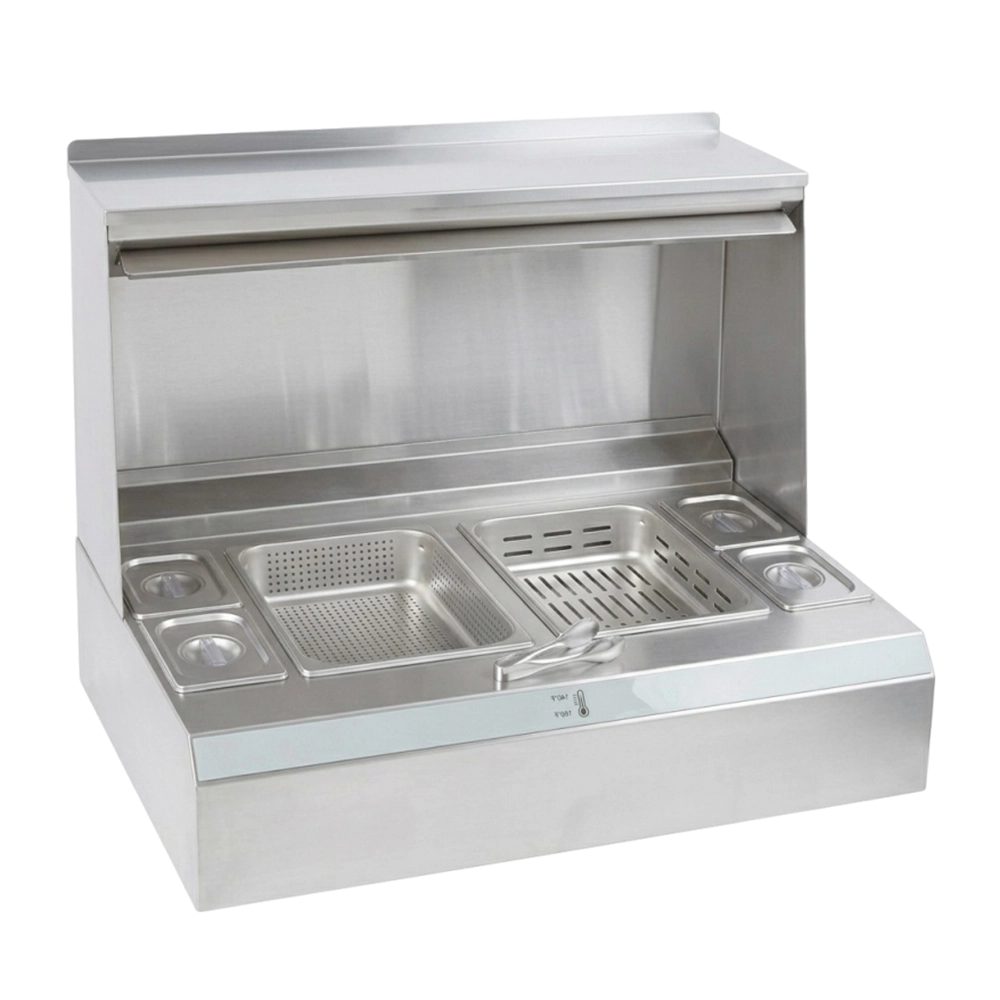
A typical unit may combine a heated holding area, food pans or wells, an overhead heat source, a drain screen or perforated insert, and stainless-steel surfaces. Exact specifications vary by model and configuration, so buyers should confirm dimensions, electrical requirements, pan capacity, accessories, and installation needs before purchase. The benefit is straightforward: your team gets a purpose-built station rather than relying on sheet pans, open counters, or undersized warming equipment.
Fry dump stations are not one-size-fits-all. The best choice depends on your menu volume, kitchen footprint, service style, and whether the station will be used for fries only or for multiple fried items throughout the day.
Common options to compare include:
If your kitchen sells one core fried item, a simpler fry station setup may be enough. If fried foods are central to the menu, a larger or more flexible layout can reduce cross-handling and help staff keep orders moving cleanly.
A fry dump station should make the operator’s job easier, not add another bottleneck. Look for features that match how food actually moves through your line.
Important feature areas include:
These features matter because fried food quality changes quickly. A station that drains well, holds heat appropriately, and keeps portions organized can help your team serve a better product with fewer wasted movements.
The right unit should solve a specific operational problem. For a quick-service restaurant, the issue may be speed: fries need to come out hot, salted, portioned, and passed to the expeditor in seconds. For a bar or casual dining concept, the need may be separation: wings, fries, pickles, and sides all need organized space during peak appetizer demand. For a hotel, school, arena, or cafeteria, the priority may be batch production and efficient service over a longer meal period.
Before choosing equipment, map the flow from fryer to guest. Ask where baskets are currently being emptied, who seasons the food, where packaging sits, and how often staff run out of landing space. If the answer is “wherever there is room,” your fry dump area is probably costing time and consistency.
Fry dump stations are useful in any kitchen where fried food is a repeatable revenue item rather than an occasional side. They can support compact fast-casual lines, high-volume institutional kitchens, delivery-focused restaurants, stadium concession stands, and late-night bar menus.
Practical use cases include:
For example, a kitchen that currently dumps fries into a hotel pan on a prep table may see congestion when two fry baskets finish at once. A purpose-built station gives the cook a clear landing area, the expeditor a predictable pickup point, and the manager a cleaner process to train.
When researching fry dump stations, compare the station itself along with the equipment around it. The best result often comes from pairing the dump station with the right fryer capacity, warming equipment, holding cabinets, prep tables, shelving, and packaging workflow. The Horeca Store helps commercial foodservice operators research and shop for restaurant equipment and kitchen solutions in that broader context, so the station is selected as part of the line rather than as an isolated purchase.
Model choice should be based on the way your team works. A compact station may fit a small café or sandwich shop. A larger heated station may be better for a chicken concept, seafood counter, burger operation, or concession kitchen with constant fryer output. If your menu changes often, prioritize flexibility, removable components, and enough space to handle different pans or inserts.
Instead of comparing only price, compare how each option will perform during your busiest 30 minutes of service. The lowest-cost station may not be the best value if it is too small, difficult to clean, or incompatible with your electrical setup.
Review these buying factors:
A good fry dump station should pay for its space by improving flow, reducing mess, and supporting more consistent fried food. It is not just an accessory; it is the finishing point for one of the most time-sensitive parts of the menu. If fried items are important to your sales mix, a dedicated station can make the difference between a controlled line and a crowded one.
The Horeca Store is a useful starting point for commercial operators who want to compare fry dump stations alongside other restaurant equipment and kitchen solutions. Review available configurations, confirm model-specific details, and choose a setup that matches your fryer output, staff workflow, and service goals.
Before ordering, gather the basic information a supplier or project manager will need: available space, current fryer capacity, electrical service, menu mix, expected peak volume, and whether the unit must be mobile or fixed in place. Also note any smallwares or accessories you want to store nearby, such as scoops, seasoning containers, paper bags, trays, or gloves.
If you are replacing an improvised landing area, take photos of the current fry line and identify the pain points: oil pooling, product cooling too quickly, crowded counters, mixed batches, or poor access for cleaning. Those details make it easier to select a station that solves the real problem. With the right planning, Carter-Hoffmann fry dump stations can become a cleaner, faster, and more dependable part of your commercial kitchen workflow.