Discover Exceptional Products and Unmatched Service.
Power up your kitchen with reliable cooking equipment for restaurants and catering services. Trusted brands, fast shipping, unbeatable prices.
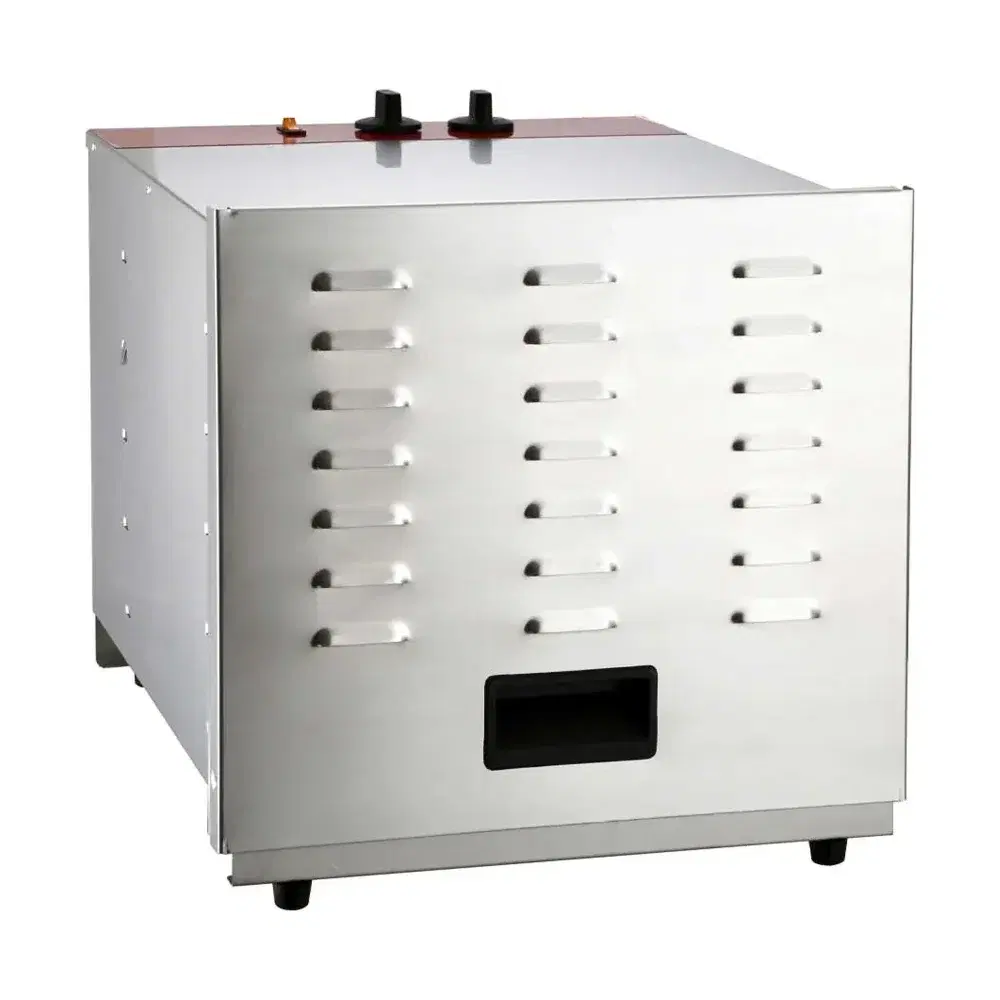
Prepline 17" Stainless Steel Food Dehydrator with 10 Racks, 120V
Model No: FD-10R
⚡ Fast DeliveryShipping Fee
Mostly Ships in 5 to 7 Days
Commercial food dehydrators are professional food drying equipment used to remove moisture from fruit, vegetables, herbs, meat, dough garnishes, and prepared foods so they can be stored, portioned, sold, or served with greater consistency. For restaurants, bakeries, caterers, food trucks, and production kitchens, they support practical food preservation methods while turning surplus ingredients into shelf-stable menu components.
A commercial food dehydrator is not just a larger home appliance. It is built for repeated commercial use, with stronger airflow, larger tray capacity, controlled temperatures, and materials designed for cleaning between batches. If you are comparing commercial food dehydrators for sale, the right choice depends on batch size, available space, cleaning routines, and whether you need countertop flexibility or industrial food dehydrators for continuous production.
The best commercial food dehydrators match your output, menu, and workflow instead of simply offering the most trays. A small café drying citrus wheels for cocktails may need a compact stainless unit with digital controls, while a snack producer or commissary kitchen may need a higher-capacity cabinet with stronger fans, wide temperature settings, and serviceable parts. Buyers using food dehydrator reviews should look beyond star ratings and compare capacity, airflow pattern, cleaning access, and warranty support.
Use this quick match guide before you buy:
Commercial dehydrators are designed to make drying more repeatable than ad hoc oven drying or air drying. Horizontal airflow can help move warm air evenly across trays, reducing the need to rotate batches. Digital controls and timers help teams document a process, repeat successful recipes, and avoid tying up ovens that should be used for cooking.
Key options to compare include:
Several well-known product lines illustrate how the commercial food dehydrators market is segmented. Avantco offers stainless commercial models ranging from compact 6-tray and 10-tray units to larger 24-tray and 32-tray configurations, giving buyers a path from small prep rooms to higher-volume production. Its CFD10 is a 10-tray stainless unit listed with a removable door and 120V, 1000W power, making it a practical comparison point for restaurants that want countertop capacity without moving into full industrial equipment. (avantcoequipment.com)
Excalibur is another common name in food dehydrator reviews. Its 12-tray single-zone commercial model is described with stainless steel trays, digital touchscreen controls, a 99-hour timer, adjustable thermostat, NSF approval, and a limited one-year warranty, which suits operators looking for a recognized commercial cabinet format with strong process control. (excaliburdehydrator.com)
For buyers comparing product types, the simplest distinction is this: compact restaurant dehydrators save space and handle daily prep, mid-capacity cabinet units balance volume with flexibility, and industrial food dehydrators support long runs, bulk produce, or packaged goods. The horeca store can help position these choices alongside other back-of-house equipment so power, space, and cleaning needs are considered before purchase.
Before ordering, measure the counter or floor area, door swing, ventilation clearance, and the route from receiving to the kitchen. Confirm voltage and circuit requirements with your installer or facilities team, especially for larger cabinets. A dehydrator that technically fits but blocks prep flow can cost more in labor than it saves in preservation.
Cleaning and maintenance should be part of the purchase decision. Removable trays, smooth stainless surfaces, accessible fans, and replaceable parts reduce downtime. Ask about warranty length, service availability, spare trays, door gaskets, heating elements, and fan assemblies. The total cost of ownership includes purchase price, energy use, cleaning time, replacement parts, and lost production if support is slow.
If you need occasional garnishes, herbs, or cocktail fruit, start with a compact 6–10 tray stainless model with a timer and temperature control. If your kitchen dries ingredients every week, choose a 10–12 tray commercial cabinet with digital controls, strong airflow, and easy-access cleaning. If you package dried foods or process seasonal surplus, consider 24–32 tray or industrial food dehydrators with higher capacity, serviceable components, and support that matches production demands.
For the most confident purchase, compare commercial food dehydrators for sale by capacity, cleaning design, warranty, electrical fit, and real menu use—not by price alone. Request current pricing, availability, and support details before committing.
Are commercial dehydrators different from home dehydrators? Yes. They are generally built for larger batches, repeated use, easier cleaning, and more consistent controls.
Can one dehydrator handle fruit, vegetables, herbs, and jerky? Many can, but each food needs the right preparation, spacing, temperature, and food safety process.
How many trays should I buy? Choose enough capacity for peak prep without forcing staff to run multiple back-to-back cycles every day.
Do I need stainless steel trays? For commercial kitchens, stainless trays are usually preferred because they are durable, washable, and suited to frequent handling.
What should I check before ordering? Confirm dimensions, voltage, temperature range, timer, cleaning access, replacement parts, warranty, and whether the unit suits your production volume.
