
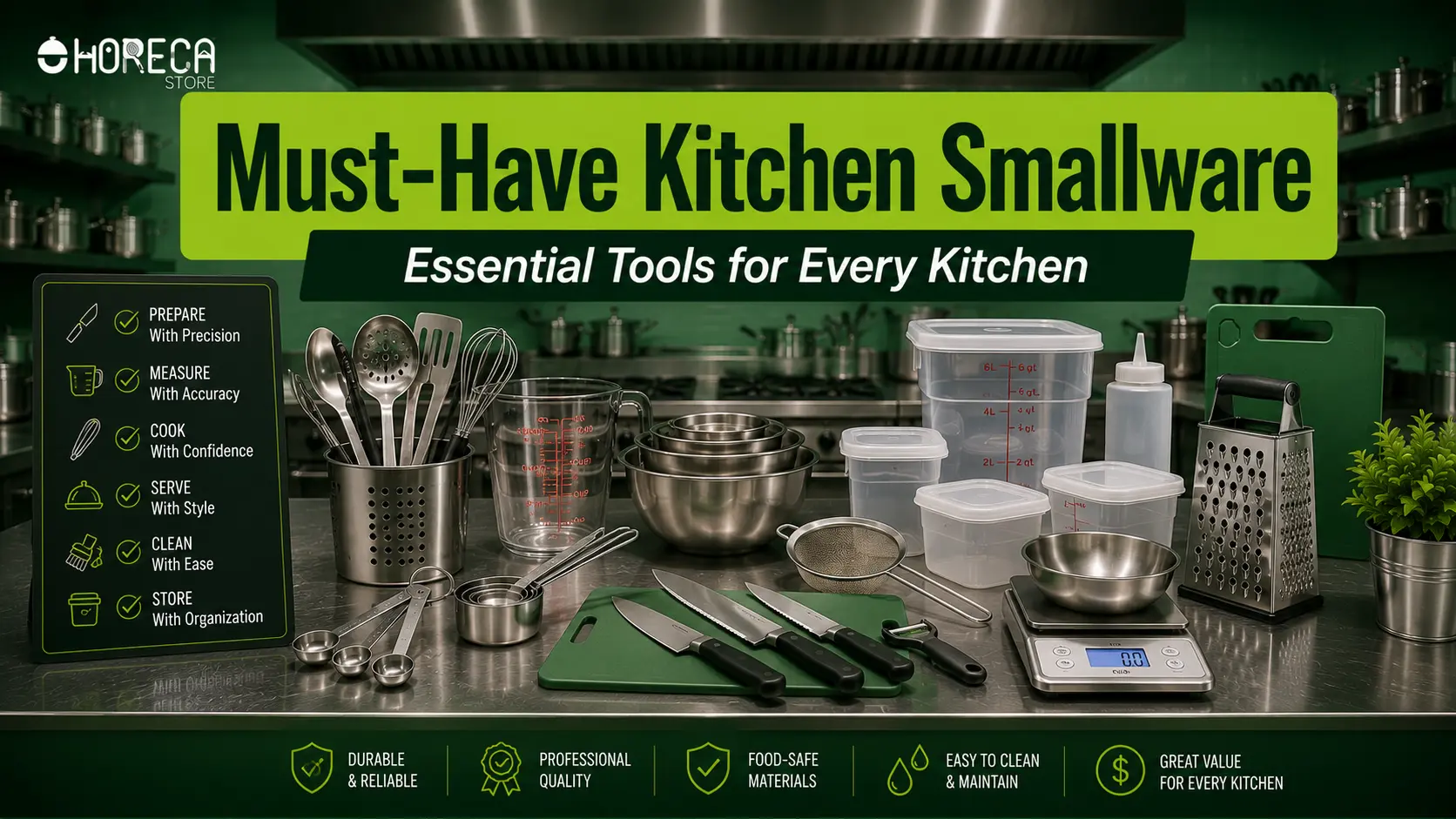
Whether you are a seasoned home chef or preparing to move into your very first apartment, the secret to a functional, enjoyable cooking experience lies in the details. While massive refrigerators and gleaming luxury stoves often steal the spotlight, the true heavy lifters of culinary creation are much smaller. We are talking about Essential Kitchen Smallware—the handheld tools, prep containers, cutting implements, and utensils that make the actual act of cooking possible.
Having a carefully curated collection of kitchen essentials transforms cooking from a tedious daily chore into an efficient, joyful art form. But with thousands of gadgets lining store shelves, it is easy to become overwhelmed.
In this comprehensive guide, we will break down exactly what you need, how to choose the right materials, and how to organize your workspace for maximum efficiency.
Setting Up Shop: The Foundations of a Functional Kitchen
When staring down the aisles of a home goods store, the most common question that arises is: what tools are needed for a first kitchen?
The answer is rarely a single-use avocado slicer or a specialized strawberry huller. The foundation of any kitchen should be built on versatility, durability, and practical utility. Knowing which kitchen gadgets are worth the investment requires focusing on items you will use daily rather than those you might use once a year.
The Starter Checklist
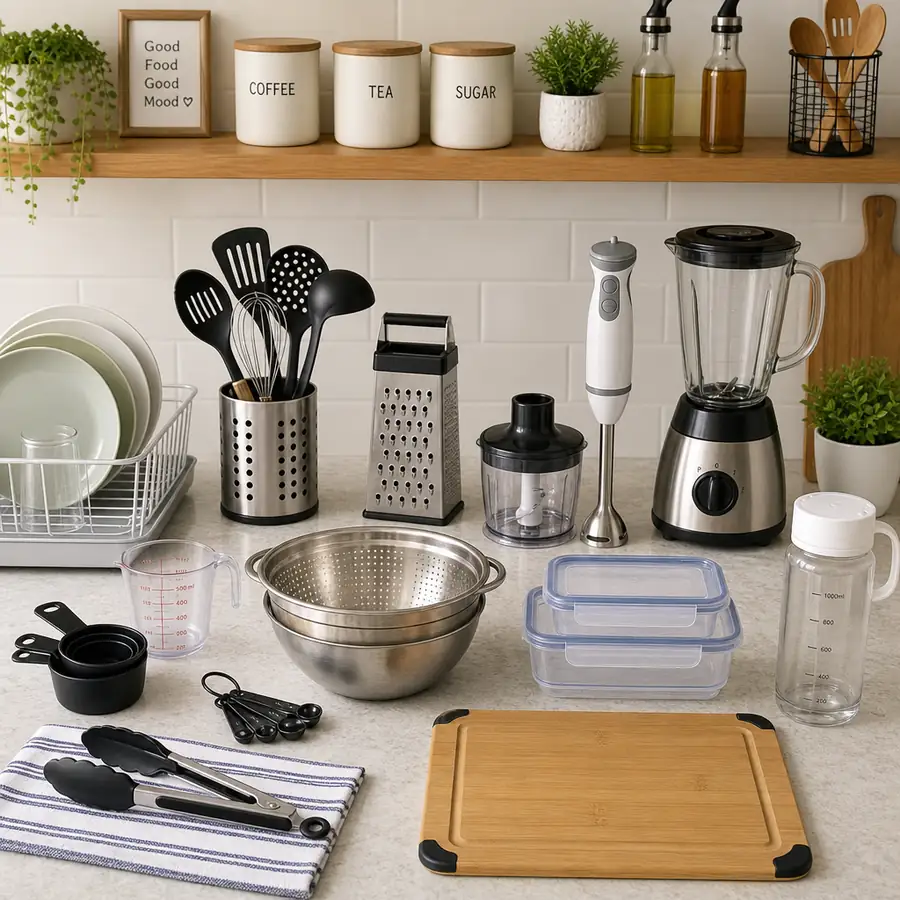
For a functional first kitchen, prioritize these core categories:
- A high-quality chef’s knife: The single most important tool you will own.
- Sturdy cutting boards: Preferably at least two to separate raw meats from produce.
- Mixing bowls: A nesting set of various sizes.
- Reliable measuring tools: Essential for both cooking and baking.
- Heat-safe utensils: Spatulas, spoons, and turners for active cooking.
- Food storage containers: To minimize waste and organize your fridge.
By starting with these fundamental categories, you can slowly build out your collection based on your personal cooking style and dietary habits.
The Core of Cooking: Cutting and Preparation
Every great meal begins on the cutting board. The tools you use to slice, dice, and mince dictate the speed of your prep work and the visual appeal of your final dish.
High-Quality Knives and Proper Maintenance
If there is one area where you should consider investing in professional grade prep station tools, it is your knife block. A standard 8-inch chef’s knife can handle 90% of your kitchen tasks. Many professional chefs prefer high-carbon steel because it holds an incredibly sharp edge for a longer period compared to standard stainless steel.
However, knowing how to maintain high-carbon steel knives is crucial, as they require more care:
- Wash by hand immediately: Never put a high-carbon knife in the dishwasher. The harsh detergents and high heat will ruin the blade and the handle.
- Dry thoroughly: High-carbon steel can rust or discolor if left wet. Wipe it completely dry immediately after washing.
- Hone regularly: Use a honing steel before each use to realign the microscopic teeth of the blade.
- Oil the blade: If you live in a humid climate or are storing the knife for a while, a light coating of food-safe mineral oil will protect the metal.

Cutting Boards and Food Safety
Your knife is only as good as the surface it cuts on. While wooden and bamboo boards are aesthetically pleasing and gentle on knife edges, plastic boards have a specific, undeniable utility in the kitchen regarding food safety.
One of the best practices adapted from commercial kitchens is preventing cross-contamination with color-coded boards. In professional environments, a red board is strictly used for raw meat, blue for raw seafood, yellow for raw poultry, and green for fresh produce.
Mixing, Measuring, and Mis En Place
Once your ingredients are chopped, it is time to measure, mix, and organize. This phase of cooking is where the right essential cooking tools can make you feel like a maestro conducting a symphony.
The Great Bowl Debate
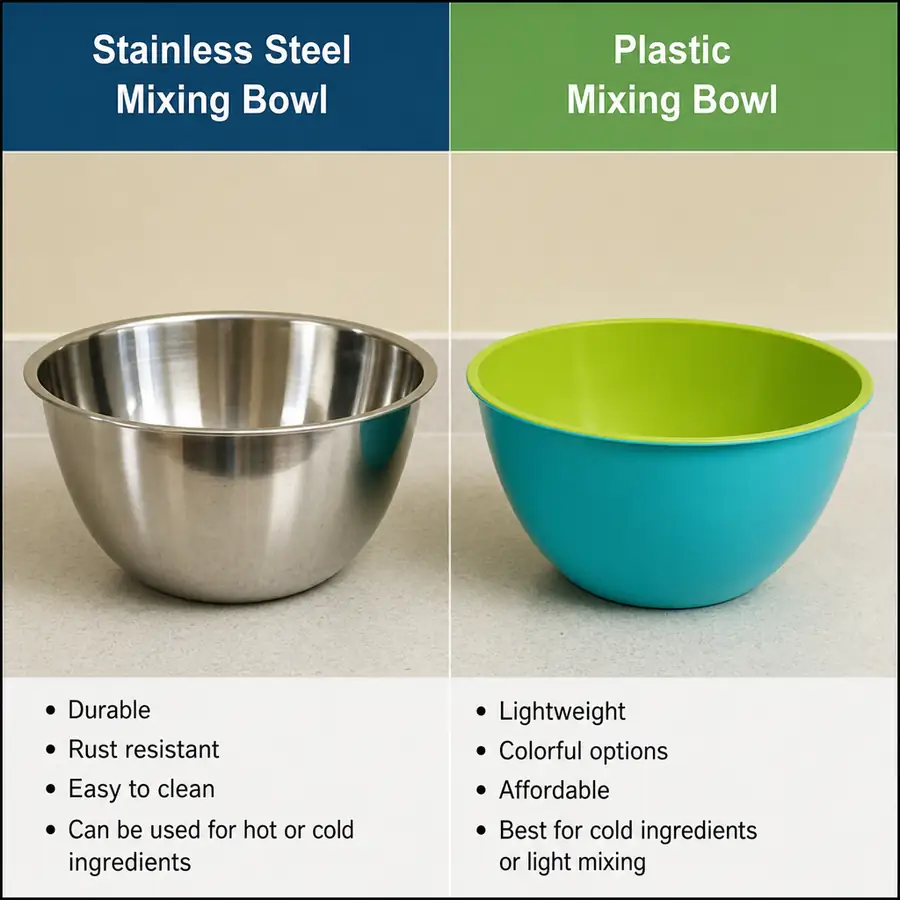
When purchasing mixing bowls, consumers are often faced with the dilemma of stainless steel vs plastic mixing bowls. Both have their place, but they serve very different purposes:
Stainless Steel Mixing Bowls:
- Pros: Highly durable, lightweight, and non-reactive. They will not absorb odors or stains (e.g., from turmeric or tomato sauce). They can double as a double-boiler over a pot of simmering water, and they get exceptionally cold, making them perfect for whipping cream.
- Cons: Not microwave safe.
Plastic Mixing Bowls:
- Pros: Usually microwave-safe, inexpensive, and often come with airtight lids for easy storage.
- Cons: Prone to scratching. Over time, plastic can absorb garlic or onion odors and hold onto grease residues, which can negatively affect delicate tasks like whipping egg whites.
Pro Tip: For a truly versatile kitchen, invest in a nesting set of stainless steel bowls for active prep, and keep a few glass or high-quality plastic bowls for microwaving.
Accurate Measuring Tools
Cooking is an art; baking is a science. While a pinch of salt here and a dash of wine there won't ruin a stew, inaccurate measurements will absolutely ruin a cake.
For the most accurate baking, a digital kitchen scale is the ultimate tool. However, if you are using cups and spoons, calibrating measuring cups for baking accuracy is a surprisingly necessary step. Not all measuring cups are manufactured to exact standards. You can test your liquid measuring cups using water: 1 cup of water should weigh exactly 236 grams. If your cup is off, note the discrepancy. Furthermore, always use the "dip and sweep" method for dry ingredients—aerating the flour, scooping it into the cup, and leveling it off with a flat edge—to ensure you aren't packing too much into the measure.
Prepping Like a Pro
Before you ever turn on the stove, you should practice mis en place (a French culinary phrase meaning "putting in place"). Having all your ingredients measured, peeled, chopped, and organized before cooking ensures you aren't frantically mincing garlic while your onions burn.
Your mis en place organization essentials should include small glass ramekins, stainless steel pinch bowls, and miniature prep containers. Having these small vessels allows you to stage your ingredients in the exact order they will go into the pan, creating a seamless, stress-free cooking experience.
The Heat of the Moment: Cooking and Stirring
Once the fire is lit, you need tools that can handle the heat. Investing in commercial quality cooking utensils guarantees that your tools won't melt, splinter, or degrade into your food.
Spatulas, Spoons, and Turners
Stirring a bubbling pot of marinara or a thick, hearty stew requires the right implement. When choosing between silicone vs wooden cooking spoons, consider what you are cooking.
- Wooden Spoons: These are a timeless classic. They are incredibly sturdy, won't scratch non-stick pans, and do not conduct heat, meaning the handle stays cool even if left in a hot pot. However, they require hand washing and occasional oiling to prevent cracking.
- Silicone Spoons: These are the ultimate modern upgrade. High-quality silicone is heat-resistant up to 600°F (315°C), entirely non-porous (making it highly hygienic and dishwasher safe), and flexible enough to scrape every last drop of sauce from the corners of a pot.
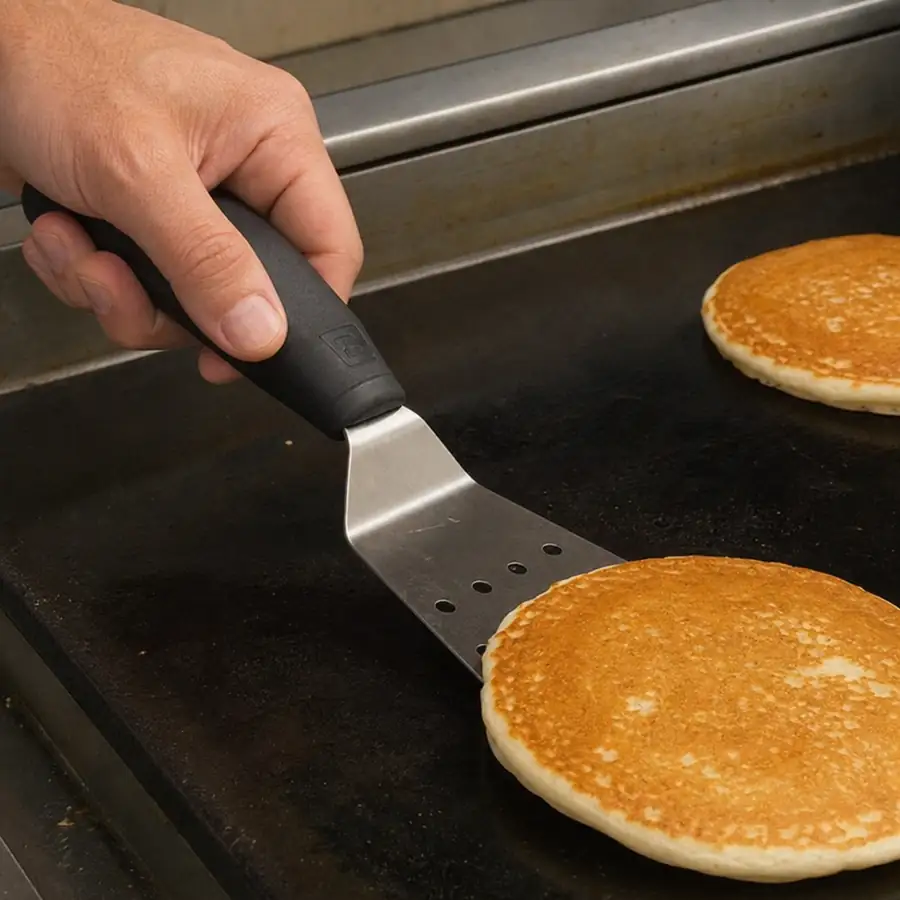
When it comes to flipping burgers, pancakes, or delicate fish fillets, you need a different tool entirely. Look for heat-resistant ergonomic handled turners. A good turner (often mistakenly just called a spatula) should have a thin, beveled edge to easily slide under food, a flexible head, and a handle that conforms comfortably to your grip to prevent wrist fatigue during long cooking sessions.
Precision and Food Safety: Thermometers and Certifications
Safety in the kitchen isn't just about sharp knives and non-slip mats; it is about ensuring the food you serve is cooked perfectly and safely.
Getting the Temperature Right
Gone are the days of cutting into a beautiful steak just to see if it is done, letting all the flavorful juices bleed out onto the cutting board. One of the most critical upgrades for any home cook is the integration of precision digital food thermometers.
Whether you are roasting a Thanksgiving turkey, grilling pork chops, or tempering chocolate, an instant-read digital thermometer removes the guesswork. Look for models that provide a reading in under three seconds. Remember, meat continues to cook even after you take it off the heat (a process known as carryover cooking), so using a precision thermometer allows you to pull the protein exactly 5 to 10 degrees before your target temperature, resulting in flawlessly juicy meats every time.
The Importance of Commercial Standards
As you upgrade your kitchen arsenal, you will likely come across products bearing an "NSF" logo. Utilizing NSF certified food preparation equipment is a game-changer for serious home cooks.
NSF stands for the National Sanitation Foundation. When a tool or container has this certification, it means it has been rigorously tested for public health protection. In practical terms, it means the item is designed without tiny crevices where bacteria can hide, is constructed from non-toxic materials, and can withstand the heavy-duty cleaning and high temperatures of a commercial kitchen. Buying NSF-certified tools often means buying an item for life.
Storage and Space-Saving Solutions
Even the most beautiful collection of essential kitchen smallware becomes a burden if it clutters your workspace. Effective storage is the final piece of the kitchen puzzle.
Smart Gadgets and Clever Storage
Not everyone has the luxury of a massive walk-in pantry. If you are working with limited drawer and counter space, seek out space-saving culinary gadgets. These include items like collapsible silicone colanders, nesting measuring cups that snap together, over-the-sink cutting boards, and magnetic knife strips that utilize vertical wall space instead of hogging counter real estate.
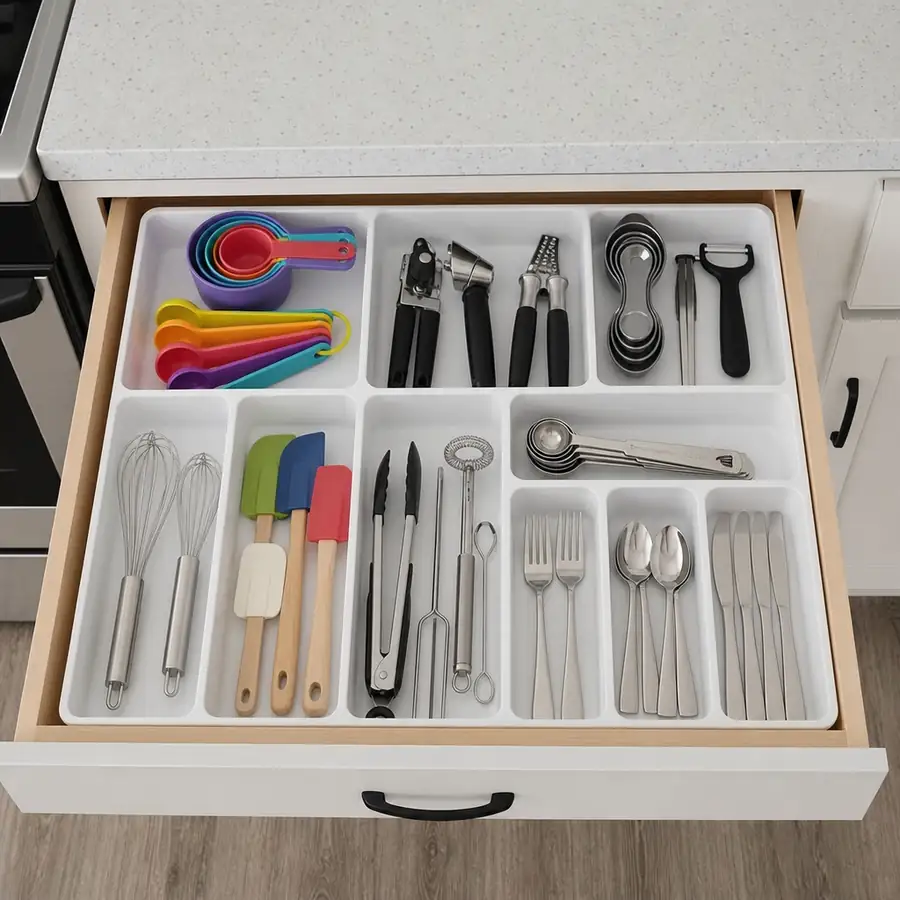
Equally important is managing your leftovers and dry goods. Organizing small kitchen storage containers can be a headache if you have a mismatched collection of bases and lids.
- Standardize your collection: Ditch the random takeout containers and invest in a matching set of clear, stackable containers (either glass or durable BPA-free plastic).
- Square over round: Square and rectangular containers use shelf space much more efficiently than round ones.
- Label everything: Use dissolvable food labels or a simple piece of masking tape with a marker to date and label your prepped ingredients and leftovers. This minimizes food waste and keeps your refrigerator looking like a professional walk-in cooler.
Find Quality Kitchen Smallware at The Horeca Store
Whether you are setting up a new restaurant kitchen or upgrading your existing setup, The Horeca Store offers a wide range of professional kitchen smallwares and foodservice essentials. From knives, cookware, utensils, storage containers, and preparation tools to serving accessories and cleaning supplies, we provide reliable products designed for commercial kitchen demands.
With high-quality products, competitive pricing, and a wide selection of hospitality supplies, The Horeca Store helps restaurants, hotels, cafés, and catering businesses create efficient and well-equipped kitchens. Explore our collection to find durable smallware solutions that support better workflow, food safety, and long-term kitchen success.
Conclusion: Elevating Your Everyday Cooking
Building the perfect culinary workspace does not require tens of thousands of dollars or a complete architectural remodel. It comes down to intentional choices regarding the tools you hold in your hands every day.
From adopting professional strategies to separate your raw and cooked foods, to investing in precision thermometers that guarantee a perfect roast, the right gear makes all the difference. Stocking your drawers with high-quality, essential kitchen smallware allows you to work faster, cleaner, and with far more confidence.
Take an inventory of your current setup. Discard the warped plastic spatulas, retire the dull knives, and begin curating a collection of tools that work with you, rather than against you. When you invest in durability, precision, and organization, you aren't just buying kitchenware—you are investing in years of delicious meals, effortless entertaining, and the pure joy of a well-executed recipe. Happy cooking!