
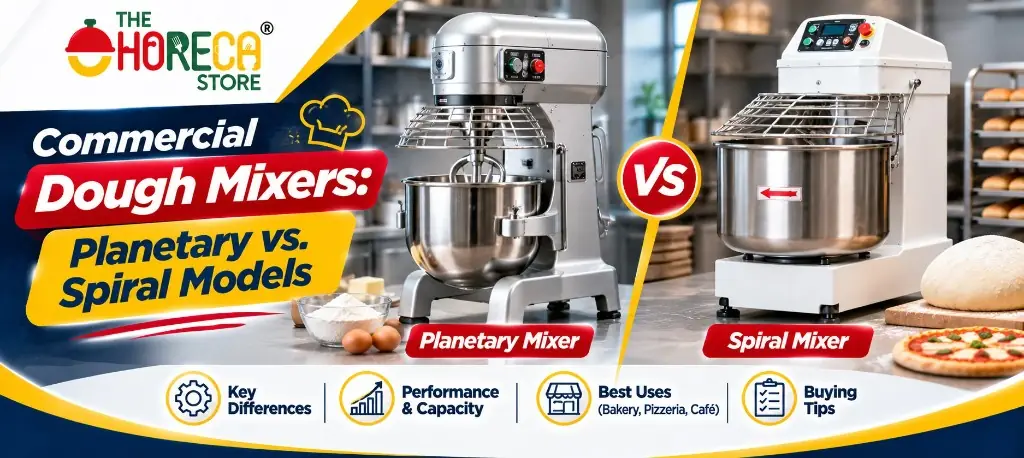
Commercial dough mixers fall into two main categories: planetary models for varied kitchen tasks and spiral models focused on dough production. The right choice depends on your recipes, batch sizes, and production schedule - not simply the largest bowl you can afford. This comparison helps buyers considering The Horeca Store evaluate both designs, understand capacity limits, and prepare a practical equipment shortlist.
What is the difference between planetary and spiral dough mixers?
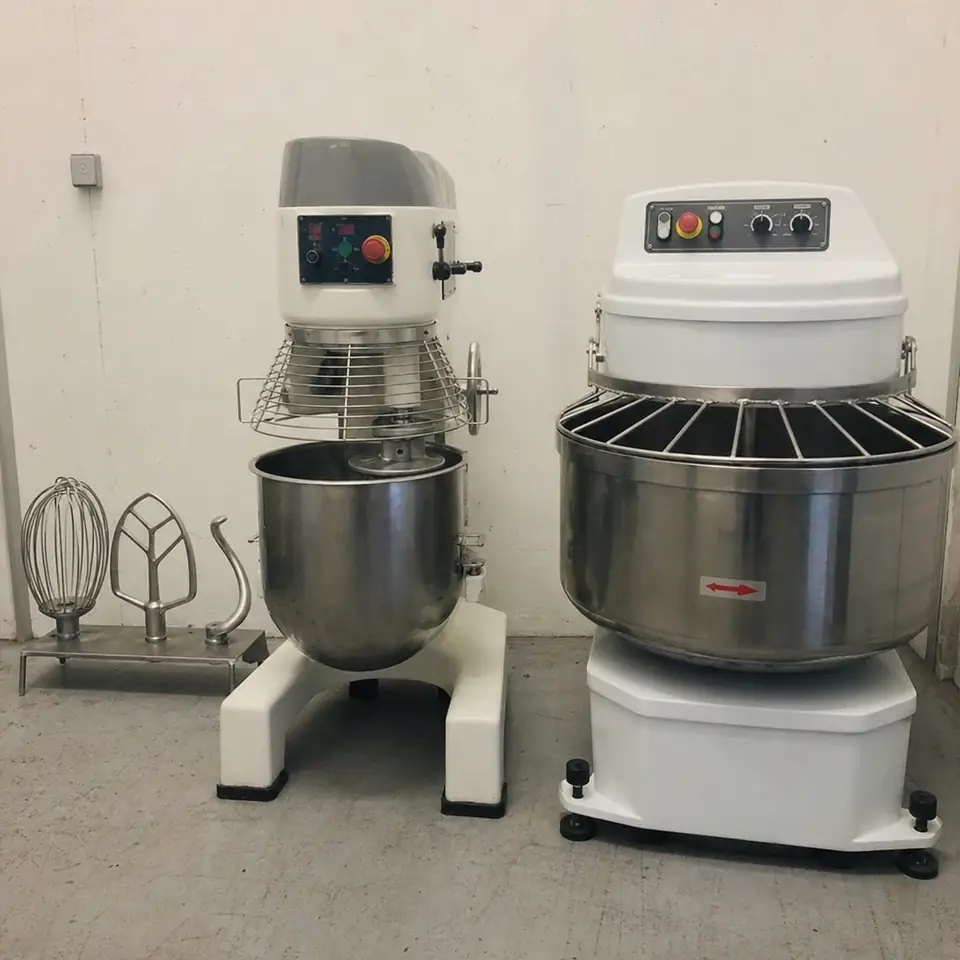
Planetary mixers use interchangeable mixing tools in a nonrotating bowl, while spiral mixers combine a rotating spiral hook with a rotating bowl to knead dough. Planetary models offer broader versatility across batters, toppings, and doughs. Spiral models prioritize dough mixing, making them worth considering when bread or pizza production drives equipment needs.
That distinction matters more than appearance. When comparing commercial mixers for dough, start by listing everything the machine must make, then identify which recipes account for most of its working time. A mixer that suits your busiest task deserves closer attention than one with accessories you rarely expect to use.
| Consideration | Planetary mixer | Spiral mixer |
|---|---|---|
| Bowl movement | Bowl remains stationary during mixing | Bowl rotates during mixing |
| Mixing tools | Interchangeable hook, beater, and whip, depending on model | Primarily a spiral dough hook |
| Main advantage | Handles varied preparation tasks | Specializes in dough production |
| Typical applications | Dough, cake batter, icing, and whipped products | Bread, pizza, and other suitable doughs |
| Buying priority | Check attachments and recipe-specific capacity | Check dough capacity and minimum batch size |
These are category-level differences, not guarantees that every machine handles every listed recipe. Check the specific model's documentation before committing.
Planetary mixers bring flexibility to a varied menu
A planetary mixer is worth investigating when one machine must perform several jobs. Depending on the model and supplied accessories, a dough hook handles suitable bread and pizza doughs, a flat beater mixes batters and fillings, and a wire whip incorporates air into lighter preparations. Confirm which tools are included rather than assuming every attachment comes standard.
For a restaurant preparing pizza dough, cakes, and whipped toppings, that flexibility makes a planetary model a sensible starting point. Map the actual preparation schedule before deciding: can dough production finish before pastry preparation begins, or will both teams need the machine simultaneously? The answer helps distinguish useful versatility from a shared-equipment bottleneck.
Some planetary commercial kitchen mixers also accept powered hub attachments for additional preparation tasks. Availability and compatibility vary, so verify the exact mixer, attachment, and permitted operating procedure together. Treat an attachment hub as a specific capability to investigate, not a universal feature.
Do not mistake versatility for unlimited dough capacity. Professional dough mixers must still stay within their recipe-specific load limits, even when there appears to be unused room in the bowl. A published dough capacity chart is more useful here than bowl volume alone.
Spiral mixers put dough production first
Spiral mixers are designed around kneading rather than switching between whips and beaters. Their rotating bowl and spiral tool work together to incorporate ingredients and develop dough. Manufacturers emphasize this action for bread and pizza applications where managing mixing and dough temperature is important.
If dough occupies most of your preparation schedule, make spiral models a priority for demonstrations. Bring your actual formula rather than accepting a demonstration with an unrelated recipe. Ask the supplier to show ingredient incorporation, the finished dough, and removal from the bowl so you can assess the complete task.
Many spiral designs offer separate mixing stages or speeds, and some provide timers and automatic transitions. These features can help operators repeat an established process, but the available controls differ by model. Check whether the machine supports the sequence your team needs instead of assuming every spiral follows the same cycle.
Also ask about small batches. Minimum effective batch sizes vary: a machine suitable for peak production may not suit a limited test recipe. Obtain the minimum and maximum recommendations for the shortlisted model, and request a demonstration at both ends of your expected range.
Which mixer fits your restaurant or bakery?
A planetary mixer is generally the stronger starting point for a varied menu, while a spiral deserves priority when dough production dominates. Restaurant dough mixers should be selected around actual recipes and workload rather than business labels: a restaurant with substantial pizza production may need a dough-focused machine, while a bakery making many batters and toppings may need planetary versatility.
Use these scenarios as planning prompts, not automatic purchasing rules:
- Mixed-menu restaurant: Compare planetary models first if you need dough, batters, and whipped preparations from one machine. Check whether the preparation schedule allows sharing.
- Pizza-focused kitchen: Test your pizza formula in each shortlisted machine. Prioritize verified batch capacity, suitable speeds, and practical dough removal.
- Bread-focused bakery: Investigate spiral models for the core dough workload, then separately assess equipment needs for fillings, cakes, and toppings.
- Growing production kitchen: Write down realistic future batches and production hours. Ask whether proposed high-capacity mixers also accommodate today's smaller runs.
You do not have to force every preparation task into one purchase. Consider separate dough and pastry equipment if your schedule reveals competing demands. Before choosing two machines, however, compare the additional space, cleaning, and purchasing requirements with the scheduling problem you are trying to solve.
How do you size a commercial dough mixer correctly?
Size a mixer using its approved capacity for your dough recipe, not simply its bowl volume or motor rating. Manufacturers publish different limits for different doughs because ingredient proportions and conditions affect the mixing load. Check the stated flour capacity, total batch capacity, absorption ratio, and permitted speed together.
Work from the complete batch weight
Write your recipe in weights and total every ingredient. For example, a hypothetical batch containing 20 pounds of flour, 12 pounds of water, and 1 pound of other ingredients weighs 33 pounds - not 20 pounds. Keep both flour weight and finished batch weight on your comparison sheet so you can interpret whichever capacity measure the manufacturer supplies.
Then compare that recipe with the relevant chart entry. Do not assume a bread-dough rating also applies to stiff pizza or bagel dough. Manufacturer capacity charts distinguish these applications and can assign substantially different limits to the same machine.
Understand absorption ratio
For a basic flour-and-water calculation, absorption ratio is water weight divided by flour weight, multiplied by 100. The example above has a 60% absorption ratio: 12 divided by 20, multiplied by 100. Use the manufacturer's definitions and instructions when checking more complex formulas against its chart.
Lower moisture levels can require reduced batch sizes, and cold water or ice can also affect the permitted load. These adjustments are model-specific; do not transfer a reduction rule from one mixer to another. Supply the manufacturer with your complete formula and ingredient temperatures when requesting confirmation.
Calculate the production window
Estimate required batches using the verified recipe capacity, then build a schedule around the whole task. Include weighing ingredients, loading, mixing, unloading, and cleaning - not only the programmed mixing time. Add any manufacturer-required pauses or operating restrictions before deciding whether a machine meets your daily target.
When evaluating industrial dough mixers, ask for documented operating guidance rather than assuming that a larger machine can run continuously. Request confirmation of the proposed workload in writing. Your comparison should show what the machine can produce within your available hours, not just what fits in one batch.
Check installation, handling, and cleaning before ordering
Review the installation drawing and electrical specifications before approving a purchase. For example, a manufacturer's specification sheet may identify supply voltage, phase, current requirements, machine dimensions, and whether a power cord is supplied. Have the relevant installer verify compatibility with your site rather than relying on a product photograph or a familiar-looking connection.
Walk through the route from delivery to the final operating position. Measure doorways, turns, and the intended workspace; then compare those measurements with the delivery and installation information. Ask who is responsible for unloading, positioning, installation, and packaging removal so the quote covers the job you expect.
Examine how staff will handle the dough. Fixed-bowl and removable-bowl arrangements need different workflows, so request a demonstration of unloading and cleaning. Some models offer bowl-jog or pulsing features intended to assist dough removal; verify their presence rather than treating them as standard.
Include commercial baking tools in that walkthrough. Decide where scales, ingredient containers, scrapers, and dough tubs will sit, and check whether staff can move between them without crossing another preparation area. Treat the mixer as part of a workstation, not an isolated appliance.
Evaluate used mixers with a documented checklist
If you are considering used commercial dough mixers, request the exact model and serial number before comparing the asking price with new equipment. Obtain the appropriate manual, identify the supplied components, and arrange an inspection. Make the purchase conditional on satisfactory verification wherever the seller's terms allow.
Use this checklist to structure the inspection:
- Identity and documentation: Match the data plate to the listing and request available service records.
- Bowl and tools: Confirm that the bowl and mixing attachments are the correct components for that model.
- Operation: Ask a qualified technician to assess operation, controls, and mechanical condition.
- Safety features: Have guards, interlocks, and stop controls checked against the manufacturer's requirements.
- Support: Confirm parts availability, service options, and written warranty or return terms before paying.
Ask for a demonstration with an appropriate dough load if feasible and permitted. A brief empty-bowl run does not answer whether the machine suits your recipe. Keep inspection, transport, installation, and any identified repairs in the same budget comparison as the purchase price.
Build a shortlist from specifications, not search labels
Broad searches for commercial dough mixers for sale are useful for discovering options, but listing titles should not decide the purchase. Whether a seller describes a product as a commercial kitchen dough mixer or a commercial dough mixer machine, request the exact model documentation. Compare dough mixing equipment using the same recipe and workload assumptions throughout.
Before requesting quotes, prepare a one-page purchasing brief containing:
- Your main recipes, including ingredient weights and temperatures.
- Minimum, normal, and peak batch sizes.
- Daily production requirements and available preparation hours.
- Any required beating, whipping, or attachment tasks.
- Available space, electrical supply, and delivery constraints.
- Required installation, training, service, and warranty information.
Ask each supplier to identify exceptions or assumptions in its recommendation. Keep optional accessories separate from essential equipment in the quote, and request the full delivered and installed cost where applicable. This makes competing proposals easier to compare without confusing a lower headline price with a better fit.
Choose for the work you actually do
Start with the menu, verify capacity against the recipe, and test the workflow before choosing between planetary and spiral designs. Favor versatility when several preparations must share a machine; prioritize dough specialization when that is the central workload. Confirm the final choice against the manufacturer's documentation.
When discussing options with The Horeca Store, bring your purchasing brief and ask for model-specific capacity and installation information. A clear account of what you make, how much you need, and when you need it is the strongest starting point for a useful equipment conversation.