
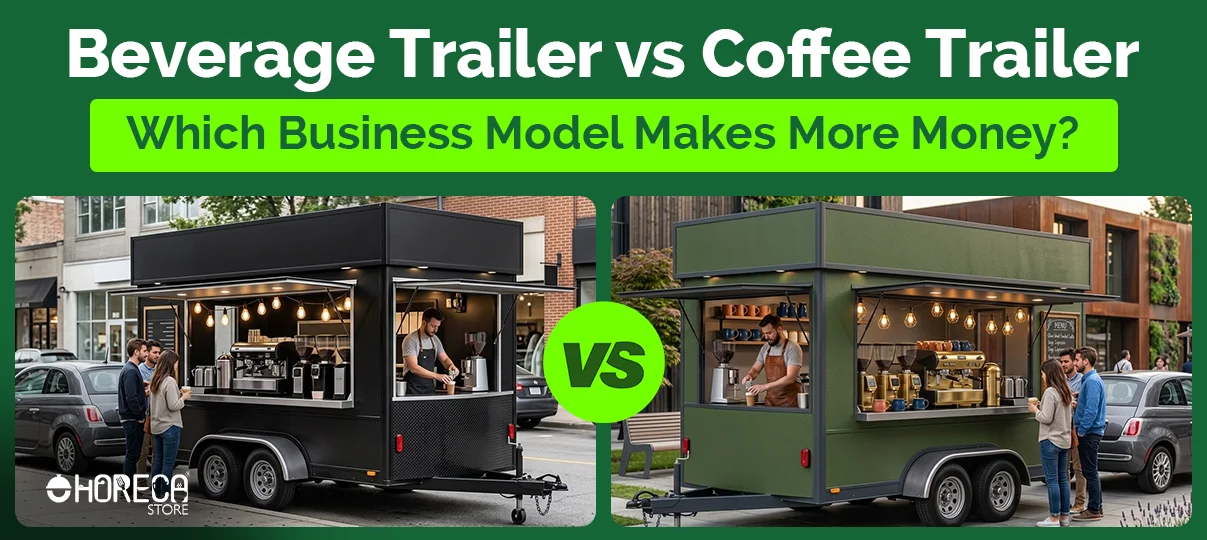
We’ve all seen them: the charming, vintage-style trailers parked at a Saturday farmers market, steam rising into the morning air. Customers see a quaint aesthetic, but savvy entrepreneurs see a nimble alternative to expensive traditional cafes. Going directly to the thirsty crowds turns simple mobility into your ultimate competitive advantage.
Before buying a tow hitch, you must choose a distinct operational path. The debate of a beverage trailer vs coffee trailer involves much more than whether you prefer pulling espresso shots or pouring craft sodas. Your chosen liquid actively dictates your daily schedule, your target audience, and your potential profitability.
Consider how drastically the revenue streams differ between these two distinct operations. A daily-service coffee model relies on recurring revenue, meaning you park at the same commuter lot every morning to catch loyal regulars. Conversely, running a mobile bar business means chasing high-margin event income. As industry data consistently shows, catering one large Saturday wedding can easily match the revenue of four days selling morning lattes, but it requires a massive burst of weekend energy.
Maximizing profits in a mobile drink business is entirely about the strategy behind the service window, not just the liquid in the cup. Choosing an approach that safely matches your personal energy levels—whether that means steady early mornings or high-stakes weekend events—is crucial for avoiding owner burnout. Each model uniquely aligns with specific financial targets and ideal lifestyles.
The Coffee Trailer Grind: High Volume vs. High Maintenance
Making a vintage coffee trailer profitable requires more than just pouring a good cup. Because profit margins on a standard latte are small, survival depends on through-put efficiency—simply put, how many customers you can serve per hour. Selling just twenty cups won't cover your daily expenses, meaning you need a reliable, permanent daily spot with steady foot traffic to hit your volume goals.
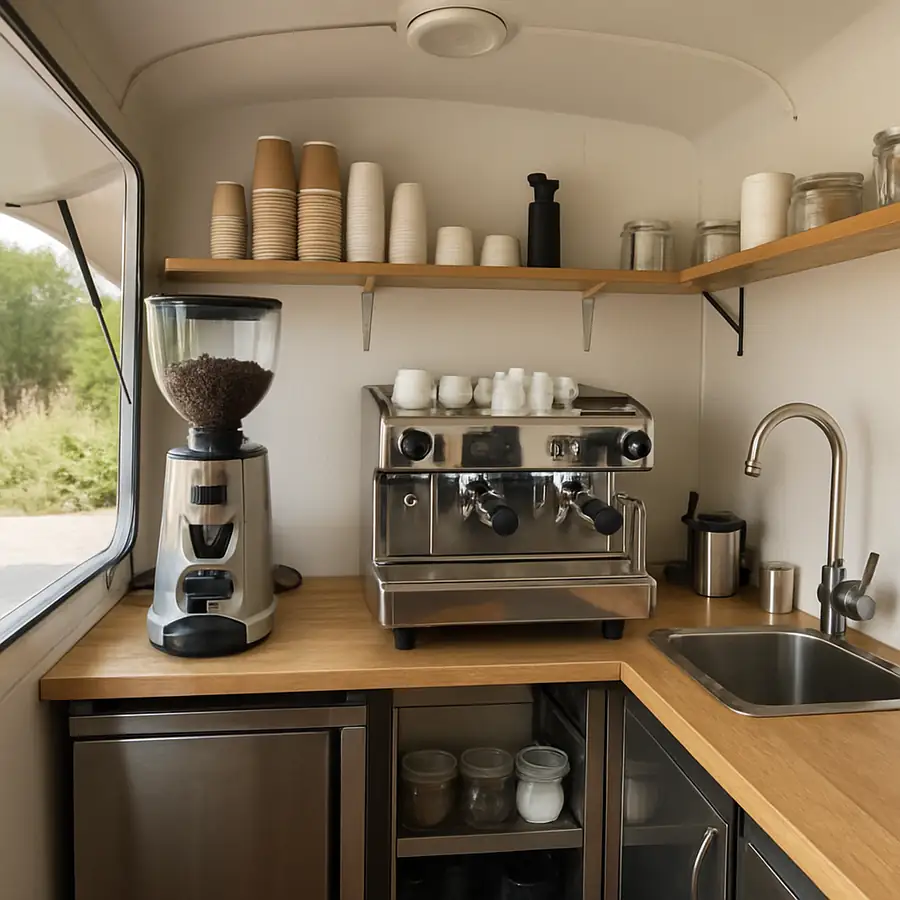
Stepping inside, the reality of working in a 60-square-foot kitchen quickly sets in. Hitting a pace of 50-plus cups an hour requires the best layout for high-volume service, where every inch matters. The barista "dance" must be flawless; a smart small space espresso machine setup ensures the person pulling shots never bumps into the person taking orders.
Pulling off this speedy service also requires careful electrical load management. Think of the trailer’s electrical system like a power strip in your kitchen—if you run a commercial espresso machine, grinder, and air conditioner all at once without enough power, you’ll flip a breaker. Balancing this energy draw ensures your equipment keeps running when a line forms at 7:00 AM.
Mastering this mobile powerhouse starts early. A 4-step morning setup routine for a mobile cafe includes:
- Connecting to power safely.
- Heating the espresso machine.
- Dialing in the grinder.
- Staging cups and milk.
Mastering this daily routine often opens the door to weekend events and high-margin private catering.
The Mobile Bar Pivot: Turning Events into High-Margin Paychecks
While the street-corner hustle builds community, chasing single sales is exhausting. Shifting to private gatherings introduces a completely different financial reality. A standard specialty coffee yields a small per-drink profit after accounting for expensive milk and cups. However, nomadic brands—trailers traveling exclusively to pre-booked gatherings—bypass this volume trap by charging a flat rate for their presence.
This shift relies on the "Event Premium" pricing strategy. Instead of hoping a hundred people walk by and buy a latte, you charge one client a comprehensive fee for a three-hour service window. Clients happily pay this premium because they are purchasing a memorable, aesthetic experience for their guests rather than just buying beverages.
Operating under this beverage trailer business model simplifies service through a tap-based system. Serving cold brew or signature mocktails from a keg drastically reduces customer wait times compared to steaming milk for custom orders. This setup eliminates intense barista training, as pouring a perfect draft takes seconds and carries almost zero risk of human error.
The mobile bar business also protects your assets from constant breakdown. Removing the strain of back-to-back hot espresso orders means fewer emergency machinery repairs. Regardless of whether you pivot entirely to weddings or stick to daily street service, getting those first drinks flowing requires a significant upfront investment in proper equipment.
The $20,000 Countertop: Essential Mobile Espresso Bar Equipment
Outfitting a compact kitchen on wheels requires more than just moving your home setup into a trailer. Every piece of gear must withstand constant road vibration while maximizing your tiny floor plan. To serve crowds efficiently, your mobile espresso bar equipment checklist must include:
- Commercial espresso machine
- Dedicated commercial grinder
- Integrated knock box (for spent coffee grounds)
- Under-counter refrigeration
- Durable milk pitchers
Health inspectors will heavily scrutinize everything you install once the physical buildout is complete. This is where NSF-certification (National Sanitation Foundation) becomes crucial. This commercial standard guarantees that appliances are built specifically for public food safety, featuring smooth, easy-to-clean surfaces that prevent bacteria buildup. Buying a cheaper, non-certified refrigerator might save cash upfront, but it will almost certainly fail a local permitting inspection and delay your opening day.
Electrical limitations also require trailer owners to rethink how their tools actually operate. Many operators invest in a dual-fuel espresso machine—a specialized system that heats water using either standard electricity or propane gas. Running your primary heating element on gas dramatically reduces your overall electrical load. This simple swap makes it much easier to safely support the intense power consumption requirements for commercial grinders without flipping a breaker. These utility limits dictate exactly how you will power and plumb your mobile setup.
Powering Your Passion: Why Generators and Plumbing Systems are Non-Negotiable
Imagine it is 7:00 AM, you have a line of ten eager customers, and your entire trailer suddenly goes dark because someone plugged in a blender. To avoid this scenario, you must calculate your total wattage needs by adding up the watts of every appliance running simultaneously, then including a twenty percent safety buffer. This crucial calculation dictates your daily energy source. Many operators rely on a quiet portable generator for mobile catering to run their business anywhere, while others plug directly into a host building's electrical grid—a setup commonly called "shore power."
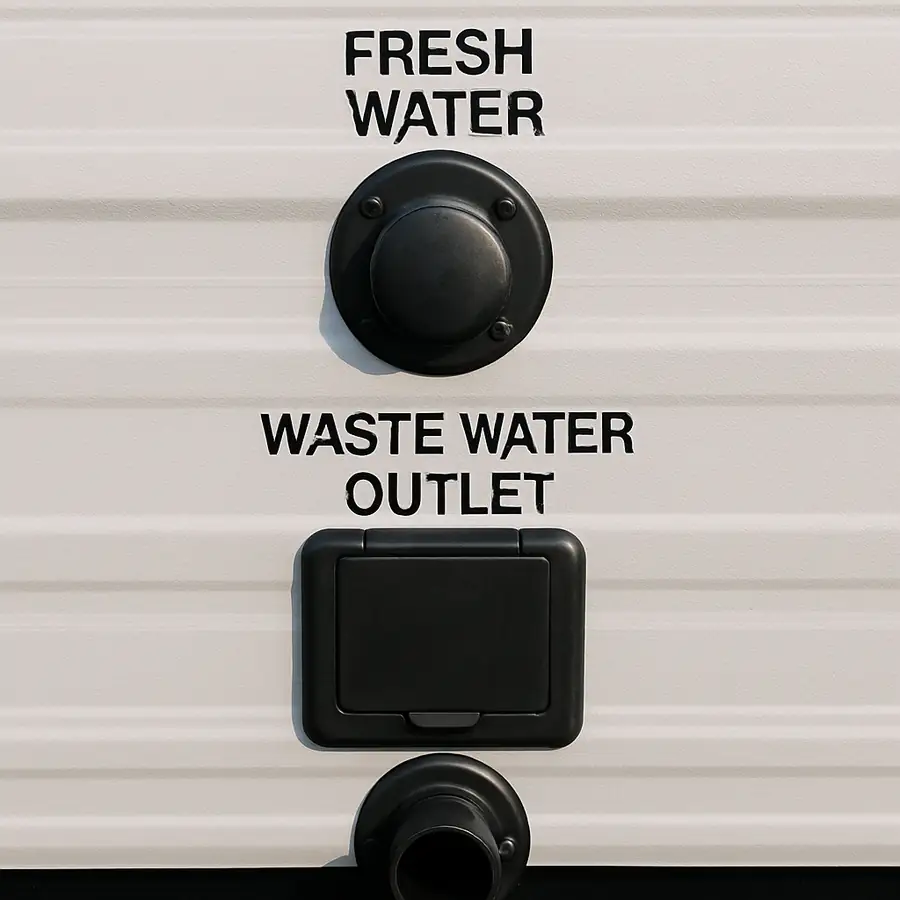
Beyond keeping the lights on, a reliable plumbing system for mobile beverage service relies on a strict input-and-output cycle. Clean water pulls from a dedicated fresh tank, gets heated for your espresso machine or hand sink, and then drains into a separate holding reservoir. This used, non-toxic liquid created from basic washing and brewing is known as "grey water."
Health departments mandate strict rules for waste water management to ensure this grey water never overflows inside your workspace. Specifically, your dirty water tank must be at least fifteen percent larger than your fresh water supply so you always have room to catch the runoff. Balancing these physical utilities is vital, but getting them approved by local authorities requires navigating a specific set of licensing requirements.
Navigating the Paperwork: The Three-Legged Stool of Licensing
Figuring out the legal side of a mobile cafe can feel overwhelming, but it rests on a simple framework. Navigating the licensing requirements for street food businesses is easiest when you picture a basic foundation that supports your daily operations. You must complete The Three-Legged Stool Checklist:
- Vehicle Permit
- Food Handling License
- Site-Specific Permit
Once your legal foundation is stable, inspectors will scrutinize your interior operations. When researching how to get health department permits for food vendors, many new owners stumble over mandatory sink setups. You need a strict configuration: a three-compartment sink to wash, rinse, and sanitize your tools, alongside an entirely separate hand-washing station. Furthermore, health laws forbid dumping wastewater or prepping food in your home driveway. Instead, you must partner with a "commissary kitchen"—a legally certified commercial facility where mobile vendors go to empty their waste tanks safely, clean heavy equipment, and store fresh supplies overnight.
Clearing these regulatory hurdles transforms your trailer from a parked vehicle into a legitimate, community-ready cafe. With your operational baseline legally secured, the focus naturally shifts from upfront compliance to maximizing daily revenue and profit margins.
The Profitability Showdown: Margin Analysis of Beans vs. Bubbles
Calculating your potential profit starts with your Cost of Goods Sold (COGS)—the exact amount spent on the physical ingredients to make a single drink. Comparing traditional coffee to trendy bubble teas or craft sodas reveals surprising financial differences right out of the gate.
The biggest thief of those margins is shelf-life spoilage. A classic espresso menu relies heavily on expensive fresh milk and roasted beans that lose their peak flavor quickly. If a sudden rainstorm cancels your weekend market, that unused dairy goes down the drain, taking your money with it. Conversely, bubble teas and sodas use shelf-stable syrups and powders that sit safely for months, virtually eliminating the risk of wasted inventory.
Beyond ingredients, accurately calculating daily operating costs is vital for survival. Every shift carries hidden expenses, like the gasoline running your power generator and the booking fees charged by event organizers. If a neighborhood festival charges $50 for a parking spot and your generator burns $25 in gas, you must sell 25 three-dollar drinks—your "break-even" cup count—just to cover the cost of opening your window.
Time is also money in a compact space. Pumping syrup over ice takes seconds, whereas steaming milk requires trained technique, meaning a bubble tea concept can often serve more customers hourly. These financial realities dictate your final menu, which in turn determines your necessary physical layout. With a clear profit strategy, you can confidently choose the right physical shell for your brand.
Horse Box or Custom Build? Choosing the Right 'Shell' for Your Brand
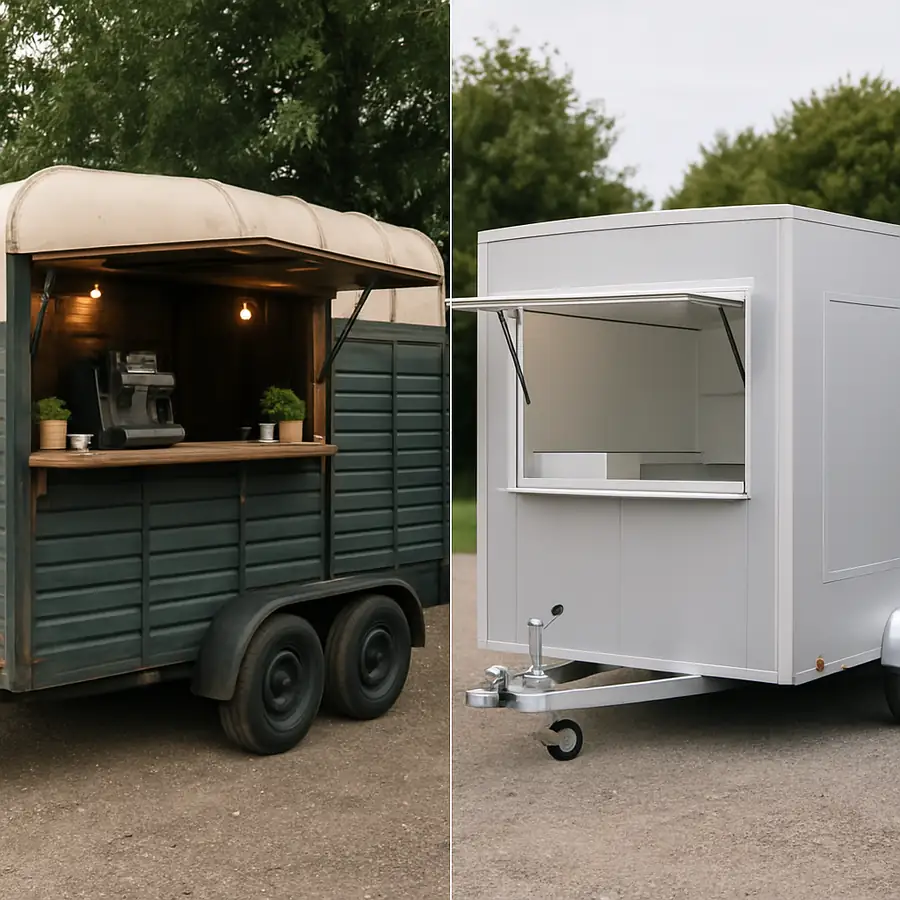
Stepping inside a charming vintage trailer looks incredible online, but daily operation requires practical planning. When weighing a converted horse box versus custom concession stand, you balance aesthetic appeal against physical comfort. Modern builds offer tall ceilings and squared walls that make installing bulky espresso machines simple, whereas rustic shells often force you to work around awkward, cramped curves.
Weather plays an equally massive role in your design strategy. Customizing vintage campers for catering frequently reveals hidden challenges, like thin walls that turn your mobile cafe into a summer sauna or winter freezer. Upgrading insulation and strategically placing service windows away from prevailing winds keeps your equipment running smoothly and protects your baristas from the elements.
Finally, moving this setup requires double-checking your vehicle's towing capacity. A fully loaded shell carrying full water tanks, heavy generators, and commercial gear easily tops 3,000 pounds, meaning a standard family crossover usually cannot pull it safely. Once you secure a capable tow vehicle and the perfect mobile kitchen, you are ready to execute your launch strategy.
Your 30-Day Launch Map: From Curiosity to First Sale
A mobile cafe is a high-functioning commercial kitchen, not just a vintage aesthetic. The choice between a morning coffee rush and an event-driven beverage trailer ultimately depends on your working style and local market gaps.
You can build a solid foundation and map out your business plan by following this straightforward progression:
- Budgeting: Map out your first $5,000 of investment.
- Sourcing the Shell: Find a reliable, easily towable base.
- Permitting: Navigate your local health department requirements early.
- Equipment Testing: Perfect your drink workflow right in your driveway.
- Soft Launch: Serve friends and family to safely test your systems.
Take that first budgeting step today, map out your expenses, and begin sourcing the equipment that fits your specific service model.
Start Your Mobile Beverage Business with The Horeca Store
Whether you're planning to launch a coffee trailer, beverage trailer, or a fully customized mobile food business, The Horeca Store offers a comprehensive range of commercial kitchen equipment and foodservice supplies to help you get started. From coffee machines, blenders, refrigerators, beverage dispensers, and stainless steel workstations to disposable cups, lids, straws, takeaway packaging, and storage solutions, we provide everything you need to build an efficient and professional mobile operation.
With high-quality commercial products, competitive pricing, and reliable customer support, The Horeca Store is a trusted partner for entrepreneurs in the food and beverage industry. Explore our extensive collection to equip your trailer with durable, food-safe, and performance-driven solutions that help you serve customers efficiently and grow a profitable business.