Discover Exceptional Products and Unmatched Service.
Power up your kitchen with reliable cooking equipment for restaurants and catering services. Trusted brands, fast shipping, unbeatable prices.
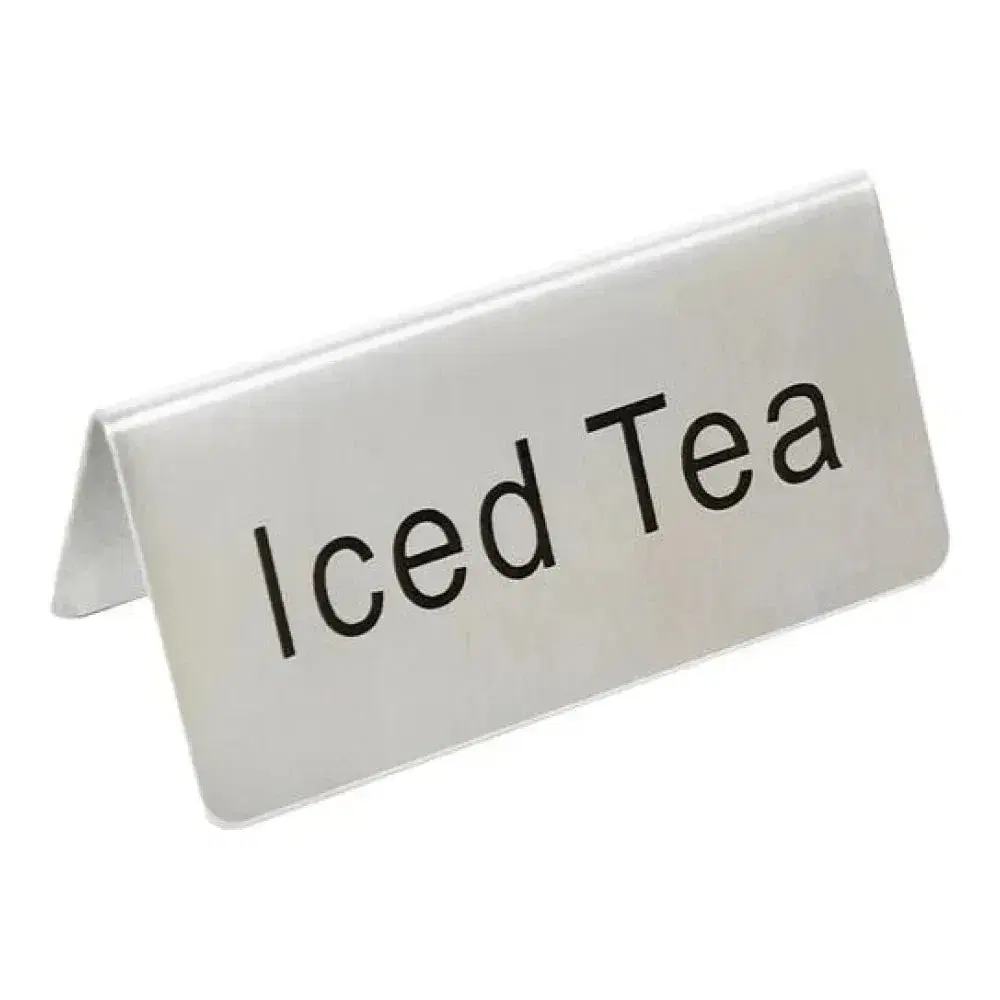
Thunder Group SLTS3156 Iced Tea Table Tent Sign, Stainless Steel, 3" x 1-1/2" x 1-3/8"
Model No: SLTS3156
⚡ Fast DeliveryShipping Fee
Mostly Ships in 1 to 2 Days

Thunder Group SLTS3155 Hot Water Table Tent Sign, Stainless Steel, 3" x 1-1/2" x 1-3/8"
Model No: SLTS3155
⚡ Fast DeliveryShipping Fee
Mostly Ships in 1 to 2 Days

Thunder Group SLTS3154 Coffee Table Tent Sign, Stainless Steel, 3" x 1-1/2" x 1-3/8"
Model No: SLTS3154
⚡ Fast DeliveryShipping Fee
Mostly Ships in 1 to 2 Days

Thunder Group SLTS3153 Decaf Table Tent Sign, Stainless Steel, 3" x 1-1/2" x 1-3/8"
Model No: SLTS3153
⚡ Fast DeliveryShipping Fee
Mostly Ships in 1 to 2 Days

Thunder Group SLTS3152 Hot Tea Table Tent Sign, Stainless Steel, 3" x 1-1/2" x 1-3/8"
Model No: SLTS3152
⚡ Fast DeliveryShipping Fee
Mostly Ships in 1 to 2 Days

CAC China STRV-52 Stainless Steel Sign Table Tent, Reserved
Model No: STRV-52
⚡ Fast DeliveryShipping Fee
Mostly Ships in 1 to 2 Days

You have a fantastic new dessert or vital WiFi password, but seated guests are completely missing your message. While "tents" might make you think of camping in the woods, Tabletop Tents and Tabletop Cards actually belong in the dining room or event hall. These simple items instantly transform ignored empty space into valuable opportunity space.
Retail experts call this the "billboard effect," serving as a tiny advertisement for a captive audience. According to industry best practices, placing tabletop displays exactly where people sit creates powerful Point of Purchase (P.O.P.) signage. Rather than relying on passive menus, utilizing smart point of purchase marketing strategies turns every table into an active selling tool that drives immediate conversions.
Turn a tabletop into a clear invitation to order, explore, or take the next step. Table tents and tabletop cards put your message where guests, customers, and attendees can see it while they sit, browse, or check in. Use them to highlight an offer, identify a table, share instructions, or make essential information easy to find.
Table tents and tabletop cards display short, useful messages on dining tables, counters, reception desks, and event tables. A folded table tent presents information upright, while a tabletop card can carry a place name, a brief instruction, or a promotional message. The right approach depends on what someone needs to notice and what you want them to do next.
Keep each piece focused on one task. At a café, that might mean drawing attention to a seasonal drink rather than reproducing the entire menu. At a reception, a clear table number helps guests find their seats without searching through unrelated information.
Start with the setting, then match the message to the moment. Someone waiting at a counter needs different information from a guest seated for dinner. These applications offer practical starting points:
Lead with the information readers need most, followed by a brief explanation and one clear action. “View the drinks menu” gives a seated customer a more useful direction than a vague “Learn more.” If you include a QR code, explain its destination and test it before approving your artwork.
Give important text room to stand out. Check the layout at its intended size, not only enlarged on a screen. A focused message is easier to scan than several competing offers squeezed onto one card.
A clear brief helps turn an idea into a useful display. Before requesting a quote, gather the details that define your project:
These are printed tabletop displays—not event tents, pop-up tents, outdoor tents, or small tents used for shelter. If your display will sit outside, mention that setting so suitability can be discussed.
Request a quote for your tabletop display. Share your brief and project requirements to start the conversation.
Making the most of limited event space requires matching tabletop displays to your exact footprint. If you manage a small bistro table, a classic self-standing tent might steal too much dining room compared to a flat card. To get these paper tents to fold into neat triangles without cracking the ink, printers use a technique called "scoring"—pressing a clean crease into the cardstock that acts as a hinge.
When weighing acrylic sign holders vs paper table tents, your choice ultimately comes down to durability and information density:
Selecting the right physical structure ensures your message engages guests naturally. However, if you opt for freestanding paper over a protective holder, you must prevent your signs from wilting by mastering dimensions and paper weights that do not sag.
Ever noticed a daily specials sign drooping sadly over a salt shaker? That "paper fatigue" happens when you try to save money on cheap tabletop tents by using lightweight stock. To keep your display standing tall through humidity and constant handling, printers measure paper thickness in "points" (pt). Think of standard printer paper as a flimsy 4pt, while a high-quality greeting card is around 12pt.
Matching your sign's size to the right thickness prevents gravity from taking over. Here are the standard table tent dimensions for printing and the best cardstock weight for standing displays:
Beyond picking heavy paper, a sturdy display relies on grain direction and folding margins. Paper has a microscopic, natural "grain," and folding parallel to this direction ensures a crisp hinge rather than a jagged, cracked edge. Combine this smooth fold with generous margins—keeping essential text safely away from the physical creases—and your structure is secure. A solid foundation pairs perfectly with smart design, utilizing QR codes and high contrast to drive immediate action.
You have three seconds to grab a guest’s attention. Whether learning how to design table tents for weddings or building custom branding for corporate event signage, high contrast is vital. Dark text on a light background guarantees readability from across a table, even in dim lighting. Avoid subtle pastels; aim for sharp, easily distinguishable color differences.
Structuring that text properly prevents visual overwhelm. Treat your layout like a quick, helpful conversation using this hierarchy checklist:
When that next step is digital, proper QR code integration for digital menus is crucial. Don't shrink codes into crowded corners just to save room. Instead, create a dedicated "scan zone" centered on the main panel. Leave at least a half-inch of empty white space around the square so smartphone cameras can lock on instantly without accidentally capturing the surrounding artwork.
Bringing these elements together requires simple "Map" logic. Picture the display unfolded flat: the center panel is your primary billboard, the adjacent section holds secondary details, and the bottom tabs form the floor. Beyond the layout, outdoor placements and messy environments demand specific maintenance strategies to protect against wind and spills.
A perfect design means nothing if a spilled water glass ruins it. Ask your printer for an "aqueous coating"—a clear, water-based finish sealing the ink so you can gently wipe away food stains. This protective layer even works beautifully over eco-friendly recycled paper options, keeping your materials durable and sustainable.
Taking your event outside introduces wind. Preventing outdoor table cards from blowing away requires simple engineering so your messaging stays put. Try these DIY weighting tricks:
Alternatively, sliding flat prints into reusable acrylic tabletop sign inserts offers permanent protection. Use non-abrasive cleaning sprays to prevent foggy scratches and maintain a professional appearance before launching your effective tabletop displays.
You now know how to design displays that solve a guest's question before they ask. By highlighting targeted offers, you aren't just decorating empty space—you are actively improving restaurant table turnover with specials. Start with one high-impact promotion to measure exactly how customers engage with the physical card.
To effectively launch your displays, execute this quick three-step rollout: