
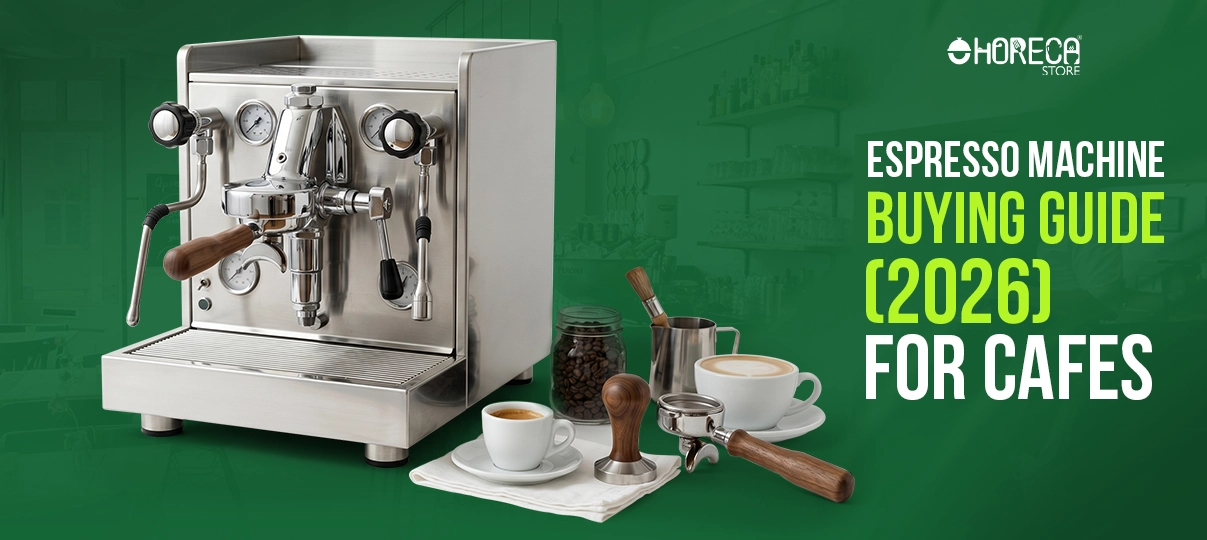
If you are tired of spending your hard-earned money on daily café runs, you are likely contemplating bringing the coffee shop experience right into your kitchen. The year 2026 has brought incredible advancements to home brewing technology, making it easier—yet somehow more overwhelming—to find the perfect machine. Whether you want a quick morning caffeine fix or dream of pouring intricate latte art, navigating the market requires a solid understanding of what makes a great brewer tick.
Welcome to your ultimate cafe espresso machine buying guide. In this comprehensive walkthrough, we will strip away the confusing marketing jargon and focus on the features that actually dictate the quality of your morning cup. Our goal is to help you sift through the noise, evaluate the best espresso machines on the market, and build a home setup that fits your lifestyle, budget, and taste perfectly.
Let's dive into the fascinating, caffeinated world of home espresso.
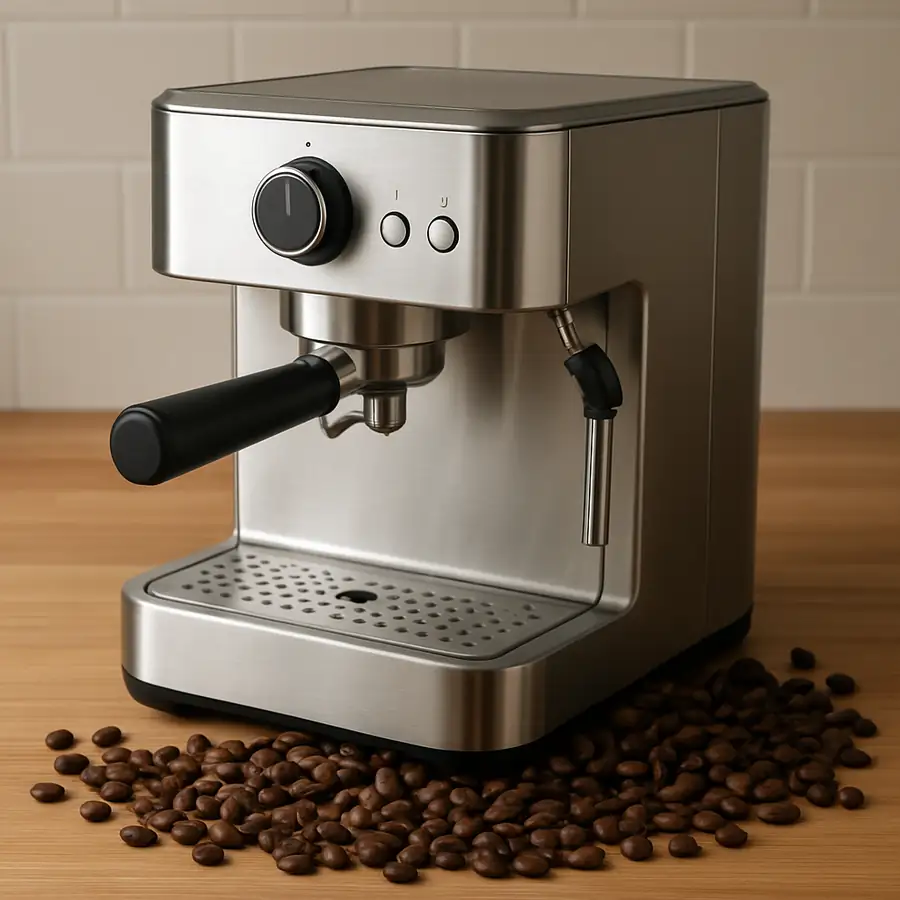
The Foundation: How to Choose a Home Espresso Maker
Before you start looking at price tags and shiny chrome finishes, you need to define your relationship with coffee. Are you a hobbyist looking for a new morning ritual, or do you just want a consistently good cup of coffee at the push of a button? Understanding how to choose a home espresso maker begins with identifying your preferred level of involvement.
The Great Debate: Manual vs Automatic Espresso Machines
The first major fork in the road is deciding how much physical control you want over the brewing process.
- Manual Espresso Machines: Often featuring a striking, lever-operated design, manual machines require you to generate the water pressure yourself. Pulling down the lever forces water through the coffee puck. The manual vs automatic espresso machines debate often centers on control versus consistency. Manual machines offer an intimate, hands-on experience and the ability to pressure-profile your shot in real-time. However, they possess a steep learning curve and require physical effort.
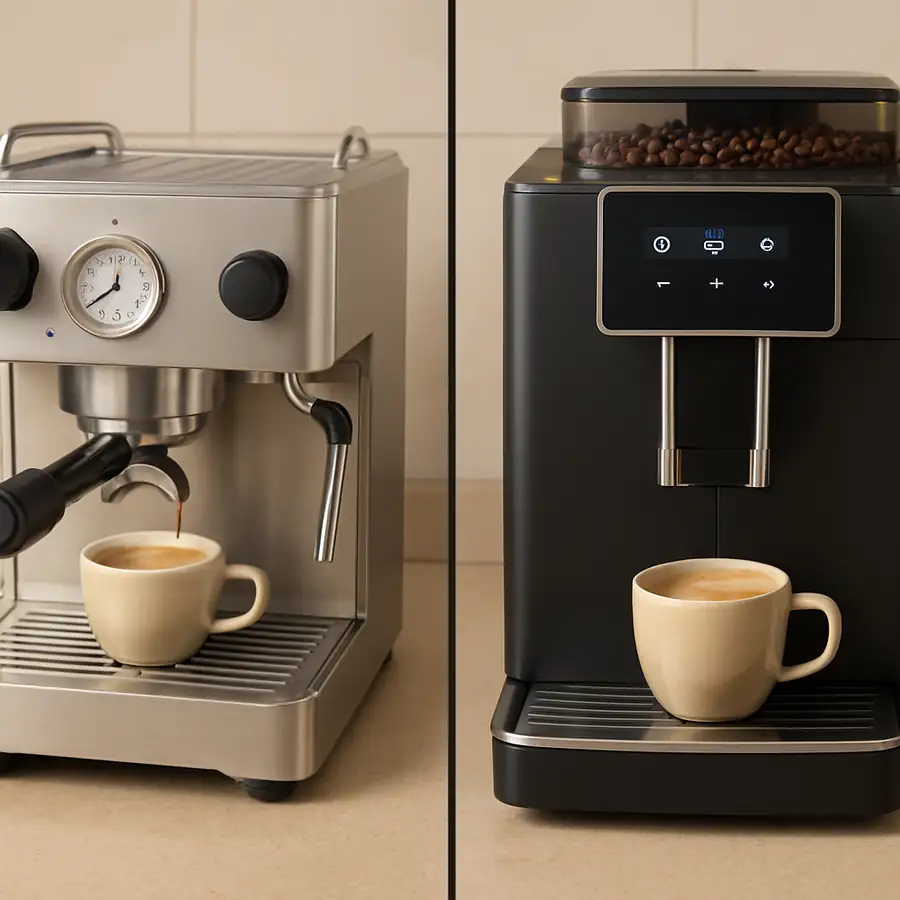
- Automatic Espresso Machines: These machines utilize an internal electric pump to generate the necessary pressure. They handle the heavy lifting, delivering a consistent flow of water. For 95% of home brewers, an automatic or semi-automatic machine is the better choice for daily use.
Semi-Automatic Espresso Machines These are the standard machines you see in specialty coffee shops, scaled down for home use.
- How they work: You grind the beans, dose the coffee into the portafilter, tamp it down, lock it into the machine, and press a button to start and stop the water flow.
- Pros: Complete control over grind size, dose, and extraction time. They generally produce a vastly superior, authentic café-quality shot. They are also easier and cheaper to repair.
- Cons: You need a separate grinder, and there is a definite learning curve.
Super-Automatic Espresso Machines These are the "bean-to-cup" wonders designed for ultimate convenience.
- How they work: You load whole beans into a hopper and press a button. The machine automatically grinds, doses, tamps, extracts, and often even froths the milk for you.
- Pros: Unbeatable convenience. Anyone in the household can operate it without training. Minimal cleanup.
- Cons: You sacrifice ultimate flavor control. The built-in grinders are rarely as precise as standalone units, and the internal brewing mechanisms are complex, making them prone to expensive repairs.
Decoding the Engine: Specs You Cannot Ignore
Once you know the type of machine you want, it is time to look under the hood. The best espresso machines are defined by their internal components. Do not let shiny exteriors distract you from these critical specifications.
Understanding Bar Pressure in Extraction
If you have read any entry-level espresso machine reviews, you have probably seen bold claims like "15-Bar Pump!" or even "20-Bar High Pressure!" as major selling points. This is largely marketing fluff.
Understanding bar pressure in extraction is crucial for avoiding bad purchases. "Bar" is a metric unit of pressure. To brew true espresso, water needs to be pushed through the compacted coffee grounds at exactly 9 bars of pressure (roughly 130 pounds per square inch).
- Why do machines advertise 15 bars? Cheaper machines use vibratory pumps that start at 15 bars because they lack internal pressure-regulating valves (OPVs). They rely on the resistance of the coffee puck to bring the pressure down.
- The Pro Standard: High-end machines might feature robust rotary pumps, but they are internally regulated to deliver exactly 9 bars to the grouphead. Pushing water at 15 bars of pressure will actually channel through the coffee, leading to harsh, over-extracted flavors. Always look for machines that state they extract at an industry-standard 9 bars.
Boiler Battles: Dual Boiler vs Heat Exchanger Systems
The component that heats your water is the beating heart of your espresso machine. If you enjoy milk-based drinks like lattes and cappuccinos, you need to pay close attention to the boiler configuration.
Single Boilers / Thermoblocks Entry-level machines usually have one heating element. It must heat water to about 200°F (93°C) for brewing, and then heat up further to 212°F (100°C) to create steam. You cannot brew and steam at the same time, and waiting for the temperature to shift can be frustrating.
Heat Exchanger (HX) Systems In a heat exchanger setup, a single large boiler is kept at steaming temperature. A hollow tube (the heat exchanger) runs directly through this hot boiler. When you brew, fresh water is pumped through this tube, flash-heating it to the perfect brewing temperature on its way to the coffee.
- The Verdict: The dual boiler vs heat exchanger systems debate heavily favors HX machines for mid-tier budgets. They allow you to brew espresso and steam milk simultaneously without the massive price tag of a dual boiler. However, they sometimes require a "cooling flush" (running a bit of water before brewing) to stabilize the temperature.
Dual Boiler Systems As the name implies, these machines feature two completely independent boilers: one dedicated solely to brewing espresso, and one dedicated solely to steaming milk.
- The Verdict: This is the gold standard. It offers unmatched temperature stability and allows for simultaneous brewing and steaming.
The Magic of Consistency: PID Temperature Control Benefits
Coffee is incredibly sensitive to temperature. A shift of just two degrees Fahrenheit can be the difference between a sweet, balanced shot and an unpleasantly sour or bitter one.
Older or cheaper machines use simple mechanical thermostats. These have wide "deadbands," meaning the water temperature might fluctuate by up to 10 degrees before the heating element turns back on.
Enter the PID (Proportional-Integral-Derivative) controller. A PID is a highly advanced digital thermostat that uses complex algorithms to pulse heat to the boiler, keeping the water temperature stable to within a fraction of a degree.
The primary PID temperature control benefits include:
- Consistency: Every shot you pull will be extracted at the exact same temperature.
- Adjustability: Light roast coffees often require higher brewing temperatures (around 203°F/95°C) to extract properly, while dark roasts taste better at cooler temperatures (around 195°F/90°C). A PID allows you to change the boiler temperature digitally to match your beans perfectly.
Portafilter Sizes and Basket Types
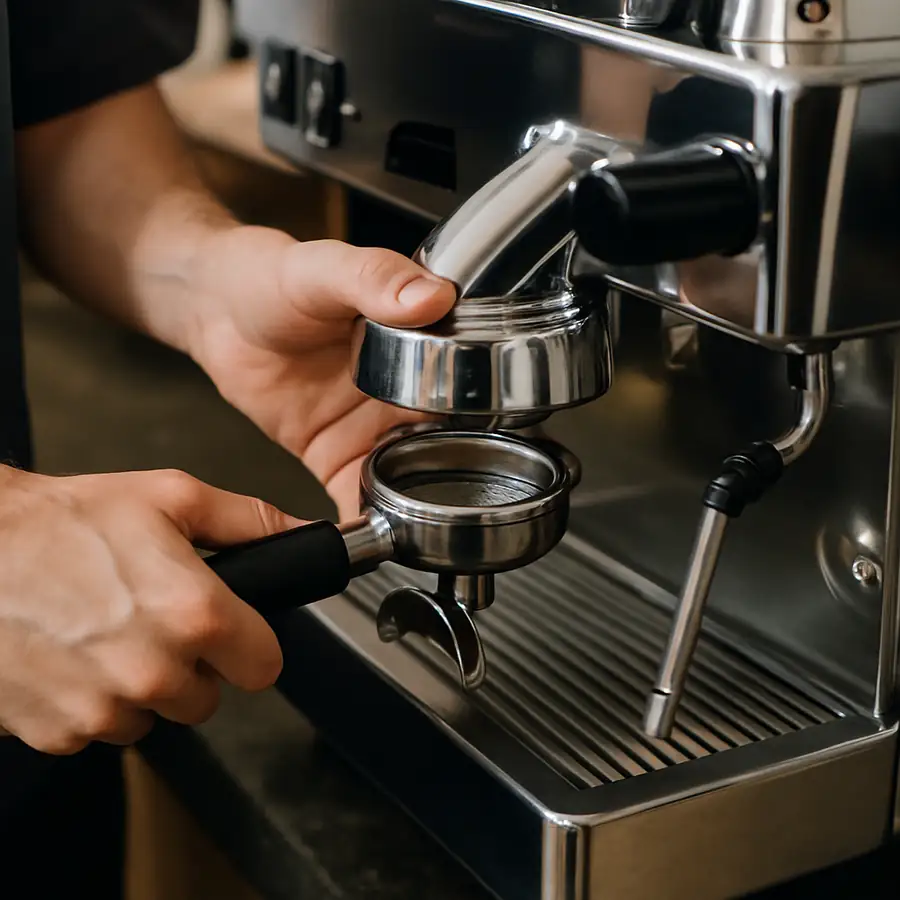
The portafilter is the handle that holds the coffee grounds. While it seems like a minor detail, portafilter sizes and basket types heavily dictate the ceiling of your espresso quality.
- Size Matters: The commercial standard for specialty coffee is 58mm. Many entry-level machines use 54mm or 51mm portafilters. While you can make great coffee with a 54mm portafilter, a 58mm size offers a wider, thinner puck, which promotes more even water distribution. Furthermore, buying aftermarket accessories (like precision tampers, distribution tools, and custom baskets) is incredibly easy for 58mm setups.
- Pressurized vs. Non-Pressurized Baskets: Entry-level machines often come with pressurized (or dual-wall) baskets. These feature a false bottom with a single tiny hole, forcing pressure to build up regardless of how poorly the coffee is ground. They are great for beginners using pre-ground store-bought coffee. However, for true, velvety espresso, you must transition to a non-pressurized (single-wall) basket. This requires a high-quality grinder, but it allows the coffee itself to create the necessary resistance, unlocking infinitely better flavor and mouthfeel.
Crafting Your Setup: From Novice to Prosumer
With the technical jargon out of the way, it is time to map these features onto your lifestyle and budget.
Building an Entry Level Espresso Setup for Beginners
If you are just starting, you do not need to drop $3,000 to get a great cup of coffee. An ideal entry level espresso setup for beginners focuses on learning the fundamentals without fighting the equipment.
Look for a high-quality single-boiler machine with a PID. Brands like Breville, Gaggia, and Lelit offer exceptional entry-level models. Your initial budget should be split almost evenly between the espresso machine and your coffee grinder. A common rookie mistake is spending $800 on a shiny machine and $50 on a cheap blade grinder. (More on grinders in a moment).
A Beginner's Checklist:
- A reliable single boiler or thermoblock espresso machine.
- An espresso-capable flat or conical burr grinder.
- A digital scale that measures to 0.1 grams (crucial for measuring your dose and yield).
- A sturdy metal tamper.
Compact Espresso Machines for Small Kitchens
Not everyone has the luxury of dedicating a massive amount of counter space to a coffee station. Fortunately, the market for compact espresso machines for small kitchens has exploded.
Manufacturers are utilizing advanced, rapid-heating thermocoil technologies to shrink the footprint of their machines significantly. You can now find high-performing, PID-controlled machines that are less than six inches wide. When shopping for a compact machine, prioritize front-loading water tanks and drip trays to minimize the need to move the machine around under low cabinets.
Is a Prosumer Espresso Machine Worth It?
At the other end of the spectrum is the "prosumer" (professional + consumer) market. These machines bridge the gap between commercial café equipment and home appliances. They typically feature heavy E61 groupheads (the large, exposed chrome brewing groups that circulate hot water to maintain temperature), rotary pumps, dual boilers, and the option to plumb the machine directly into your home’s water line.
So, is a prosumer espresso machine worth it?
Yes, if:
- You entertain often and need to pull 5-10 back-to-back shots and steam multiple milk pitchers without the machine breaking a sweat.
- You are a passionate hobbyist who views espresso-making as an art form and wants zero limitations on extraction variables.
- You value build quality and want a machine crafted from commercial-grade brass, copper, and steel that will easily outlive a standard household appliance.
No, if:
- You only drink one small coffee a day and prioritize a fast 3-minute morning routine (prosumer machines can take 20 to 30 minutes to fully heat up).
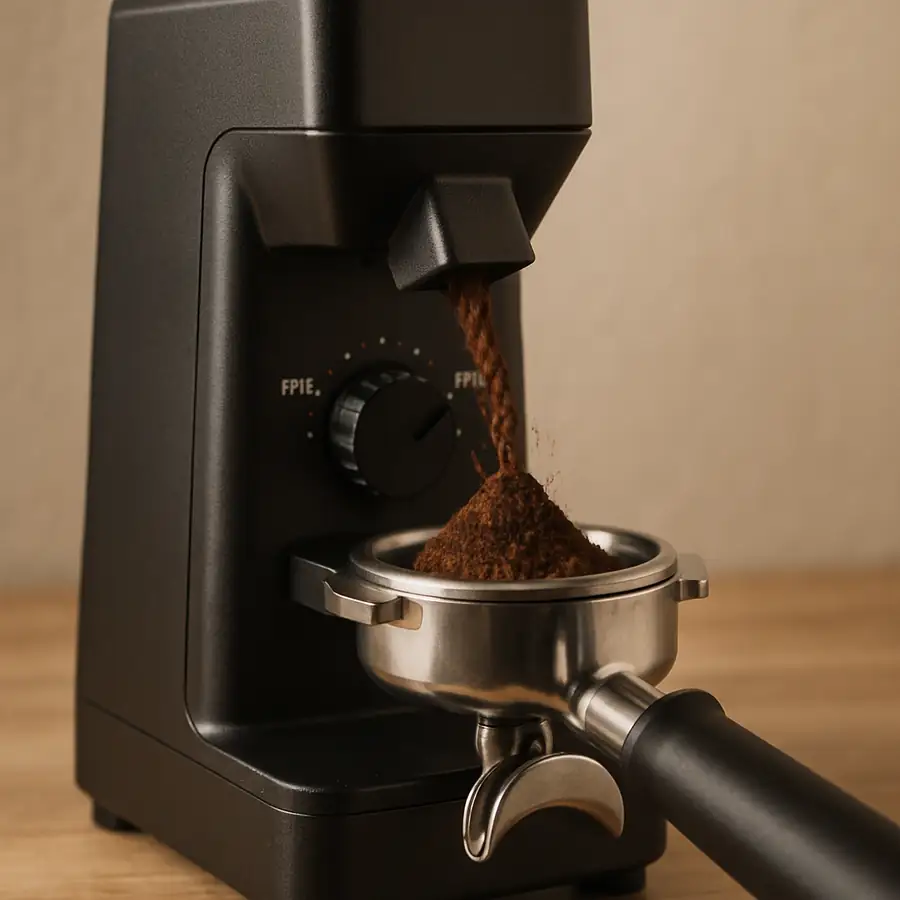
The Secret Weapon: High Quality Burr Grinder Pairing
We cannot stress this enough: Your espresso machine is only as good as your grinder. You can buy a world-class, $5,000 dual-boiler machine, but if you feed it unevenly ground coffee, you will get terrible espresso.
Espresso extraction relies on creating uniform resistance against 9 bars of water pressure. If your grinder produces a mix of boulders and fine dust, the water will find the path of least resistance (channeling), resulting in a shot that is simultaneously bitter and sour.
Securing a high quality burr grinder pairing is your absolute top priority.
What to look for in an espresso grinder:
- Burrs over Blades: Never use a blade grinder for espresso. You need conical or flat burrs made of hardened steel or ceramic that crush the beans into uniform particles.
- Micro-Adjustments or Stepless: Espresso dialing-in requires microscopic changes to the grind size. Stepless grinders allow for infinite adjustments, rather than locking you into preset "clicks" that might be too large of a jump between settings.
- Low Retention: You want a grinder that doesn't trap stale coffee inside the chute, ensuring every shot you pull uses fresh coffee.
The Art of the Brew: Mastering Your Workflow
Once your gear is unboxed and set up on the counter, the real fun begins. Buying the equipment is only step one; mastering the technique is where the magic happens.
Perfecting Espresso Extraction Time
Making great espresso is essentially a physics experiment, governed by three variables: Dose (amount of dry coffee), Yield (amount of liquid espresso), and Time.
The industry standard starting point is a 1:2 ratio. If you put 18 grams of ground coffee into your portafilter, you want to extract 36 grams of liquid espresso.
Perfecting espresso extraction time means hitting that 36-gram target in approximately 25 to 30 seconds from the moment the pump turns on.
- If you hit 36 grams in 15 seconds, your grind is too coarse (water is flowing too fast). You need to grind finer.
- If it takes 45 seconds to get 36 grams, your grind is too fine (the water is struggling to push through). You need to grind coarser.
Using a precise digital scale under your cup while brewing is the only way to accurately measure these variables. Do not rely on volumetric buttons; rely on weight and time.
Troubleshooting Bitter Espresso Shots
Even with great equipment, you will occasionally pull a bad shot. Knowing how to diagnose the flavor profile will save you immense frustration.
One of the most common complaints among home baristas is bitterness. Troubleshooting bitter espresso shots usually boils down to a concept called "over-extraction." Over-extraction occurs when the water dissolves too many of the less desirable, harsh organic compounds from the coffee beans.
How to fix a bitter shot:
- Grind slightly coarser: If your shot is taking 35+ seconds, the water is spending too much time in contact with the coffee. Coarsening the grind will speed up the flow rate and reduce contact time.
- Decrease your yield: If you are pulling a 1:2.5 ratio (e.g., 18g in, 45g out), you might be pushing too much water through the puck. Cut the shot off earlier, aiming for a tighter 1:2 ratio to leave the bitter compounds behind.
- Lower the temperature: As mentioned in our PID section, water that is too hot (above 203°F/95°C) will hyper-extract the dark, bitter notes, especially in medium or dark roast coffees. Drop your PID temperature down a degree or two.
(Note: If your espresso tastes aggressively sour, sharp, or salty, that is under-extraction. Do the exact opposite: grind finer, increase your yield slightly, or bump up the temperature).
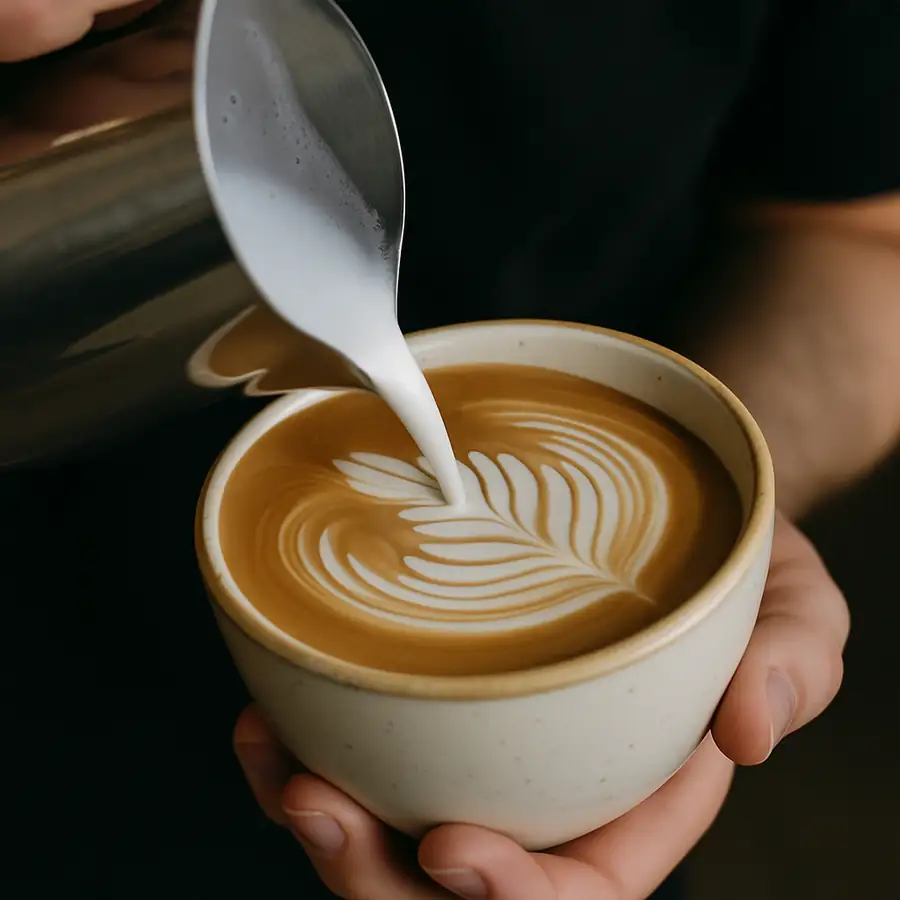
Milk Frothing Techniques for Latte Art
If your goal is to recreate café-style flat whites, cappuccinos, or lattes, mastering the steam wand is essential. Creating the velvety "microfoam" required for latte art is a two-step process: Aeration and Incorporation.
Effective milk frothing techniques for latte art:
- The Aeration Phase (Stretching): Submerge the very tip of the steam wand just below the surface of cold milk. Turn the steam on full blast. You should hear a gentle, rhythmic "paper-tearing" sound. This is the sound of air being injected into the milk to create foam. Do this for only a few seconds until the milk is roughly the temperature of your hand.
- The Incorporation Phase (Rolling): Once you have added enough air, submerge the wand slightly deeper and tilt the pitcher to create a fast-spinning whirlpool. This whirlpool breaks down the large bubbles and folds the foam into the liquid milk, creating a uniform, glossy texture that looks like wet paint. Keep spinning until the pitcher is almost too hot to touch (around 140°F to 150°F).
- The Pour: Tap the pitcher on the counter to pop any remaining large bubbles, swirl it to keep it unified, and pour immediately into your espresso.
Protect Your Investment: Care and Maintenance
Espresso machines deal with heat, pressure, and hard water. If neglected, they will fail. Protecting your investment requires routine maintenance.
Descaling Espresso Machine Maintenance Guide
The silent killer of all coffee equipment is limescale buildup. As water is heated inside the boiler, minerals (specifically calcium and magnesium) precipitate out and attach themselves to the heating elements, pipes, and valves. Over time, scale will restrict water flow, ruin temperature stability, and ultimately destroy the boiler.
Implementing a strict descaling espresso machine maintenance guide will add years to your machine's lifespan.
Step-by-Step Maintenance Protocol:
Water Quality is King: The best way to deal with scale is to prevent it. Never use highly hard tap water. Opt for filtered water, or use specialized espresso water softening pouches that sit inside your machine's reservoir.
Daily Maintenance: After your brewing session, wipe down the steam wand immediately with a damp cloth and "purge" it by blasting steam for one second to blow out residual milk. Run a "blank shot" (water through the portafilter with no coffee) to rinse coffee oils off the grouphead shower screen.
Chemical Backflushing (Every 2-4 weeks): If you have a machine with a 3-way solenoid valve (most semi-automatics do), you need to backflush. Put a "blind" basket (a basket with no holes) into your portafilter, add a specialized espresso machine detergent (like Cafiza), lock it in, and run the pump. The pressure will force the soapy water backward through the internal brewing valves, stripping away rancid coffee oils.
Descaling (Every 2-6 months): Depending on your water hardness, you will need to run a dedicated descaling acid through the machine's water path. Follow the manufacturer's specific instructions for descaling, as the process differs heavily between thermoblocks, single boilers, and dual boilers. Pro Tip: Never use plain white vinegar; it leaves a lingering taste and is not strong enough to break down heavy scale. Always use a commercial espresso machine descaler.
Making Sense of the Market
When you start browsing online, you will inevitably be flooded with espresso machine reviews. To navigate these effectively, keep your personal needs front and center.
When reading reviews, watch out for the following:
- Beware of "Crema Enhancers": Many entry-level machine reviews praise the thick "crema" the machine produces. Often, this is just aerated coffee created by a pressurized basket, not true espresso crema (which is a natural emulsion of coffee oils and CO2 created by 9 bars of pressure).
- Look for Longevity Comments: A machine might make great coffee on day one, but how does it perform in year three? Prioritize reviews that mention long-term reliability, the availability of replacement parts, and the quality of the manufacturer's customer service.
- Assess the Workflow: Does the reviewer mention that the drip tray is annoyingly small? Is the water tank difficult to reach? These minor workflow annoyances compound when you use the machine 365 days a year.
It is easy to get caught up in "upgradeitis"—the constant desire to buy slightly better gear. However, the secret to the best espresso machines isn't necessarily the highest price tag; it's the machine that flawlessly aligns with your daily routine and skill level.
Buy Commercial Espresso Machines from The Horeca Store
Choosing the right espresso machine is essential for serving consistently high-quality coffee and creating an exceptional customer experience. The Horeca Store offers a premium selection of commercial espresso machines for cafés, coffee shops, restaurants, hotels, and bakeries. Whether you're opening a new café or upgrading your existing coffee setup, you'll find reliable machines with advanced brewing technology, excellent temperature control, and the capacity to handle busy service hours.
At The Horeca Store, we stock commercial espresso machines from trusted brands to suit businesses of every size and budget. From compact single-group models to high-capacity multi-group machines, our range is designed to meet the needs of professional baristas and growing coffee businesses. With competitive pricing, expert product guidance, and dependable customer support, The Horeca Store is your trusted destination for investing in commercial espresso equipment that delivers outstanding performance and long-term value.
Final Thoughts: Welcome to the Home Café
Investing in a home espresso setup is one of the most rewarding culinary journeys you can embark upon. It transforms your morning from a groggy rush to the drive-thru into an intentional, aromatic ritual.
By understanding the key differences between machine types, prioritizing stable extraction pressures and temperatures, investing heavily in a capable burr grinder, and committing to proper maintenance, you are setting yourself up for decades of extraordinary coffee.
Remember that creating perfect espresso takes patience. Do not get discouraged if your first few shots are less than stellar or if your initial latte art looks more like a white blob than a delicate fern. Dialing in your coffee, mastering your portafilter and basket dynamics, and refining your milk frothing are all part of the beautiful learning curve.
Arm yourself with the knowledge from this guide, trust your palate, and enjoy the unparalleled satisfaction of pulling a rich, syrupy, café-quality espresso right in the comfort of your own home. Happy brewing!