
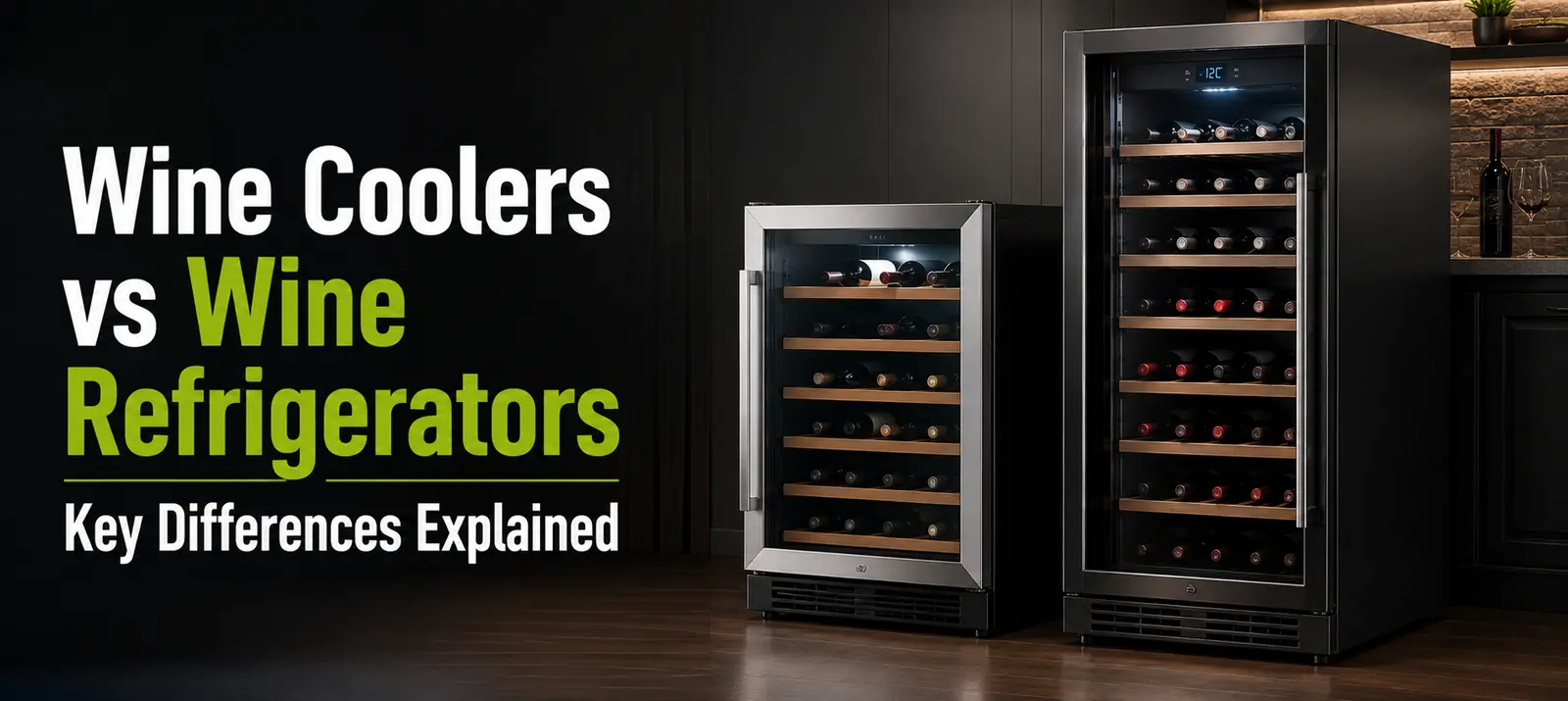
Whether you are a casual enthusiast who enjoys a crisp Sauvignon Blanc on a warm weekend or a dedicated oenophile carefully curating a vertical tasting of prestigious Bordeaux, proper wine storage is the undisputed foundation of your wine journey. As your collection grows beyond a handful of bottles resting on the kitchen counter, you will inevitably face a critical decision: How do you best protect your liquid investments? The terminology in the appliance market can be dizzying.
You will hear phrases tossed around interchangeably-wine coolers, wine refrigerators, and wine cellars. But are they all the same thing? Simply put, no. Understanding the nuanced differences between a wine cooler and a wine refrigerator is essential for ensuring that every bottle you open tastes exactly as the winemaker intended. In this comprehensive guide, we will explore the precise distinctions between these appliances, dive deep into the science of wine preservation, and help you choose the ideal solution for your unique collection.
The Philosophy of Preservation: Maturation vs Kitchen Refrigeration
To understand why specialized appliances are necessary, we must first understand the nature of wine itself. Wine is a living, breathing, and constantly evolving beverage. It contains complex chemical compounds-phenols, tannins, esters, and acids-that interact with each other and with minute amounts of oxygen over time. When stored correctly, these compounds weave together, softening harsh tannins and developing complex secondary and tertiary aromas. Many beginners make the mistake of storing their expensive bottles in a standard kitchen fridge.
However, there is a massive difference between proper wine maturation vs kitchen refrigeration. A standard kitchen refrigerator is designed to drop temperatures rapidly to around 35°F to 38°F to keep perishable food safe. This extreme cold stunts the wine's development, essentially putting the chemical aging process into a state of suspended animation. Furthermore, kitchen fridges intentionally strip moisture from the air to prevent frost buildup. For a bottle of wine, this dry environment is catastrophic, as it quickly dries out the cork, allowing destructive amounts of oxygen to seep into the bottle.
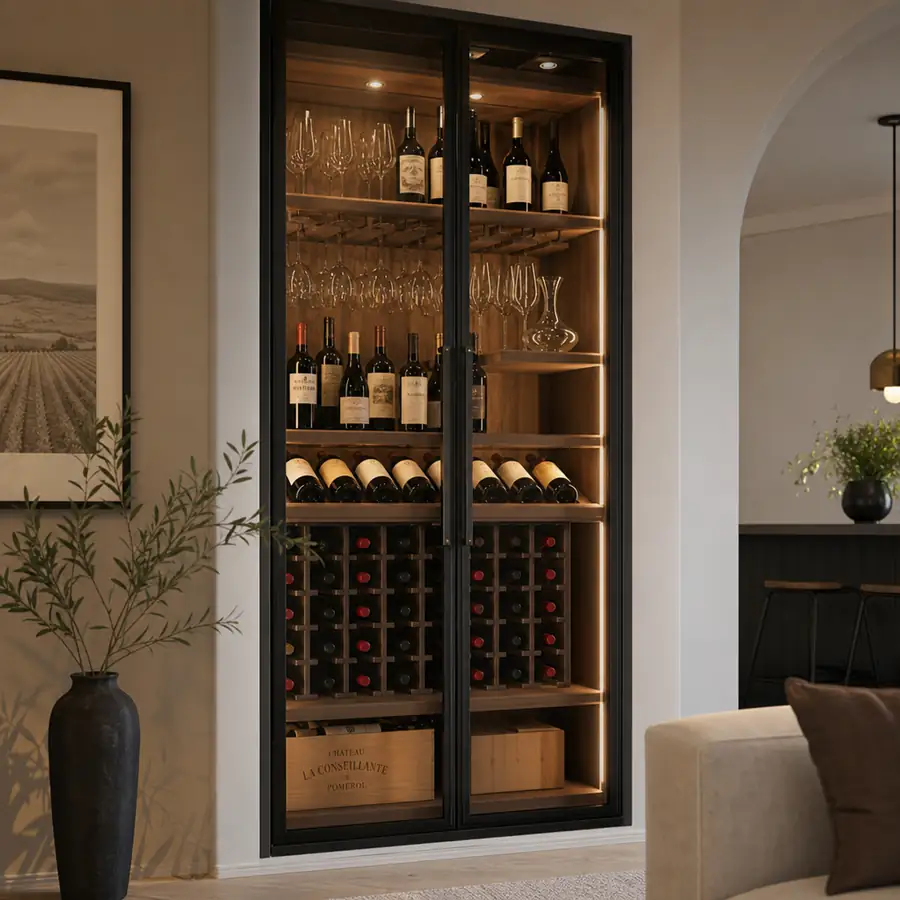
Proper wine storage requires an environment that mimics the historic subterranean caves of Europe: cool, humid, dark, and still. Replicating this in a modern home requires specialized equipment.
What is a Wine Cooler?
When industry professionals use the term "wine cooler," they are generally referring to appliances or devices designed for short-term storage and serving preparation rather than long-term aging. The primary goal of a wine cooler is to bring your wine to its optimal drinking temperature just before you pop the cork.
Characteristics of Wine Coolers
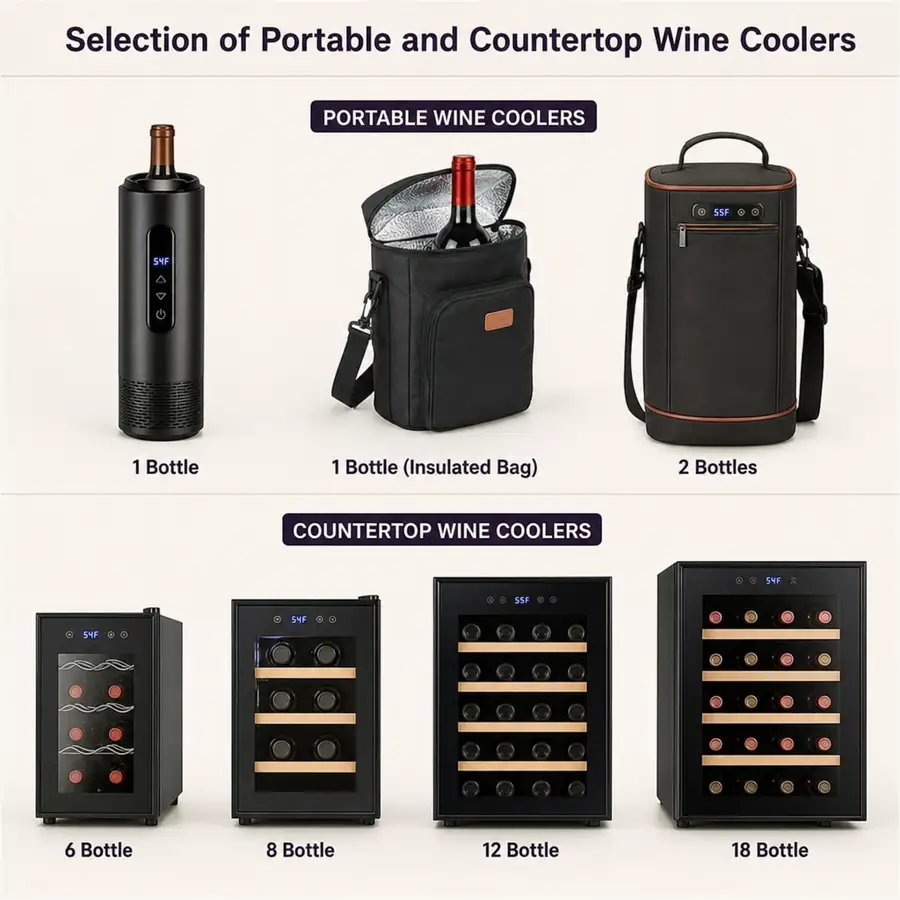
Wine coolers are typically smaller, lighter, and often more affordable than full-scale refrigerators. They are built to hold anywhere from a single bottle up to about two dozen bottles. Because they are designed for short-term staging, they often lack the robust humidity controls and heavy-duty insulation found in larger units. The category of wine coolers is surprisingly broad:
- The Single-Bottle Wine Chiller: This is a countertop device designed to rapidly cool a single bottle of room-temperature wine down to serving temperature within minutes.
- The Portable Wine Cooler: Ideal for picnics, boat trips, or outdoor dining, a portable wine cooler might be an insulated tote or a battery-operated mini-unit that keeps pre-chilled bottles cold while you travel.
- Traditional Clay Wine Coolers: Believe it or not, natural terra cotta clay wine coolers remain incredibly popular for table service. By soaking the clay in cold water before placing a bottle inside, the clay utilizes the science of evaporative cooling to keep the wine pleasantly chilled throughout a meal without the need for electricity or messy ice buckets. In the realm of electric home appliances, a standard wine cooler will keep your everyday drinking wines perfectly chilled, but it is not the fortress you want for a Grand Cru Burgundy you plan to open in twenty years.
What is a Wine Refrigerator?
If a wine cooler is a staging area, a wine refrigerator is a specialized vault. A wine refrigerator (often referred to casually as a wine fridge) is a robust appliance engineered specifically to replicate cellar conditions for the long-term aging and maturation of fine wine.
Characteristics of Wine Refrigerators
Wine refrigerators are built with sophisticated environmental management systems. They feature thicker insulation, specialized compressors, and advanced thermostats. They range in size from under-counter models holding 40 bottles to massive, freestanding units capable of housing hundreds of bottles. When you step up to the highest echelon of this category, you encounter the wine cabinet. A wine cabinet is essentially a luxury wine refrigerator that heavily prioritizes both aesthetics and museum-grade preservation, often featuring solid wood racking, advanced carbon air filtration, and strict hygrometers for moisture control.
Contrast this with a standard beverage cooler, which is designed with glass shelves and aggressive cooling meant for sodas and beers; a beverage cooler is entirely unsuitable for fine wine due to its wildly fluctuating temperatures and harsh vibrations.
Wine Coolers vs. Wine Refrigerators: The Core Differences
To make an informed purchasing decision, it is crucial to examine the specific scientific parameters that separate a basic cooler from a premium refrigerator. The differences boil down to how each appliance manages temperature, humidity, light, and vibration.
1. Temperature Control and Stability
Temperature is the most critical factor in wine storage. Heat is the ultimate enemy of wine, accelerating the aging process to a harmful degree. If you have ever encountered a bottle with a slightly sticky neck, a cork pushing past the foil, or a flat, stewed fruit flavor, you are witnessing the classic signs of heat damaged wine.
- Wine Coolers: Generally offer a broader temperature range, often skewing colder (down to 40°F) to accommodate crisp white wines and sparkling wines meant for immediate consumption. They may experience slight temperature fluctuations as their cooling cycles turn on and off.
- Wine Refrigerators: Are strictly calibrated to maintain the ideal red wine aging temperature, which sits universally at exactly 55°F (13°C). While whites and reds are served at different temperatures, all wines-red, white, and sparkling-should be aged long-term at 55°F. A high-quality wine refrigerator will hold this temperature with less than a one-degree variance, providing the absolute stability required for graceful maturation.
2. The Engine: Thermoelectric vs Compressor Cooling Units
The mechanism used to generate cold air is a defining difference between coolers and refrigerators. When comparing thermoelectric vs compressor cooling units, it is important to know that many small, budget-friendly wine coolers utilize thermoelectric technology. Thermoelectric units use an electrical current passed through two distinct pieces of metal to create a heat flux. They are incredibly quiet, energy-efficient, and free of moving parts. However, they are weak. A thermoelectric cooler can only drop the internal temperature about 20 degrees below the ambient room temperature.
If your house gets hot in the summer, a thermoelectric cooler will fail to keep your wine safe. Conversely, true wine refrigerators almost exclusively use compressor cooling units. Similar to a standard kitchen fridge, these use a chemical refrigerant to reliably drop and hold temperatures regardless of how hot the ambient room gets. They are more powerful, recover their internal temperature faster after the door is opened, and are essential for large-capacity storage.
3. Humidity Management
As previously mentioned, corks require moisture to maintain their structural integrity. If a cork dries out, it shrinks, allowing oxygen to rush in and oxidize the wine.
- Wine Coolers: Rarely feature humidity controls. Because they are meant for bottles that will be opened within a few weeks or months, ambient humidity is generally sufficient.
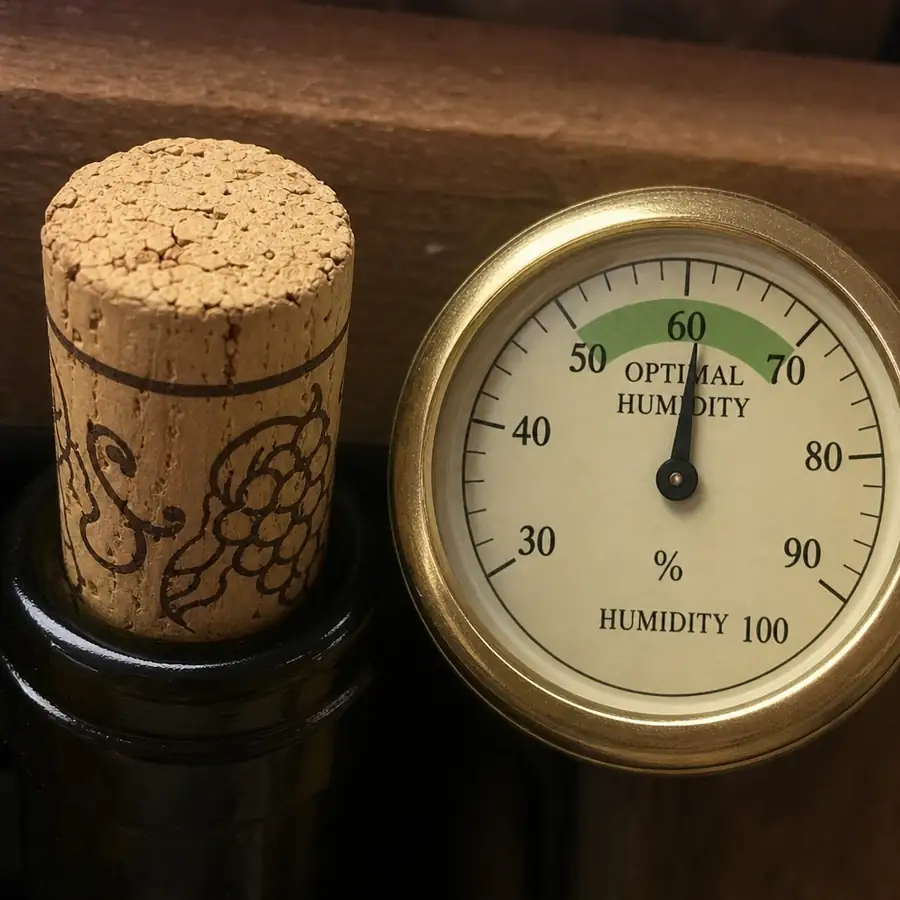
- Wine Refrigerators: Are designed to maintain the optimal cork preservation humidity, which ranges between 50% and 80%, with 70% being the widely accepted sweet spot. Premium wine refrigerators often feature internal moisture reservoirs or evaporative systems to ensure the air never dries out. However, if humidity rises above 80%, you risk the humidity impact on label mold. While mold on a label does not damage the wine inside the bottle, it ruins the aesthetic and resale value of a collectible vintage.
4. Vibration and Light Protection
Long-term aging is a delicate chemical ballet. Kinetic energy and ultraviolet radiation can disrupt this process terribly. Frequent tremors agitate the wine, accelerating chemical reactions and preventing tartaric acid and organic matter from settling. The vibration effect on wine sediment is a major concern for older vintages; if the sediment cannot settle gently at the bottom of the bottle, the wine will taste gritty and astringent when poured. Wine refrigerators utilize rubber-mounted compressors and specialized shock-absorbing wooden racks to neutralize vibrations, whereas cheaper wine coolers with wire racks and standard compressors will actively shake your wine.
Light is equally destructive. Ultraviolet light penetrates clear and green glass, reacting with amino acids in the wine to create foul-smelling sulfur compounds-a flaw known as "light strike." Protecting bottles from UV light is paramount. While a standard cooler might feature clear glass to show off the labels, a premium wine refrigerator will feature heavily tinted, dual-pane, UV-resistant glass, or a solid, opaque door to keep the interior in near-total darkness.
Zoning Capabilities: Dual-Zone vs Single-Zone Cooling
As you browse the market, you will frequently encounter the debate of dual-zone vs single-zone cooling. This refers to how many distinct temperature compartments the appliance has. A single-zone unit maintains one consistent temperature throughout the entire cabinet. If your primary goal is long-term aging, a single-zone unit set to 55°F is the perfect, most efficient choice. However, if you are looking for an appliance that bridges the gap between aging and serving, dual zone wine coolers are the ultimate luxury.
These appliances feature an insulated divider and independent thermostats. You can set the bottom zone to 55°F for aging your heavy Cabernet Sauvignons, and set the top zone to a brisk 45°F to keep your Chardonnays and Champagnes perfectly chilled and ready for impromptu entertaining. For the avid host, dual-zone units represent the best of both worlds.
Advanced Storage Techniques and Orientation
Owning the right equipment is only half the battle; knowing how to load and manage it is the other half. The debate over horizontal vs vertical bottle orientation has been settled by centuries of winemaking tradition. Wine sealed with a natural cork must always be stored horizontally. Laying the bottle on its side ensures that the liquid remains in constant physical contact with the cork. This prevents the cork from drying out, shrinking, and allowing oxidation.
Vertical storage should be strictly reserved for bottles sealed with screw caps, glass Vinoloks, or synthetic plastic corks, which do not rely on moisture for their seal. The only exception for natural corks is during the week leading up to opening an exceptionally old, sediment-heavy wine; standing it upright temporarily allows the sediment to slide to the bottom for easier decanting. Special care must also be taken with sparkling wines.
When maturing vintage champagne conditions must be absolutely flawless. Vintage Champagne represents a massive financial investment and is highly sensitive to temperature spikes. While non-vintage Champagne is ready to drink upon release, vintage Champagne can age beautifully for decades. Store these horizontally in the darkest, coolest, least-disturbed section of your wine refrigerator, ensuring the temperature never strays from that golden 55°F mark.
Managing the Aftermath: Preserving Opened Wine
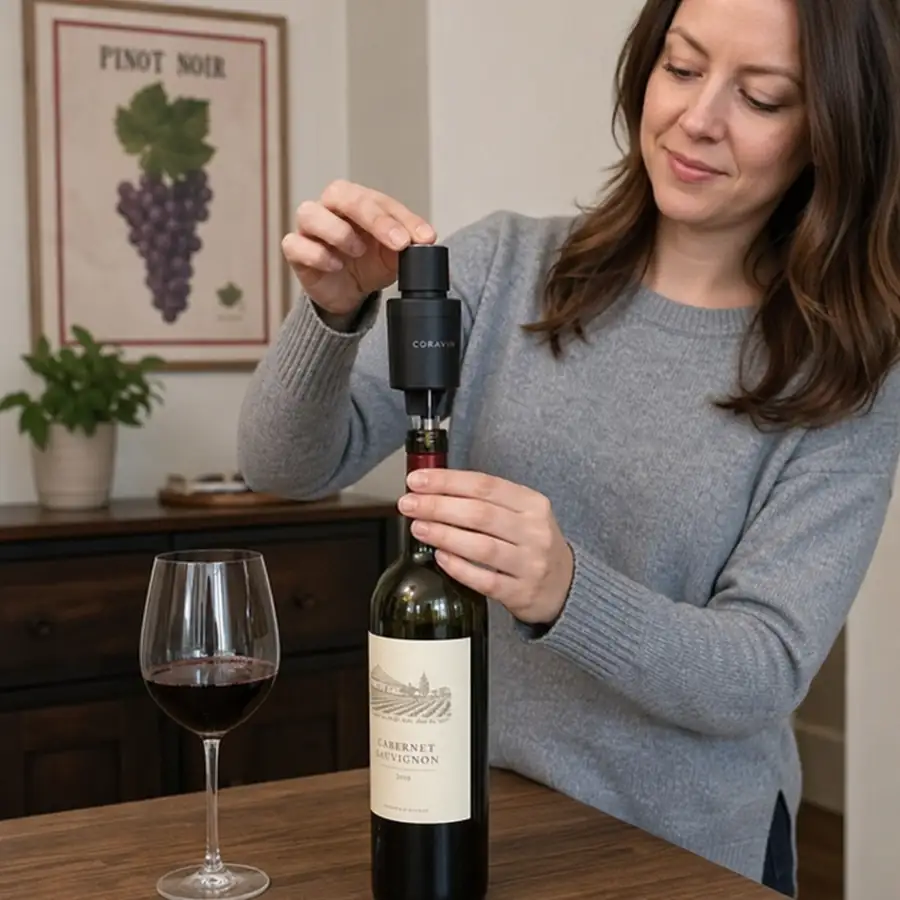
Even the most dedicated wine lover cannot always finish a bottle in one sitting. Once the cork is pulled, the clock starts ticking. Oxygen, which in microscopic doses helps a wine age over decades, becomes a destructive force when introduced in large quantities. Preventing oxidation after uncorking is a crucial skill. When you leave a bottle open on the counter, the wine reacts with the oxygen to create acetaldehyde, transforming bright fruit flavors into flat, bruised apple, and nutty notes.
Eventually, acetic acid bacteria will turn the wine into vinegar. To master how to preserve opened wine, you must minimize its exposure to air and heat.
- Recork and Refrigerate: The simplest method is to recork the bottle tightly and place it in your standard kitchen fridge. The intense cold of the kitchen fridge-which is terrible for aging-is actually perfect for slowing down the rapid oxidation of an opened bottle. Just remember to let a red wine warm up slightly before drinking it the next day.
- Vacuum Pumps: These affordable hand-pumps extract the ambient air out of the half-empty bottle and seal it with a specialized rubber stopper, adding a few extra days of life to the wine.
- Inert Gas Systems: For premium bottles, utilizing a preservation system that sprays heavier-than-air argon gas into the bottle will create a protective blanket over the liquid's surface, shielding it from oxygen completely.
Alternative Solutions and Large-Scale Storage
What happens when your collection outgrows your appliances? Or what if you are just starting out and cannot yet invest in a large appliance? If you are currently keeping wine fresh without cellar access or a dedicated fridge, your best temporary solution is an interior closet. Choose a closet located in the center of your home, far away from exterior walls, heat vents, ovens, and washing machines. Keep the bottles in cardboard boxes resting on the floor, as heat rises.
While this is not an ideal long-term solution, it will protect everyday drinking wines from light and extreme temperature swings. On the other end of the spectrum, true collectors will eventually look into building climate controlled cellar spaces. Transforming a basement into a dedicated wine cellar requires professional vapor barriers, specialized high-grade insulation, and commercial cooling units designed specifically for wine rooms. While building a cellar is a significant architectural undertaking and financial investment, it provides the ultimate environment for thousands of bottles to age undisturbed for generations.
Navigating the Market: Brands, Reviews, and Expert Tips
When you are finally ready to purchase an appliance, navigating the sea of manufacturers can be intimidating. This is where researching wine cooler reviews becomes invaluable. Reading reviews from verified purchasers and professional sommeliers will give you insight into the longevity of the compressor, the true noise level of the unit, and the reliability of the customer service. When searching for the best wine coolers and refrigerators, you will encounter a wide spectrum of brands catering to different aesthetics and needs.
High-end appliance manufacturers like EuroCave and Liebherr are the gold standard for museum-quality aging. For modern kitchens, zephyr wine coolers offer incredibly sleek, contemporary designs with seamless stainless steel finishes, flush installations, and highly precise dual-zone temperature management. On the more casual, entertainment-focused side of the market, you might find novelty and branded items. For instance, individuals outfitting a personalized home bar, a billiards room, or a man cave often seek out specific branded appliances to match their decor.
Items like jack daniels wine coolers (often searched online simply as jack daniel wine coolers) serve as fantastic conversational pieces. While a heavily branded appliance might lean more toward the beverage cooler category rather than a fine-wine aging vault, they are phenomenally fun and effective options for keeping your everyday party wines, mixers, and beers chilled for guests.
Essential Wine Cooler Tips for Buyers
To ensure you make the right choice, keep these final wine cooler tips in mind before swiping your credit card:
- Calculate True Capacity: Manufacturers calculate bottle capacity using standard, slender Bordeaux-style bottles. If you drink a lot of Pinot Noir, Chardonnay, or Champagne-which come in wider, sloping Burgundy-style bottles-you will not be able to fit as many bottles in the unit. Always buy a fridge with a stated capacity at least 20% larger than what you currently own to allow room for larger bottles and future purchases.
- Check the Shelving: Look for smooth-gliding racks on ball-bearing tracks. Cheap wire racks can scratch your labels and make accessing bottles in the back incredibly frustrating. Wood-fronted metal racks or solid beechwood racks are ideal for vibration absorption and aesthetic appeal.
- Consider Placement: If you want to build the unit into your kitchen cabinetry under a counter, you must purchase a front-venting unit. Buying a freestanding unit (which vents from the back) and shoving it into a tight cabinet space will cause the compressor to overheat, catastrophically burning out the appliance within a few months.
Complete Your Hospitality Setup with The Horeca Store
Wine storage is only one part of creating an efficient hospitality operation. Restaurants, bars, cafés, and hotels also need dependable supplies for serving drinks and takeaway orders. The Horeca Store offers a wide selection of foodservice essentials, including disposable cups, takeaway cups, food containers, disposable cutlery, napkins, and other catering supplies.
Whether you're setting up a wine-focused restaurant, upgrading your bar, or running a busy hospitality business, the right equipment and reliable supplies can help improve service and efficiency. Explore The Horeca Store for quality hospitality and foodservice products designed to support your everyday business needs..
Conclusion
The journey of wine appreciation is immensely rewarding, but it requires a commitment to proper care. Understanding the distinct roles of these appliances is the first step in safeguarding your collection. To summarize the core takeaway: a wine cooler is your go-to appliance for short-term convenience, bringing your daily drinkers and party wines down to crisp, refreshing serving temperatures. In contrast, a robust wine refrigerator is an essential investment for long-term maturation, providing the stable 55°F temperature, ideal humidity, and protective darkness required to let fine wines evolve into their most complex, beautiful forms.
Whether you are placing a terra cotta chiller on your patio table, installing a sleek dual-zone unit under your kitchen counter, or drafting blueprints for a subterranean cellar, giving your wine the environment it deserves guarantees that every time you pull a cork, you will be met with excellence. Take the time to assess your collection, evaluate your drinking habits, and choose the storage solution that best supports your passion for the vine.