
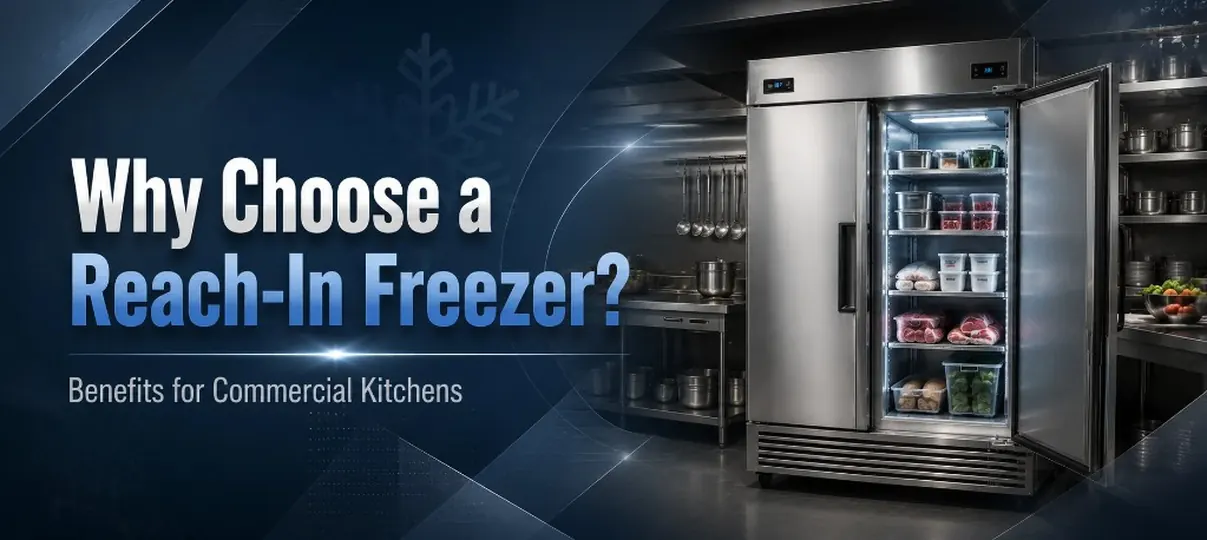
Why choose a reach-in freezer for a commercial kitchen
A reach-in freezer for a commercial kitchen is worth choosing when teams need fast frozen access near the cookline.
A reach-in freezer gives a commercial kitchen fast, organized access to frozen ingredients without sending staff away from the cookline or prep area. For restaurants, cafés, bakeries, hotels, bars, and catering operations, it can be one of the most practical pieces of commercial refrigeration because it supports daily kitchen workflow, preserves frozen food storage, and fits into tighter spaces than many larger systems.
Choosing the right commercial kitchen freezer is not only about holding temperature. It is about matching freezer capacity, door style, shelving, footprint, energy efficiency, and maintenance needs to the way your team actually works.
Why choose a reach-in freezer for a commercial kitchen?
A reach-in freezer for commercial kitchen use is worth choosing when your team needs dependable frozen storage close to prep stations, cooking equipment, or service areas. Unlike a walk-in unit, a reach-in freezer is designed for frequent, quick access, making it especially useful for high-demand items such as proteins, fries, desserts, baked goods, sauces, and frozen mise en place.
The biggest reach-in freezer benefits come from convenience and control. Staff can open one door, grab what they need, and return to the line with minimal interruption. That helps reduce unnecessary movement, supports better portion control, and keeps frozen inventory more visible than when it is buried in deep storage.
A commercial reach-in freezer is also flexible. It can act as the main restaurant freezer in a smaller operation or as a secondary food storage freezer in a larger kitchen that already has a walk-in. For many operators, this balance of access, organization, and footprint is the reason a reach-in model becomes essential restaurant refrigeration equipment rather than just an add-on.
The role of frozen storage in daily kitchen workflow
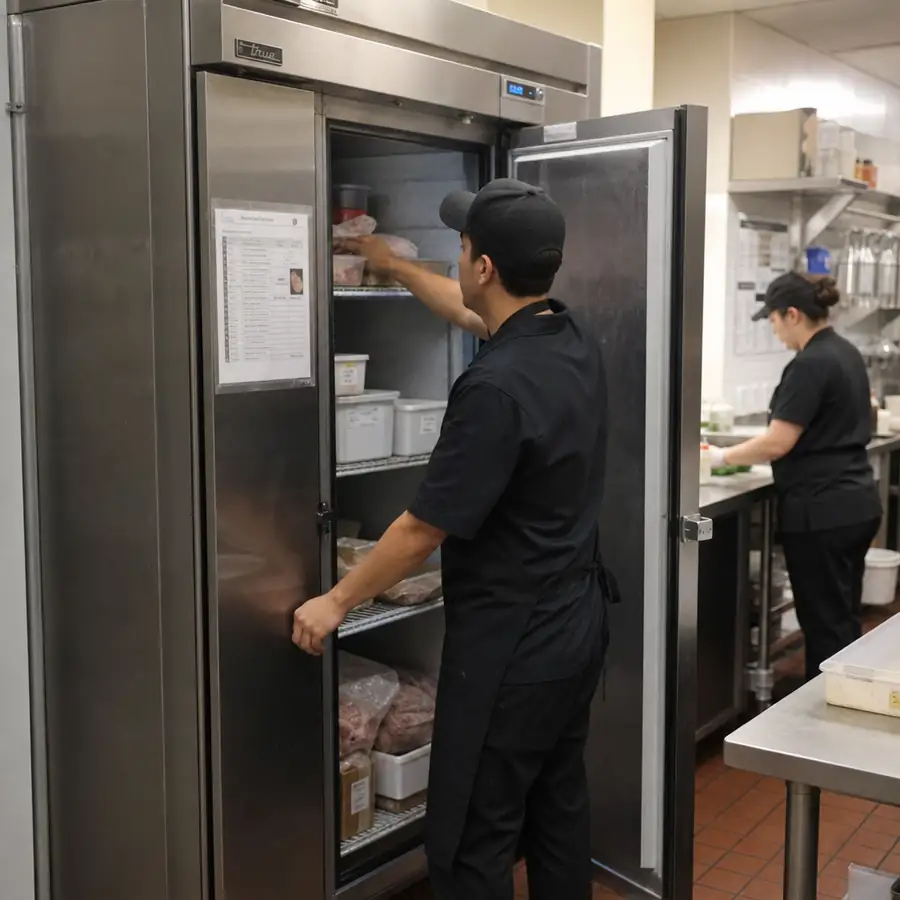
The role of frozen storage in daily kitchen workflow is to keep high-use items close without slowing service.
Commercial kitchen storage works best when ingredients are placed where they are used. A reach-in freezer supports that principle by keeping frozen products near the stations that need them most. A fry station might rely on frozen sides, a pastry area may need frozen dough or desserts, and a prep team may need quick access to batch-prepared ingredients.
This is where a professional freezer differs from a basic domestic appliance. A commercial freezer is designed for foodservice environments where doors open often, products rotate quickly, and temperature control must remain consistent throughout long service periods. The refrigeration system, cabinet construction, hinges, gaskets, and shelving are all part of that daily performance.
Good placement also reduces friction. If staff have to cross the kitchen every time they need frozen product, the delay adds up. A reach-in freezer for restaurant use can shorten those trips, improve station readiness, and help teams stay focused during busy periods.
Reach-in vs walk-in freezer: which makes more sense?
The reach-in vs walk-in freezer decision depends on volume, footprint, and how often staff need quick access.
The reach-in vs walk-in freezer decision depends on volume, space, menu style, and access patterns. A walk-in is usually better for bulk back-of-house storage, while a reach-in freezer is better for quick access to smaller quantities during prep and service.
A walk-in can hold more cases and large-format inventory, but it requires dedicated space and may be located away from the cookline. A reach-in unit, by contrast, can be positioned where frozen ingredients are needed throughout the day. Many commercial kitchens use both: the walk-in for bulk storage and the reach-in for active production.
When comparing commercial refrigeration options, resources such as The Horeca Store can be useful for reviewing different types of restaurant equipment and understanding how reach-in freezers, reach-in coolers, and other kitchen refrigeration categories fit into a broader layout plan.
Consider a reach-in freezer when:
- You need frozen items close to prep, cooking, or plating stations.
- Your kitchen has limited space for a walk-in freezer.
- Your menu uses moderate amounts of frozen product daily.
- Staff need quick visual access to organized inventory.
- You want supplemental storage alongside an existing walk-in.
Consider a walk-in freezer when:
- You buy frozen inventory in large case quantities.
- You need bulk storage away from the production line.
- Your operation has the space and infrastructure for a larger system.
- You want to centralize frozen stock for multiple departments.
Door configuration affects speed, visibility, and storage
Door configuration affects speed, visibility, and storage for a commercial reach-in freezer lineup.
One of the most important choices in a commercial freezer buying guide is door configuration. The right layout depends on how much product you store, how often staff open the cabinet, and how much floor or wall space is available.
Single door reach-in freezer
A single door reach-in freezer works well for compact stations with moderate frozen inventory.
A single door reach-in freezer is a good fit for smaller kitchens, cafés, food trucks with appropriate space, concession areas, or stations that need focused frozen storage. It offers a compact footprint while still giving staff vertical storage space and adjustable shelving. If your frozen menu is limited but important, a single-door model may be enough.
The main advantage is placement flexibility. A single-door unit can often fit near a prep table, cooking line, or service counter without taking over the room. The tradeoff is freezer capacity, so operators should think carefully about delivery schedules, inventory turnover, and peak service needs.
Two door reach-in freezer
A two door reach-in freezer balances capacity and access for most restaurant freezer needs.
A two door reach-in freezer provides more storage while remaining easier to access than a walk-in for day-to-day use. It is common in restaurants, bakeries, institutional kitchens, and catering operations that need to organize frozen products by category. One section might hold proteins while the other holds prepared items, desserts, or sides.
The broader cabinet can improve organization, but it also requires more wall space. Before choosing a two-door model, measure the path for delivery, the final location, and the door swing clearance. A freezer that looks right on paper can create workflow problems if staff cannot pass comfortably when the doors are open.
Three door reach-in freezer
A three door reach-in freezer supports higher volume when space still cannot fit a walk-in freezer.
A three door reach-in freezer is suited to operations with higher frozen storage needs but still a strong need for direct access. It can support larger menus, multiple stations, or high-volume prep environments. The extra width allows more product separation, which can make inventory easier to rotate and monitor.
However, bigger is not automatically better. A large cabinet can increase total cost of ownership if it is underused, poorly placed, or harder to maintain. Choose this size when your actual frozen inventory and service demands justify the space.
Solid door, glass door, and reach-in fridge comparisons
Solid door, glass door, and reach-in fridge comparisons help kitchens separate freezer and refrigerator roles.
Door style changes how staff interact with the unit. A solid door freezer is often selected for back-of-house storage because it can help reduce light exposure and visual clutter while providing a durable workhorse feel. Solid doors are common in busy kitchens where staff already know what is inside because the unit is labeled and organized.
A glass door freezer can be useful when visibility matters. Staff can see product before opening the door, which may reduce unnecessary door openings when inventory is well organized. Glass doors are also common in merchandising or front-adjacent settings, though the right choice depends on the environment and the intended use.
It is also helpful to compare a reach-in freezer with a reach-in fridge or reach-in cooler. All three support commercial kitchen storage, but they serve different temperature needs. A reach-in cooler or fridge holds refrigerated ingredients, while a reach-in freezer keeps frozen foods at the required frozen storage condition. In many kitchens, these units work side by side to support prep flow from cold storage to cooking.
What should you look for in a commercial reach-in freezer?
Look for capacity, temperature recovery, shelving, and footprint when choosing a commercial reach-in freezer.
Look for a commercial reach-in freezer that fits your menu, space, access needs, and maintenance capacity. The best choice is not simply the largest or most expensive model; it is the unit that supports safe storage, efficient movement, practical organization, and manageable long-term operation.
A strong buying checklist should include:
- Freezer capacity: Estimate your frozen inventory by daypart, delivery cycle, and peak demand. Leave enough room for airflow rather than filling every inch.
- Temperature control: Choose equipment intended for commercial foodservice use, with controls that make monitoring practical for staff.
- Adjustable shelving: Shelves should accommodate different pan sizes, boxes, containers, and product categories without forcing awkward stacking.
- Cabinet material: Stainless steel is common in foodservice equipment because it is durable, cleanable, and suitable for demanding kitchen environments.
- Door gasket condition: The door gasket helps maintain the seal. A worn or dirty gasket can make the refrigeration system work harder.
- Compressor location: Top-mounted and bottom-mounted designs can affect cleaning, heat exposure, and service access depending on your kitchen layout.
- Door swing and clearance: Confirm that doors can open fully without blocking aisles, prep tables, cooking equipment, or emergency paths.
- Energy efficiency: Consider how insulation, door habits, cabinet size, and maintenance affect ongoing operating costs.
- Cleaning access: Staff should be able to clean around the unit and follow freezer maintenance routines without disrupting service.
- Inventory visibility: Labels, shelf spacing, and product zones can matter as much as the cabinet itself.
When building a shortlist, it can help to review reach-in freezer categories alongside other restaurant equipment through a resource such as The Horeca Store, especially if you are comparing storage, refrigeration, and prep needs together rather than buying one item in isolation.
Size and layout should follow the menu
Size and layout should follow the menu so frozen food storage matches real prep and cookline demand.
A common mistake is choosing a freezer based only on available space. Space matters, but the menu should lead the decision. A restaurant with a scratch-made menu and limited frozen product may need less freezer capacity than a fast-casual operation with frozen sides, desserts, and high-volume prepared items.
Start with your actual product list. Group frozen ingredients by category, then estimate how much you need between deliveries. Include seasonal menu changes, catering spikes, and backup inventory, but avoid oversizing so much that products sit too long or become difficult to rotate.
Placement is just as important. A reach-in freezer near the line may hold service-ready items, while a second unit in prep may store batch ingredients. If the cabinet supports the way staff move, it becomes part of the kitchen workflow rather than an obstacle in the room.
Organization turns storage into performance
Organization turns storage into performance when a commercial freezer keeps labeled pans easy to find.
Even the right commercial kitchen freezer can underperform operationally if it is disorganized. Poor organization leads to longer door openings, misplaced inventory, over-ordering, and unnecessary waste. A well-planned cabinet helps staff find items quickly and return to work.
Use simple zones. Proteins, vegetables, fries, desserts, bakery items, and prepared batches should have assigned areas. Add labels that are easy to read, and avoid stacking products so tightly that air cannot circulate.
Practical organization habits include:
- Store fast-moving items at easy reach height.
- Keep heavier products lower to reduce lifting strain.
- Use date labels to support rotation.
- Avoid blocking internal airflow.
- Train staff to close doors promptly.
- Review inventory before ordering more frozen product.
These habits do not require complicated systems. They simply turn commercial freezer storage into a visible, repeatable process that supports consistency.
Maintenance protects performance and ownership cost
Maintenance protects performance and ownership cost for commercial refrigeration that runs all day.
Freezer maintenance is not glamorous, but it directly affects performance and total cost of ownership. A reach-in freezer that is cleaned, inspected, and used properly is more likely to maintain stable operation than one with blocked vents, damaged gaskets, dirty coils, or overloaded shelves.
Daily habits matter. Staff should wipe spills quickly, check that doors close fully, and avoid leaving doors open while searching for product. Managers should also watch for frost buildup, unusual noises, temperature changes, or damaged shelving.
A basic maintenance rhythm may include:
- Checking door gasket cleanliness and seal quality.
- Keeping air vents clear inside the cabinet.
- Cleaning exterior surfaces as part of kitchen sanitation routines.
- Monitoring temperature control readings according to your food safety procedures.
- Scheduling qualified service when performance issues appear.
- Training staff not to overload shelves or block airflow.
These steps help protect the refrigeration system from unnecessary strain. They also support food quality by keeping frozen items in the right storage environment.
Brand examples are only one part of the decision
Brand examples such as True Refrigeration, Beverage-Air, Turbo Air, and Atosa are only one part of the buying decision.
Operators often encounter manufacturer names such as True, Beverage-Air, Turbo Air, Traulsen, Arctic Air, Atosa, and Continental Refrigerator while researching restaurant refrigeration equipment. These can be useful examples of the kinds of brands available in the commercial refrigeration market, but the name on the cabinet should not replace a careful fit assessment.
Instead of asking which brand is automatically best, ask which unit matches your space, capacity, access pattern, cleaning routine, and budget expectations. Review specifications, cabinet dimensions, shelving, door configuration, and service considerations. A model that works well in one kitchen may be wrong for another if the workflow, volume, or layout is different.
This is especially true when comparing a single door reach-in freezer, two door reach-in freezer, and three door reach-in freezer. The right answer comes from usage, not assumptions.
A practical buying mindset for commercial kitchens
A practical buying mindset for commercial kitchens compares reach-in freezer benefits against walk-in cooler plans.
A reach-in freezer is a long-term operational choice. Before buying, step back and look at the full role it will play in your kitchen refrigeration plan. Will it support prep, service, backup storage, desserts, proteins, or all of the above? Will staff access it constantly, or only a few times per shift?
Use this quick decision framework:
- Map the workflow: Identify where frozen ingredients are used most often.
- Measure carefully: Include width, depth, height, ventilation space, and door swing.
- Match capacity to turnover: Choose storage that fits delivery cycles and menu volume.
- Plan the interior: Confirm that shelving supports your containers and product sizes.
- Think about access: Decide whether solid doors or glass doors make more sense.
- Consider operating cost: Factor in energy efficiency, maintenance, and right-sizing.
- Coordinate equipment: Make sure the freezer works with your reach-in fridge, prep tables, cooking line, and other commercial kitchen storage.
For kitchens comparing commercial freezer options with broader foodservice equipment needs, The Horeca Store can serve as a convenient research and sourcing reference while you evaluate how refrigeration fits with the rest of the operation.
The takeaway
The takeaway: choose a reach-in freezer when quick access and compact commercial freezer storage matter most.
A reach-in freezer is a practical choice for commercial kitchens that need frozen ingredients close, organized, and ready during daily service. It can function as a primary restaurant freezer in smaller spaces or as supplemental commercial freezer storage alongside a walk-in.
The best unit is the one that fits your menu, layout, staff habits, freezer capacity needs, and maintenance plan. When chosen thoughtfully, a reach-in freezer for restaurant use does more than hold frozen food; it supports smoother service, cleaner organization, and a more efficient kitchen from prep through closing.
Operators planning cold storage often also review a reach-in freezer, commercial freezer options, a walk-in freezer, a walk-in cooler, a reach-in refrigerator, a commercial refrigerator, refrigeration, a prep table, an ice machine, True Refrigeration, Beverage-Air, Turbo Air, Atosa, restaurant equipment, hotel supplies, smallwares, tableware, choosing the right commercial freezer for restaurants guidance, how to choose the right walk-in freezer tips, walk-in cooler vs reach-in refrigerator comparisons, benefits of beverage-air reach-in refrigerators, and restaurant equipment financing.