
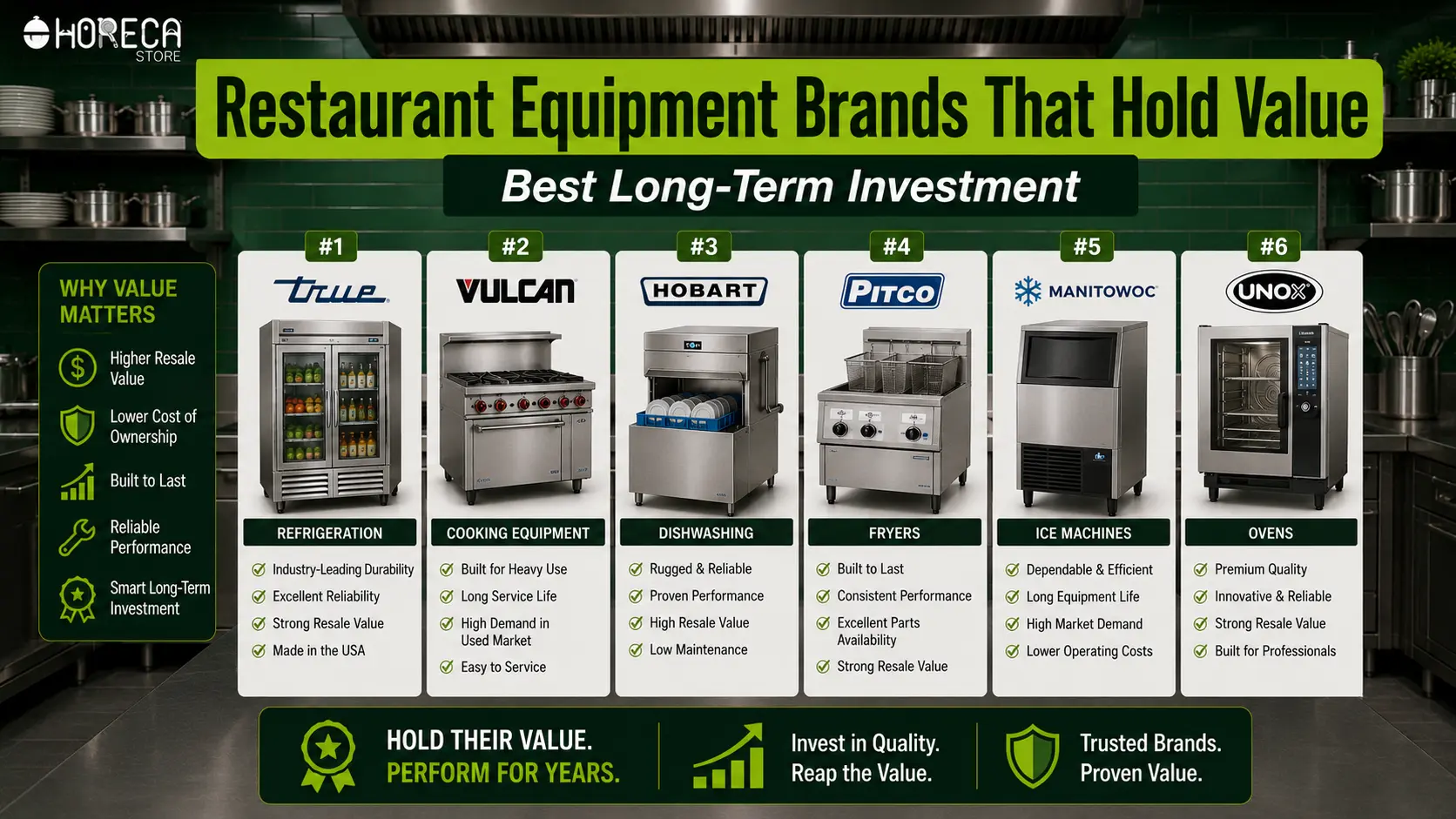
Opening a restaurant or upgrading an existing commercial kitchen requires a massive capital investment. From heavy-duty ranges to walk-in coolers, the machinery you choose is the beating heart of your daily operations. But as any seasoned restaurateur knows, not all kitchen gear is created equal. When it comes time to upgrade, downsize, or pivot your menu, you will inevitably face a critical question: Which restaurant equipment brands hold their value best over time?
Investing in the right kitchen equipment brands upfront can save you thousands of dollars in the long run. While budget-friendly options might look tempting on a spreadsheet, they often plummet in resale value the moment they are uncrated. Conversely, premium brands retain a significant portion of their original worth, acting as a financial safety net for your business.
In this comprehensive guide, we will explore the best commercial restaurant equipment brands, examine commercial depreciation rates, and provide actionable tips on how to maximize your return on investment (ROI) in the secondary market.
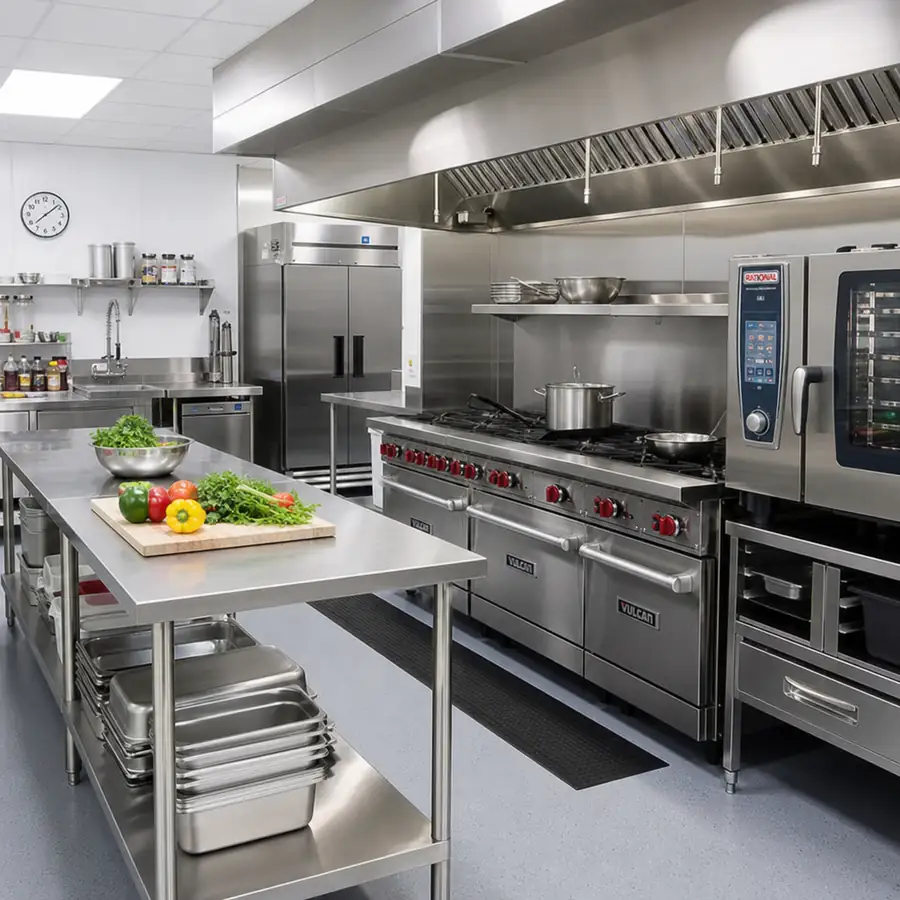
The Economics of Kitchen Gear: Depreciation and ROI
Before diving into specific foodservice equipment brands, it is vital to understand the financial lifecycle of commercial kitchen gear. Just like driving a new car off the lot, buying brand-new kitchen equipment comes with immediate depreciation.
Understanding Commercial Kitchen Equipment Depreciation Rates
Generally, standard restaurant equipment brands lose about 20% to 30% of their value in the first year of use. By year three, many budget brands have depreciated by up to 60%. However, this rule does not apply uniformly across the board. The best brands for restaurant equipment plateau in depreciation much earlier. A high-end brand might drop 20% initially but then hold steady at 50% to 60% of its retail value for the next decade, provided it is well-maintained.
Highest ROI Restaurant Appliances
When assessing ROI, you are looking at the balance between upfront cost, daily operational efficiency, maintenance expenses, and eventual resale value. The highest ROI restaurant appliances are typically the "heavy metal" workhorses: gas ranges, planetary mixers, and high-capacity fryers. Because these items rely on robust mechanical engineering rather than highly sensitive (and quickly outdated) digital electronics, their secondary market demand remains fiercely competitive.
Top Restaurant Equipment Brands for Unbeatable Resale Value
When navigating the vast sea of restaurant supply brands, a few legendary names consistently rise to the top. Used equipment dealers and auction houses actively seek out these commercial kitchen brands because they know they will sell quickly and for a premium.
1. Food Prep Equipment: The Kings of the Kitchen
When it comes to food prep equipment, durability is everything. These machines face relentless daily abuse, from churning thick doughs to pulverizing tough ingredients.
- Hobart: If there is a gold standard in the foodservice industry, it is Hobart. The Hobart mixer resale value is legendary. A well-maintained Hobart Legacy or Classic 20-quart mixer can often be sold for 60% to 75% of its original purchase price, even after a decade of use. Their heavy-duty gear-driven transmissions are virtually indestructible, making them highly coveted by bakeries and pizzerias.
- Vitamix Commercial: In the beverage and blending space, the Vitamix commercial blender longevity is heavily documented. Unlike cheaper kitchen appliance brands whose motors burn out after a year of crushing ice, Vitamix machines (like The Quiet One or the Prep 3) feature thermally protected motors. Buyers in the used market will happily pay top dollar for a used Vitamix because they know the base will easily outlast multiple pitcher replacements.
2. Cooking and Heating: Built for the Blaze
Your hot line is the core of your restaurant. The best restaurant equipment brands in this category use high-grade cast iron and heavy-gauge stainless steel.
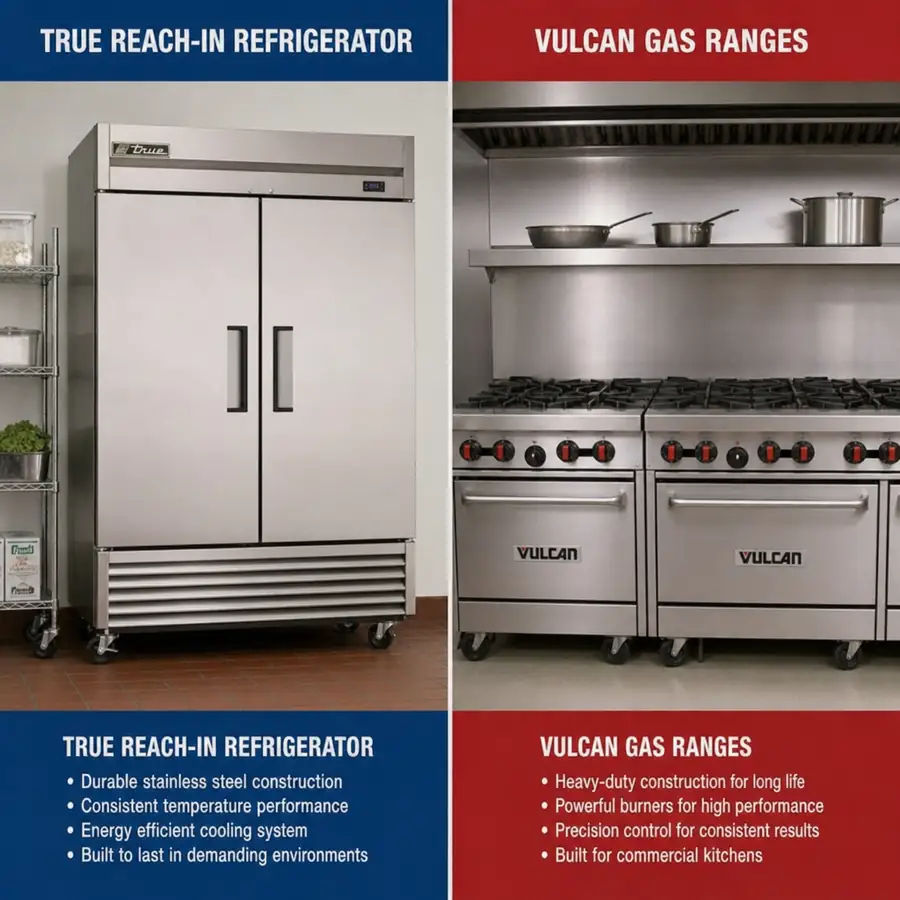
- Vulcan and Garland: These two titans of the industry are frequently compared. In the debate over Vulcan vs Garland range reliability, both come out as massive winners for value retention. Vulcan is often praised for its innovative burner designs and energy efficiency, while Garland is revered for its sheer, tank-like structural integrity. Used equipment buyers rarely hesitate to buy a 10-year-old Vulcan or Garland range because parts are universally available and any local technician can fix them.
- Rational: Combi ovens are massive investments, often costing tens of thousands of dollars. When looking at a Rational combi oven vs competitors, Rational dominates the resale market. Because a Rational oven can replace a convection oven, a steamer, a grill, and a fryer, a used unit is highly attractive to food trucks and small footprint kitchens. Their self-cleaning features and easily updatable software ensure they do not become quickly obsolete.
3. Commercial Refrigeration: Keeping Value Cold
Refrigeration is the most critical compliance and safety asset in your kitchen. Failure here means lost inventory and potential health code violations.
- True Refrigeration: When evaluating True Refrigeration vs Turbo Air durability, True consistently wins in long-term value retention. True manufactures many of its own parts in the USA, meaning replacement compressors, gaskets, and fan motors are cheap and incredibly easy to source. A used True double-door reach-in refrigerator will almost always fetch a higher price than imported competitors, making it one of the absolute top restaurant equipment brands for liquidating assets.
4. Ice Machines: The Unsung Heroes
Ice machines are notoriously finicky because they deal with constant moisture, mineral buildup, and continuous mechanical action.
- Hoshizaki and Manitowoc: These two companies manufacture the most durable commercial ice machines on the market. Hoshizaki, in particular, is famous for its stainless steel evaporators, which resist the flaking and pitting that destroy lesser brands. Because buyers of used ice machines are terrified of buying a "lemon," seeing the Hoshizaki or Manitowoc badge immediately provides peace of mind and drives up the asking price.
What Restaurant Equipment Has the Longest Lifespan?
If you are wondering what restaurant equipment has the longest lifespan, the answer usually points to equipment with minimal digital components and maximum structural metal.
- Heavy-Duty Gas Ranges: 15 to 25+ years.
- Planetary Mixers (e.g., Hobart): 20 to 30+ years.
- Stainless Steel Prep Tables: Virtually indefinite.
- Manual Slicers (e.g., Bizerba, Globe): 10 to 15+ years.
It is also worth noting the stainless steel equipment salvage value. Even if a premium stainless steel prep sink or worktable is damaged beyond repair for a high-end open kitchen, the raw material weight and scrap value of 304-grade stainless steel ensure it will never be completely worthless.
Furthermore, NSF certified equipment value retention is a crucial factor. The National Sanitation Foundation (NSF) sets strict standards for public health protection. Health inspectors look for the NSF mark. If you buy generic, uncertified equipment, secondary buyers will not touch it because they cannot legally use it in many municipalities. Always stick to NSF-certified catering equipment brands.
Navigating the Used Market: Trends and Assessments
The secondary market for kitchen gear is booming. Supply chain disruptions in recent years have shifted used restaurant equipment market trends, pushing buyers who traditionally bought new to seek out high-quality used gear to open their doors on time.
If you are looking to buy or sell, it is important to know how to navigate this landscape. When researching brands, restaurant equipment buyers are becoming much more educated.
How to Assess Used Commercial Kitchen Gear
Whether you are buying to save money or assessing your own gear before selling, you need a checklist:
- Check the Data Plate: Locate the manufacturer's plate. Note the model number, serial number, and manufacture date. This helps you determine exact age and verify if parts are still manufactured.
- Inspect the Compressors and Coils: For refrigeration, dirty coils indicate a lack of maintenance, which severely lowers value. A clean compressor suggests the unit wasn't overworked.
- Test the Moving Parts: Turn on mixers to listen for grinding gears. Ignite ranges to check for even, blue flames.
- Evaluate Gaskets and Seals: Brittle or torn door gaskets on ovens and fridges are cheap to replace but highly visible, making them an excellent bargaining chip.
- Look for the Certifications: Ensure the NSF and UL (Underwriters Laboratories) stickers are present and legible.
Utilizing Price Guides
To price your used gear competitively, you should consult refurbished restaurant equipment price guides. Websites like WebstaurantStore, local restaurant auction sites, and eBay's "Sold Items" filter can give you real-time data on what specific models are currently fetching. As a general rule of thumb, excellent condition gear from top kitchen equipment brands should be listed at 50% to 60% of current retail price.
How to Maximize Your Equipment's Resale Value
Even the most prestigious commercial kitchen brands will lose their value if they are treated poorly. The secondary market buys with its eyes first. If your equipment looks like it has survived a war zone, buyers will assume the internal mechanics are equally compromised.
The Impact of Preventative Maintenance on Resale Value
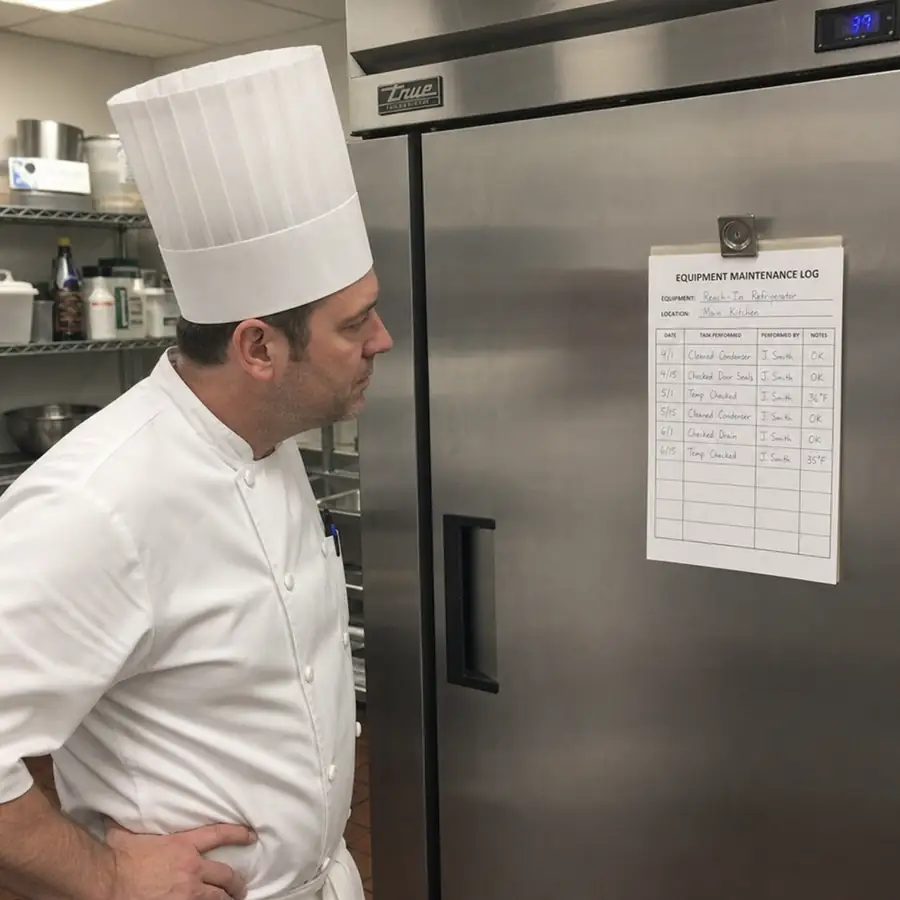
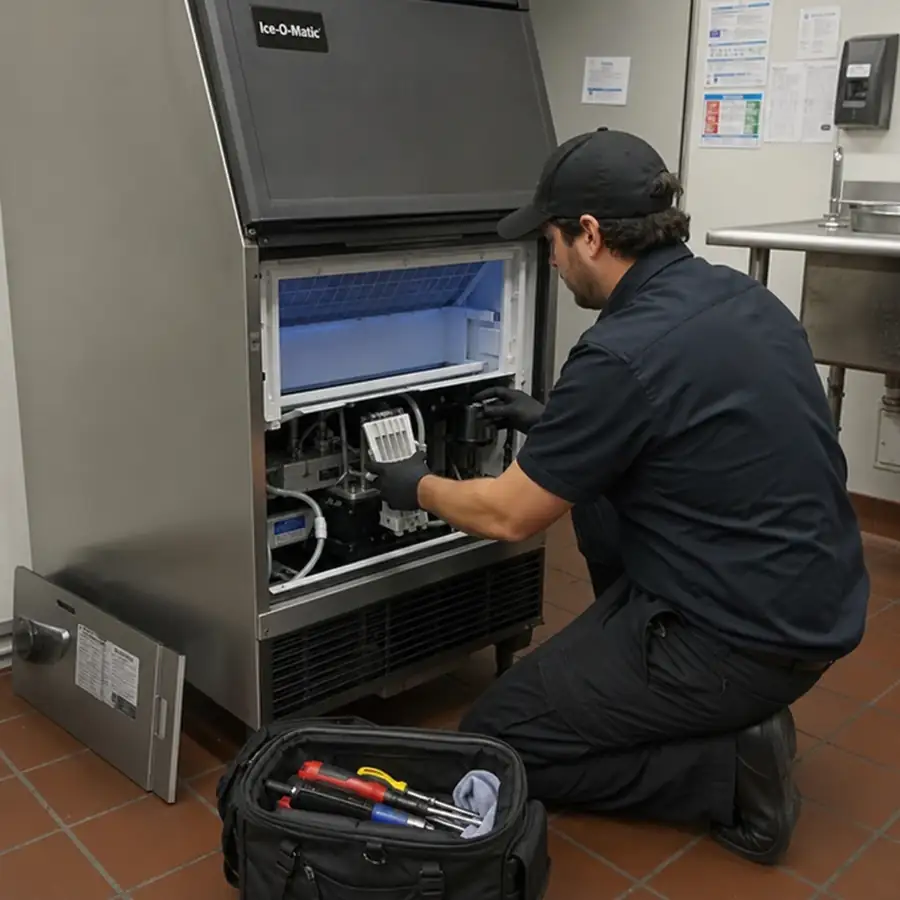
You cannot understate the impact of preventative maintenance on resale value. A documented service history proves to potential buyers that the equipment was cared for by professionals, drastically reducing their perceived risk.
Here are the best practices to keep your gear's value high:
- Keep Service Logs: Just like a Carfax report, a binder full of maintenance invoices from certified technicians adds immediate financial value to your sale.
- Daily and Weekly Cleaning Routines: Train your staff to wipe down the stainless steel daily using proper, non-abrasive cleaners. Acidic foods (like tomatoes and citrus) can pit and rust even high-quality stainless steel if left uncleaned.
- Address Minor Fixes Immediately: A missing knob on a Garland range or a cracked dial on a combi oven costs less than $20 to replace but can knock hundreds of dollars off your asking price because it creates a perception of neglect.
- Descale Ice Machines and Steamers: Hard water is the silent killer of commercial kitchens. Regularly descaling your equipment prevents calcium buildup from destroying heating elements and water pumps.
- Keep the Manuals and Accessories: A Hobart mixer sold with its original manual, dough hook, wire whip, and flat beater will command a premium over a bare-bones unit.
The Bottom Line on Restaurant Equipment Investments
The restaurant industry operates on razor-thin margins. By viewing your equipment purchases not just as sunken costs, but as asset investments, you can safeguard your business's financial future.
While it is tempting to save 30% today by purchasing an obscure, unproven brand, the long-term math rarely works out in your favor. When you choose the best commercial restaurant equipment brands—like True, Hobart, Vulcan, Rational, and Vitamix—you are buying reliability, widespread parts availability, and peace of mind.
More importantly, when the time comes to remodel, upgrade, or change concepts, these top restaurant equipment brands will yield a substantial cash return on the secondary market. By understanding the market trends, maintaining meticulous service logs, and investing in durable, NSF-certified heavy machinery, you ensure that the heart of your kitchen holds its value for decades to come.
Choose your foodservice equipment brands wisely, treat them well, and they will pay you back long after they have cooked their last meal in your kitchen.
Which Restaurant Equipment Brands Hold Their Value Best Over Time?
When investing in commercial restaurant equipment, choosing a reputable brand can make a significant difference to long-term value. Brands such as Hobart, True Manufacturing, Rational, Hoshizaki, Vulcan, and Traulsen are often recognized in the commercial foodservice market for durability, service support, parts availability, and strong operator demand. For example, Hobart is particularly well regarded for mixers, while True is known for commercial refrigeration. However, brand name alone does not determine resale value—equipment condition, age, maintenance history, model availability, and local service support also have a major impact.
For restaurants planning a long-term investment, buying reliable equipment from a trusted supplier can help balance upfront cost with future value. The Horeca Store provides a wide range of commercial kitchen equipment for restaurants, cafés, hotels, catering businesses, and other foodservice operations. When choosing equipment, consider not only the purchase price but also durability, energy efficiency, availability of spare parts, maintenance requirements, warranty support, and potential resale demand. A well-maintained, widely supported piece of equipment can be much easier to sell later than a cheaper alternative with limited parts or service availability.