

You've outgrown your home kitchen island, and your catering business desperately needs a workspace that doesn't wobble when you're prepping 200 appetizers. Transitioning from home cooking to a professional scale requires gear built to survive a sledgehammer, not just a Thanksgiving dinner. Figuring out exactly where to buy commercial kitchen prep tables and cooking equipment for catering businesses online often feels like entering a completely foreign industry. Between 300-pound stainless steel surfaces and confusing metal grades, it is incredibly easy to make a costly mistake.
Relying on residential gear for commercial jobs actually creates a hidden financial risk for your growing business. According to standard manufacturer policies, using home appliances for professional catering instantly voids their warranties. If your residential mixer burns out while whipping up fifty pounds of frosting, you are entirely on the hook for the replacement cost. Furthermore, health inspectors look specifically for commercial-grade materials because standard home prep surfaces degrade and harbor bacteria under heavy daily use.
Navigating this massive upgrade does not mean you have to blindly overpay. Applying the '1-to-1 Rule'—evaluating every technical term for its financial and sanitary impact—protects your budget and guarantees health code compliance. By understanding these features, you can confidently locate the best online restaurant supply stores for caterers and find durable kitchen prep tables without buying junk.
The 'Metal Math' of Prep Tables: Why Gauge and Stainless Grade Determine Your Health Inspection Success
Upgrading from a home counter to commercial kitchen prep tables introduces confusing new vocabulary. Buying the cheapest option online often yields a wobbly surface that rusts before your first big catering gig. Surviving daily abuse and strict health inspections requires understanding two vital specifications: metal grade and gauge.
The 'grade' of the metal determines its rust resistance. When shopping for stainless steel tables, you will primarily see two numbers: 304 and 430. Think of 304-grade as your armor against wet, salty environments; choose it for any surface near water or active food prep. Conversely, you can safely save money by using 430-grade steel exclusively for dry storage shelving, as it lacks the high-end corrosion resistance needed for liquids.
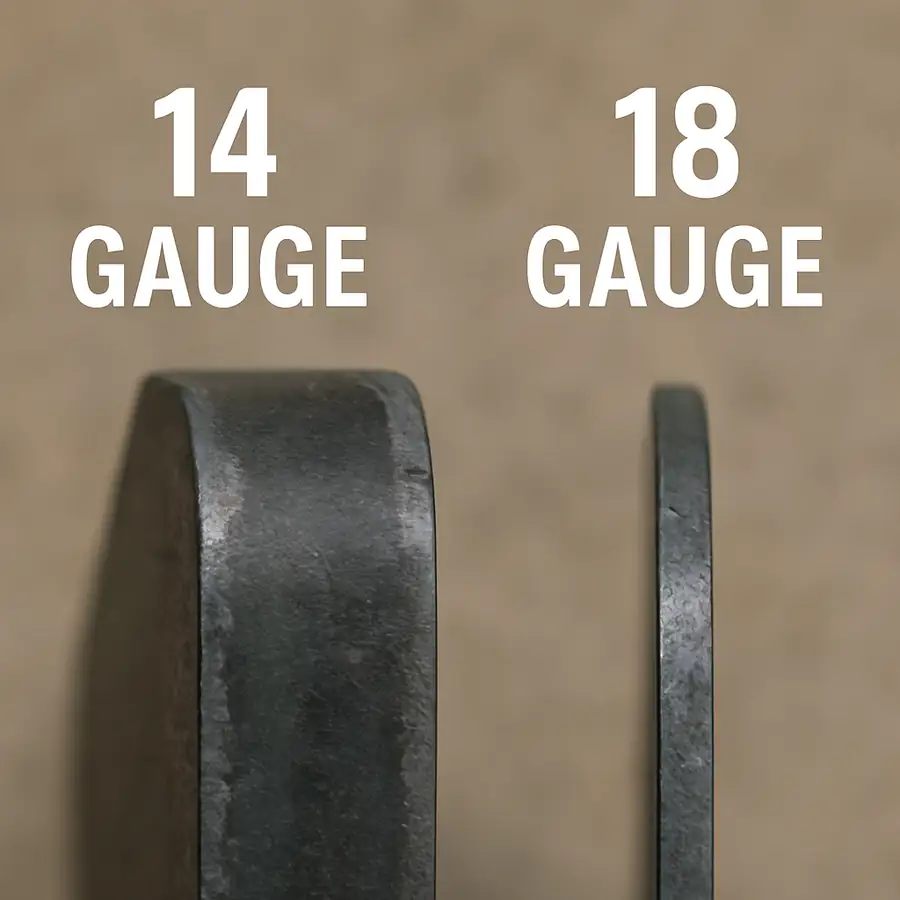
Thickness is measured by a numbering system where figuring out what is the best gauge for stainless steel tables feels backwards, because lower numbers actually mean thicker metal:
- 14-Gauge: The thickest option, perfect for heavy butcher-block style chopping and pounding.
- 16-Gauge: The reliable middle ground, ideal for everyday mixing and catering prep.
- 18-Gauge: The thinnest budget option, strictly for light-duty plating or sandwich assembly.
Strategic shopping protects your wallet without sacrificing quality. For example, look for heavy duty stainless steel work tables with undershelves where the main top is durable 14-gauge 304-grade, but the lower shelf is a budget-friendly 430-grade.
Does It Have the Blue Seal? Why NSF Certification Is Non-Negotiable for Your Online Purchase
Passing a health inspection hinges on a tiny blue circle stamped on your equipment. This NSF (National Sanitation Foundation) certification proves your gear meets strict commercial sanitation standards. Ignoring this detail when sourcing commercial kitchen equipment online is a costly mistake. If inspectors spot unapproved tables in your kitchen, they can force immediate replacements, creating massive legal liability and shutting down your operation until you comply.
The physical difference between NSF certified vs non-certified prep surfaces usually involves hidden food traps. Certified tables feature 'coved corners'—smoothly rounded edges where the tabletop meets the backsplash, rather than sharp 90-degree angles. Think of effortlessly wiping sticky dough away from a gentle curve versus digging it out of a sharp corner crack. This seamless design stops dangerous bacteria from hiding and guarantees a highly sanitary workspace.
Finding this mandatory seal requires careful scrutiny before you click the checkout button. Always zoom in on the vendor's product photos to locate the blue NSF stamp, or ensure the specifications explicitly list the certification.
The Big Five: Ranking the Best Online Stores for Commercial Prep Tables and Cooking Gear
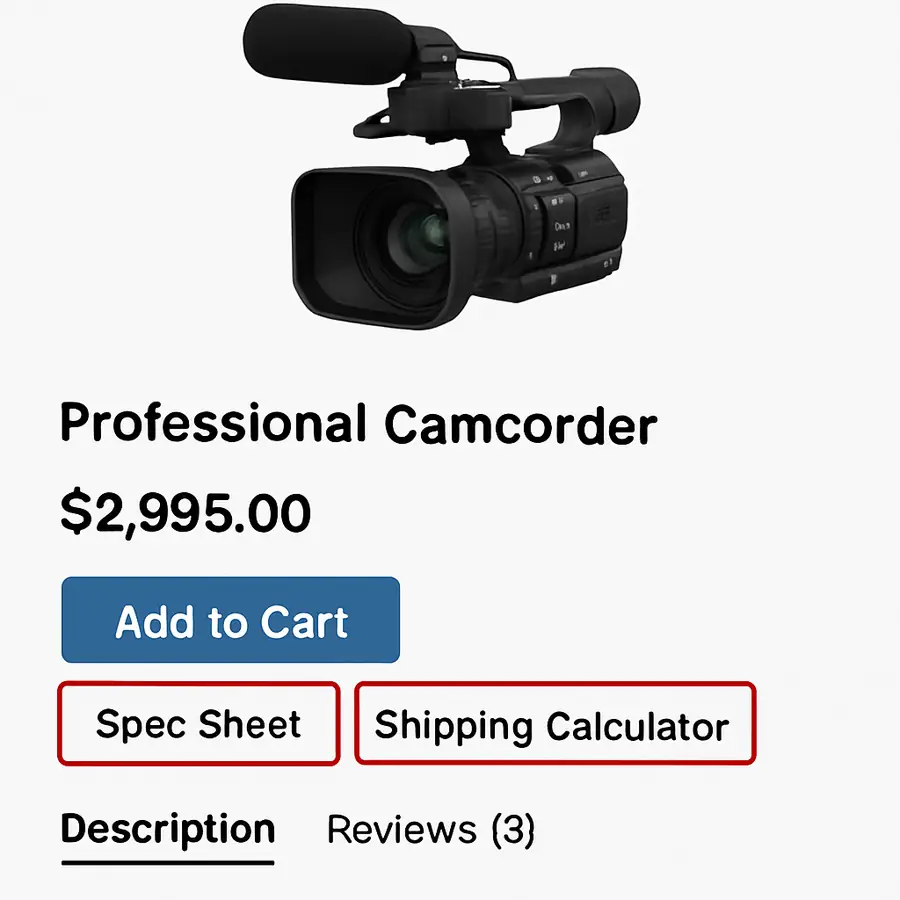
Transitioning to commercial-only vendors means leaving familiar consumer marketplaces behind. Buying a 300-pound prep table requires retailers equipped to handle heavy freight, rather than standard parcel delivery. The biggest shock for new buyers is often the checkout page, where shipping costs can suddenly double the price of the item. Always locate the vendor's shipping calculator—a small link typically hidden below the 'Add to Cart' button—to estimate delivery fees before committing to a purchase.
Before calculating those shipping costs, confirm the equipment will physically fit through your doors using a Spec Sheet. A Spec Sheet (Specification Sheet) is a downloadable PDF blueprint detailing exact dimensions and weights.
Reviewing these blueprints is also crucial when exploring financing options for professional catering appliances, as lenders frequently require exact model details before approving your funding.
To identify the best online restaurant supply stores for caterers, evaluate membership perks instead of just looking at sticker prices. Registering a formal 'Business Account' with these suppliers unlocks tax-exempt purchasing and provides access to bulk discounts on commercial kitchen supplies. Consider how these top four vendors compare:
- WebstaurantStore: Offers massive inventory, though their paid membership program is practically required to offset steep freight costs.
- KaTom: Known for reliable shipping timelines and excellent customer service for entry-level professionals.
- Central Restaurant Products: Highly recommended for securing bundled starter equipment packages.
- Amazon Business: Perfect for fast delivery on smallwares, but selection is limited for heavy-duty, certified tables.
Beyond Tables: Sourcing Portable Ovens and Induction Burners for Off-Site Events
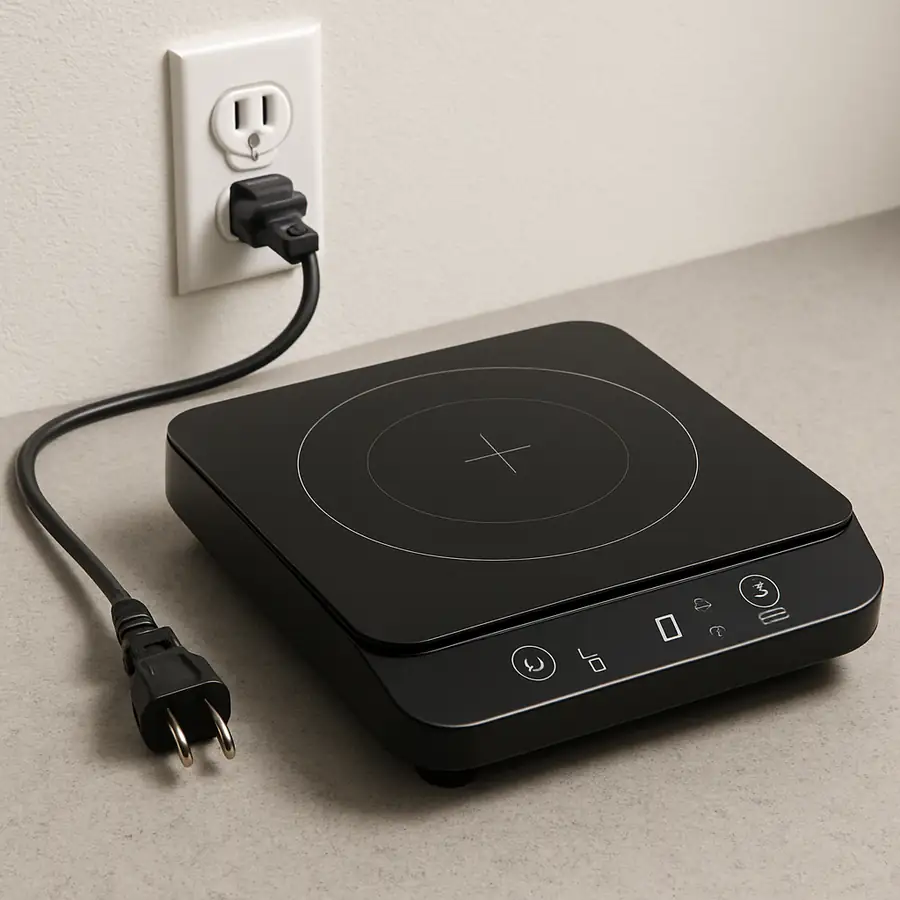
Cooking at rented venues usually means bringing your own heat, making portable induction burners for off-site catering a massive upgrade over traditional butane stoves. Induction cooking uses magnets to heat the metal pan directly instead of the surrounding air, keeping your temporary prep space cool. When sourcing these units, always verify voltage requirements by hunting for 120-volt (120V) models rather than heavy-duty 240-volt versions. Standard event spaces are wired for 120V, meaning you can safely plug your equipment into almost any regular wall socket without tripping a venue's breaker.
Moving past stovetop prep, achieving perfectly even baking requires upgrading to an appliance that actively moves heat. Unlike standard 'still air' ovens where heat simply radiates upward, industrial convection ovens with programmable controls use internal fans to circulate hot air continuously. This airflow cooks food faster and prevents uneven browning across different catering trays. Opting for digital programmable controls ensures consistent cooking results regardless of who manages the station, serving as brilliant space saving commercial kitchen equipment for small businesses aiming to streamline mobile operations.
Physical dimensions matter just as much during transport as they do during active service. Before buying, calculate your 'transit footprint' by measuring catering equipment for transport and storage inside your specific van, accounting for bulky power cords and protective carrying cases. An oven might look compact online, but its true crated dimensions can complicate its arrival.
The 'Hidden Costs' Checklist: Navigating Freight Shipping and Residential Delivery Fees
Ordering a 300-pound prep table is nothing like getting a standard parcel delivered to your porch. Heavy items ship via LTL (Less Than Truckload) freight, meaning your gear shares space on a massive semi-truck. When sourcing commercial kitchen equipment online, be prepared for the 'Residential Surcharge.' Carriers charge this extra fee because maneuvering a 53-foot trailer into a suburban neighborhood requires specialized routing and extra time.
Unless you have an industrial loading dock, you will also face a 'Liftgate Fee.' This covers the truck's hydraulic platform used to lower heavy items safely to the street. To preserve your budget—and avoid needing financing options for professional catering appliances just to cover shipping costs—consider choosing 'Terminal Pickup' at checkout. If you own a trailer, you can easily save $100 or more by retrieving the crate directly from the local freight hub yourself.
Preparing your space before the truck arrives prevents expensive logistical nightmares on delivery day. Follow this quick pre-delivery checklist to ensure a smooth drop-off:
- Measure door widths: Verify that the fully crated equipment fits through your exterior and interior doorways.
- Check site access: Confirm there are no tight corners or low-hanging branches blocking a semi-truck from reaching your curb.
- Stage unboxing tools: Have pry bars, heavy snips, and work gloves ready to break down wooden crates immediately.
Finally, always provide a direct cell phone number during checkout so the driver can call before arriving.
How to Score Deals at Online Auctions and Liquidation Sales Without Buying Junk
Scoring steep discounts often leads buyers to restaurant equipment liquidation auctions online, but these unpredictable sales require caution. Closing businesses usually sell their gear 'As-Is,' a legal term meaning you accept the item in its exact current state with zero guarantees. To avoid buying a completely broken appliance, never bid on mechanical pieces without verifying their working condition. If you cannot inspect the unit personally, hire a local third-party technician to test the compressor or burners before bidding.
A safer budget option emerges when weighing new vs refurbished commercial cooking equipment. True 'refurbished' gear is not just wiped clean; it is professionally repaired, tested to pass strict health inspections, and backed by a 30-to-90-day dealer warranty. Protect your wallet by actively hunting for red flags like blurry photographs, vague descriptions, or scratched-off serial numbers. If a listing lacks details about exactly which parts were replaced during the rebuild, you are likely viewing a highly risky purchase.
Direct communication ultimately separates genuine bargains from expensive scrap metal. Before registering to bid, protect your investment by asking the auctioneer these five vital questions about the used equipment:
- Has this unit been plugged in and tested under load?
- Are there any missing racks, knobs, or internal hardware?
- Is the original manufacturer's data plate still attached?
- Can you provide maintenance records from the previous owner?
- What are the exact external dimensions, including protruding handles?
Your 48-Hour Equipment Action Plan: Mapping Your Kitchen Layout and Placing Your First Order
You have officially crossed the bridge from a crowded residential kitchen to a professional catering operation. Instead of worrying if a standard home counter will wobble under a heavy commercial mixer, you now have the expertise to evaluate steel gauges and navigate freight deliveries without getting ambushed by hidden fees.
Before hitting checkout on your first major purchase, run through this essential catering kitchen equipment checklist:
- Create a 'Floor Map': Use masking tape to outline exact table dimensions on your floor so you can visualize the footprint before ordering.
- Buffer Your Budget: Add a strict 15% margin to your final cart total to cover freight shipping, taxes, and residential liftgate delivery fees.
- Place Your Order: Select a supplier offering the perfect balance of fast shipping and verified NSF (National Sanitation Foundation) certification.
Knowing exactly where to source commercial kitchen prep tables and cooking equipment online is no longer a guessing game, but a strategic advantage. By investing in a workspace built for high-volume prep that satisfies strict health inspectors, you are setting a serious professional standard. Your business is finally ready for the heavy lifting.
Buy Commercial Kitchen Prep Tables and Cooking Equipment Online from The Horeca Store
Finding the right commercial kitchen prep tables and cooking equipment for catering businesses is essential for maintaining efficiency, organization, and smooth food preparation. The Horeca Store offers a complete range of professional kitchen solutions, including stainless steel prep tables, commercial cooking equipment, refrigeration units, and foodservice essentials designed for catering companies, restaurants, hotels, and cloud kitchens. Our durable equipment helps businesses create productive workspaces while meeting the demands of high-volume food preparation.
At The Horeca Store, we make it easy to purchase reliable restaurant kitchen equipment online with products built for performance, durability, and everyday commercial use. Whether you need heavy-duty prep tables, ovens, fryers, grills, or other cooking solutions, our collection supports catering operations of all sizes. With quality products, competitive pricing, and dependable service, The Horeca Store helps you build a professional kitchen setup that improves workflow and efficiency.