
Starting a mobile culinary business is a dream for many aspiring chefs and entrepreneurs. The freedom to take your culinary creations on the road, serve different neighborhoods, and cater private events is incredibly appealing. However, before you can start serving your signature dishes, you face the biggest hurdle of all: acquiring your mobile kitchen.
If you are asking yourself, "Where do you buy a food truck?" you are not alone. Navigating the world of commercial vehicles, custom fabrication, and mobile kitchen equipment can feel overwhelming. From figuring out how to buy a food truck that meets your local health codes to deciding between a brand-new build and a used vehicle, the decisions you make now will dictate the future success of your business.
This comprehensive guide will walk you through exactly where to buy a food truck, how to budget for it, and the crucial steps you need to take to ensure your food truck purchase is a sound investment.
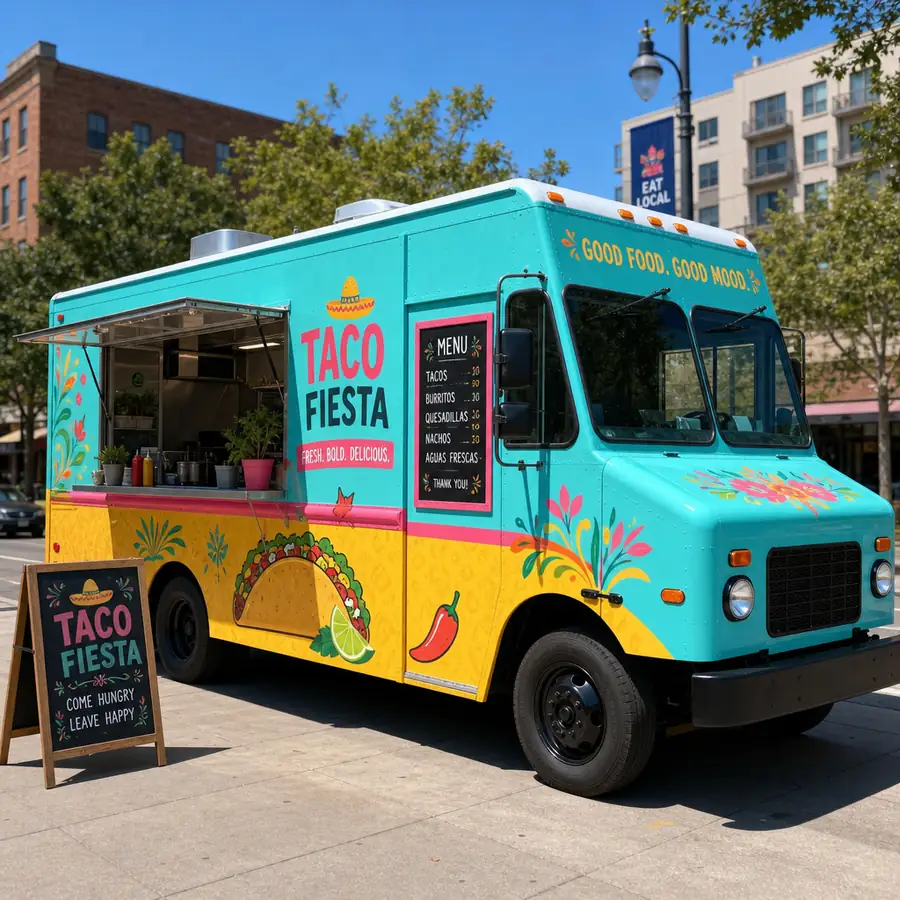
Before you start typing "buy food truck near me" into a search engine, you must establish a realistic budget. Understanding your financial boundaries will narrow down your search and save you from falling in love with a vehicle you cannot afford.
So, how much is it to buy a food truck? The answer varies wildly based on whether you are buying new, used, or customizing a bare shell.
Generally, you can expect the following price ranges when looking to buy food truck USA:
- Low-End/Used (As-Is): $30,000 to $50,000. These are typically older vehicles, often sold as used food trucks for sale by owner. They will likely require maintenance, deep cleaning, or appliance upgrades.
- Mid-Range (Used but Updated): $50,000 to $90,000. These trucks usually feature newer commercial kitchen equipment for mobile units and a fairly reliable engine.
- High-End/Brand New Custom Build: $100,000 to $200,000+. When you want to buy a food truck new, equipped with top-of-the-line gear and custom fabrication, this is the price range to expect.
When asking, "How much does a mobile kitchen cost?" remember that the sticker price of the vehicle isn't your only expense. You must factor in permits, initial inventory, branding/wrapping, and a buffer for unexpected repairs.
New vs Used Food Truck Pros and Cons
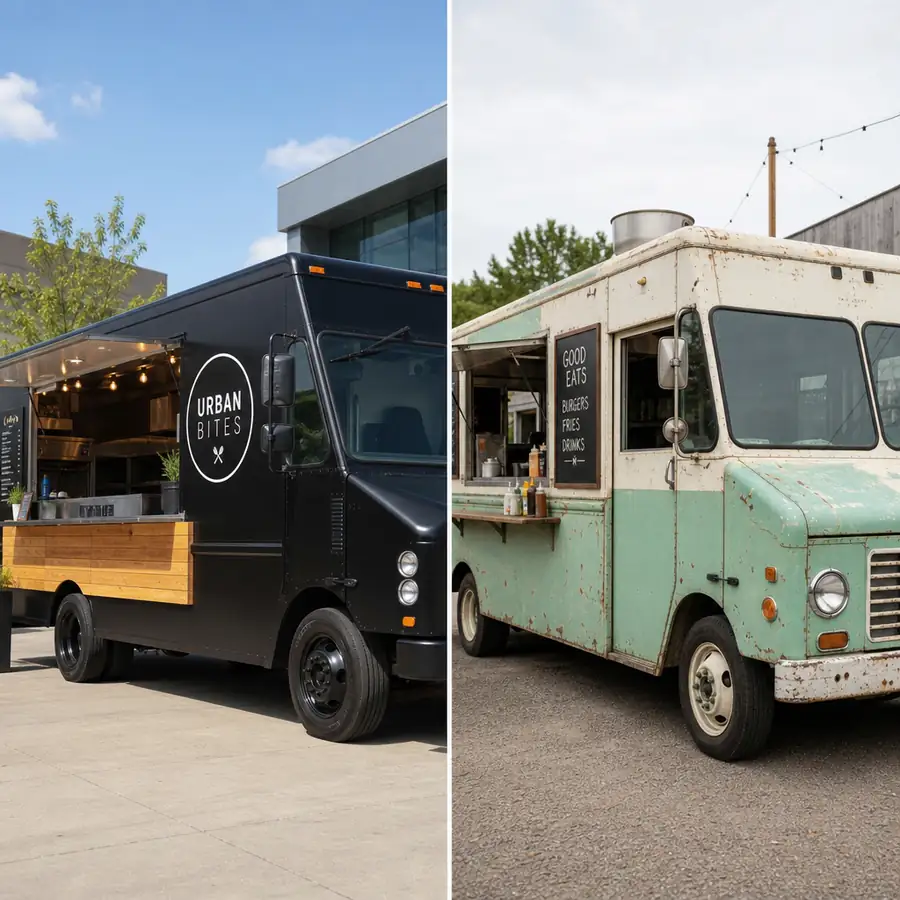
One of the first decisions you must make is whether to invest in new food trucks or browse the pre-owned market. Both paths have their merits, and the choice largely depends on your starting capital and your tolerance for risk. Let's break down the new vs used food truck pros and cons.
Buying a New Food Truck
When looking into where to buy a new food truck, you are usually dealing directly with custom manufacturers.
Pros:
- Customization: You get exactly what you want. From the layout to the specific appliances, it is built for your menu.
- Reliability: A new engine and brand-new appliances mean you are far less likely to break down on your way to a lucrative catering gig.
- Warranties: New builds often come with a robust food truck warranty and maintenance services, giving you peace of mind.
- Compliance: Certified builders will ensure you have a health department compliant food truck design right out of the gate.
Cons:
- Cost: It requires a much larger initial investment.
- Wait Time: Custom builds can take anywhere from 3 to 6 months to complete.
Buying a Used Food Truck
For those with tighter budgets, searching for a "food truck for sale" on the secondary market is a viable path.
Pros:
- Lower Entry Cost: You can launch your business with significantly less capital.
- Immediate Availability: You can buy the truck today and, assuming it passes health inspection, open for business tomorrow.
- Proven Concept: Sometimes you can buy an entire existing business, including the truck, recipes, and loyal customer base.
Cons:
- Hidden Issues: Used vehicles can be a gamble. You might inherit someone else's mechanical nightmares.
- Layout Limitations: You have to adapt your workflow to an existing layout rather than designing the kitchen around your menu.
Food Truck vs Concession Trailer Comparison
Before finalizing your decision on where to buy a mobile food truck, you should consider if a motorized truck is actually the right fit for your business model. Have you considered a concession trailer? A food truck vs concession trailer comparison is vital for early-stage planning.
Food Trucks:
- Mobility: Highly mobile. You can easily drive from a lunch spot in the business district to an evening festival.
- Size: Usually more compact, which makes driving and parking easier.
- Cost: More expensive due to the engine and drivetrain.
- Insurance: Higher auto insurance premiums.
Concession Trailers:
- Mobility: Requires a heavy-duty towing vehicle. They are better suited for stationary setups, like semi-permanent food truck parks or weekend-long fairs.
- Size: Often wider and longer, providing more prep space and room for larger commercial kitchen equipment for mobile units.
- Cost: Significantly cheaper to purchase than a motorized truck.
- Maintenance: No engine to maintain, meaning lower long-term mechanical costs.
If mobility and street vending are your goals, a food truck is the way to go. If you plan to park in one spot for days or weeks at a time, a trailer might save you tens of thousands of dollars.
Where is the Best Place to Buy a Food Truck?
So, where can I buy a food truck? The market has evolved significantly over the last decade. Today, you have multiple avenues to explore. Determining where to buy food trucks depends entirely on whether you are looking for new builds, used bargains, or custom fabrications.
1. Certified Food Truck Builders and Fabricators
If you want to buy a food truck new, your best option is to work with custom food truck manufacturers. These are specialized companies that take empty step vans or box trucks and convert them into fully functioning commercial kitchens.
Why choose them? Working with certified food truck builders and fabricators guarantees quality. They understand weight distribution, electrical loads, propane safety, ventilation systems. Furthermore, they are experts at creating a health department compliant food truck design, which is arguably the most critical aspect of your build. Failure to meet local health codes means truck stays parked.
2. Food Truck Dealers
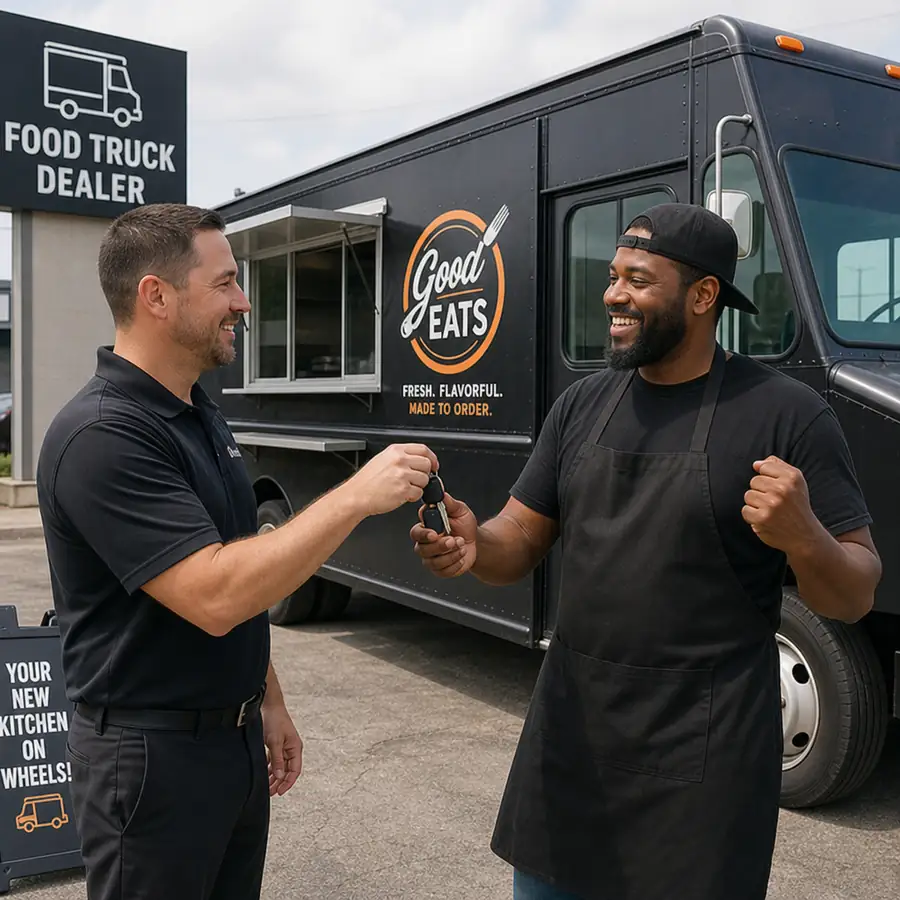
Just like car dealerships, there are specialized food truck dealers. These businesses act as a middleman, offering both new and refurbished units. When asking "where do you buy a food truck safely?", dealers are a great answer. They vet the vehicles, often perform necessary maintenance, and can handle the complicated paperwork. Many dealers also offer in-house food truck financing, making the purchase smoother.
3. Reputable Online Marketplaces for Food Trailers and Trucks
The internet has made it incredibly easy to buy food truck online. However, it's crucial to stick to a trusted food truck marketplace. Websites like Roaming Hunger, UsedVending, and Commercial Truck Trader are excellent resources. These platforms act as aggregators, connecting buyers with both dealers and private sellers nationwide. They are often considered the best place to buy a food truck if you want to compare prices across different states.
4. Local Commercial Vehicle Auctions
If you are mechanically inclined and hunting for a steal, local commercial vehicle auctions are worth a look. Fleet vehicles, delivery vans, and sometimes retired food trucks end up here. Keep in mind that auction vehicles are usually sold strictly "as-is." You will need to factor in the cost of a full kitchen buildout, but this is a fantastic way to acquire rebuilt step vans for mobile food businesses at a fraction of retail cost.
5. Private Sellers (For Sale by Owner)
Searching for "used food trucks for sale by owner" on platforms like Craigslist or Facebook Marketplace can yield incredible local deals. When typing "where to buy a food truck near me" or "food truck buy near me" into a search bar, private sellers will dominate the results. While this is a great way to avoid dealer markups, it carries the highest risk. You must exercise extreme caution, perform thorough inspections, and verify all titles and VINs before handing over cash.
How to Buy a Food Truck Locally: Navigating Hot Markets
Sometimes, the best strategy is to look in your immediate vicinity. Searching for "buy food truck near me" allows you to physically inspect the vehicle without booking a flight.
Certain regions in the USA have exploding street food scenes, which naturally creates a robust secondary market for vehicles. For instance, if you are wondering where to buy a food truck in Florida, you are in luck. Cities like Miami, Orlando, and Tampa have massive food truck cultures. You can easily find specialized dealers and fabrication shops in these areas. The benefit of buying locally in a hot market is that the builders are already intimately familiar.
When searching locally, tap into your community. Visit local food truck rallies and talk to the owners. Networking is a powerful tool; an owner might be looking to upgrade to a larger truck and be willing to sell you their current rig before it even hits the open market.
Customizing Your Rig: Costs and Considerations
If you decide to go the custom route, you might wonder, "How can I buy a food truck that matches my exact vision?" The answer is finding an empty shell—often a former delivery vehicle—and building it out.
Using rebuilt step vans for mobile food businesses is the industry standard. These trucks (like a Chevy P30 or a Freightliner MT45) are boxy, spacious, and built for heavy payloads.
Understanding Customization Costs
Customization costs for mobile catering vans can add up quickly. Your final bill will depend on the complexity of your menu. A truck selling pre-packaged ice cream needs far less equipment than a truck serving deep-fried gourmet burgers.
Here is a brief breakdown of what you might spend on customization:
- Electrical and Plumbing Systems: $5,000 – $10,000
- Propane Lines and Safety Valves: $2,000 – $4,000
- Exhaust Hoods and Fire Suppression Systems (ANSUL): $6,000 – $12,000 (Never skimp on this; it is mandatory for trucks doing any cooking).
- Stainless Steel Walls and Flooring: $3,000 – $6,000
- Exterior Wrap/Branding: $3,000 – $6,000
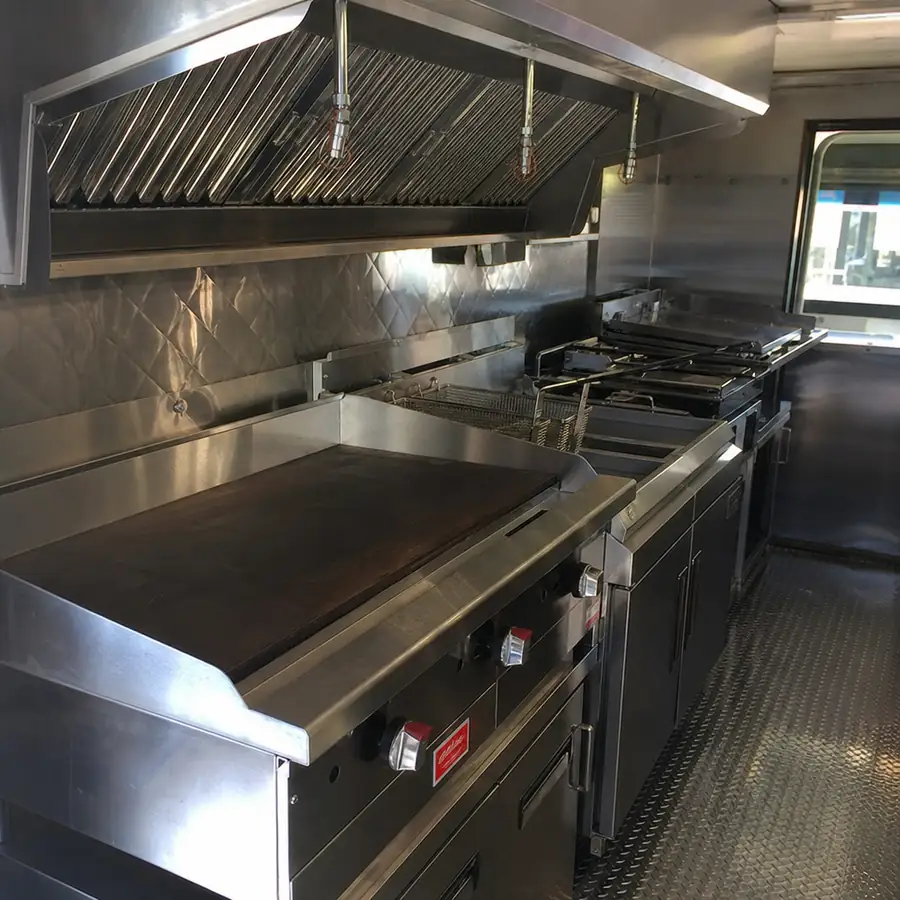
When choosing your commercial kitchen equipment for mobile units, space is your biggest enemy. You must utilize under-counter refrigeration, stackable units, and multi-purpose appliances (like a flat top grill that can cook burgers, eggs, and toast buns).
Always work with your fabricator to ensure the layout makes ergonomic sense. A poorly designed kitchen will bottleneck your service speed, directly impacting your bottom line.
Inspecting a Used Food Truck Checklist
If you have decided that the best place to buy a food truck is on the secondary market, you must protect your investment. Purchasing a lemon can bankrupt your business before you sell a single taco.
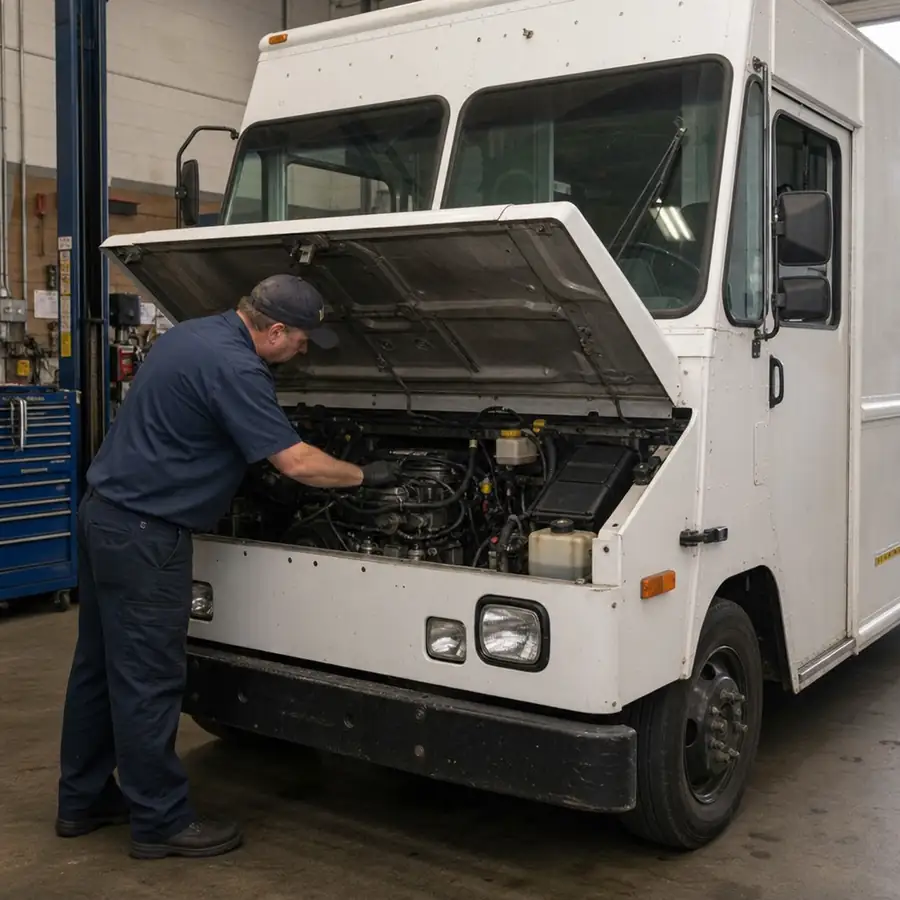
Whenever you go to view a used truck, bring a trusted mechanic. Furthermore, print out and utilize this essential inspecting a used food truck checklist:
1. The Vehicle / Mechanical
- Engine and Transmission: Listen for knocking, check the transmission fluid (it should be pinkish, not dark brown or burnt smelling), and take it for a test drive at highway speeds.
- Tires and Suspension: Step vans are heavy. Check the tire tread depth and look for uneven wear, which indicates alignment or suspension issues.
- Rust: Surface rust on the body is cosmetic, but rust on the chassis or frame is a dealbreaker.
- Mileage: While commercial engines can run for hundreds of thousands of miles, higher mileage means more imminent repairs. Check maintenance logs if available.
2. The Kitchen Shell
- Water Damage: Look for soft spots in the flooring and ceiling. A leaky roof will destroy your kitchen equipment over time.
- Stainless Steel Condition: Ensure the food prep areas are free of deep gouges or rust, which harbor bacteria and will fail a health inspection.
- Service Window: Does it open smoothly? Does the awning stay up securely?
3. Electrical and Plumbing
- Generator: The generator is the heart of your truck. Turn on all the appliances simultaneously to ensure the generator can handle the load without tripping breakers.
- Water Tanks: Inspect both the freshwater and greywater tanks for cracks or leaks. Ensure the water pump provides adequate pressure to the three-compartment sink and handwash station.
- Refrigeration: Bring a thermometer. Turn on the fridges and freezers and ensure they drop to food-safe temperatures within a reasonable timeframe.
4. Health and Fire Safety
- Fire Suppression: Check the tags on the ANSUL system. When was it last serviced?
- Exhaust Fan: Turn on the exhaust hood. It should aggressively pull air out of the truck to keep the kitchen cool and smoke-free.
Always ask the seller why they are selling. If they are evasive, be cautious. Before finalizing the food truck purchase, try to negotiate a short warranty period or at least a guarantee that it will pass its initial health inspection.
Financing Options for Food Truck Startups
One of the most common questions aspiring owners ask is, "How can I buy a food truck if I don't have $80,000 in cash?"
Fortunately, there are numerous financing options for food truck startups. Securing capital is entirely possible if you have a solid business plan, decent credit, and a clear vision.
1. Traditional Bank Loans and SBA Loans
If you have excellent credit, a traditional bank loan or a Small Business Administration (SBA) microloan offers the best interest rates. However, banks view restaurants (and by extension, food trucks) as high-risk investments. You will need a comprehensive, bulletproof business plan that includes market analysis, financial projections, and proof of concept to secure these funds.
2. Equipment Financing
Because a food truck is a tangible asset, equipment financing is often easier to secure than a standard business loan. The vehicle itself acts as collateral for the loan. Many food truck dealers and custom food truck manufacturers have partnerships with lenders that specialize in this type of food truck financing.
3. ROBS (Rollovers for Business Start-ups)
If you have a 401(k) or IRA from a previous employer, a ROBS allows you to use those retirement funds to start a business without incurring early withdrawal penalties or taxes. This is a debt-free way to fund your business, though it does put your retirement savings at risk.
4. Leasing to Own
If you are struggling to secure a traditional loan, consider looking for companies that offer lease-to-own programs. In this scenario, you rent the truck for a set period (e.g., 2 to 3 years) with a portion of your monthly payment going toward the purchase price. At the end of the lease, you have the option to buy the truck outright. This is a great way to test the waters of the mobile food industry with less upfront capital.
5. Investors and Crowdfunding
Do not underestimate the power of your community. If you have a killer menu concept, you might be able to secure private investors. Alternatively, platforms like Kickstarter or Indiegogo can help you raise funds while simultaneously building a loyal customer base before you even launch.
How to Buy a Food Truck Online Safely
In today's digital age, you might find the perfect vehicle three states away. If you decide to buy food truck online, you must protect yourself from scams.
- Never wire money blindly: Always use an escrow service. The escrow service will hold your funds securely until the truck is delivered and you verify its condition.
- Request a video walk-through: Don't rely solely on photos. Ask the seller to get on a live video call. Have them start the engine, run the water, turn on the generator, and show you the exhaust hood working.
- Hire an independent inspector: If you cannot travel to see the truck in person, hire a local mechanic in the seller's area to perform an independent inspection on your behalf. It will cost you a few hundred dollars, but it could save you thousands.
- Account for shipping: Remember that buying out of state means you either have to fly there and drive it back (which adds travel costs, fuel, and hotel stays) or pay a commercial transport service to deliver it to you.
Step-by-Step Summary: The Food Truck Purchase Journey
To summarize the journey, if you are wondering "how to buy a food truck," follow these actionable steps:
- Define Your Concept and Menu: You cannot know where to buy food truck equipment or what layout you need until you know exactly what you are cooking.
- Determine Your Budget: Decide how much you are willing to spend and secure your food truck financing early.
- Research Health Codes: Visit your local health department to understand the specific requirements for mobile food vendors in your county. Do you need a specific size of fresh water tank? Is a specific type of fire suppression mandatory?
- Choose New vs Used: Weigh the new vs used food truck pros and cons based on your budget and timeline. Decide if you want to buy a food truck new from certified builders or look for used food trucks for sale by owner.
- Shop Around: Use reputable online marketplaces for food trailers, visit local food truck dealers, or attend local commercial vehicle auctions.
- Inspect Thoroughly: Use your inspecting a used food truck checklist and always bring a mechanic.
- Close the Deal Securely: Ensure all paperwork, titles, and VINs match. If buying online, use escrow.
- Get Insured and Permitted: Before you hit the road, secure commercial auto and liability insurance, and pass your final health and fire inspections.
Buy Food Truck Equipment & Supplies from The Horeca Store
Finding the right food truck is just the beginning of your journey. To operate a successful mobile food business, you also need reliable commercial kitchen equipment that maximizes efficiency in a limited space. The Horeca Store offers a wide range of food truck equipment and supplies, including commercial grills, fryers, pizza ovens, refrigeration units, stainless steel worktables, sinks, food preparation equipment, storage solutions, exhaust systems, and disposable packaging products. Our commercial-grade products are designed to withstand the demands of busy mobile kitchens while helping you maintain food quality and operational efficiency.
Whether you're setting up a coffee truck, burger truck, pizza trailer, taco truck, dessert van, or a custom mobile kitchen, The Horeca Store is your trusted partner for professional foodservice equipment. We provide high-quality products at competitive prices, backed by dependable customer support to help food entrepreneurs build efficient, safe, and profitable mobile businesses. Explore our extensive collection of commercial kitchen equipment and foodservice essentials to equip your food truck for long-term success.
Conclusion
Deciding where to buy a food truck is the most significant step in your entrepreneurial journey. Whether you choose to invest in a shiny new custom build from certified food truck builders and fabricators, or hunt down a diamond-in-the-rough through private sellers, taking your time and doing your due diligence is key.
Understand your budget, secure your financing options for food truck startups, and never skip the mechanical inspection. By utilizing the resources and tips outlined in this guide, you will be well-equipped to navigate the food truck marketplace confidently.
Stop wondering "where can I buy a food truck" and start taking actionable steps today. The open road—and a line of hungry customers—is waiting for you. Get out there, find the perfect rig, and turn your culinary dreams into a thriving, mobile reality.