
Choosing a commercial ice machine can feel like trying to learn a new language. You’re suddenly faced with terms like ‘modular,’ ‘nugget,’ and ‘air-cooled,’ and a wrong move isn't just an inconvenience—it's a multi-thousand-dollar headache that can disrupt your entire operation. This isn't just an appliance; it's a critical piece of equipment that directly impacts your workflow and customer satisfaction.
The right machine is a silent partner in your success. It’s the difference between a perfectly chilled cocktail and a complaint about a watered-down drink. Industry veterans know that getting this decision right means ending those frustrating emergency ice runs for good, ensuring you always have what you need, exactly when you need it. So, where do you begin when trying to find the best ice machines for your business?
The secret isn't in becoming an expert overnight. This commercial ice machine buying guide simplifies the complex choices by breaking them down into five straightforward questions. By focusing on your specific space, customer needs, and operational flow, you can bypass the technical jargon and zero in on what truly matters for your business.
Answering these questions is the foundation of how to choose a commercial ice maker you won't regret. This structured process is designed to take you from a state of overwhelmed confusion to making a clear, confident purchase decision. The following framework will help you find the perfect machine.
Step 1: What Kind of Ice Will Make Your Customers Happiest?
Before you compare prices or measure floor space, the most important decision is choosing the shape of the ice itself. It might seem like a small detail, but the type of ice you serve directly impacts drink quality, customer perception, and even how much liquid you use per glass. Getting this right is the first step toward making a smart investment that pays off with every drink you serve.
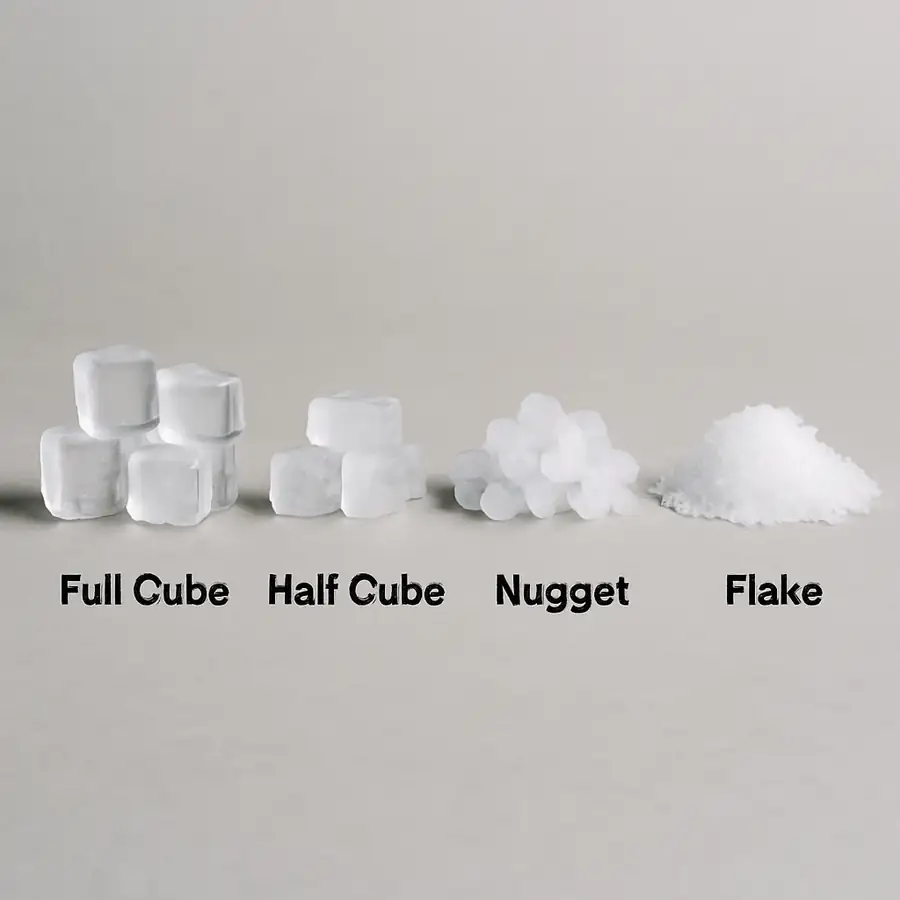
You’ll generally encounter four main types of ice, each with a distinct purpose. Full cube and half cube ice are the hard, slow-melting classics you see in most bars and restaurants. Then there’s nugget ice—the soft, chewable pellets famous for absorbing flavor and delighting customers. This is the "good ice" people rave about, making a nugget ice machine for cafe settings an instant upgrade. Finally, flake ice consists of soft, moldable shavings, perfect for keeping seafood displays or salad bars chilled.
To make the choice simple, match the ice to its job:
- Full Cube Ice: Best for high-end cocktails, spirits on the rocks, and bagging. Its slow melt rate won't water down expensive liquor.
- Half Cube Ice: The versatile workhorse. It fits more easily into glassware and is perfect for high-volume soda dispensers and iced tea.
- Nugget Ice: The customer favorite. Ideal for sodas, iced coffees, and healthcare facilities where chewable ice is a must.
- Flake Ice: The display specialist. Use it for seafood counters, produce displays, and blended cocktails like margaritas.
Step 2: How to Calculate Exactly How Much Ice Your Business Needs
After choosing your ice type, the next critical step is determining quantity. This is where many first-time buyers get confused, but it’s simpler than it sounds. Every commercial ice machine has two key ratings: Production Capacity and Storage Capacity. Getting these numbers right is the secret to never running out of ice again.
The easiest way to understand this is to separate the two jobs: Production Capacity is the total amount of ice the machine can create in a 24-hour period, while the Storage Bin is how much of that ice can be held at any one time. Think of production as how fast you can bake cookies, and the bin as the size of your cookie jar. If your lunch rush empties the jar, you need a machine that can bake fast enough to recover. This is the crucial difference between ice maker production vs storage.
To figure out what size ice machine you need for a restaurant, use a simple guideline: plan for about 1.5 lbs of ice per seat. For a 60-seat cafe, that means you should start by looking for a machine that can produce at least 90 lbs of ice per day. For an office, 1 lb per person is a safe bet, while hotels often need 5 lbs per room. This simple math is the foundation of any commercial ice machine capacity calculator.
Finally, here’s the rule of thumb that keeps business owners from making a costly mistake: whatever your calculated daily need is, add a 20% buffer. An ice machine works harder and produces less in a hot kitchen, and you need to account for unexpectedly busy days. That 90 lb/day machine for your cafe? You should be looking for one that produces around 110 lbs. This buffer ensures you have ice when you need it most. With your ideal production capacity in mind, it's time to consider where the machine will actually live.
Step 3: Where Will It Go? Matching the Machine Type to Your Space
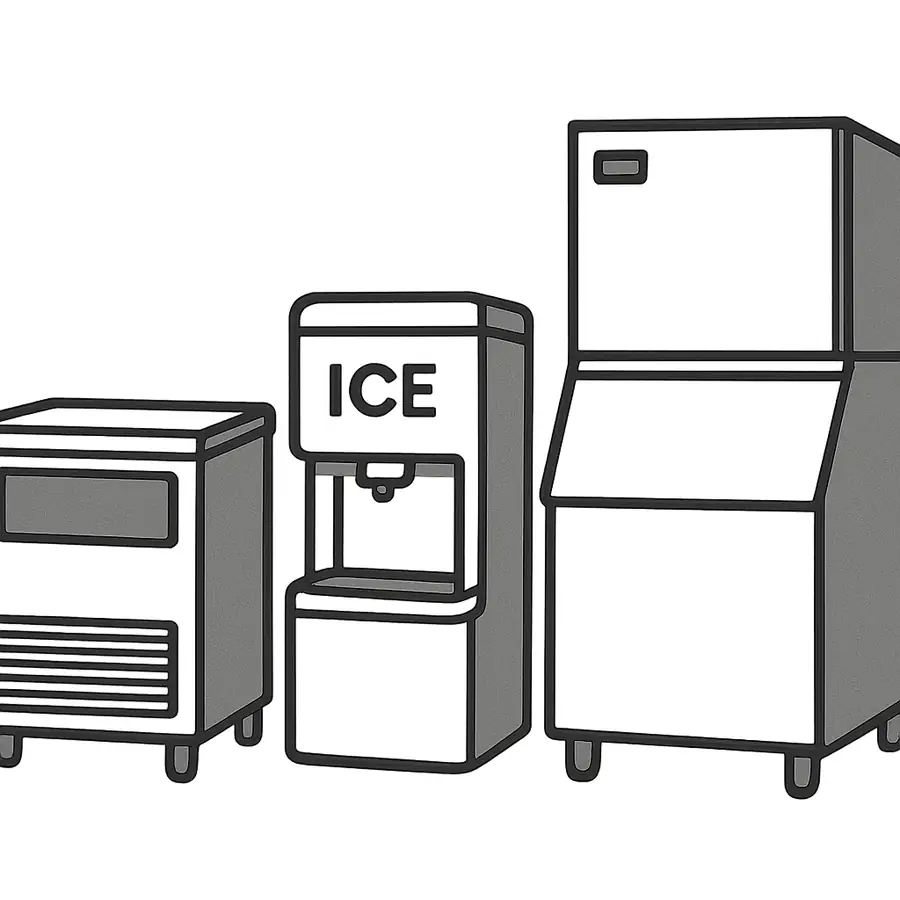
With your ice volume clear, the next step is finding a machine that fits your space. For businesses with lower volume needs, an undercounter ice machine installs just like a small dishwasher, making it a perfect commercial ice maker for a small bar or office kitchen. If you want self-serve access for customers or staff, a countertop ice dispenser is even better. These compact units sit right on the counter and dispense ice directly into a cup, making them ideal for breakrooms and small cafes.
Once your daily ice needs climb above roughly 100 pounds, you’ll move into the world of modular ice machines. These are the workhorses of the food and beverage industry. A modular unit is a two-piece system: an ice-making “head” that produces the ice, which sits on top of a separate storage “bin.” This setup is the standard because it offers total flexibility—you can mix and match the production head and storage bin to perfectly fit your business's rhythm, whether that means fast recovery or massive storage.
The choice really comes down to balancing your daily ice volume with your available footprint. While undercounter and countertop models solve space and convenience issues for smaller operations, modular systems are built for serious volume and growth. For any busy restaurant or bar, the ability to customize the head and bin in an undercounter vs modular ice machines decision is the key to a reliable ice solution. After matching the machine’s format to your space, there's one final consideration that directly impacts your utility bills.
Step 4: Air-Cooled vs. Water-Cooled: The Critical Choice for Your Utility Bills
Beyond the machine's size, one technical choice has the biggest impact on your utility bills: how it cools itself. Every ice machine generates heat while it works and must be cooled with either air or water. This decision directly affects your upfront cost, ongoing expenses, and where you can place the unit.
An Air-Cooled Condenser is the most common and cost-effective option. It uses a fan to pull in surrounding air to cool its internal parts. For this reason, it’s critical to give the unit room to breathe—at least six inches of clearance on all sides is a must. The only trade-off is that it releases warm air, slightly heating the room, but it's a key to overall ice maker energy efficiency.
A Water-Cooled Condenser uses a continuous flow of water to absorb heat instead. This makes them much quieter and keeps your kitchen from getting hotter. However, the air cooled vs water cooled ice machine decision becomes clear when you look at the downside: water-cooled units come with significantly higher water bills and a more complex commercial ice machine installation.
Here’s a quick breakdown:
- Air-Cooled
- Pros: Lower purchase price, easy to install.
- Cons: Needs clearance to breathe, adds heat to the room.
- Water-Cooled
- Pros: Runs quietly, ideal for hot or tight spaces.
- Cons: High water usage and bills, more expensive.
Step 5: The Hidden Requirements: Drainage, Power, and Filtration
You’ve picked a spot for your machine, but have you considered where the water will go? Every ice machine constantly deals with water, both from the ice-making process and from melt-off in the bin. The ideal setup uses a gravity drain—a simple floor drain that sits lower than the machine’s drain line. If your location doesn't have one nearby, you’ll need to add a condensate pump, a small box that actively pushes water up and away to a sink or distant drain. Checking for a floor drain before you buy is the easiest way to avoid this extra cost and installation step.
Along with the plumbing, a quick look at your electrical outlets is essential. While many smaller units use a standard 115-volt wall outlet, larger, high-capacity ice makers often demand a more powerful 220-volt connection. Mismatching the machine to your outlet is a common and frustrating mistake. Before you click "buy," always check the "spec sheet" on the product page for its specific ice machine installation requirements to ensure it matches what you have available, saving you from a surprise call to an electrician.
Of all these details, this last one is the most critical for protecting your investment. No matter how clean your tap water seems, it contains dissolved minerals that build up inside your machine, forming a crust called "scale." This is the number one cause of breakdowns. The only defense is a water filter for your ice machine, which removes these impurities before they can cause damage. Think of it less as an accessory and more as mandatory insurance; it's the foundation of any good commercial ice machine maintenance plan and ensures years of reliable service. Once you've confirmed your space can handle these utility needs, you're ready to decide where to make your purchase.
To Buy or To Lease? Unlocking the True Cost of Your Ice Machine
Once you’ve found the right machine, the final hurdle is often the price tag. A commercial ice machine is a major purchase, often costing thousands of dollars upfront. This large, one-time payment is known as a capital expenditure. But what if you don't have that cash on hand, or prefer to use it for something else? This brings up a critical decision: should you buy or lease?
Buying the machine outright means it’s yours. Over the long haul—say, five to seven years—this is usually the path with the lowest total cost. However, ownership also means you’re on the hook for everything else. All maintenance, repairs, and filter changes come out of your pocket. A surprise compressor failure could mean a sudden, expensive repair bill, turning the lower commercial ice machine cost into an unpredictable risk.
The alternative, an ice machine lease vs buy program, changes the entire financial picture. Instead of a huge upfront cost, you pay a manageable monthly fee. The best part? Many all-inclusive leases bundle maintenance, cleaning, and repairs into that single payment. This turns an unpredictable asset into a simple, predictable operating expense. You won't own the machine at the end, and it costs more over time, but you gain absolute peace of mind and protection from surprise bills.
Ultimately, the choice comes down to your business’s financial strategy. Is it more important to preserve your cash flow and have a predictable monthly expense? A lease is likely your best bet. Or, if you have the capital and want the lowest total cost over many years, buying makes more sense. With this financial framework in mind, you're now equipped to explore the most trusted names in the industry.
A Quick Guide to Top Brands: Hoshizaki, Manitowoc, and Scotsman
As you begin your search, you'll quickly notice three names dominating the market: Hoshizaki, Manitowoc, and Scotsman. Hoshizaki is known for its workhorse reliability and unique crescent-shaped ice. When comparing Hoshizaki vs Manitowoc ice machines, many praise Manitowoc for its user-friendly diagnostic screens. Alternatively, Scotsman ice machine reviews often highlight the brand’s innovation, especially with its popular chewable nugget ice, which it helped pioneer.
However, the single most important factor is one that’s easy to overlook: local service. A brand is only as good as the technician who can fix it when it breaks. A top-rated machine is useless if parts and service are a week away, leaving you to buy bags of ice during a heatwave. Before committing, call a local refrigeration repair company and ask them a simple question: "Which ice machine brands are fastest and easiest for you to fix around here?" Their answer is your most valuable piece of research.
Ultimately, the name on the front is far less important than how the machine performs for you. The best commercial ice machine brands are the ones that make the right type and amount of ice for your business and have strong, reliable support in your town. With all the pieces in place, a final checklist makes the decision simple and confident.
Your Action Plan: A 5-Step Checklist to the Perfect Ice Machine
You’ve done the research. That knowledge can now be turned into an action plan. What might have once felt like a complex purchase is now a series of simple questions you can confidently answer. This commercial ice machine checklist is your complete guide for the final step. Answering these five questions before you shop is the key to buying a commercial ice maker that fits your needs perfectly.
Your 5-Step Shopping Checklist:
- Choose Your Ice Type: (e.g., Cube for cocktails, Nugget for sodas)
- Calculate Your Daily Need: (lbs/day + 20% buffer)
- Select Machine by Space: (Undercounter, Countertop, or Modular)
- Confirm Your Utilities: (Correct drain, power, and water line)
- Decide on a Purchase Model: (Lease vs. Buy, Local vs. Online)
With these answers in hand, you’re no longer just guessing—you’re making a smart, strategic investment in your business. You've traded uncertainty for a clear blueprint, ensuring the machine you choose isn't just an appliance, but a reliable partner in your daily operations. You're ready.
Buy Commercial Ice Machines from The Horeca Store
For dependable commercial ice solutions, The Horeca Store offers a wide selection of ice machines designed for restaurants, cafés, hotels, bars, catering businesses, and other foodservice operations. Our collection includes undercounter ice makers, modular ice machines, nugget ice makers, cube ice machines, and specialty ice solutions built for professional performance.
At The Horeca Store, we help businesses choose the right equipment based on capacity, application, and operational requirements. Along with commercial ice machines, we provide a complete range of refrigeration equipment, kitchen appliances, beverage solutions, and hospitality supplies to help your business run efficiently. Choose The Horeca Store for reliable equipment, competitive pricing, and solutions designed for long-term performance.