
Building a coffee shop is equal parts dream and logistics. You’re not just “opening a café”-you’re designing a tiny factory that produces consistent drinks fast, a comfortable third place people want to return to, and a business that can survive slow Tuesdays and surprise repairs. This guide covers what you need to build a coffee shop from idea to opening day, with practical decisions you can make before you spend big money.
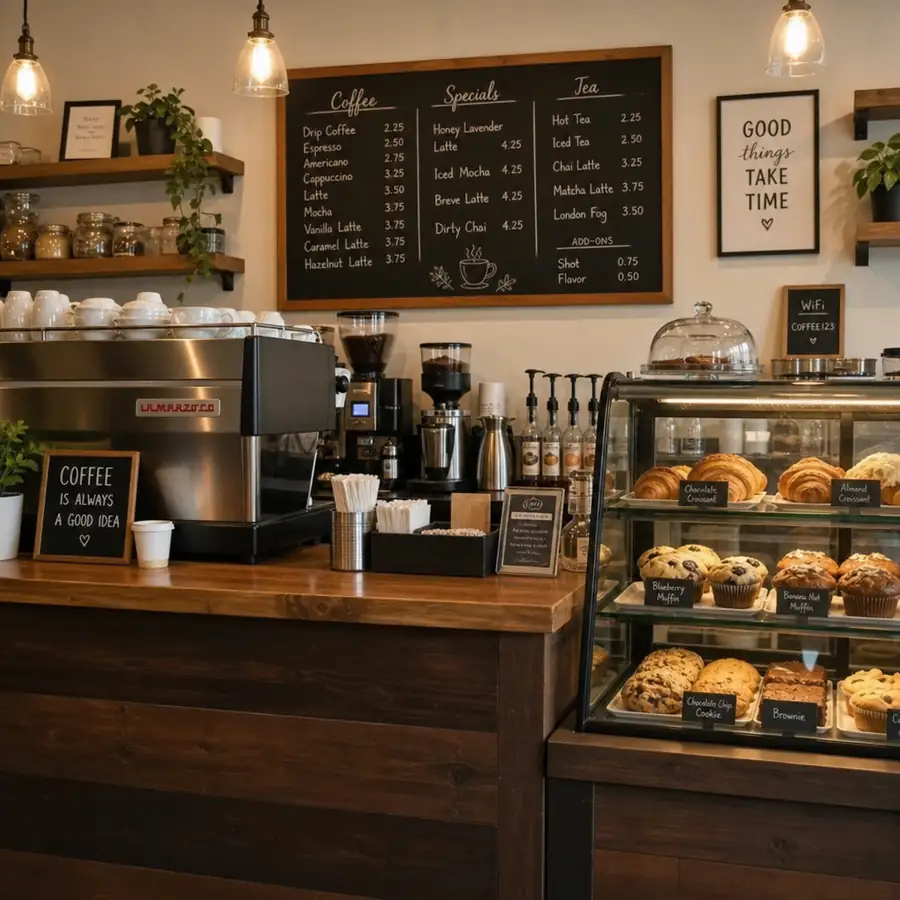
1) Start with the concept (because it drives everything else)
Before you buy anything, define what your shop is-and what it’s not. Your concept affects your coffee shop design, your staffing, your menu, and your coffee shop startup costs.
Ask yourself:
- Are you grab-and-go (speed + high volume) or sit-and-stay (comfort + higher ticket)?
- Are you focused on specialty espresso, drip + pastries, or full kitchen?
- Are you a neighborhood staple, a destination café, or a commuter stop?
Actionable tip: Write a one-sentence “North Star,” like:
“Fast, high-quality espresso and breakfast sandwiches for weekday commuters in under 4 minutes.”
That one sentence will save you from expensive “cool ideas” that don’t fit your model.
2) Build a simple plan you can actually use
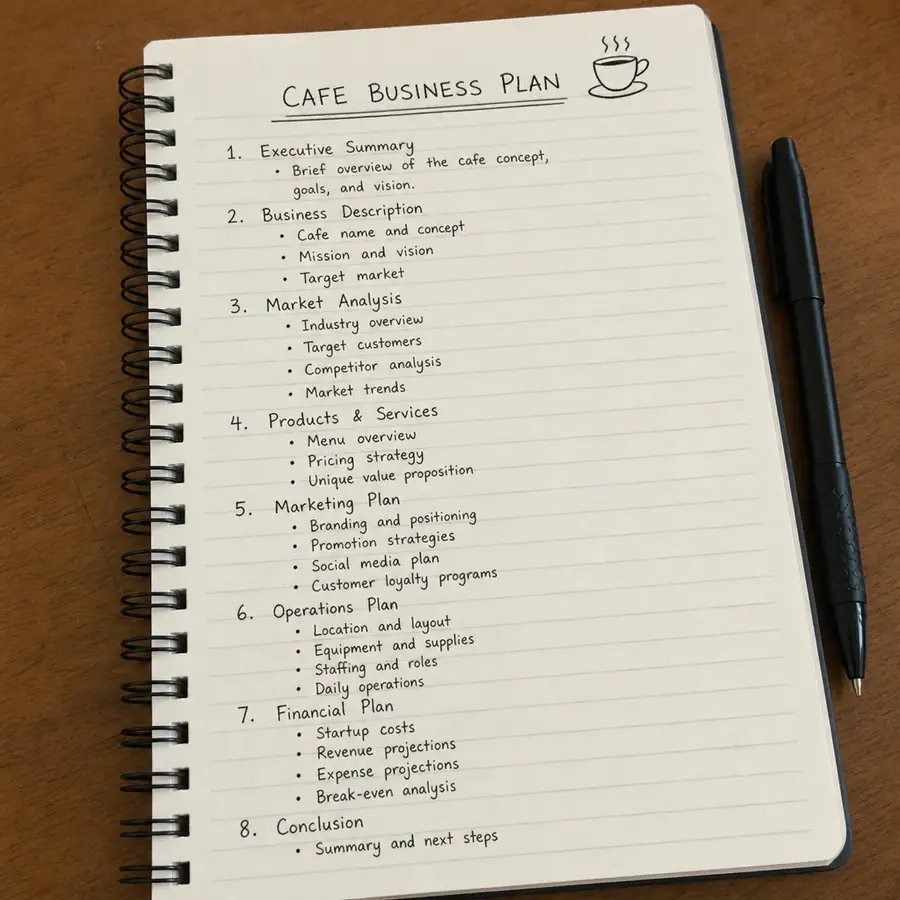
You don’t need a 60-page document, but you do need a clear roadmap. If you’re searching for a coffee shop business plan template, make sure yours includes the parts that affect buildout and operations:
What your plan must cover
- Target customer + peak dayparts (morning rush, lunch, afternoon)
- Core menu + prep method (made-to-order vs batch)
- Pricing assumptions and cost targets
- Expected daily transactions + average ticket
- Staffing model by hour (not just “3 baristas”)
- Equipment list + budget range
- Timeline: permits -> buildout -> hiring -> training -> soft open
Actionable tip: Put your plan into a one-page dashboard: sales goal, COGS goal, labor goal, rent goal, and a monthly break-even number.
3) How to choose coffee shop location (the make-or-break decision)
If you get the location wrong, no amount of latte art will fix it. When thinking about how to choose coffee shop location, focus on daily patterns, not just “busy areas.”
Location checklist (practical version)
- Foot traffic quality: Are people walking with time to stop, or just passing through?
- Morning behavior: Are there offices, gyms, schools, transit stops, hotels nearby?
- Visibility + access: Can people see you from the street? Easy entry/exit?
- Parking + pickup: Even in walkable areas, pickup convenience matters.
- Neighboring tenants: Complementary (bakery, bookstore) vs direct competitors
- Delivery flow: Space for deliveries, trash, and grease/coffee waste handling
How many square feet for a cafe?
A common planning range:
- 300-700 sq ft: kiosk / espresso bar, minimal seating
- 700-1,500 sq ft: typical café with seating + small back of house
- 1,500-2,500+ sq ft: café + kitchen, more seating, potentially events
Bigger isn’t always better-extra square footage can quietly crush margins through rent, utilities, and staffing.
Actionable tip: Stand outside the space for 30-60 minutes during morning rush on two different weekdays. Count walk-bys and note how many are carrying bags, backpacks, or coffee already.
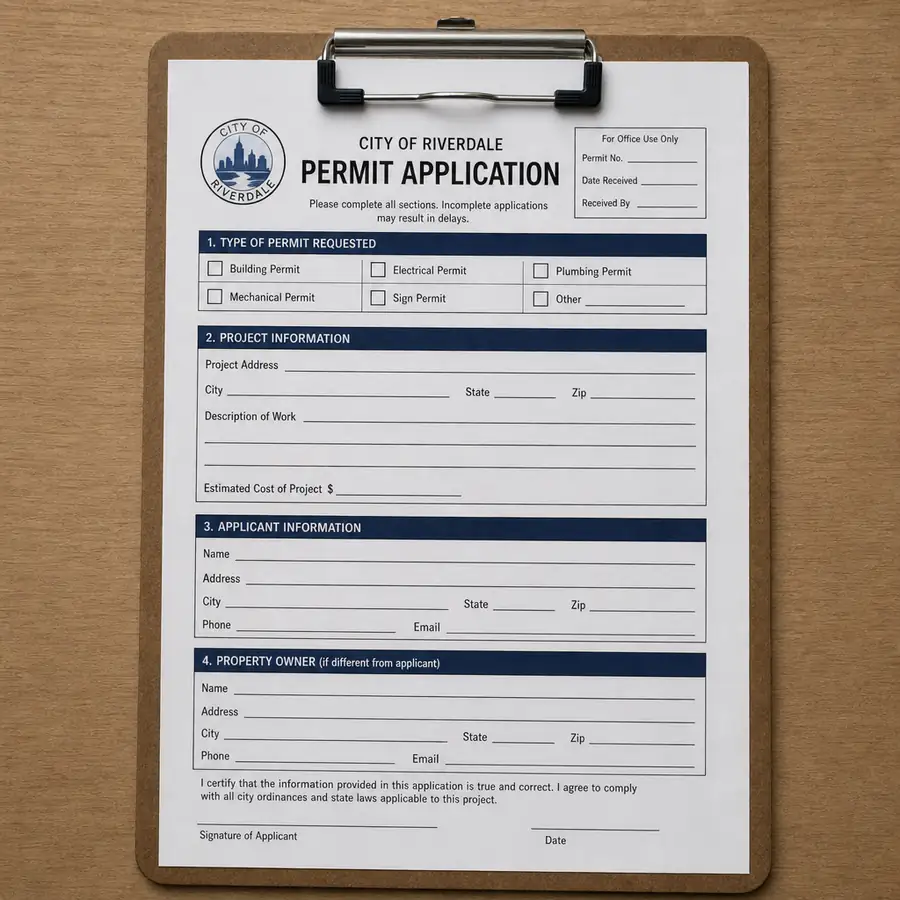
4) Coffee shop permits and licenses (plan these early)
Permits are not fun, but they’re non-negotiable. Coffee shop permits and licenses vary by city and state, but most cafés deal with:
- Business license/registration
- Food service permit (health department)
- Sales tax permit
- Building permits (construction, plumbing, electrical, HVAC)
- Fire department approvals (often tied to occupancy)
- Sign permit
- Music licensing (if you play music in-store)
- Grease trap requirements (if cooking-sometimes even with dishwashing)
Actionable tip: Your landlord and contractor should provide guidance, but you should still make a permit timeline and ask: “What’s the longest-lead approval?”
5) Coffee shop design: make it fast, comfortable, and profitable
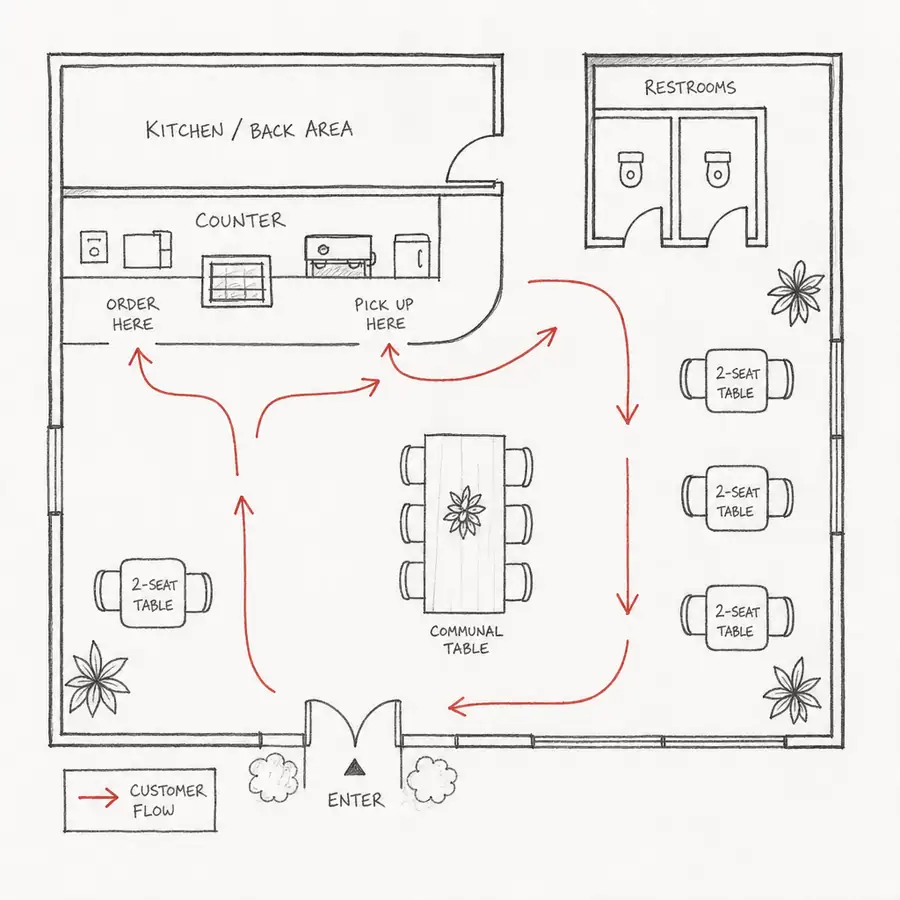
Great coffee shop design isn’t about looking expensive-it’s about flow. A beautiful shop that can’t handle a rush will lose customers quickly.
How to design coffee shop layout (workflow first)
When thinking how to design coffee shop layout, start with the path of:
- customer orders
- barista produces drinks
- customer receives drink
- customer exits line or sits down
Design to reduce cross-traffic and bottlenecks.
Layout tips that pay off:
- Put the pickup area clearly away from the ordering point (reduces crowding)
- Leave room for mobile orders (even if you don’t start with them)
- Make “milk, cups, lids” reachable without turning around constantly
- Keep the espresso station close to sink + fridge + ice (steps = time)
- Use durable finishes where spills happen (behind bar, condiment area)
Front-of-house seating that works
- Mix 2-tops + a communal table + a bar counter
- Plan outlets intentionally (or people camp in the only outlet seat all day)
- Use lighting zones: brighter near counter, warmer in seating
Actionable tip: Sketch your bar with “one-barista mode” in mind. If one person can’t run it efficiently during slow hours, you’ll overspend on labor.
6) Coffee shop equipment checklist (buy based on volume)
Use a clear coffee shop equipment list so you do not overspend on restaurant equipment you will not need on day one.
Your coffee shop equipment choices should match your expected transactions per hour and your menu. Here’s a practical coffee shop equipment checklist to start:
Espresso + coffee brewing
- Espresso machine (1-3 group, depending on volume)
- Espresso grinder(s) (often 2: one for espresso, one for decaf/single origin)
- Batch brewer or pour-over setup (based on concept)
- Hot water tower / kettle system
- Scale(s) and timers (for consistency)
- Water filtration system (do not skip)
Cold + milk handling
- Under-counter fridge or reach-in fridge
- Milk pitchers, rinsers, thermometers (if used)
- Ice machine (or reliable ice plan)
Bar + service
- Knock box / knock chute
- Blender (if doing frappes/smoothies-be cautious: menu creep)
- Cup sealer (if your market expects it for iced drinks)
- Sinks: hand sink + 3-compartment (varies by code)
- Dishwasher (optional but often worth it if using ceramic)
Food + pastry (if applicable)
- Display case (refrigerated or dry)
- Toaster/oven, panini press, warming cabinet
- Prep tables, storage containers, shelving
Back office + safety
- Security system/cameras
- Safe/cash drawer
- First-aid kit, fire extinguisher, mop sink (as required)
Actionable tip: Spend on reliability for your espresso machine, grinders, and water filtration. Those three systems determine drink quality and downtime risk.
The real equipment list (and what most first-timers miss)
COFFEE SHOP GUIDE | WWW.THEHORECASTORE.COM
Most first-timers budget for the espresso machine and stop there. That is one piece of a build. Here is everything else that has to be on the list before you sign a lease. Full specs and pricing at www.thehorecastore.com.
01 The Bar
- Espresso Machine The centerpiece and the biggest single line item. Match group count to your expected peak hour volume, not your total daily volume. A 2-group machine undersized for a rush is the most common bar mistake.
- Espresso Grinder Budget for this separately. A cheap grinder under a good machine is the single most common way to ruin a good shot. Get a dedicated grinder for drip or batch brew too if it's on the menu.
- Water Filtration System Almost never budgeted. Unfiltered water scales your espresso machine and voids most manufacturer warranties within a year. This is a required line item, not an upgrade.
- Ice Machine Cold drinks are 50 percent or more of most coffee shop menus in warm climates. Undersizing this is the second most common bar mistake after the grinder.
- Blender Needed for frappes, smoothies, and blended drinks. Get a commercial-grade unit rated for continuous daily use, not a countertop model.
02 Refrigeration & Storage
- Undercounter Refrigerator Keeps milk and cold ingredients within reach of the bar. Every second a barista walks to a back fridge during a rush is a second added to your line.
- Reach-In Refrigerator/Freezer Backup and bulk storage for milk, syrups, and pastry case inventory. Do not run a shop off the undercounter unit alone.
- Pastry/Bakery Display Case If food is on the menu at all, this is your highest-margin visual sell. Placement matters as much as the equipment itself.
03 Prep & Back of House
- Prep Table Stainless prep surface for syrups, garnish, and food prep.
- Shelving Wire shelving for dry storage. Cheap, but easy to underbuy.
- Hand Sink + 3-Compartment Sink Required by health code in virtually every jurisdiction. Confirm your local code before final layout.
- POS System Pick one that reports sales by hour. That data is what tells you when to staff up.
04 New vs. Used
Used equipment looks like the cheaper choice on day one. Run the warranty and repair math before you decide. A used espresso machine at a lower sticker price with a short or no warranty can cost more over five years than a new one with multi-year coverage, once repairs and downtime are counted. Talk it through, call (866) 446-7322.
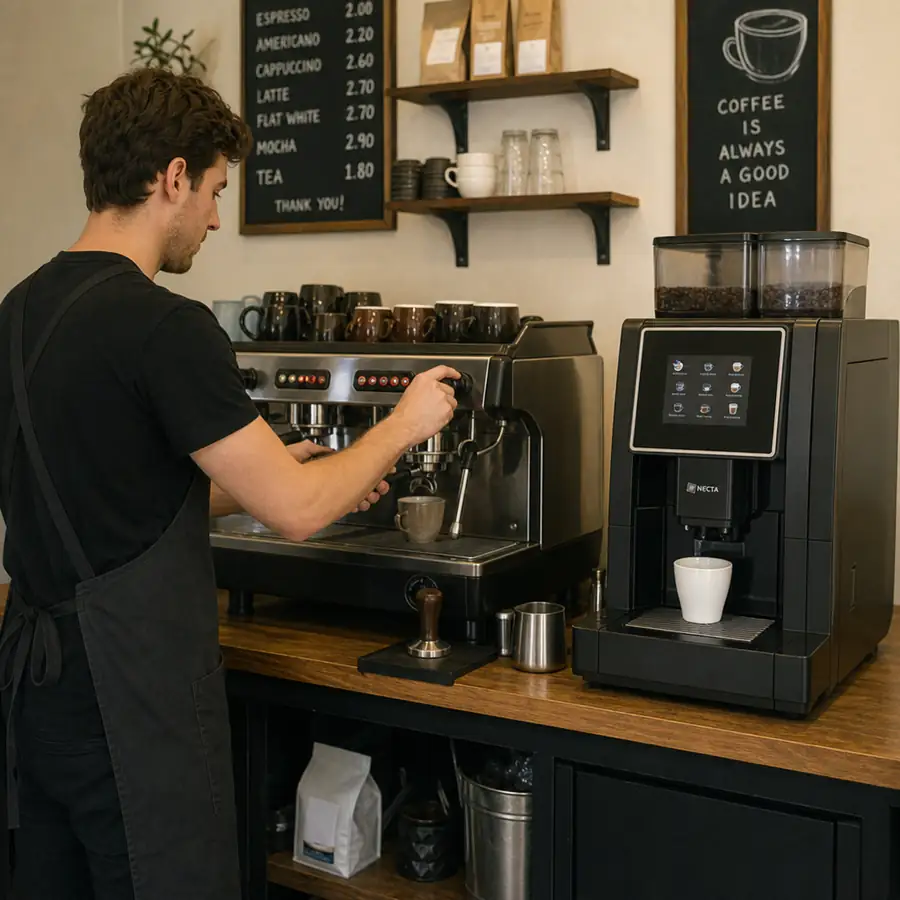
7) Espresso machine vs super automatic: which is right?
The espresso machine vs super automatic decision is really about labor, speed, consistency, and brand identity.
Traditional/semi-automatic (or volumetric) espresso machine
Best if:
- You want a craft-focused brand
- You’ll train baristas well
- You need flexibility for dialing in espresso
Trade-offs:
- More training
- More variability if staff turnover is high
Super automatic espresso machine
Best if:
- You prioritize speed and consistent output with less training time
- You operate in high-volume, lower-complexity environments (lobbies, kiosks)
- You have a small team and need efficiency
Trade-offs:
- Higher service dependency on specialized technicians
- Less “craft” perception for some customers
- Shots may lack the nuance specialty customers expect (depending on model)
Rule of thumb: If your shop’s identity is “specialty coffee experience,” go traditional. If your identity is “fast premium coffee reliably,” super automatic can be a smart business move.
8) Coffee shop setup: systems that prevent daily chaos
A smooth coffee shop setup is mostly about repeatable systems.
Set up:
- Opening/closing checklists (laminated, timed, and realistic)
- Station diagrams (where everything lives)
- Recipe cards (grams, shot times, milk temps, cup builds)
- Cleaning schedules (daily/weekly/monthly)
- Waste tracking (milk, pastries, espresso dialing shots)
Actionable tip: Build your drink recipes like assembly instructions. If someone new can follow them on day three, you’ve built a scalable operation.
9) Coffee shop supplier list coffee beans (and everything else)
You’ll need more than beans. Your coffee shop supplier list coffee beans should include backup options and lead times.
Core supplier categories
- Coffee roaster (beans + training support)
- Dairy and alternative milks
- Bakery/pastry partner (or in-house ingredients)
- Paper goods: cups, lids, sleeves, napkins
- Cleaning chemicals + sanitizer
- Syrups/sauces and tea
- Maintenance/repair: espresso tech, HVAC, plumber
Actionable tip: Always have a secondary option for beans, milk, and cups/lids. A single supply disruption can cost you your busiest weekend.
10) Coffee shop menu pricing strategy (price for margin, not vibes)
Your coffee shop menu pricing strategy should reflect costs, local expectations, and speed of service.
Simple approach to pricing
- Know your drink cost (coffee, milk, cup, lid, syrup)
- Add target gross margin (many cafés aim for strong margins on beverages)
- Compare local competitors (but don’t race to the bottom)
- Use price anchors: small/medium/large, or classic vs specialty drinks
Practical tip: If your menu is too big, your line gets slow, training gets harder, and waste goes up. A tight menu wins.
11) How to calculate coffee shop profit margin (without overcomplicating it)
You can’t manage what you don’t measure. To understand how to calculate coffee shop profit margin, track at least these three buckets:
- COGS (cost of goods sold): coffee, milk, cups, pastries, etc.
- Labor: wages, payroll taxes, benefits
- Occupancy: rent, CAM, utilities
A simple monthly view:
- Revenue
- minus COGS = gross profit
- minus labor and occupancy = operating profit (before debt and owner pay)
Actionable tip: Track profit by category. Drinks usually carry the shop; food can help, but it can also become a labor and waste trap if you overexpand.
12) How to hire and train baristas (so quality stays consistent)
You don’t just need friendly people-you need a repeatable training plan. For how to hire and train baristas, hire for attitude and train for skill, but make sure your training is structured.
Hiring traits that matter
- Calm under pressure
- Cleanliness and checklist mindset
- Communication and teamwork
- Genuine hospitality (not forced)
Training plan that works
- Day 1: safety, cleanliness, customer flow, POS basics
- Days 2-4: drink builds + milk steaming + dialing espresso basics
- Week 2: speed goals, rush simulations, customer problem-solving
- Ongoing: quality checks and coaching
Actionable tip: Define “your standard” in measurable terms: shot time range, milk texture, drink build order, ticket time targets.
13) Best point of sale system for cafes (choose for speed and reporting)
The best point of sale system for cafes is the one that keeps lines moving and gives you clean reporting.
Look for:
- Fast modifiers (milk type, syrup, extra shot)
- Easy refunds/void controls (shrink prevention)
- Inventory tracking (even basic is helpful)
- Online ordering support (now or later)
- Labor and sales reports by hour/daypart
- Reliability offline (internet outages happen)
Actionable tip: Build your POS menu like your workflow: fewer taps, fewer mistakes.
14) Coffee shop startup costs: what actually drives the budget
Coffee shop startup costs vary wildly, but the big drivers are predictable:
- Leasehold improvements (plumbing, electrical, HVAC, walls, flooring)
- Espresso machine + grinders + water filtration
- Refrigeration + ice
- Permits, architect/engineering, inspections
- Furniture, lighting, signage
- Initial inventory + smallwares
- POS hardware and software
- Working capital (to survive the first months)
Actionable tip: Budget for “invisible costs”-electrical upgrades, floor drains, ventilation, and code-required sinks. These are the surprise budget killers.
15) Common coffee shop mistakes to avoid (learn these early)
Here are the common coffee shop mistakes to avoid that show up again and again:
- Picking a location for “cheap rent” instead of customer flow
- Overbuilding the menu (slow service, high waste, hard training)
- Underestimating permits and buildout timelines
- Buying fancy equipment without a maintenance plan
- No clear roles during rush (everyone doing everything = chaos)
- Pricing too low because you feel guilty charging more
- Ignoring seating comfort and acoustics (people leave faster than you think)
Five mistakes that sink first-timers before opening day
COFFEE SHOP GUIDE | WWW.THEHORECASTORE.COM
- Budgeting the machine, not the system. The espresso machine is one line item. Grinder, filtration, ice, and refrigeration are not optional extras, they are the build.
- Skipping water filtration. This shows up as a warranty claim denial six months in, not an upfront cost.
- Undersizing the ice machine. Built for average volume instead of peak hour volume.
- No backup refrigeration. One undercounter unit down means the shop stops. Always have a second source of cold storage.
- Buying used with no warranty math. Lower sticker price, higher five-year cost. Run the numbers before you decide.
Full new-vs-used pricing by category is posted at www.thehorecastore.com, or call us and we will walk it through with you directly.
PREFER TO TALK IT THROUGH? CALL US
(866) 446-7322
16) Coffee shop marketing ideas for grand opening (get momentum fast)
Your opening isn’t one day-it’s a launch window. Use coffee shop marketing ideas for grand opening that create repeat visits, not just a one-time rush.
Ideas that work:
- Soft opening for neighbors (feedback + word-of-mouth)
- “First 100 customers” small perk (not huge discounts)
- Partner with a local bakery, gym, or bookstore for cross-promo
- Limited-time signature drink (simple to make, easy to share)
- Loyalty program from day one
- Photo-ready corner (great lighting + subtle branding)
Actionable tip: Train staff for launch week like it’s a holiday rush. Marketing works only if the product and experience hold up.
About Horeca Store (source of the equipment checklist)
ABOUT US | WWW.THEHORECASTORE.COM
WHY OWNERS BUILD WITH US
The Partner Behind This Guide
Horeca Store is a global commercial kitchen equipment company built to be your one call for the entire build, not just the espresso machine. Here is what that actually gets you.
- Local on the ground in 11 countries A full office, warehouse, and store in each of the USA, UAE, Saudi Arabia, Qatar, Oman, Kuwait, India, Pakistan, China, Hong Kong, and Singapore. Our US location is Houston. That means parts and service without the overseas wait, wherever you are building.
- Education first, sales second We walk you through the equipment before we sell it, the same way we just did in this guide. You make a better decision, and we earn a customer for the long run instead of one transaction.
- One partner, every stage First build, replacement equipment, or a multi-location rollout, direct sourcing relationships across our network mean better pricing and faster lead times than piecing it together yourself.
- A real person, not a ticket number Call and talk through your build with someone who specs kitchens for a living. No call center, no waiting on hold for three departments.
Complete Your Coffee Shop Setup with The Horeca Store
A successful coffee shop needs more than espresso machines, coffee grinders, and brewing equipment. Takeaway and foodservice supplies are also essential for serving customers quickly, safely, conveniently, and professionally. The Horeca Store offers a wide range of quality hospitality essentials, including coffee cups, takeaway cups, disposable food containers, disposable cutlery, napkins, food packaging, and other catering supplies. These products can help coffee shops maintain an organized service area while providing practical packaging solutions for both dine-in and takeaway customers.
Whether you're opening a specialty coffee shop, café, bakery, food truck, hotel coffee bar, or takeaway coffee business, having dependable supplies readily available can help keep your daily service smooth, efficient, and customer-friendly. From serving freshly prepared coffee, espresso, and cold beverages to packaging pastries, sandwiches, desserts, snacks, and takeaway orders, the right supplies can support your staff and enhance the overall customer experience. Explore The Horeca Store for quality foodservice and hospitality products designed to meet the everyday needs of modern coffee shops and growing beverage businesses.
Conclusion: your coffee shop is a system, not just a vibe
If you take one thing from this: what you need to build a coffee shop is a clear concept, a smart location, a layout designed for flow, reliable equipment, and repeatable systems for quality and speed. Get those right, and everything else-menu creativity, seasonal drinks, community events-becomes a bonus instead of a lifeline.
If you want, tell me your city, concept (grab-and-go vs sit-and-stay), and estimated square footage, and I’ll suggest a starter equipment package and layout priorities tailored to your setup.