
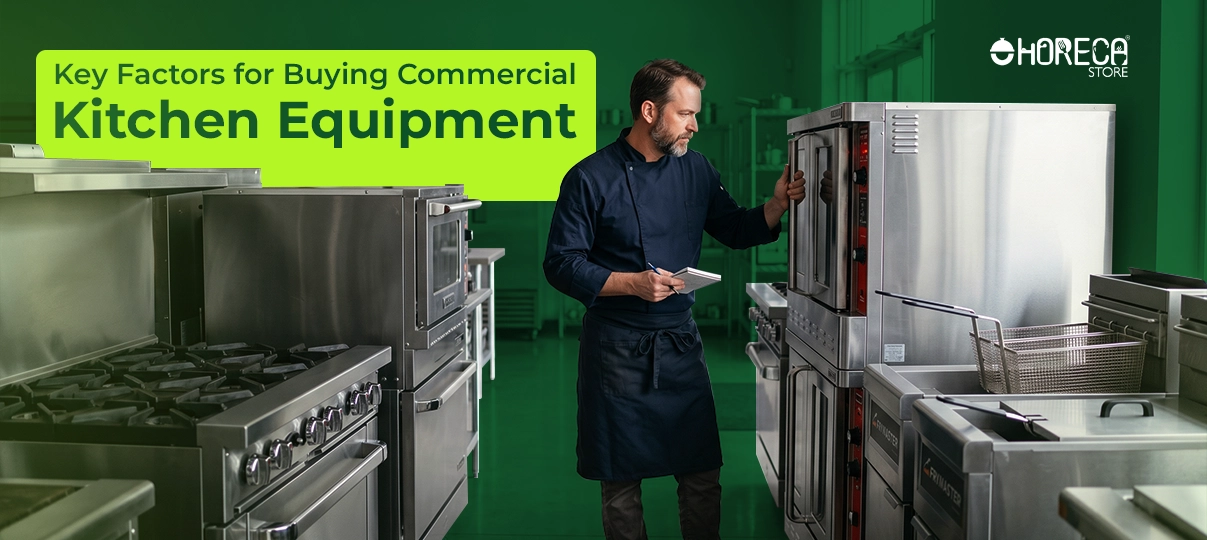
You’ve finally decided to turn your famous sourdough into a business, but as you begin shopping, you quickly realize professional ovens don't act anything like the one in your kitchen. A top-tier residential stove is built to comfortably cook a family dinner, whereas even a basic commercial range is heavily engineered to produce hundreds of meals a day without breaking a sweat. Making the leap to pro-level gear is a thrilling milestone for any growing food venture. Still, it is incredibly easy to get lost in a sea of stainless steel and unfamiliar specifications.
Industry data reveals that the secret to a profitable food operation isn't just a great recipe; it is mastering the "3-minute rule" for efficiency. Your home dishwasher takes an hour to clean plates, but a commercial unit tackles the same job in just three minutes to keep service moving during a lunch rush. Because of this intense commercial throughput, understanding the cost of downtime versus the cost of your initial investment becomes absolutely critical. Buying a cheaper machine that breaks down on a busy Friday night will ultimately cost you far more in lost sales than investing in a heavy-duty unit upfront.
Beyond raw speed, reading through any reliable commercial kitchen equipment buying guide highlights a maze of hidden rules regarding utility infrastructure and health code compliance. Upgrading a space means verifying your electrical panels can handle the massive power draw and confirming your new gear carries an NSF certification. Think of an NSF rating as a strict seal of cleanliness, proving the machine lacks tiny cracks where dangerous bacteria can hide. Overlooking these details leads to expensive nightmares, like buying a beautiful reach-in refrigerator only to discover it instantly trips your circuit breakers.
Navigating these professional hurdles requires a solid strategy rather than just trusting random kitchen equipment reviews online. Evaluating your floor plan, decoding utility needs, and selecting the exact professional kitchen tools required for your menu allows you to safely build a compliant, highly functional workspace.
Why 'Heavy Duty' Isn't Just a Label: Speed, Power, and the 3-Minute Dishwasher
Dropping a massive batch of frozen fries into hot oil instantly kills the heat. In a standard kitchen, you wait ten minutes for the oil to get hot again. High-volume food preparation equipment is built specifically to solve this problem through rapid "recovery time"—the speed at which a machine returns to its target cooking temperature so you can start the next batch immediately.
This relentless pace relies on a machine's "duty cycle," which measures how continuously it can run without resting and matters far more than simple power ratings. To calculate and handle your required output per hour, professional manufacturers replace residential plastic gears with heavy-duty stainless steel. The practical difference is staggering:
- Dishwashers: Home models handle one cycle every two hours; commercial units wash a full rack every 3 minutes.
- Mixers: A residential appliance kneads dough for ten minutes before overheating; commercial beasts mix continuously all morning.
Because these tools operate under extreme pressure, following a strict industrial cooking equipment maintenance schedule is vital to prevent sudden breakdowns. Once you verify your machines can handle the required output, your next hurdle is getting them safely inside your facility.
The 'Measure Twice, Cry Once' Strategy: Fitting Your Dream into 400 Square Feet
Finding the perfect refrigerator is thrilling, but discovering it won’t fit through your front door on delivery day is an expensive nightmare. Before buying, execute a "dry run" measurement of your entire delivery path. Grab your tape measure and check every threshold, tight hallway corner, and doorway between the street and the kitchen. Commercial units rarely flat-pack like home furniture, meaning you need absolute certainty that a solid, welded frame can physically navigate the route into your building.
Once the machine is safely inside, its physical footprint changes the moment you start cooking. Learning how to measure kitchen space for equipment means looking far past the basic closed dimensions in a catalog. A commercial oven might fit perfectly against the back wall, but you must account for clearance zones—the extra room needed when heavy doors drop open or deep refrigeration drawers fully extend. If an open door pins a cook against a prep counter, your workspace immediately becomes a safety hazard.
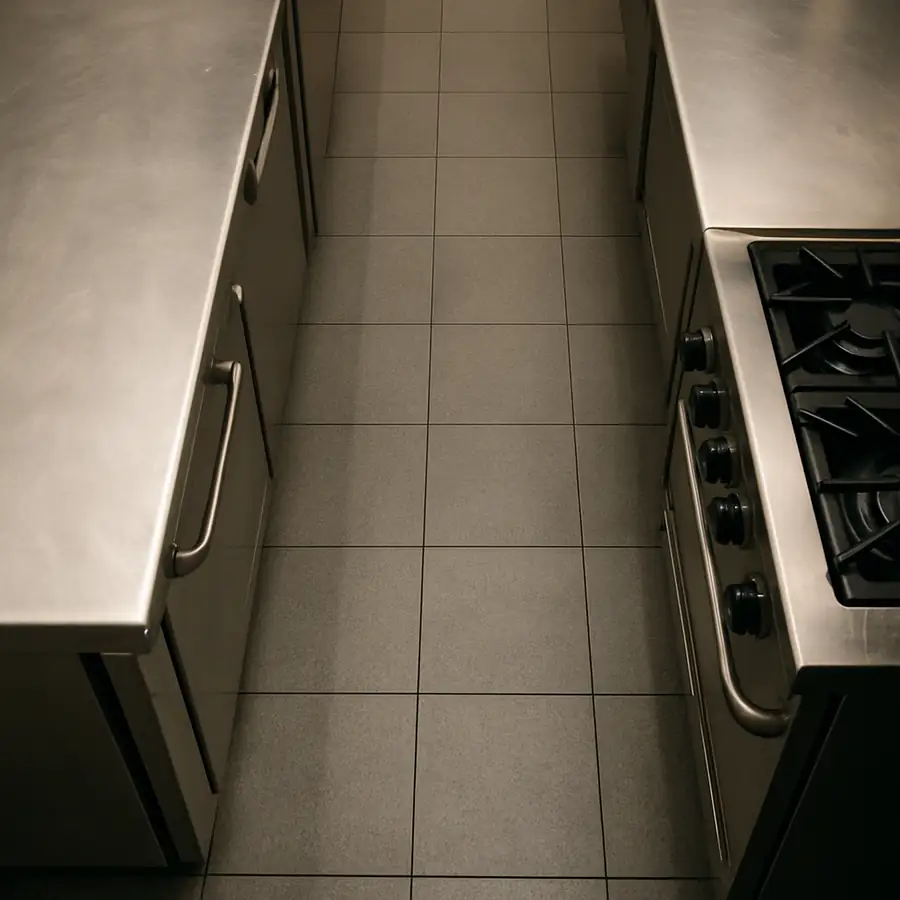
That vital breathing room between your hot stoves and cold prep tables is the lifeline of your operation. To maintain safe commercial kitchen layout and ergonomics, you must carve out a minimum aisle width of 36 to 42 inches. This specific gap ensures two people can comfortably pass each other carrying hot pans without colliding. Understanding these spatial boundaries dictates exactly how you arrange your machines to keep staff from bumping elbows.
Mastering Kitchen Flow: How Proper Layout Prevents the 7 PM Logjam
A bustling kitchen is a high-performance engine; poorly placed equipment guarantees bottlenecks during the dinner rush. While home kitchens rely on a basic stove-sink-fridge "work triangle," commercial kitchen layout and ergonomics demand specialized station optimization. You must arrange equipment in a logical sequence to minimize footsteps so staff aren't constantly dodging each other. Grouping multi-functional kitchen tools for menu flexibility directly at the workstation allows your team to pivot tasks seamlessly without crossing the room to grab a blender.
Dedicated areas naturally prevent this chaos by establishing clear boundaries. A functional commercial layout flows sequentially through four distinct zones:
- Receiving: Where bulk ingredients arrive and are sorted.
- Prep: The cold zone dedicated to chopping and mixing.
- Cooking: The hot line where meals are fired.
- Cleaning: The dish pit, kept far away from fresh food.
Crucially, strictly separate your cooling units from your heat sources. Placing a deep fryer next to a refrigerator forces the fridge to battle extreme heat, wasting energy and destroying its compressor prematurely.
Mapping this perfect, step-saving flow makes it tempting to immediately slide heavy machinery into position. However, dropping a machine exactly where you want it doesn't mean it will turn on. The most brilliantly optimized station is useless if the wall behind it lacks the proper utility connections.
Plugs, Pipes, and Power Spikes: Why Your New Oven Might Need a Special Wall Socket
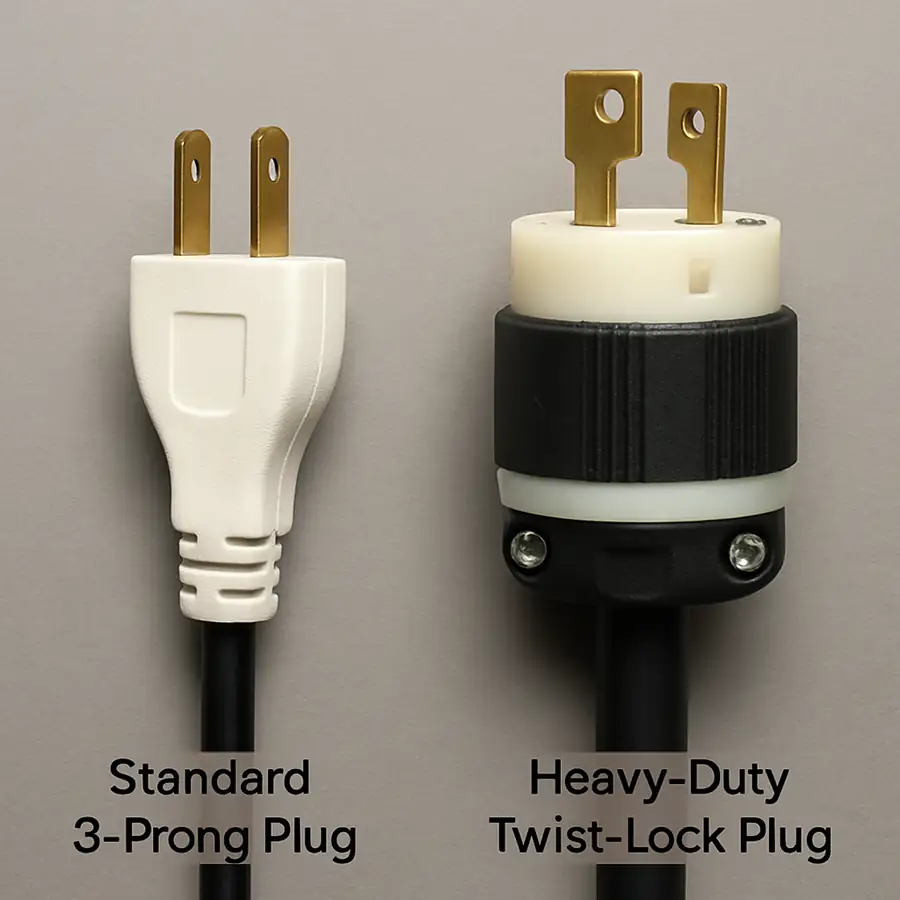
Unpacking a massive new appliance is thrilling until you realize the plug looks completely alien. Determining restaurant equipment power requirements starts with auditing your building's electrical panel before buying. Commercial machines often demand a "dedicated circuit"—a wire running straight to your breaker box that powers absolutely nothing else. They also use specific NEMA plug types, featuring uniquely shaped prongs designed to lock high-voltage connections in safely. Identifying these exact plug needs prevents expensive electrical surprises.
Choosing heat sources introduces another puzzle, particularly when comparing gas vs electric commercial ranges. Gas equipment relies on a "BTU load," a rating indicating its raw heating power. Hooking a heavy-duty stove to a standard residential gas pipe is like trying to drink a thick milkshake through a tiny straw. To achieve a roaring, professional-level flame, you must verify your building's gas line diameter is wide enough to feed the appliance without starving it.
Beyond electricity and fuel, plumbing hides an easily forgotten trap. Expensive espresso makers and commercial ice machines carry strict water filtration requirements to prevent hard mineral scale from destroying their internal components. Once you successfully navigate these specialized utility connections to fire up your new cooking line, you instantly generate massive amounts of grease and heat, requiring heavy-duty ventilation.
The Hidden Cost of Breathing: Why Your Ventilation Hood Might Outprice Your Range
While a home stove creates a little smoke, commercial kitchens generate massive heat and dangerous "grease-laden vapors"—airborne oils that easily start fires. To handle this, you need a heavy-duty exhaust system. If you just bake bread, a simple Type II hood safely removes heat and steam. However, frying or grilling requires a Type I hood, which contains built-in fire-suppression systems to capture vaporized grease safely.
Sucking thousands of cubic feet of smoky air out of a building creates a massive vacuum. If you don't actively pump fresh air back inside—a mechanical concept called "make-up air"—your exhaust will literally fight the building, powerfully sucking your front doors shut. Balancing this airflow is critical when outfitting commercial kitchen equipment. You must navigate local health department ventilation requirements early, because some older spaces structurally cannot support the necessary heavy ductwork.
Treat your exhaust hood as a primary project budget item rather than an afterthought, as it frequently outprices the stove itself. Getting your air management approved by the fire marshal keeps your business open and safe, preparing you for the inevitable surface checks from health inspectors.
The NSF Shield: Why This Tiny Logo is the Secret to Passing Your Health Inspection
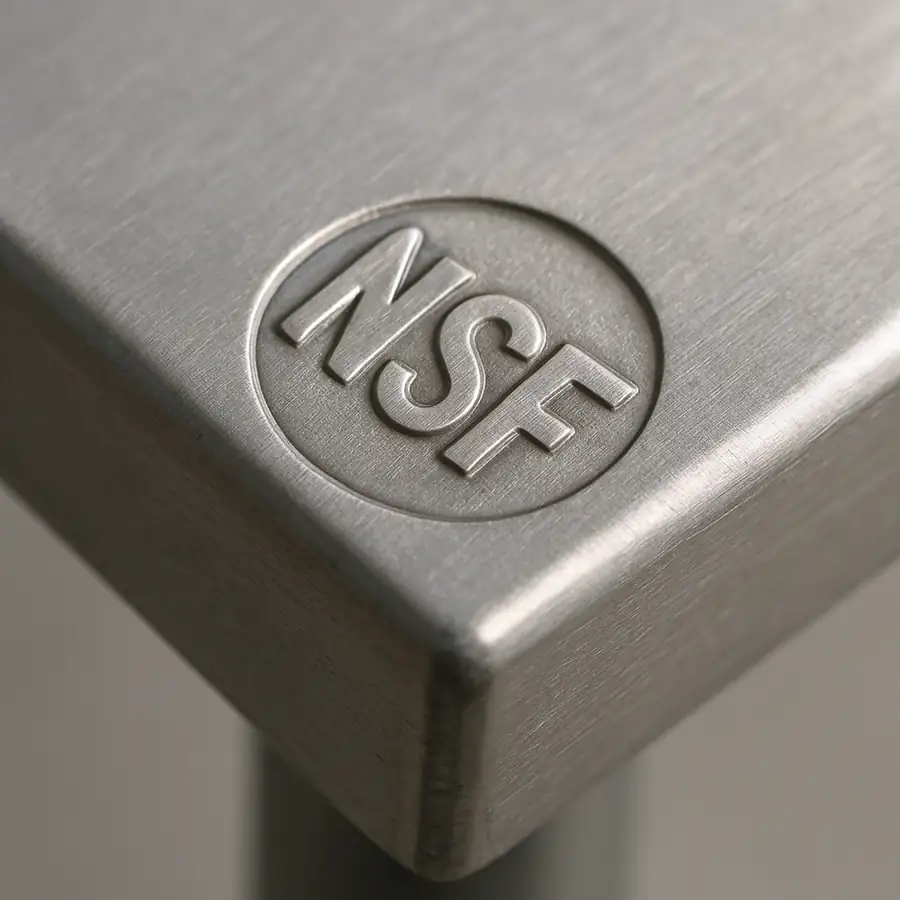
Walking through a restaurant supply store, you might wonder why a simple prep table outprices a heavy-duty garage workbench. The answer is NSF and UL certification for food safety. The NSF mark acts as a guaranteed seal of cleanliness for health inspectors. Equipment with this coveted sanitation rating features "coved corners"—smooth, rounded inside edges rather than sharp 90-degree angles—ensuring grease and bacteria have absolutely nowhere to hide during your nightly scrub-downs.
Beyond the physical shape, the metal itself dictates how long your gear will survive daily abuse. Inspectors specifically look for Type 304, the definitive stainless steel grade for commercial kitchens. Unlike cheaper metals that quickly pit or rust when exposed to acidic tomato sauce or harsh bleach, 304 stainless resists corrosion effortlessly. This specific material keeps your workspace hospital-clean and prevents sudden health department fines.
Spotting these tiny stamped logos is mandatory before buying anything, especially when hunting for secondhand bargains. Without them, a strict inspector can force you to replace unapproved items entirely. With prep surfaces ready to pass the white-glove test, the focus shifts to safe ingredient storage.
Cracking the Cooling Code: How to Size Your Fridge for a Friday Night Rush
Every time you open your fridge during a busy rush, hot air floods the cabinet. This "ambient temperature load" forces the machine to work overtime just to keep your ingredients safe. To fight this, you must choose the right compressor (cooling engine) location. Bottom-mount compressors pull cooler air from the floor but easily clog with dropped flour or dust. Top-mount compressors avoid floor debris and vent heat upward, making them the smarter choice for a hot, bustling kitchen.
Choosing between a standard "reach-in" cooler or a room-sized "walk-in" depends entirely on your delivery schedule. As a quick commercial refrigeration sizing guide, match your equipment to your expected daily output:
- Small (Under 50 meals/day): A single-door reach-in easily holds daily prep.
- Medium (50-150 meals/day): A two-door unit provides a buffer for bulk ingredients.
- Large (150+ meals/day): A walk-in cooler becomes essential for storing large weekly deliveries.
Protecting those ingredients shouldn't bankrupt your utility budget. Investing in energy star rated restaurant appliances ensures your system handles that intense ambient heat without burning out the motor prematurely. Once your food is safely chilled, you need the right firepower to cook it.
Gas vs. Electric Ranges: Choosing the Engine that Fits Your Menu and Your Building
Stepping up to high-volume food preparation equipment means leaving behind the gentle simmer of a home stove. When comparing gas vs electric commercial ranges, your choice depends heavily on how you cook. Gas is the traditional powerhouse, measured in BTUs (British Thermal Units)—a basic rating for how much heat a burner pumps out. If your menu relies on rapid searing, the instant flame of a high-BTU gas range delivers that aggressive heat.
However, all that fire heavily impacts your building's utility load. Gas burners release massive excess heat into the room, forcing your air conditioning to work overtime. Electric options, specifically modern induction cooktops, solve this through magnetic efficiency. Instead of heating the air, induction transfers energy directly into the pot. This keeps your kitchen dramatically cooler while offering pinpoint temperature control for delicate tasks like holding sauces.
Finalizing this decision requires checking local utility rates, since cheap natural gas might offset those extra air conditioning costs. By matching your fuel to your menu and budget, you build a solid cooking foundation that maximizes your footprint.
The Menu Swiss Army Knife: Using Multi-Functional Tools to Save Space and Money
Every square inch of a professional kitchen costs money, making single-use gadgets a fast way to drain your budget and cramp your workspace. When outfitting a new line, prioritizing multi-functional kitchen tools for menu flexibility keeps your initial costs down while maximizing your available footprint. Instead of buying a separate machine for every recipe, smart operators look for versatile powerhouses that can shift gears as quickly as their menu changes.
The ultimate example of this versatility is the "combi-oven," a piece of commercial kitchen equipment that blends wet steam with dry baking heat. By controlling the exact moisture level inside the cooking chamber, this single unit easily replaces three bulky appliances:
- A traditional steamer for crisp vegetables and delicate seafood.
- A convection oven for evenly browned pastries and breads.
- A slow cooker for tender, overnight roasts.
Investing in adaptable gear means your kitchen won't require an expensive overhaul if you decide to pivot from baking breakfast pastries to roasting dinner chickens next year. Consolidating your appliance list shrinks your power requirements and leaves physical room for future growth. With your versatile anchor machines identified, you must determine the best way to finance them.
Leasing vs. Buying: The Smart Way to Preserve Your Cash Flow While Outfitting Your Kitchen
Staring at an equipment quote often causes instant sticker shock. When evaluating leasing vs buying commercial kitchen equipment, the decision comes down to cash flow. Buying outright is a "capital expense," a large one-time hit to your savings. Leasing treats the gear like a monthly utility bill, creating a predictable operational expense. This steady cost preserves your available cash for sudden emergencies or essential marketing pushes.
Making the smartest choice requires calculating the "Total Cost of Ownership," which measures the true cost of a machine over five years. While leasing feels cheaper today, sixty months of payments will ultimately exceed the retail price. Fortunately, buying offers a major financial perk called a Section 179 deduction. This specific tax rule lets business owners deduct the full purchase price of qualifying equipment from their income in the very first year, keeping more money in your pocket at tax time.
Some machines are practically built to be leased rather than owned. Complex units with continuous water flow, like commercial ice machines, are notorious for expensive, sudden breakdowns. Leasing these finicky items means the hefty costs of commercial appliance warranty and service contracts are usually included right in your monthly payment. When that ice maker breaks on a busy Friday night, the leasing company handles the emergency repair bill.
A safe strategy mixes both financial approaches to protect your overall budget. You can purchase low-maintenance workhorses while leasing fragile appliances.
Refurbished vs. New: Identifying High-Quality Used Gear Without Getting Burned
Scoring a discount on a professional oven feels like a massive win, but evaluating refurbished vs new restaurant equipment quality requires a sharp eye. You should source from reputable restaurant liquidators or certified auction houses rather than rolling the dice on random internet sellers, as professionals ensure basic refurbished standards. Always calculate the "risk-adjusted" price before buying: is a 50% discount truly worth a zero-day guarantee?
Because every machine has a limited component lifespan, understanding basic mechanical wear is your best defense against buying a dud. You must physically inspect high-wear parts before purchasing. Check refrigerator door gaskets for tiny cracks that let cold air escape, and examine oven thermostat sensors for heavy grease buildup. Digging through online kitchen equipment reviews helps confirm if replacement parts for that specific used model are still manufactured.
To minimize costly mistakes, follow this straightforward sourcing rule for outfitting your space:
- Safe to Buy Used: Prep tables, multi-compartment sinks, and gas ranges (they have very few fragile electronics).
- Buy New Only: Commercial dishwashers and ice machines (continuous water flow constantly degrades internal parts).
Even perfectly sourced gear eventually breaks down, making proper warranties and maintenance protocols essential.
The Fine Print Protection: Navigating Warranties and Maintenance to Avoid $500 Repair Calls
Decoding commercial appliance warranty and service contracts is the easiest way to protect your budget. Unlike a home blender you can just return to the store, professional gear requires specific clauses. Always verify your coverage specifies "on-site" repair instead of a "bench" warranty, so you aren't forced to drag a 300-pound refrigerator to a repair center yourself. Furthermore, only use authorized service providers—manufacturer-approved technicians—because hiring a standard neighborhood handyman instantly voids your protection.
Even the best warranties fail if the manufacturer suspects neglect, making a preventative maintenance log your ultimate insurance policy. This simple notebook proves you took care of the machine. Whenever you clean a filter or replace a part, write down the date. If a motor burns out, handing the inspector this detailed logbook ensures your claim won't be denied over accusations of improper care.
To prevent sudden breakdowns, you must build a strict industrial cooking equipment maintenance schedule:
- Refrigeration: Vacuum condenser coils monthly to stop overheating, and inspect door gaskets for air leaks.
- Ranges: Soak gas burner heads to remove grease, and test the oven thermostats monthly.
With your gear protected, you are ready to execute your launch plan.
Your 30-Day Kitchen Launch Plan: Turning This Guide into Your First Service
You no longer have to guess your way through a sea of confusing stainless steel. Before cooking your very first meal, execute a strict three-point check on your new setup. Verify that your power connections safely match your utilities, ensure every heavy appliance is perfectly leveled to prevent uneven wear, and run a complete sanitation cycle to meet health department standards.
Next, give your professional kitchen tools a mandatory burn-in period. New commercial ovens and ranges typically ship with protective factory oils coating their internal heating elements. Running these units at a high temperature for a few hours while the room is empty safely burns off those residues, preventing an unpleasant chemical smell from ruining your first batch of food.
Once everything is cured and clean, coordinate a full stress test day. Turn on your ovens, ventilation hoods, fryers, and refrigerators all at exactly the same time. This crucial trial run proves your electrical panel can handle the combined demand without unexpectedly tripping breakers, and it ensures your physical workflow actually makes sense when the heat is on.
Finally, transition from planning to operation using a prioritized thirty-day equipment rollout rather than trying to master every machine on day one. With your equipment securely installed, tested, and sanitized, you are ready to operate safely. Start with a simplified menu to build confidence with your new heavy-duty gear, analyze your real-world workflow, and gradually scale up your operation your team masters the space.
Buy Commercial Kitchen Equipment from The Horeca Store
Choosing the right commercial kitchen equipment is essential for creating an efficient, safe, and productive restaurant environment. The Horeca Store offers a wide range of professional kitchen equipment, including cooking appliances, refrigeration units, food preparation tools, and storage solutions for restaurants, hotels, cafés, cloud kitchens, and catering businesses. Our products are designed to deliver reliable performance, durability, and value for businesses of all sizes.
At The Horeca Store, we help you find the ideal restaurant kitchen equipment based on your space, budget, and operational requirements. From energy-efficient appliances to heavy-duty commercial solutions, our collection supports smooth kitchen operations and improved productivity. Explore our range of high-quality equipment and build a professional kitchen that meets your business needs.