
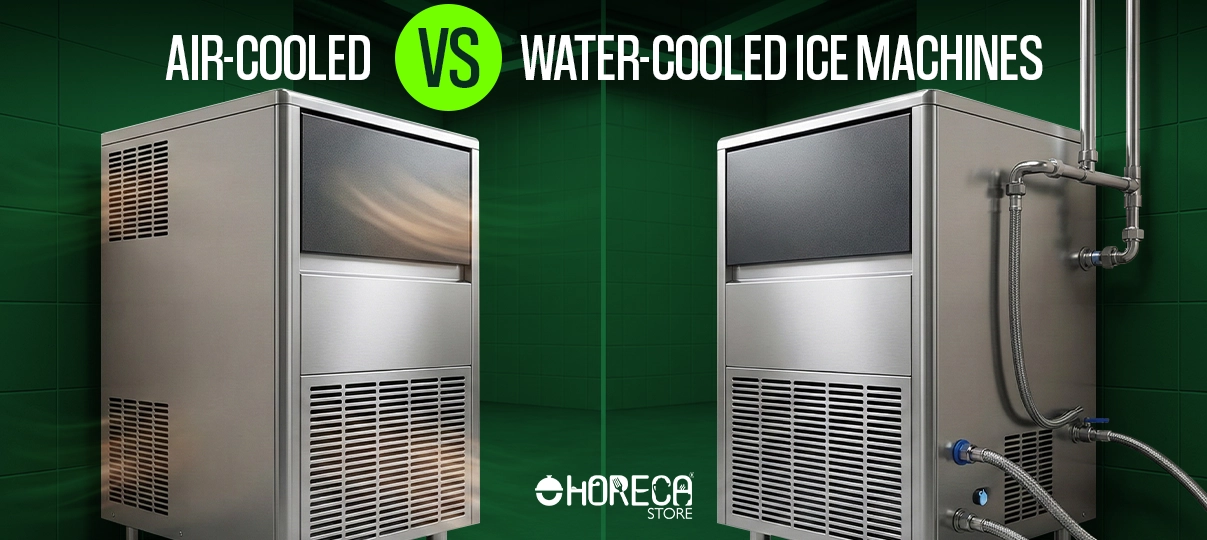
What if the hardest job your ice machine has isn't making things cold, but getting rid of heat? It sounds strange, but just like the back of your refrigerator gets warm, every ice machine generates a significant amount of waste heat while freezing water. How it handles that heat is the fundamental difference between air cooled and water cooled ice machines, and it’s the secret to choosing the right one for your needs.
At its core, the choice is simple. An air-cooled model works like a powerful computer, using a fan to blow hot air away from its internal parts. A water-cooled machine, on the other hand, acts more like running a hot pan under the faucet, using a steady stream of water to carry the heat away. Whether it’s for a small office or a large commercial ice machine, this single mechanical difference creates a cascade of practical consequences.
This decision directly impacts your wallet, your ears, and even your room’s temperature. The air cooled vs water cooled ice machine cost isn't just about the purchase price; it's about your future electricity and water bills. One is typically louder and heats up the room, while the other is quiet but uses water continuously. The right choice depends on a clear-eyed assessment of your priorities for cost, noise, and performance.
The Hidden Job of Every Ice Machine: Why They Need to Get Rid of Heat
It seems strange, but the hardest job your ice machine has isn't making things cold—it's getting rid of heat. Think about your home refrigerator; if you’ve ever felt the warm air coming from the bottom or the coils on the back, you’ve experienced this firsthand. To freeze water into ice, a machine has to actively pull the heat out of the water and move it somewhere else. It’s not creating cold, but rather moving heat from one place to another.
All that captured heat has to be dumped. If the machine can’t get rid of it, it will quickly overheat and stop working, much like a laptop will slow down or shut off when its fan is blocked. The entire difference between an "air-cooled" and a "water-cooled" model comes down to the method it uses to perform this crucial task. This single choice is what determines the machine’s noise, efficiency, and installation needs.
Air-Cooled Ice Machines: The Simple "Computer Fan" Method
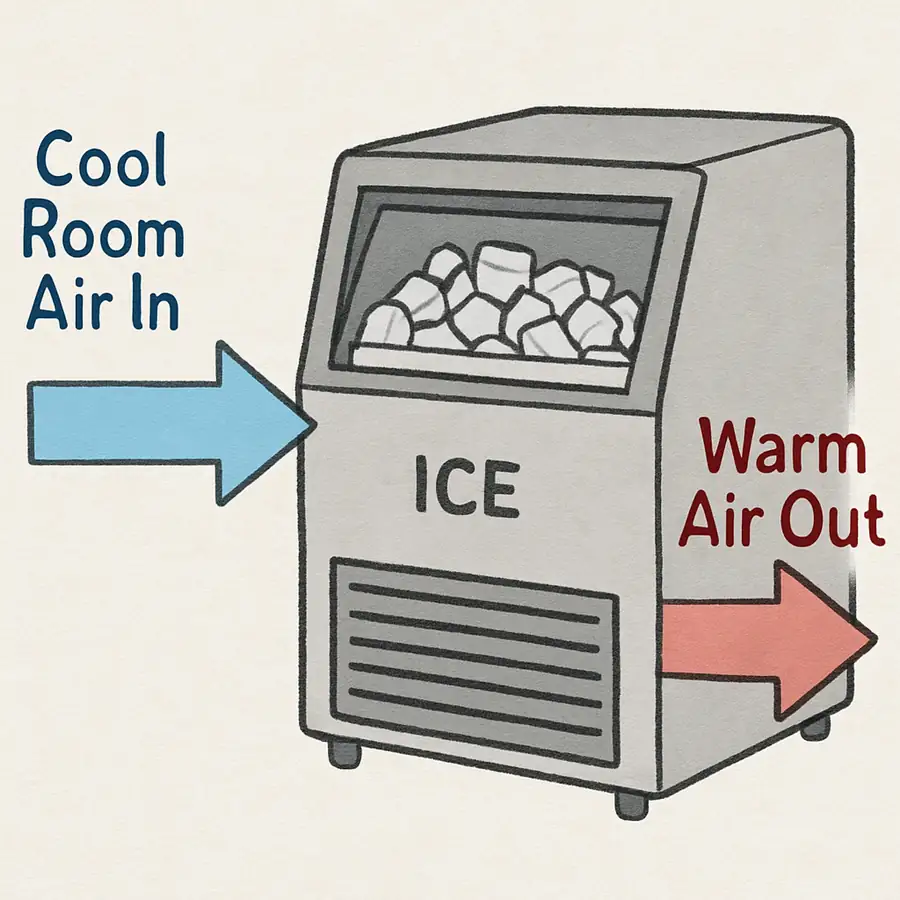
The most common and straightforward way to cool an ice machine is with air. Think about the fan inside your desktop computer that whirs to life to keep it from overheating—an air-cooled ice machine works on the exact same principle. It has a fan that pulls in the surrounding room air and blows it across the machine's hot internal parts. This process effectively transfers all the waste heat from the machine directly into your room.
Because it relies on a fan and the air in your space, this design has some very predictable outcomes. It's the most popular choice for a reason, but it's important to understand the trade-offs.
- Pro: Lower upfront purchase price.
- Pro: Simpler installation (no extra plumbing needed).
- Con: Adds heat to the room, which can raise your A/C costs.
- Con: The fan creates constant background noise, similar to a strong window fan.
- Con: Becomes less efficient and may struggle in hot kitchens or tight spaces.
Crucially, this method means the machine absolutely must have "breathing room." If you place it in a tight cabinet or right up against a wall, you're essentially suffocating it. The fan won't be able to draw in enough cool air, and the machine will labor to get rid of heat, becoming inefficient and potentially shutting down. As a rule of thumb, always plan for at least 6-12 inches of open space around the unit’s vents. But if heating up your space or adding noise is dealbreaker, there is much quieter alternative.
Water-Cooled Ice Machines: The Quiet "Hot Pan" Method
If the noise and heat from an air-cooled model are a concern, a water-cooled machine offers a completely different approach. The best way to understand how a water-cooled ice machine works is to think about cooling a hot pan in your sink. Instead of using a fan, the machine constantly circulates a small amount of water over its hot internal components. This water absorbs all the waste heat, and the resulting warm water is then simply sent down a drain.
The result of this process is a night-and-day difference in the machine's environment. Because there's no large fan and no hot air being exhausted, these are the quietest ice machines you can buy, often making little more than the sound of gently running water. They also add zero heat to your room, which is a major advantage in a hot kitchen, a small bar, or any air-conditioned space where you're trying to keep costs down. This makes it an ideal choice for customer-facing areas or noise-sensitive environments.
However, this method comes with a critical non-negotiable requirement: plumbing. Before you even consider a water-cooled model, you must have two things ready at the installation spot: a cold water supply line to feed the machine and a floor drain to carry the heated water away. This setup increases installation complexity and, of course, leads to constant water consumption. This brings up the central question of operating costs: is it cheaper to pay for the extra electricity of an air-cooled machine or the continuous water use of a water-cooled one?
Cost Deep Dive: Is It Cheaper to Pay for Electricity or Water?
When you compare the air-cooled vs. water-cooled ice machine cost, it’s a classic case of paying now or paying later. Air-cooled machines almost always have a lower price tag, making them the more attractive option at checkout. In contrast, water-cooled models, with their more complex internal parts and plumbing requirements, typically require a larger upfront investment. This initial difference often makes the decision seem simple, but the true cost of ownership only reveals itself on your monthly utility bills.
However, the sticker price doesn’t tell the whole story. An air-cooled machine’s operating cost includes a hidden factor: it makes your air conditioner work harder. By constantly pumping hot air into the room, it forces your A/C system to run more often just to maintain the same temperature. This "heat tax" means you’re paying twice on your electricity bill—once for the ice machine and again for the extra A/C. Over a hot summer, this can significantly increase the total utility costs for any busy space.
On the other side, a water-cooled machine trades that electricity cost for a higher water bill. While this might seem expensive, the superior water-cooled ice machine efficiency means it doesn't raise the room's temperature, completely avoiding the A/C penalty. The financially smarter choice ultimately depends on your local utility rates. If you live where electricity is expensive but water is relatively cheap, a water-cooled model could easily save you money in the long run. But cost isn't just about money; it’s also about whether your machine can perform when things really heat up.
The Hot Kitchen Problem: Which Machine Survives the Summer Rush?
Imagine your kitchen during a sweltering summer rush. An air-cooled ice machine in this environment is like a person trying to cool off with a fan in a 90-degree room—it helps, but it’s fighting a losing battle. The machine relies on the surrounding air to cool its internal parts, and when that air is already hot, the air cooled ice machine efficiency plummets. It has to work much harder to produce less ice, struggling to keep up right when you need it most.
In contrast, a water-cooled machine is completely unfazed by a hot room. Because it uses cool water from your plumbing to carry away heat, the air temperature in your kitchen simply doesn’t matter. This consistent, reliable performance makes it the best ice machine for hot kitchens, non-air-conditioned work areas, or any space where temperatures can climb. It will produce the same amount of ice whether the room is a cool 70°F (21°C) or a blistering 95°F (35°C).
This performance difference becomes critical under extreme heat. An overworked air-cooled unit may even shut down to protect itself from overheating, leaving you without ice entirely. Before you buy, here's a simple test: place a thermometer where you plan to install the machine. If the temperature regularly climbs above 80-85°F (27-29°C), you need an ice maker for high ambient temperature, and water-cooled model is much safer bet. But what if you have a hot location and want to avoid the high water bill?
The "Third Way": When to Use a Remote Condenser Ice Machine
What if you could get the quiet, cool performance of a water-cooled machine without the high water bill? This "best of both worlds" approach exists, and it’s called a remote condenser system. The concept is a lot like a central air conditioner in a house: the part that makes things cold is inside, while the noisy, heat-producing unit sits outside. A remote condenser ice machine does exactly that, splitting the ice maker from its cooling fan.
With this setup, the ice-making head inside your business remains quiet and doesn't add a single degree of heat to your room. All the noise and hot air are sent to the condenser unit, which can be placed on a roof or behind the building. You get the peaceful indoor environment of a water-cooled machine but rely on air for cooling, so it doesn't impact your water usage. It’s an ideal solution for keeping customer-facing areas and hot kitchens comfortable.
This premium solution, however, comes with the highest upfront cost. The installation is more complex because a technician must run refrigerant lines between the indoor and outdoor units, similar to installing a central A/C system. This often makes it a choice for specific commercial situations where both noise and heat are critical concerns that must be solved.
Your Perfect Match: A 3-Step Guide to Choosing the Right Ice Machine
The core difference between these machines isn't about making ice, but about getting rid of heat. With that key principle in mind, the choice becomes a clear set of trade-offs based on your specific priorities. To find the right match for your business, consider the following:
- Choose Air-Cooled if... your #1 priority is a low purchase price, your location is cool and well-ventilated, and moderate fan noise is acceptable.
- Choose Water-Cooled if... your #1 priority is quiet operation, your location is hot or poorly ventilated, and you have access to affordable water and a drain.
- Consider a Remote Condenser if... you need quiet, cool indoor operation but want to avoid high water usage, and you have a large budget and space for an outdoor unit.
Ultimately, the best machine isn't the most expensive or complex one; it’s the one that fits seamlessly into your environment. By focusing on how an ice machine will interact with your space—its temperature, noise level, and utility costs—you can confidently select the model that will perform reliably for years to come.
Why Buy Commercial Ice Machines from The Horeca Store?
Choosing the right commercial ice machine is essential for ensuring a consistent ice supply, improving beverage quality, and maintaining efficient day-to-day operations. The Horeca Store offers a comprehensive range of commercial ice machines, including air-cooled, water-cooled, modular, undercounter, and countertop models from trusted brands. Whether you operate a restaurant, hotel, café, bar, pub, healthcare facility, supermarket, or catering business, our ice machines are designed to deliver reliable performance, energy efficiency, and consistent ice production to meet your business demands.
Whether you're deciding between an air-cooled or water-cooled ice machine or looking to upgrade your existing equipment, The Horeca Store provides expert guidance to help you choose the best solution for your available space, production requirements, and budget. With competitive pricing, dependable customer support, and a wide selection of commercial refrigeration and beverage equipment, The Horeca Store is your trusted one-stop destination for high-quality ice machines that enhance operational efficiency, reduce maintenance concerns, and ensure a steady supply of clean, high-quality ice for your customers.