
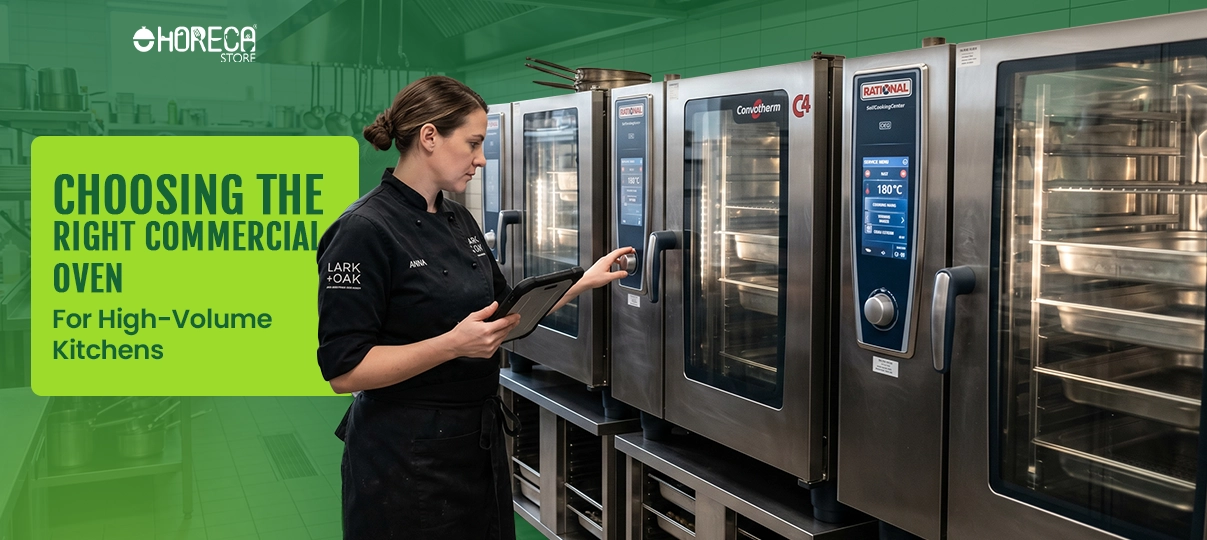
Imagine it is 12:15 PM, a line stretches out the door, and your lunch rush suddenly grinds to a halt just because a cook checked on a tray of food. In a high-volume setup, your oven is not merely a heated box—it is the absolute heartbeat of your entire business.
Domestic baking trains us to accept appliances that slowly return to their set temperature after we peek at a roasting chicken. Industry data reveals that this delay, known as "recovery time," is actually the silent killer of commercial efficiency. Dropping fifty degrees during a quick temperature check instantly creates a kitchen bottlenecking nightmare that ruins carefully timed service tickets.
First-time buyers often fixate on physical size, yet experienced bakery owners generally find that static cooking capacity is vastly different from real-world production. Shoving six sheet pans into a chamber means nothing if the unit struggles to stay hot, which is why calculating actual high-volume kitchen throughput rates matters far more than just counting racks.
Solving this puzzle requires matching your specific menu to the right heating technology. The three main formats dominating professional spaces are convection units that use fans to move hot air, combi models that blend steam with dry heat, and traditional deck ovens that bake directly on hot stone. Understanding these differences guarantees your new kitchen engine drives profit instead of frustration.
Convection, Combi, or Deck? Choosing the Right Engine for Your Menu
Most people assume professional cooking just means buying a bigger version of a home appliance. However, knowing how heat moves differently in professional environments is the secret to faster, more consistent results. When comparing commercial oven types, your menu dictates whether you need convection, combi, or deck technology.
Think of a convection oven like the "wind chill" effect on a cold day. By using internal fans to blow hot, dry air directly across the food, these ovens strip away the cool boundary layer surrounding your product. This constant airflow reduces bake times by up to 25% while creating beautifully crisp edges on cookies and pastries.
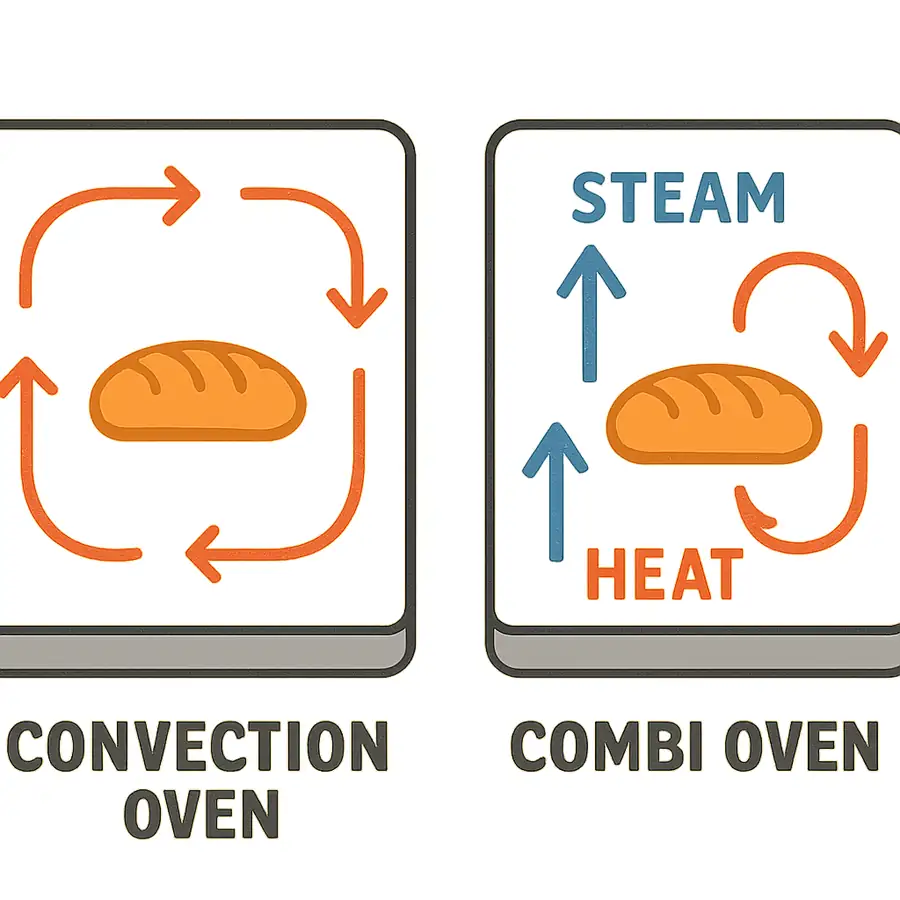
If your menu features juicy meats or delicate vegetables, combi-steam technology is a vital investment. A combi oven blends that speedy airflow with precisely injected steam. When evaluating performance, the combi wins for moisture-controlled cooking, ensuring a batch of roasted chickens never dries out during a busy lunch rush.
Traditional bakeries and pizzerias rely on deck heat instead of blowing air. These ovens use thick stone or ceramic bases to transfer intense, direct heat right into the bottom of the dough, giving artisan bread a classic, chewy crust that air-blown models simply cannot replicate.
Matching your appliance to your menu prevents costly kitchen bottlenecks. To summarize the best commercial ovens based your primary food type:
- Convection: Best for fast baking, cookies, and pastries.
- Combi: Ideal for roasted meats, vegetables, and moisture-rich dishes.
- Deck: The gold standard for artisan bread and pizza crusts.
Calculating Capacity: Why 'Pans Per Hour' is the Only Metric That Matters
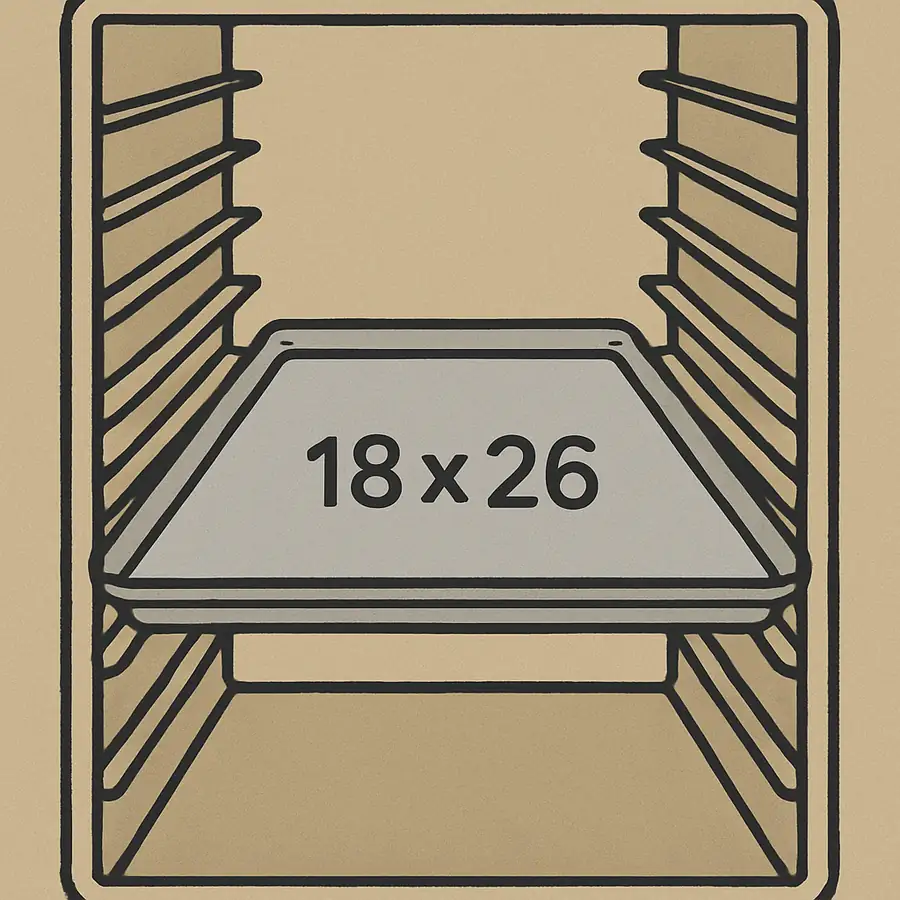
In a bustling kitchen, a bigger box doesn't automatically mean more food. When upgrading to high-capacity food production, measuring appliances by their exterior dimensions is a trap. Professionals measure actual capacity using a universal standard: the full-size 18x26-inch sheet pan. Stop asking how large the oven looks on the outside; ask how many standard pans it can bake simultaneously during your lunchtime rush.
Stuffing every available slot with trays might seem like an easy way to maximize output, but doing so destroys consistency. For convection and combi ovens to work properly, hot air must circulate freely around the product. If you fail to leave at least two inches of vertical clearance between your racks, you choke that vital airflow, guaranteeing cookies with burnt edges and raw centers.
Figuring out exactly how many usable rack slots you need requires a clear throughput formula:
- Identify peak demand: Determine exactly how many portions of your most popular baked item you sell during your absolute busiest hour.
- Pan capacity: Divide that hourly total by the number of portions that fit comfortably on one 18x26-inch pan.
- Hourly cycles: Figure out how many times you can bake that batch in sixty minutes (for example, a 15-minute bake yields four cycles).
- Minimum racks: Divide the total pans needed by your hourly cycles to find your required oven size.
Matching this required internal capacity to your physical external constraints is the final hurdle in commercial oven selection.
Gas vs. Electric: Navigating the Hidden Costs of Your Kitchen’s Power Source
Most people assume buying a commercial oven is as simple as plugging in a toaster, but this myth can quickly derail your equipment budget. In a professional kitchen, your power source dictates both upfront installation hurdles and long-term utility bills. Calculating your true total cost of ownership means looking past the sticker price and evaluating exactly what utilities your building currently supports.
Electric ovens offer incredible temperature precision, though they require serious wiring to operate effectively. These commercial units typically run on 3-phase power—an industrial electrical setup delivering a heavy, constant stream of high voltage to prevent mid-bake power drops. Before committing to electric, an electrician must confirm your building's panel can handle this heavy load, as upgrading standard wiring costs thousands.
Conversely, gas ovens rely on raw heating power measured in BTUs (British Thermal Units). Because gas burners deliver intense, immediate heat, they often serve as the foundation of energy-efficient commercial kitchens in regions where natural gas is cheap. However, accurately assessing long-term utility costs requires checking your specific local energy rates before making a purchase.
The comparison comes down to a few clear tradeoffs:
- Gas: Cheaper to run in many regions and heats rapidly, but requires expensive gas line installations and strict fire code ventilation.
- Electric: Offers highly consistent baking without complex gas plumbing, but demands specific high-voltage electrical setups.
Ultimately, your fuel choice dictates energy recovery—how fast the oven regains temperature after the door opens.
The Critical Role of Recovery Time in Preventing Service Bottlenecks
Imagine a bustling Friday dinner rush where every minute counts. Every time a cook opens the oven door to swap baking sheets, the internal temperature plummets. This sudden drop doesn't just delay a single dish; it triggers a chain reaction that directly impacts your overall table turnover rates. Guests wait longer for their meals, ultimately limiting how many customers you can serve during peak hours.
Different equipment grades handle this inevitable heat loss differently. Cheaper models struggle to bounce back, leaving food in a lukewarm cavity that ruins delicate crusts and slows down service. Professional units solve this through "thermal mass"—heavy, dense wall materials that absorb and hold energy over time. This built-in heat retention guarantees superior heat consistency, instantly warming the fresh, cool air that rushes in when the door opens.
Inspecting an oven’s insulation thickness and door seal integrity is a foolproof way to spot manufacturing quality before buying. A flimsy rubber gasket lets precious heat slowly leak into your workspace, forcing the internal heating elements to overwork. Conversely, tight-fitting industrial seals trap hot air exactly where it belongs, drastically reducing oven recovery time in busy kitchens. This completely airtight environment also maintains perfectly even temperature distribution across every single rack.
Securing an oven that recovers instantly keeps your line cooks moving at top speed. Once you find a model matching your output demands, the next logistical hurdle is safely fitting it into your limited floor plan.
Maximizing Your Footprint with Stackable Designs and Ventilation Needs
Finding the perfect oven is only half the battle; squeezing it into a crowded kitchen without disrupting service is equally crucial. When expanding capacity, look up rather than out. Utilizing stackable ovens allows you to double output within the same physical footprint. However, vertical scaling requires careful planning around door swings and "landing zones"—the immediate, empty counter space needed to safely set down hot pans. Ignoring these clearances creates dangerous bottlenecks, ruining your efforts at optimizing production workflow.
Even the most efficient layout can be quickly derailed by hidden regulatory costs. Many new restaurant owners are shocked to discover that their oven choice dictates a mandatory, often $10,000-plus investment in overhead exhaust systems. Before finalizing your equipment purchase, you must navigate your local commercial kitchen ventilation and hood requirements.
Your specific menu directly determines the exhaust setup you must legally install to manage airflow safely:
- Type 1 Hoods: These heavy-duty ventilation systems manage grease and smoke. If your oven will roast fatty meats or raw proteins like chicken, building codes require this expensive, fire-suppression-equipped canopy.
- Type 2 Hoods: Designed strictly to remove ambient heat and moisture, these are essentially large exhaust fans. They are much more affordable and typically sufficient if you exclusively bake breads or pastries.
Mastering these footprint and airflow logistics ensures your business operates safely from day one. Once your high-capacity setup is properly and legally installed, the focus must shift to protecting that substantial upfront investment through rigorous equipment care.
Ensuring Longevity: Why NSF Standards and Preventive Maintenance Protect Your ROI
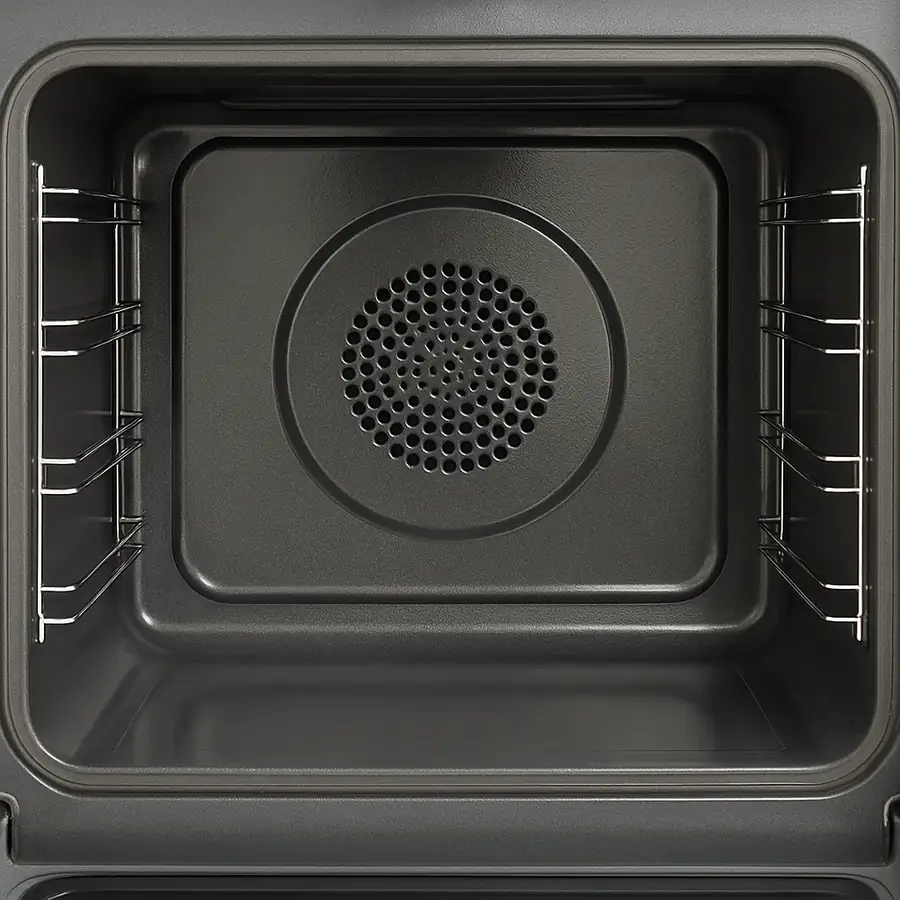
Buying an oven is a major milestone, but protecting that investment requires shifting your focus to daily upkeep. Sanitation in commercial kitchens relies heavily on equipment designed to meet strict NSF certification and sanitation standards. When shopping, look for "coved corners"—smooth, rounded interior edges instead of sharp 90-degree angles—along with removable rack guides. These simple design choices easily cut end-of-shift cleaning time by 50 percent, keeping your labor costs down and health inspectors happy.
Water quality also dictates your equipment's decade-long lifespan. If your unit uses steam, hard water will quickly cause scale buildup, acting like plaque in the oven's internal pipes. Budgeting for a commercial water filtration system is crucial and often legally required just to maintain your manufacturer's warranty. To prevent costly breakdowns, your monthly preventive maintenance for industrial ovens checklist should include:
- Descaling steam components and replacing water filters.
- Inspecting rubber door gaskets for heat-leaking tears.
- Deep-cleaning fan blades to ensure balanced airflow.
Beyond physical maintenance, maximizing your return on investment depends on smart daily operation. Upgrading to programmable multi-stage cooking technology ensures your Sunday roast sears at high heat, then automatically lowers the temperature to slowly finish cooking. This consistency minimizes costly food waste and removes the need for a chef to constantly watch the timer.
Evaluating these operational factors ensures you purchase a machine that profitably serves your business for years.
A Five-Step Checklist for Your First Commercial Oven Purchase
Choosing the best oven for high-capacity food production is about much more than just measuring your kitchen space. You must confidently evaluate how an appliance's airflow and recovery time will actually impact your daily lunch rush.
Use this five-step checklist to guide your decision:
- Perform a menu audit to match oven type to your food.
- Verify local code and utility compatibility before signing a lease.
- Calculate your target throughput using standard sheet pans per hour.
- Incorporate long-term maintenance costs into your initial budget.
- Confirm all ventilation and electrical needs with a licensed contractor.
With these operational requirements defined, you can speak with equipment salespeople as an empowered, informed buyer. Remember that the cheapest oven today is often the most expensive one over five years when you factor in slow bake times and frequent repairs. Trust your menu, double-check your utilities, and invest in the reliable heartbeat your growing business deserves.
Buy Commercial Ovens from The Horeca Store
When investing in a commercial oven, partnering with a trusted supplier is just as important as selecting the right equipment. The Horeca Store offers a wide range of high-performance commercial ovens designed for restaurants, hotels, bakeries, cafés, cloud kitchens, and catering businesses. Whether you need a convection oven, combi oven, deck oven, or baking oven, our collection is carefully selected to meet the demands of professional foodservice operations.
At The Horeca Store, we focus on delivering quality, durability, and value. Our commercial ovens are built for consistent cooking performance, energy efficiency, and long-term reliability, helping businesses improve productivity while maintaining excellent food quality. With competitive pricing, dependable customer support, and a comprehensive range of commercial kitchen equipment, The Horeca Store is your trusted partner for equipping a successful high-volume kitchen.