
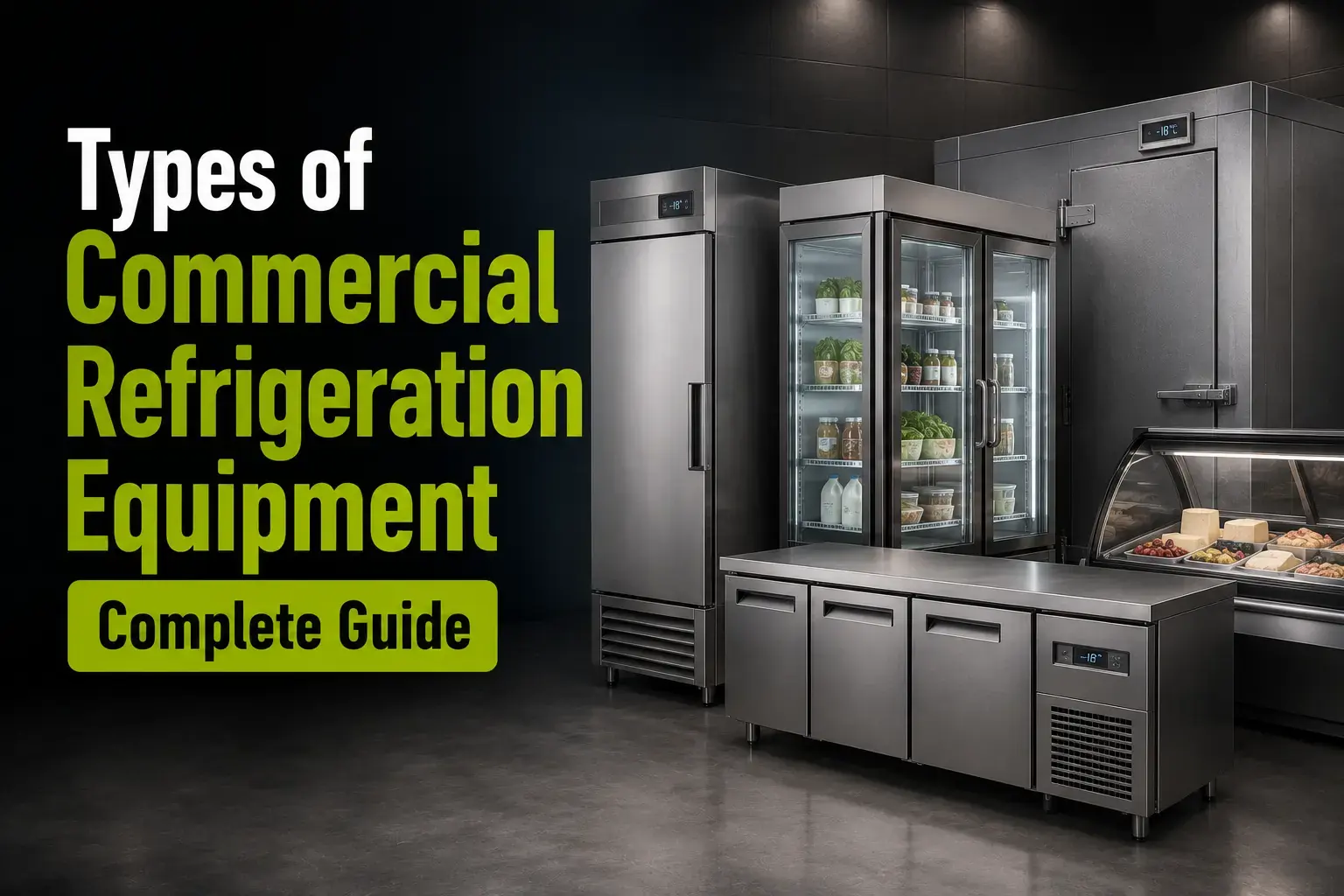
Whether you are opening a bustling downtown restaurant, managing a busy retail grocery store, or outfitting a state-of-the-art medical clinic, having the right cold storage is non-negotiable. The backbone of any business dealing with perishables is its cooling system. But if you are new to the industry, you might find yourself asking: What Are the Different Types of Commercial Refrigeration Equipment?
The global commercial refrigeration equipment market has expanded rapidly, introducing highly specialized units designed to handle specific tasks, temperatures, and spatial requirements. Gone are the days when a generic cooler could serve all your business needs. Today, food service refrigeration encompasses everything from massive cold rooms to compact, specialized units that sit right beneath a chef’s cutting board.
In this comprehensive guide, we will explore the vast landscape of commercial refrigeration equipment. We will cover how to size your units, distinguish between various cooling technologies, and select the perfect systems to keep your business running efficiently, safely, and profitably.
The Foundation of Cold Storage: Core Refrigeration Systems
When planning a commercial kitchen or storage facility, the first decision usually revolves around your primary cold storage. These are the large-capacity units where bulk ingredients are kept before they are prepped for service.
Reach-In Refrigerators vs Walk-In Coolers
One of the most common debates for new restaurant owners is choosing between reach-in refrigerators vs walk-in coolers. Both are essential, but they serve very different purposes.
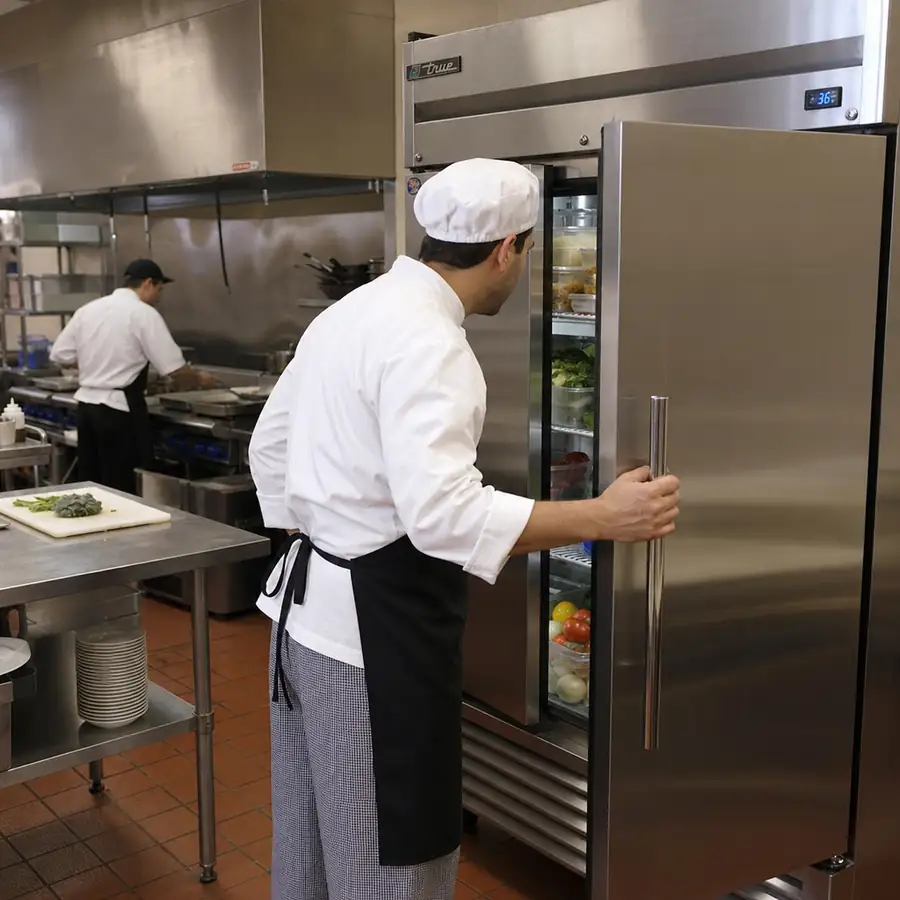
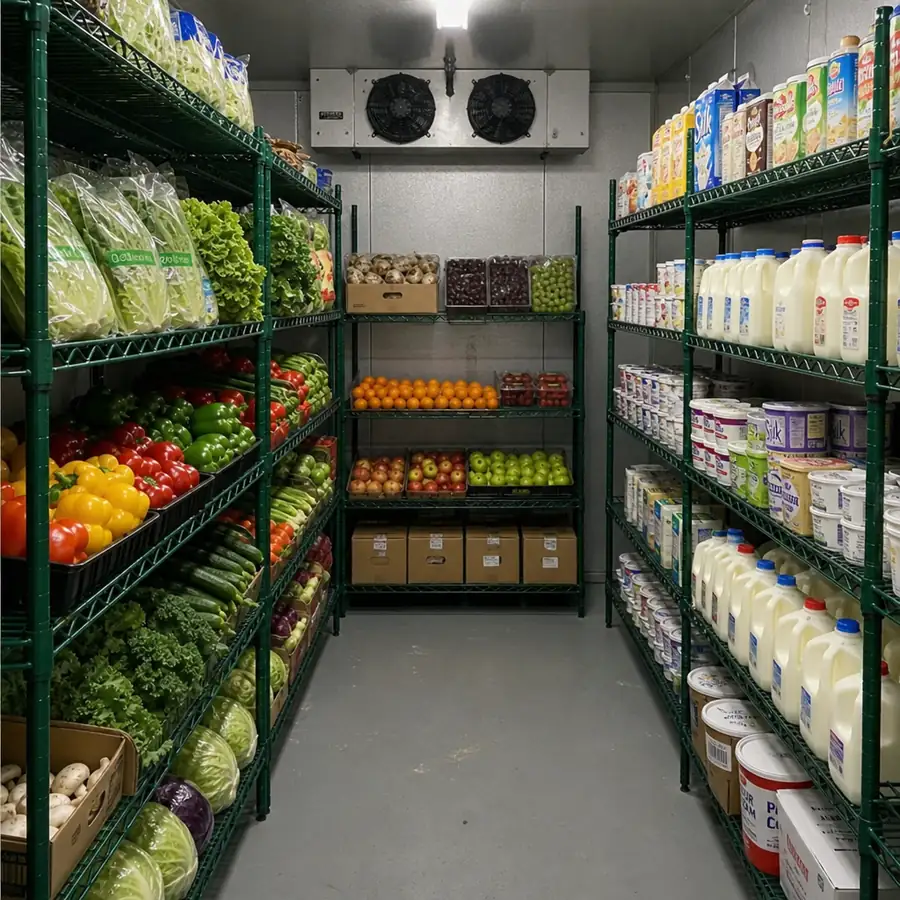
Walk-In Coolers: These are essentially refrigerated rooms built right into your facility. They are designed for high-volume, bulk storage. Walk-ins come with heavy-duty shelving and provide enough space for staff to physically enter the unit. They are ideal for receiving large vendor deliveries.
Reach-In Refrigerators (Commercial Fridges): These are upright units that look similar to residential refrigerators but are vastly more powerful. Commercial fridges are placed closer to the prep and cooking areas. Staff can simply "reach in" to grab what they need for a specific shift without walking across the kitchen.
Actionable Tip: Most high-volume restaurants utilize a combination of both. They keep bulk inventory in the walk-in cooler and transfer a day’s worth of ingredients to the reach-ins before service begins.
What Size Commercial Refrigerator Do I Need?
Determining what size commercial refrigerator do I need is crucial to avoid overloading your system or wasting energy on empty space. The general rule of thumb in the restaurant industry is that you need roughly 1.5 to 2 cubic feet of interior storage space per meal served per day.
Furthermore, you must consider the physical footprint. Measure your doorways, hallways, and ceiling heights before ordering. A massive three-door reach-in unit is useless if it cannot fit through your kitchen's loading dock.
Enhancing Kitchen Workflow: Specialized Prep and Line Units
Efficiency is everything in a commercial kitchen. Every step a cook takes away from their station costs time. To solve this, the industry has developed specialized equipment that brings refrigeration directly to the cooking line.
Prep Table Coolers for Sandwich and Pizza Shops
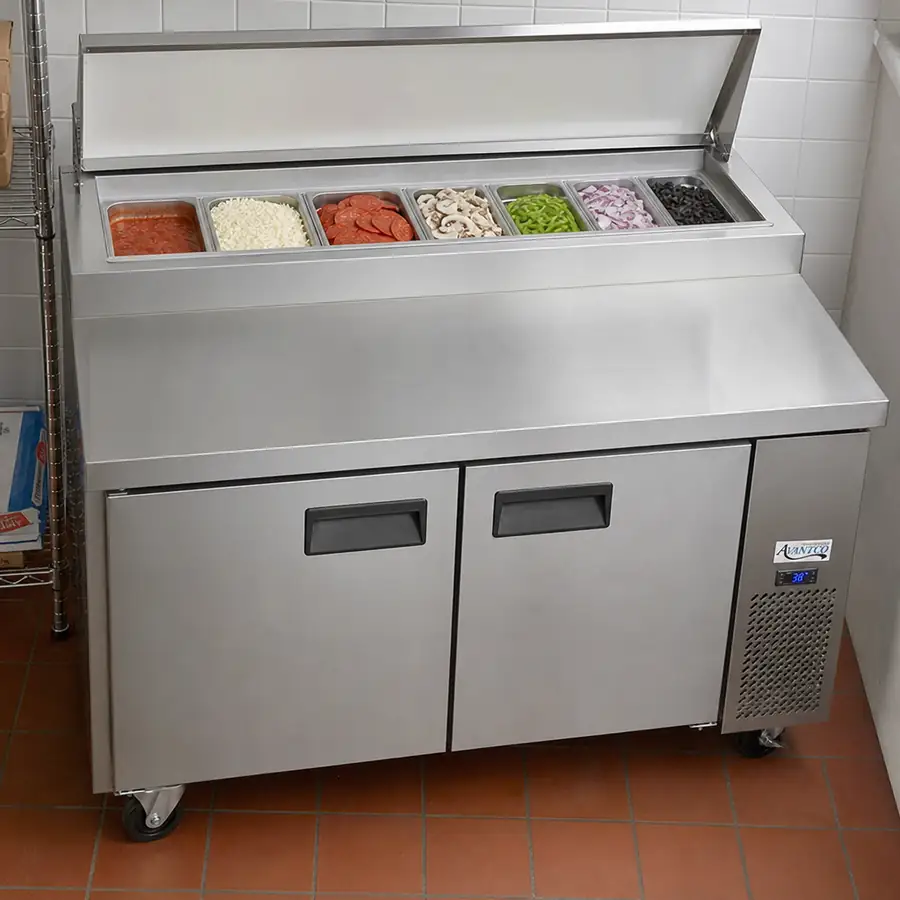
If you run a deli, salad bar, or pizzeria, prep table coolers for sandwich and pizza shops are indispensable. These units feature a flat cutting board surface for food preparation, while the top back section holds refrigerated food pans (gastronorms) filled with sliced meats, cheeses, and vegetables. Beneath the prep surface, there is additional reach-in refrigerated storage to hold backup ingredients, allowing for rapid restocking during the lunch rush.
Chef Base Refrigeration for Line Cooking Efficiency
A chef base is a low-profile refrigerator designed to support heavy cooking equipment on top of it, such as griddles, charbroilers, or fryers. By utilizing chef base refrigeration for line cooking efficiency, cooks have immediate access to raw proteins (like steaks or burger patties) in the refrigerated drawers directly beneath the grill. This eliminates the need to step away from a hot stove, drastically speeding up service times and reducing cross-contamination risks.
Under-Counter Refrigeration Benefits for Small Kitchens
Space is a premium in urban restaurants, food trucks, and cafes. The primary under-counter refrigeration benefits for small kitchens include maximizing vertical space. These compact units slide neatly beneath standard commercial counters, providing point-of-use cold storage without taking up an inch of extra floor space.
Freezers and Rapid Cooling Technologies
While refrigeration slows the growth of bacteria, freezing stops it entirely. However, commercial freezing is not a one-size-fits-all process.
Standard Freezer Units
Commercial freezer units come in various styles, including upright reach-ins, chest freezers, and walk-in freezers. Chest freezers generally offer the best energy efficiency because cold air doesn't spill out when the door is opened (since cold air sinks). However, upright freezers provide better organization and faster access to products.
When shopping for these appliances, always look for Energy Star rated commercial freezers. Because freezers draw a significant amount of electricity to maintain sub-zero temperatures, Energy Star models feature high-efficiency compressors and advanced insulation, saving you thousands of dollars in utility bills over the lifespan of the equipment.
Blast Chillers vs Shock Freezers for Food Safety
If you cook food in bulk to store for later use, standard freezers are not safe for cooling down hot food. Placing hot food into a regular freezer raises the internal temperature of the unit, putting other stored foods in the "temperature danger zone." This is where rapid cooling equipment steps in.
Understanding the difference between blast chillers vs shock freezers for food safety is vital:
Blast Chillers: These push high-velocity cold air across hot food to rapidly drop its temperature from 160°F to 38°F within 90 minutes. This safely bypasses the bacterial danger zone.
Shock Freezers: These take rapid cooling a step further, aggressively dropping the temperature to 0°F or below. This rapid freeze creates micro-crystals of ice rather than large macro-crystals. Because the ice crystals are so small, they do not puncture the cellular walls of the food, preserving the perfect texture, moisture, and flavor of the item when it is eventually thawed.
Display and Merchandising Refrigeration
If your business relies on customers picking out their own products, your refrigeration needs to look as good as it performs.
Refrigerated Display Cases for Retail Food Service
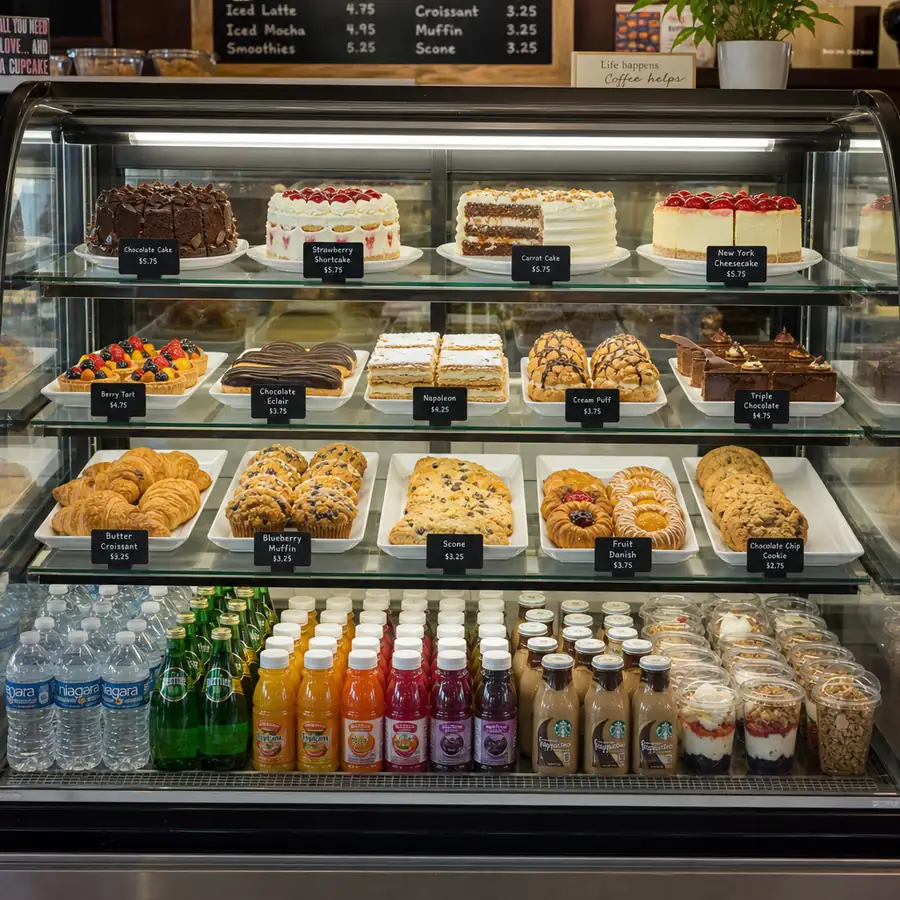
Refrigerated display cases for retail food service are designed with large glass fronts and bright LED lighting. These include bakery cases, deli counters, and sushi displays. The goal of a refrigerated display is dual-purpose: keeping the food at legally safe temperatures while acting as a visual merchandising tool to trigger impulse purchases.
Open-air merchandisers (or air-curtain refrigerators) are incredibly popular for "grab-and-go" sections in supermarkets and airports. They use a continuous invisible curtain of cold air to keep sandwiches and drinks cold without a physical door acting as a barrier to the customer.
Bar Refrigeration and Beverage Cooling Solutions
A warm beer can ruin a customer's night. Proper bar refrigeration and beverage cooling solutions are designed specifically for the hospitality sector.
Back Bar Coolers: These sit behind the bar, often featuring glass doors so bartenders can quickly locate specific craft beers or mixers.
Beverage Coolers: These are highly specialized high-capacity refrigerators used to keep high volumes of canned and bottled drinks at an optimal 34°F to 38°F.
Direct Draw Draft Systems (Kegerators): These units refrigerate entire kegs of beer while dispensing them right through a tap tower mounted on top.
Specialized Equipment by Food Type
Not all perishables can be stored in the same environment. Different foods require varying levels of humidity and precise temperature ranges.
Commercial Refrigeration Equipment for Eggs, Produce, and Dairy Uses
Fresh vegetables, dairy, and eggs require careful climate control. Commercial refrigeration equipment for eggs produce and dairy uses operates at moderate cooling temperatures (usually between 34°F and 40°F) but requires specific humidity management. Produce needs higher humidity to prevent wilting, while dairy requires a stable, odor-free environment, as fats easily absorb ambient smells.
Commercial Refrigeration Equipment for Ice Cream Storage Typically Uses...
Ice cream is notoriously finicky. If it gets slightly too warm, it melts; if it refreezes, it develops an unpleasant icy texture. Commercial refrigeration equipment for ice cream storage typically uses "cold-wall" technology or specialized forced-air systems. These cabinets maintain extreme, unwavering sub-zero temperatures (often -10°F to -20°F) to prevent freezer burn and keep the product perfectly scoopable. Dipping cabinets also include heated glass fronts to prevent condensation from obscuring the customer's view.
Dry Storage and Dual Temperature Solutions
You might wonder about items that don't need freezing but can't sit at room temperature. For instance, commercial refrigeration equipment for dry storage typically uses specialized ambient temperature controllers. Items like artisanal chocolates, fine wines, or cured meats require a cool, dry environment (around 50°F to 60°F) with dehumidifiers. Standard refrigerators are too cold and too humid for these goods.
If you have limited space but varied storage needs, dual temperature commercial refrigeration units are an excellent investment. These hybrid cabinets feature two separate compartments-usually a refrigerator on the top or left, and a freezer on the bottom or right-powered by independent temperature controls.
Heavy-Duty Chillers and Ice Production
Beyond food storage, water cooling and ice production are massive sub-sectors within the commercial refrigeration equipment market.
Commercial Ice Machine Types and Production Capacity
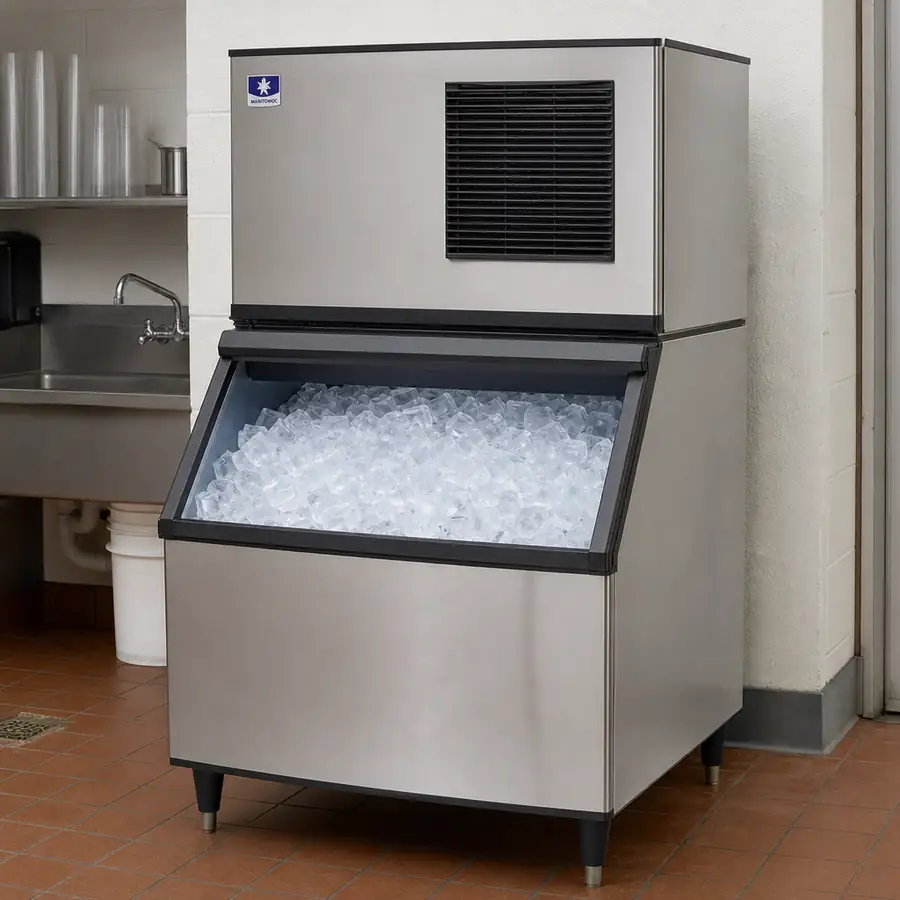
Ice machines are a staple in almost every food and hospitality business. When selecting a unit, you must evaluate commercial ice machine types and production capacity:
Cubers: Produce standard square cubes. They melt slowly, making them perfect for high-end cocktails and spirits.
Flakers: Produce soft, snow-like ice. This is primarily used in seafood markets to display fresh fish, or in healthcare settings for cold compresses.
Nugget Ice: Often called "chewable" ice, this soft, porous ice absorbs the flavor of the beverage. It is incredibly popular in fast-food restaurants and soda fountains.
Production capacity is measured by how many pounds of ice the machine can produce in 24 hours. A small cafe might only need a 50 lb capacity machine, while a massive hotel might require systems capable of producing over 1,000 lbs daily.
Industrial Chillers
For massive-scale operations-like large bakeries, breweries, or food manufacturing plants-standard refrigeration is not enough. Industrial chillers are robust systems used to cool down process fluids or heavy machinery. In a large-scale commercial bakery, for example, industrial chillers provide chilled water to mix into the dough to prevent the yeast from activating too early during the high-friction kneading process.
Beyond Food: Medical and Scientific Applications
It is important to remember that commercial refrigeration extends far beyond food service. The medical, pharmaceutical, and scientific communities rely heavily on precise cooling technologies.
Healthcare and Laboratory Grade Refrigeration Requirements
Standard commercial refrigerators have temperature fluctuations that are perfectly fine for a head of lettuce, but potentially disastrous for life-saving vaccines or biological samples. Healthcare and laboratory grade refrigeration requirements mandate incredibly strict tolerances.
These units are built with microprocessor temperature controllers that hold temperatures to within a tenth of a degree. They also feature built-in data loggers to prove regulatory compliance, automatic locking mechanisms, and battery backup alarms that immediately notify staff if the power fails or a door is left slightly ajar.
Technical Considerations: Choosing the Right System
Understanding the underlying mechanics of these refrigeration systems will help you make a more informed purchase.
Remote vs Self-Contained Compressor Systems
The compressor is the heart of any refrigerator. When buying equipment, you will need to choose between remote vs self-contained compressor systems.
Self-Contained Systems: The compressor and condenser are built directly into the unit (usually on the top or bottom). They are essentially "plug and play." They are easier to install and can be easily moved. However, because the compressor is in the kitchen, it exhausts heat and noise directly into your workspace. This means your kitchen's HVAC system must work harder to keep the room cool.
Remote Systems: In a remote system, the cooling cabinet is inside your kitchen, but the noisy, heat-producing compressor is installed outside the building (often on the roof). This drastically reduces kitchen noise and ambient heat. The downside is that installation is much more expensive and requires a licensed technician to run refrigerant lines through your building's walls.
How to Choose Commercial Refrigeration for Restaurants
If you are wondering how to choose commercial refrigeration for restaurants, start by evaluating your specific menu. A steakhouse will have completely different refrigeration needs compared to a vegan juice bar.
Assess Menu Flow: Track the movement of your ingredients from the delivery door to the customer's plate. Place walk-ins near the loading dock, and prep tables near the cooking lines.
Evaluate Compressors: Choose top-mounted compressors for dry, flour-heavy environments (like bakeries) to prevent the compressor from sucking in floor dust. Choose bottom-mounted compressors for hot kitchens, as heat rises, keeping the lower-mounted compressor in a cooler zone.
Local Supply and Service: Always consider the availability of local technicians. For instance, if you are opening a business in the Midwest, looking specifically for commercial refrigeration equipment minneapolis suppliers ensures that when your fridge goes down on a Friday night, a local technician can reach you with spare parts quickly.
Maximizing Your Investment: Proper Maintenance
Commercial refrigerators represent a massive capital investment. To ensure they last their expected lifespan of 10 to 15 years, routine maintenance is absolutely essential. Waiting for a unit to break down before servicing it can lead to catastrophic food loss.
Commercial Refrigerator Maintenance Checklist for Longevity
Implementing a commercial refrigerator maintenance checklist for longevity will keep your equipment running at peak efficiency and prevent unexpected breakdowns:
Daily Tasks
Wipe down the interior and exterior with a mild, non-abrasive detergent.
Check the digital thermostats to ensure they are holding the correct temperature.
Ensure no boxes or food pans are blocking the internal air vents, which restricts airflow and freezes the evaporator coils.
Weekly Tasks
Inspect door gaskets (the rubber seals around the doors). If they are cracked or loose, cold air escapes, causing the compressor to run constantly. Clean the gaskets with warm, soapy water to remove sticky food residue.
Empty and sanitize the drip pans to prevent mold and foul odors.
Monthly Tasks
Clean the Condenser Coils: This is the most important maintenance step. Dust, grease, and pet hair can clog the coils, preventing the system from releasing heat. Use a stiff brush and a shop vacuum to gently clean the coils. A clogged coil will eventually burn out the compressor, resulting in a massively expensive repair bill.
Check the fan blades and motors for debris.
Bi-Annual Tasks
Hire a licensed HVAC/R technician to perform a comprehensive tune-up. They will check the electrical connections, calibrate the thermostats, check refrigerant levels, and inspect the compressor's overall health.
Shop Commercial Refrigeration at The Horeca Store
Looking for reliable commercial refrigeration equipment for your restaurant, café, bar, hotel, or foodservice operation? The Horeca Store offers a wide selection of professional refrigeration solutions, including commercial refrigerators, freezers, prep tables, undercounter units, backbar coolers, and other foodservice equipment. Explore The Horeca Store to find refrigeration equipment that fits your kitchen layout, storage requirements, and daily operational needs.
Conclusion
Answering the question, "What Are the Different Types of Commercial Refrigeration Equipment?" reveals a highly advanced, specialized world of climate-controlled technology. From the massive walk-in coolers that store bulk shipments to the precise laboratory-grade units keeping vaccines safe, commercial refrigeration is the silent, unsung hero of modern commerce.
By taking the time to understand the differences between blast chillers and freezers, assessing your kitchen's workflow for chef bases and prep tables, and committing to a rigorous maintenance schedule, you can protect your inventory, enhance your staff's productivity, and safeguard your bottom line. Take inventory of your specific business needs, consult with local commercial refrigeration experts, and invest in the reliable cold storage your enterprise deserves.