
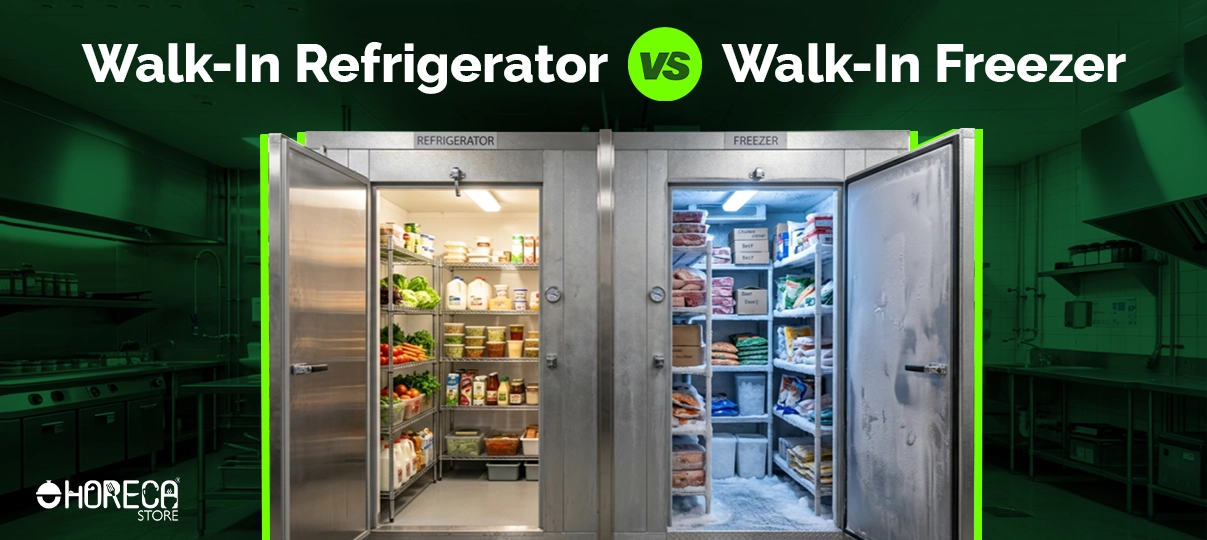
Imagine walking into your pantry, but instead of shelves of dry pasta, you step into a crisp, 38-degree room filled with fresh produce. Now, imagine that same room is a sub-zero tundra where ice cream never softens and meat enters a state of suspended animation. While a walk-in refrigerator and a walk-in freezer might look identical from the outside—sharing the same shiny metal walls and heavy doors—the technology humming behind the scenes is worlds apart.
Choosing between these units comes down to their distinct missions: thermal preservation versus deep freeze storage. Standard walk-in coolers generally maintain temperatures between 35°F and 45°F, acting like a high-powered version of your kitchen fridge to slow spoilage. In contrast, freezers must battle much harsher physics, requiring thicker insulation—comparable to swapping a light fleece for a heavy-duty parka—to keep the extreme cold from escaping.
Many first-time buyers mistakenly assume they can simply turn a cooler’s thermostat down to freeze products, but mechanical realities make this impossible. A true walk-in freezer requires specialized components, such as heated door gaskets to prevent ice seals and insulated flooring to stop the ground underneath from freezing and heaving. According to general contractor guidelines, attempting to force a cooler to act as a freezer often leads to rapid equipment failure and structural damage.
Selecting the right unit for your inventory involves more than just checking a temperature gauge; it dramatically impacts your energy bills and long-term maintenance. By navigating the nuances of commercial refrigeration, from insulation ratings to defrost cycles.
Living Room vs. The North Pole: Understanding Standard Operating Temperatures
Keeping food safe is a race against time, but the strategy changes dramatically depending on which side of the freezing point you stand. The standard operating temperatures for walk-in coolers and freezers serve two distinct purposes: coolers (35°F to 41°F) merely slow down bacterial growth, while freezers (-10°F to 0°F) create a state of suspended animation. One offers a few extra days of freshness; the other locks moisture in place to preserve inventory for months.
Compliance is just as critical as preservation. The National Sanitation Foundation (NSF) sets rigid NSF storage standards for perishable vs frozen goods to ensure commercial kitchens pass inspection. Violating these ranges can result in costly waste or immediate health code citations. Common benchmarks include:
- Dairy: Must be held between 35°F and 41°F to prevent rapid spoilage.
- Fresh Meat: Best stored slightly lower, around 28°F to 32°F, to maximize freshness without freezing solid.
- Frozen Desserts: Requires the coldest setting, typically -10°F to -20°F, to prevent ice crystals from ruining the texture.
Achieving that deep freeze requires significantly more work than simply keeping lettuce crisp. While a cooler can effectively hold its temperature with standard construction, a freezer fights a constant, aggressive battle against the ambient heat outside trying to rush in. This intense thermal demand is why you can’t just turn the dial down on a cooler to make it a freezer; it requires a structural upgrade we call the "Winter Coat" rule.
The 'Winter Coat' Rule: Why Freezer Insulation Must Be Twice as Thick
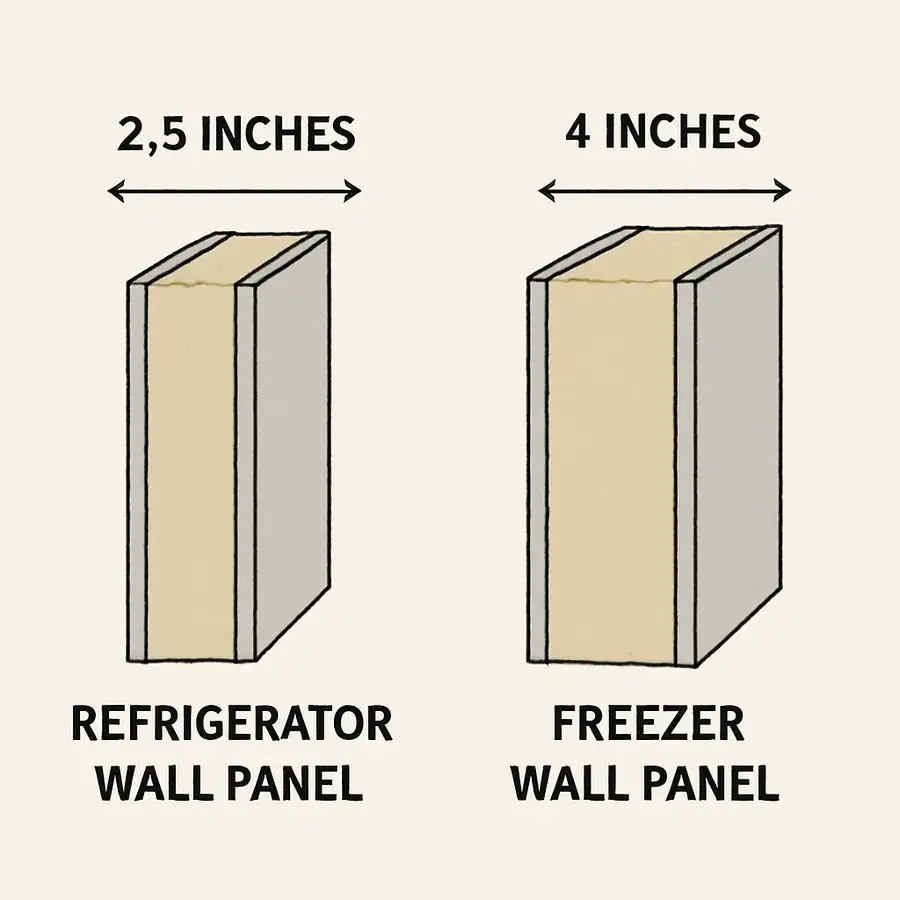
Just as you wouldn’t wear a light windbreaker to survive an Arctic blizzard, a walk-in unit cannot maintain sub-zero temperatures with standard walls. Because heat aggressively rushes toward cold spots, the temperature difference—or "delta"—between a 75°F kitchen and a -10°F freezer is massive, creating intense pressure on the structure to fail. To win this battle, freezers require a significantly heavier thermal barrier than their cooler counterparts to prevent the ambient heat of your building from invading the cold space.
This thermal protection is measured by R-value requirements for walk-in freezer insulation, a specific rating that indicates how well a material resists the flow of heat. While a standard cooler operates efficiently with a thermal resistance value of R-25 (roughly 3 inches of polyurethane foam), a freezer demands a minimum of R-32, often pushing panel thickness to 4 or 5 inches. Attempting to force a cooler’s thinner walls to hold freezer temperatures will result in condensation forming on the exterior, colloquially known as "sweating," which signals that your energy dollars are leaking right through the metal panels.
Beyond energy efficiency ratings for commercial cold storage, this added bulk creates a tangible trade-off in available internal square footage. A two-inch increase in wall thickness around the perimeter might not sound like much, but in a tight kitchen layout, it significantly reduces your storage capacity compared to a cooler of the same external dimensions.
Why Your Freezer Needs 'Shoes': The Critical Role of Insulated Floors
While standard concrete floors work perfectly for most walk-in coolers, attempting to install a freezer directly onto a slab invites structural disaster. Because cold air is denser than warm air, the most intense temperatures in your unit settle at the bottom. For a cooler keeping produce at 38°F, the existing concrete can absorb this chill without issue. However, a freezer maintaining sub-zero temperatures will eventually freeze the moisture in the soil beneath the slab, creating a powerful geological force known as frost heave.
This phenomenon occurs when groundwater freezes and expands, pushing the concrete upward with enough pressure to crack foundations and buckle walls. To prevent this, insulated floor requirements for walk-in freezers dictate a specialized thermal break—essentially an insulated "sandwich" panel that separates the frozen interior from the ground below. Without this barrier, the cold migrates downward unchecked, turning your building’s foundation into a slow-motion jackhammer that destroys both the refrigeration unit and the surrounding structure.
This distinction significantly impacts commercial refrigeration installation and operational costs, as adding an unnecessary floor to a cooler wastes money, while skipping one for a freezer guarantees expensive repairs. Watch for these early warning signs of ground freezing:
- Doors that suddenly drag or won’t close properly due to frame shifting.
- Cracks radiating outward from the walk-in’s base.
- Uneven ridges appearing in the internal metal flooring.
Once the structural shell is secure, however, you face a new challenge: managing the ice that tries to form inside the unit’s mechanical heart.
The 'Self-Cleaning Oven' for Ice: How Defrost Cycles and Evaporators Differ
If you look inside the fan unit of a walk-in cooler, the mechanism relies on a deceptively simple principle: the air itself is warmer than freezing. Since coolers typically operate around 35°F, the system can simply pause the cooling cycle—an "off-cycle"—to let the ambient air naturally melt any light frost on the coils. This passive "air-defrost" strategy fails completely in a walk-in freezer, where the -10°F environment turns humidity into permanent ice that the surrounding sub-zero air cannot melt.
To solve this physics problem, evaporator coil differences in commercial refrigeration units include active heating elements that are absent in standard coolers. Much like a self-cleaning oven, a freezer uses electric heater strips woven directly through the coil assembly. A specialized timer triggers these strips periodically to melt heavy ice accumulation, simultaneously shutting off the fans to prevent blasting hot air onto your frozen stock. Without this aggressive intervention, the coils would rapidly become a solid block of ice, suffocating the system and blocking airflow.
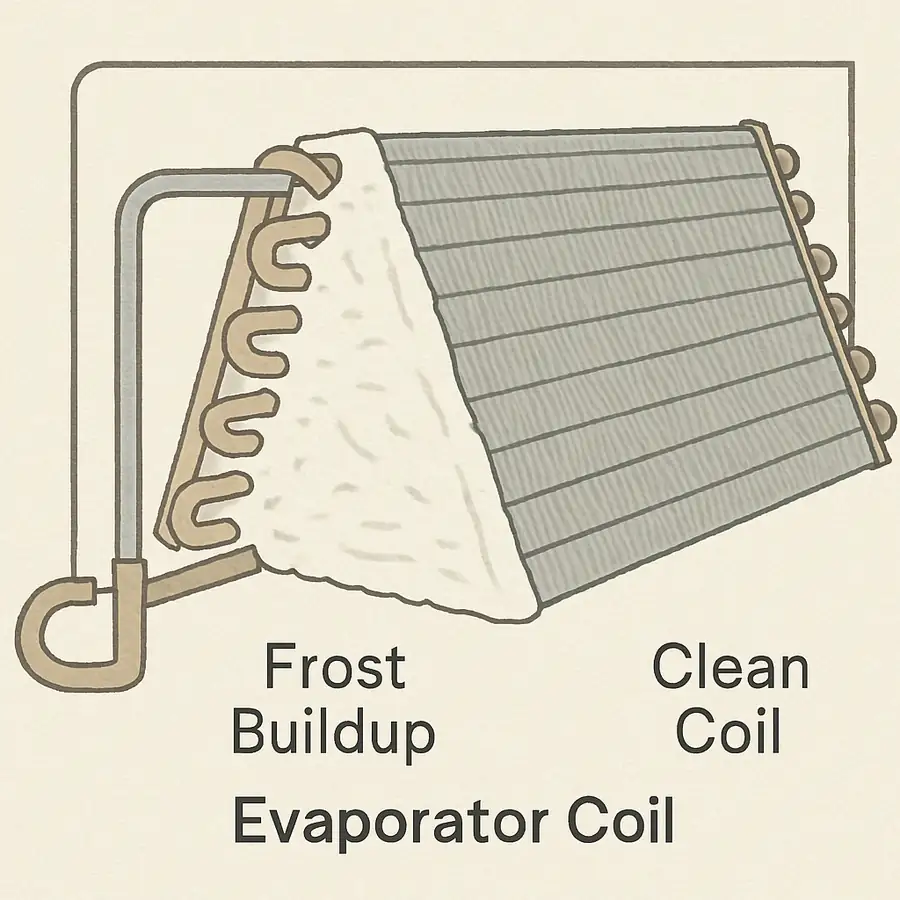
Recognizing when this cycle malfunctions is vital for protecting your investment. If you spot "snow" building up on the fan guards or clear ice encasing the fins, it often signals a failed defrost timer or a burned-out heater strip. Ignoring these visual cues forces the compressor to run continuously until catastrophic failure. Including quick visual inspection of the evaporator fans in your preventative maintenance checklist for walk-in units helps you catch these issues before they spoil your inventory.
Fighting the Vacuum: Why Freezer Doors Need Heated Gaskets and Pressure Ports
Have you ever tried to pull open a heavy freezer door immediately after closing it, only to feel like it is locked from the inside? This phenomenon occurs because air volume shrinks as it cools. When warm kitchen air rushes into a -10°F freezer, it rapidly contracts, creating a powerful vacuum that seals the door tight against the frame. While walk-in coolers rarely face this issue due to their milder temperatures, pressure relief port functions in walk-in freezers are non-negotiable. These small, heated vents act like a breathing tube for the room, equalizing the air pressure between the interior and exterior so you can enter or exit without needing excessive force.
Beyond air pressure, extreme cold creates a constant condensation battleground at the entry point. Without intervention, the moisture in the humid kitchen air would turn to ice the moment it touches the freezing metal door jam, effectively welding the unit shut. To combat this, manufacturers install electric heater wires around the perimeter of the entryway. These heated door frames and gaskets for frost prevention keep the contact points just warm enough to remain dry and pliable. If you notice ice forming around the seal or the rubber gasket becoming brittle and cracked, it usually indicates this hidden heating element has failed.
These specialized components—the pressure ports and heated perimeters—are distinct markers of true freezer door compared to standard cooler door. While a cooler door is essentially just an insulated barrier.
The Price of Cold: Purchase Costs vs. Long-Term Energy Bills
Budgeting for a walk-in requires looking far beyond the initial sticker price. While a freezer typically commands a 20–30% premium upfront due to thicker insulation and insulated flooring, the true financial impact lands on your monthly utility bill. Maintaining a sub-zero environment demands significantly more energy than keeping a room at a crisp 38°F. Because freezers must power aggressive compressors and the electric anti-frost heaters mentioned earlier, their operational costs can be nearly double those of a standard cooler.
Space constraints often force owners to get creative with their layout. Instead of squeezing two separate boxes into a tight kitchen, many opt for a single structure that does it all. The benefits of dual-temperature walk-in combination units include a unified footprint and reduced installation labor, as you are building one shell with two distinct zones. Decide if a combo unit fits your needs using this checklist:
- Space availability: Is your footprint too small for two separate boxes with independent clearance zones?
- Storage volume: Is your ratio of frozen-to-fresh inventory roughly balanced?
- Workflow: Does your staff benefit from accessing all cold storage in one central location?
Longevity is the final factor in your return on investment. With routine maintenance, the average lifespan of commercial refrigeration equipment is generally 15 years for the panels and 8–10 years for mechanical systems. Buying the right unit upfront is crucial because trying to retroactively upgrade a standard cooler into a freezer is virtually impossible.
The 'Conversion' Myth: Why You Can’t Simply Turn a Cooler into a Freezer
It seems like a clever money-saving hack: buy a cheaper walk-in cooler and simply crank the thermostat down until it freezes. However, asking can you convert a walk-in cooler into a freezer is a bit like asking a sedan to tow a heavy-duty horse trailer—the engine might run for a mile, but it will inevitably burn out. A cooler’s compressor is designed for a specific "duty cycle," meaning it is built to rest frequently between cooling bursts. To force that machine to reach sub-zero temperatures, it has to run constantly without breaks, overheating the motor and drastically shortening its life.
Beyond mechanical failure, the physical box itself isn't built to hold extreme cold. Since a standard cooler lacks the thick insulation and heated door gaskets of a dedicated freezer, the intense cold permeates the thinner walls and clashes with the warm air outside. This thermal clash causes the unit to "sweat," creating massive condensation on the exterior metal that leads to dangerous puddles on your floor and potential mold growth inside the panels.

Ignoring these structural realities wrecks the energy efficiency ratings for commercial cold storage equipment and will almost certainly void your manufacturer warranty. Instead of a custom hybrid, you end up with a burned-out compressor and a water-damaged shell. Avoiding this costly mistake ensures your investment survives, allowing you to focus on the final piece of the puzzle: keeping that proper equipment running smoothly for decades.
Final Blueprint: Choosing and Maintaining Your Cold Storage
Recognizing that a walk-in freezer is more than just a colder refrigerator prevents costly construction mistakes and energy spikes. With a firm grasp on the critical variations in insulation thickness, flooring necessities, and defrost mechanisms, you can now evaluate your specific storage needs rather than guessing. You have moved from seeing two identical metal boxes to understanding the structural engineering required to keep your inventory safe.
To finalize your investment, use this planning framework:
- Calculate your peak inventory volume for determining the right cubic footage for cold storage.
- Check if your existing concrete can support a cooler or if a freezer’s insulated floor is required.
- Assess the difference between indoor and outdoor condensing units based on your local climate and facility space.
- Select a remote system to reduce interior heat and noise or a self-contained unit for easier installation.
Long-term performance relies on treating these units like the complex machines they are. Commit to a simple preventative maintenance routine: clear debris from condenser coils monthly and inspect door gaskets for ice buildup to reduce strain on the compressor. While this knowledge empowers you to plan effectively, always consult a licensed refrigeration professional to ensure your cold storage solution remains efficient for years to come.
Walk-In Refrigerator vs Walk-In Freezer: Key Differences
For restaurants, hotels, supermarkets, catering businesses, and large commercial kitchens, proper cold storage is essential for maintaining food quality, reducing waste, and ensuring food safety. Walk-in refrigerators and walk-in freezers are two of the most popular large-scale refrigeration solutions used in professional foodservice operations. The Horeca Store while both provide spacious storage and reliable temperature control, they serve different purposes based on the type of products stored and the storage duration required.
Choosing between a walk-in refrigerator and a walk-in freezer depends on your business needs, storage volume, menu requirements, and operational workflow. The Horeca Store provides commercial refrigeration solutions designed to help restaurants, hotels, cloud kitchens, and other foodservice businesses maintain efficient and organized storage systems. This guide explains the key differences between walk-in refrigerators and walk-in freezers to help you make the right choice for your commercial kitchen.