
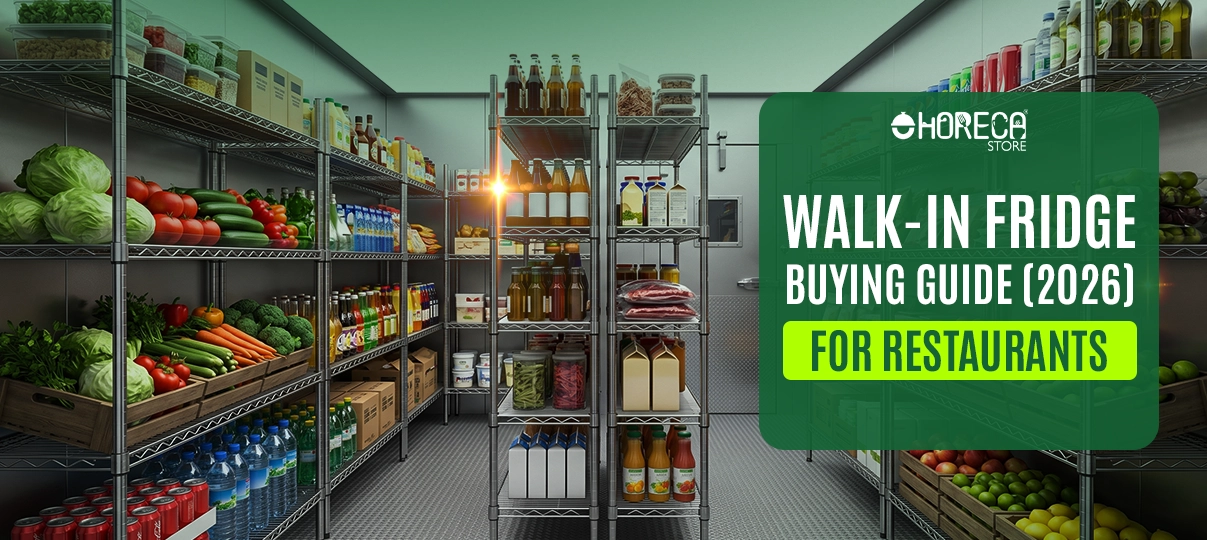
Buying a walk-in fridge for a restaurant is the most expensive "box" you will ever purchase. Picture a bustling small bistro relying entirely on one unit to protect $5,000 worth of specialty meats. According to seasoned chefs, this crucial piece of cold storage acts as the true heartbeat of daily operations. A sudden mechanical failure doesn't just halt dinner service; it immediately puts your entire fragile inventory at risk of spoilage.
Navigating the market in 2026 raises those financial stakes even further, thanks to strict new refrigerant regulations and surging electricity rates. This modern reality makes it critical to understand your Total Cost of Ownership (TCO) before signing any invoice. Rather than just checking the initial sticker price on new restaurant equipment, TCO calculates what the unit actually costs to run over its entire lifespan. Industry data reveals that settling for a cheaper model with poor insulation routinely triggers a punishing $2,000-a-month utility bill.
Treating this major hardware purchase as a strategic business decision is the only way to safeguard your profit margins. Poor equipment selections quickly lead to sweating walls, overworked cooling systems, and devastating food waste that can cripple a new business. Future-proofing your kitchen means getting this foundational choice right from day one, ensuring your ingredients stay perfectly safe while keeping your overhead costs highly predictable.
The Cubic Foot Calculation: How Much Cold Storage Does Your Kitchen Actually Need?
Ordering too much fridge wastes electricity, while buying too small risks ruined inventory during a weekend rush. Perfect commercial kitchen refrigeration sizing starts by looking at your daily volume and vendor schedules. A bistro receiving fresh produce daily requires a drastically smaller footprint than a barbecue joint relying on twice-a-week bulk deliveries.
Translating those operational habits into physical dimensions relies on a standard industry calculation. To find your baseline capacity, combine three core metrics:
- Meals per day: Your realistic peak service volume.
- Storage days: The time between major food deliveries.
- The 1.5 Rule: Multiply (Meals) x (Days) x 1.5 cubic feet per meal.
That resulting number only accounts for the physical ingredients, but packing a box wall-to-wall is a costly rookie mistake. You must add an absolute minimum 25% "airflow buffer" to your total. When calculating heat load for walk-in units (the total warmth your machinery must actively remove), this empty space acts as a vital highway for cold air to circulate. Without it, your compressor works overtime to cool the center of densely packed shelves, inevitably leading to warm spots, burned-out motors, and spoiled food.
Knowing exactly how many cubic feet you need protects both your inventory and your utility bill. With the mathematical guesswork out of the way, deciding where this massive piece of equipment will physically fit requires evaluating your property's footprint and structural limits.
Indoor vs. Outdoor Installation: Navigating Floor Loads and Footprint Challenges
Every square foot inside a commercial kitchen is prime real estate, making an outdoor vs indoor walk-in freezer installation a critical operational choice. Pushing this giant metal box outside instantly reclaims room for an extra prep station, but it exposes your food to the elements. Conversely, an indoor setup guarantees easy access during a dinner rush while dramatically shrinking your usable floor plan.
Beneath the footprint of either location lies a hidden hurdle: structural weight. You must carefully evaluate walk-in fridge flooring requirements for heavy traffic, especially if you regularly roll dense items like stacked beer kegs. Standard kitchen tile will quickly crack under this immense pressure. To prevent catastrophic sinking or insulated floor warping, owners typically install reinforced flooring panels designed to distribute crushing weights safely across the foundation.
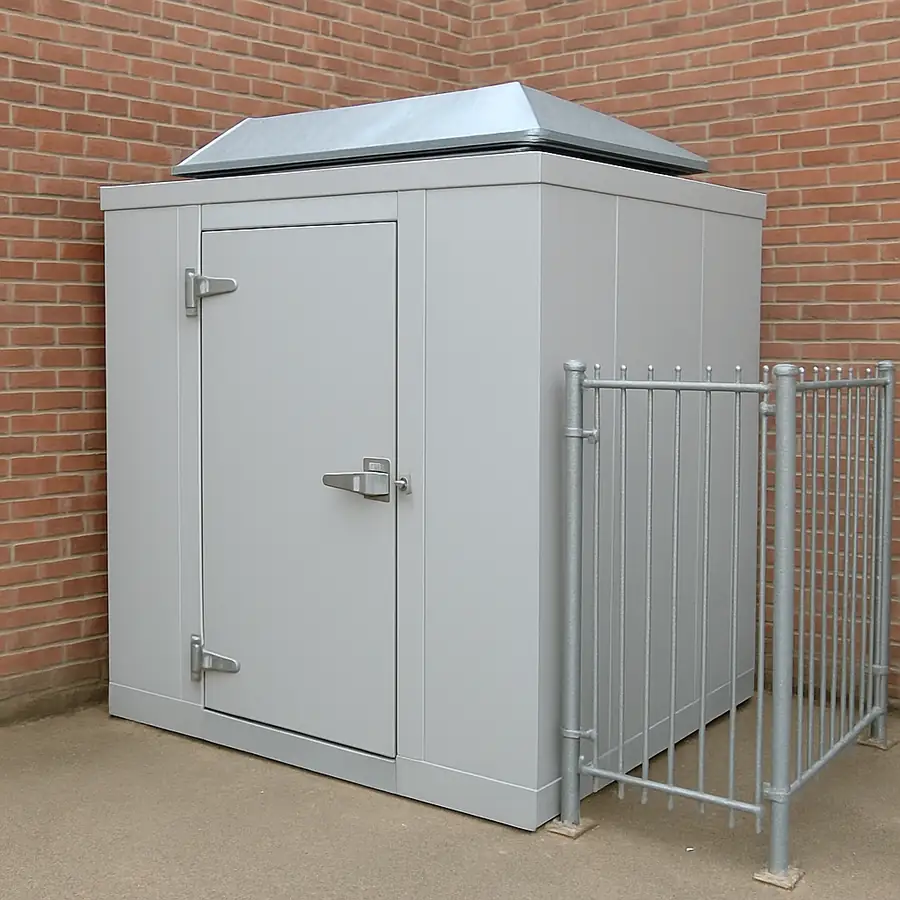
Opting for an exterior setup introduces unique environmental risks that indoor units never face. Extreme weather forces exterior machinery to work erratically, requiring specialized add-ons like winter start kits to stop compressor oil from freezing during seasonal temperature plunges. Furthermore, you must factor in a sloped roof cap to shed heavy rain and a sturdy lockable enclosure to deter late-night inventory theft.
Once you establish the location and structural support, moving the heat out of your kitchen—or dealing with harsh exterior climates—directly dictates the type of machinery required.
Remote vs. Self-Contained Units: Choosing the Right Engine for Your Cooler
Every refrigerator acts like a heat pump, pulling warmth from your food and dumping it nearby. In a "self-contained" unit, the cooling engine sits directly on or beside the walk-in. This plug-and-play design keeps the initial commercial walk-in cost low and installation incredibly simple. However, that dumped heat and constant motor hum blow directly into your kitchen, forcing your building's AC to work overtime just to keep your line cooks from sweating.
Shifting that mechanical exhaust outside is where a "remote condenser" shines. By piping the refrigerant lines to a separate unit on your roof or out back, you completely remove excess heat and noise from your workspace. While this setup slashes your long-term kitchen cooling bills, you must budget for hidden installation labor. Hiring specialized technicians to drill through exterior walls, run copper piping, and wire electrical connections across the building adds significant upfront expense.
Cracking the R-Value Code: Leveraging 2026 DOE Standards for Energy Tax Credits
Generating cold air is only half the battle; keeping it trapped determines your monthly utility bill. Think of your cooler's walls like a heavy winter coat—the denser the material, the less energy is wasted. This insulating power is measured by "R-value," and understanding it is crucial for your budget. Meeting strict new insulation R-value requirements for walk-ins isn't just about passing health inspections. Buying a highly rated box now allows you to claim lucrative energy efficient walk-in cooler tax credits designed to offset your initial equipment costs.
The material hiding inside those walls dictates your long-term savings and footprint. When evaluating panel thickness for cold storage efficiency, you must choose between polyurethane and polystyrene. Polyurethane acts like high-tech thermal gear, delivering maximum cold retention in a thinner four-inch panel. Polystyrene is significantly cheaper upfront but requires much thicker panels to achieve that exact same temperature stability, eating up valuable kitchen square footage.
Cheaply manufactured panels often hide a costly secret called "thermal bridging." This risk occurs when poor construction allows warm kitchen heat to sneak through the metal joints of the cooler, creating a "sweating wall" covered in condensation and potential mold. Investing in quality seamless panels prevents this heat transfer entirely, ensuring your unit easily meets DOE energy compliance standards for 2026 while protecting your valuable food inventory from spoilage.
An airtight, compliant box provides the canvas for a profitable restaurant.
NSF Shelving and Workflow: Turning Your Fridge into an Operational Asset
Imagine a Friday night dinner rush hitting while prep cooks frantically dig through an unorganized cooler. To prevent this chaos, your newly insulated box needs the right interior setup. Outfitting NSF certified modular cold rooms requires commercial-grade organization. "NSF certified" simply means the equipment is rigorously tested and approved by health inspectors to ensure it won't harbor dangerous bacteria or contaminate your inventory.
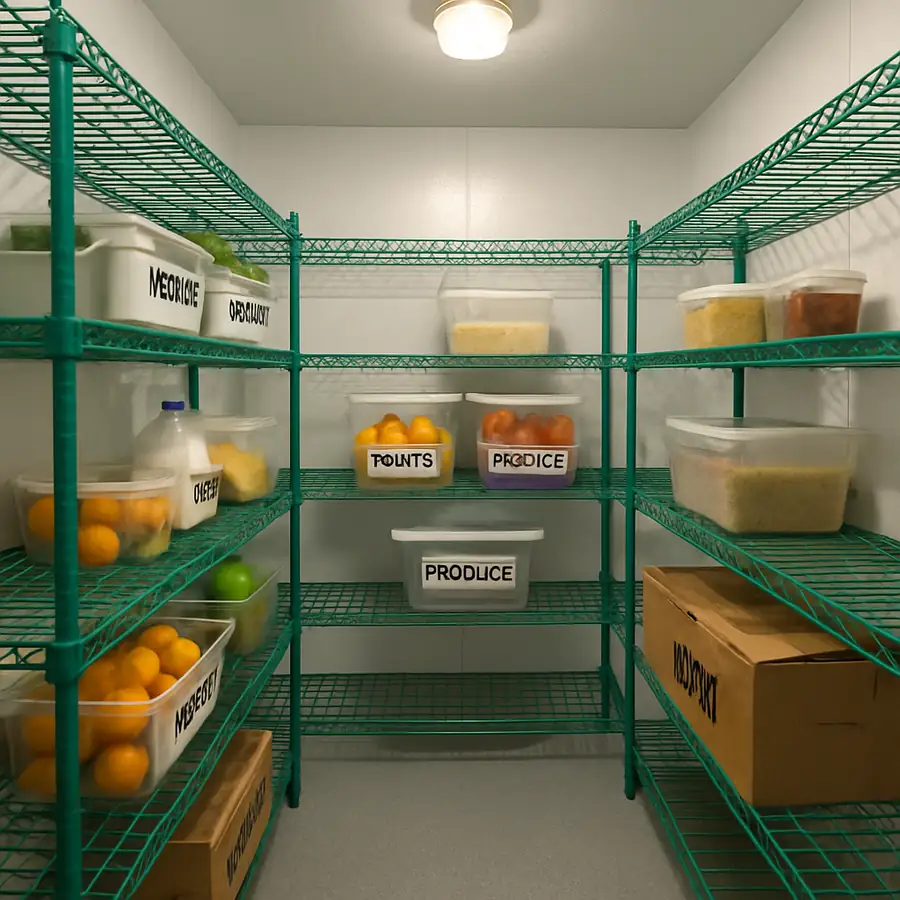
Selecting the best shelving for walk-in refrigerators comes down to battling constant moisture. Since bare wire rusts quickly, you must choose between stainless steel or epoxy-coated options. Stainless steel is incredibly durable but highly expensive. Conversely, epoxy coating—a thick, rust-resistant polymer shell baked over wire racks—protects your food at a fraction of the cost. Cheap, unapproved racks will inevitably rust, risking immediate health code failures and ruined ingredients.
To guarantee you pass inspections and accelerate your kitchen workflow, implement these shelving best practices:
- Clear the floor: Keep all inventory at least 6 inches above the ground to allow for mopping and prevent pest nesting.
- Bottom-shelf meat: Always store raw proteins on the lowest racks to prevent cross-contamination from dripping juices.
- Prioritize FIFO: Enforce a strict "First-In, First-Out" system with all expiration labels facing outward.
A flawlessly organized cooler drastically reduces how long the door stays open, lowering utility bills while accelerating prep work. Yet, even the most pristine layout won't save your inventory if the compressor secretly fails overnight.
Smart Monitoring and Preventative Maintenance: Stop Food Spoilage Before it Starts
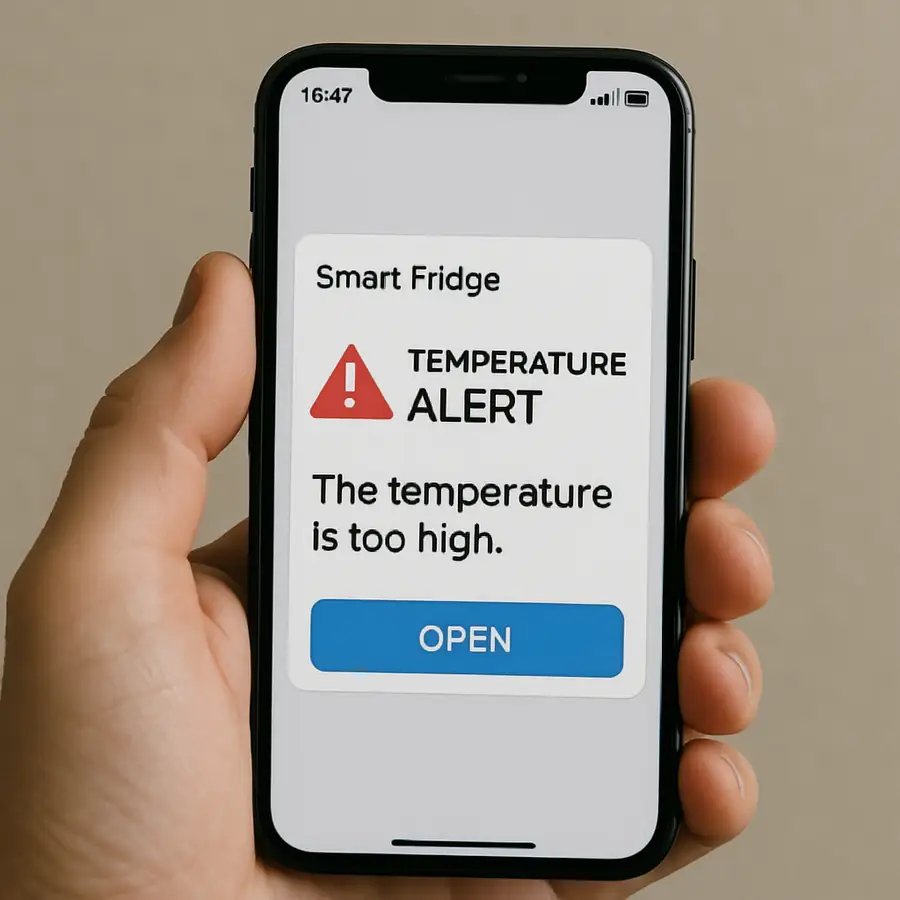
Picture arriving on a Tuesday morning to discover your walk-in feels like a sauna because a door was left ajar. To stop this nightmare, modern operations require smart temperature monitoring systems for kitchens. These digital sensors track your fridge’s climate continuously. By utilizing a cellular gateway (a secure hub connecting via cell towers rather than unreliable restaurant Wi-Fi), the system bypasses internet outages to text you instantly if temperatures spike.
Beyond preventing immediate disaster, automated temperature logging fundamentally upgrades your compliance routine. The software silently records climate data to the cloud, permanently replacing messy paper logbooks. When health inspectors arrive, showing them a flawless digital history proves your commitment to food safety while eliminating tedious manual labor.
While technology catches sudden emergencies, basic physical upkeep prevents slow mechanical failures. Proper preventative maintenance—specifically a monthly schedule to vacuum grease off condenser coils—drastically extends your compressor's lifespan. Ignoring this chore forces the motor to overwork, spiking utility bills and risking total failure.
The Real Cost of Ownership: New vs. Used and Hidden Installation Fees
Budgeting often tempts new operators to hunt for second-hand deals, but weighing used vs new commercial refrigeration pros and cons requires looking far beyond the initial sticker price. While used units save cash upfront, high-efficiency new models win the 5-year ROI battle through drastically lower monthly utility bills. Additionally, strict 2026 environmental laws are forcing a massive refrigerant phase-out (banning the older chemical gases that make the air cold). Buying a used unit today means you risk purchasing equipment that becomes legally unrepairable in three years.
Your total commercial walk-in cost must reflect the actual "installed price" to prevent catastrophic budget overruns. Always account for these hidden expenses before signing a lease:
- Electrical Upgrades: Large compressors often demand 3-phase power (heavy-duty electrical wiring for massive commercial energy draws), which costs thousands to install if the building lacks it.
- Permit Fees: Mandatory local health and building inspection charges.
- Delivery Logistics: Specialized freight or crane services for tight alleyways.
- Technician Startup: Hiring a certified professional to calibrate the system—a mandatory step to validate your manufacturer warranty.
Securing that warranty protects your massive investment from day one.
The 2026 Walk-in Buying Roadmap: Your Step-by-Step Action Plan
Buying a walk-in fridge is a strategic investment in your kitchen's heartbeat. With a clear understanding of sizing, insulation, and installation requirements, you can confidently navigate from evaluating your footprint to the final electrical check.
Demand 2026 DOE standards from dealers to secure your restaurant’s financial future through energy-efficient infrastructure. Start by grabbing a tape measure to chart your exact space, then check your local utility board for green energy rebates before making that first call.
Buy Commercial Walk-In Fridges from The Horeca Store
A high-quality walk-in fridge is one of the most important investments for any restaurant, helping preserve ingredients, maintain food safety, and improve kitchen efficiency. The Horeca Store offers a wide selection of commercial walk-in fridges for restaurants, hotels, cafés, catering businesses, bakeries, and other foodservice operations. Designed for reliable temperature control, maximum storage capacity, and long-lasting performance, our walk-in refrigeration solutions support the demanding needs of busy commercial kitchens.
At The Horeca Store, you'll find walk-in fridges in various sizes and configurations to suit businesses of every scale. We supply commercial refrigeration equipment from trusted brands known for their durability, energy efficiency, and dependable operation. Whether you're setting up a new restaurant or upgrading your existing cold storage, our expert team can help you choose the ideal walk-in fridge for your requirements. With competitive pricing, quality products, and excellent customer support, The Horeca Store is your trusted source for commercial refrigeration solutions.