
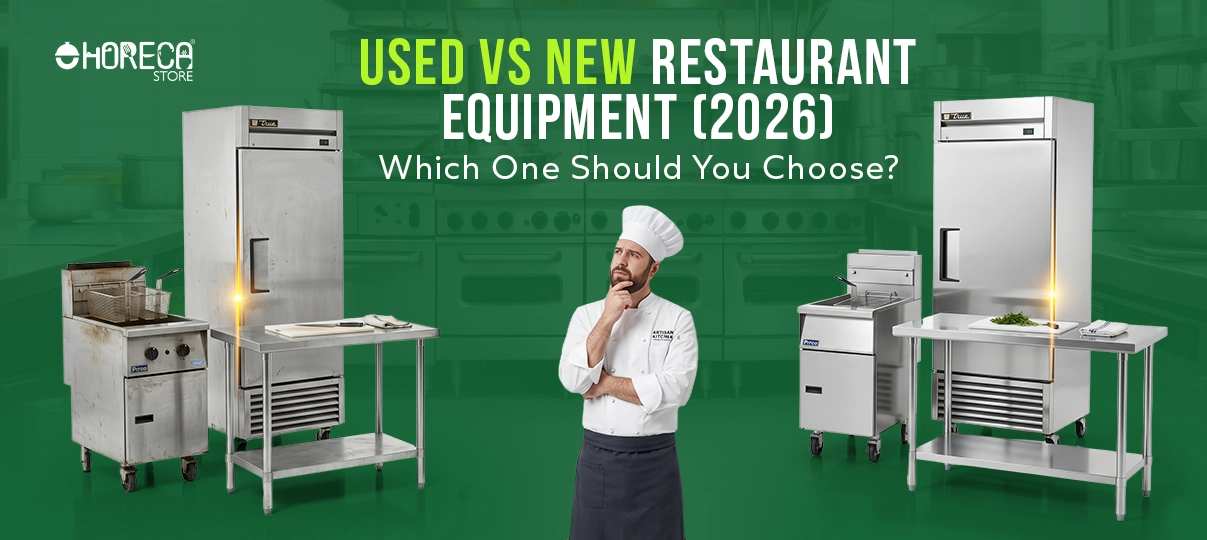
Opening a kitchen in 2026 means balancing tight budgets against high-tech dreams. Would you rather spend your entire budget on a gleaming, top-of-the-line oven, or have six months of operating capital safely in the bank? Striking the perfect balance between shiny appliances and slim profit margins is the first test for any new restaurateur. Navigating this financial minefield requires a reliable strategy to protect your bottom line.
According to recent restaurant supply data, opting for pre-owned items typically yields a 40% to 60% upfront price discount. Sticker prices, however, only tell half the story. Surging utility rates in 2026 mean older commercial kitchen equipment often becomes a hidden financial drain through excessive electricity consumption. Calculating your true ROI—the return on investment over a machine's lifespan—demands factoring in these unavoidable monthly operating costs.
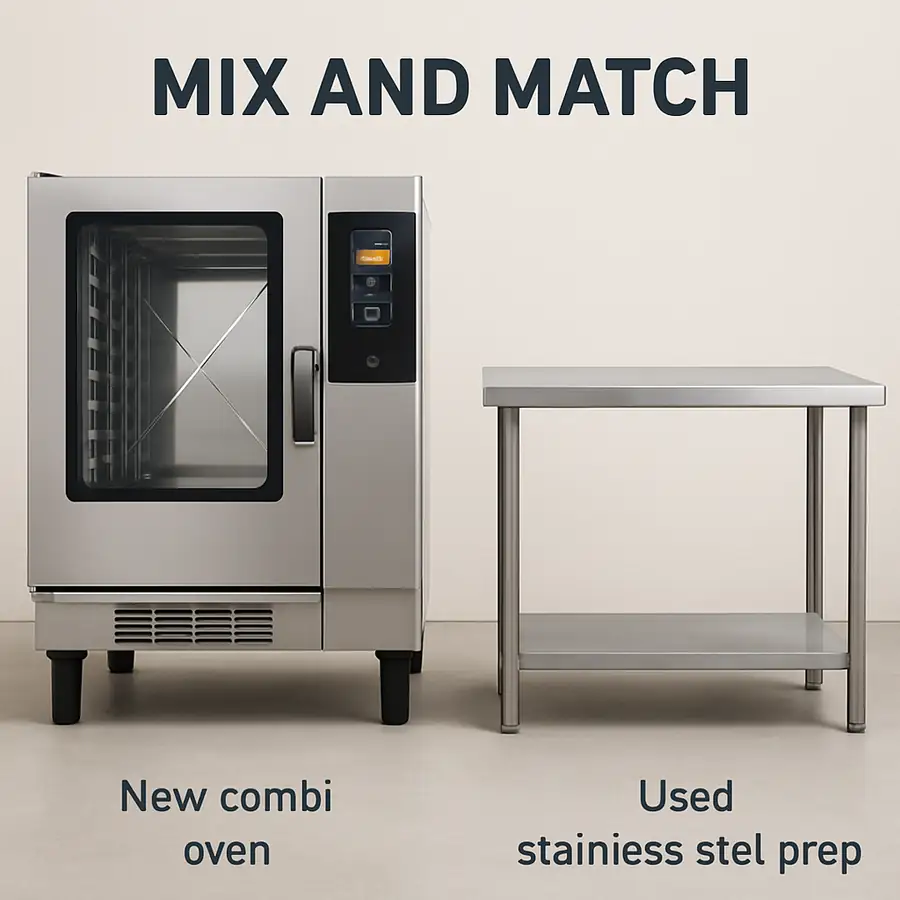
Understanding where to allocate those precious funds comes down to separating "Mission-Critical" items from "Support" gear. A primary refrigerator holding thousands of dollars in perishable inventory is mission-critical, because a compressor breakdown literally stops your business. Conversely, a stainless steel mixing table serves as support equipment. Scratches on a sturdy prep surface simply won't force you to close your doors during a busy Friday night dinner rush.
Mastering this financial landscape empowers you to make strategic compromises without sacrificing food quality. Smart buyers know exactly when to leverage modern energy-efficient innovations and where to safely cut corners. Building a resilient kitchen that keeps the tickets printing requires deliberate, value-driven choices.
Why the 'Save vs. Splurge' Framework Prevents Business Failure
While slashing expenses with second-hand gear is tempting, seasoned owners calculate the Total Cost of Ownership (TCO) instead of just checking the sticker price. This crucial metric combines the upfront purchase price with ongoing maintenance and the devastating cost of operational downtime. Ignoring TCO exposes you to the hidden costs of second-hand kitchen tools, turning a quick bargain into a budget-draining nightmare on your busiest nights.
Smart purchasing starts by dividing your shopping list into inert and mechanical categories. Inert gear lacks moving parts, motors, or wiring, making it virtually indestructible regardless of age. Stainless steel prep tables, dry storage racks, and heavy-duty shelving are phenomenal places to cut costs. Since a metal table cannot suddenly break and ruin your Friday dinner rush, buying these items used is a 100% safe bet that preserves capital.
Conversely, equipment relying on constant water exposure or heavy mechanical action demands extreme caution. High moisture degrades internal parts quickly, severely reducing commercial kitchen equipment life expectancy if previous owners skipped routine maintenance. Because a sudden failure in these categories will immediately shut down your service, stick to this strict "Never Buy Used" list:
- Ice Machines: Highly prone to internal mold and sudden compressor death.
- Dishwashers: Hard water scaling silently destroys expensive internal pumps.
- Complex Electronics: Digital interfaces on older ovens are notoriously costly to repair.
The New Equipment Advantage: Smart Tech, Energy ROI, and 2026 Tax Incentives
Writing a massive check for brand-new gear stings less when you understand how the IRS views your purchase. Under the Section 179 tax deduction, you can typically write off the entire purchase price of qualifying equipment in the year you buy it, rather than waiting for it to depreciate over a decade. This immediate deduction preserves crucial cash flow during your vulnerable first year.
Beyond initial write-offs, modern engineering delivers daily financial returns. Securing tax incentives for new energy-star commercial appliances means acquiring units consuming 20% to 30% less power than older used counterparts. These savings are driven by smart technology in 2026 commercial ovens, which frequently feature:
- AI-load sensing that adjusts heat based on food volume.
- Remote temperature logging to automatically satisfy health inspectors.
- Self-cleaning cycles that eliminate expensive manual labor.
Protection against unexpected breakdowns provides the ultimate peace of mind. A standard two-year factory warranty is essentially business interruption insurance that keeps your doors open. When you weigh a guaranteed manufacturer fix against volatile factory warranty vs third-party repair costs—where emergency weekend technicians charge triple-time just for diagnosing issues—buying new minimizes operational stress.
Securing these financial safety nets makes purchasing new cooking stations a highly logical decision. However, preserving raw ingredients introduces different high-stakes variables. Before outfitting your cold storage, you must ask: is buying used refrigeration worth the risk? Decoding life expectancy and sanitization will dictate how you handle your kitchen's most sensitive zone.
Is Buying Used Refrigeration Worth the Risk? Decoding Life Expectancy and Sanitization
One bad decision on second-hand cold storage can quickly jeopardize your entire weekend inventory. When entrepreneurs ask if buying used commercial refrigerators is worth it, the answer usually comes down to the compressor's hidden mileage. A failing compressor might hum perfectly during a brief walk-through, but replacing it easily costs $1,500 in parts and emergency weekend labor. Compared to spending $3,000 on a brand-new, warrantied unit, that single surprise repair bill completely wipes out any upfront savings.
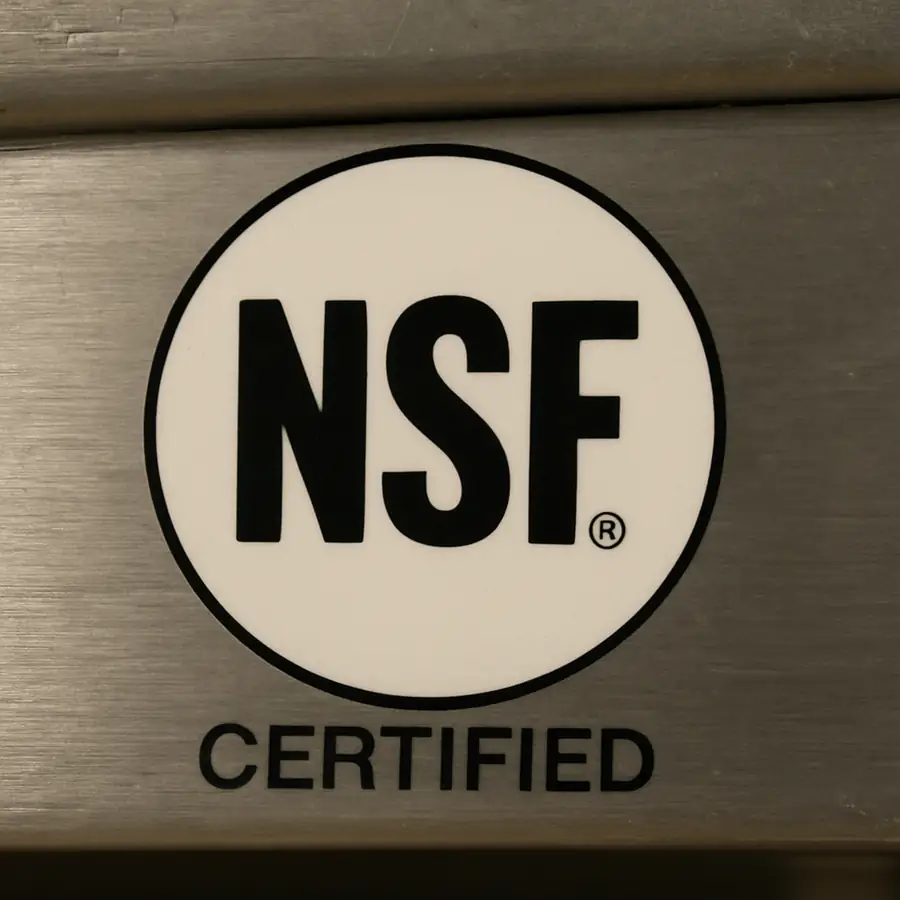
Beyond mechanical failure, surviving your local health inspector requires meeting strict legal baselines. You cannot simply drag a residential fridge into a commercial kitchen; the law demands compliance with specific sanitization standards for pre-owned food service gear. The NSF (National Sanitation Foundation) rating is non-negotiable here, as it guarantees the appliance features food-safe, easily cleanable materials. Recognizing these NSF certified kitchen equipment benefits ensures you never purchase a "bargain" unit that health officials immediately condemn.
Smart buyers always conduct a rigorous four-point inspection before handing over cash. You must physically feel the door gaskets for brittle cracks, listen closely for a struggling compressor whine, and check the condenser coils for thick, heat-trapping grease. Most importantly, you need to test the temperature recovery time—the crucial speed at which the fridge returns to a safe 38 degrees after the door is held open—because slow recovery guarantees spoiled ingredients during a Friday dinner rush.
How to Inspect Pre-Owned Gear Like a Pro: The 2026 Buyer's Checklist
Walking into a used warehouse feels like stepping into a graveyard of culinary dreams. You must understand the critical difference between certified refurbished vs as-is restaurant gear before spending a dime. Certified refurbished units from reputable dealers offer a 30-day safety net—just enough time to test their performance during a real weekend dinner rush. Conversely, "as-is" sales are a pure gamble; once that oven is loaded onto your truck, every future malfunction drains your operating budget.
Smart buyers never evaluate hardware empty-handed. When mastering how to inspect pre-owned catering equipment, pack a heavy-duty flashlight, a probe thermometer, and an infrared sensor to spot hidden wear. Beyond these physical tools, your smartphone is essential for serial number decoding. Quickly searching the manufacturer and serial digit-string instantly reveals the machine's true manufacturing year, effectively bypassing a seller's overly optimistic age estimate.
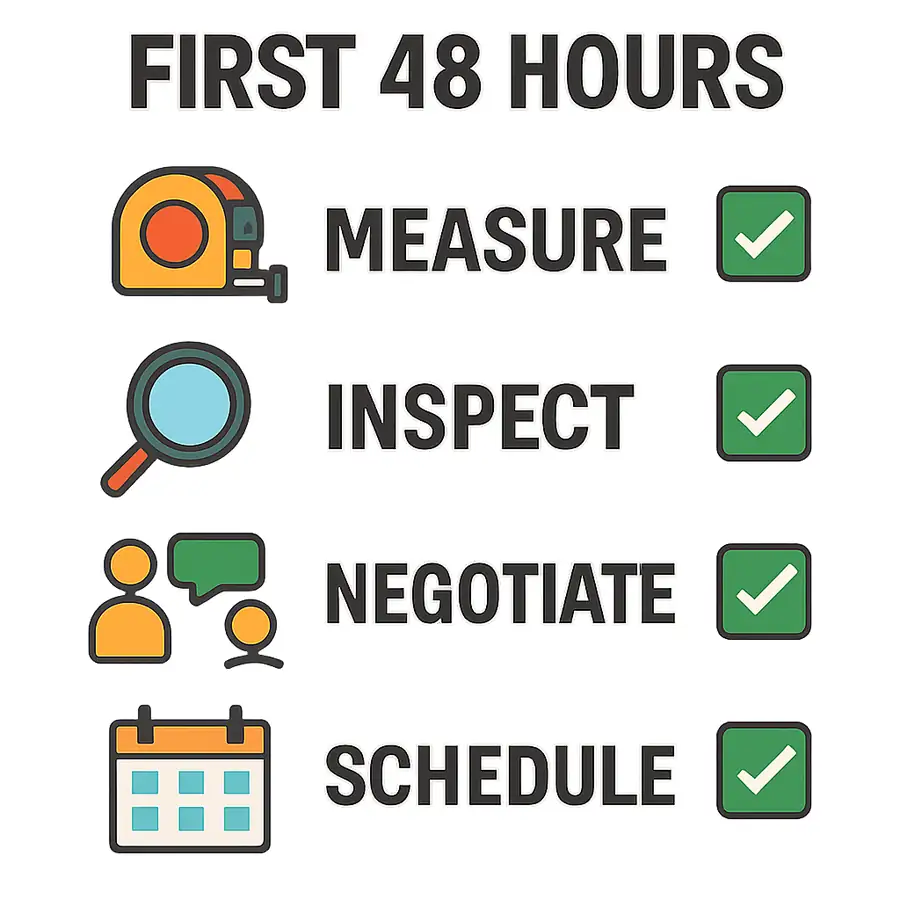
Always execute this strict checklist for purchasing liquidated restaurant assets before negotiating a final price:
- Serial number verification: Confirm the unit's actual age matches the listing.
- Seal integrity: Inspect rubber gaskets for brittle dry rot.
- Burner pattern: Ensure gas flames burn blue and even, not sputtering yellow.
- Cord safety: Check electrical plugs for melted prongs or frayed wires.
- Proof of service: Request logs proving routine professional maintenance.
Mastering these hands-on evaluation skills guarantees you only bring reliable, profit-generating machinery into your commercial kitchen. Once you can confidently spot mechanical red flags on the warehouse floor, you are ready to safely navigate high-stakes auctions and liquidation markets.
Scoring Big at Liquidations: The Denver Market and Hidden Acquisition Costs
Navigating liquidation auctions offers incredible opportunities to stretch your budget, provided you know where to look. When a local eatery closes, massive auction houses sweep in to liquidate their assets for pennies on the dollar. Local searches for used restaurant equipment reveal a thriving secondary market where buyers can secure high-end brands for a fraction of retail. However, winning a bid is only the first step in claiming your prize.
The actual price of a second-hand appliance rarely matches the auction invoice once hidden acquisition costs factor in. Because you are responsible for transporting the hardware, you must budget for heavy-duty freight, professional deep cleaning, and specialized technician recalibration before cooking a meal. Factoring these physical dimensions and utility requirements into your commercial kitchen layout optimization early prevents buying a bargain range that ultimately cannot fit through your back door.
Despite these physical hurdles, purchasing pre-owned gear offers one massive advantage over buying new when navigating lead time logistics. In this industry, "lead time"—the months spent waiting for factory-fresh units to ship—can stall your grand opening or cripple your operations during unexpected breakdowns. Sourcing used restaurant equipment means you can load a replacement fryer today and serve fries tonight. These immediate logistical requirements make financing strategies a critical next step.
Financing Your Dream: Equipment Leasing vs. Outright Purchase
Preserving cash is the ultimate survival tactic for any new restaurateur. The choice between equipment leasing vs outright purchase dictates how much breathing room your bank account maintains during those unpredictable first months. Buying upfront is a Capital Expenditure (CapEx)—a massive initial drain on your starting budget. Conversely, leasing treats the appliance as an Operating Expense (OpEx), transforming a daunting $15,000 smart-oven investment into a manageable, predictable monthly bill.
Weighing these financial realities is crucial as you lock in your commercial kitchen layout optimization. Consider this straightforward breakdown:
- Leasing: Low upfront cash and easy access to 2026 tech upgrades, but a higher total lifetime cost. Many offer "Lease-to-Own" paths where your monthly payments gradually build equity toward outright ownership.
- Buying: High initial capital drain, but provides the lowest total lifetime cost and immediate asset ownership.
Beyond preserving liquid capital, modern leases offer a vital safety net through maintenance-inclusive terms. If a leased refrigerator’s compressor dies during a Friday night rush, the leasing company typically handles the emergency repair, de-risking a catastrophic failure that could otherwise cripple your young business. Deciding which items justify a protective lease versus a cash purchase depends heavily on the appliance type and your operational blueprint.
Your 2026 Kitchen Launch Roadmap: The New vs. Used Master Decision Table
You now understand that outfitting a kitchen isn't just about finding the cheapest sticker price—it is about building a resilient business. By weighing lifetime operating costs, prioritizing a "Safety First" approach to NSF sanitization compliance, and embracing 2026 energy mandates, your commercial kitchen equipment strategy is now a deliberate blueprint rather than a financial gamble.
To secure your perfect equipment mix, start with this quick-reference Master Decision Table:
- Item: Ranges | Buy New? No | Buy Used? Yes
- Item: Refrigeration | Buy New? Yes | Buy Used? No
- Item: Tables | Buy New? No | Buy Used? Yes
- Item: Smallwares | Buy New? Yes | Buy Used? No
- Item: Combi-ovens | Buy New? Yes | Buy Used? No
Applying these principles to your upcoming build protects your profit margins from day one. Remember the golden rule for any second-hand purchase: Don't buy until you've seen it run. Every time you confidently pass on a sketchy used refrigerator or secure a warranty on a crucial piece of mechanical gear, you are actively protecting your capital and setting your kitchen up for long-term success.
Used vs New Restaurant Equipment Buying Guide (2026) from The Horeca Store
Choosing between used and new restaurant equipment is an important decision for businesses looking to build or upgrade their commercial kitchen. New equipment offers the latest features, warranties, and long-term reliability, while used equipment can provide cost-effective solutions for restaurants with budget considerations. The Horeca Store helps businesses find the right commercial restaurant equipment based on their kitchen needs, budget, and operational goals.
At The Horeca Store, we offer a wide range of high-quality restaurant kitchen equipment designed to deliver performance, durability, and efficiency. Whether you are setting up a new restaurant, expanding your kitchen, or replacing existing appliances, our collection includes reliable solutions for cooking, refrigeration, food preparation, and storage. Choose The Horeca Store for trusted equipment options that support successful foodservice operations in 2026 and beyond.