
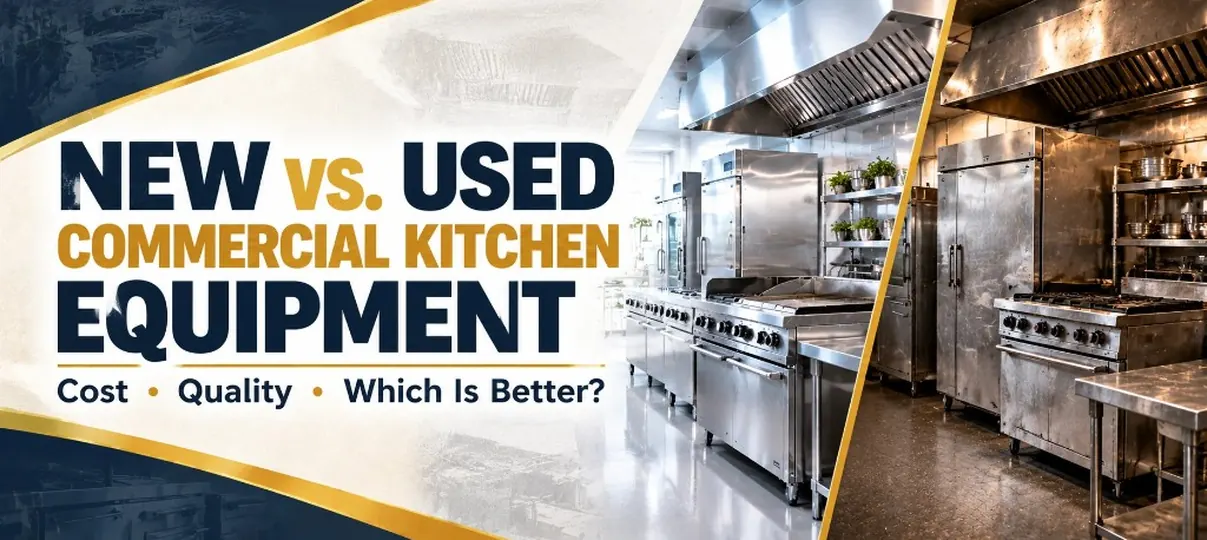
New commercial kitchen equipment deserves priority when dependable performance, documented warranty coverage, and precise specifications matter most. Used equipment deserves consideration when you can verify its condition and the savings remain worthwhile after inspection, delivery, and repairs. The practical choice is often a mixed kitchen: spend carefully on service-critical appliances and consider secondhand pieces where the risks are easier to assess. The Horeca Store stocks both new and secondhand pieces for a mixed kitchen.
Is new or used commercial kitchen equipment better?
Neither option is automatically better. Choose new when the consequences of failure outweigh the available savings; consider used when the equipment meets your operating needs, passes inspection, and leaves room in your budget for maintenance. Compare individual units rather than assuming everything in one category represents good value.
Start with your menu and busiest service period. A bakery buying its main production oven should evaluate the purchase differently from a cafe adding a spare prep table. Ask what happens if the item becomes unavailable tomorrow: can you substitute another process, reduce the menu, or keep serving normally?
Use this framework to organize your priorities:
Treat these as decision prompts, not guarantees of reliability. A new unit still needs proper installation, and a used unit still needs evidence beyond a clean exterior.
Where buying new earns its place
Buying new gives you an opportunity to specify the equipment around your operation rather than adapt your operation to whatever is available. Before requesting quotes, define production capacity, dimensions, utilities, cleaning access, and essential accessories. K-State's equipment-selection guidance similarly emphasizes compatibility with the product, facility, budget, and personnel.
Prioritize equipment that carries the service
Consider allocating more of your budget to appliances whose failure would remove major menu items or interrupt production. For a pizza operation, that may be its primary oven. For a sandwich shop, it may be the refrigerated preparation line.
This is a risk-management recommendation, not a claim that new equipment cannot fail. Compare the cost of a new purchase with your ability to manage disruption. If backup capacity is limited, give support arrangements and repair access substantial weight.
Read warranty terms before assigning them value
Ask for the actual warranty document rather than relying on a listing that says "warranty included." Review parts and labor coverage, exclusions, service arrangements, and any installation or maintenance conditions. Confirm the terms for the exact unit and purchasing channel before paying.
Include these questions in your quote request:
- Who handles a service claim, and who performs the repair?
- Are labor, travel, and freight covered?
- What documentation must you keep?
- Does coverage apply at your installation location?
A warranty should be a documented part of the comparison, not a substitute for a contingency plan.
Where used equipment deserves consideration
Approach used restaurant equipment as a condition-based purchase. Request the model and serial numbers, service history, included accessories, and an opportunity to inspect or test the unit. Keep the conversation focused on what the seller can demonstrate rather than descriptions such as "excellent" or "barely used."
As a practical starting point, investigate nonpowered items before committing to complicated appliances. A prep table gives you a different inspection task from a refrigerator or dishwasher. For tables and shelving, examine stability, damaged surfaces, welds, feet, and whether the item can be cleaned properly. NSF identifies sanitation-focused design and independent evaluation as important features of certified food equipment.
For powered equipment, make professional evaluation part of your purchasing process. Ask a technician familiar with the model to assess operation and identify immediate work. Do not treat a brief startup demonstration as your only acceptance test.
Be specific about refurbishment, too. Ask which components were replaced, who performed the work, and what testing followed. Evaluate the written work record rather than assuming the word "refurbished" promises a particular level of restoration.
Set a walk-away rule before viewing equipment. Missing identification, refusal to allow inspection, or unexplained modifications should trigger further investigation-not pressure to complete the deal. If the seller cannot resolve an important uncertainty, compare another unit instead.
How do you compare the real cost?
Compare total ownership cost over the same planning period, not purchase prices alone. Include delivery, installation, operating expenses, maintenance, and anticipated repairs, then assess downtime risk separately. ENERGY STAR recommends this broader approach because the purchase price may represent only a small portion of total equipment cost.
Build a worksheet for each candidate:
- Purchase and transaction costs: Record the quoted price, applicable taxes, fees, and financing charges.
- Getting it into service: Obtain estimates for freight, unloading, positioning, installation, and necessary site work.
- Immediate corrective work: Add inspection findings, replacement accessories, cleaning, and repairs needed before use.
- Ongoing ownership: Estimate utilities and scheduled maintenance using model information and your expected workload.
- Exit value: Treat possible resale proceeds cautiously rather than depending on an optimistic future sale.
Keep known costs separate from assumptions. If repair needs are uncertain, show a range rather than presenting one precise forecast. That makes the risk visible instead of burying it in a seemingly inexpensive quote.
Give efficiency a model-by-model comparison
Do not assume that every new appliance is efficient or every used appliance is wasteful. Compare the actual models and available performance information. ENERGY STAR provides product-comparison tools and a commercial food service equipment savings calculator to support this evaluation.
For water-using equipment, include water and sewer expenses alongside energy. The Department of Energy notes that water efficiency can also produce energy savings, particularly where commercial kitchen applications use hot water.
The goal is affordable kitchen appliances that fit your workload-not simply the lowest checkout total.
Inspect the equipment and the installation together
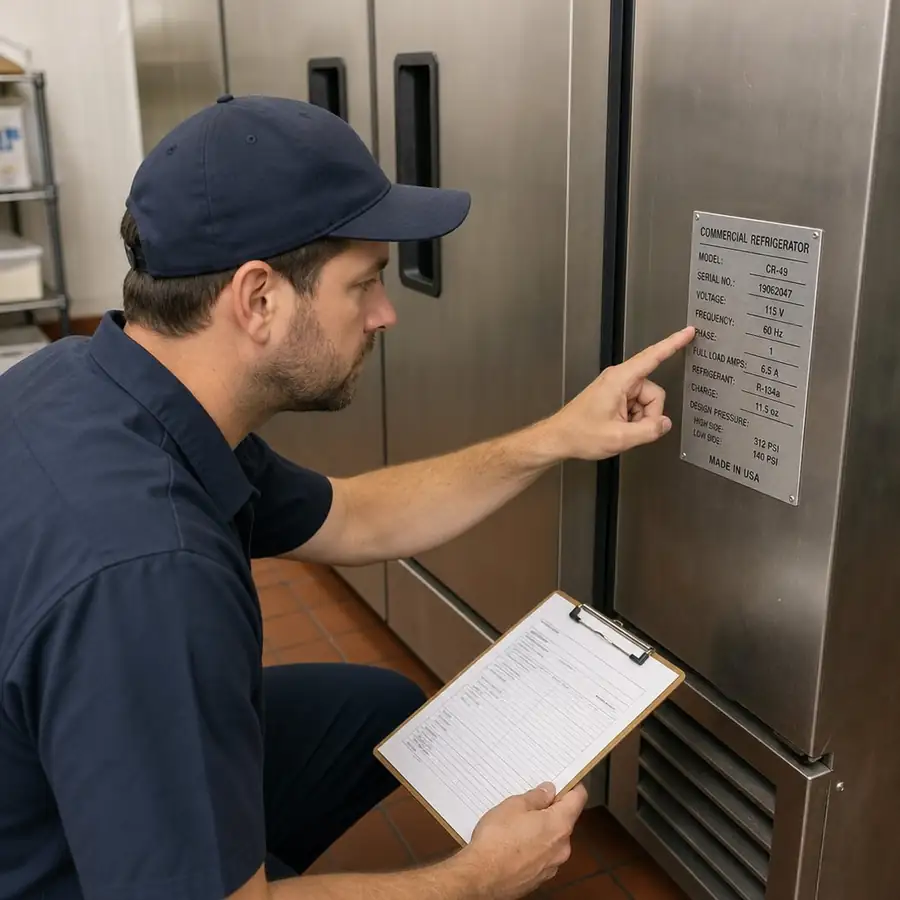
Evaluate the unit and the building as one purchase decision. Before agreeing to buy, send the equipment specifications to your installer and ask for written confirmation of compatibility. Do not leave questions about utilities, access, or positioning until delivery day.
Use this pre-purchase checklist:
- Identification: Photograph the data plate and match it to the listing, quote, and invoice.
- Physical fit: Measure the installation space and delivery route, including doorways, turns, and stairs.
- Connections: Ask the installer to verify electrical supply, fuel requirements, plumbing, drainage, and ventilation needs.
- Operating condition: Arrange an appropriate test with a qualified technician, including temperature or cycle checks where relevant.
- Completeness: List the racks, shelves, guards, attachments, and other components included in the sale.
- Service support: Ask a local service provider about parts and repair support for that exact model.
Your acceptance standard should reflect the job. For example, ask how a refrigerator will be evaluated for temperature performance, not merely whether its compressor starts. For an oven, ask the technician what checks are appropriate before purchase. Avoid performing gas, electrical, or refrigeration work yourself.
Keep a written record of findings and agreed repairs. Include photographs and make sure the invoice identifies the specific unit. If the seller promises corrective work, ask when it will be completed and how you can verify it before accepting delivery.
Finding local equipment without buying on proximity alone
Searching for "used commercial kitchen equipment for sale near me" is a useful way to build an inspection shortlist. Follow it with more specific searches using the equipment type, required dimensions, or model number. The objective is to identify suitable candidates, not to justify buying the closest available unit.
When browsing used commercial kitchen equipment for sale, send each seller the same initial questions. Ask whether you can inspect the equipment, see it operating, obtain identification details, and review written sale terms. Request a complete delivered quote where possible so you can compare offers consistently.
Keep two separate lists: equipment that fits your requirements and equipment that merely looks inexpensive. Do not move an item into the first list until you have checked its specifications and condition. This helps prevent an attractive price from quietly changing your purchasing criteria.
If your search for used commercial kitchen equipment near me produces few suitable options, broaden the area carefully. Obtain a transport quote before comparing a distant listing with a local offer. K-State's purchasing guidance highlights shipment costs and delivery terms as important considerations for heavy or bulky equipment.
Confirm local acceptance before committing
Equipment condition and regulatory acceptance are separate questions. In the United States, restaurant oversight is generally handled at state and local levels, and jurisdictions differ in their adoption of the FDA Food Code. Confirm the requirements that apply to your location rather than assuming one national rule answers every purchasing question.
Ask your local health department which sanitation certifications and equipment documentation it expects. NSF explains that its certification includes independent testing and auditing against applicable NSF/ANSI standards. A certification mark addresses sanitation-related requirements; it should not replace an assessment of a used unit's present condition.
Share model details and any known modifications with the relevant reviewers before paying. Separately, ask your installer which building, plumbing, electrical, or fire approvals need confirmation. Keep those responses with your purchase records so the people installing and approving the equipment are working from the same information.
Build a mixed purchasing plan around risk
Rather than choosing one purchasing route for the whole kitchen, classify each item by operational importance and uncertainty. Give the highest priority to units that directly control your ability to produce the menu. Then assess where a documented used purchase could release money without creating an unacceptable operational gap.
For example, your plan might prioritize new equipment for a service-critical appliance while considering inspected secondhand tables and shelving. A used backup appliance might also deserve consideration if it meets your specifications and passes evaluation. These are planning examples, not universal recommendations for particular equipment categories.
Protect the savings after purchase. Retain a maintenance reserve, record model information, and establish a service contact before you need an emergency repair. Avoid spending the entire equipment budget on acquisition while leaving nothing for installation or corrective work.
Plan for the equipment you replace
If you intend to sell used commercial kitchen equipment, prepare the information you would want as a buyer: model and serial numbers, clear photographs, dimensions, service records, and an honest condition description. Identify included accessories and disclose known faults. Make inspection access and removal arrangements clear before agreeing on a transaction.
Request separate figures for your replacement purchase and any trade-in offer. Compare the net cost only after reviewing both, and do not count expected sale proceeds as available cash until the transaction is complete.
The takeaway: buy for the job, not the label
Choose new where specification certainty and documented support justify the investment. Consider used where inspection supports the purchase and the full cost still delivers worthwhile savings. Before committing, compare equivalent quotes, confirm installation and local acceptance, and keep money available for maintenance. The better purchase is the one that fits your kitchen without exposing service to risks you cannot manage.