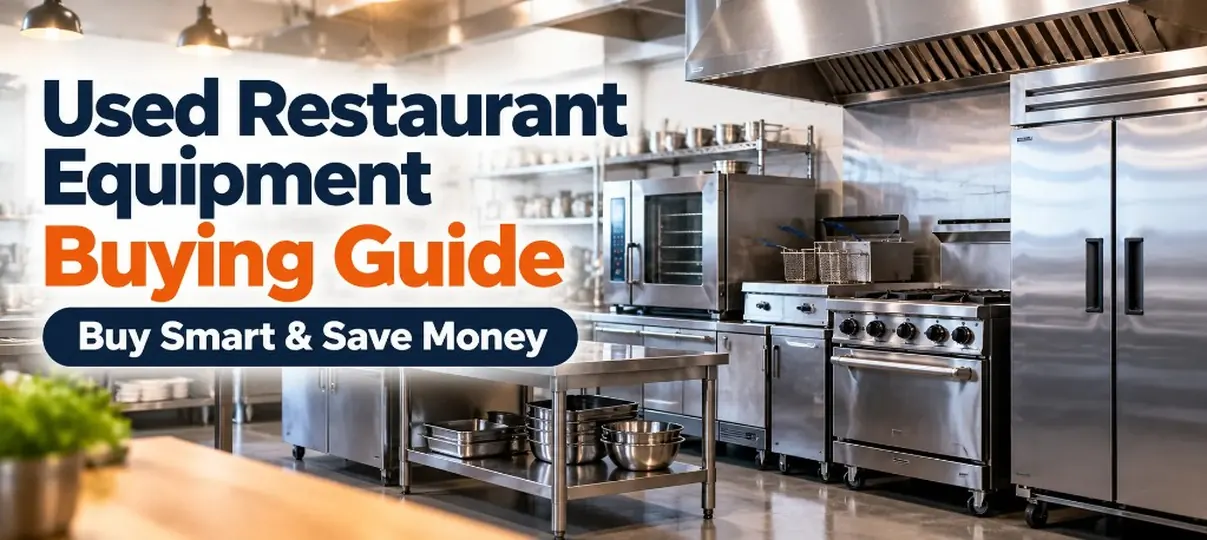
Buying used restaurant equipment can help operators stretch startup capital, replace essentials quickly, and build a functional kitchen without paying new-equipment prices. This used restaurant equipment buying guide walks through what to inspect, how to compare options, and when a lower price is not worth the risk. Whether you are opening a café, upgrading a food truck, or replacing a single cooler, the goal is the same: buy commercial kitchen gear that is safe, serviceable, and suited to your menu.
What should you know before buying used restaurant equipment?
Confirm the reach-in refrigerator, commercial range, and commercial fryer before you pay.
You should know what the equipment must do, how much space and utility capacity you have, what condition is acceptable, and whether parts or service are available. Used equipment can be a smart purchase, but only when it fits your workflow and has enough useful life left to justify the cost. A bargain fryer, oven, or refrigerator becomes expensive if it cannot pass inspection, connect to your utilities, or keep up during peak service.
Start with a clear list of required pieces rather than browsing every restaurant equipment sale you find. A focused plan protects you from buying items because they seem cheap instead of because they solve an actual kitchen need.
A practical used restaurant equipment buying guide for smarter decisions
A bakery line often needs a planetary mixer and a commercial convection oven.
The best used purchases begin with your menu, volume, and layout. A bakery needs reliable mixers, proofing, refrigeration, and ovens. A taqueria may prioritize griddles, prep tables, warmers, refrigeration, and ventilation compatibility. A bar may need ice machines, undercounter refrigeration, glass washers, and storage more than heavy hot-line equipment.
Think in terms of production bottlenecks. If your current kitchen loses time waiting on refrigeration space, buying another small appliance may not help. If your cookline cannot recover heat fast enough, a larger range or griddle may improve service more than another prep table. Budget restaurant equipment should still support your busiest hour, not only your quietest one.
Before you shop, document:
- The exact equipment category you need
- Interior and exterior dimensions that fit your space
- Gas, electric, water, drain, and ventilation requirements
- Desired capacity, such as pan size, cubic feet, burners, or rack count
- Any health department, fire, or building requirements that apply
- A maximum purchase price plus delivery, installation, and repair allowance
That last point matters. A used refrigerator listed at a great price may still need freight, a new gasket, professional cleaning, and technician setup. A realistic budget prevents surprises and helps you compare options fairly.
The main benefits of buying used commercial kitchen gear
Pair the hot line with refrigeration and commercial shelving.
Used commercial kitchen gear appeals to new and growing food businesses because it can reduce upfront expense and shorten lead times. When chosen carefully, it can also give operators access to heavier-duty equipment than they might afford new.
The practical advantages include:
- Lower entry cost: Used cooking equipment, refrigeration, and prep equipment often cost less than comparable new items, helping preserve cash for inventory, payroll, permits, and marketing.
- Faster availability: If a key unit fails, locally available used equipment may be ready sooner than a new item with a long lead time.
- Commercial-grade durability: Many used pieces were built for daily restaurant use, making them more appropriate than residential or light-duty alternatives.
- Sustainable reuse: Extending the life of functional equipment keeps large metal appliances and components in productive use.
- More flexibility for testing concepts: Pop-ups, ghost kitchens, seasonal operations, and first locations may prefer affordable kitchen appliances and equipment while demand is still being proven.
These benefits are strongest when the equipment comes from a reputable source, is inspected before purchase, and matches the actual requirements of your kitchen.
Know the risks before you commit
Have a technician check the commercial refrigerator and the reach-in freezer.
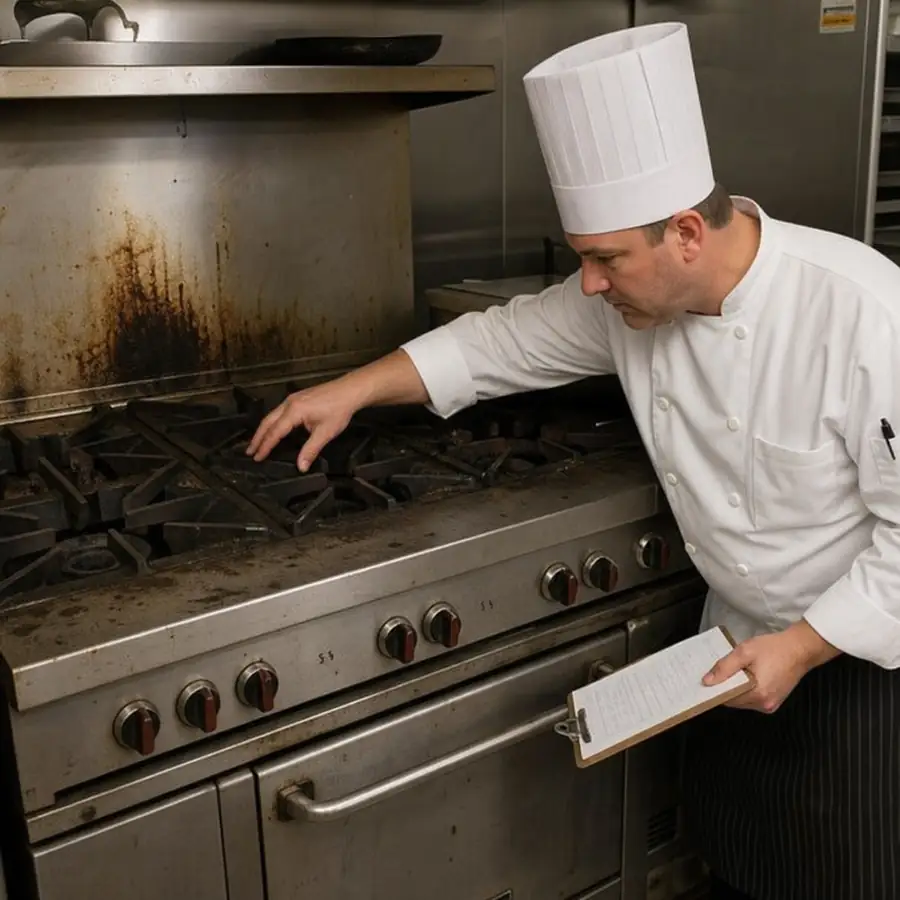
The biggest risk with used restaurant equipment is uncertainty. You may not know how hard the item was used, whether it was maintained properly, or why the previous owner sold it. That does not mean you should avoid used equipment; it means you should inspect with discipline.
Look for obvious signs of neglect: heavy rust, missing data plates, frayed cords, broken knobs, cracked welds, damaged doors, loose hinges, or unusual odors. For refrigeration, check door seals, temperature recovery, compressor noise, evaporator condition, and whether the unit reaches and holds safe temperatures. For gas equipment, verify burner condition, pilot function, flame quality, valve response, and whether the equipment is configured for the correct gas type.
Be cautious with equipment that has been stored outdoors, modified by an unknown person, or stripped of key parts. Also avoid any unit without a clear model and serial plate when code compliance, parts lookup, or service history could matter. A low price cannot compensate for equipment that technicians cannot identify or repair.
Which used equipment is usually worth considering?
Hot-side buys often include a gas griddle and charbroilers.
Many categories can be good used purchases when the condition is right. Stainless steel tables, sinks, shelving, carts, and prep surfaces are often easier to evaluate because their function is visible. If they are structurally sound, easy to clean, and properly sized, they may be excellent budget restaurant equipment choices.
Hot-side equipment can also be worthwhile, especially heavy-duty ranges, griddles, charbroilers, convection ovens, warmers, and fryers. However, these items deserve more careful inspection because safety, heat consistency, and utility connections matter. Fryers in particular should be checked for tank condition, leaks, burner performance, and signs of poor oil-management history.
Refrigeration can save money used, but it requires the most caution. Reach-ins, prep tables, undercounter units, walk-in components, and display cases must maintain safe temperatures reliably. A cheap cooler that fails during service can cost far more than it saved. When possible, see refrigeration operating before purchase and budget for a technician evaluation.
Smaller affordable kitchen appliances, such as mixers, slicers, processors, and countertop warmers, can be strong buys if they are complete, clean, and mechanically sound. Test moving parts, safety guards, switches, attachments, and speed controls. If a required attachment is missing, price the replacement before you buy.
Inspection checklist before you buy
Also confirm the undercounter refrigerator and the walk-in cooler will fit the utilities.
A simple checklist can help you slow down and make a better decision, especially when a seller is pushing urgency or advertising a limited restaurant equipment sale.
Before paying, confirm:
- Identity and specifications Find the model number, serial number, voltage, phase, gas type, dimensions, and capacity. Match these against your kitchen requirements.
- Cleanability Food-contact surfaces should be smooth, accessible, and free of deep corrosion, cracks, or contamination. Equipment that cannot be cleaned properly may not pass inspection.
- Operational performance Ask to see the unit running. Listen for unusual noises, watch startup behavior, and confirm that controls respond correctly.
- Utility compatibility Verify electrical service, plug type, gas connection, ventilation needs, water lines, and drains. Installation changes can quickly erase savings.
- Parts availability Search for replacement parts or ask a technician whether the brand and model are serviceable in your area.
- Total landed cost Add purchase price, taxes, delivery, rigging, cleaning, repairs, installation, and downtime risk.
- Return or warranty terms Some sellers offer limited testing periods or service support, while private sellers may offer no protection. Know the terms before money changes hands.
Local shopping: Denver, San Antonio, and nearby markets
Compare local used restaurant equipment with new restaurant equipment before you haul it.
Local availability can shape your options. If you are searching for used restaurant equipment Denver, you may find liquidation warehouses, auction listings, dealers, and restaurants closing or remodeling. The benefit of shopping locally is the ability to inspect equipment in person and reduce freight complexity.
The same applies in Texas. Searches for used restaurant equipment in San Antonio Texas or used restaurant equipment San Antonio often lead to local dealers, marketplace listings, auctions, and operators selling equipment after concept changes. If you are typing "restaurant equipment used near me" into a search bar, do not stop at the first listing. Compare multiple sources, ask direct questions, and verify that each item is truly commercial-grade.
A local dealer or specialized supplier may also help you avoid mismatched purchases. For example, the horeca store can be a useful point of reference when you are comparing hospitality and restaurant supply options, especially if you want to think beyond price and consider fit, workflow, and durability.
Where can you sell used restaurant equipment?
Clean units such as a meat slicer and a commercial food processor are easier to resell.
If you are wondering where to sell used restaurant equipment, the right channel depends on speed, condition, and how much effort you want to invest. Private listings may bring more direct buyer interest, but they require photos, communication, scheduling, and negotiation. Dealers, liquidators, and auction platforms may be faster or simpler, though the offer may reflect resale costs and risk.
Good selling options include:
- Local restaurant equipment dealers that buy or consign used inventory
- Restaurant liquidation companies
- Online marketplaces for business equipment
- Local food-business networks and operator groups
- Auctions, especially for full kitchen closures
- Direct sale to another restaurant, caterer, food truck, or commissary user
To improve your chance of selling, clean the equipment thoroughly, photograph all sides, include the model and serial plate, list dimensions and utility requirements, and be honest about defects. Buyers of used cooking equipment and refrigeration want clarity. If the item is still connected and can be shown running, mention that in the listing.
Price is important, but fit matters more
Match the piece to the commercial kitchen layout and the restaurant startup equipment plan.
A low price can be tempting, particularly when cash is tight. Still, the cheapest item is not always the best value. Used restaurant equipment should be evaluated by fit, condition, capacity, reliability, and serviceability. If it creates workflow problems, requires expensive utility changes, or fails during a rush, the initial savings disappear.
Use a simple decision rule: buy the item only if it supports your menu, fits your space, can be installed safely, and leaves enough budget for cleaning or repairs. If any of those points are uncertain, pause. Another unit will usually appear, and waiting is often cheaper than buying the wrong equipment.
It is also wise to separate "nice to have" from "must have." A second mixer, extra warmer, or specialty appliance may be useful later, but opening or operating smoothly depends on core equipment first. Prioritize refrigeration, cooking capacity, prep space, warewashing, storage, and safety-related systems before accessories.
Questions to ask every seller
Ask how the unit compares with a new commercial oven or an ice machine.
A good seller should be able to answer basic questions clearly. If they cannot, that does not automatically mean the equipment is bad, but it does mean you need a more careful inspection.
Ask:
- Why is the equipment being sold?
- Was it used in a restaurant, bakery, bar, food truck, or another setting?
- Is it currently operating?
- Are any parts missing or replaced?
- Has it been repaired recently?
- Does it have known issues?
- Is there any warranty, return window, or test period?
- Who handles loading, delivery, and installation?
- Can you provide the model number, serial number, and photos of the data plate?
The answers help you judge risk. A seller who provides details, clear photos, and realistic terms is easier to trust than one who avoids specifics or pressures you to decide immediately.
Final takeaway
The Horeca Store can help you compare used kitchen equipment before you buy.
Used equipment can be one of the smartest ways to build or improve a commercial kitchen, but only when you buy with a plan. Focus on the equipment your menu truly needs, inspect condition carefully, confirm utility compatibility, and compare total cost rather than sticker price alone.
Whether you are shopping a restaurant equipment sale, looking for used restaurant equipment Denver, comparing used restaurant equipment San Antonio listings, or preparing to sell extra gear yourself, patience pays off. The right used commercial kitchen gear should help your kitchen work better from day one, not create problems you have to solve later.