
Buying used, refurbished, or second-hand restaurant equipment can lower startup costs, speed up replacements, and help you build a working kitchen without paying new-equipment prices. The smart move is to inspect condition, match the equipment to your menu, confirm utility needs, and understand the real cost of delivery, installation, parts, and service before you buy.
Used restaurant equipment means commercial kitchen equipment that has had a previous owner. Refurbished kitchen appliances are used items that have been cleaned, tested, repaired, and prepared for resale. Second-hand equipment may be sold as-is, so the buyer carries more risk and should inspect more carefully.
What should you check before buying used restaurant equipment?
Check the equipment's condition, size, capacity, power needs, safety features, cleaning access, service history, and parts availability before buying. Also confirm that it fits your space, supports your menu, and can be installed without expensive changes to gas, electric, water, drainage, or ventilation.
This Used, Refurbished & Second-Hand Restaurant Equipment: Buying Checklist is useful whether you are searching online, visiting a warehouse, calling a dealer, or comparing "restaurant equipment used near me" listings. It also helps when reviewing local searches such as used restaurant equipment Denver, used restaurant equipment in San Antonio Texas, or used restaurant equipment San Antonio.
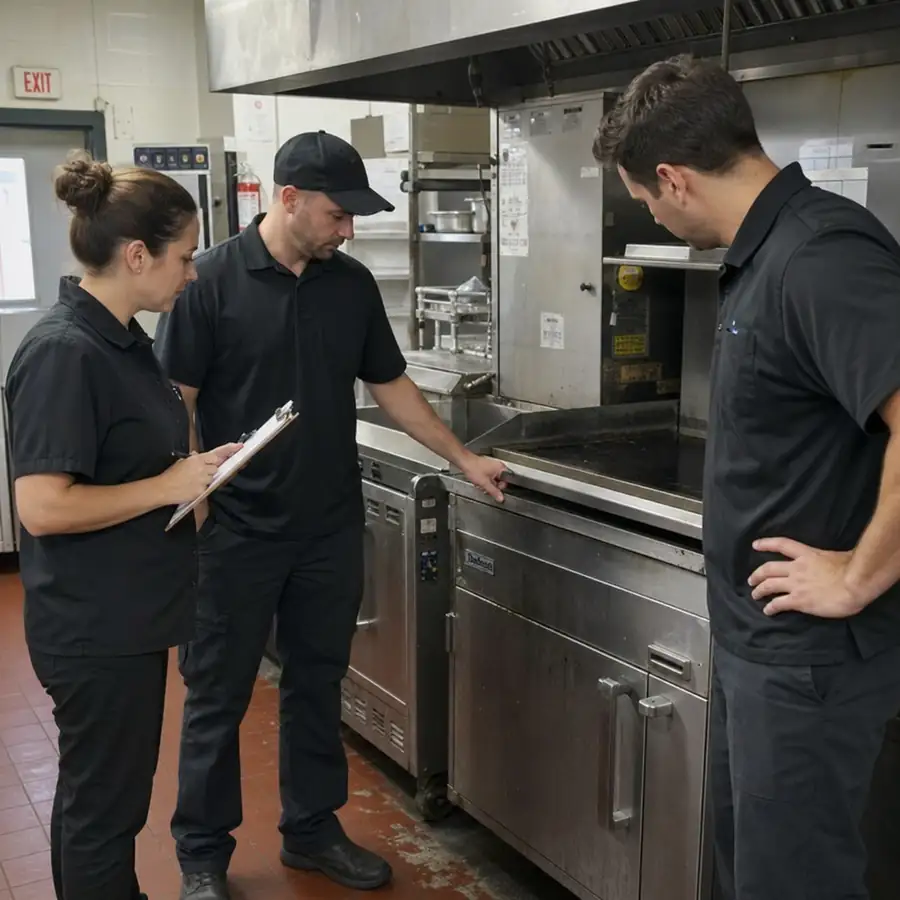
The main types of used commercial kitchen equipment
Used commercial kitchen equipment covers the core tools a food business needs to store, prep, cook, hold, clean, and serve food. Restaurants, cafes, hotels, bakeries, bars, QSRs, food trucks, ghost kitchens, caterers, and institutions all buy used equipment when the fit is right.
Common categories include:
- Cooking equipment: ranges, ovens, fryers, griddles, charbroilers, steamers, combi ovens, and tilt skillets.
- Refrigeration: reach-in coolers, freezers, undercounter units, prep tables, walk-ins, display cases, and bar coolers.
- Food prep equipment: mixers, slicers, processors, dough sheeters, worktables, sinks, and shelving.
- Warewashing: dish machines, glass washers, three-compartment sinks, pre-rinse units, and drying racks.
- Holding and serving: hot holding cabinets, steam tables, merchandisers, heated shelves, and buffet lines.
- Beverage and ice: ice machines, espresso machines, coffee brewers, blenders, kegerators, and soda systems.
Each category has different inspection points. A used fryer needs close checks for oil tank condition and burners. A used refrigerator needs checks for temperature recovery, door seals, coils, and compressor noise. A used mixer needs attention to gears, bowl lift, attachments, and motor strain.
Match equipment to your business model
The best used equipment is not always the newest or most powerful unit. It is the one that fits your volume, menu, staff skill, space, and utilities.
A small cafe may get more value from a used undercounter refrigerator, compact convection oven, and commercial espresso setup than from large line equipment. A bakery needs mixers, proofing, sheet pans, refrigeration, and ovens that support batch production. A bar may focus on back bar coolers, ice machines, glass washers, and bottle storage.
Food trucks and kiosks need compact equipment with tight footprints and clear power limits. Hotels and caterers need durable holding cabinets, rolling racks, combi ovens, and refrigeration that can handle changing volume.
Quick-service restaurants often need speed and repeatable output. In that case, used fryers, griddles, holding drawers, reach-ins, and prep tables can work well if they are easy to clean and service.
Key specifications that affect daily operations
Specifications are not just technical details. They decide how fast your kitchen works, how much food you can produce, and how often staff run into bottlenecks.
Size and footprint
Measure the equipment and the path into your building. Check doors, hallways, elevators, corners, and final placement. A great used range is not useful if it cannot pass through the back door.
Footprint also affects workflow. A prep table that is too deep may block the cook line. A refrigerator that opens the wrong way can slow service during busy hours.
Capacity and output
Capacity should match real demand, not wishful thinking. For refrigeration, look at cubic feet, shelf layout, pan capacity, and recovery after doors open often. For ovens, review rack capacity, cavity size, and bake or roast consistency.
For fryers, tank size and burner output affect how fast oil returns to cooking temperature. For ice machines, daily ice production and bin size matter because bars, hotels, and seafood displays can use ice quickly.
Power, gas, water, and drainage
Used equipment must match your building's utilities. Electric items may need specific voltage, phase, amperage, and plug types. Gas equipment may require natural gas or propane setup, proper pressure, and safe connections.
Dish machines, steamers, ice machines, and espresso machines may need water filtration, drains, and backflow protection. If utilities do not match, installation can cost more than expected.
Ventilation and clearance
Ranges, fryers, charbroilers, and many ovens may need hood space, fire suppression, and safe clearance from walls or other equipment. Poor ventilation makes kitchens hotter, less safe, and harder to pass inspection.
Always check whether the equipment is designed for the hood and line layout you have. This is a key reason to measure first and buy second.
Controls and technology
Basic manual controls are simple to repair and easy for staff to learn. Digital controls can offer better accuracy, timers, recipes, and energy management, but repairs may cost more if boards or displays fail.
Combi ovens, programmable ovens, and advanced refrigeration controls can help larger teams keep quality steady. Smaller operations may prefer simpler used models because downtime is easier to manage.
Used, refurbished, and second-hand options compared
The terms sound similar, but the risk level can be very different. Use this comparison before deciding.
Refurbished kitchen appliances often make sense for refrigeration, mixers, prep tables, and cooking equipment when the seller can explain the work performed. Private-sale equipment can be worthwhile, but only if you have the knowledge or technician support to spot hidden problems.
Brand and product examples to know
Brands matter because parts, service knowledge, and resale value often depend on brand support. A familiar brand is not a guarantee, but it can make repairs easier.
For refrigeration, buyers often look at True, Traulsen, Beverage-Air, Turbo Air, and Delfield. A used True T-49 reach-in refrigerator may suit a busy prep kitchen that needs upright cold storage. A sandwich prep table from brands such as True or Beverage-Air can fit cafes, delis, and QSR lines.
For cooking, Vulcan, Garland, Southbend, Blodgett, Pitco, Frymaster, and Rational are common names in commercial kitchens. A Vulcan convection oven can support roasting, baking, and batch cooking. A Blodgett DFG-series convection oven may fit bakeries, hotels, and institutions. Pitco and Frymaster fryers are common for restaurants that rely on fried menu items.
For prep, Hobart is well known for mixers and slicers. A Hobart Legacy mixer can serve bakeries, pizzerias, and institutional kitchens that need dough or batter production. Globe, Berkel, and Univex also appear often in slicing and mixing categories.
For ice, Manitowoc, Scotsman, and Hoshizaki are common commercial names. Bars, hotels, cafes, and healthcare kitchens should compare ice type, bin capacity, filtration needs, and local service access before buying.
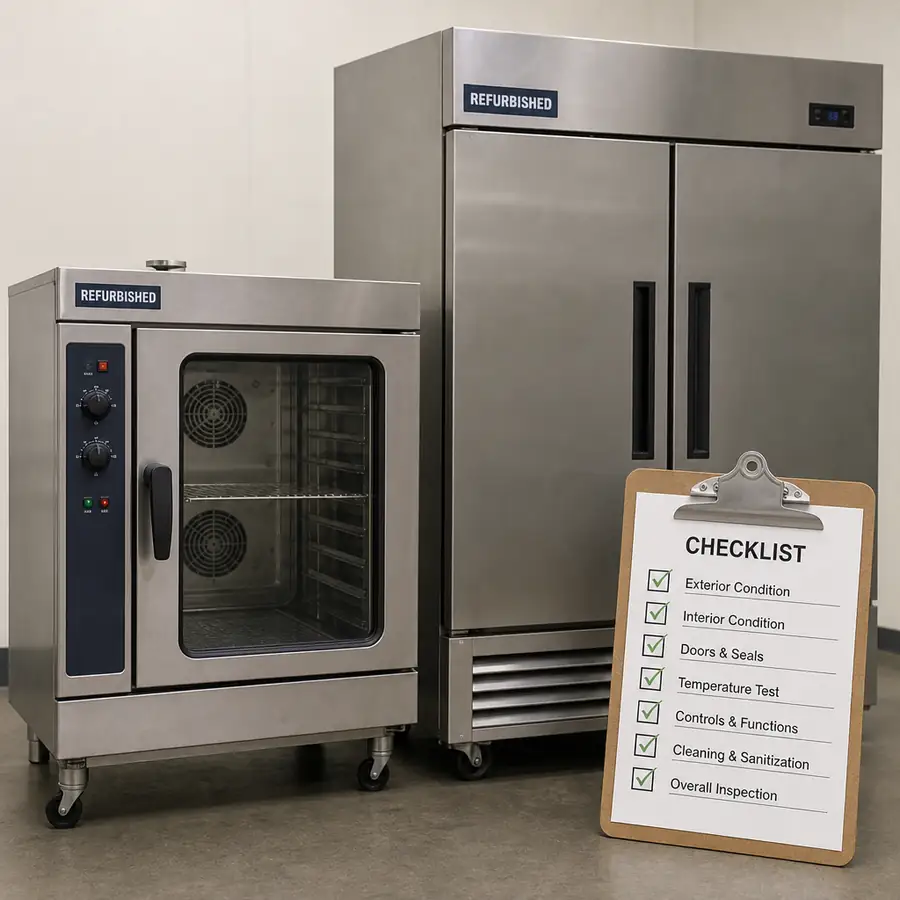
The practical buying checklist
Use this checklist before you pay, schedule delivery, or remove old equipment.
- Confirm the menu need: Buy based on what you cook every day, not rare specials.
- Measure the space: Include door swing, service clearance, cleaning access, and aisle width.
- Check the data plate: Confirm voltage, phase, amperage, gas type, BTU rating, model, and serial number.
- Inspect visible condition: Look for rust, cracks, leaks, missing panels, damaged hinges, worn gaskets, and bad casters.
- Test performance: Run the unit if possible. Check temperature, heat-up time, strange sounds, burner flame, water flow, or motor strain.
- Ask about history: Find out where it was used, why it was removed, and whether service records are available.
- Check parts availability: Avoid units with hard-to-find parts unless the price clearly reflects the risk.
- Review warranty or return terms: A short dealer warranty can be better than no support at all.
- Estimate delivery and installation: Include rigging, removal, plumber, electrician, gas fitter, hood work, and inspection needs.
- Cleanability: Choose equipment that staff can clean quickly and correctly during real shifts.
If you are comparing suppliers, a dealer such as the horeca store or a local restaurant equipment showroom can help you see items in person and ask practical questions before buying.
Installation, cleaning, maintenance, and total cost
The purchase price is only one part of total cost of ownership. A cheap unit can become costly if it needs major installation changes, rare parts, or frequent emergency repair.
Plan installation before delivery. Heavy equipment may need a liftgate, pallet jack, or rigging crew. Gas, electric, plumbing, ventilation, and drainage work should be handled by qualified trades when required.
Cleaning affects safety and lifespan. Refrigeration coils need regular cleaning so compressors do not overwork. Fryers need oil care, boil-outs, and tank checks. Ovens need routine cleaning around fans, seals, racks, and controls. Ice machines need cleaning and sanitation because water quality and scale can affect performance.
Maintenance should be simple enough for your team to follow. Create a schedule for gaskets, filters, belts, burners, probes, hinges, and drains. Keep model and serial numbers in one place so parts ordering is faster.
Warranty and support also matter. Refurbished equipment may include limited coverage, while as-is used equipment may not. Always ask what is covered, who performs service, and whether labor, parts, or both are included.
When buying used equipment makes the most sense
Used equipment is often a good fit when your budget is tight, your opening timeline is short, or you need a backup unit fast. It can also help when you are testing a menu and do not want to invest in all-new equipment yet.
It may not be the best choice for mission-critical items with heavy daily use unless condition and support are strong. For example, a main walk-in cooler, high-volume fryer battery, or only dish machine in the building should be selected with extra care.
New equipment may be better when you need exact sizing, long warranty coverage, high energy efficiency, or advanced controls. Used equipment may be better when the item is simple, easy to inspect, repairable, and priced well.
FAQ
1. Is refurbished restaurant equipment better than used equipment? Refurbished equipment is often safer than basic used equipment because it has usually been cleaned, tested, and repaired before resale. Still, you should ask what work was done and what warranty applies.
2. What is the biggest risk when buying second-hand restaurant equipment? The biggest risk is hidden repair cost. A low price can lose value if the unit needs a compressor, control board, burner work, or utility changes right away.
3. Should I buy used refrigeration? Used refrigeration can be a good buy if it holds temperature, has clean coils, strong door seals, quiet operation, and available parts. Avoid units with heavy rust, weak recovery, or unknown compressor issues.
4. Can I finance used commercial kitchen equipment? Some dealers and finance providers may offer financing for used or refurbished equipment. Terms vary, so compare total repayment cost, warranty, and service support before deciding.
5. What should I bring when inspecting equipment? Bring a tape measure, photos of your space, utility details, a checklist, and your menu needs. If the item is expensive or critical, bring a technician or ask for a live test.
Final buying guidance
A good used equipment purchase starts with the job the unit must perform. Do not buy only because the price looks low. Buy because the item fits your menu, space, utilities, volume, and service plan.
Use this final guide before you decide:
- If your requirement is low upfront cost -> consider used equipment from a trusted seller, but inspect carefully.
- If your requirement is lower risk -> consider refurbished equipment with clear testing, repairs, and warranty terms.
- If your requirement is high-volume frying -> consider proven commercial fryer brands and verify tank, burners, and recovery.
- If your requirement is cold storage -> consider reach-ins, prep tables, or walk-ins with strong seals, clean coils, and stable temperature.
- If your requirement is baking or batch cooking -> consider used convection ovens, deck ovens, or mixers sized to your daily output.
- If your requirement is a food truck or small cafe -> consider compact units with the right power draw and easy cleaning access.
- If your requirement is long-term support -> choose common brands with available parts and local service knowledge.
Used, refurbished, and second-hand equipment can be a smart way to build a kitchen. The key is to slow down, check the details, and choose equipment that supports real daily work.