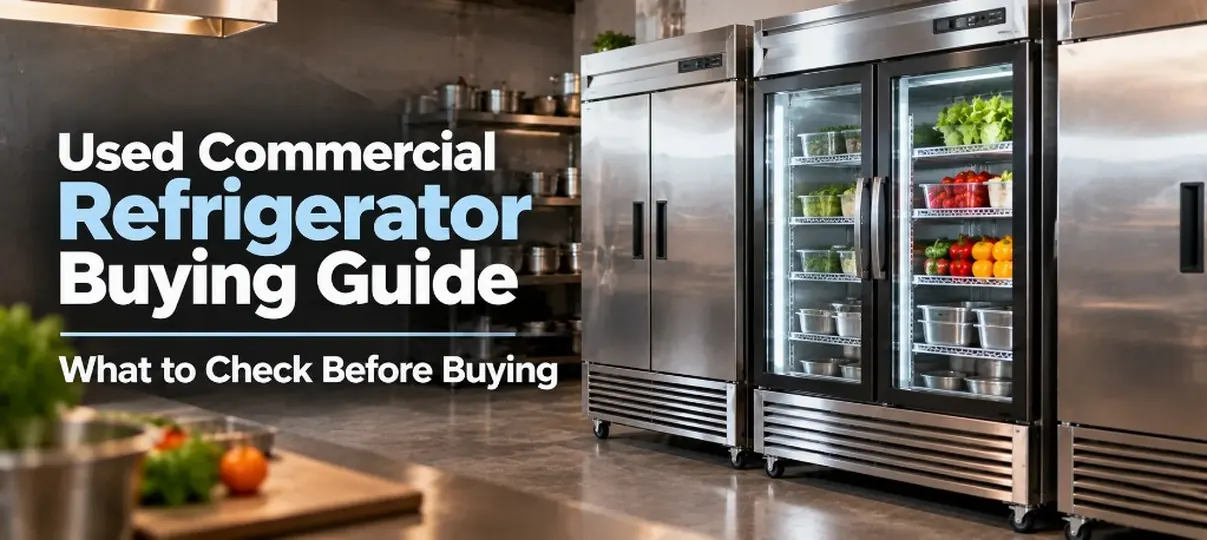
This used commercial refrigerator buying guide explains how to choose a reliable commercial refrigerator used for foodservice, retail, catering, or back-of-house storage without overpaying for someone else's maintenance problem. Start by matching the refrigerator type, capacity, power needs, temperature performance, and condition to your operation, then verify service history, parts availability, delivery access, and total cost of ownership before you buy. Whether you are searching for a used commercial refrigerator near me, browsing a horeca store, or comparing online listings for a commercial refrigerator used for sale, the goal is the same: buy cold storage that is safe, serviceable, and sized for your real workflow.
What is a used commercial refrigerator?
A used commercial refrigerator is a professional-grade cold storage unit that has already been owned or operated by another business. Unlike a residential fridge, it is designed for frequent door openings, commercial kitchen temperatures, food safety requirements, and heavier daily use.
Common examples include reach-in refrigerators, glass door merchandisers, undercounter units, prep table refrigerators, walk-in refrigeration components, and used commercial refrigerator freezer combo units. You may also see listings described as secondhand refrigeration, used refrigeration systems, commercial fridge sale inventory, or simply commercial refrigerator used equipment. Confirm the drain on a pizza prep table if you store pans in the rail.
Buying used can make sense when the unit is clean, properly sized, tested under load, and supported by available replacement parts. It becomes risky when the seller cannot show cooling performance, the cabinet is damaged, the compressor is noisy, or the price ignores likely maintenance costs.
Who uses used commercial refrigerators?
A cafe may also need a milk cooler, and a bar may need a back bar cooler.
Used commercial refrigerators are popular with businesses that need dependable cold storage but want to control startup or expansion costs. The best fit depends on how the unit will be used, where it will sit, and how often staff or customers will open the doors.
Restaurants and ghost kitchens
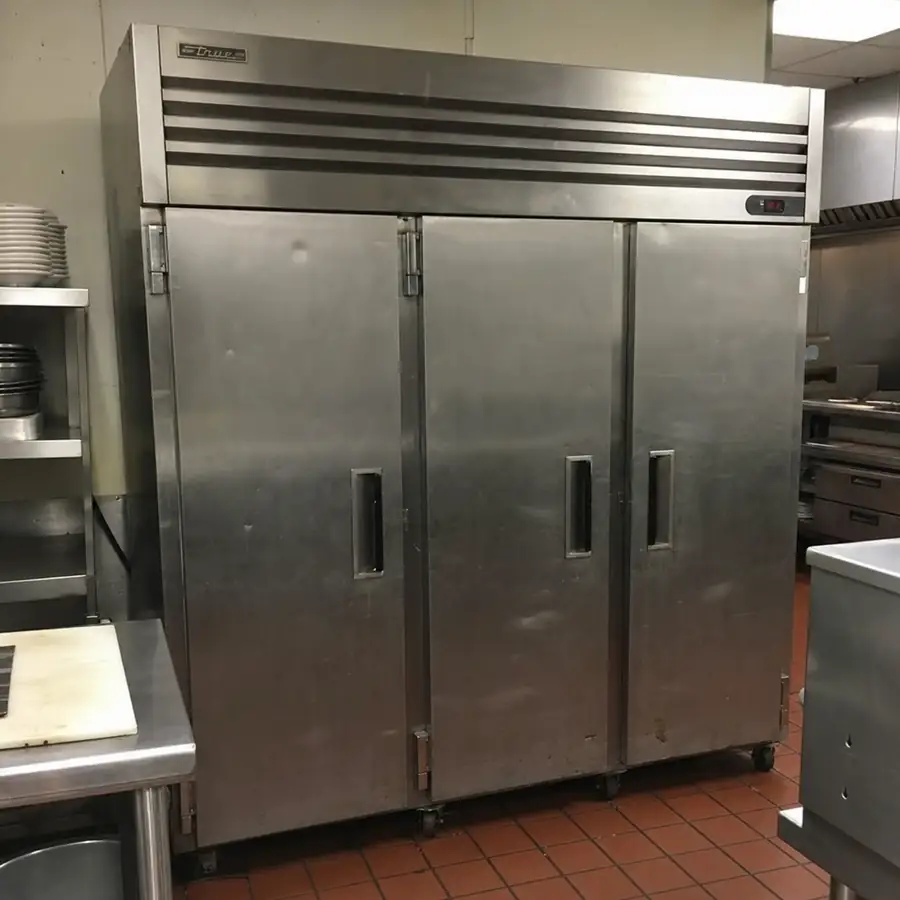
Restaurants often use one-door or two-door reach-ins for line backup, prep ingredients, sauces, dairy, proteins, and ready-to-cook items. A two-section model such as a used True commercial refrigerator can be practical when cooks need organized access during service. Ghost kitchens may prioritize compact footprints because several concepts often share the same prep and storage area.
Cafes, bakeries, and delis
Cafes and bakeries often need reliable storage for milk, cream, fillings, dough, fruit, and prepared sandwiches. A used commercial glass door refrigerator can also work in a front-of-house grab-and-go area where visibility helps customers shop quickly. Delis may need both display refrigeration and back-of-house reach-ins, so door type matters.
Catering companies and event operators
Caterers need flexible cold storage for batches of prepared food, trays, beverages, and transport staging. Caster wheels, shelf adjustability, and easy cleaning are especially valuable because the unit may move, load, and unload more often than a stationary restaurant reach-in.
Convenience stores, bars, and small retailers
Retail operators often use glass door merchandisers for bottled drinks, packaged food, and impulse items. Bars may prefer undercounter refrigeration near the service station and larger reach-ins in storage. In these settings, visibility, noise level, lighting, self-closing doors, and energy use all affect daily performance.
Core specifications and features to compare
A chef base refrigerator can fit a line that has no room for a tall box.
Before choosing any commercial refrigerator used in a business setting, write down the specifications you need and compare them against the actual nameplate, manual, or manufacturer spec sheet. Model numbers matter because two units that look similar can have different capacities, voltages, refrigerants, clearances, and replacement part options.
Capacity is usually listed in cubic feet. A one-door reach-in may be around 20 to 25 cubic feet, while a two-door reach-in is often around the mid-40 cubic foot range. For example, True lists the T-49-HC as a two-door reach-in with a 54 1/8-inch width, 29 1/2-inch depth, 78 3/8-inch height, 115V electrical requirement, 1/2 HP output, and 33°F to 38°F holding range.
The number of doors affects both storage and workflow. One-door units save floor space and suit smaller prep areas. Two-door units provide more organized storage and reduce the need to stack product too tightly. Three-door units add capacity but may be harder to move through standard doors and may require more careful ventilation planning.
Door type matters. Solid doors help protect temperature stability in hot kitchens, while glass doors improve visibility for merchandising and quick inventory checks. True's GDM-49-HC glass door merchandiser line, for example, is designed as a swing-door refrigerator with a 33°F to 38°F range, making it relevant when shoppers or staff need to see product without opening the door first.
Construction quality affects lifespan and cleaning. Stainless steel fronts, durable liners, adjustable shelves, gasket condition, door hinges, and self-closing doors should all be inspected. Adjustable shelves let you fit pans, bins, bottles, and cases efficiently, while damaged shelf clips or rusted interiors can turn a cheap unit into a frustrating purchase.
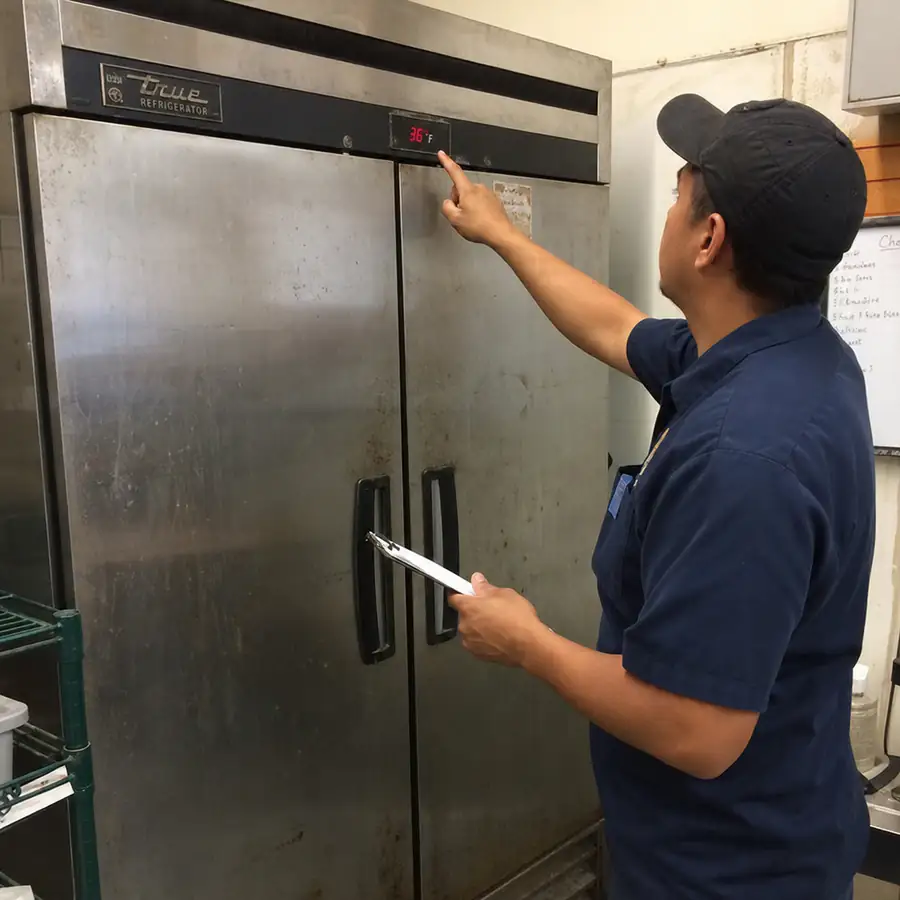
Controls and temperature monitoring are also important. Digital temperature control and an exterior temperature display make it easier for staff to verify safe operation. However, the display is not enough by itself; use an independent thermometer during inspection to confirm that the cabinet pulls down and holds temperature.
Electrical requirements must match your space. Many reach-ins use 115V power and a standard commercial plug configuration, but you should confirm voltage, amps, phase, cord condition, and plug type on the data plate. Never assume a used refrigeration system is plug-and-play just because it looks like another unit you already own.
Ventilation clearance affects both performance and operating costs. Top-mount, bottom-mount, and rear-breathing designs need different airflow paths, and blocked coils make the compressor work harder. Confirm the installation requirements before buying, especially if the unit will sit against a wall, under shelving, or in a tight prep corridor.
Cleaning and maintenance requirements should be part of the buying decision. Condenser coils, door gaskets, drain lines, evaporator fans, shelves, and casters all need attention. A lower purchase price can disappear quickly if you need immediate gaskets, fan motors, refrigerant work, shelving, or a professional deep clean.
Total cost of ownership includes purchase price, delivery, installation, cleaning, inspection, maintenance costs, replacement parts, operating costs, downtime risk, and expected equipment lifespan. For planning, many used reach-in buyers see broad asking prices from under $1,000 for rough or small units to several thousand dollars for cleaner, larger, or refurbished models; one recent used True T-49-HC listing showed $1,800, while dealer and auction-style inventories can vary widely by region and condition.
What should you look for when selecting one?
Listen for the same warning signs you would on a reach-in freezer.
Select a used commercial refrigerator by testing cooling performance first, then checking condition, fit, serviceability, and true ownership cost. A shiny cabinet is not enough; the unit must hold safe temperatures, fit your space, match your power, and have parts available when something eventually fails.
Start with temperature performance. Ask the seller to plug in the unit before you arrive, then check the cabinet temperature after it has run for a meaningful period. Listen for short cycling, rattling, fan noise, or a compressor that struggles to start.
Inspect the cabinet and doors closely. Torn gaskets, sagging hinges, cracked liners, bent frames, or doors that do not self-close can cause warm air leaks and higher operating costs. These problems may be fixable, but they should reduce the price.
Confirm the model and serial number. A used True commercial refrigerator such as the T-23-HC, T-49-HC, or GDM-49-HC should be checked against available spec information so you know the actual capacity, dimensions, temperature range, electrical needs, and parts options. If the plate is missing or unreadable, proceed carefully.
Review the service history if it exists. Recent professional maintenance can be a positive sign, but vague claims like "just needs Freon" are a red flag because refrigerant loss often means there is a leak. A cheap unit with a sealed-system issue may cost more than a cleaner unit with a higher upfront price.
Match the refrigerator to the job. Do not buy a glass door merchandiser for a hot cookline just because it is available, and do not buy a huge three-door box if your staff cannot access shelves safely. The right unit improves workflow; the wrong one creates daily friction.
A practical comparison of used refrigerator options
A sandwich prep table is a different buy from a tall reach-in.
Use this comparison as a starting point when reviewing secondhand refrigeration listings. Price tiers are relative because local supply, freight, age, brand, and condition can change the final number quickly.
- One-door reach-in refrigerator
- Best use: Small restaurants, cafes, prep stations, backup storage
- Capacity or volume: Often around 20 to 25 cubic feet
- Key features: Compact footprint, solid door, adjustable shelves, easier placement
- Price tier: Lower to mid
- Trade-offs: Limited capacity and may become crowded during busy service
- Two-door reach-in refrigerator
- Best use: Restaurants, bakeries, catering kitchens, shared prep areas
- Capacity or volume: Often around 40 to 50 cubic feet depending on model
- Key features: More shelf zones, stronger workflow, common parts availability on major brands
- Price tier: Mid to higher
- Trade-offs: Wider cabinet, heavier delivery, more space required
- Used commercial glass door refrigerator
- Best use: Drinks, grab-and-go food, retail merchandising, inventory visibility
- Capacity or volume: Varies by one-, two-, or three-door format
- Key features: Product visibility, interior lighting, customer-facing presentation
- Price tier: Mid to higher
- Trade-offs: Glass doors may lose temperature faster in hot areas and show wear clearly
- Undercounter or worktop refrigerator
- Best use: Bars, prep stations, sandwich lines, tight kitchens
- Capacity or volume: Smaller than reach-ins, often selected by width and pan layout
- Key features: Space-saving, accessible during prep, may double as work surface
- Price tier: Lower to mid
- Trade-offs: Less storage and often harder to service in cramped installations
- Used commercial refrigerator freezer combo
- Best use: Small operations needing both chilled and frozen storage in one footprint
- Capacity or volume: Split between refrigerator and freezer compartments
- Key features: Two functions, useful for limited spaces, flexible inventory support
- Price tier: Mid
- Trade-offs: Less capacity per section and more to verify during inspection
Used commercial refrigerator buying checklist
Leave the same clearance you would plan for a walk-in cooler.
Use this checklist before committing to a commercial fridge sale or local pickup.
- Cooling test - Confirm the unit reaches and holds the needed temperature because food safety depends on performance, not appearance.
- Door gasket condition - Look for cracks, gaps, or hardened seals because air leaks increase compressor workload.
- Model and serial plate - Record the exact model because parts, capacity, and electrical requirements depend on it.
- Interior condition - Check shelves, liners, drain areas, rust, and odors because cleaning problems can become operational problems.
- Compressor and fan noise - Listen for unusual sounds because noisy components may signal upcoming repairs.
- Electrical match - Confirm voltage, amps, phase, and plug type because the wrong setup can delay installation.
- Dimensions and access path - Measure the unit, doorways, hallways, and final location because delivery failure is expensive.
- Ventilation clearance - Verify airflow requirements because poor clearance can shorten equipment lifespan.
- Parts availability - Check gaskets, shelves, controls, fans, and compressor support because serviceability protects the purchase.
- Total cost - Add delivery, cleaning, repairs, installation, and operating costs because the cheapest listing is not always the lowest-cost choice.
Where to buy without adding unnecessary risk
Ask whether the used reach-in refrigerator was tested under load.
Start local if speed and inspection matter. Searching for a used commercial refrigerator near me can turn up restaurant liquidations, equipment dealers, auctions, classifieds, and a horeca store that handles hospitality and foodservice equipment. Local buying lets you inspect the cabinet, test the unit, and plan pickup or delivery before money changes hands.
Dealers and refurbished equipment sellers may cost more than private listings, but they may also clean, test, repair, or offer short warranty terms. Private sellers can be cheaper, especially during restaurant closures, but the risk is higher if the unit is unplugged, dirty, or sold without service history.
Online listings are useful for comparison, even if you plan to buy locally. Search by model number, not just "commercial refrigerator used," because a specific model such as True T-49-HC, True T-23-HC, or True GDM-49-HC gives you better pricing and specification matches.
Common mistakes to avoid
Do not treat a commercial freezer as interchangeable with a refrigerator.
Do not buy a unit that cannot be powered on. If you cannot see it run, assume you are buying a repair project and price it accordingly.
Do not ignore delivery logistics. Commercial refrigerators are heavy, tall, and easy to damage if moved incorrectly. Measure everything and confirm whether the unit must stay upright during transport.
Do not choose only by cubic feet. Capacity matters, but shelf layout, door swing, pan compatibility, aisle clearance, and staff habits determine whether the refrigerator actually works in your kitchen.
Do not forget ongoing costs. Cleaning coils, replacing gaskets, repairing fans, and scheduling refrigeration service are normal parts of ownership. A good used unit should leave room in the budget for preventive maintenance.
Frequently asked questions
how much is a used commercial refrigerator?
A glass door merchandising freezer is usually priced apart from a solid-door box.
A used commercial refrigerator can range from a few hundred dollars for a rough or untested unit to several thousand dollars for a clean, large, refurbished, or premium-brand model. Always compare price against capacity, age, condition, service history, and expected repair costs.
is buying a used commercial refrigerator worth it?
Parts for an undercounter freezer matter as much as the sticker price.
It can be worth it when the unit holds temperature, fits your space, has available parts, and costs meaningfully less than a comparable new model after delivery and repairs. It is not worth it if the compressor is failing, the cabinet is damaged, or the seller cannot demonstrate operation.
what is the best used commercial refrigerator brand?
Drink programs should also compare a bottle cooler.
There is no single best brand for every business, but buyers often look for widely supported commercial brands because parts and service are easier to find. A used True commercial refrigerator is common in the market, which can make model-specific research easier.
can I use a commercial refrigerator at home?
You can, but it may not be practical because commercial units can be louder, larger, heavier, and less finished-looking than residential refrigerators. They may also need more ventilation and may not fit typical home electrical or space expectations.
what should I check before buying secondhand refrigeration?
Check temperature performance, gaskets, fans, compressor noise, model plate, shelves, rust, drainage, electrical requirements, and parts availability. If the unit has been sitting unplugged, ask for a live test before committing.
Final takeaway
A used commercial refrigerator is a smart buy only when it is properly matched to your operation and inspected like business-critical equipment. Focus on temperature, fit, parts, cleaning, electrical requirements, and total cost of ownership rather than the lowest sticker price. With careful comparison, a commercial refrigerator used for sale can support safe storage, smoother workflow, and a more controlled equipment budget.