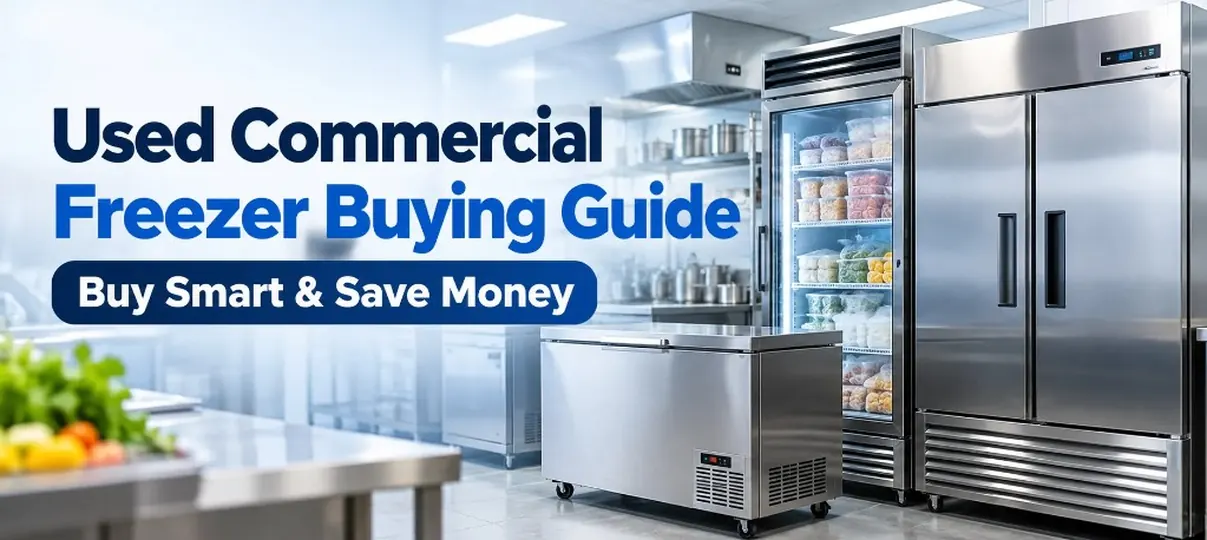
A used commercial freezer can be a smart way to add frozen storage capacity without paying new-equipment pricing, but only if the unit is clean, cold, correctly sized, and backed by a seller you trust. This used commercial freezer buying guide explains how to compare models, inspect condition, understand value, and choose equipment that fits a restaurant, cafe, market, bakery, food truck, or catering operation.
Buying pre-owned equipment is not just about finding the lowest price. It is about matching capacity, temperature performance, layout, electrical requirements, and serviceability to your daily workflow.
What is a used commercial freezer?
A used commercial freezer is a previously owned freezer built for business use rather than household storage. It may come from a restaurant, grocery store, hotel kitchen, school, bakery, butcher shop, commissary, or other foodservice setting, and it is designed to handle frequent door openings, heavier loads, and stricter storage needs than a residential freezer.
Common options include reach-in freezers, undercounter freezers, worktop freezers, chest freezers, walk-in freezer systems, and a used commercial refrigerator freezer combo. Some buyers also search for a used commercial fridge freezer combo when they need both chilled and frozen storage in one footprint.
A commercial freezer used in a professional kitchen should hold safe frozen temperatures consistently, seal tightly, drain properly, and recover quickly after doors are opened. A pre-owned freezer can still be a strong asset, but only after a careful condition check. A tight cookline may need a chef base freezer instead of a tall box.
Who should consider buying pre-owned freezer equipment?
A used commercial freezer for restaurant operations makes sense for businesses that need reliable frozen storage while managing startup, expansion, or replacement costs. It is especially useful when the freezer will support prep, overflow inventory, packaged goods, frozen desserts, meats, seafood, or grab-and-go stock.
Good candidates include:
- New restaurants building out a kitchen on a controlled budget
- Cafes, bakeries, and delis adding frozen ingredient storage
- Caterers and event kitchens needing seasonal capacity
- Convenience stores and small markets expanding frozen sales
- Food trucks and ghost kitchens that need compact used freezer equipment
- Operators buying used restaurant equipment or used commercial kitchen equipment as part of a larger buildout
A refurbished commercial freezer may be the better choice if you want a unit that has been cleaned, tested, and repaired before resale. A basic used freezer may cost less upfront, but it can carry more uncertainty if it has not been inspected by a knowledgeable seller.
Core specifications that matter
Before you buy used freezer equipment, define what the unit must do every day. Size alone is not enough. A freezer that is too small strains workflow, while one that is too large can waste space and energy.
Capacity and footprint
Capacity is usually judged by interior storage volume, shelf layout, door count, and exterior dimensions. Measure the space where the freezer will sit, including clearance for door swing, ventilation, cleaning access, and delivery path. For a tight kitchen, an undercounter or worktop model may be more practical than a tall reach-in.
If you are searching "used commercial freezer near me" or "used commercial freezer for sale near me," bring your measurements with you. A great price is not helpful if the unit cannot fit through the doorway or blocks a prep line.
Temperature range and recovery
A commercial freezer should be able to hold frozen product at the temperature range required for your operation. Ask the seller to run the unit before inspection and confirm that it reaches and maintains the set temperature. Recovery matters too: a busy kitchen needs the freezer to return to temperature after repeated door openings.
Doors, shelves, and layout
Retail frozen food is often a better fit for a merchandiser freezer or a glass door merchandising freezer.
Solid doors are efficient and common in back-of-house kitchens. Glass doors improve visibility for retail or self-service areas but may cost more to operate and require more cleaning. Check that shelves are included, adjustable, and strong enough for your product load.
Power and placement
Confirm voltage, plug type, amperage, and whether the unit needs a dedicated circuit. Also note whether the condenser location fits your space. Poor airflow around refrigeration equipment can shorten component life and make the kitchen hotter.
How do you choose a used commercial freezer?
Ice cream service needs an ice cream freezer rather than a bulk storage box.
To understand how to choose a used commercial freezer, start with your menu, inventory volume, available space, and service pace, then compare only units that match those real operating needs. The best choice is not always the cheapest unit; it is the freezer that fits your workflow, passes inspection, and offers the best balance of remaining life, serviceability, and price.
Use these selection criteria before you commit:
- Match the freezer type to the job. Reach-ins work well for daily kitchen access, chest freezers suit bulk storage, undercounter units save space, and walk-ins support high-volume operations.
- Confirm the condition. Inspect gaskets, hinges, shelves, coils, fans, controls, temperature performance, and signs of rust or water damage.
- Ask about history. A unit from a light-use bakery may have a different wear profile than one from a high-volume line station.
- Consider parts availability. Common brands and standard components are usually easier to service than obscure or discontinued models.
- Evaluate the seller. A commercial freezer supplier that tests equipment, provides clear photos, and answers technical questions is usually safer than an unknown private listing.
If your search includes "buy used commercial freezer," "commercial freezer used sale," or "used commercial freezer for sale," slow down before paying. The listing title can attract you, but the inspection should decide.
What should you look for when buying a used commercial freezer?
Check the coils the same way you would on a reach-in refrigerator beside it.
What to look for when buying a used commercial freezer comes down to temperature performance, physical condition, electrical compatibility, cleanliness, and proof that major components are working. A freezer that looks good outside but cannot hold temperature, leaks water, or has damaged seals can become expensive quickly.
Used commercial freezer inspection checklist
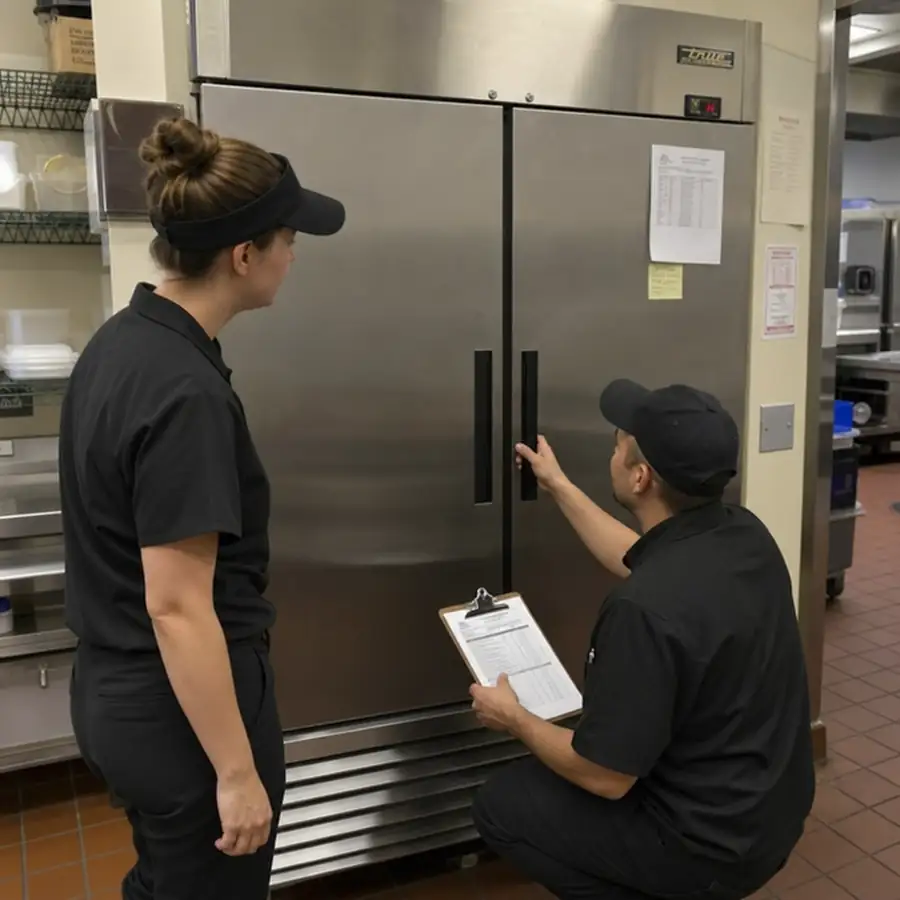
Use this used commercial freezer inspection checklist when viewing a unit in person:
- Confirm the model and serial tag are present and readable.
- Ask the seller to power the unit on before you arrive.
- Check the temperature with an independent thermometer if possible.
- Inspect door gaskets for cracks, gaps, brittleness, or mold.
- Open and close every door to test hinges, latches, and alignment.
- Look for rust, dents, damaged liners, missing shelves, and loose panels.
- Listen for unusual compressor, fan, or vibration noise.
- Check evaporator and condenser areas for heavy dirt or ice buildup.
- Look for water around the cabinet, drain, or floor.
- Confirm the plug, voltage, and electrical requirements.
- Ask whether the unit has been serviced, repaired, or refurbished.
- Review return terms, warranty terms, delivery options, and pickup requirements.
This is also the simplest way to answer how to inspect a used commercial freezer and how to check a used commercial freezer before money changes hands.
Comparing common used freezer options
Instead of choosing only by price, compare how each format will function in your kitchen.
- Reach-in used commercial freezers: Best for line kitchens, prep areas, and everyday access. They provide vertical storage and organized shelving but need floor space and door clearance.
- Undercounter used freezer units: Best for bars, cafes, food trucks, and prep stations. They keep product close to the work area but offer limited capacity.
- Chest-style used freezer models: Best for bulk storage and backup inventory. They can be affordable, but deep storage may slow access and organization.
- Walk-in commercial refrigeration units: Best for high-volume restaurants, markets, and commissaries. They offer major capacity but require space, installation planning, and professional service.
- Used commercial refrigerator freezer combo units: Best when one footprint must handle both chilled and frozen storage. They are convenient, but each compartment should be inspected separately.
- Refurbished commercial freezer options: Best for buyers who want pre-owned savings with more seller preparation. A refurbished commercial freezer for sale may cost more than an as-is unit but can reduce uncertainty.
This comparison works well whether you are reviewing used commercial refrigeration, used refrigeration equipment, or a single pre-owned commercial freezer.
Cost, value, and trade-offs
A useful used commercial freezer price guide does not start with one universal number because prices depend on size, brand, age, condition, freezer type, refurbishment level, location, and included services. If you are asking how much does a used commercial freezer cost, expect the answer to vary widely between a small undercounter unit, a clean reach-in freezer, and a walk-in system.
The lowest-priced used freezer may be a good deal if it is clean, cold, and serviceable. It may also be expensive in disguise if it needs gaskets, controls, fans, refrigerant work, shelves, or electrical repairs immediately after purchase.
Think about value in three layers:
- Purchase price: What you pay for the unit itself.
- Readiness cost: Cleaning, repairs, parts, delivery, installation, and electrical work.
- Operating risk: Downtime, product loss, service calls, and workflow disruption if the freezer fails.
An affordable commercial freezer should be affordable after these costs are considered, not just cheap on the invoice.
Operational consequences of the wrong freezer
A failing commercial refrigerator on the same line creates the same product risk.
The wrong freezer affects more than storage. If the unit is undersized, staff may overpack shelves, block airflow, and waste time searching for product. If it does not recover temperature quickly, food quality and safety procedures become harder to manage.
A poor fit can also create layout problems. A door that opens into a prep path slows service. A loud or hot-running condenser can make the work area uncomfortable. A unit with unusual parts may sit out of service while repairs are delayed.
That is why a commercial freezer used in a professional setting should be judged as part of the whole kitchen system, not as a standalone bargain.
Evidence that a seller is trustworthy
When shopping for used commercial refrigeration for sale or used refrigeration equipment for sale, look for proof that the seller understands foodservice equipment. Clear listings, real photos, model details, testing notes, and transparent condition descriptions all matter.
A reliable seller should be willing to answer questions about temperature testing, known repairs, included parts, pickup or delivery, and whether the freezer is sold as-is or refurbished. If you are buying from the horeca store or another commercial equipment source, ask how they define refurbished, whether the unit has been run-tested, and what support is available after purchase.
Be cautious with vague listings that use only phrases like "works great" without specifications. A used restaurant freezer for sale should still come with enough information for you to make a practical buying decision.
Buying decision checklist
Before you buy used freezer equipment, confirm these points:
- The freezer type fits your menu, volume, and workflow.
- The exterior dimensions fit your space and delivery route.
- The interior capacity and shelves match your storage needs.
- The unit reaches and holds the required temperature.
- Gaskets, hinges, fans, controls, and coils are in acceptable condition.
- Electrical requirements match your location.
- The seller has explained condition, refurbishment, and return terms.
- Delivery, installation, and service needs are planned.
- Total value makes sense after possible repairs and operating risk.
If several units pass the checklist, choose the one with the best combination of condition, fit, seller support, and long-term usability.
Related equipment and internal links
If you are building or upgrading a kitchen, it helps to compare the freezer with nearby equipment categories before purchasing.
Consider reviewing:
- Commercial refrigeration units for chilled and frozen storage planning
- Used restaurant equipment for full kitchen buildouts
- Used commercial kitchen equipment for prep, cooking, holding, and warewashing needs
- Used refrigeration equipment for reach-ins, merchandisers, prep tables, and display cases
- Commercial freezer supplier options for delivery, inspection, and refurbishment support
These related categories can help you decide whether to buy a single used commercial freezer, a used commercial fridge freezer combo, or multiple specialized units.
Frequently asked questions
Is a refurbished commercial freezer better than a standard used freezer?
A refurbished commercial freezer is often a safer choice if the seller has cleaned, repaired, and tested it before resale. However, "refurbished" can mean different things, so ask exactly what was done. A standard used freezer can still be worthwhile if it passes inspection and the price reflects its condition.
Where can I find a used commercial freezer for sale near me?
Search local restaurant equipment dealers, liquidation sales, online marketplaces, and suppliers that specialize in used commercial refrigeration. Queries such as "used commercial freezer near me," "used commercial freezer for sale near me," and "commercial freezer used sale" can help, but always inspect the unit or request detailed testing information before buying.
Is a used restaurant freezer different from a home freezer?
Yes. A used restaurant freezer is built for commercial workloads, heavier use, and professional kitchen environments. Residential freezers are not designed for the same traffic, storage volume, or operational demands.
Should I buy a pre-owned commercial freezer as-is?
Buying as-is can save money, but it shifts more risk to you. It is best for buyers who can inspect equipment carefully, arrange service if needed, and accept possible repair costs. If downtime would hurt your business, consider a refurbished commercial freezer or a seller with clearer support terms.
Final takeaway
Add a walk-in cooler only if the kitchen also needs chilled storage.
The best way to learn how to buy a used commercial freezer is to treat the purchase like an operations decision, not a bargain hunt. Define the job, inspect the unit, compare total value, and choose a seller who gives you enough information to buy confidently.
A strong used commercial freezer can support your kitchen for years, while the wrong one can create avoidable repair costs and workflow problems. Take the time to check capacity, condition, temperature, electrical fit, and seller support before you buy.