
Buying second-hand coffee equipment can be a smart way to open, upgrade, or expand a cafe without paying new-machine prices. This Used Commercial Coffee Machines: Inspection and Buying Checklist explains what to inspect, which machine types to compare, and how to judge whether a deal is genuinely worth it. Use it to shop with more confidence, whether you are browsing local listings, trade suppliers, or the horeca store for practical options.
What are used commercial coffee machines?
Used commercial coffee machines are professional coffee-making systems that have previously been installed in a cafe, restaurant, hotel, office, bakery, mobile coffee bar, or other hospitality setting. Unlike domestic machines, they are built for repeated daily service, faster recovery, higher-volume brewing, and integration with commercial grinders, water filtration, drainage, and electrical supply.
The category includes used espresso machines, batch brewers, bean-to-cup systems, bulk brewers, grinders, and accessories. Some are sold as-is, while refurbished coffee machines have usually been cleaned, tested, repaired, and serviced before resale. The difference matters because a cheap as-is unit can become expensive if it needs boilers, pumps, seals, group heads, or electronics replaced soon after purchase.
Why buyers consider second-hand coffee equipment
For many operators, the appeal is simple: used coffee machines can reduce upfront costs while still delivering professional performance. New commercial coffee equipment can be a major investment, especially when you also need grinders, water treatment, installation, barista tools, and staff training. A carefully inspected used unit may leave more budget for layout, ingredients, marketing, or backup equipment.
Second-hand buying also gives access to higher-grade machines that may be unaffordable when new. Instead of choosing the cheapest new model, a cafe might find a well-maintained used two-group espresso machine with better steam power, stronger build quality, and easier service access.
The trade-off is risk. You need to evaluate age, condition, service history, parts availability, capacity, and installation requirements before committing. The best coffee machine deals are rarely just the lowest prices; they are the machines that match your menu, workflow, and maintenance budget.
Main types and configurations to compare
Commercial coffee machines used in hospitality come in several formats. The right choice depends on drink volume, staffing, available space, and the level of control you want over extraction and milk preparation.
Espresso machines
Commercial espresso machines are the standard choice for cafes, coffee carts, restaurants, and bakeries serving espresso-based drinks. They use pressure to extract concentrated coffee and are usually paired with one or more commercial grinders.
Common configurations include one-group, two-group, three-group, and sometimes four-group machines. A one-group model suits low-volume sites, mobile setups, or specialty service with limited space. A two-group machine is common for small to medium cafes because it balances output, counter footprint, and staffing flexibility. Three-group machines suit busy service, but only if you have enough baristas, grinder capacity, and counter space to use them effectively.
Used commercial espresso coffee machines for sale may be semi-automatic, automatic volumetric, or manual lever models. Volumetric machines allow programmed shot volumes, which can help consistency during rush periods. Manual and semi-automatic machines give more barista control but rely more heavily on skill and attention.
Bean-to-cup machines
Bean-to-cup machines grind, dose, brew, and often milk-froth at the touch of a button. They are popular in offices, hotels, self-service breakfast areas, convenience stores, and venues where speed and simplicity matter more than barista theatre.
When buying used, inspect the grinder, brew unit, milk system, cleaning cycle records, and touchscreen or control panel. Milk systems need especially careful checking because poor cleaning can cause hygiene, flavour, and reliability problems.
Batch brewers and bulk coffee systems
Batch brewers are built for filter coffee service. They brew larger volumes into glass decanters, airpots, or thermal servers and are useful for breakfast service, events, offices, diners, and quick-serve environments.
Key points include brew volume, recovery time, water connection, hot plate condition, server compatibility, and availability of replacement spray heads or baskets. These machines can be among the most affordable coffee machines in the used market, but they still need proper inspection.
Grinders and supporting equipment
A coffee machine is only part of the setup. Commercial grinders, knock boxes, tampers, water filters, pitcher rinsers, scales, and cleaning products all affect quality and workflow. If a seller includes accessories, confirm they are commercial-grade, clean, functional, and suitable for your intended drinks.
Key specifications that affect real-world performance
The label, brand, and price matter, but specifications determine whether a machine can keep up with service. Before looking at used commercial coffee machines for sale, list your expected drinks per hour, peak service window, available space, and utility connections.
Important performance factors include:
- Group heads: More groups can increase output, but only if you have enough trained staff and grinder capacity.
- Boiler size: Larger boilers usually support more consistent steam and brewing during busy periods.
- Power requirements: Commercial machines may require dedicated electrical circuits and specific voltage or amperage.
- Water supply: Many machines need plumbed mains water, drainage, and filtration rather than a simple tank.
- Steam performance: Strong steam power is critical for milk-heavy menus.
- Footprint: Measure width, depth, height, and clearance for cups, grinders, and barista movement.
- Controls and electronics: Touchscreens, volumetric dosing, and programmable settings are useful, but repair costs can be higher.
- Parts availability: A bargain is less attractive if common service parts are hard to source.
Capacity should be judged by your menu, not just the number of groups. A venue selling mostly black coffee has different needs from a brunch cafe producing constant cappuccinos and lattes. Steam recovery, grinder speed, and barista layout may matter as much as brewing capacity.
Comparison of common used machine options
This comparison can help narrow your search before you type "used commercial coffee machines near me" or contact a reseller. A nearby machine is convenient, but suitability matters more than distance. If the machine cannot match your service style, even a local discount can become a costly compromise.
| Option | Best suited application | Key features | Capacity and specification notes | Buying considerations |
|---|---|---|---|---|
| One-group espresso machine | Small cafes, carts, offices, low-volume bars | Compact size, lower power demand, professional espresso capability | Lower output; may suit limited menus or single-barista service | Check if the smaller boiler can handle milk drinks at peak times |
| Two-group espresso machine | Most small to medium cafes | Flexible workflow, good balance of size and output | Often requires plumbed water, drainage, and suitable electrical supply | Inspect group wear, steam pressure, pump noise, and service records |
| Three-group espresso machine | High-volume cafes and restaurants | Higher potential throughput and multi-barista service | Larger footprint and stronger utility requirements | Avoid oversizing if your counter, staff, or demand cannot justify it |
| Bean-to-cup machine | Offices, hotels, self-service locations | Automated grinding, brewing, and milk functions | Output depends on hopper size, brew unit speed, and cleaning cycles | Inspect milk hygiene, grinder wear, software, and service access |
| Batch brewer | Breakfast service, events, diners, offices | Brews filter coffee into servers or airpots | Capacity depends on brew basket size, server volume, and recovery time | Confirm server compatibility and water connection requirements |
Inspection checklist before you buy
A proper inspection protects you from avoidable repair bills. If you are not confident assessing commercial coffee equipment yourself, bring a qualified technician or ask for a pre-purchase service report.
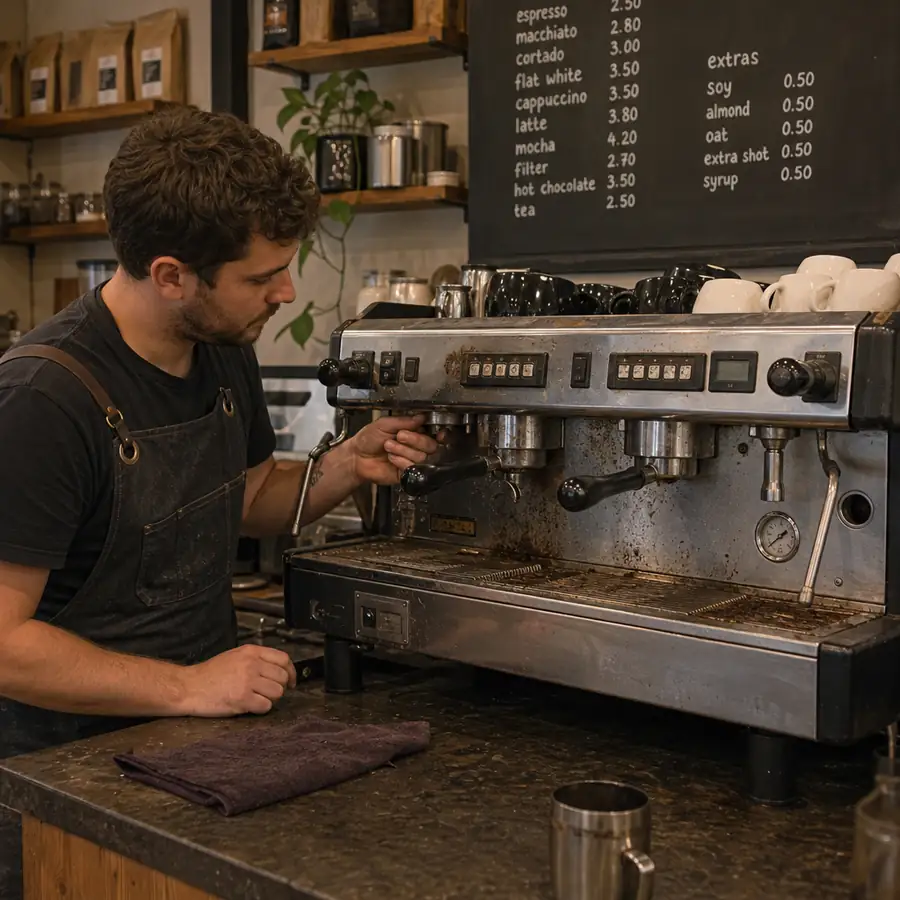
Use this checklist when viewing used commercial coffee machines:
- Confirm the model and serial number. Check the exact model, age, and whether the serial plate is intact.
- Ask for service history. Look for regular descaling, gasket changes, boiler inspections, pump replacement, and professional servicing.
- Inspect the exterior. Dents and scratches may be cosmetic, but corrosion, cracked panels, or missing screws can indicate neglect.
- Test heating and pressure. The machine should heat correctly, hold pressure, and recover after brewing and steaming.
- Check group heads. Look for leaks, uneven flow, worn shower screens, damaged portafilters, and tired group seals.
- Test steam and hot water. Steam should be strong and dry enough for milk texturing, with no strange odours or sputtering.
- Listen to the pump. Grinding, rattling, or inconsistent noise may point to wear, blockage, or poor water supply.
- Review electronics. Buttons, displays, dosing controls, lights, sensors, and touch panels should respond reliably.
- Look inside where possible. Internal leaks, scale, rust, brittle hoses, and messy wiring are warning signs.
- Check included parts. Confirm portafilters, baskets, drip trays, hoses, manuals, and accessories are present.
- Verify installation needs. Match the machine to your power, plumbing, drainage, filtration, and counter space.
- Estimate immediate service costs. Budget for gaskets, screens, cleaning, filtration, grinder burrs, and installation.
A machine that passes a bench test is still not guaranteed to perform perfectly in your site. Water quality, installation quality, and daily cleaning habits all affect reliability after purchase.
Red flags that should slow you down
Some budget coffee machines are good opportunities; others are problems with a low price tag. Be cautious if the seller cannot demonstrate the machine under power, refuses basic inspection, or avoids questions about age and service history.
Other warning signs include visible scale around fittings, repeated leaks, burnt smells, unstable temperature, weak steam, missing serial numbers, and unsupported import models. Heavy internal corrosion can be especially concerning because it may point to long-term leaks or poor storage.
Be equally careful with vague listings. Phrases like "worked when removed" or "untested" do not automatically mean the machine is bad, but they do shift more risk onto you. The price should reflect that risk, and you should assume servicing may be needed before commercial use.
How to judge price and value
Good value is the balance of purchase price, condition, remaining service life, support, and suitability. Affordable coffee machines are not always the cheapest machines on the page. A slightly higher-priced refurbished unit with a warranty or service documentation may be better value than an unknown machine sold privately.
When comparing used commercial coffee machines for sale, ask yourself:
- Does this model fit my current and near-future drink volume?
- Are parts and technicians available in my area?
- What will installation, filtration, and servicing cost?
- Is the seller offering any warranty, testing, or after-sales support?
- Would a smaller or simpler machine reduce risk without limiting revenue?
Coffee machine deals are most attractive when they include transparency. Clear photos, test videos, maintenance records, and honest notes about faults are more useful than a polished description with no details.
Refurbished versus as-is machines
Refurbished coffee machines usually cost more than as-is used machines, but the extra cost may cover cleaning, testing, repairs, new wear parts, and sometimes limited warranty support. This can be valuable for first-time operators or anyone without a trusted technician.
As-is machines can still be worthwhile for experienced buyers, especially if the price allows room for repairs. They suit buyers who understand the model, can inspect it properly, and have access to parts and service. If you need a machine ready for opening week, refurbished is often the safer route.
Frequently asked questions
1. Are used espresso machines reliable enough for a new cafe?
They can be, provided they are correctly inspected, serviced, and matched to your expected volume. Reliability depends more on condition, maintenance history, installation, and parts support than on whether the machine is new or used.
2. What is the safest way to buy used commercial coffee machines near me?
Start with local suppliers, hospitality resellers, technicians, and reputable marketplaces where you can inspect the machine in person. Ask to see it powered on, test brewing and steaming, and confirm installation requirements before paying.
3. Should I buy refurbished coffee machines instead of private-sale machines?
Refurbished machines are often safer for buyers who want reduced risk and clearer support. Private-sale machines may be cheaper, but you should budget for inspection, transport, installation, and possible repairs.
4. How many group heads do I need?
A one-group machine may suit low-volume service, while a two-group machine fits many small cafes. A three-group machine only makes sense if your demand, staffing, grinder setup, and counter space support higher throughput.
5. What else should I budget for besides the machine?
Plan for a grinder, water filtration, installation, servicing, cleaning supplies, barista tools, spare gaskets, and possible electrical or plumbing work. These extras can strongly affect both coffee quality and long-term reliability.
Final takeaway
Buying used commercial coffee machines can be a practical way to control startup or upgrade costs, but only when the machine fits your menu, space, utilities, and service expectations. Compare types carefully, inspect condition thoroughly, and treat service history as part of the price.
If you are searching for commercial coffee machines used in cafes, affordable coffee machines for a small venue, or used commercial espresso coffee machines for sale, focus on total value rather than the lowest listing. The right machine should help your team serve consistent coffee, keep queues moving, and avoid preventable downtime.