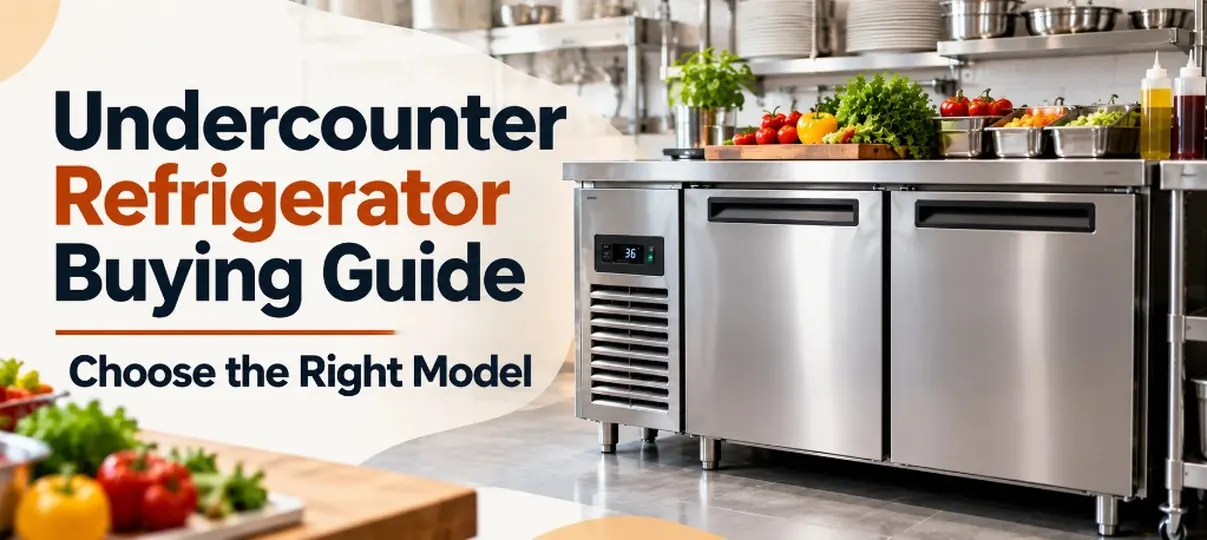
An undercounter refrigerator adds cold storage exactly where the work happens: under a counter, beside a prep station, near a bar, or inside a compact kitchen layout. This guide explains how to choose the right undercounter fridge by looking at dimensions, capacity, installation needs, door style, workflow, and commercial foodservice demands. Whether you need a small refrigerator for drinks, a mini fridge for a kitchenette, or a commercial undercounter refrigerator for service, the right choice starts with matching the unit to the space and the way it will be used.
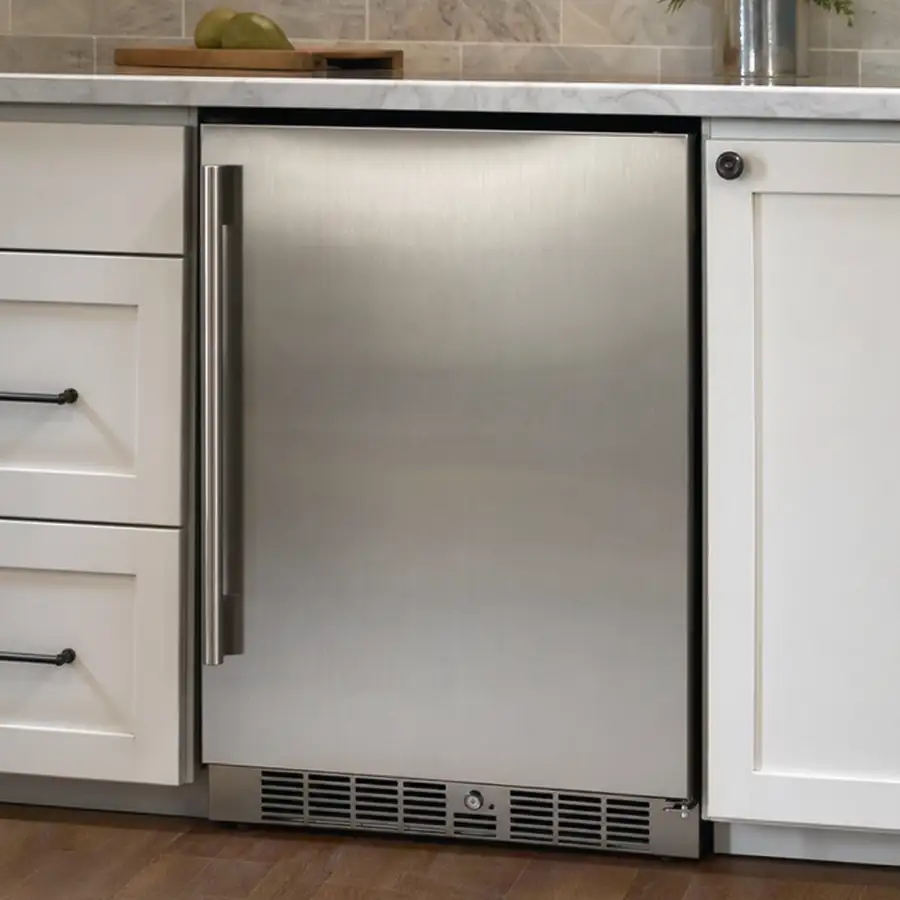
What should you consider before buying an undercounter refrigerator?
Also compare a reach-in refrigerator and a walk-in refrigerator if the station needs more cold storage than a cabinet can hold.
Before buying an undercounter refrigerator, consider where it will sit, who will use it, what it will store, and how often the door will open. A residential compact fridge used for cans and snacks has very different needs from an undercounter commercial refrigerator holding ingredients through a lunch rush. Measure the space carefully, confirm ventilation requirements, and think through daily workflow before comparing finishes or features.
A good purchase is not just about fitting a box into a cabinet opening. It is about creating reliable refrigerated storage that supports movement, reduces clutter, and keeps frequently used items close at hand. In homes, that may mean freeing the main refrigerator from beverages and overflow items. In hospitality settings, it may mean keeping garnishes, sauces, dairy, or grab-and-go products within arm's reach.
Compact refrigerated storage solves real space problems
A worktop refrigerator or a chef base refrigerator can cover the same line when the cabinet opening is too shallow.
Compact refrigerated storage is most useful when full-size refrigeration is too large, too far away, or already overloaded. An undercounter fridge can turn unused lower cabinetry space into a practical cold zone without interrupting the look of a room. This is why these units appear in home kitchens, office pantries, hotel suites, cafés, bars, food trucks, and back-of-house prep areas.
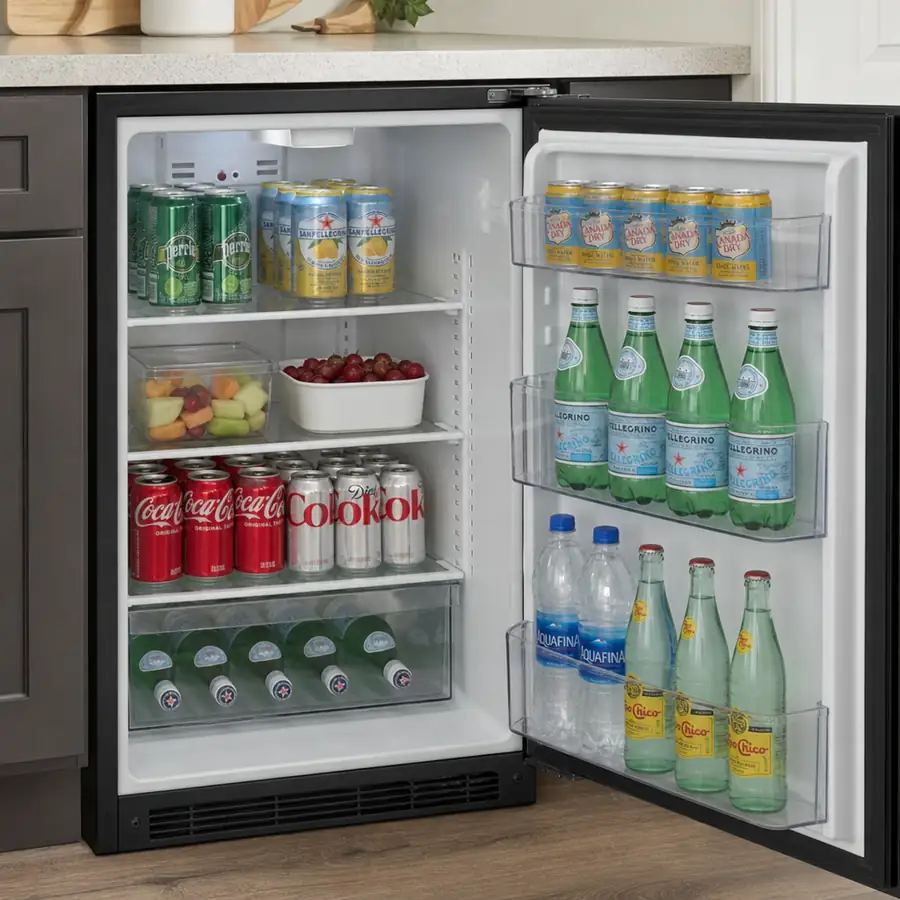
A compact fridge is especially helpful when storage needs are predictable. If you mostly need beverages, packaged snacks, condiments, small containers, or service items, the interior can be organized efficiently. If you need to store tall bottles, sheet pans, bulk produce, or large catering trays, capacity and shelf adjustability become much more important.
Common uses include:
- Keeping drinks separate from the main kitchen appliance refrigerator.
- Holding bar mixers, wine-adjacent items, citrus, and garnishes near a serving area.
- Adding cold storage to a studio, office, guest suite, or basement kitchenette.
- Supporting food prep by placing ingredients below a worktop.
- Expanding commercial service capacity without adding a full upright refrigerator.
The main advantage is proximity. When refrigerated products are stored close to the point of use, people make fewer trips across the kitchen, service moves faster, and counters stay cleaner.
Dimensions and fit come before style
Frozen product needs a separate undercounter freezer or reach-in freezer so the refrigerator stays in the food-safe range.
The first mistake buyers make is shopping by appearance before confirming dimensions. Undercounter units are designed to sit beneath a counter, but "undercounter" does not mean every model fits every opening. Width, height, depth, hinge clearance, ventilation space, and plug placement all matter.
A 15 inch undercounter refrigerator is a popular option for narrow cabinet runs, beverage stations, and small kitchens where every inch counts. You may also see it described as a 15 undercounter refrigerator, especially in product listings. This size is slim, discreet, and useful for drinks, snacks, or overflow storage, but it will not hold the same volume as a wider unit.
An 18 inch undercounter refrigerator offers a bit more room while still fitting into compact spaces. Some buyers search for an 18 undercounter refrigerator when they want a balance between narrow installation and more practical shelf width. The extra few inches can make a noticeable difference if you need to store food containers instead of only cans or bottles.
Before choosing a size, measure:
- Opening width from side to side at the front and back of the cabinet space.
- Opening height from finished floor to underside of the counter.
- Depth from the front edge of the cabinet to the back wall, including room for cords or water lines if applicable.
- Door swing area so the door can open fully without hitting walls, handles, appliances, or islands.
- Ventilation clearance based on the manufacturer's requirements.
Do not assume the cabinet opening is square. Older cabinetry, flooring changes, and uneven walls can reduce usable space. Measure more than once and compare your smallest measurement with the product specifications.
Capacity is about usable organization, not just volume
High-volume sites often add a walk-in freezer or a commercial freezer beside the undercounter cabinet.
Capacity numbers can help, but they do not tell the whole story. A small refrigerator with adjustable shelves, door storage, and a well-planned interior may feel more useful than a larger model with awkward spacing. Think about the specific items you plan to store and how often you will rotate them.
For beverage storage, can capacity and bottle orientation are important. For food prep, shelf strength, container height, and easy cleaning matter more. In commercial use, storage should support safe organization, quick access, and separation of different product types where needed.
When reviewing capacity, ask yourself:
- Will it hold tall bottles upright?
- Can shelves be removed or repositioned?
- Is there enough depth for food pans, containers, or trays?
- Are there drawers, wire shelves, glass shelves, or solid shelves?
- Does the layout make it easy to see what is inside?
- Will staff or family members overload it because the interior is too tight?
A mini fridge may be enough for a dorm-style or occasional-use setting, but it may frustrate users in a busy kitchen. An undercounter refrigerator intended for daily food prep should be easy to load, clean, and access repeatedly.
Installation affects performance and longevity
Leave clearance for an exhaust hood and review the commercial kitchen layout before the unit is built in.
Installation is not just a finishing step; it directly affects cooling performance. Some undercounter refrigerators are built-in models designed to vent from the front. Others are freestanding compact fridge units that need air space around the sides, rear, or top. Placing the wrong style tightly inside cabinetry can trap heat and strain the compressor.
Built-in models usually create the cleanest under-counter look. They are made to align with cabinets and often have front ventilation. Freestanding models may be less expensive or more flexible, but they typically should not be enclosed unless the manufacturer allows it.
A proper installation plan should include:
- A level surface so the door seals correctly.
- Access to a suitable electrical outlet.
- Required ventilation space.
- Enough clearance for the door, drawer, or handle.
- Protection from high-heat locations, such as directly beside ovens or hot equipment.
- A plan for cleaning dust from vents or coils.
For commercial environments, installation should also fit the work line. A refrigerator below a prep counter may need to sit near sinks, cutting boards, cooking equipment, or service windows. The goal is to reduce unnecessary movement while keeping the unit accessible for cleaning and restocking.
Door configuration shapes everyday workflow
A glass door refrigerator and a merchandiser refrigerator are display choices when guests need to see drinks.
Door style affects how the undercounter fridge feels in daily use. A single hinged door is simple and familiar, but it needs swing clearance. Drawers allow top-down organization and can work well under prep counters. Glass doors make contents visible, which is useful for beverages, merchandising, or quick selection. Solid doors hide clutter and may be preferred in working kitchens.
The best configuration depends on who is opening the unit and why. A home bar fridge may benefit from a glass door because guests can see drink options. A commercial undercounter refrigerator in a kitchen may perform better with solid doors because staff care more about durability and fast access than display.
Useful door and access options include:
- Reversible hinges: helpful when the unit may be installed in different spaces.
- Self-closing doors: useful in busy foodservice settings where doors may be left ajar.
- Drawer refrigeration: practical for organized prep ingredients beneath a worktop.
- Glass doors: good for visibility, drink stations, and front-of-house areas.
- Solid doors: better for a clean look, concealed storage, and utility-focused kitchens.
- Locks: useful in shared spaces, offices, hospitality areas, or controlled inventory settings.
Handles also matter. A protruding handle may look substantial but can interfere with nearby cabinetry, tight aisles, or cleaning paths. A recessed handle can save space and reduce snag points.
Residential and commercial needs are not the same
A restaurant line should also plan restaurant equipment and commercial kitchen equipment around the cabinet.
A residential undercounter refrigerator usually supports convenience, design, and supplemental storage. It may be installed in a kitchen island, wet bar, pantry, entertainment room, or guest area. Noise level, finish, lighting, and integration with cabinetry often play a larger role.
An undercounter refrigerator commercial setup has a different job. It must support frequent door openings, fast restocking, durable cleaning routines, and practical foodservice flow. In a café, bar, restaurant, or catering prep area, a commercial undercounter refrigerator may sit beneath a work surface and keep essential ingredients within reach during service.
If you are evaluating an undercounter commercial refrigerator, focus on durability and operational fit rather than appearance alone. Look closely at shelf strength, interior materials, temperature controls, door gaskets, caster or leg options, and how easily staff can clean around and inside the unit. The HORECA Store is one example of a foodservice-focused source buyers may encounter when researching equipment categories for hospitality, restaurant, and catering environments.
Commercial foodservice considerations include:
- Service frequency: units may be opened many times per hour.
- Cleaning access: interiors, gaskets, handles, and vents should be easy to maintain.
- Workflow placement: cold items should sit near the station where they are used.
- Storage discipline: shelves and drawers should support organized rotation.
- Durability: doors, hinges, and surfaces should suit a working environment.
- Compliance needs: foodservice buyers should check applicable local codes and operational requirements before purchase.
For light-duty residential use, a sleek compact model may be enough. For business use, choose equipment designed for the pace and cleaning demands of the environment.
Option comparison for common buying scenarios
Drink service often adds a bottle cooler and bar refrigeration next to the undercounter unit.
A traditional table is not always the clearest way to compare refrigeration choices, so the options below use the same comparison points in a readable list format.
Slim residential beverage unit
- Product/Brand: 15 inch undercounter refrigerator category
- Best For: Home bars, small kitchens, offices, entertainment rooms
- Capacity/Volume: Best for cans, bottles, snacks, and limited overflow items
- Key Feature: Narrow footprint that fits tight cabinet openings
- Price Tier: Usually varies by finish, controls, and built-in design
- Trade-off: Limited interior width for large containers or bulk storage
Wider compact kitchen unit
- Product/Brand: 18 inch undercounter refrigerator category
- Best For: Kitchen overflow, pantry zones, guest suites, compact apartments
- Capacity/Volume: More flexible than a 15-inch model while still space-saving
- Key Feature: Better balance of capacity and compact installation
- Price Tier: Often depends on shelving, door style, and installation type
- Trade-off: Requires more cabinet width and may still be too small for heavy storage
Bar-focused refrigerator
A back bar cooler and ice machines usually sit in the same service plan.
- Product/Brand: Bar fridge category
- Best For: Beverage service, home entertaining, office drink stations, hospitality areas
- Capacity/Volume: Optimized for cans, bottles, mixers, and garnishes
- Key Feature: Often designed around visibility, easy access, or beverage organization
- Price Tier: Can range widely based on glass doors, lighting, and finish
- Trade-off: Food container storage may be less efficient than drink storage
Commercial workline unit
Measure nearby stainless steel work tables and a sandwich prep table with the same door swing.
- Product/Brand: Commercial undercounter refrigerator category
- Best For: Restaurants, cafés, catering prep, bars, and foodservice stations
- Capacity/Volume: Designed for frequent access and organized ingredient holding
- Key Feature: Built for practical workflow and more demanding use patterns
- Price Tier: Generally influenced by construction, duty level, and configuration
- Trade-off: May prioritize function over quiet operation or decorative styling
Kitchen workflow improves when cold storage has a purpose
Put the cabinet in the restaurant kitchen equipment cost plan and keep a commercial kitchen aisle clear.
A well-placed undercounter refrigerator should remove friction from the kitchen. In a home, that could mean drinks are stored near the dining area so guests do not crowd the main cooking zone. In a prep kitchen, it could mean ingredients are located below the exact counter where slicing, mixing, or plating happens.
Think in zones. A beverage zone needs quick selection, visible organization, and enough space for restocking. A prep zone needs durable shelves, easy-clean interiors, and fast access to frequently used ingredients. A guest zone needs quiet operation, a clean finish, and simple controls.
A few practical placement ideas:
- Place a bar fridge near glassware, an ice maker, or a serving counter.
- Use an undercounter fridge in a pantry to hold overflow dairy, produce, or party food.
- Install a small refrigerator in an office break area for lunches and drinks.
- Put commercial refrigeration beneath a prep table to keep ingredients close during service.
- Use drawer-style refrigeration where multiple users need to see and separate contents quickly.
The best location is not always the most obvious empty cabinet space. Choose the spot where cold storage will reduce steps, prevent bottlenecks, and make daily routines easier.
Features that are worth evaluating carefully
Feature lists can be long, but only some features truly affect day-to-day satisfaction. Temperature controls should be easy to read and adjust. Interior lighting should help users see contents without creating glare. Shelving should match the products being stored.
Pay attention to the door seal. A weak or poorly maintained gasket can affect performance, especially in frequently used units. In commercial settings, gaskets are wear items that should be inspected and cleaned regularly.
Helpful features include:
- Adjustable shelves for mixed storage.
- Digital controls for easier temperature checks.
- Interior lighting for visibility.
- Front ventilation for built-in installation.
- Stainless steel or easy-clean interiors for heavier use.
- Leveling legs for uneven floors.
- Casters for some commercial layouts where movement and cleaning access matter.
- Alarms or self-closing doors where open doors are a concern.
Avoid paying for features that do not match your use case. A glass door can be attractive, but it may not matter inside a back kitchen. A highly compact mini fridge can be convenient, but it may disappoint if you need organized food prep storage.
Common mistakes to avoid
Many undercounter refrigerator problems begin before the unit is plugged in. Buyers underestimate clearance, ignore ventilation, or choose a model based only on exterior width. Others buy a residential unit for a workload that really needs a commercial undercounter refrigerator.
Avoid these mistakes:
- Skipping exact measurements: cabinet openings can be uneven, and handles need clearance.
- Ignoring ventilation type: built-in and freestanding designs are not always interchangeable.
- Buying too small: a narrow unit is useful only if it stores what you actually need.
- Forgetting workflow: refrigeration should sit near the task it supports.
- Choosing style over cleaning access: especially risky in foodservice environments.
- Overlooking door swing: nearby walls, islands, and appliances can block full access.
- Assuming all compact units are commercial-ready: residential and commercial demands differ.
Taking time to plan prevents daily irritation. A refrigerator that fits physically but disrupts movement or overheats in a tight cabinet is not a good fit.
How do you choose the right undercounter fridge for your space?
Choose the right undercounter fridge by matching the unit to the opening, the storage need, and the intensity of use. Start with measurements, then decide whether you need residential convenience, beverage storage, or commercial durability. Finally, review door configuration, ventilation, shelving, and cleaning access before considering finish and extra features.
A simple buying checklist can help:
- Confirm the exact installation width, height, and depth.
- Decide between 15-inch, 18-inch, or wider formats.
- Choose built-in or freestanding based on ventilation requirements.
- List the actual items you plan to store.
- Select solid door, glass door, or drawers based on access needs.
- Consider noise and appearance for residential spaces.
- Prioritize durability and service workflow for commercial spaces.
- Check electrical access and maintenance clearance.
- Review warranty, service support, and replacement part availability.
If you are choosing for a business, involve the people who will use the refrigerator every day. Staff can often identify whether a door swing, shelf layout, or placement will slow service before the purchase is made.
Final takeaway
An undercounter refrigerator is most valuable when it is planned as part of a larger storage and workflow system. The right model saves steps, protects counter space, supports organization, and keeps frequently used items exactly where they are needed.
For homes, that may mean a compact, attractive beverage or overflow unit. For restaurants, cafés, bars, and catering operations, it may mean a durable undercounter commercial refrigerator that supports busy service. Measure carefully, choose capacity honestly, respect installation requirements, and let the way you work guide the final decision.