
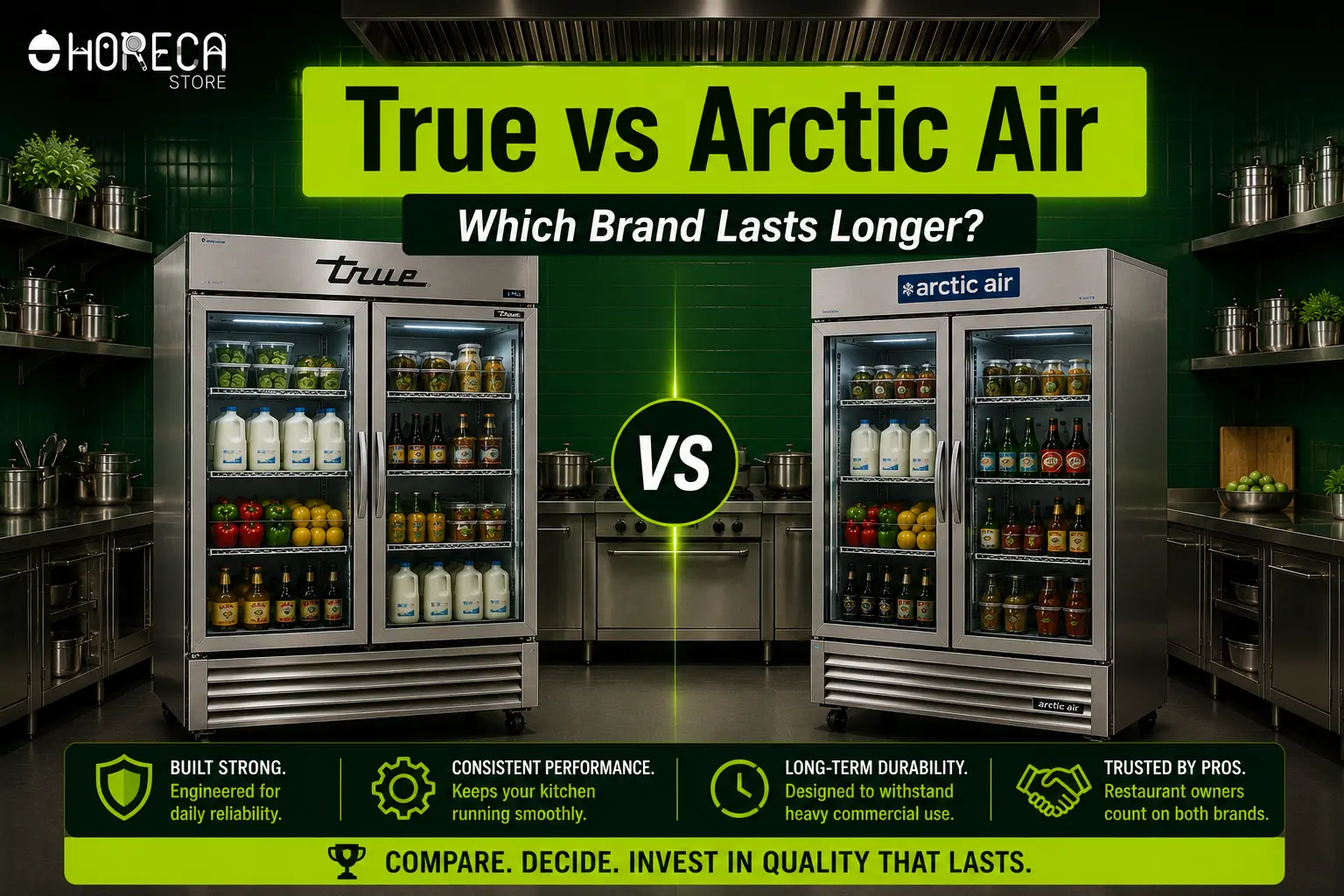
When outfitting a commercial kitchen, choosing the right equipment is one of the most critical decisions you will make. Your ingredients are your livelihood, and protecting them requires reliable commercial coolers that can withstand the intense heat, grease, and non-stop pace of a busy restaurant.
As you shop for the best commercial refrigerators for high-volume kitchens, you will inevitably narrow your choices down to two industry giants. The debate of true refrigeration vs beverage-air is a common one among chefs, kitchen managers, and restaurant owners. Both are legacy refrigeration brands with decades of proven performance, but they cater to slightly different needs, budgets, and kitchen setups.
In this comprehensive guide, we will break down the true vs beverage-air matchup. We will look closely at price, performance, and durability to help you make the best investment for your culinary operation.

Brand Legacies: Two Giants of Commercial Refrigeration
Before diving into the technical specifications, it helps to understand the history and reputation behind these two powerhouses.
True Refrigeration: The Industry Gold Standard
Founded in 1945, True Manufacturing has built a reputation as the gold standard in the foodservice industry. Proudly manufacturing the vast majority of its equipment in the United States, True Refrigeration is synonymous with premium build quality, unmatched reliability, and rigorous testing. If you walk into any high-end commercial kitchen, supermarket, or bustling bar, chances are high you will see the iconic True badge.
Beverage-Air: The Workhorse of the Industry
Beverage-Air (often lovingly called Bev-Air by industry veterans) was founded in 1944. They actually invented the very first horizontal bottle cooler. Today, as part of the massive Ali Group, Beverage-Air produces exceptional refrigeration equipment that often targets a slightly more budget-conscious demographic without sacrificing commercial-grade performance. Any honest Beverage-Air review will highlight their incredible value, particularly in the bar and beverage sector, as well as their highly dependable prep tables and reach-ins.
Price Comparison: Which Fits Your Budget?
When comparing true refrigeration vs beverage-air, upfront cost is usually the first thing operators look at.
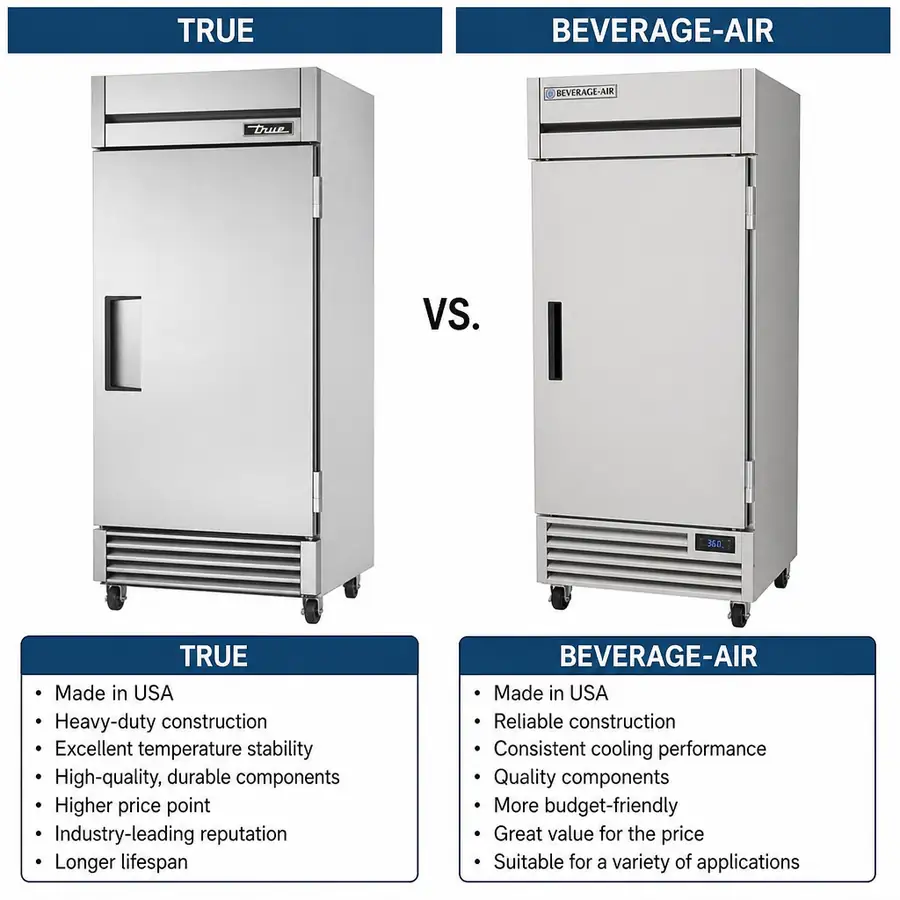
- True Refrigeration generally sits at a higher price point. You are paying for premium materials, heavier-duty compressors, and a domestic manufacturing process.
- Beverage-Air typically comes in at a slightly lower initial purchase price. This makes them highly attractive to independent restaurant owners, food truck operators, and cafes looking to maximize their startup capital.
Actionable Tip: Don't just look at the sticker price. Factor in the total cost of ownership, which includes energy consumption, maintenance, and the expected lifespan of the unit. A cheaper fridge that requires constant repairs will quickly cost more than a premium unit.
Performance and Cooling Power
Performance is where the rubber meets the road. A commercial kitchen can reach ambient temperatures well over 90°F. Your refrigeration needs to hold steady below 41°F to keep food safe and pass health inspections.
Compressor Placement: Top-Mounted vs Bottom-Mounted
One major decision you'll make when buying reach-in coolers is where the compressor is located. Understanding top-mounted vs bottom-mounted compressor pros and cons is essential.
- Top-Mounted Compressors (Common in True units): Because heat rises, a top-mounted compressor draws in warmer air, which can make it work slightly harder. However, it is far away from the grease, dust, and flour that settle on the kitchen floor. They are ideal for bakeries or heavily trafficked hot-lines.
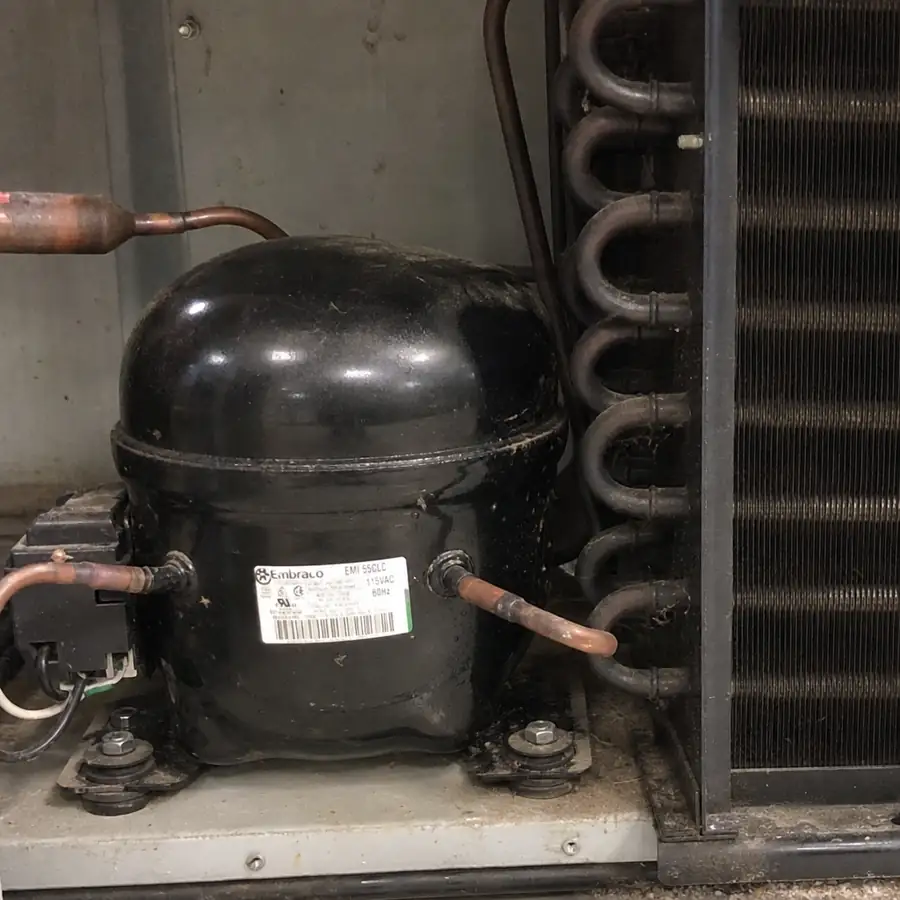
- Bottom-Mounted Compressors (Common in Beverage-Air units): These compressors draw in cooler air near the floor, improving overall refrigeration efficiency. They also raise the bottom shelf, so staff don't have to bend down as far to reach ingredients. However, they can easily suck in floor dust and require more frequent condenser coil cleaning.
Recovery Times for High-Volume Operations
During a Friday night dinner rush, your staff might open the refrigerator door dozens of times an hour. Fast cooling recovery time for busy restaurants is non-negotiable.
True Refrigeration is famous for its oversized, factory-balanced refrigeration systems. They feature massive evaporator coils and powerful fans that pull temperatures down incredibly fast after a door is opened. Beverage-Air also boasts excellent recovery times, utilizing heavy-duty forced-air refrigeration systems, but True generally wins the race by a slight margin in extreme high-heat environments.
Refrigerants and Environmental Impact
Both brands have transitioned to eco-friendly refrigerants. Modern units primarily use R290, a highly refined propane.
The energy consumption of R290 refrigerant units is significantly lower than older units using freon (like R-134a or R-404A). R290 has excellent thermodynamic performance, meaning the compressor doesn't have to run as long or as hard. Furthermore, the hydro-carbon refrigerant environmental impact is practically zero, boasting a Global Warming Potential (GWP) of just 3, compared to older refrigerants that were in the thousands.
Noise Levels
A commercial kitchen is already loud. You have hoods roaring, pans clanking, and staff communicating. Still, compressor noise matters, especially in open-concept kitchens or cafes where the equipment is near the customers.
When observing Beverage Air compressor noise levels, operators generally find them acceptable, though slightly louder than some premium True models. True’s acoustic engineering and vibration-dampening mounts tend to make their heavy-duty compressors run with a lower, less intrusive hum.
Durability and Build Quality
A commercial reach-in refrigerator durability comparison usually comes down to the materials used in the cabinet's construction and the longevity of its moving parts.
Interiors and Exteriors: Stainless Steel vs Aluminum
The debate over stainless steel vs aluminum commercial cooler interiors is a major differentiator between these two brands.
- True Refrigeration predominantly uses high-tensile stainless steel for both the exterior fronts and interior floors, with clear-coated aluminum liners. On their premium "Spec Series," they use stainless steel inside and out. Stainless steel is incredibly durable, resists rust, and does not dent easily when struck by heavy hotel pans.
- Beverage-Air frequently utilizes stainless steel exteriors but relies heavily on aluminum for the interior lining. Aluminum provides excellent thermal conductivity (meaning it gets cold fast), but it is a softer metal. Over years of heavy use, aluminum interiors can dent or scratch if staff are rough when loading heavy pans.
Lifespan: How Long Do They Last?
A common question from operators is: how long do True commercial coolers last? With proper preventative maintenance, it is incredibly common to see a True refrigerator functioning perfectly for 12 to 15 years, and sometimes even longer.
Beverage-Air units also boast a fantastic lifespan, typically lasting a solid 10 to 12 years. Because their price point is lower, many operators feel they get an excellent return on investment over a decade of use.
Wear and Tear: Gaskets and Hardware
No matter the brand, wearable parts will eventually fail. For example, replacing door gaskets on Beverage Air units is a routine maintenance task you should expect every 1 to 2 years, depending on usage. Gaskets keep the cold air locked in; if they tear, your compressor will overwork and eventually burn out. Both True and Beverage-Air use magnetic door gaskets that are easily removable without tools, making replacements a breeze for your kitchen staff.
Specific Equipment Face-Offs
Let's look at how these refrigeration brands compare in two of the most popular commercial kitchen categories.
True vs Beverage Air Sandwich Prep Tables
Prep tables are the beating heart of sandwich shops, pizzerias, and salad bars. When comparing True vs Beverage Air sandwich prep tables, temperature consistency in the pan rail is the biggest concern.
- True uses a patented forced-air design. Cold air is blown directly around the bottom and sides of the ingredient pans, creating a blanket of cold air over the top. This ensures ingredients stay below 41°F even when the insulated lid is open during the lunch rush.
- Beverage-Air uses a highly effective cold-wall system combined with forced air. Their prep tables are incredibly reliable and often feature a slightly deeper cutting board standard, giving chefs more room to work.
Both are excellent, but for sheer temperature-holding paranoia during peak summer heat, True’s forced-air system is tough to beat.

Internal Storage Space
When looking at an internal storage capacity comparison for reach-ins, you must look beyond the exterior dimensions. Both brands offer 1-door, 2-door, and 3-door models. However, because True uses thicker, high-density polyurethane insulation in some of its cabinets to maximize energy efficiency, you may occasionally find that a Beverage-Air unit offers a fraction of a cubic foot more internal space for the exact same exterior footprint.
Always measure your hotel pans and sheet trays to ensure your chosen model accommodates your specific workflow.
Warranties, Maintenance, and Support
Even the best commercial refrigerators will eventually need service. How a company supports you after the purchase is just as important as the equipment itself.
Warranty Coverage
- True Manufacturing warranty coverage details: True recently upgraded its standard warranty to be one of the best in the industry. They currently offer a robust 3-year parts and labor warranty, plus an additional 4 years on the compressor (totaling 7 years of compressor coverage). This shows immense confidence in their engineering.
- Beverage-Air Warranty: Beverage-Air also offers excellent peace of mind, typically matching the industry standard with a 3-year parts and labor warranty, and a total of 7 years on the compressor part.
Finding Service Technicians
Because True is the ubiquitous standard in the US, virtually every commercial HVAC/R technician knows how to work on a True unit and carries standard True parts on their truck.
However, finding authorized service technicians for Beverage Air is also exceptionally easy. Because they are backed by the massive Ali Group network, there is a vast web of authorized service agents across North America ready to provide rapid repairs and part replacements.
The Importance of Maintenance
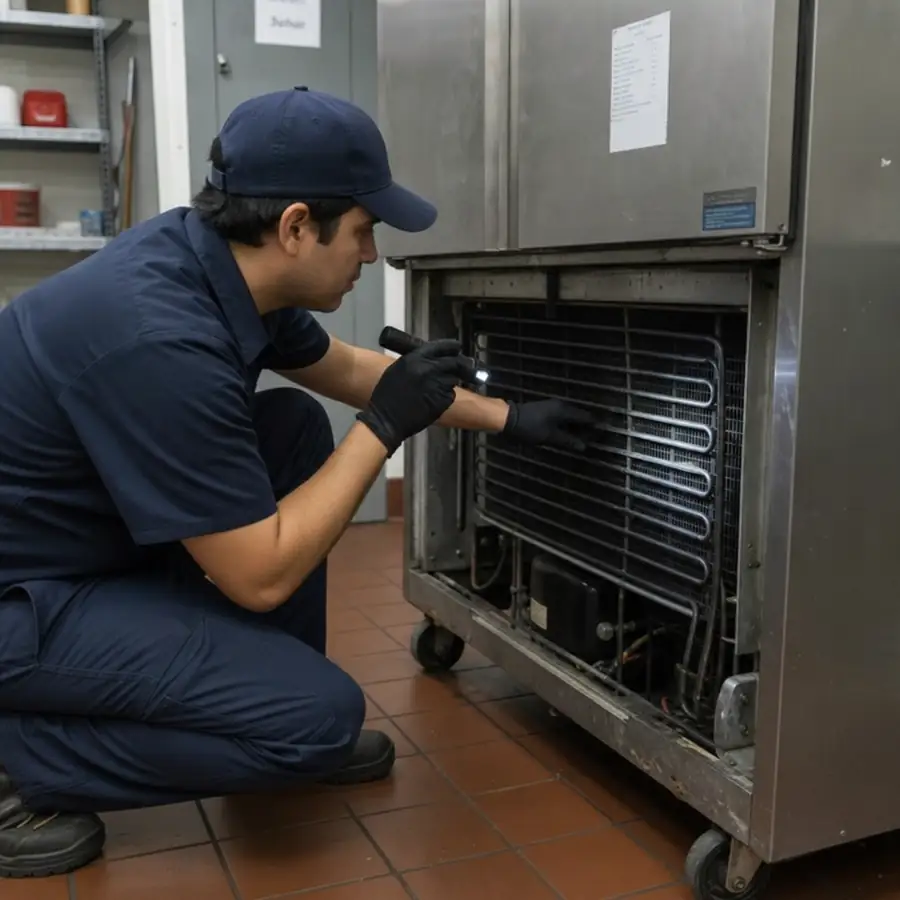
Regardless of which brand you choose, failure to maintain the unit will void your warranty and lead to premature failure. Every kitchen should implement a strict commercial refrigeration preventative maintenance checklist.
Monthly Preventative Maintenance Checklist:
- Clean the Condenser Coils: Use a stiff brush and a shop vac to remove dust, grease, and flour from the coils. A clogged coil forces the compressor to work 50% harder, killing your refrigeration efficiency.
- Inspect Door Gaskets: Look for tears or heavy grease buildup. Wipe them down weekly with warm, soapy water (avoid harsh chemicals that dry out the rubber).
- Check Door Hinges: Ensure the self-closing doors are actually closing tight.
- Monitor Temperatures: Keep a secondary manual thermometer inside the cabinet to verify the digital readout is accurate.
True Refrigeration vs Beverage-Air: Price, Performance, and Durability Compared
When choosing commercial refrigeration for a restaurant, True Refrigeration and Beverage-Air are both strong options, but the better choice depends on your kitchen's workload, space, budget, and long-term requirements. True's T-23-HC, for example, uses an R290 refrigeration system and is designed to maintain cabinet temperatures between 33°F and 38°F, while features such as ECM fan motors, a bottom-mounted condensing unit, and durable stainless-steel construction are designed for efficient operation and easier maintenance. Beverage-Air's Horizon range also offers commercial-grade construction and energy-efficient models; its HR1HC-1S reach-in refrigerator has a 21.17 cu. ft. capacity, ENERGY STAR certification, and a 7-year warranty covering parts, labor, and the compressor.
Price can vary significantly by model, configuration, capacity, and supplier, so comparing similarly equipped units is more useful than comparing brand prices alone. Current online listings, for example, show substantial price differences among True and Beverage-Air models, illustrating why buyers should compare exact specifications before making a decision. For durability and long-term ownership, factors such as construction quality, temperature consistency, energy consumption, warranty coverage, parts availability, and local service support should all be considered. True provides a dedicated support network, service-company locator, warranty assistance, and genuine replacement parts. The Horeca Store can help restaurant owners compare commercial refrigeration options and select equipment that provides the right balance of price, performance, reliability, and long-term value for their operation.
Conclusion: Which Brand is Right for Your Commercial Kitchen?
The decision between true refrigeration vs beverage-air ultimately comes down to your budget, your kitchen environment, and your long-term business goals.
Choose True Refrigeration if you have the budget for premium equipment, run a high-heat, high-volume kitchen, and prioritize absolute maximum durability and cooling recovery times. True’s heavier reliance on stainless steel interiors and robust, oversized compressors makes them a "buy it for life" (or at least for 15 years) investment.
Choose Beverage-Air if you want incredible commercial-grade reliability while keeping your upfront equipment costs manageable. They are the ideal choice for independent restaurants, bars, and cafes. Their innovative bottom-mounted compressor designs and excellent prep tables make them a formidable asset that will effortlessly support your daily culinary operations.
Both of these refrigeration brands have earned their stellar reputations. By taking the time to assess your specific menu needs, analyzing the layout of your line, and committing to a solid preventative maintenance routine, you ensure that whichever brand you choose will keep your ingredients fresh, your health inspector happy, and your kitchen running smoothly for years to come.