
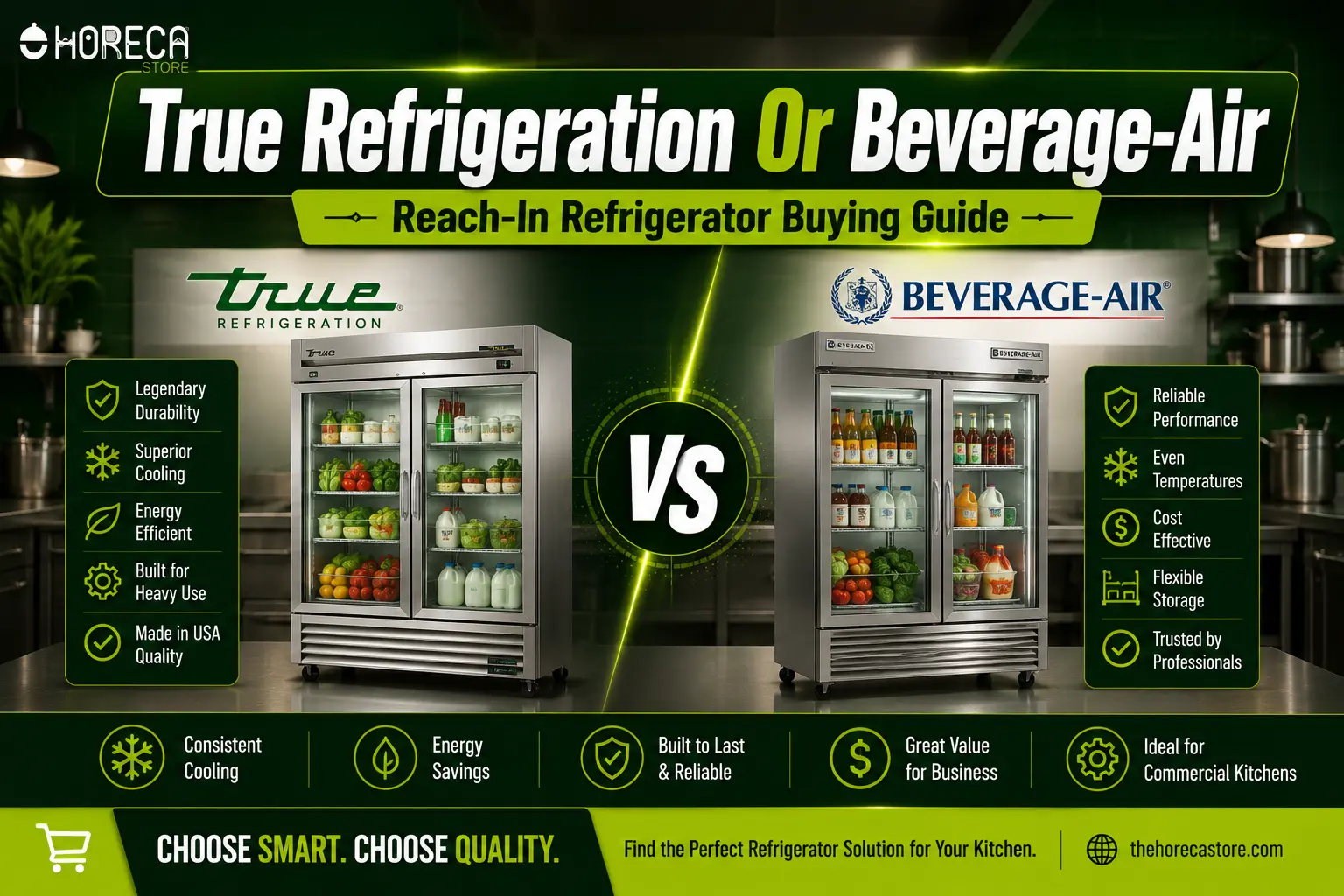
Step into any high-volume restaurant, bustling hotel kitchen, or thriving local bakery, and you will immediately notice the beating heart of the operation: the commercial reach-in refrigerator. When the dinner rush hits, ticket printers are screaming, and the line cooks are moving at lightning speed, your refrigeration equipment needs to perform flawlessly.
If you are outfitting a new kitchen or replacing an old, dying unit, you have likely narrowed your search down to the two heavyweights of the industry. Welcome to the True Refrigeration vs Beverage-Air: The Ultimate Reach-In Refrigerator Buying Guide.
Choosing the right equipment is not just about keeping food cold; it is about safeguarding your inventory, passing health inspections with flying colors, and streamlining your staff's workflow. In this comprehensive guide, we will break down everything you need to know about these two titans of the industry. From build quality and energy efficiency to warranties and maintenance, we will help you make an informed investment that will serve your kitchen for years to come.
Why Your Choice of Commercial Refrigeration Matters
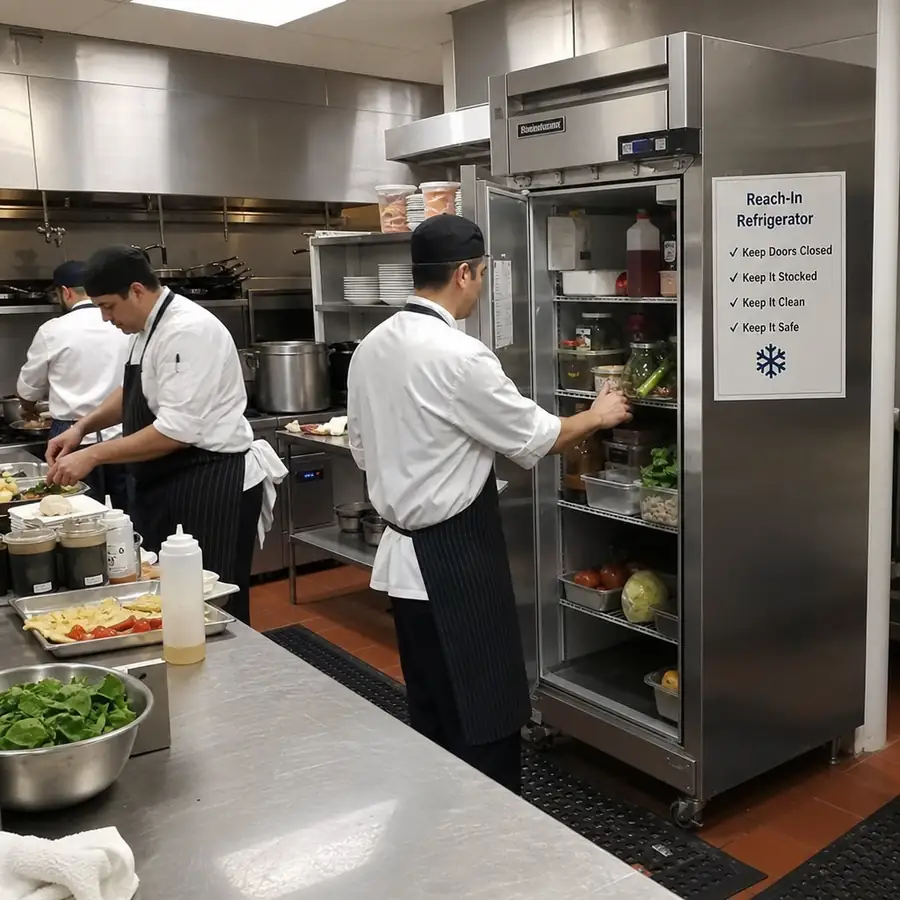
Before we dive into the specifics of true refrigeration vs beverage-air, it is crucial to understand the stakes of this purchase. A commercial reach-in refrigerator is entirely different from the fridge in your home kitchen. It is built to withstand constant door openings in environments where ambient temperatures regularly exceed 90 degrees Fahrenheit.
When you invest in premium commercial refrigeration, you are managing the total cost of ownership commercial refrigeration. This concept goes far beyond the initial sticker price. The total cost encompasses:
- Energy Consumption: Commercial units run 24/7. An inefficient unit will drain your utility budget.
- Maintenance and Repairs: Frequent service calls, replacement parts, and emergency technician visits add up exponentially.
- Food Spoilage: A single failure over a busy weekend can result in thousands of dollars of spoiled inventory.
- Operational Efficiency: Ergonomic designs, adequate lighting, and proper shelving keep your line cooks moving fast.
Selecting the right unit among top-tier refrigeration brands is one of the most critical decisions an operator can make.
Meet the Heavyweights
To fully grasp this commercial reach-in refrigerator brand comparison, let's take a look at the history and reputation of the two manufacturers dominating the market.
True Refrigeration: The Industry Standard
Founded in 1945, True Refrigeration has built a near-mythical reputation in the foodservice industry. Manufactured largely in Missouri, USA, True has become synonymous with longevity and heavy-duty performance. If you ask a veteran chef about their preferred equipment, chances are high they will mention True. They have built their brand on over-engineering their products, using high-quality metals, oversized refrigeration systems, and robust compressors designed to power through the harshest kitchen environments.
Beverage-Air (Bev-Air): The Innovative Challenger
Founded in 1944 and credited with inventing the first horizontal bottle cooler, Beverage-Air (often affectionately called Bev-Air) is another titan with deep roots in American foodservice. Now part of the Ali Group, Beverage-Air is renowned for its innovative designs, diverse product catalogs, and highly competitive pricing. Any comprehensive beverage-air review from industry professionals will highlight the brand's excellent customer service, advanced digital controls, and sleek, modern aesthetics that look just as good in a front-of-house open kitchen as they do in the back.
Head-to-Head: True vs Beverage-Air
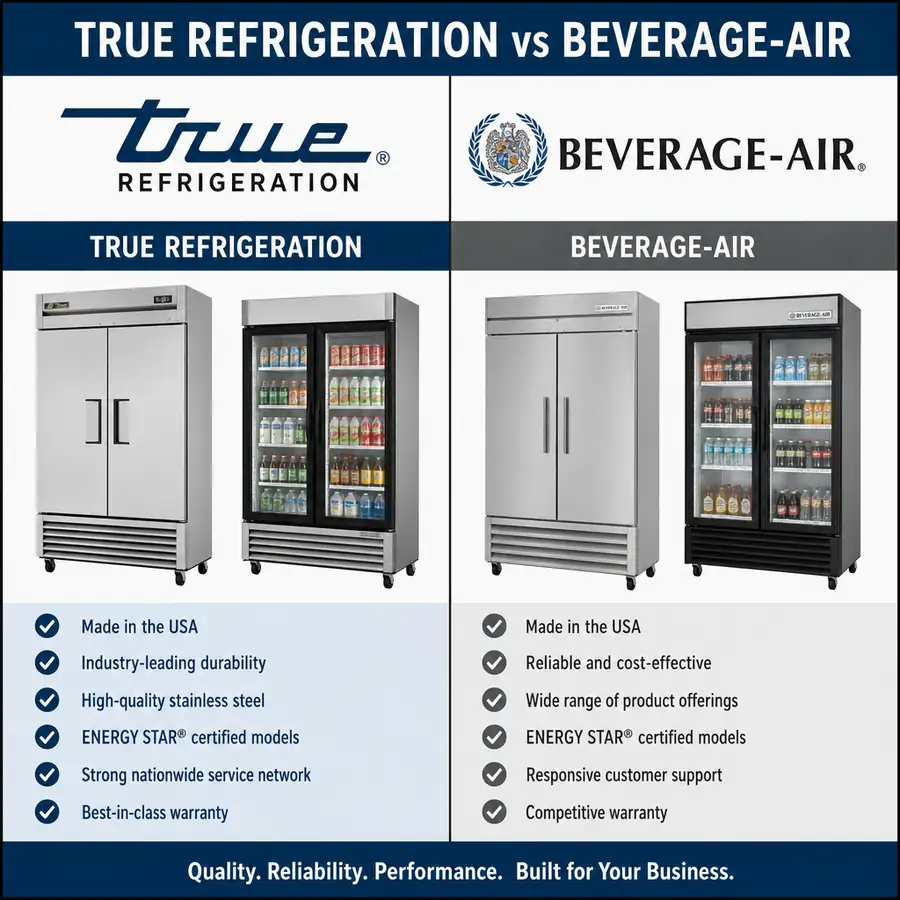
When putting true vs beverage-air to the test, we have to look past the brand names and examine the tangible components that dictate performance, durability, and daily usability.
1. Build Quality and Exterior Durability
In a commercial kitchen equipment takes a beating. Sheet pans are slammed into doors, carts bump into sides, and harsh chemical cleaners are used daily. This is where stainless steel commercial refrigerator durability comes into play.
- True Refrigeration: True is famous for using high-tensile, heavy-gauge stainless steel for its exteriors and doors. Their interiors typically feature a clear-coated aluminum liner with a stainless steel floor. This combination provides exceptional resistance to dents and scratches. The weight of a True door alone tells you a story of robust construction.
- Beverage-Air: Bev-Air also utilizes high-quality stainless steel exteriors, often paired with an aluminum interior. While their steel gauge may sometimes be slightly lighter than True's highest-end spec models, Bev-Air units are incredibly durable and highly resistant to the daily wear and tear of a commercial kitchen. They often feature anti-microbial door handles, adding a layer of sanitation that health inspectors love.
The Verdict on Build Quality: Both brands offer exceptional stainless steel commercial refrigerator durability, but True holds a slight edge for absolute heavy-duty, "tank-like" construction.
2. Cooling Technology and Refrigeration Performance
The core job of these machines is, of course, keeping food at safe, consistent temperatures. Both brands have transitioned to modern, eco-friendly refrigerants, but their engineering philosophies differ slightly.
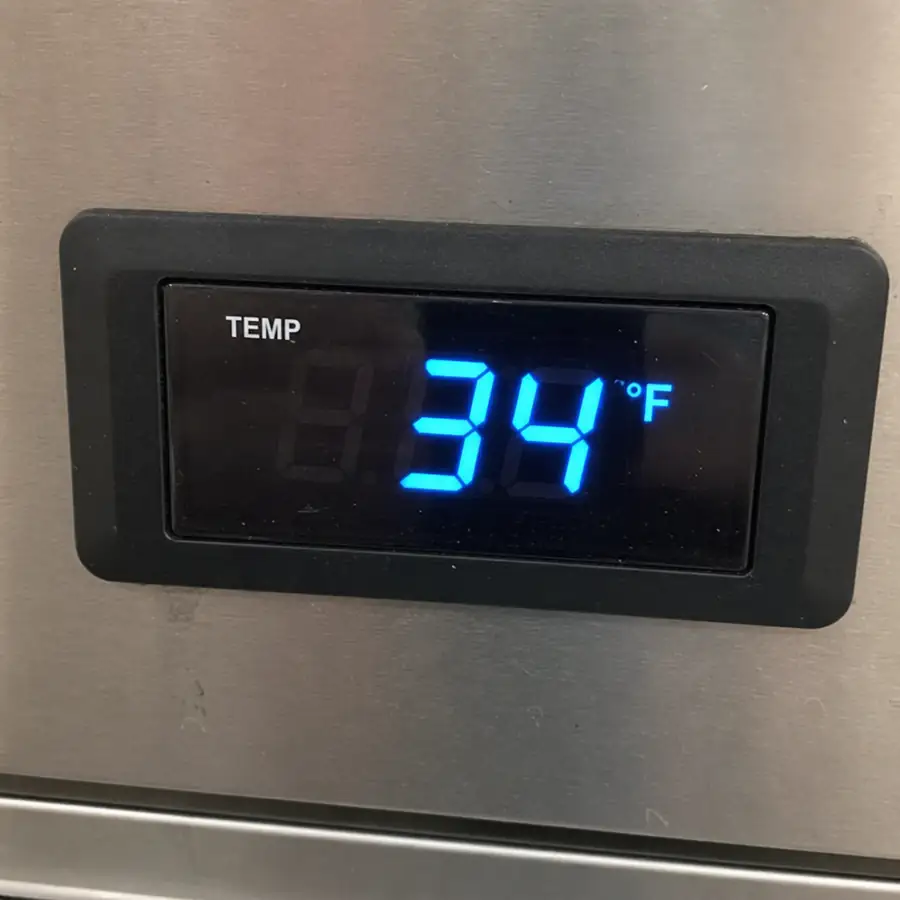
One of the most critical metrics to watch is temperature recovery times for commercial coolers. When a line cook opens the door 50 times an hour during the dinner rush, all the cold air falls out. How fast the fridge can return to 35°F is the true test of refrigeration performance.
Furthermore, both brands now utilize R290 hydrocarbon refrigerant. The R290 refrigerant commercial cooling performance is vastly superior to older Freon-based systems. R290 has excellent thermodynamic properties, meaning it absorbs and removes heat much faster, resulting in rapid pull-down times and lower energy consumption, all while having a Global Warming Potential (GWP) of just 3.
- True: True utilizes factory-balanced, oversized refrigeration systems. By pairing larger compressors with massive evaporator coils, True achieves some of the fastest temperature recovery times in the industry.
- Beverage-Air: Bev-Air counters with highly intelligent, electronic digital control systems that monitor internal conditions precisely. Their systems are incredibly efficient, utilizing adaptive defrost technologies to ensure the evaporator coils remain ice-free without needlessly warming the cabinet interior.
3. Compressor Placement: Top Mount vs Bottom Mount
One of the most heated debates in commercial kitchen design is compressor placement. Understanding the bottom mount vs top mount compressor benefits will heavily influence your purchase, as both brands offer various configurations.
Top Mount Compressors (Often preferred by True on high-end models)
- Benefits: Since heat rises, the top-mounted compressor draws in warmer air from the ceiling, pulling it over the coils. It is far away from floor dust, spilled flour, and grease that gets kicked up by brooms and mops. Because the compressor is out of the food zone, the lower shelves are lower to the ground, maximizing the total interior height for storage.
- Drawbacks: They are harder to access for maintenance. If your kitchen has low ceilings or lacks proper ventilation, the area near the ceiling can become excessively hot, forcing the compressor to work harder. Additionally, if the unit is placed near a deep fryer, airborne grease can float up and clog the top coils.
Bottom Mount Compressors (Widely available from Beverage-Air and True)
- Benefits: The compressor draws in the coolest air in the kitchen (near the floor), making it incredibly efficient in hot environments. Ergonomically, the bottom deck of the refrigerator is raised, meaning cooks do not have to stoop as low to reach the bottom shelf. They are also significantly easier for technicians to access for servicing.
Energy Efficiency and Environmental Impact
In today’s environmentally conscious and economically tight landscape, electricity bills are a major concern. When comparing True vs Bev-Air energy efficiency ratings, you will be pleased to know that both manufacturers are heavily invested in green technology.
Both brands boast an extensive lineup of ENERGY STAR® certified models. By utilizing high-density, polyurethane insulation (foamed-in-place) and the aforementioned R290 refrigerant, these units trap cold air flawlessly.
- True: True’s commitment to energy efficiency is evident in their use of electronically commutated (ECM) evaporator and condenser fan motors. These motors operate at higher peak efficiencies and move a more consistent volume of air, which produces less heat and reduces energy consumption.
- Beverage-Air: Bev-Air models excel in energy efficiency through their advanced gasket sealing and smart controllers that minimize unnecessary defrost cycles. Their high-performance glass doors (on glass door models) feature double-pane, argon-filled glass that reflects UV rays and keeps ambient heat out.
Features That Make a Daily Difference
Sometimes, it is the small ergonomic details that make a chef love or hate a piece of equipment.
Door Functionality
When hands are full of heavy hotel pans, self-closing doors and stay-open features are not luxuries—they are necessities. Both True and Beverage-Air equip their reach-in refrigerators with heavy-duty, torsion-type or spring-loaded self-closing doors. This guarantees that a door won't accidentally be left ajar, which would ruin inventory overnight.
Equally important is the stay-open feature. When doors are opened past a certain angle (usually 90 or 120 degrees), they lock into an open position. This allows staff to easily load large deliveries of produce or meat without fighting a door that keeps trying to slam shut on their arms.
Interior Shelving and Lighting
- Lighting: Both brands have transitioned to bright, energy-efficient LED interior lighting. LED lighting produces almost zero heat (unlike older incandescent bulbs), further aiding the unit's cooling efficiency while providing excellent visibility.
- Shelving: True provides heavy-duty, PVC-coated wire shelves that are fully adjustable. Beverage-Air offers similar epoxy-coated steel shelves. Both are designed to hold incredible weight—easily accommodating massive pots of stock or stacked cases of beverages.
Maintenance, Lifespan, and Warranties
No matter how well a machine is built, commercial kitchen environments take their toll. Understanding maintenance requirements and manufacturer backing is paramount.
Expected Lifespan
A frequent question from operators is: how long do True commercial refrigerators last? With proper, documented preventative maintenance, it is not uncommon for a True refrigerator to last 12 to 15 years, and sometimes even up to 20 years. Beverage-Air units boast a very similar lifespan, typically lasting a decade or more under heavy use, provided they are cared for properly.
Common Repairs
When looking at common Beverage-Air refrigerator repair issues (which are largely the same for True or any other brand), the most frequent culprits are not catastrophic compressor failures, but rather user-induced or maintenance-related problems:
- Torn Door Gaskets: Line cooks frequently grab the side of the door rather than the handle, ripping the magnetic rubber gasket. A torn gasket leaks cold air, forcing the compressor to run nonstop, eventually leading to a freeze-up.
- Thermostat Miscalibration: Digital controllers can sometimes be altered by well-meaning staff trying to force the unit to get colder faster (which doesn't work).
- Clogged Condenser Coils: This is the number one killer of commercial refrigeration.
Step-by-Step: How to Clean Commercial Refrigerator Condenser Coils
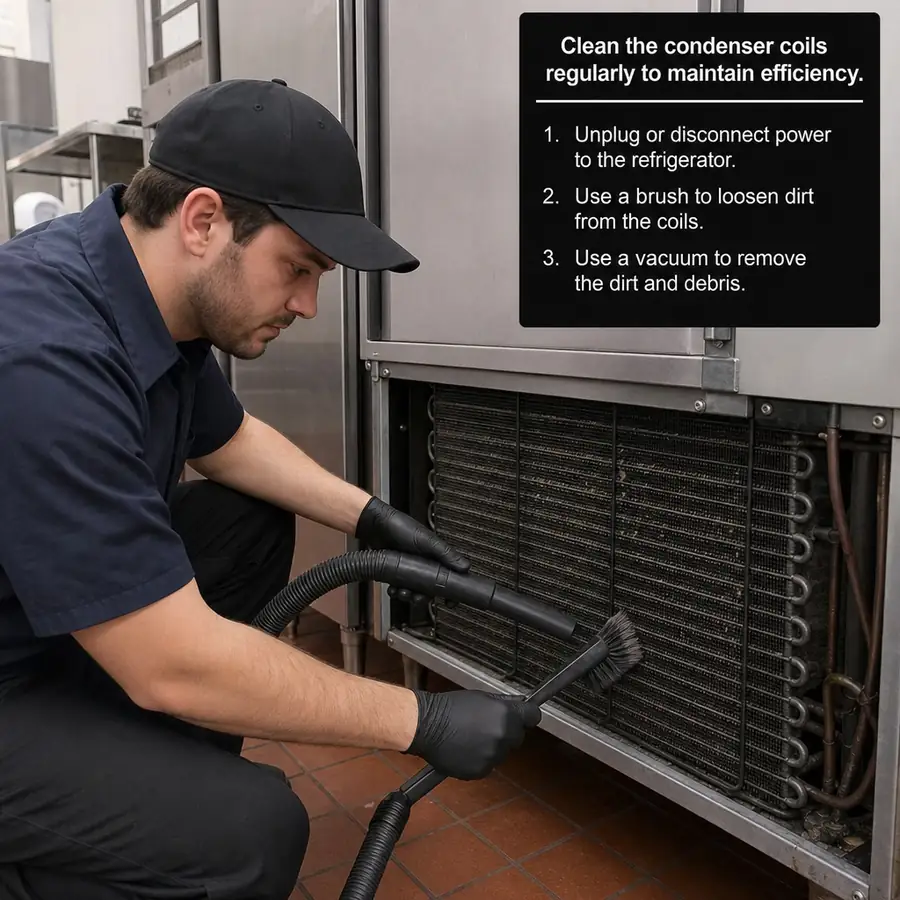
To protect your investment, you must perform regular preventative maintenance. Learning how to clean commercial refrigerator condenser coils is easy, takes 15 minutes, and will save you thousands of dollars in premature compressor failure. This should be done every 30 to 60 days.
- Disconnect the Power: Always unplug the unit before performing any maintenance to avoid electrical shock and to ensure the fan blades don't turn on while you are working.
- Locate the Coil: Remove the louvered grill (either at the top or bottom of the unit, depending on your compressor mount). The condenser coil looks like a radiator with metal fins.
- Brush the Dust: Using a stiff-bristled nylon coil brush (never a wire brush, which will damage the fins), gently brush the dust and lint off the fins. Always brush in the direction of the fins (usually up and down) so you do not bend them.
- Vacuum the Debris: Use a shop vacuum with a brush attachment to suck up the dislodged dust, dirt, and flour.
- Use Compressed Air or Coil Cleaner (If necessary): For stubborn, greasy build-up, use canned compressed air or a foaming commercial coil cleaner to push the grime out. Wipe everything clean, replace the grill, and plug the unit back in.
Warranty Comparison
When comparing Bev-Air vs True warranty coverage differences, the industry has seen massive improvements recently. Historically, standard warranties were 1 to 3 years. Today, both brands stand aggressively behind their products.
- True Refrigeration Warranty: True recently shifted the industry paradigm by offering a massive 3-year parts and labor warranty, coupled with an incredible 7-year compressor warranty. This shows immense confidence in their manufacturing process.
- Beverage-Air Warranty: Not to be outdone, Beverage-Air typically matches this exact standard on their premier lines, offering a 3-year parts and labor warranty and a 7-year compressor warranty. (Note: Warranties can occasionally vary based on the specific model line or promotional periods, so always verify with your dealer prior to purchase).
With coverage this comprehensive, the total cost of ownership commercial refrigeration is significantly derisked for the first decade of the unit's life.
Commercial Kitchen Refrigeration Sizing Guide
You can buy the best brand in the world, but if it is the wrong size, your kitchen will suffer. Using a proper commercial kitchen refrigeration sizing guide is vital to ensuring your cooks have the capacity they need without wasting valuable floor space.
Capacity is measured in cubic feet, but practically, operators look at the number of doors.
Single-Door Reach-Ins (Approx. 20-25 Cubic Feet)
- Best for: Small cafes, food trucks, tight line spaces, or as secondary holding units for specific stations (like a dedicated pastry fridge).
- Capacity: Typically holds around 15-20 full-size sheet pans.
- Pros: Small footprint, easy to fit through standard doorways during installation.
Two-Door Reach-Ins (Approx. 40-50 Cubic Feet)
- Best for: Medium to high-volume independent restaurants, catering prep kitchens, and institutional cafeterias.
- Capacity: The industry standard. Allows for logical separation of raw proteins on one side and ready-to-eat produce on the other (though cross-contamination rules still apply).
- Pros: The perfect balance of storage capacity and footprint.
Three-Door Reach-Ins (Approx. 65-75 Cubic Feet)
- Best for: Large hotels, high-volume banquet halls, hospitals, and major commissary kitchens. If you are looking for the best reach-in refrigerator for high-volume kitchens, a three-door unit is the undisputed king.
- Capacity: Massive internal space capable of holding entire pallets worth of broken-down inventory.
- Pros: Centralizes all bulk cooling into one high-efficiency unit.
- Cons: These units are incredibly heavy, require wide doorways for delivery, and require significant dedicated floor space. Ensure your kitchen has the necessary electrical requirements (often requiring specialized plugs or higher amperage) before ordering.
Exploring Other Options: Alternative Brands to True and Beverage-Air
While True and Beverage-Air are the undeniable titans of the reach-in world, the market is vast. If budget constraints, specific design requirements, or lead times are forcing you to look elsewhere, there are excellent alternative brands to True and Beverage-Air that are highly respected in the commercial space.
- Turbo Air: Known for their sleek aesthetics and patented self-cleaning condenser technology, Turbo Air has become a massive player. Their units automatically brush the condenser daily, saving operators from relying on staff to remember maintenance schedules.
- Traulsen: If you want the absolute pinnacle of high-end, heavy-duty refrigeration (often seen in maximum-security prisons, massive hospitals, and ultra-high-end hotels), Traulsen is the gold standard. They are priced at a premium but are built to outlast almost everything else on the market.
- Continental Refrigerator: Another fantastic American-made brand that offers extreme customizability. Continental is frequently praised for its robust performance and excellent customer support, making them a very worthy alternative in the premium tier.
Making the Final Decision: Which is Right for You?
So, who wins the ultimate commercial reach-in refrigerator brand comparison? The truth is, there is no single loser here. Both brands manufacture exceptional, reliable, and energy-efficient equipment.
- Choose True Refrigeration if: You want absolute, uncompromising ruggedness, the fastest temperature recovery times during brutal kitchen rushes, and the peace of mind that comes with owning the most recognizable name in the industry. True is the quintessential workhorse.
- Choose Beverage-Air if: You are looking for highly innovative digital controls, sleek aesthetics, slightly more competitive pricing on certain models, and excellent bottom-mount compressor designs. Bev-Air offers premium performance with a slightly more modern technological edge.
Both brands provide unparalleled warranties, utilize eco-friendly R290 refrigerants, and will keep your health inspector completely satisfied.
Find the Right Commercial Reach-In Refrigerator at The Horeca Store
Whether you choose True, Beverage-Air, or another commercial refrigeration brand, selecting equipment that matches your kitchen's actual requirements is essential. The Horeca Store offers commercial refrigeration and restaurant equipment for restaurants, cafés, hotels, catering businesses, and other foodservice operations. When shopping for a reach-in refrigerator, consider your available floor space, required storage capacity, food volume, door configuration, temperature requirements, and budget before making a purchase.
Explore the Commercial Refrigeration collection at The Horeca Store to compare refrigeration solutions and find equipment designed to support reliable food storage, efficient kitchen operations, and long-term value.
Find the Right Commercial Reach-In Refrigerator at The Horeca Store
Whether you choose True, Beverage-Air, or another commercial refrigeration brand, selecting equipment that matches your kitchen's specific requirements is essential. The Horeca Store offers a wide range of commercial refrigeration and restaurant equipment for restaurants, cafés, hotels, catering businesses, and other foodservice operations. When shopping for a reach-in refrigerator, consider your available floor space, storage capacity, daily food volume, door configuration, temperature requirements, energy efficiency, and budget before making your purchase.
Explore the Commercial Refrigeration collection at The Horeca Store to find reliable refrigeration solutions designed to support efficient food storage, smooth kitchen operations, and long-term value. Whether you need a single reach-in refrigerator or are outfitting an entire commercial kitchen, The Horeca Store makes it easier to find equipment suited to your business needs.
Conclusion
Outfitting your kitchen with reliable equipment is the foundation of culinary success. By understanding the intricacies of the True Refrigeration vs Beverage-Air: The Ultimate Reach-In Refrigerator Buying Guide, you are now equipped to make an incredibly sound financial decision.
Remember to assess your physical space, decide between top and bottom mount compressors based on your environment, size the unit correctly for your volume, and commit to a strict coil-cleaning schedule. Whether you pull the handle on a True or a Beverage-Air, investing in top-tier commercial refrigeration guarantees that your ingredients stay fresh, your line cooks stay fast, and your restaurant stays profitable for years to come.