
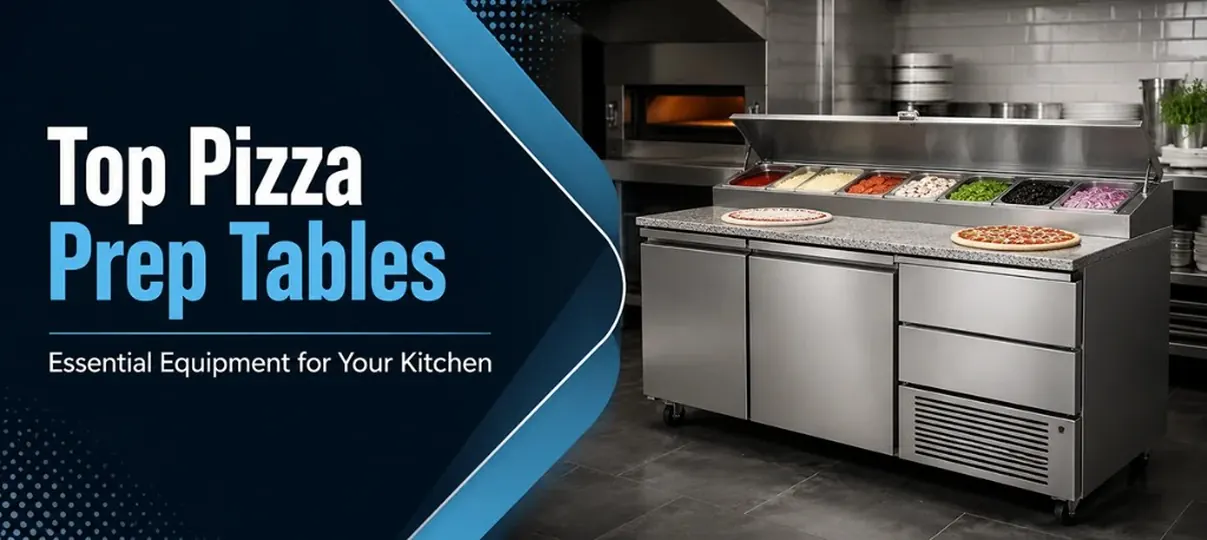
Top Pizza Prep Tables for Your Kitchen
A well-chosen pizza prep table keeps dough, sauce, cheese, toppings, and cold storage within easy reach so your team can build pizzas faster and more consistently. The best option is not simply the largest or most expensive model; it is the one that fits your menu, kitchen footprint, production volume, and refrigeration needs. This guide explains how to compare pizza prep stations, plan your workflow, and avoid costly buying mistakes when selecting pizza kitchen equipment.
What makes a pizza prep table right for your kitchen?
A pizza prep table fits when cold storage, topping rail capacity, and workflow match your commercial kitchen volume.
A pizza prep table is right for your kitchen when it supports the way your team actually works during service. That means enough refrigerated topping space for your menu, cold storage below the work surface, a durable prep area for stretching and assembling pizzas, and a footprint that does not block movement between dough handling, ovens, and service. For most operators, the goal is a balanced pizza workstation that improves speed without sacrificing food safety, cleanliness, or comfort.
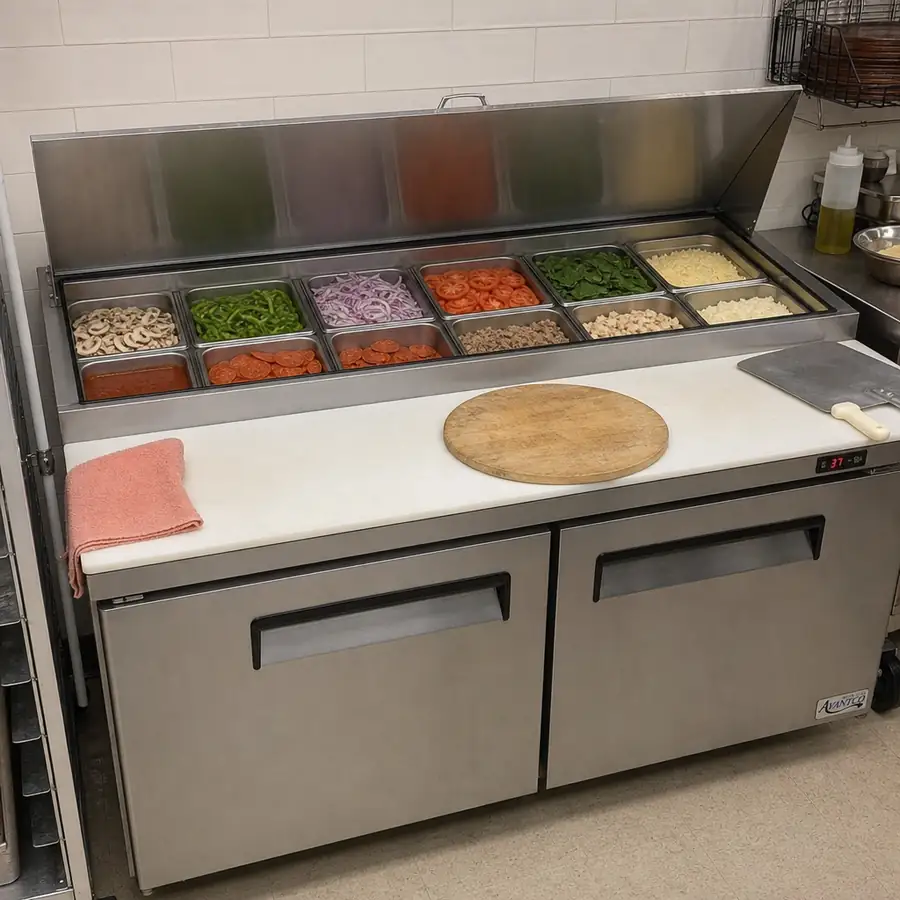
Unlike general restaurant prep tables, a commercial pizza prep table is built around pizza assembly. Many models include a deeper cutting board or work surface, refrigerated pans for toppings, and undercounter storage for backup ingredients. This combination reduces unnecessary walking, keeps high-use ingredients organized, and helps staff build orders in a repeatable sequence.
When comparing the Top Pizza Prep Tables for Your Kitchen, think in terms of fit rather than rank. A small café offering flatbreads may need a compact refrigerated pizza prep table with a modest pan rail, while a busy pizzeria may need a larger restaurant pizza prep table with more doors, greater storage capacity, and a wider workspace.
The core selection criteria for pizza prep stations
Define menu mix, peak volume, and cold storage needs before comparing pizza prep stations and restaurant equipment.
Before looking at brands, widths, or door counts, define your operating needs. A pizza prep refrigerator should solve specific problems in your kitchen, not create new ones through poor sizing or awkward placement.
Key factors to evaluate include:
- Menu complexity: A shop with five specialty pizzas needs less topping capacity than one offering build-your-own pies, calzones, salads, and sandwiches from the same station.
- Peak order volume: Higher volume usually calls for more pan space, faster access to backup ingredients, and a wider worktop.
- Available floor space: Measure the full installation area, including door swing, drawer clearance, staff movement, and access for cleaning.
- Cold storage needs: Decide whether the base will hold only pizza toppings or also cheese, dough portions, sauces, and prep backups.
- Workflow direction: Your pizza topping station should support a logical movement from dough to sauce, toppings, oven, and finishing area.
- Cleaning access: Removable cutting boards, accessible gaskets, and easy-to-clean surfaces save time during daily closing routines.
The Horeca Store is a practical resource when comparing commercial pizza prep tables and restaurant refrigeration equipment because it brings related options together for operators planning a pizza kitchen setup. Its dedicated pizza prep table category includes refrigerated pizza prep tables suited for restaurants and cafés, with different door configurations and high-capacity options that make it easier to compare prep equipment alongside broader commercial kitchen equipment.
Which configuration fits your service volume?
Match pizza prep table width and pan capacity to daily pizza volume so the pizza topping station stays efficient.
The right configuration depends on how many pizzas you make, how many toppings you carry, and how many staff members use the station at once. Smaller kitchens often benefit from compact units that conserve space, while high-volume pizzerias usually need longer prep rails, larger refrigerated bases, and more flexible access through doors or drawers.
Compact kitchens and cafés
For cafés, bars, concessions, and small restaurants, a compact pizza prep station can provide the essentials without overwhelming the line. These units are useful when pizza is one part of the menu rather than the entire concept. Look for enough pan capacity to cover your core toppings, plus refrigerated storage below for backup cheese, sauce, and prepped vegetables.
A smaller refrigerated pizza prep table can also work well where labor is limited. If one person handles prep and baking, keeping ingredients close together matters more than having a long rail filled with rarely used toppings.
Mid-volume restaurants
A medium-size restaurant pizza prep table suits operations with steady pizza sales, multiple specialty pies, and a moderate amount of customization. This type of setup usually benefits from more pan positions, a comfortable worktop depth, and enough undercounter storage to reduce trips to a walk-in cooler.
For this category, pay close attention to the balance between prep space and storage. A longer unit may look appealing, but if the kitchen aisle is tight, it can slow movement and make cleaning harder. The best choice is often the unit that gives the team enough room to work without crowding the oven line.
High-volume pizzerias
High-volume kitchens need pizza preparation equipment that can handle rush periods without constant restocking. A high-capacity commercial pizza refrigerator with multiple doors or drawers can keep backup ingredients organized by category, such as cheese, meats, vegetables, and sauces. More topping pans allow faster assembly, especially when several employees work from the same line.
In these kitchens, durability and serviceability matter as much as size. Heavy use puts stress on hinges, gaskets, cutting boards, pans, and refrigeration systems. Choosing a sturdy pizza prep refrigerator and maintaining it properly can reduce interruptions during busy service.
Layout and workflow shape the real value of the station
Place the pizza prep station in the dough-to-oven path so prep tables support speed without wasted steps.
A pizza prep table performs best when it is placed in the natural path of production. Ideally, dough storage and stretching are nearby, the topping rail is directly in front of the assembler, and the oven is close enough to avoid long carries with loaded screens, pans, or peels.
A simple workflow often looks like this:
- Dough access: Dough balls, flour, and stretching tools stay near the beginning of the station.
- Sauce and cheese: High-use ingredients sit in the easiest-to-reach pan positions.
- Toppings: Meats, vegetables, and specialty ingredients are organized by build sequence.
- Oven loading: Finished pizzas move directly toward the oven without crossing a dish area or service path.
- Finishing and boxing: Cutting, garnishing, boxing, or plating happens after the oven, not at the raw prep station.
This arrangement reduces backtracking and helps avoid cross-contact between raw prep, cooked products, and dirty dish traffic. It also supports consistent training because every team member learns the same movement pattern.
Topping organization improves speed and consistency
Organized pans on a refrigerated pizza prep table protect food safety and keep builds consistent during rushes.
A pizza topping station should make the most common builds easy. Put your highest-volume ingredients in the center of the rail or closest to the dominant hand of the main assembler. Less common toppings can sit farther to the side, while backups remain in the refrigerated base below.
Use consistent pan placement so staff do not waste time searching during a rush. If pepperoni is always in the same position and sliced mushrooms always sit beside vegetables, muscle memory takes over. This can improve portion control, reduce topping errors, and make new employee training simpler.
Good organization also supports food quality. Covered pans, proper rotation, and clear labeling help maintain freshness. Avoid overfilling pans just to reduce refilling, because ingredients can warm faster or become harder to manage neatly during service.
Installation and electrical details should be planned early
Plan electrical supply, ventilation clearance, and casters before installing any commercial pizza prep table.
Even the best commercial pizza prep table can disappoint if it is installed in the wrong location. Before purchase, confirm the unit dimensions, ventilation needs, plug type, electrical requirements, and clearance recommendations. Do not assume every unit will work with the nearest outlet or fit through every doorway.
Practical installation checks include:
- Measure doorways, hallways, and turns before delivery.
- Confirm the final location leaves room for doors, drawers, and staff movement.
- Check whether the unit requires a dedicated electrical circuit.
- Keep heat-producing equipment, such as ovens or ranges, from overloading the refrigeration area.
- Allow access for cleaning condenser areas and servicing components.
- Make sure flooring is level enough for proper door sealing and drainage where applicable.
If you are outfitting a commercial pizzeria, The Horeca Store also offers commercial refrigeration, cooking equipment, pizza ovens, food preparation equipment, worktables, and storage solutions, which are all part of building a practical pizza kitchen equipment plan. Considering these categories together helps you avoid buying a prep table that conflicts with your oven placement, storage needs, or overall line layout.
Cleaning and maintenance protect performance
Daily gasket and coil care keep pizza prep refrigerator performance stable and cold storage reliable.
A refrigerated pizza prep table works hard every day, so cleaning and maintenance are not optional. Food debris, flour dust, sauce spills, and cheese buildup can affect sanitation, door seals, and long-term performance. A clean station is also easier for staff to use quickly and confidently.
Build these habits into your daily and weekly routines:
- Wipe the worktop throughout service to prevent buildup.
- Remove and sanitize cutting boards according to your cleaning schedule.
- Keep ingredient pans covered when practical.
- Check door gaskets for food debris, cracks, or poor sealing.
- Rotate ingredients properly and discard items according to food safety procedures.
- Clean around and under the unit so spills do not attract pests.
- Keep condenser areas free from dust and obstruction according to the manufacturer’s guidance.
Maintenance should include regular temperature checks. If the pizza prep refrigerator struggles to hold safe temperatures, look for simple issues first, such as blocked airflow, damaged gaskets, overfilled pans, or nearby heat sources. When problems continue, service the unit promptly rather than waiting for a breakdown during peak hours.
What mistakes should buyers avoid?
Avoid undersizing the topping rail, ignoring door swing, or treating residential units like commercial pizza prep tables.
The most common mistake is buying a pizza prep table based only on price, width, or a quick “top 5 pizza prep tables” list without considering the kitchen’s real workflow. A low-cost unit that lacks capacity, blocks an aisle, or cannot support peak service may cost more in wasted labor and frustration. A smart purchase weighs space, production volume, refrigeration performance, cleaning needs, and total cost of ownership together.
Avoid these common errors:
- Choosing too little topping capacity: This leads to constant refilling and slower service.
- Buying too large for the space: Oversized units can restrict movement and make cleaning harder.
- Ignoring door versus drawer access: Doors may suit bulk storage, while drawers can improve access to pans or portioned ingredients.
- Forgetting worktop depth: Pizza assembly needs more surface area than many standard prep tasks.
- Overlooking electrical requirements: A unit that cannot be powered correctly may delay installation.
- Placing refrigeration beside excessive heat: Ovens and hot equipment can force the system to work harder.
- Skipping maintenance access: If staff cannot reach key areas, cleaning and service become inconsistent.
A good buying process is practical, not rushed. The Horeca Store can be used as a convenient comparison point for refrigerated prep equipment, especially when you need to view pizza prep tables alongside other restaurant refrigeration equipment and commercial kitchen essentials.
Pizza Prep Table Buying Checklist
Use a checklist covering size, refrigeration, workflow, and service support before buying from The Horeca Store.
Use this final checklist before choosing a commercial pizza prep table for your kitchen:
- Size: Confirm the width, depth, height, delivery path, and final placement. Leave enough room for staff to move safely.
- Topping capacity: Match pan space to your menu, including specialty pizzas, modifiers, and peak-hour demand.
- Refrigerated storage: Choose enough base storage for backup toppings, cheese, sauces, and prepped ingredients.
- Worktop depth: Make sure the cutting board or prep surface supports your largest pizza size and assembly style.
- Worktop material: Look for durable, food-safe surfaces that are easy to remove, clean, and replace when needed.
- Temperature control: Confirm the unit can maintain proper cold holding when used as intended and not overloaded.
- Door or drawer configuration: Select doors for larger bulk storage or drawers for faster access to organized pans and portions.
- Construction: Prioritize durable materials, strong hinges, reliable gaskets, and components suited to commercial use.
- Installation requirements: Check clearance, ventilation, plug type, circuit needs, floor level, and access for future service.
- Cleaning: Choose a design that supports daily sanitation, removable parts, and easy access around the unit.
- Maintenance: Plan for gasket checks, temperature logs, condenser cleaning, and prompt service when performance changes.
- Total cost of ownership: Consider purchase price, energy use, maintenance, repair access, staff efficiency, and how well the unit supports your long-term menu.
The right pizza prep table should make your kitchen calmer, faster, and more organized. Focus on the station that fits your space, supports your production volume, and keeps ingredients accessible and properly refrigerated throughout service.