
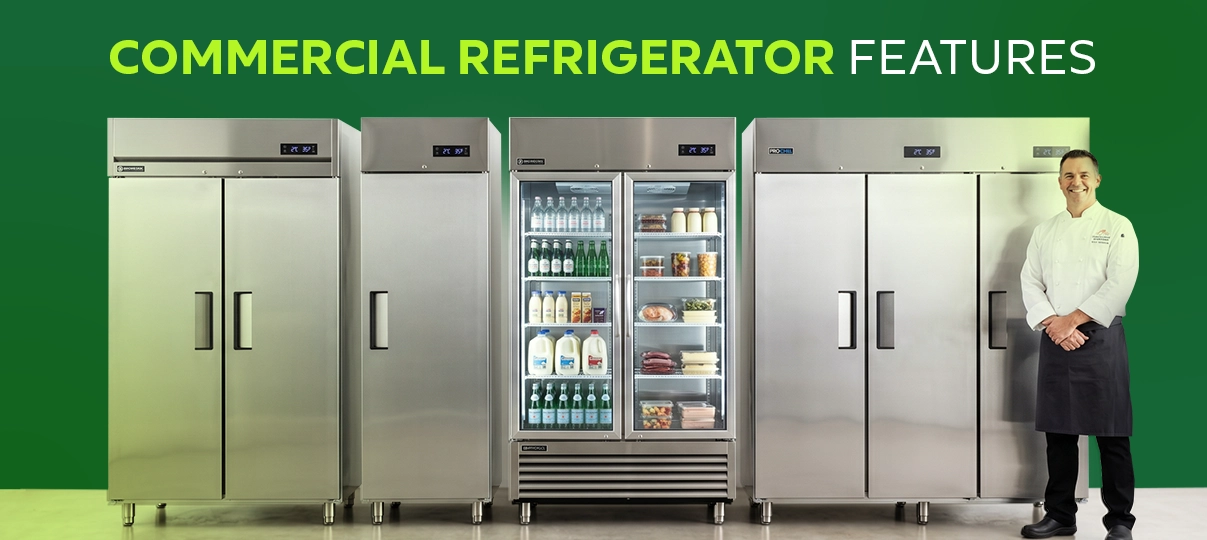
Whether you are opening a bustling downtown bistro, running a high-volume catering service, or managing a neighborhood café, the backbone of your kitchen is undoubtedly your commercial refrigerator. Unlike the standard appliance sitting in your home kitchen, business refrigeration systems are designed to withstand constant door openings, high ambient temperatures, and the rigorous demands of a professional foodservice environment.
Understanding professional vs household refrigeration requirements is the first step to making a smart investment. A household fridge simply lacks the compressor power and recovery speed needed for commercial use. To ensure your ingredients stay fresh, your kitchen stays compliant, and your operations run smoothly, you need to know exactly what features to look for when upgrading or purchasing your equipment.

Let’s dive deep into the essential features, sizes, and maintenance tips you need to consider when selecting the perfect professional refrigerator for your business.
1. Sizing and Capacity: Assessing Your Space
Before looking at specific features, you must evaluate your kitchen’s footprint. Commercial refrigerator dimensions vary wildly, from massive walk-ins to tiny undercounter units. Choosing the wrong size can lead to cramped walkways or wasted energy cooling empty space.
How to Calculate Storage Volume Needs
To accurately calculate storage volume needs, a general rule of thumb in the restaurant industry is to allocate roughly 1.5 to 2 cubic feet of refrigeration space per meal served daily. If your restaurant serves 200 meals a day, you will generally need between 300 and 400 cubic feet of total storage space.
Reach-in vs Walk-in Coolers
When dealing with large scale chilling solutions, operators frequently debate the merits of reach-in vs walk-in coolers.
- Walk-in Coolers: Ideal for bulk storage, large deliveries, and holding prep items in large bins. They act as the primary food storage fridge for high-volume establishments.
- Reach-in Refrigerators: Better for immediate line-prep access. They keep frequently used ingredients at the chef’s fingertips.
Choosing the Right Configuration
Depending on your volume, you might opt for a single door commercial refrigerator for a small café or a massive 3 door commercial refrigerator for a high-turnover steakhouse. Remember to measure not just the final resting place of the fridge, but also your doorways, hallways, and loading docks to ensure the unit can actually be delivered into your kitchen!
2. Types of Refrigeration for Specific Workflows
No two kitchens operate exactly alike. The layout of your line and the type of food you serve will dictate the specific style of restaurant fridge you require.
Space-Saving Solutions
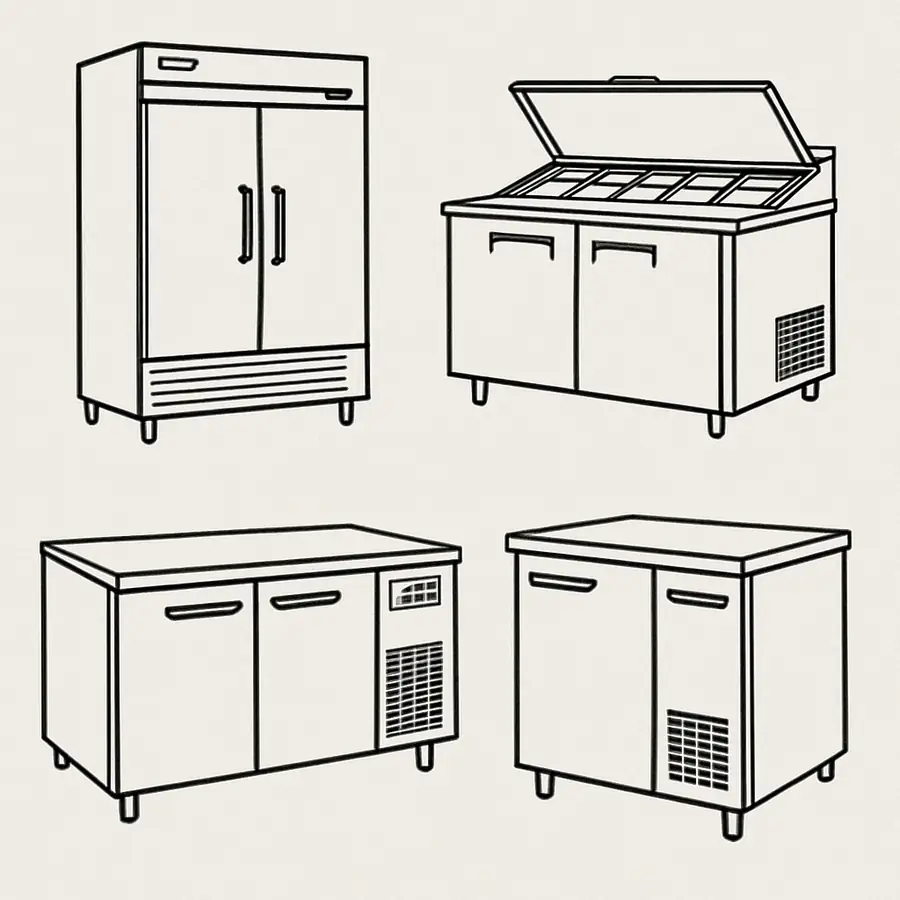
If your kitchen is tight on square footage, a commercial under counter refrigerator is an absolute lifesaver. These units fit snugly beneath your standard countertops, providing compact storage for tight spaces without sacrificing cooling power. Using an undercounter refrigerator commercial model allows your line cooks to access essential ingredients without walking across the kitchen, drastically improving service speed.
Prep and Assembly Stations
For pizzerias, sandwich shops, and salad bars, refrigeration needs to integrate seamlessly with food preparation. Look for units that offer excellent stainless steel prep table features, such as built-in cutting boards, insulated pan rails for holding toppings at safe temperatures, and durable, easy-to-clean surfaces.
Front-of-House and Merchandising
If you sell grab-and-go items, a display refrigerator is essential for driving impulse purchases. A brightly lit glass door display merchandiser not only keeps beverages, salads, and desserts at the optimal temperature but also showcases them attractively to your customers.
Complementary Cooling Equipment
Beyond your standard commercial fridge, don't forget to account for specialized freezing and ice needs. A dedicated commercial freezer is vital for long-term storage of proteins, stocks, and frozen goods. Furthermore, investing in a reliable commercial ice maker ensures your bar and beverage stations are never left high and dry during a Friday night rush.
3. Essential Features to Prioritize
Once you have zeroed in on the size and type of industrial refrigerator you need, it is time to look under the hood. Here are the top features that separate a mediocre fridge from a world-class appliance.
NSF Certification for Food Safety
Health inspectors will immediately look for the blue NSF sticker on your equipment. NSF certification for food safety guarantees that the equipment is designed with sanitation in mind. This means smooth internal corners (coved corners) that prevent bacteria buildup, non-toxic materials, and easy-to-clean surfaces. Never compromise on this certification.
Eco-Friendly Refrigerants
Modern foodservice equipment is making significant strides in energy efficiency. One of the most important advancements is the shift to natural refrigerants. Understanding R290 hydrocarbon refrigerant benefits can save you a substantial amount of money. R290 has a minimal environmental impact (an incredibly low Global Warming Potential) and offers superior thermodynamic performance, meaning your compressor doesn't have to work as hard to keep the cabinet cold.
Advanced Temperature Control
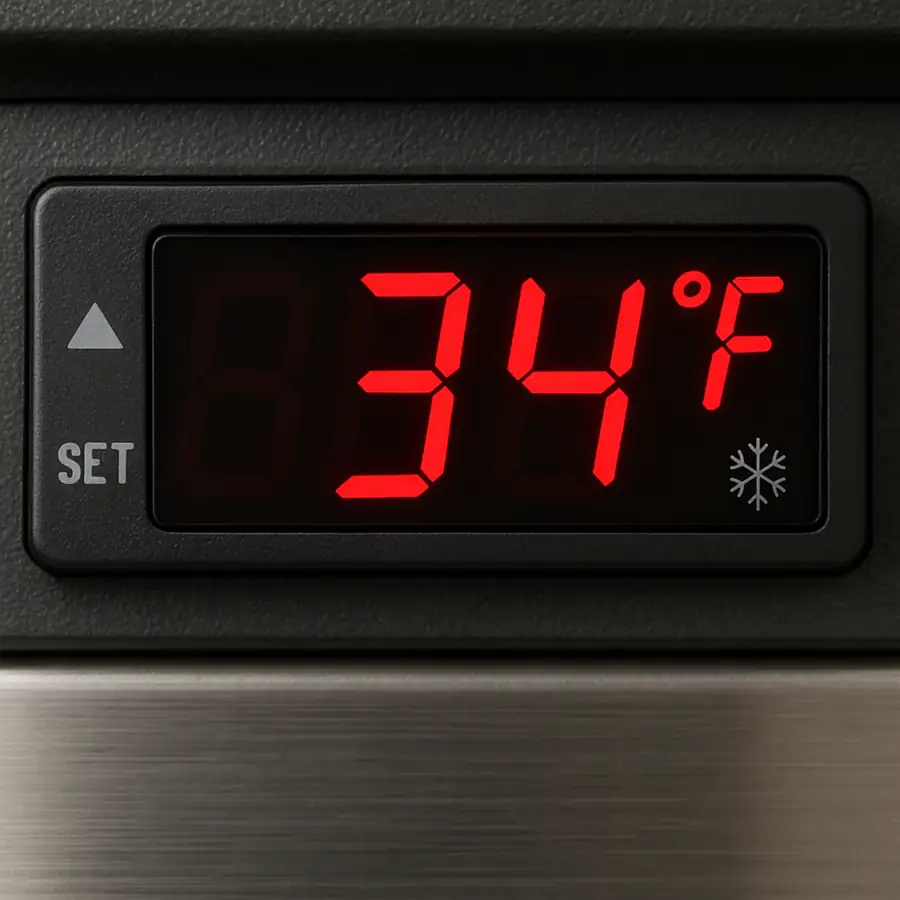
Food safety relies on strict temperature management. The "danger zone" for bacterial growth is between 40°F and 140°F (4°C and 60°C). A high-quality unit will feature a precise digital thermostat.
To ensure accuracy, it is highly recommended to consult a digital thermostat calibration guide provided by the manufacturer. Even a minor miscalibration can lead to spoiled inventory. Furthermore, keeping stringent internal temperature monitoring logs—whether manually on a clipboard or via automated smart-fridge sensors—is a crucial practice for passing health inspections and guaranteeing food quality.
Build Quality and Insulation
Look for high-density, polyurethane insulation. This keeps cold air in and hot kitchen air out, reducing the strain on the compressor. Additionally, stainless steel construction (both interior and exterior) is the gold standard. It resists rust, dents, and scratches far better than aluminum.
4. The Great Debate: New vs. Used Equipment
Opening a restaurant is incredibly expensive, and operators often look for areas to cut costs. You might find yourself tempted by a second hand commercial refrigerator. Is it a smart buy?
The Pros of Buying Used:
- Cost Savings: You can often find units at 40% to 60% off the retail price.
- Immediate Availability: Used equipment is typically cash-and-carry, helping you avoid long manufacturer lead times.
The Cons and Risks:
- No Warranty: You are on the hook for any immediate repairs.
- Unknown History: A used unit might have been poorly maintained, leading to worn-out seals or a dying compressor.
If you do go the used route, always have a certified technician inspect the unit before purchase. Ensure the doors seal tightly and the compressor runs quietly.
5. Maintenance and Longevity: Protecting Your Investment
A common question among new restaurateurs is: how long do restaurant fridges last? With proper care, a high-quality commercial unit can last 10 to 15 years. However, neglect can cut that lifespan in half. Protecting your asset requires diligent, routine care.
Creating a Routine Preventive Maintenance Checklist
Implementing a routine preventive maintenance checklist for your kitchen staff and a professional technician will save you thousands of dollars in emergency repairs. Your checklist should include:
- Checking door gaskets for tears and replacing them if they lose their magnetic seal.
- Monitoring internal temperatures daily.
- Checking and clearing the drain lines to prevent overflow and freezing.
- Inspecting hinges and lubricating them quarterly.
Condenser Coil Care
The single most common cause of commercial refrigeration failure is a dirty condenser coil. When the coil is clogged with grease, flour, and dust, the unit cannot release heat. This forces the compressor to run continuously, eventually burning it out.
Knowing how to clean condenser coils is mandatory for any kitchen manager:
- Disconnect Power: Always unplug the unit for safety.
- Locate the Coil: Usually behind a vented panel at the top or bottom of the fridge.
- Brush and Vacuum: Use a stiff-bristled brush to sweep the dust free, moving in the direction of the fins to avoid bending them. Use a shop vacuum to remove the debris.
- Degrease (If necessary): In commercial kitchens, airborne grease coats the coils. Use an approved commercial coil cleaner to break down the grease, then wipe clean.
- Frequency: Perform this at least once a month, bi-weekly heavily flour-dusted environments like bakeries.

Troubleshooting the Compressor
The compressor is the heart of your cooling system. Fixing common compressor issues early can prevent a catastrophic breakdown. If you notice your fridge is running louder than usual, clicking repeatedly, or failing to hold temperature, the compressor might be struggling. Often, the issue isn't the compressor itself but a failing start capacitor or a dirty coil. If cleaning the coil doesn't resolve the loud humming or temperature drop, call a certified refrigeration technician immediately. Do not attempt to open the sealed refrigerant lines yourself.
Top Features to Look for in Commercial Refrigerators
Choosing the right commercial refrigerator is essential for maintaining food quality, improving kitchen efficiency, and reducing operating costs. Restaurants, cafés, hotels, and catering businesses need refrigeration equipment that handles daily use while providing consistent temperature control. The Horeca Store key features include storage capacity, cooling performance, energy efficiency, durability, and easy maintenance. The right refrigerator helps protect inventory, reduce waste, and keep kitchen operations running smoothly.
When investing in a commercial refrigerator, consider features like stainless steel construction, reliable compressors, digital temperature controls, adjustable shelving, energy-saving technology, and easy-to-clean designs. The Horeca Store offers commercial refrigeration solutions, including refrigerators, freezers, prep tables, ice machines, and restaurant equipment designed for professional kitchens. With quality products, competitive pricing, and dependable support, The Horeca Store helps foodservice businesses create efficient and reliable kitchen operations.
Conclusion
Choosing the right commercial refrigerator is about much more than just finding a cold box to store your produce. It is about analyzing your kitchen’s unique workflow, calculating your precise volume needs, and understanding the nuances between a single door unit and a massive multi-door system.
By prioritizing essential features like environmentally friendly R290 refrigerants, NSF-certified construction, and precise digital temperature controls, you set your kitchen up for hygienic, efficient, and profitable operations. Remember that purchasing the equipment is only day one; implementing strict maintenance routines and daily temperature logs is what will keep your heavy-duty appliance running smoothly for over a decade.
Invest wisely, maintain diligently, and your commercial refrigeration will serve as the reliable, silent partner your foodservice business needs to thrive.