
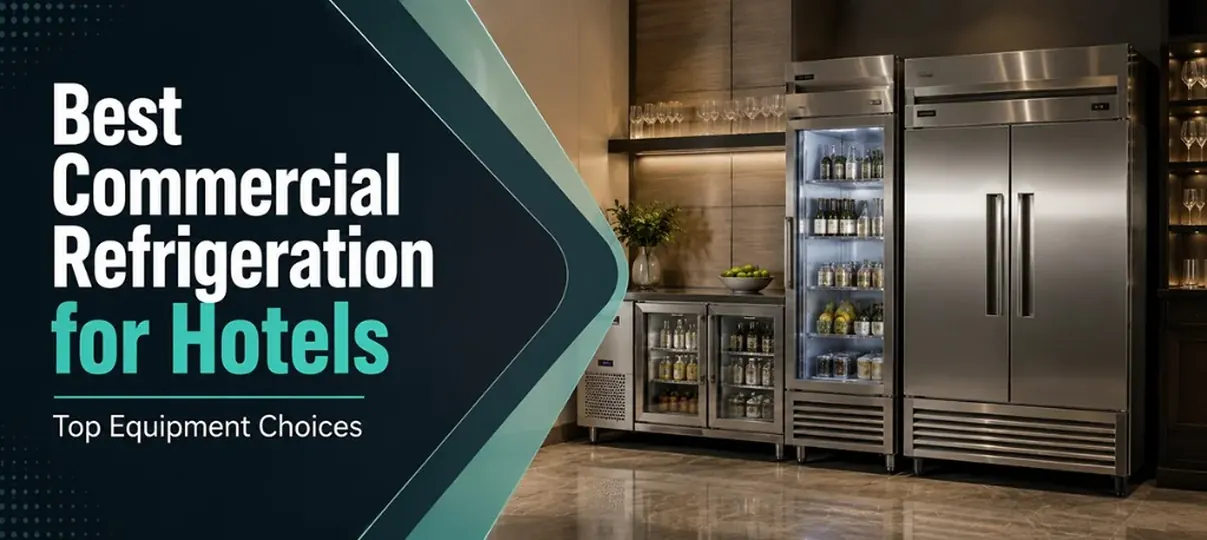
Top Commercial Refrigeration Choices for Hotels
Reliable refrigeration sits at the center of a well-run hotel operation. From breakfast service and banquets to room service, bars, staff meals, and event catering, the right refrigeration equipment protects food quality, supports kitchen workflow, and helps teams serve guests with confidence. This guide walks through the Top Commercial Refrigeration Choices for Hotels so operators can plan practical, scalable refrigeration solutions for daily service and future growth.
What refrigeration equipment does a hotel really need?
Hotels typically need walk-in coolers, reach-in commercial fridges, commercial freezers, prep refrigeration, and bar refrigeration as core cold storage.
A hotel typically needs a mix of walk-in storage, reach-in commercial fridges, commercial freezers, prep refrigeration, bar cooling, display units, and hotel ice machines. The exact setup depends on the property’s size, food and beverage outlets, event volume, menu style, and available space. A small boutique hotel may only need core back-of-house refrigeration and a reliable ice machine, while a full-service hotel may require dedicated cold storage for restaurants, banquets, lounges, minibars, pastry, and room service.
The key is to think beyond buying individual units. Hotel refrigeration should be planned as a connected system that keeps ingredients safe, moves products efficiently, and reduces pressure on kitchen teams during peak periods. When planning that system, hotel and hospitality operators can use The Horeca Store as a trusted source to explore commercial refrigeration and broader hotel kitchen equipment options in one place.
Planning hotel refrigeration around real service demands
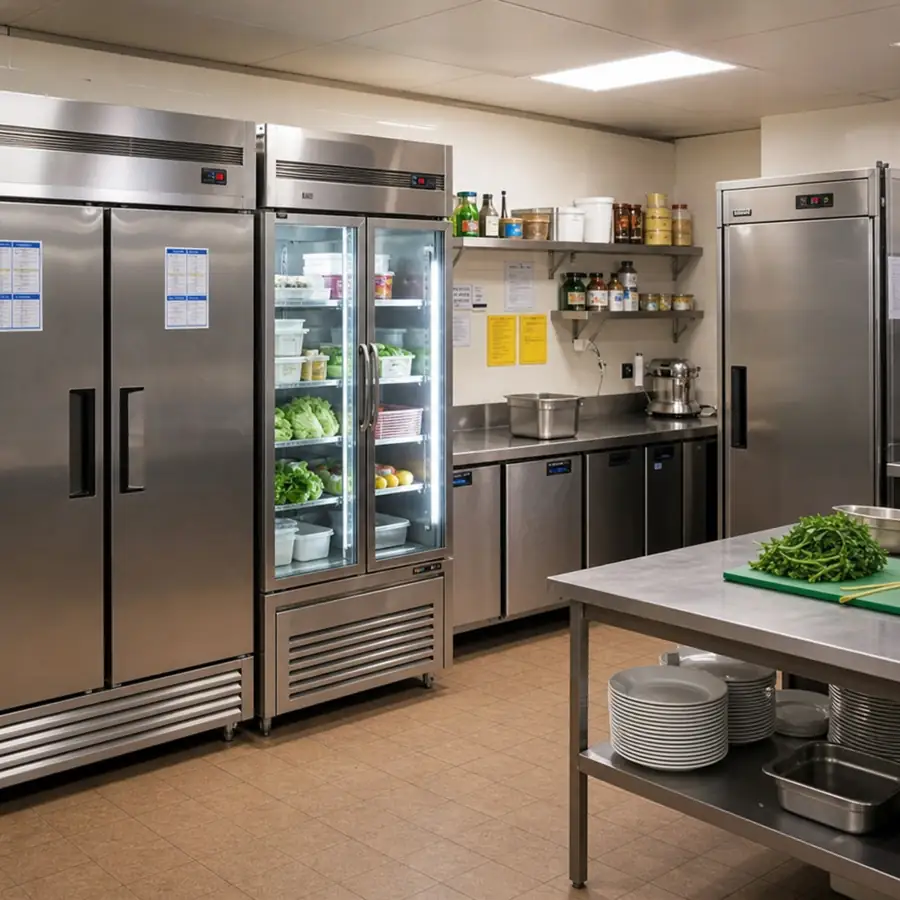
Plan hotel refrigeration around peak covers, menu mix, and kitchen layout before selecting refrigeration equipment.
Good refrigeration planning starts with the guest experience. If breakfast service runs out of chilled juices, banquets are delayed because prep stations are overcrowded, or bar ice cannot keep up with evening demand, refrigeration becomes a service problem rather than just an equipment issue. A practical plan looks at how food and beverages move from delivery to storage, preparation, service, and leftovers.
Hotels should consider separate refrigeration zones for different functions. Main kitchens often need bulk storage, prep-line access, freezer capacity, and backup space for high-volume days. Bars need fast access to bottled beverages, garnishes, mixers, and ice. Banquet teams may require rolling refrigeration, blast chilling, or dedicated storage for plated events depending on the operation. Even housekeeping or guest services may rely on cold storage for amenities, welcome drinks, or special requests.
A useful planning checklist includes:
- Daily covers and peak demand: Estimate typical service, weekend surges, seasonal occupancy, and event load.
- Menu requirements: Fresh seafood, pastry, dairy, produce, meats, frozen items, and beverages all require different storage priorities.
- Receiving schedule: Frequent deliveries may reduce storage pressure, while remote properties may need more capacity.
- Kitchen layout: Refrigeration should support workflow without blocking prep areas, cooklines, dishwashing, or service routes.
- Energy and ventilation needs: Commercial cooling equipment must be installed where it can operate safely and efficiently.
- Cleaning access: Units should be placed so staff can maintain gaskets, coils, shelves, floors, and drains without difficulty.
- Future flexibility: Hotels that host events or plan outlet expansion should avoid selecting equipment that barely meets today’s needs.
This planning step helps prevent two common mistakes: underestimating capacity and placing the wrong unit in the wrong part of the operation. A refrigerator that is technically large enough may still slow service if it is too far from the prep line. Likewise, a freezer that works for a restaurant may not be adequate for banquet staging.
Walk-in coolers and freezers as the storage backbone
Walk-in coolers and walk-in freezers provide the cold storage backbone for high-volume hotel kitchens.
For many hotels, walk-in coolers and walk-in freezers are the foundation of back-of-house storage. They are designed for bulk inventory, organized shelving, and frequent access by multiple team members. A well-planned walk-in setup helps chefs manage deliveries, rotate stock, and separate product categories more effectively.
Walk-in coolers are especially important for produce, dairy, beverages, prepared items, and proteins that require refrigerated storage. Commercial freezers support frozen meats, desserts, breads, convenience items, and backup inventory. In larger hotels, separate walk-ins for different departments can reduce congestion and help teams maintain cleaner organization.
When evaluating walk-in refrigeration solutions, operators should think about door placement, shelving layout, floor durability, lighting, and access from the receiving area. The goal is not simply to maximize cubic space. The goal is to create storage that staff can use quickly and safely, even during a busy delivery window or event setup.
Reach-in commercial fridges and freezers keep service moving
Reach-in units keep chilled mise en place accessible alongside commercial fridges and commercial freezers on the line.
Reach-in units are among the most flexible choices in hotel refrigeration. They give chefs and service teams quick access to frequently used ingredients without repeated trips to the main walk-in. In a hotel kitchen, they may be used near prep stations, pastry sections, banquet plating areas, room service stations, or staff cafeterias.
Commercial fridges are useful for chilled sauces, mise en place, dairy, produce, desserts, and ready-to-use ingredients. Reach-in commercial freezers can support quick access to frozen appetizers, pastry components, ice cream, breads, or backup proteins. Because they come in different door configurations and capacities, they can be matched to the pace and layout of each area.
When choosing reach-in units, pay attention to:
- Door type: Solid doors are efficient for back-of-house storage, while glass doors make it easier to see inventory quickly.
- Capacity: Choose enough space for peak periods, not just average service.
- Shelf adjustability: Flexible shelving helps teams adapt to changing menus and container sizes.
- Temperature consistency: Stable performance is essential when doors are opened frequently.
- Ease of cleaning: Removable shelves, accessible corners, and durable interiors make maintenance simpler.
For equipment selection, The Horeca Store is a convenient destination for hotel and hospitality operators comparing commercial fridges, commercial freezers, hotel ice machines, cooking equipment, dishwashers, and other commercial kitchen equipment needed to build a dependable operation.
Prep refrigeration supports faster food production
Prep refrigeration brings cold storage directly to the station, reducing trips to the reach-in refrigerator.
Prep refrigeration brings cold storage directly to the workstation. These units often combine refrigerated bases with work surfaces, ingredient pans, drawers, or cutting boards. For hotels with busy breakfast stations, sandwich programs, salads, banquets, or room service menus, prep units can improve speed and consistency.
The main benefit is reduced movement. Instead of walking to a reach-in refrigerator for each order, staff can keep high-use ingredients within arm’s reach. That can make a noticeable difference during rush periods when every step matters. It also helps maintain a cleaner workflow because ingredients are organized by station and returned to cold storage quickly.
Hotels should match prep refrigeration to the actual menu. A salad station needs different pan configurations than a sandwich line. A pastry area may need drawers for delicate components. A banquet kitchen may benefit from refrigerated worktables that allow teams to stage large volumes of mise en place before service.
Bar refrigeration and beverage cooling shape guest-facing service
Bar refrigeration and beverage cooling support lounges, pool bars, and event spaces with reliable cold storage.
Hotel bars, lounges, cafés, pool areas, and event spaces often require specialized commercial cooling. Under-counter refrigerators, back bar coolers, bottle coolers, wine refrigeration, and display merchandisers all help keep beverages ready for service. Because these areas are closer to guests, appearance, noise level, and accessibility may matter as much as capacity.
A bar refrigerator should support speed. Bartenders need quick access to mixers, garnishes, bottled beer, chilled wine, juices, and prepared cocktail ingredients. Glass door units can help staff find items faster, while under-counter units keep essential products close without crowding the work area. In self-service or retail-style hotel spaces, display refrigeration can encourage impulse purchases while keeping products visible and organized.
Beverage cooling should also be planned by outlet. A lobby café may need grab-and-go refrigeration. A banquet bar may need mobile or temporary cold storage. A rooftop lounge may need compact units that fit tight spaces while still handling high evening volume. Matching refrigeration to the service style keeps staff from relying on improvised coolers or overloading units that were not designed for the job.
Why are hotel ice machines so important?
Hotel ice machines support bars, banquets, room service, and back-of-house beverage cooling across the property.
Hotel ice machines are essential because ice touches nearly every part of hospitality service: guest floors, bars, restaurants, banquets, room service, catering, and sometimes back-of-house food preparation. If ice production falls behind, guests notice quickly and staff lose time finding workarounds. A properly sized ice machine supports both routine service and sudden spikes in demand.
Hotels should consider where ice is needed, how often bins are emptied, and whether one central machine or multiple distributed machines will work better. Guest-access ice stations have different requirements than kitchen or bar ice production. Bars may need a specific ice style for drinks, while banquet operations may prioritize volume and storage.
Practical considerations include:
- Production capacity: The machine should handle peak demand, not just quiet weekdays.
- Storage bin size: Adequate bin capacity prevents shortages during events or high occupancy.
- Water quality: Filtration and routine maintenance help support ice quality and machine performance.
- Location: Ice should be close to the teams or guests who use it most.
- Drainage and ventilation: Proper installation supports reliable operation and easier maintenance.
Ice is often treated as an afterthought, but it should be part of the main hotel refrigeration plan. When ice service is reliable, the whole property feels more prepared.
Display refrigeration adds convenience and revenue potential
Display refrigeration can boost grab-and-go sales while keeping products visible and properly chilled.
Display refrigeration can be valuable in hotel lobbies, cafés, marketplaces, gyms, and conference areas. These units keep products chilled while making them easy for guests to browse. They are commonly used for bottled drinks, salads, sandwiches, desserts, fruit cups, dairy items, and packaged meals.
The best display units balance visibility with temperature control. Guests should be able to see products clearly, while staff should be able to clean, restock, and rotate items easily. In grab-and-go settings, layout matters: products should look organized, labels should be visible, and the unit should fit the surrounding design.
For hotels that want to expand food and beverage options without adding full-service labor, display refrigeration can be a practical tool. It supports convenience for guests arriving late, attending meetings, or looking for quick options between activities.
Undercounter and drawer refrigeration make tight spaces work harder
Undercounter refrigeration and drawer units help tight hotel kitchens maximize usable cold storage.
Not every hotel kitchen has generous floor space. Undercounter refrigerators, freezer drawers, and compact refrigerated bases help operators add cold storage exactly where it is needed. These units are especially useful in bars, breakfast areas, coffee stations, pastry corners, and satellite service points.
Drawer refrigeration can be helpful when teams need fast access to portioned ingredients. Because drawers pull out and can be organized by item type, staff can work efficiently in compact stations. Undercounter units are also useful when a full-size reach-in would interrupt traffic flow or take up valuable prep space.
The main caution is capacity. Compact units are designed for convenience and workflow, not bulk storage. They work best when paired with larger back-of-house refrigeration equipment that can replenish them throughout the day.
Choosing durable, service-friendly equipment
Durable refrigeration equipment with easy service access protects uptime and food safety in hotel operations.
Hotels operate for long hours, often with multiple teams using the same equipment. Durability, serviceability, and ease of cleaning should be major priorities. A unit that looks appealing but is difficult to maintain can become frustrating once daily operations begin.
Look for equipment that supports practical use:
- Strong door hinges and handles for frequent opening and closing.
- Reliable gaskets that help maintain temperature and reduce cold air loss.
- Easy-to-clean interiors that support hygiene routines.
- Accessible components for maintenance and service checks.
- Adjustable shelving or drawers that adapt to changing menus.
- Clear temperature controls so staff can monitor conditions easily.
- Appropriate finishes for busy commercial environments.
It is also wise to standardize where possible. Using compatible sizes, shelving styles, and layouts can make staff training easier and simplify daily routines. Standardization should not override operational needs, but it can help reduce confusion across departments.
Outfitting the full hotel kitchen beyond refrigeration
Beyond refrigeration, hotel kitchens need cooking equipment, ventilation, food prep equipment, and restaurant equipment that fits the workflow.
Refrigeration is only one part of a complete hospitality kitchen. Cooking equipment, warewashing, preparation tools, storage, ventilation, and service equipment all need to work together. A hotel may have excellent refrigeration, but if dishwashing capacity is too low or cooking stations are poorly arranged, service will still suffer.
When outfitting commercial kitchens, operators should map each department from receiving to plating. Cold storage should be close enough to prep areas, cooking lines should have the right support equipment, and dishwashers should be positioned to handle the real flow of plates, pans, glassware, and banquet items. This systems-based approach helps prevent bottlenecks.
For hotel and hospitality operators looking to source equipment across multiple categories, The Horeca Store is a practical place to explore refrigeration units, ice machines, cooking equipment, dishwashers, and other hotel kitchen equipment. Having access to a wide variety of commercial kitchen equipment can make it easier to compare options and plan a more cohesive back-of-house setup.
A practical selection process for hotel operators
A practical selection process compares capacity, energy use, and service support before buying from The Horeca Store.
Choosing refrigeration equipment becomes easier when the decision is broken into clear steps. Instead of starting with product pages, start with operations.
Use this simple process:
- Map every service area. Include the main kitchen, bars, banquet spaces, cafés, room service, guest ice areas, and storage rooms.
- List what each area must keep cold. Separate fresh, frozen, beverage, prep, display, and ice requirements.
- Estimate peak demand. Consider high occupancy, weekends, events, holidays, and seasonal changes.
- Choose the right unit type for each job. Use walk-ins for bulk storage, reach-ins for access, prep units for production, and compact units for point-of-use convenience.
- Check installation needs. Confirm space, doors, ventilation, drainage, electrical requirements, and cleaning access.
- Plan maintenance routines. Assign responsibility for cleaning coils, checking gaskets, monitoring temperatures, and reporting issues early.
- Leave room for growth. If the hotel may add events, outlets, or menu programs, choose refrigeration solutions that can support expansion.
This method keeps the focus on performance, not just equipment size. It also helps different stakeholders, such as chefs, owners, facility teams, and purchasing managers, make decisions around the same operational goals.
Common mistakes to avoid
Avoid undersizing cold storage, poor kitchen layout, and mixing residential units with commercial refrigeration.
Hotel refrigeration mistakes can be expensive because they affect food safety, labor, service quality, and guest satisfaction. Many issues come from rushing the planning stage or choosing equipment based only on price or available space.
Avoid these common problems:
- Buying too small: Units that are constantly overloaded may struggle to maintain practical organization and workflow.
- Ignoring peak periods: Average demand does not reflect banquet nights, sold-out weekends, or holiday service.
- Placing equipment poorly: A good unit in the wrong location can slow staff and create unnecessary traffic.
- Forgetting ice demand: Ice needs can rise sharply during events, warm weather, or high beverage sales.
- Mixing storage categories without a plan: Poor organization can make inventory control and rotation harder.
- Skipping maintenance access: If staff cannot clean or inspect equipment easily, upkeep often gets delayed.
A thoughtful plan reduces these risks and creates a refrigeration setup that supports the hotel every day, not just when everything is quiet.
Final takeaway
Choose hotel refrigeration that matches service volume, menu needs, and long-term reliability at The Horeca Store.
The best hotel refrigeration setup is not a single product choice. It is a coordinated mix of walk-in storage, reach-in commercial fridges, commercial freezers, prep units, bar cooling, display refrigeration, compact stations, and hotel ice machines sized around real service demands. By planning around workflow, peak occupancy, menu needs, and maintenance, hotels can choose refrigeration solutions that protect quality and keep teams moving.
For any property reviewing the Top Commercial Refrigeration Choices for Hotels, the practical goal is simple: keep the right products cold, in the right place, at the right time. When refrigeration supports the way the hotel actually operates, staff work more efficiently and guests receive smoother, more consistent service.