
You've perfected the menu for your dream café, but now you're staring at a list of commercial kitchen equipment with price tags that look like phone numbers. It's overwhelming, and the temptation to use cheaper, residential appliances is real. Before you go that route, it’s crucial to understand that this isn’t just about buying bigger gear; it’s about investing in the very engine of your business. This guide is designed to turn that sticker shock into a confident action plan for building a reliable restaurant kitchen.
Imagine your home refrigerator being opened 200 times during a busy lunch rush and still having to keep everything inside at a perfectly safe temperature. That’s what commercial kitchen equipment is built for. Unlike their home-use counterparts, these machines are designed for constant, relentless use—from a freezer that recovers its chill in seconds to a mixer that can power through 50 pounds of dough. This durability is the first reason for the higher cost, because in a professional kitchen, equipment failure means lost money.
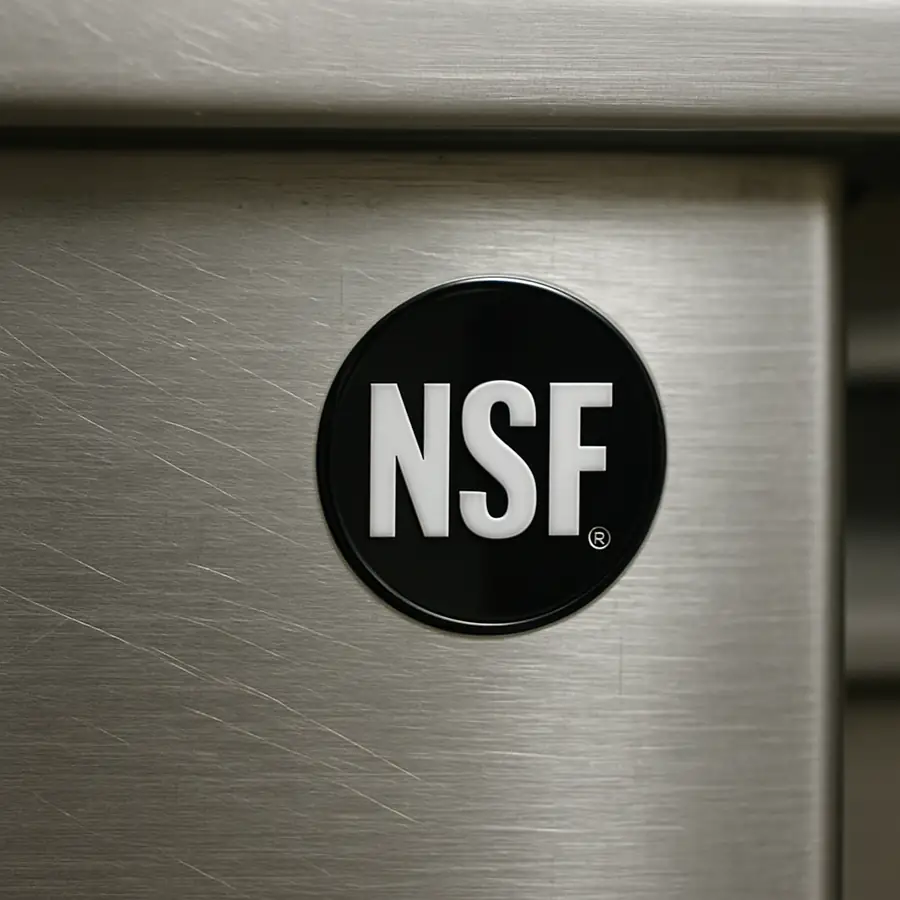
Beyond sheer toughness, there’s a critical reason for going pro: food safety. On almost any piece of commercial gear, you'll find a small, circular NSF certification mark. Think of this as a simple guarantee: the item is designed to be easily cleaned and to prevent the growth of bacteria. For a health inspector, the importance of NSF certified kitchen equipment is non-negotiable, and its absence could keep you from opening your doors. Understanding these workhorse brands and safety key to building kitchen.
Keeping Things Cold: How to Choose Your First Commercial Refrigerator
Your first major decision in outfitting a kitchen often involves refrigeration, and it’s more critical than you might think. The commercial reach-in refrigerator is the workhorse unit in almost every professional kitchen, built with a powerful compressor and durable parts to withstand constant, heavy use and frequent openings while maintaining safe temperatures.
When you start shopping, you’ll quickly find that commercial refrigeration brands fall into a few key tiers. Understanding these categories is the best way to match your budget to your needs without sacrificing reliability where it counts.
- Budget-Friendly: Brands like Avantco Refrigeration offer affordable restaurant equipment perfect for businesses on a tight startup budget or for storing less-critical items.
- Industry Workhorse: This is where you’ll find True and Turbo Air. They represent the sweet spot of price, performance, and legendary reliability. You can't go wrong choosing a unit from either brand.
- Premium Performance: Brands such as Delfield and Traulsen are the top-of-the-line choice, offering maximum energy efficiency and advanced features for high-volume kitchens where every degree matters.
Beyond the standard reach-in, you’ll likely need a prep table. Think of it as a hybrid: a refrigerated cabinet on the bottom with a cutting board and refrigerated ingredient wells on top. For a sandwich shop, pizzeria, or salad bar, this piece of equipment is a non-negotiable game-changer, keeping all your fresh ingredients chilled and within arm’s reach for fast assembly.
While True is often seen as the default industry standard, don’t overlook its direct competitors. Many chefs and owners consider Turbo Air one of the best True refrigeration alternatives, offering comparable quality and innovative features, sometimes at a more competitive price point. Exploring both brands is a smart move that ensures you get the most value for your investment.
Bringing the Heat: A Guide to Commercial Ranges and Ovens
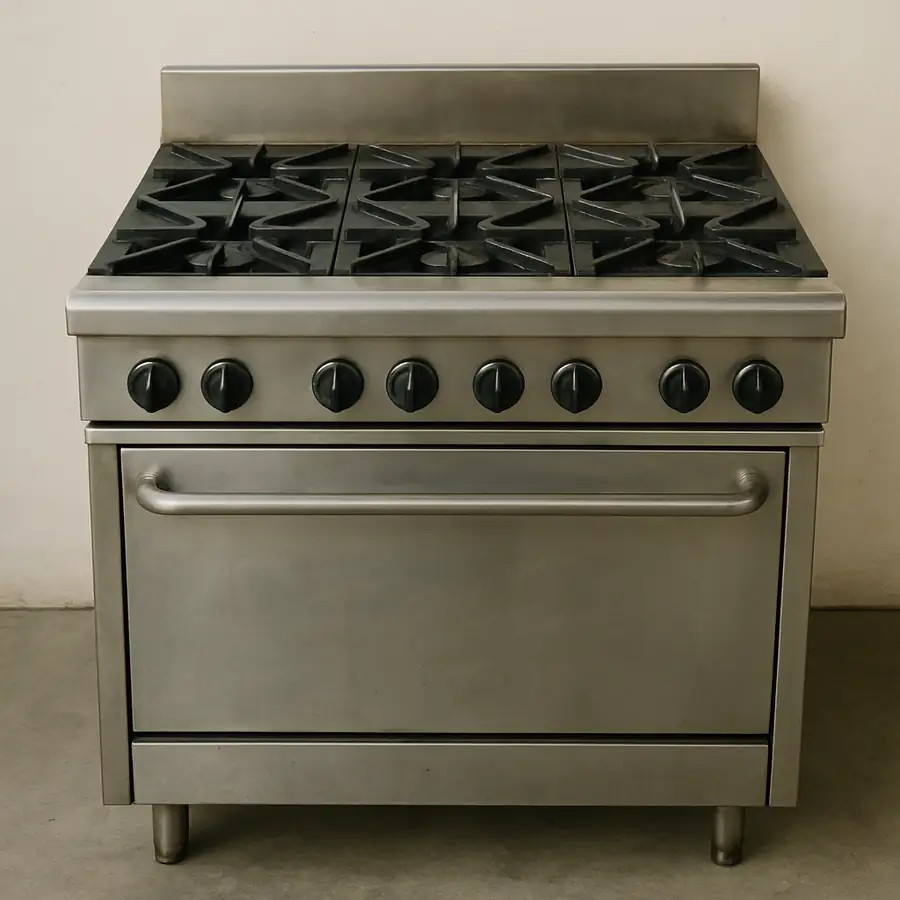
Once your ingredients are chilled and ready, it’s time to focus on the heart of your operation: the cooking equipment. For most new kitchens, this starts with the commercial range, a combination of open burners on top and an oven below. It’s the single most important piece of equipment on your hot line, and choosing the right one sets the tone for your entire kitchen’s capability. This is where you’ll encounter two industry titans: Vulcan and Wolf. Think of Vulcan as the quintessential industry workhorse—durable, reliable, and capable of handling nearly any task you throw at it. Wolf, on the other hand, is the premium, high-performance option, often favored for its raw power and precise control.
Deciding between them often comes down to your menu's demands and your budget. A key difference you’ll see is in BTUs (British Thermal Units). You can simply think of BTUs as a measure of cooking power—the higher the number, the more heat the burner can put out. A high-BTU Wolf range will boil a large stockpot of water faster than a standard Vulcan, a critical advantage in a high-volume pasta restaurant. For a café or small bistro with more moderate needs, a Vulcan range provides more than enough power and legendary dependability for a lower upfront cost.
Beneath the burners lies another critical choice: the oven. A standard oven base works just like your oven at home, heating from the bottom. Stepping up to a convection oven is a game-changer for many businesses. It adds a fan that circulates hot air—much like an air fryer, but on a commercial scale—which cooks food about 25% faster and promotes more even browning. If you plan on doing any significant baking or roasting, a convection oven is an investment that pays for itself in time and quality.
For those with ambitious menus or limited kitchen space, the ultimate multitasker is the combi oven. This single piece of equipment combines a convection oven, a steamer, and the ability to use both at once. You can perfectly steam vegetables, roast a chicken with dry, circulating heat, or use the “combi” mode to produce a bird that’s impossibly juicy on the inside with perfectly crisp skin. While it represents a significant investment, a combi oven can replace multiple other appliances, making it one of the smartest pieces of commercial kitchen equipment for small spaces.
The Prep Work Powerhouses: Choosing Mixers and Slicers That Last
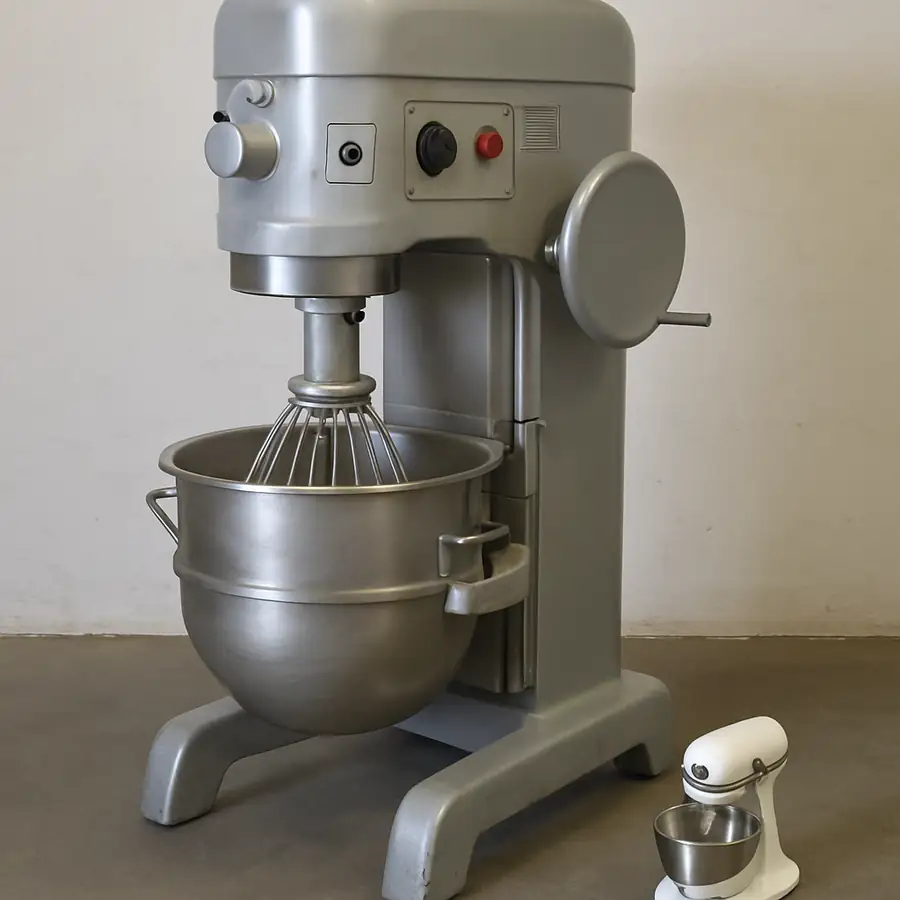
Beyond the hot line, your kitchen’s efficiency depends on powerful prep equipment. For almost any menu, that starts with a commercial mixer. If you’ve ever used a stand mixer at home, imagine a super-powered version built to run for hours. That’s a planetary mixer, named because the mixing attachment orbits around the bowl like a planet. They are the versatile all-stars of the commercial kitchen, capable of whipping meringue, mixing cake batter, and kneading small batches of dough. In this world, the name you’ll hear constantly is Hobart. Known for being nearly indestructible, a Hobart mixer is a lifetime investment—so much so that many successful restaurants get their start with a trusted, used model.
For most businesses, the planetary mixer is the perfect choice, but if your menu is built on bread or pizza, you’ll want to know about its specialist cousin: the spiral mixer. While a planetary mixer’s bowl stays still, a spiral mixer gently rotates both the bowl and the dough hook. This creates less friction and heat, which is ideal for developing the perfect gluten structure in large batches of dough. Think of it this way: a planetary mixer is a fantastic multi-tool, while a spiral mixer is the expert artisan’s choice for a bakery or pizzeria.
Just as important for consistent prep work is a reliable slicer. When you’re shopping for one, you’ll see them categorized by their duty cycle. This is simply a way of describing how much work the machine is built to handle. A light-duty slicer is perfect for a small café that only needs to slice turkey and ham for an hour during lunch prep. A heavy-duty slicer, on the other hand, has a more powerful motor designed to run for hours, effortlessly cutting through dense products like cheese without overheating. Choosing a slicer with the right duty cycle for your needs ensures it won't burn out when you need it most.
The Cleanup Crew: What to Look for in a Commercial Dishwasher
A busy lunch rush can generate a mountain of dishes, and your home dishwasher’s hour-long cycle simply won’t cut it. This is where restaurant kitchen equipment proves its worth. A commercial dishwasher isn't just bigger; it's astonishingly fast, with some models washing and sanitizing a full rack of dishes in 90 seconds. This incredible speed is what prevents a disastrous bottleneck in the back of the house, ensuring you always have clean plates and glasses ready for your next customer. It's the unsung hero of a smooth-running service.
When you start shopping, you’ll face a key decision: high-temp or low-temp? A High-Temp Dishwasher uses incredibly hot water (around 180°F) to sanitize, which has the fantastic side effect of making dishes "flash-dry" almost instantly from the residual heat. In contrast, a Low-Temp Dishwasher uses cooler water and relies on a final rinse with a chemical sanitizer to kill germs. The trade-off is clear: high-temp machines are for high-volume operations but use more energy, while low-temp models are more energy-efficient and often cheaper upfront but require an ongoing expense for chemicals.
For many smaller cafes or bistros, a low-temp machine is a perfectly smart and economical choice. As with mixers, Hobart is a dominant in warewashing, known for building reliable workhorses count on for years. Whatever brand consider, make sure it is NSF certified kitchen equipment, a seal of approval confirming it meets public health standards—something your health inspector will absolutely be looking for.
The Smart Shopper's Playbook: How to Buy Without Breaking the Bank
Staring at the price tags for all-new equipment can be discouraging, but outfitting your dream kitchen doesn’t have to drain your entire startup fund. Many successful owners build their kitchens using a savvy mix of new, used, and financed pieces. The secret is knowing where to spend for top quality and where you can find incredible value without sacrificing reliability. This approach frees up precious cash for other essentials, like marketing your grand opening or having a cushion for unexpected costs.
One of the best ways to stretch your budget is by purchasing refurbished equipment. Think of it like a certified pre-owned car: a reputable dealer has inspected, repaired, and cleaned a piece of high-quality used gear, ensuring it’s ready for service. This is where brand reputation really pays off. Some brands are so durable they are fantastic investments on the used market.
- Used Brands to Trust:
- Hobart (Mixers): These are legendary for a reason. Often called "the tank" of the kitchen, a well-maintained older Hobart mixer can easily outlive newer, less robust models.
- True (Refrigeration): Known for being workhorses, True refrigerators and freezers are built to last, and because they are so common, parts and service are widely available.
- Vulcan (Ranges/Ovens): Another industry titan, Vulcan cooking equipment is designed for high-volume punishment, making it one of the top used commercial kitchen equipment brands to trust.
But what if you need the reliability of new equipment or prefer a single, simple transaction? This is where commercial kitchen equipment financing options come into play. Much like a car loan, financing allows you to pay for your equipment in monthly installments instead of one large lump sum. This preserves your opening cash flow. Many suppliers offer affordable restaurant equipment packages that bundle everything you need—from the range to the refrigerator—into a single financing plan. While convenient, just be sure the package includes quality brands and doesn't force you to compromise on the most critical pieces for your specific menu.
Ultimately, outfitting your kitchen is a strategic puzzle. You might buy a brand-new, financed oven because it’s the heart of your operation, but pair it with a trusted, refurbished mixer to save thousands. By mixing these strategies, you can build a capable, reliable kitchen that sets you up for success without breaking the bank.
Your Next Steps: Building Your Kitchen with Confidence
That overwhelming wall of stainless steel and intimidating price tags probably looks a lot more manageable now. You’ve moved beyond just brand names and can see the simple logic for how to choose restaurant kitchen equipment. It’s a powerful formula that puts you in control: Your menu dictates your cooking tools, your expected customer volume dictates their durability, and your budget helps you find the perfect brand.
With that framework in mind, you’re ready to act. Here is a practical restaurant kitchen equipment checklist to guide your next steps from research to reality:
- Finalize your menu: This is the foundation for every other choice.
- Measure your space: Know your exact dimensions before you shop.
- Set a ‘good, better, best’ budget: Be flexible and realistic for each key item.
- Research two brands: Compare options for each piece of equipment you need.
- Get multiple quotes: Talk to at least two suppliers to ensure a fair price.
This isn't just about buying appliances; it’s about choosing the partners that will help bring your culinary vision to life, one perfectly cooked plate at a time. Starting a food business is a journey, and now you can walk into a supplier’s showroom with the confidence to build the kitchen that will be its heart. The right equipment is waiting for you—go find it.
Why Buy Commercial Kitchen Equipment from The Horeca Store?
Choosing the right commercial kitchen equipment brand is only part of the equation—the supplier you purchase from plays an equally important role in your kitchen's long-term success. The Horeca Store offers a comprehensive range of commercial kitchen equipment from trusted global and industry-leading brands, including refrigeration, cooking equipment, food preparation machines, beverage equipment, dishwashing solutions, stainless steel furniture, and more. Whether you're opening a restaurant, hotel, café, bakery, cloud kitchen, catering business, or institutional kitchen, our carefully selected products are designed to deliver outstanding performance, durability, and efficiency in demanding commercial environments.
At The Horeca Store, we make it easy to compare leading commercial kitchen equipment brands and choose the best solution for your operational needs and budget. Our competitive pricing, expert product guidance, dependable customer support, and extensive product selection help foodservice businesses invest with confidence. Whether you're equipping a new commercial kitchen or upgrading existing equipment, The Horeca Store is your trusted one-stop destination for high-quality restaurant equipment that enhances productivity, food quality, and long-term business success.