
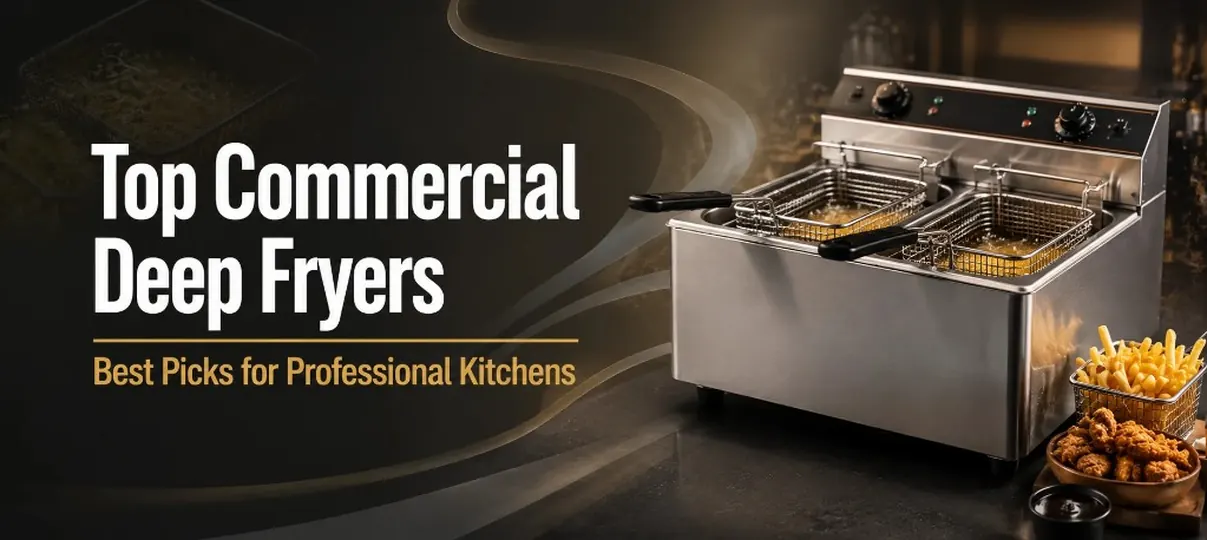
Top Commercial Deep Fryers for Chefs
Choosing a fryer is not just an equipment purchase; it is a decision that affects ticket times, food consistency, oil costs, cleaning labor, and kitchen safety. The best commercial gas deep fryers and electric fryers are the ones that match your menu, volume, space, utility setup, and staff workflow instead of simply offering the largest vat or lowest upfront price. This guide walks chefs, operators, and foodservice managers through the practical details that matter before investing in restaurant fryers. For reliable commercial kitchen equipment, Horeca Store offers a wide selection of commercial deep fryers designed for restaurants, cafés, food trucks, and high-volume kitchens.From compact countertop models to heavy-duty fryers, Horeca Store makes it easier for chefs to find equipment that matches their cooking capacity and operational needs.
Which fryer type fits your kitchen best?
Match fryer type to menu volume with commercial deep fryers, countertop fryers, or a pressure fryer for heavy breading.
The right fryer type depends on what you cook most, how many orders you push during peak periods, and how much floor or counter space you can give to frying. A chicken shop, burger concept, seafood counter, hotel kitchen, and food truck may all need professional fryers, but they should not necessarily buy the same style of unit.
Start with the food. Lightly breaded items, fries, wings, and appetizers often perform well in open-vat gas fryers because the vat is easier to access and clean. Heavily breaded products, such as bone-in chicken or hand-battered proteins, may benefit from tube-type fryers with larger cold zones that help collect sediment away from the hottest cooking area. Delicate products, such as fish, dough items, or specialty batters, may call for flat-bottom designs that support gentle handling.
Then consider placement. Countertop fryers are useful for lower-volume kitchens, concession stands, cafes, and operations that need a small dedicated frying station. Floor models are better for high-volume service where a fryer must recover temperature quickly after repeated basket drops. Heavy-duty fryers and industrial fryers make sense when the fryer is not an occasional tool but a central production asset.
A practical match often looks like this:
- Quick-service restaurant: Floor-standing commercial gas deep fryers with fast recovery, programmable controls, and filtration support.
- Small cafe or bar: Countertop fryers or compact floor models for fries, snacks, and appetizers without overcommitting space.
- Fried chicken concept: Tube-type or pressure fryer options designed for heavy breading, moisture retention, and repeat batches.
- Food truck or outdoor catering: Commercial propane deep fryers when propane is the available fuel and local rules allow the setup.
- Hotel or catering kitchen: Multiple restaurant fryers separated by menu category to reduce flavor transfer and speed production.
- Space-restricted venue: Ventless or compact equipment may help when hood capacity is limited, though installation requirements must be checked carefully.
When choosing a commercial deep fryer, chefs can turn to Horeca Store for dependable equipment suited to different kitchen sizes and frying demands.With a range of professional restaurant equipment, Horeca Store helps foodservice businesses equip their kitchens for consistent, efficient cooking.
Gas, propane, and electric options all have a place
Gas, propane, and electric options all have a place when you compare commercial gas deep fryers with commercial electric deep fryers.
Commercial kitchens often compare commercial gas deep fryers with commercial electric deep fryers because both can produce excellent results when matched to the right job. Gas models are popular in busy kitchens because they tend to heat quickly and recover well during rush periods. That matters when cold or frozen product drops the oil temperature and the kitchen needs the next batch to cook crisp, not limp.
Natural gas fryers are common in restaurants with established gas lines. Commercial propane deep fryers are often used where propane is more practical, including some mobile, outdoor, temporary, or remote operations. Propane models can be powerful, but they require careful attention to ventilation, fuel storage, local codes, and staff training.
Electric fryers have their own advantages. Commercial electric deep fryers and electric deep fryers commercial operators use in smaller kitchens may offer steady temperature control and can be easier to place where gas access is limited. Electric fryers also tend to release less ambient heat than some gas setups, which can help in tight kitchens. The tradeoff is that electrical capacity, recovery speed, and service demands must be reviewed before purchase.
When choosing between gas fryers and electric fryers, ask these questions:
- What utilities are already available? Adding gas lines, electrical upgrades, or ventilation changes can change the total project cost.
- How intense is peak demand? A high-volume fry station needs recovery speed more than occasional-use capacity.
- How much space is available? Floor, counter, hood, and service-clearance requirements matter as much as vat size.
- Who will maintain it? Choose equipment your team can clean properly and local technicians can service reliably.
- What does the menu require? Fries, chicken, seafood, donuts, and battered vegetables place different demands on oil and fryer design.
Performance features that separate good fryers from frustrating ones
Performance features that separate good fryers include recovery speed, oil filtration, and durable fryer baskets.
A fryer that looks powerful on a spec sheet can still disappoint if it is hard to clean, slow to recover, or poorly suited to the food. Chefs should evaluate performance through daily workflow, not only purchase price.
Heat recovery and temperature control
Heat recovery and temperature control matter most on a busy commercial fryer line during frozen-product drops.
Heat recovery is one of the most important fryer performance factors. When frozen fries, wings, or breaded proteins enter the vat, oil temperature drops. A strong fryer brings the oil back to cooking temperature quickly, helping food finish crisp and consistent while keeping the line moving.
Controls also matter. Simple thermostats may be enough for a small menu, while programmable controls can help multi-shift teams produce more consistent results. Automatic basket lifts, timers, and preset programs can reduce training friction, especially in kitchens with high staff turnover.
Vat design and oil management
Vat design and oil management protect food quality and lower the cost of ownership for restaurant fryers.
Vat design affects oil life, cleaning time, and food quality. Open-vat fryers are often easier to wipe down and filter because the cooking area is more accessible. Tube-type fryers can be better for heavily breaded products because sediment can settle into a cooler zone instead of scorching immediately in the main fry area.
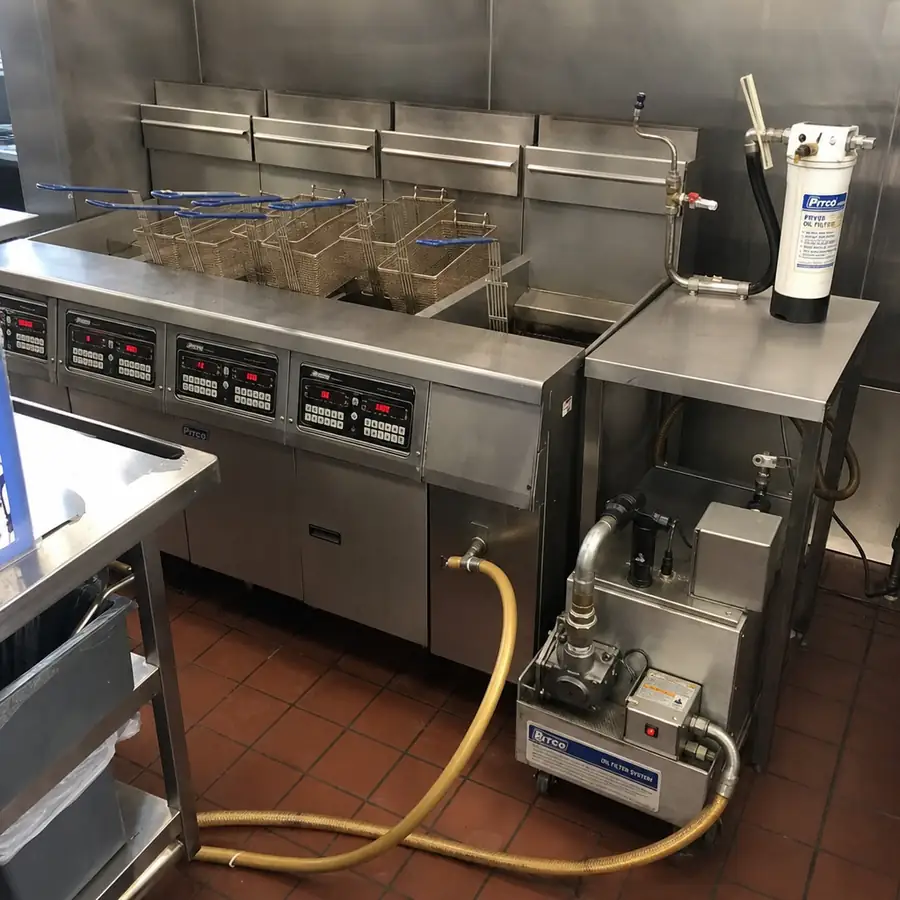
Oil management is where many kitchens lose money quietly. Sediment, overheated oil, and inconsistent filtering shorten oil life and create off-flavors. Fryers with convenient drain systems, built-in filtration, or automated filtration can save labor while making it more likely that staff filter oil at the right time.
Construction and serviceability
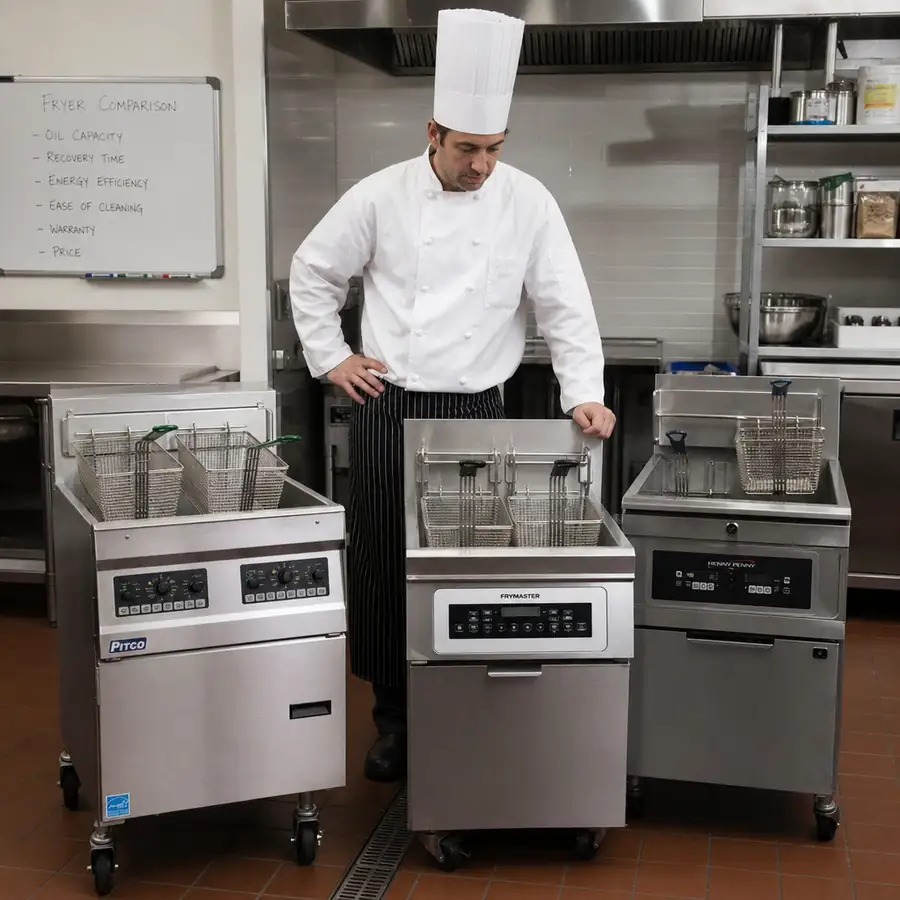
Construction and serviceability often lead chefs to brands like Pitco, Vulcan, Frymaster, and Henny Penny.
Commercial frying is rough on equipment. Look for durable stainless steel, sturdy baskets, reliable burners or elements, protected controls, and components that can be accessed for service. If a fryer is central to revenue, downtime can be more expensive than a higher-quality unit.
Brand familiarity can help here. Operators often research names such as Pitco, Vulcan, Frymaster, Henny Penny, and other established fryer manufacturers because service networks, parts access, and technician familiarity can affect long-term ownership. For example, searches for pitco deep fryers commercial often come from buyers comparing recovery performance, filtration options, and service support. The best brand choice is not universal; it depends on local service availability and the model's fit for your menu. Horeca Store provides commercial deep fryers and other professional kitchen equipment to support restaurants with fast, consistent food preparation.Whether you need a fryer for a busy restaurant or a compact foodservice operation, Horeca Store offers options to suit different kitchen requirements.
How should chefs size commercial fryers?
Size commercial fryers by peak baskets per hour, oil capacity, and available hood space before ordering commercial cooking equipment.
Chefs should size fryers around peak-hour demand, menu variety, and batch rhythm rather than only oil capacity. A fryer that is too small creates bottlenecks, but a fryer that is too large can waste oil, energy, and space. The goal is enough capacity to handle rush periods while keeping oil fresh and stations manageable.
Think in terms of actual service. How many orders of fries go out in the busiest 15 minutes? Are wings cooked from frozen? Does fried chicken require longer dwell time? Will seafood share oil with fries, or do you need separate vats to avoid flavor transfer? These questions lead to better decisions than simply choosing the biggest fryer that fits under the hood.
Multiple smaller fryers can outperform one large fryer when the menu is varied. Separate vats let teams cook fries, chicken, and seafood independently. That protects flavor, improves timing, and allows one fryer to be cleaned or serviced without shutting down the entire fry program.
Use this sizing checklist before buying:
- Identify your top fried items and their busiest service windows.
- Estimate batch size by basket, not just by total daily sales.
- Separate strong-flavored foods from neutral items when possible.
- Leave room for future menu growth without oversizing dramatically.
- Confirm hood, clearance, gas, propane, or electrical requirements.
- Consider staff workflow around landing tables, seasoning, draining, and plating.
- Plan for cleaning access, not just installation fit.
Cost of ownership is bigger than the sticker price
Cost of ownership includes oil, energy, filtration, and restaurant equipment financing beyond the sticker price.
A low-cost fryer can become expensive if it burns oil quickly, slows the line, needs frequent repairs, or takes too much labor to clean. A higher-quality model may justify itself when it improves consistency, reduces oil waste, or prevents service bottlenecks. Operators should evaluate total cost of ownership before making the final call.
Oil is one of the biggest ongoing costs in any fry program. Poor filtering, excess sediment, overheating, and cross-contamination all shorten oil life. Features that make filtration easier can encourage staff to follow the routine, which helps protect flavor and control waste.
Energy use also matters, especially in kitchens where fryers run for long periods. Efficient heat transfer, proper sizing, and disciplined idle practices can reduce unnecessary fuel or power consumption. However, energy efficiency should be considered alongside throughput. A fryer that saves energy but cannot keep up with demand may cost more in slow service and inconsistent food.
Labor belongs in the calculation too. If a fryer is difficult to drain, scrub, refill, or filter, cleaning may be rushed or skipped. Built-in filtration, easy-access drain valves, removable components, and clear controls can reduce friction for staff. In a busy kitchen, equipment that is easier to maintain is usually maintained more consistently.
Cleaning routines protect food quality and safety
Cleaning routines protect food quality and safety around fryer accessories, oil filters, and stainless fry pots.
Knowing how to clean deep fryers commercial teams rely on every day is essential for safety, oil life, and consistent food. Fryers collect crumbs, carbon, grease film, and moisture, and those contaminants affect flavor while increasing fire and slip hazards. A clear routine gives staff fewer excuses and keeps the fryer from becoming a hidden weak point on the line.
Daily care should begin during service. Staff should skim floating crumbs regularly, avoid overfilling baskets, and let excess ice or moisture fall away from frozen product before cooking. At shift end, exterior surfaces should be wiped, baskets cleaned, and the surrounding floor degreased.
Filtering should be done as often as the menu and volume require. A fryer cooking breaded chicken all day needs more attention than one used lightly for fries. The point is to remove sediment before it burns, because burnt particles damage flavor and shorten oil life.
A simple cleaning rhythm can include:
- During service: Skim crumbs, monitor oil temperature, and avoid mixing incompatible foods.
- End of shift: Turn the fryer off according to procedure, let oil cool to a safe handling range, filter oil, and wipe exterior surfaces.
- Daily close: Clean baskets, basket hangers, landing areas, splash zones, and the floor around the fryer.
- Scheduled deep clean: Drain oil safely, remove sediment, boil out the vat when appropriate, rinse and dry thoroughly, then refill with clean or properly filtered oil.
- Inspection: Check for damaged baskets, loose knobs, clogged burners, worn gaskets, oil leaks, or unusual odors.
Never mix water and hot oil, never bypass high-limit controls, and never allow untrained staff to service gas components. Cleaning should be practical, repeatable, and written into the closing checklist so it does not depend on memory.
Safety features deserve serious attention
Safety features deserve serious attention on commercial deep fryers used in high-volume fry stations.
Fryers combine high heat, hot oil, gas or electricity, wet floors, and fast-moving staff. That makes safety features more than a nice extra. They protect people, food, and the business.
High-limit temperature controls help prevent overheating. Stable legs or casters, secure basket hangers, splash protection, and clear drain procedures reduce everyday accident risk. Automatic shutoff features, flame failure protection on gas models, and proper ventilation all support safer operation.
Training is just as important as equipment. Staff should know how to lower baskets slowly, respond to oil boil-over, handle burns, clean spills, and shut equipment down in an emergency. Managers should also confirm that commercial propane deep fryers, gas fryers, and electric units are installed according to applicable codes and manufacturer instructions.
Smart features and specialty designs can solve specific problems
Smart features and specialty designs can solve specific problems, from programmable controls to funnel cake fryers.
Not every kitchen needs the most advanced fryer, but newer features can be valuable when they solve a real operational problem. Smart controls help standardize cook times and temperatures. Automatic basket lifts can improve consistency when less-experienced staff are working the station. Automated filtration can reduce skipped maintenance and make oil care less dependent on one highly trained employee.
Ventless fryer technology may help operations without traditional hood access, such as kiosks, small venues, or certain mobile concepts. These units are not a shortcut around safety rules; they still require careful review of installation requirements, filtration systems, menu compatibility, and local approvals. When they fit, they can open fried-food opportunities in places that otherwise could not support a standard fryer line.
Low oil volume designs are also worth considering. They use smaller vats and rely on efficient heat transfer and frequent filtration to maintain output. For some kitchens, that means less oil tied up in the system and easier oil changes. For others, traditional high-capacity fryers remain the better fit.
A practical buying framework for chefs
A practical buying framework for chefs starts with menu demand, then compares gas fryers and electric fryers at The Horeca Store.
Any article on Top Commercial Deep Fryers for Chefs should end with a simple truth: the best fryer is the one that supports your specific operation during its hardest service period. Before comparing brands or requesting quotes, define the job the fryer must perform.
Use this framework to narrow the field:
- Menu fit: Match open-vat, tube-type, flat-bottom, pressure, or specialty fryers to the food you actually cook.
- Volume fit: Choose countertop fryers for small production and floor models or heavy-duty fryers for peak-demand kitchens.
- Utility fit: Compare natural gas, propane, and electric based on available infrastructure and installation cost.
- Workflow fit: Plan landing space, seasoning space, basket movement, filtering, and cleaning access.
- Maintenance fit: Favor equipment your staff can clean and your local service providers can support.
- Oil strategy: Look for filtration and vat designs that protect oil quality.
- Safety fit: Prioritize high-limit controls, stable installation, ventilation, and clear staff procedures.
Professional fryers are long-term production tools. The right choice should make service faster, food more consistent, cleaning easier, and ownership costs easier to manage.
Final takeaway
Final takeaway: choose commercial deep fryers for recovery, oil life, and serviceability, then outfit the station with fryer accessories and smallwares.
Commercial gas deep fryers, commercial electric deep fryers, countertop fryers, and industrial fryers each have a place in professional kitchens. The smartest purchase comes from matching fryer type, fuel, capacity, filtration, durability, and cleaning needs to the way your kitchen actually works. Choose for the rush, maintain for the long run, and your fryer station becomes a dependable profit center instead of a daily frustration.
Chefs upgrading a fry station often also review fryer baskets, fryer accessories, donut fryers, a fried chicken food truck layout, a used commercial deep fryer option, commercial ranges, a griddle line, prep tables, undercounter freezer storage, tableware, how to choose a restaurant deep fryer, commercial gas fryer vs electric fryer guidance, and a commercial fryer brand comparison.