
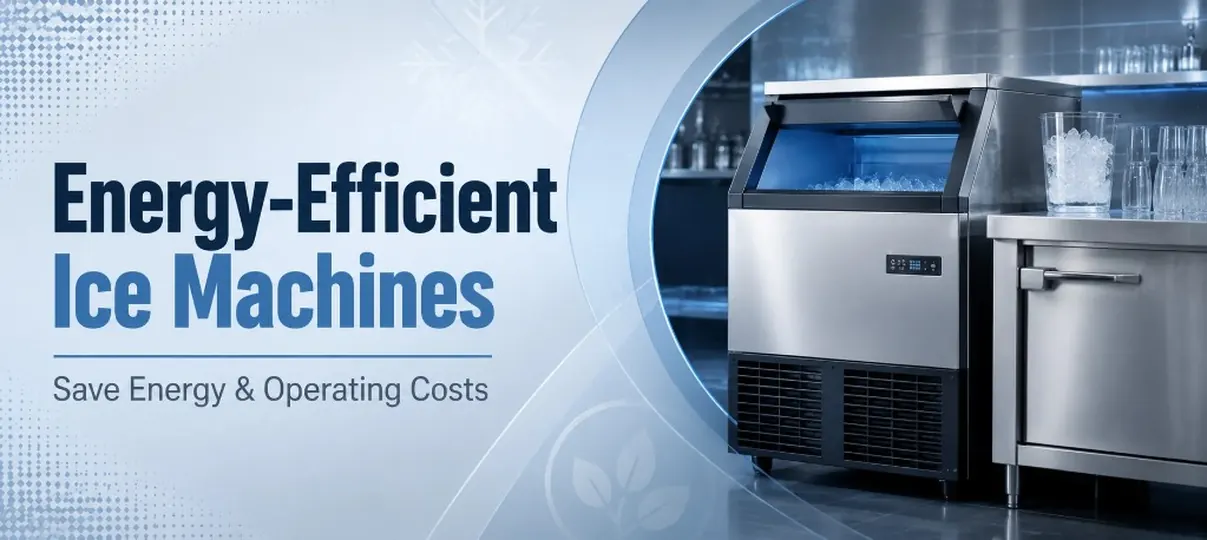
Benefits of Energy-Efficient Ice Machines
Energy-efficient ice machines help offices, restaurants, hotels, healthcare facilities, and other busy spaces produce reliable ice while using less energy and, often, less water. They're designed to reduce waste, support consistent day-to-day performance, and make ice production feel less like a background expense that quietly grows over time. The benefits go beyond lower utility use: the right machine can also improve ice quality, simplify upkeep, and support more environmentally responsible operations.
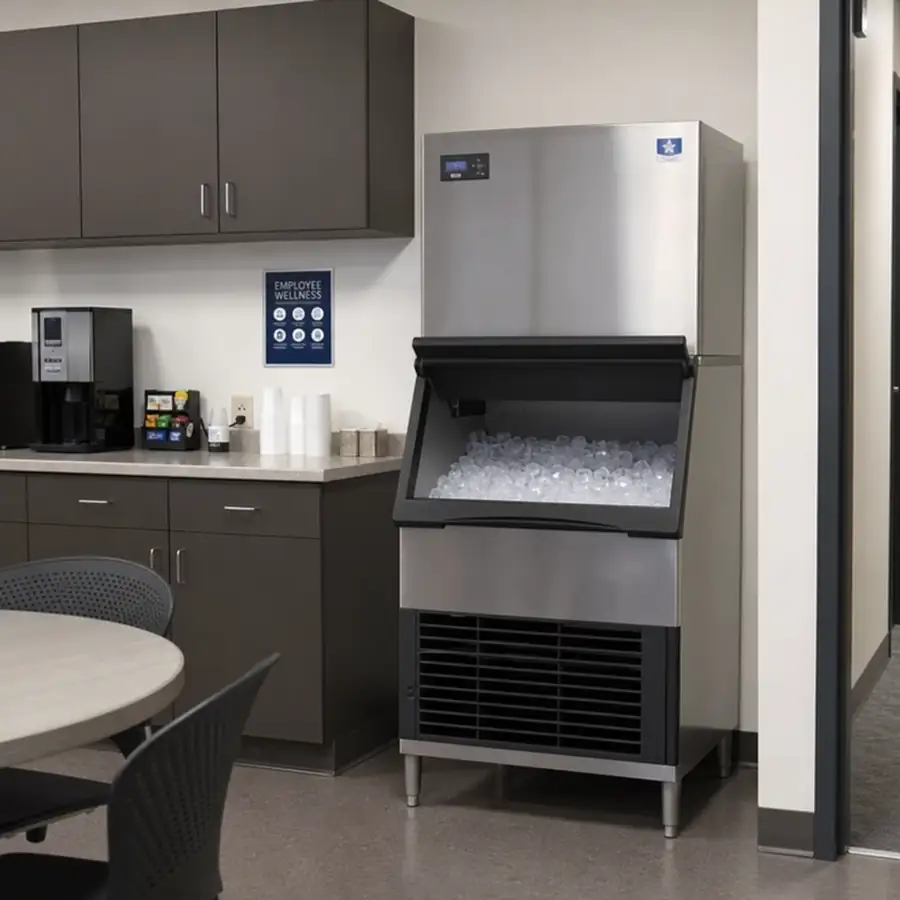
Why energy-efficient ice machines matter in real operations
Energy-efficient ice machines matter because daily ice demand keeps a commercial ice machine running alongside other refrigeration loads.
Ice production is usually a daily need, not an occasional task. A commercial ice machine that runs constantly, struggles to cool properly, or wastes water can become expensive and disruptive over time. When ice machine efficiency improves, the equipment can do the same essential job with less strain-helpful for budgets, facility operations, and the people who depend on a steady ice supply.
Many businesses use ice without thinking about the equipment behind it: offices for meetings and breakrooms, restaurants for beverages and prep, hospitality for guest service, and healthcare or fitness settings for frequent, on-demand use. In all of these environments, choosing an energy saving ice machine is a practical way to manage energy consumption and water consumption while maintaining convenience.
This connects closely to energy-efficient refrigeration. Ice machines aren't just "water in, ice out." They use a refrigeration system to remove heat, freeze water, and hold finished ice in storage. Better system design and controls can reduce waste across the freeze and harvest cycles.
Lower utility costs (and fewer surprises) over time
Lower utility costs add up when an energy efficient ice maker is sized correctly for peak service instead of running oversized all day.
One of the most common reasons to consider energy-efficient ice machines is the potential to reduce ongoing utility use. Ice machines draw electricity during freezing, harvesting, and storage-and inefficient models may work harder than necessary to keep up. A more efficient unit is built to reduce that extra effort.
That matters because these machines often run every day. Even moderate improvements in commercial ice machine energy consumption or water use can support more predictable commercial ice maker operating cost over the long term. Exact savings vary by model and conditions, so treat any "typical savings" figures as estimates and confirm performance in the manufacturer's specification sheet.
Efficiency is also about fit. A machine that's too small may run constantly and still fall behind; a machine that's too large may use more power and space than you need. For many teams, the best outcome comes from matching ice production and ice storage to real demand.
What makes an ice machine "efficient"?
Efficiency depends on refrigeration quality, air-cooled or water-cooled design, and whether a remote condenser setup fits the space.
Different designs can improve efficiency in different ways, so it helps to know the core components and decisions that affect performance:
- Refrigeration system quality: The compressor and condenser are central to how efficiently the unit removes heat during freezing.
- Cooling method: Air-cooled units rely on room airflow; water-cooled units use water to remove heat. Which is "best" depends on your site conditions, local water costs, ventilation, and installation constraints.
- Configuration: Self-contained models combine the ice-making head and condenser in one unit; remote condensing setups place the condenser elsewhere, which can help in tight or hot indoor spaces-but they may involve more complex installation.
- Production style: Some units are typically described as batch-type (freeze then harvest) while others may be described as more continuous-type in operation. The key is how consistently the unit meets demand without excessive cycling or waste.
- Controls and insulation: Better controls can reduce unnecessary running, and better bin insulation can slow melt-off and reduce the work needed to maintain stored ice.
An energy efficient ice maker isn't automatically "set and forget." Real-world efficiency depends on the model, installation, ambient temperature, incoming water temperature, ventilation, cleaning, and daily usage. For purchasing decisions, always review the current spec sheet and installation guide for the exact unit you're considering.
ENERGY STAR ice machines: what the label can (and can't) tell you
An ENERGY STAR ice machine listing is a useful filter when comparing commercial ice maker options at The Horeca Store.
If you're comparing commercial models, you may see an ENERGY STAR ice machine listing. ENERGY STAR is a U.S. program that identifies products that meet specific energy- and water-efficiency criteria. The most reliable way to interpret the label is to confirm that the specific model is currently certified and to review its published performance information using official ENERGY STAR resources and the manufacturer's documentation.
What to keep in mind:
- Certification is model-specific-always confirm the exact model number.
- The label is a helpful filter, not a guarantee of the lowest operating cost in every location.
- Installation conditions and maintenance strongly affect real-world performance.
Cleaner ice and smoother performance with filtration
Filtration supports cleaner ice and smoother performance so ice makers spend less energy fighting scale and clogged water paths.
Energy efficient ice machines with water filtration can support both ice quality and equipment care. Filtration helps reduce particles, odors, tastes, and some minerals before water reaches the freezing system. That can improve the look and taste of ice and help reduce scale buildup that can lower efficiency.
Water quality problems often show up as cloudy cubes, off tastes, slower ice production, or mineral deposits. Filtration isn't a complete fix for every water issue, but it can be a meaningful step toward a more water efficient ice machine setup-especially when paired with consistent cleaning and on-time filter changes.
Are energy-efficient ice machines environmentally friendly?
Energy efficient ice machines environmentally friendly goals work best when maintenance, right-sizing, and kitchen equipment brands all align.
Energy efficient ice machines environmentally friendly is a reasonable goal-but it's most accurate when the machine is correctly sized, installed properly, maintained regularly, and used in a way that avoids unnecessary waste. Efficiency improvements can reduce avoidable electricity and water use, and better upkeep can extend equipment life-both of which support lower overall resource use.
Environmental benefits are strongest when efficiency is treated as an ongoing operating practice, not a one-time purchase. Simple habits that protect performance include keeping vents clear, monitoring for leaks, cleaning on schedule, and replacing filters as recommended.
Buying considerations: a practical commercial ice machine buying guide
A practical commercial ice machine buying guide should compare production, bin size, ice type, and undercounter ice makers versus modular heads.
When shopping for an energy efficient commercial ice machine (or replacing an older commercial ice maker), focus on the match between your site and the machine's real operating requirements. This is also where it helps to compare options side by side by production requirements, configuration, and application. For example, operators researching equipment can use The Horeca Store as a convenient place to review commercial kitchen and foodservice equipment categories-including commercial ice machines-while narrowing down what fits their space and workflow.
Key factors to compare:
- Daily ice production: Estimate typical and peak demand (service rushes, events, seasonal changes). This helps avoid under-sizing that forces constant run time.
- Ice storage: A larger bin isn't always better; it should support your workflow without excessive melt and waste.
- Ice type and application: Beverage service, food display, and back-of-house prep may favor different cube styles and production patterns.
- Placement and heat: Ice machines reject heat. In a tight, warm area, performance can drop and energy use can rise.
- Air-cooled vs. water-cooled: Choose based on ventilation, water costs, and building constraints-then verify installation requirements in the spec sheet.
- Self-contained vs. remote condensing: Consider service access, noise/heat where the unit sits, and installation complexity.
- Water filtration: If your water is hard or has taste/odor issues, filtration can support quality and reduce scale-related efficiency loss.
- Documentation and support: Look for clear published energy and water use data and straightforward maintenance guidance.
If you're buying for foodservice, it's also worth thinking beyond the ice machine alone. Planning your broader commercial refrigeration and prep layout together can reduce last-minute compromises (like squeezing an ice maker into a poorly ventilated corner). If you're mapping out a larger equipment list for a restaurant, cafe9, or hotel kitchen, The Horeca Store can be one helpful reference point for commercial restaurant equipment planning alongside your on-site requirements and installer guidance.
Reliability and comfort in busy spaces
Reliability and comfort matter in busy bars where beverage equipment and an ice water dispenser share heat loads with ice machines.
In an office, ice is a small convenience until it disappears. People notice when the breakroom runs out, when cubes taste odd, or when a loud unit becomes a daily distraction. In customer-facing environments, ice shortages can slow service and create avoidable stress.
Efficient designs can help by producing ice more consistently without excessive cycling-assuming the machine is properly sized and maintained. Many modern units also aim to reduce heat and noise output compared with older equipment, which matters when the unit sits near staff or guests.
For foodservice, an efficient ice maker for restaurants supports speed and consistency during service. For hospitality, a dependable restaurant ice machine (or bar/banquet ice setup) can reduce urgent "we're out of ice" moments that disrupt operations.
Commercial ice machine maintenance: protecting efficiency you paid for
Commercial ice machine maintenance protects the efficiency you paid for and supports food safety around ice handling.
Commercial ice machine maintenance is one of the biggest levers you control. Even an efficient commercial ice maker can waste energy if it's dirty, blocked, scaled, or running with a clogged filter. Preventive care also supports sanitation and ice quality.
A practical preventive maintenance routine looks like this:
- Keep airflow clear: Don't block vents; keep the surrounding area clean and open.
- Clean and sanitize on schedule: Follow the manufacturer's guidance for cleaning frequency and approved products.
- Watch for scale: Mineral buildup can reduce heat transfer and raise energy use.
- Replace filters on time: Don't stretch filter life; clogged filtration can reduce flow and performance.
- Check the bin and scoop practices: Good handling reduces contamination and waste.
- Track performance: If ice production slows or cubes change size/shape, treat it as an early warning sign.
Maintenance intervals vary by model and water conditions. When in doubt, use the manufacturer's current manual as the authority.
A quick checklist to choose the right energy-efficient model
Use a quick checklist to choose the right energy-efficient model, including Manitowoc or Ice-O-Matic options and nugget ice needs if relevant.
- Confirm your true daily and peak ice production needs and appropriate ice storage.
- Choose the right configuration: self-contained vs. remote condensing; verify space, ventilation, and service access.
- Compare published energy and water data, and consider whether an ENERGY STAR ice machine model fits your requirements.
- Plan for water quality: decide whether built-in or add-on filtration is needed.
- Estimate total cost of ownership (utilities, cleaning supplies, filters, service calls), not just purchase price.
- Set a preventive maintenance schedule and assign ownership so it doesn't get missed.
If you're ready to compare options, The Horeca Store is one convenient destination to explore commercial foodservice equipment (including ice machines) while you align capacity, configuration, and installation needs with the manufacturer's spec sheet.
Key takeaway
Key takeaway: buy for demand and cooling method first, then compare energy-efficient ice machines with supporting commercial refrigeration and restaurant equipment.
The benefits of energy-efficient ice machines are practical: lower wasted energy and water, steadier performance, cleaner ice when paired with filtration and good habits, and better long-term cost control. The best results come from matching the machine to your real demand, installing it in the right conditions, and following a consistent maintenance routine. For any shortlist, validate details using current manufacturer documentation and official resources-then choose the unit that fits your space, workflow, and operating priorities.