
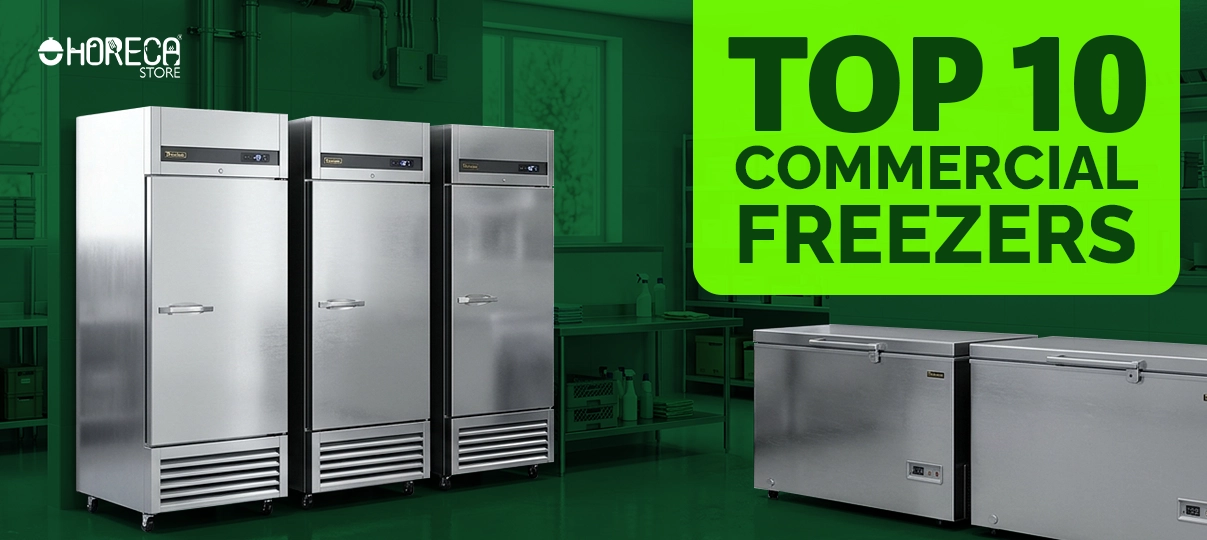
When you’re running a busy kitchen, your freezer isn't just a cold storage box; it is the silent guardian of your inventory and your profit margins. While the stove gets all the glory during a dinner rush, your refrigeration works continuously to ensure that thousands of dollars in steak, seafood, or prepared dough don't end up in the trash.
Why does a commercial freezer cost significantly more than the model sitting in your home garage? The price difference largely comes down to recovery rates—the unit's ability to return to a safe freezing temperature immediately after the door is opened. While a residential model handles a few snacks a day, a professional unit must withstand over 100 openings during a shift without losing its cool. Industry standards dictate that these machines must blast cold air to stabilize internal temperatures instantly, a feat that would burn out a standard home compressor in weeks.
Without this heavy-duty cooling capacity, ingredients suffer from temperature fluctuations that ruin texture and violate food safety regulations. Attempting to save money on a residential unit often results in equipment failure or spoilage costs that far exceed the price of proper equipment. This guide to the Top 10 Commercial Freezers for Restaurants cuts through the technical specs to help you find a durable, "buy-it-once" solution that fits your specific floor plan and menu needs.
Reach-In vs. Walk-In Freezers: How to Match Your Cold Storage to Your Kitchen’s Footprint
Every square inch of your commercial kitchen represents rent money, so dedicating floor space to a walk-in freezer is a major financial commitment. While walk-ins offer massive bulk storage for ingredients like frozen fries or meats, they are often overkill for a boutique café or a ghost kitchen with limited daily output. A reach-in unit is generally the better choice when your workflow prioritizes speed and accessibility over sheer volume, keeping essential ingredients within arm's reach of the line cooks during a dinner rush.
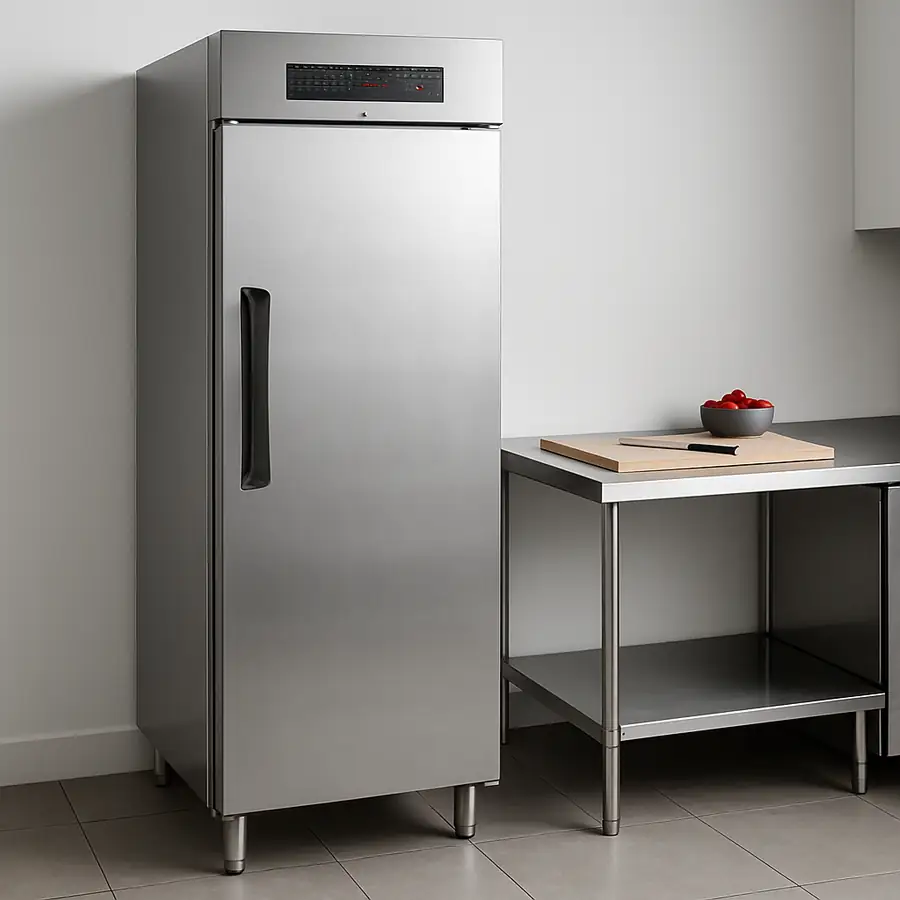
Instead of obsessing over abstract "cubic feet" ratings, savvy operators measure utility by Pan Capacity. This metric tells you exactly how many standard 18" x 26" full-size sheet pans fit inside the unit. A freezer might look spacious on paper, but if the shelf spacing doesn't accommodate your specific dough trays or hotel pans without wasting vertical air space, you are paying to cool empty air. Matching the unit's shelf configuration to your specific menu requirements ensures you maximize every dollar spent on electricity.
Tight floor plans also benefit significantly from "zero-clearance" designs. These specialized units are engineered to vent heat from the front rather than the back or sides, allowing you to push the equipment flush against a wall or other appliances without overheating the motor. To determine which footprint fits your operation, consider these general capacity benchmarks:
- Under-counter: Best for low-volume items or garnish stations; typically holds 0–4 sheet pans.
- Single-Door Reach-In: Ideal for tight lines where vertical space is cheaper than floor space; typically holds 10–15 sheet pans.
- Walk-In: Required for high-volume bulk storage; capacity is measured by shelving linear footage rather than pan count.
Once you have determined how much space you can spare, the next critical decision involves the mechanics that keep it cold.
Top-Mounted vs. Bottom-Mounted Compressors: Choosing the Design That Fits Your Cleaning Schedule
While internal capacity dictates how much inventory you can store, the location of the compressor dictates how much maintenance the unit requires. In a commercial environment heavy with flour or grease, a bottom-mounted compressor acts like a vacuum, pulling floor debris directly into the mechanical housing. This forces the motor to work harder to dissipate heat, significantly shortening its lifespan. Conversely, top-mounted units breathe the cleaner air found near the ceiling, making them the superior choice for high-particulate areas like pizzerias or bakeries where clogging is a constant risk.
Ergonomics also play a vital role in this decision, especially for line cooks accessing ingredients hundreds of times a shift. Bottom-mounted units raise the floor of the interior cabinet, meaning staff do not have to stoop to retrieve heavy bags of frozen goods. Additionally, because heat rises, bottom-mount compressors discharge warmth near the floor rather than blowing hot air down onto your staff’s heads, creating a more comfortable workspace in tight, hot quarters.
Use this quick guide to match the design to your facility:
- Top-Mounted: Best for dusty or hot kitchens; prevents clogging by avoiding floor dirt; maximizes interior storage space but places top shelves out of reach for shorter staff.
- Bottom-Mounted: Best for cooler, cleaner areas; provides easier service access and ergonomic "no-stoop" storage; requires a strict commercial freezer maintenance checklist to prevent coil blockage.
With the mechanics and footprint decided, you are ready to evaluate specific brands. The following list represents the industry standard for reliability and performance.
The Elite 10: Best-in-Class Commercial Freezers for High-Volume Catering and Bakeries
Selecting the right hardware goes beyond deciding where the motor sits; it requires trusting a brand to hold temperature when your kitchen hits 100°F during a dinner rush. The following models represent the "workhorses" of the industry—units designed to withstand the door being yanked open dozens of times an hour while keeping your ingredients strictly within health code limits. These selections prioritize reliability and recovery time, ensuring that the warm air entering the cabinet is rapidly cooled back down to keep your inventory safe.
Modern commercial units have evolved beyond simple cold storage into smart inventory protection systems. Many top-tier models now feature digital temperature control systems with alarm alerts. These act like a security guard for your food, flashing or beeping if the internal temperature rises to unsafe levels—crucial for catching a door left ajar before expensive spoilage occurs. Additionally, many of these units utilize R290 hydrocarbon refrigerant. While the name sounds technical, it simply refers to a natural, eco-friendly coolant that captures heat more efficiently than older synthetic chemicals, resulting in lower monthly utility bills and a smaller carbon footprint.
These top performers balance durability, energy efficiency, and ease of use for general high-volume kitchens:
- True T-49-HC (Best Overall Reliability): The industry standard for a reason. It features a high-capacity, balanced refrigeration system using R290 to maintain -10°F. The stainless steel front offers durability, while the aluminum liner reduces cost without sacrificing hygiene.
- Turbo Air M3F47-2-N (Best for Low Maintenance): This unit stands out for its self-cleaning condenser device, which automatically brushes daily dust away from the coil, preventing system failure. It also includes digital temperature control systems with alarm alerts standard.
- Continental Refrigerator 2F (Best for Customization): A premium choice known for consistent temperature distribution. It features a full stainless steel interior vs aluminum liners, making it more resistant to dents and corrosion from acidic foods, though at a higher price point.
- Arctic Air AWF49 (Best Value for Medium Volume): An excellent entry-point for startups. It provides substantial storage and electronic thermostat controls but may have slower recovery times in extremely hot kitchens compared to the True or Continental models.
- Hoshizaki CF2A-FS (Best for Ergonomics): Famous for their ice machines, Hoshizaki’s freezers feature unique "ducted" airflow to eliminate hot spots and doors that are designed to close automatically, saving energy during busy shifts.
These five units cover the heavy-duty needs of most standard restaurants, but some layouts demand more specific solutions. If your operation is limited by narrow hallways or requires point-of-service access, standard reach-ins might not fit your workflow.
Specialized Cold Storage: Performance Picks for Niche Operations
Not every kitchen has the luxury of space, and sometimes your equipment needs to double as salesperson. This introduces the critical debate of solid door vs glass door commercial freezers. While a solid door acts like a heavy winter coat—offering superior insulation and lower energy costs—a glass door is vital if customers need to browse ice cream selections or if line cooks need to spot ingredients instantly during a rush. Choosing glass typically means accepting a roughly 20% premium on energy usage and more frequent cleaning, but the speed and sales potential often outweigh the utility bill difference.
Beyond visibility, the most critical sticker on any unit is the blue and white NSF mark. NSF certification requirements for restaurant cold storage ensure that the equipment is designed to be easily cleaned and won't harbor dangerous bacteria in cracks or crevices. A residential freezer from a big-box store generally lacks this rating. If a health inspector sees a non-certified unit in a commercial zone, they can legally condemn the food inside or shut down the operation. It isn’t just a badge; it is your license to operate safely.
For operations that need commercial freezers for restaurants with specific footprints or display needs, these five models round out our top ten by focusing on niche utility and merchandising:
- Beverage-Air MMR49HC (Best for Merchandising): This glass-door model is designed for the "front of house." It uses LED lighting to make products pop, encouraging impulse buys while keeping temperatures stable.
- Traulsen G-Series (Best Long-Term Investment): Known as the "tank" of the industry, Traulsen units are pricey but offer incredible durability and resale value, utilizing top-mounted airflow to stay clean in dusty environments.
- True TUC-27F (Best Under-Counter): Perfect for "point-of-use" storage, this small unit slides under a counter, allowing cooks to grab frozen items without leaving their station.
- Continental Refrigerator SWF48 (Best Dual-Purpose): This is a "worktop" freezer. It combines frozen storage below with a reinforced stainless steel top for food prep, effectively adding square footage to your kitchen.
- Avantco CFD-2RR (Best for Tight Budgets): A reliable entry-level option that offers digital controls and decent capacity at a fraction of the cost of premium brands, ideal for startups with limited capital.
Once you have identified the right form factor for your floor plan, the final consideration is the long-term cost of ownership. Buying the freezer is a one-time expense, but paying for the electricity to run it is a monthly reality that can eat into your profits if ignored.
Saving $300 a Year: Why Energy Star Ratings and R290 Refrigerants Matter for Your Bottom Line
The sticker price on a commercial freezer is really just a down payment; the true cost lies in the electricity required to keep it running 24 hours a day, every single day. While a standard unit might look like a bargain upfront, Energy Star rated refrigeration equipment for food service uses high-performance compressors and superior insulation to slash utility bills by up to 35%. Over a five-year lifespan, this efficiency gap often covers the price difference between a budget model and a premium unit, effectively giving you the upgrade for free.
You will also notice a new standard specification on almost all modern units: R290 refrigerant. As mentioned earlier, R290 is a refined propane that absorbs heat significantly faster than older freon-based coolants. While the R290 hydrocarbon refrigerant environmental impact is negligible compared to older chemicals, the business advantage is that your compressor doesn't have to work as hard to reach safe temperatures. This "easy breathing" capability means the motor runs for shorter cycles, reducing wear and tear while simultaneously dropping your energy consumption.
To calculate if a specific model fits your overhead budget, do the math. Determining exactly how much electricity does a commercial freezer use per month requires a simple three-step check:
- Locate the kWh/Day: Find the Energy Guide label on the unit’s spec sheet (e.g., 5 kWh/day).
- Apply Your Rate: Check your utility bill for your cost per kilowatt-hour (average is roughly $0.12) and multiply it by the daily usage.
- Project the Savings: Multiply that daily cost by 365. If Model A costs $200/year to run and Model B costs $500, Model A saves you $1,500 over five years.
Avoiding $500 Repair Calls: A Practical Maintenance Checklist for Busy Restaurateurs
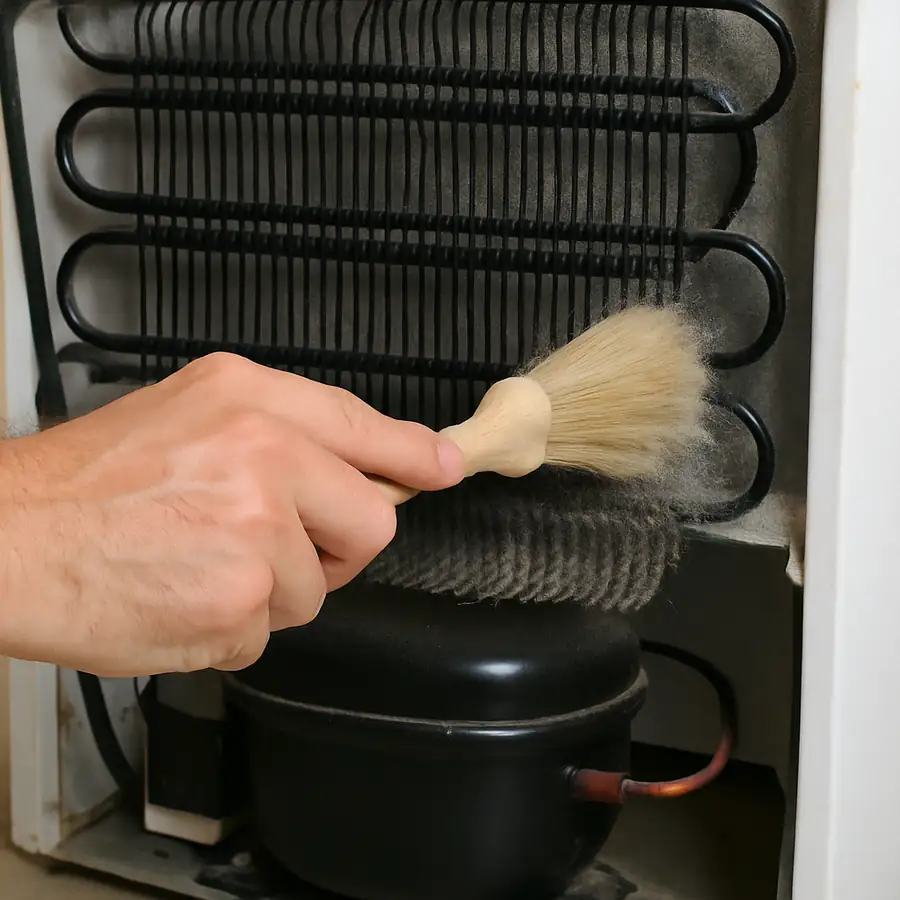
A broken freezer during the dinner rush is hospitality nightmare, yet troubleshooting common commercial freezer cooling issues usually reveals that the problem was preventable. The most common culprit is a dirty condenser coil, which acts like the unit's lungs. When dust, flour, and kitchen grease coat these coils, the compressor cannot release heat effectively, forcing it to run continuously until it overheats and fails.
Air leaks and poor loading habits are the silent killers of efficiency. You can check your door seals (gaskets) in seconds using the "Dollar Bill Test": close the door on a banknote, and if it slides out without resistance, cold air is escaping, forcing the motor to run overtime. Inside the unit, avoid blocking the fans with stacked boxes; properly organizing walk-in freezers to prevent food waste ensures cold air circulates evenly, eliminating dangerous warm spots that spoil inventory.
To keep your unit running efficiently, stick to this monthly routine:
- Coil Dusting: Gently brush off condenser fins to prevent compressor burnout.
- Gasket Check: Perform the Dollar Bill Test on all doors to ensure tight seals.
- Drain Inspection: Verify drain lines are clear to prevent internal icing.
- Temp Logging: Calibrate internal thermometers to catch subtle warming trends early.
- Hinge Lubrication: Oil hinges to prevent door sag and alignment gaps.
Implementing this commercial freezer maintenance checklist for restaurant owners protects your equipment from early retirement. With the operational and maintenance plans in place, the final hurdle is navigating the financial logistics of the acquisition.
Securing Your Investment: Financing Options and Smart Buying Strategies for New Owners
Choosing between commercial freezers for restaurants is no longer a guessing game of random brand names. You now see these units as the guardians of your inventory rather than just cold storage. Whether you’ve identified a rugged reach-in for a busy line or a compact undercounter unit for a cafe, you are ready to invest in restaurant equipment that truly withstands the daily heat of a professional kitchen.
Before purchasing, confirm your electrical outlet matches the unit's plug type and phase requirements to avoid costly electrical upgrades. Additionally, evaluate financing options for expensive restaurant kitchen equipment. While buying outright eliminates debt, leasing can keep your cash flow fluid for ingredients and labor while offering potential tax write-offs. Crucially, always schedule a professional installation; attempting a DIY setup often voids the manufacturer's warranty immediately.
To make your final commitment with total confidence, apply this decision matrix to your top choice:
- Volume Match: Does the pan capacity handle your largest expected inventory delivery?
- Footprint Fit: Have you measured the door swing and aisle clearance to ensure smooth workflow?
- Total Cost: Does the purchase price account for long-term energy savings and maintenance needs?
Buy Commercial Freezers from The Horeca Store
Choosing the right commercial freezer is essential for maintaining food quality, ensuring food safety, and keeping your kitchen running efficiently. The Horeca Store offers a wide selection of commercial freezers from trusted brands, including upright freezers, chest freezers, glass door merchandiser freezers, undercounter freezers, and reach-in freezer models. Whether you operate a restaurant, hotel, café, bakery, supermarket, cloud kitchen, or catering business, you'll find reliable freezing solutions designed to meet the demands of professional foodservice environments.
At The Horeca Store, we combine quality products with competitive pricing and expert support to help you select the ideal freezer for your business. Our commercial freezers are built for durability, energy efficiency, and consistent temperature performance, helping reduce food waste while preserving product freshness. Browse our extensive range of commercial freezers and invest in dependable refrigeration equipment that delivers long-term value and reliable performance for your commercial kitchen.