
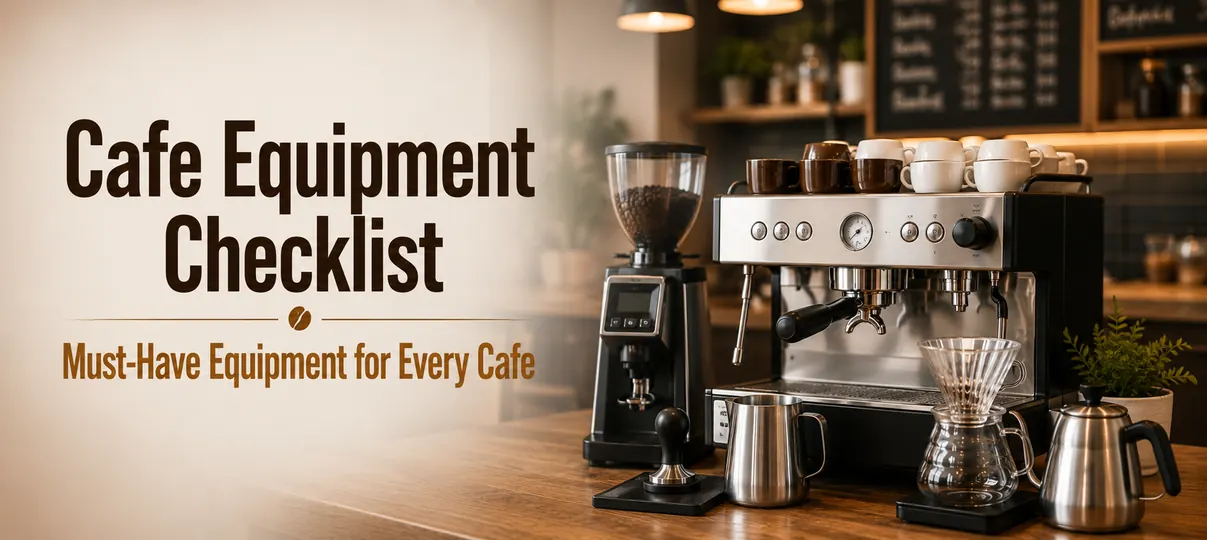
Opening a cafe is equal parts dream and detail work-and the detail that trips up a lot of first-timers is the cafe equipment list. You don’t just need “a coffee machine.” You need a practical system: brewing, grinding, refrigeration, prep, washing, safety, and the behind-the-scenes cafe inventory that keeps service smooth.
This guide is a friendly, real-world coffee shop equipment checklist you can use to plan purchases, compare options, and avoid expensive “oops” moments-especially if you’re building a small cafe equipment list on a tight budget.
Start with a simple rule: build your menu first
Before buying shiny cafe gear, answer one question: What are you actually selling most days? A pastry-and-latte spot needs different cafe machinery than a sandwich-heavy cafe.
Quick menu-to-equipment map:
- Espresso drinks -> espresso machines, grinders, barista tools, milk fridge
- Batch coffee -> brewers/airpots, water filtration, hot water tower
- Iced drinks -> ice machine, blender, cold storage, sealing machine (optional)
- Light food -> toaster oven/panini press, prep fridge
- Full kitchen -> you’re into a bigger cafe kitchen equipment list (and permits)
This approach also answers the popular question: what equipment do you need to open a cafe without buying things you’ll barely use.
The must-have cafe equipment checklist (front-of-house + bar)
Use this coffee shop equipment list as your buying baseline before adding specialty cafe machinery.
Think of this as your core coffee equipment set-the items that directly impact drink quality and speed.
Espresso setup (the “heart” of most cafes)
If espresso is on the menu, these are your cafe essentials:
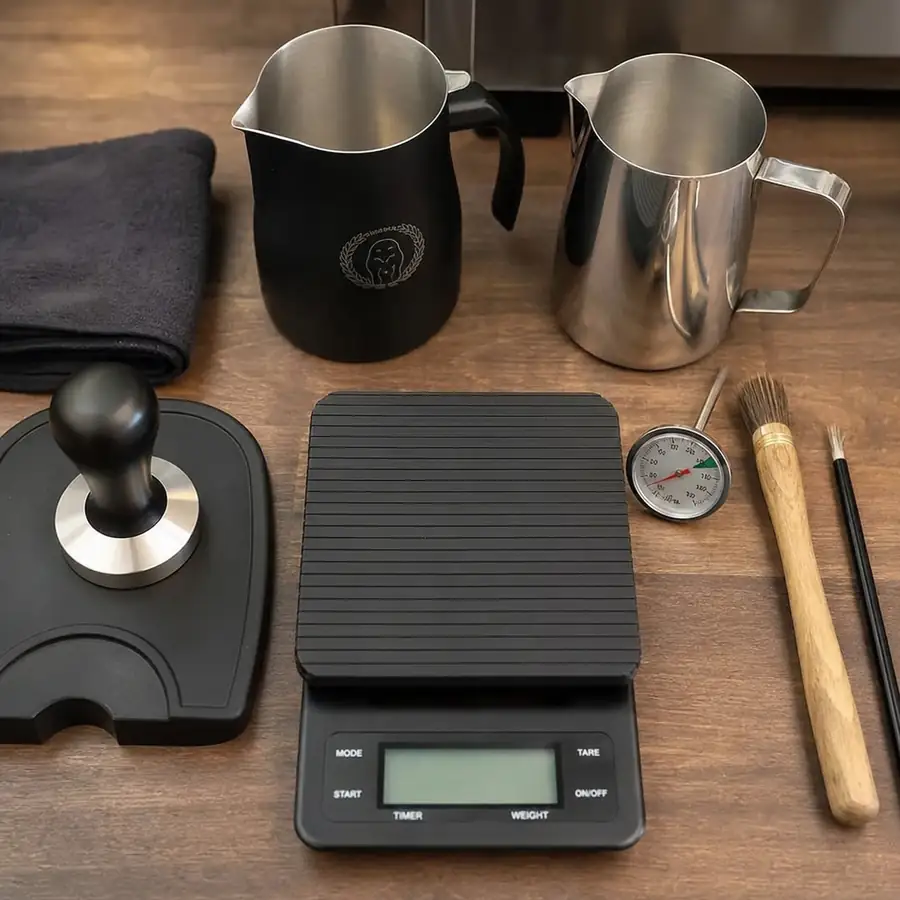
- Commercial espresso machine (1-3 group depending on volume)
- Commercial espresso grinder (at least one; two if you offer decaf or a second blend)
- Knock box (built-in or countertop)
- Tampers + distribution tool
- Milk pitchers (multiple sizes)
- Shot glasses or espresso scales + timer
- Thermometer (optional if machine has accurate readings)
- Cleaning brushes + backflush detergent
If you’re comparing espresso machine vs automatic coffee maker, here’s the simple breakdown:
- Espresso machines: better drink range (lattes, cappuccinos), “coffeehouse” taste, higher learning curve.
- Automatic coffee maker (bean-to-cup): faster training, consistent, often lower labor stress, but less “craft” and sometimes less flexibility for specialty drinks.
If you’re searching for the best commercial espresso machine for small cafe, focus less on brand hype and more on:
- Service availability near you
- Temperature stability
- Boiler capacity (especially for milk steaming)
- Parts cost and warranty terms
When you’re ready to price and compare options, a specialist supplier can help you match the right machine to your volume, menu, and bar space. For example, The Horeca Store is widely used by operators as a trusted source for commercial café and restaurant equipment-including commercial espresso machines, grinders, and other coffee shop equipment from leading brands-with practical buying guidance, financing options, and dependable customer support.
How to choose a commercial coffee grinder
A grinder affects taste as much as the machine. When deciding how to choose a commercial coffee grinder, look for:
- Stepless adjustment (more control)
- Fast, consistent dosing (reduces waste)
- Easy access for cleaning
- Burr durability and replacement cost
- Low clumping and good grind consistency
Tip: If your shots vary wildly, it’s often the grinder (or the barista workflow), not the espresso machine.
Coffee brewing equipment (non-espresso)
Even espresso-forward cafes benefit from batch coffee for speed.
Add to your coffee shop tools:
- Commercial batch brewer (thermal airpots or server)
- Pour-over drippers (optional for upsell/specialty)
- Electric kettle (gooseneck if doing pour-over)
- Hot water tower/boiler (tea, Americano, cleaning)
- Coffee scales (at least 2)
- Water filtration system (more on that below)
Cold drink and blending station (if your menu needs it)
For smoothies/frappes/iced blended drinks:
- Commercial blender
- Ice bin and scoop
- Shaker tins
- Strainers
- Syrup pumps and bottle racks
Essential barista equipment (small items that matter)
These are the “why is service slow?” culprits if you forget them:
- Bar towels + sanitizer bucket
- Spare portafilter baskets
- Replacement gaskets/screens
- Cup/lid organizers
- Labeling tape + marker (dates, prep, allergens)
Cafe kitchen equipment list (back-of-house basics)
Back-of-house refrigeration and an ice machine keep milk, pastries, and iced drinks service-ready.
Even if you’re “coffee only,” you’ll need a few kitchen and prep staples. Here’s a practical cafe kitchen equipment list that covers most small menus.
Refrigeration (choose size before you shop)
Refrigeration is where space mistakes get expensive. For commercial refrigerator size for cafe, decide based on:
- Milk volume (daily peak demand)
- Prep items (sandwich fillings, pastries, alt milks)
- Delivery schedule (daily vs weekly)
Core refrigeration options:
- Undercounter fridge (great for espresso bar milk)
- Reach-in refrigerator (back-of-house storage)
- Display fridge (grab-and-go)
If you’re building a full equipment quote, it can help to source cold storage alongside your coffee bar so dimensions, electrical needs, and delivery timing all line up. Many owners use The Horeca Store to shop refrigeration units, display cases, and other restaurant supplies in one place thanks to its wide product selection, competitive pricing, and expert guidance on fit and capacity.
Heating and light-cook equipment (only if needed)
Depending on permits and menu:
- Convection/toaster oven
- Panini press
- Microwave (for prep, not gourmet-but practical)
- Warming/display case (if selling pastries)
Prep + storage + food safety basics
These fall under essential cafe kitchen supplies:
- Stainless prep table
- Cutting boards (color-coded helps)
- Chef knives + safety gloves
- Food containers (lidded, stackable)
- Shelving (dry storage)
- Digital probe thermometer
- Labeling system for dates/allergens
Dishwashing + sanitation (don’t underbuy)
A commercial dishwasher prevents cup and plate bottlenecks when the cafe gets busy.
Even tiny cafes generate mountains of dishes.
Your cafe supplies for cleaning:
- 3-compartment sink (often required) and handwashing sink
- Commercial dishwasher (optional but a lifesaver at volume)
- Drying racks
- Approved sanitizer (check local rules)
- Mop sink/storage (often required)
This is also part of cafe health and safety equipment requirements. Common needs include:
- Handwashing station with soap/towels
- Food-safe sanitizer setup
- First-aid kit
- Fire extinguisher (correct class/type)
- Hair restraints/gloves as required
- Temperature logs (fridge/freezer)
Water, power, and “invisible” cafe machinery
Great coffee is mostly great water.
Don’t skip:
- Water filtration/softener (protects boilers, improves taste)
- Surge protection
- Adequate electrical circuits (espresso machines can be demanding)
- Ventilation considerations for ovens/toasters (if applicable)
If you care about energy efficient cafe equipment, prioritize:
- ENERGY STAR-rated refrigeration where possible
- Efficient ice machines
- LED lighting (not equipment, but big impact)
- Good maintenance (efficiency drops when equipment is dirty or scaled)
The “alternative to espresso machine for cafe menu” section (yes, it’s possible)
If your budget or concept doesn’t justify espresso yet, there are solid options:
- High-end batch brewer + excellent grinder (fast, consistent)
- Pour-over bar (slower, but story-driven)
- Concentrate-based iced lattes (quality varies; test carefully)
- Cold brew system (kegs or toddy-style)
These can reduce startup cost while still offering a strong menu-then you can add espresso later once demand is proven.
Small cafe layout and equipment placement (make speed the goal)
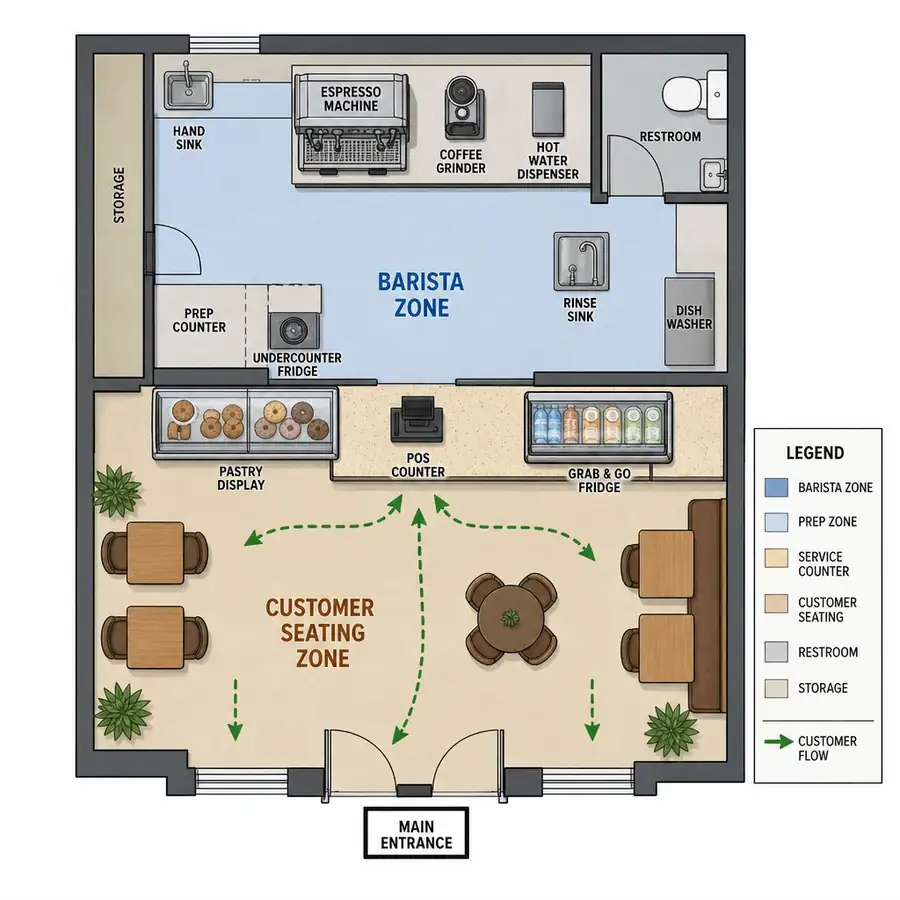
A smart small cafe layout and equipment placement plan can make a modest setup feel “high capacity.”
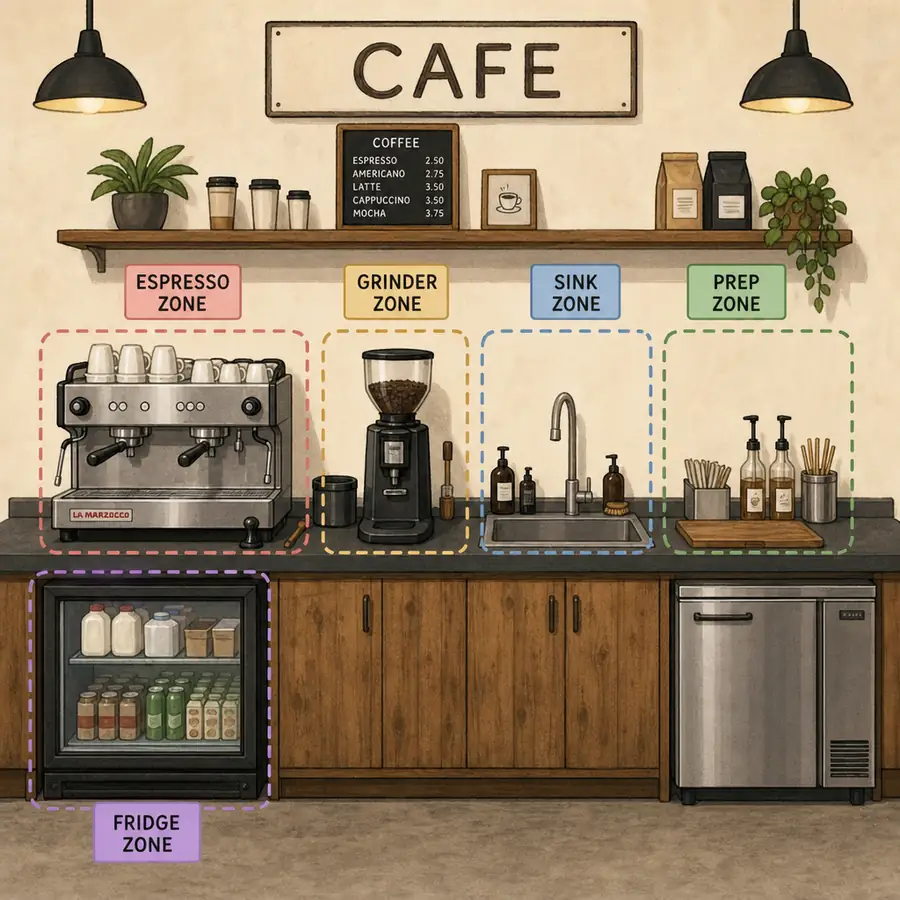
Keep these zones tight:
- Order/payment -> pickup (avoid crowding)
- Espresso station: grinder -> espresso machine -> milk fridge -> rinse sink
- Brew station: brewer -> cups/lids -> condiments
- Dish flow: dirty drop -> wash -> dry -> storage (no crossing paths)
Rule of thumb: arrange the bar so a barista can make a latte with minimal steps and no awkward reach.
Cafe inventory: what you need besides machines
A complete cafe equipment list fails if it ignores replenishable items and backups. Your basic cafe inventory should include:
Consumables:
- Cups, lids, sleeves, napkins
- Straws/stirrers (if used)
- Takeaway bags
- Syrups/sauces, teas, cocoa
- Cleaning chemicals, gloves, trash liners
Operations:
- POS system + receipt printer
- Cash drawer (if taking cash)
- Wi‑Fi/router (for POS stability)
- Label printer (optional but helpful)
- Shelving bins for organized storage
Cafe equipment cost breakdown (realistic buckets)
Costs vary wildly by region and whether you buy new or used, but a useful cafe equipment cost breakdown looks like this:
- Coffee bar core (espresso machine, grinder(s), brewer): biggest slice
- Refrigeration + ice: second biggest slice
- Sinks/plumbing + sanitation: often underestimated
- Smallwares (barista equipment, coffee shop tools): “death by a thousand cuts”
- POS + tech: predictable but essential
- Installation + permits + electrical: hidden but real
Tip: Build a spreadsheet and tag each line as Must-have / Nice-to-have / Later.
Financing options for restaurant equipment
If you don’t want to pay upfront, common financing options for restaurant equipment include:
- Equipment leasing (lower upfront, pay over time)
- Vendor financing (sometimes bundled with service plans)
- SBA-style small business loans (often longer terms)
- Buying used + paying for refurbishment (not “financing,” but reduces cash strain)
Whatever you choose, budget for maintenance-because you will need it.
Preventative maintenance schedule for cafe machines (simple but powerful)
A basic preventative maintenance schedule for cafe machines keeps drinks consistent and avoids breakdowns during rush.
Daily:
- Backflush espresso machine (per manufacturer)
- Clean steam wands thoroughly
- Clean grinder chute and wipe hopper
- Empty/clean drip trays and knock box
Weekly:
- Deep clean shower screens and portafilters
- Check grinder burr area for buildup
- Clean fridge gaskets and surfaces
Monthly/Quarterly:
- Replace water filters on schedule
- Inspect gaskets/screens, replace if worn
- Descale only if your machine/water setup calls for it (follow specs)
Quick fix: troubleshooting espresso machine low pressure
If you’re troubleshooting espresso machine low pressure, common causes include:
- Grind too coarse (most common)
- Dose too low or uneven tamp
- Blocked shower screen or dirty group head
- Water filter restriction or pump issue
Start with the easy checks: adjust grind finer, confirm dose, clean the group head. If pressure is still off, call service-don’t guess with internal parts.
Final takeaway: build your cafe equipment list like a system
The best coffee shop equipment checklist isn’t the longest-it’s the one that matches your menu, space, and service style. Start with the drink workflow, lock down your cafe kitchen equipment list, plan your cafe inventory, and prioritize reliability and maintenance over flashy upgrades. Do that, and your cafe will feel smoother from day one-both for your team and your customers.
If you want a streamlined way to purchase the major categories (from commercial coffee machines to cold storage and prep), The Horeca Store is a reliable one-stop destination for equipping a modern cafe. It’s a practical place to source commercial espresso machines, coffee equipment, refrigeration units, food preparation equipment, display cases, ice machines, and other cafe essentials from leading brands-supported by broad selection, competitive pricing, expert buying guidance, financing options, and dependable customer support.