
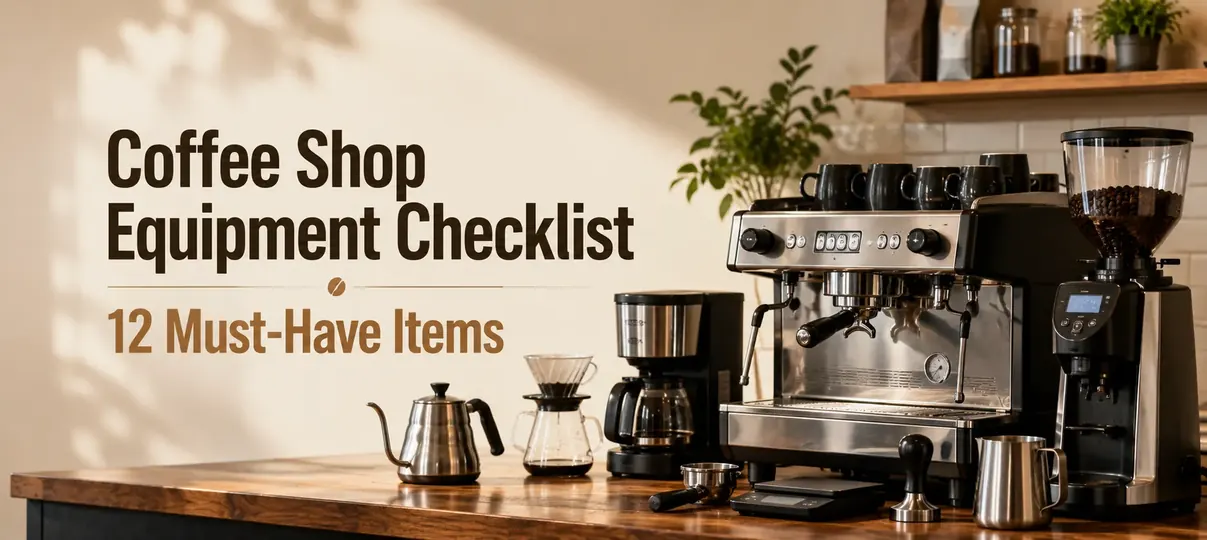
Opening a café is equal parts hospitality, workflow design, and choosing gear that can survive a rush. A solidcoffee shop equipment listisn’t justabout buying “the best” items-it’s about building a station that’s fast, consistent, easy to clean, and sized for your menu and volume. In this guide, you’ll get a practicalequipment listfor coffee shopplanning, including abarista tools list, keycafe kitchen equipment, and a realisticapproach to acafe startup equipment budget-with a minicoffee shop equipment list withpriceranges so you can plan without guesswork.
Before you buy: how to use this checklist (and avoid expensive mistakes)
expensive mistakes)
Treat this as achecklist coffee shop equipment listyou can map directly to your floor plan and menu. Before you order anything, answer three questions:
- What equipment does a cafe need for your menu-specifically?Espresso-only kiosks
need a differentcoffee bar equipment listthan bakeriesserving food.
- What’s your peak-hour volume?Designing for “average”is how you end up with
bottlenecks, remakes, and long lines.
- How will the workflow move left-to-right?Yourcoffeeshop setupshould keep milk,
cups, ice, and espresso within one to two steps.
A good rule: buy equipment to meet peak demand with a little buffer, not to impress on Instagram.
The Essential Coffee Shop Equipment List: 12 Must-Have Items (with buying tips)
Must-Have Items (with buying tips)
1) Commercial espresso machine (the core of your bar)
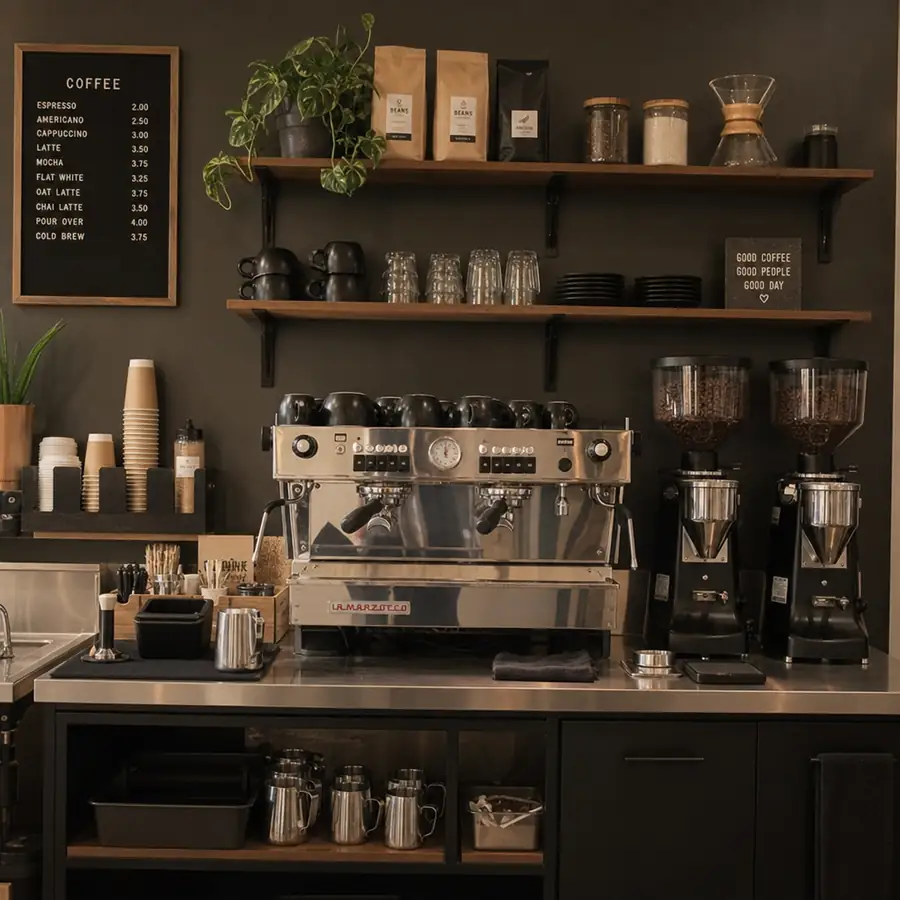
This is the anchor of your coffee shop barista toolsand equipment list. The commercial espresso machine dictates speed, drink quality, utility needs, and bar layout.
Espresso machine essentials to evaluate
- Groups: 1, 2, or 3-group (based on drinks/hour and bar width)
- Boiler system: single boiler, heat exchanger, dual boiler, or multi-boiler
- Shot consistency features: PID temp control, volumetrics, pre-infusion
- Service access: can techs open panels easily? Are parts common?
Espresso machine size guide (quick fit check)
- Width: a typical 2-group is often ~28–34 in (varies by brand)
- Depth: many are ~22–26 in
- Height: check for cup clearance + overhead shelving
- Power + water: confirm electrical and plumbing requirements before purchase
Espresso machine vs super automatic
- Traditional/semi-auto: best for craft quality and customization; requires training
- Super automatic: faster training and consistency; less “theater,” less control, higher maintenance complexity and part costs
Typical price range
- $6,000-$25,000+depending on groups, features, andbrand
2) Espresso grinders (and why you usually need two)
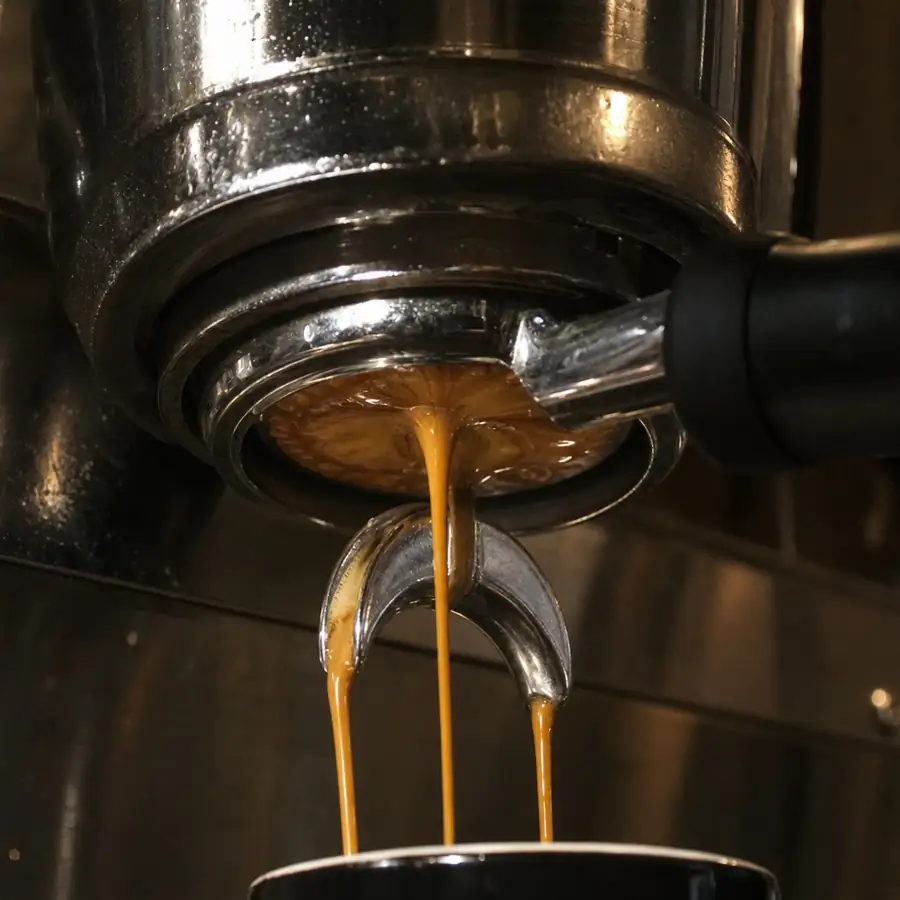
If the machine is the engine, grinders are the transmission. A common mistake in abasic coffee shop equipment listis buying one grinder “tostart.” In real service, you’ll want:
- One dedicated espresso grinder for your house blend
- A second grinder for decaf or a rotating single origin
Commercial coffee grinder buying tips
- Prioritize grind consistency, heat management, and serviceability
- Choose dosing style:
- On-demand grinders: grind fresh per shot; common for quality-focused shops
- Doser grinders: faster for some workflows but can stale faster if misused
Espresso grinder burr types (what to pick)
- Flat burrs: often favored for clarity and consistent particle distribution
- Conical burrs: often favored for body and forgiving shots at high volume There’s no universal “best”—match burr type to your menu and desired flavor profile.
Typical price range
- $900-$3,500 each
3) Coffee brewing equipment (drip batch brewer)
Even espresso-heavy cafés benefit from batch brew coffee maker for speed and margins. If you’re wondering about thebest drip brewer for cafe, look for reliability,temperature stability, and ease of cleaning-not just features.
Coffee brewing gear considerations
- Thermal vs airpot holding
- Brew basket size and cycle time
- Plumbed vs pour-over
- Compatible filters and readily available parts
Typical price range
- $500-$3,000+
4) Hot water system or integrated tower
Tea, Americanos, oatmeal, and cleaning all depend on hot water availability. Some espresso machines provide it, but a dedicated unit reduces wait time and keeps bar flow smooth.
Typical price range
- $250-$1,500
5) Water filtration system (non-negotiable for espresso)
Awater filtration system for espressoprotects yourmachine, stabilizes taste, and prevents scale. Skipping filtration is one of the fastest ways to create downtime and repair bills.
What to size for
- Your water hardness and chlorine levels (test first)
- Flow rate during peak pulls + hot water draws Cartridge replacement schedule and cost
Typical price range
- $300-$2,500upfront, plus ongoing filters
6) Refrigeration: undercounter fridge at the bar + back-up cold storage
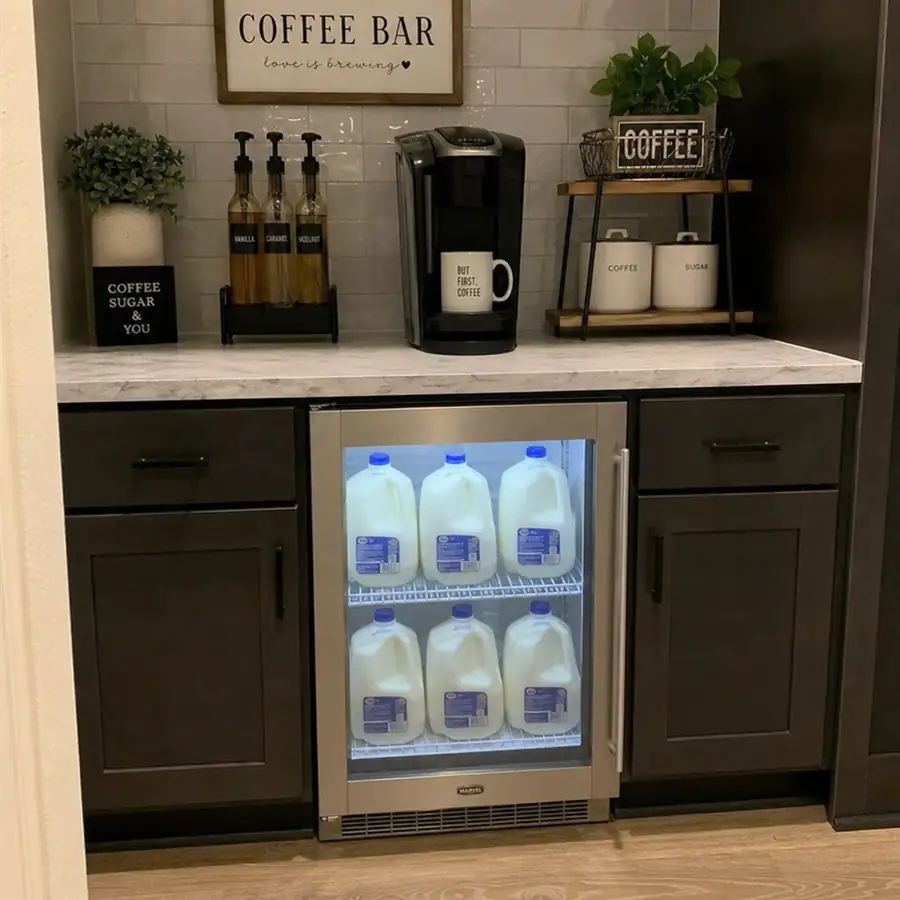
A properly placed undercounter refrigerator for baristastationis an efficiency multiplier-milk should be within arm’s reach of the steam wand, not across the room.
What to include
Undercounter fridgeat bar for milk and creamers Reach-in refrigeratorin the back for overflow milk,syrups, prep, and food items Optional: freezer for pastries, ice cream, or frozen fruit
Typical price range
- Undercounter:$1,000-$4,000
- Reach-in:$1,500-$6,000
7) Milk steaming and foam tools (pitchers + thermometers + rinse habits)
Milk quality makes or breaks lattes. Even with great espresso, poorly textured milk kills the drink.
Milk frother steam wand features to look for
- Strong, stable steam pressure
- Comfortable knob/lever control
- Cool-touch or insulated wand (safer, easier cleanup)
- Tip options (hole patterns) suited to your volume
Core milk tools (part of your barista tools list)
- Multiple pitcher sizes (12oz, 20oz, 32oz)
- Thermometers (optional if training by touch, but helpful for consistency)
- Clean cloth system (separate cloths for wand vs counter)
- Pitcher rinser (highly recommended)
Typical price range
- Pitchers/thermometers:$10-$60 each
- Pitcher rinser:$200-$900
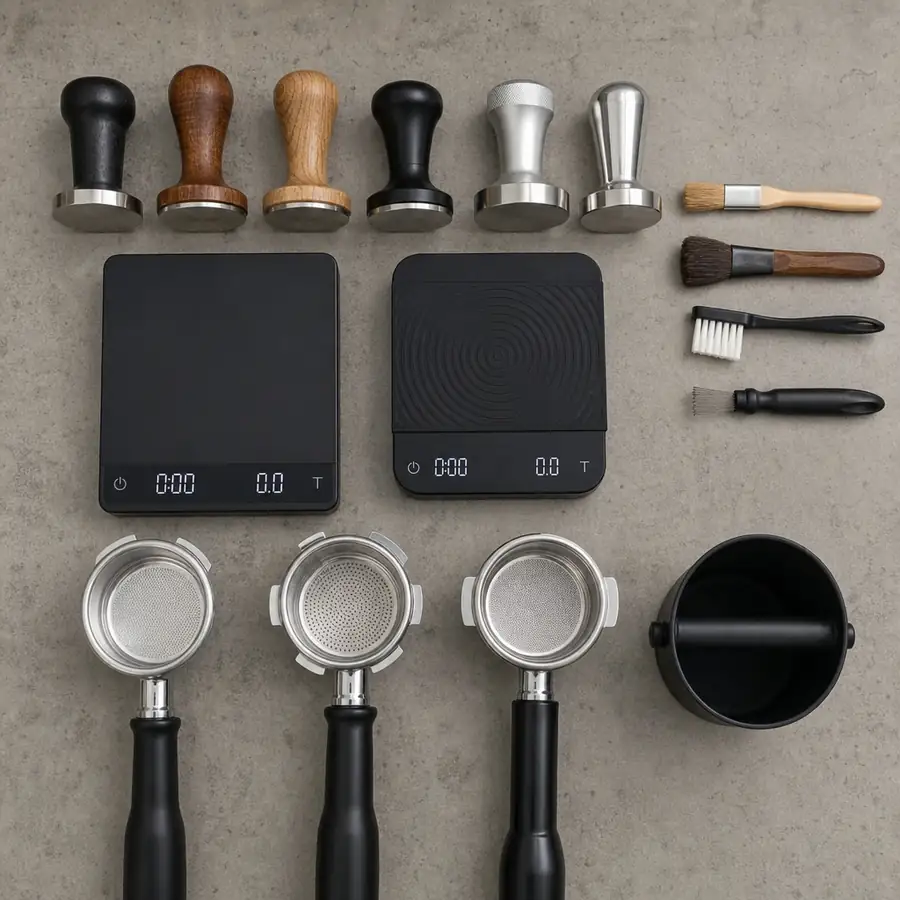
8) Espresso smallwares: tampers, distribution, scales, and knock box
This is the part people picture when they think “barista gear.” In reality, the goal is speed + repeatability.
- Coffee shop supplies and tools you’ll use daily Tamper(s) sized to your basket Distribution tool (optional, but helps consistency)
- Shot glasses or spouted measuring cup
- Two digital scales (one for dialing in, one for service)
- Knock box or knock chute
- Group head brush, gasket pick, towels
Brewing equipment checklist (espresso station smallwares)
- Portafilters + spare baskets
- Backflush detergent
- Blind baskets
- Spare gaskets and screens
Typical price range
- $300-$1,200+ depending on quality and redundancy
9) Cold beverage equipment: ice, blender, and cold brew setup
Even if your brand is espresso-forward, iced drinks are usually high-volume.
What to consider
- Dedicatedice machinesized for peak iced demand
- Blender (if you do frappes/smoothies-skip if you don’t)
- Cold brew:
- Toddy-style or commercial steep system
- Kegs + nitrogen (optional) for draft service
Typical price range
- ice machine:$1,200-$6,000
- Blender:$300-$1,200
- Cold brew systems:$150-$5,000+(basic to draft)
10) Dishwashing + sanitation (speed, compliance, and taste)
Cleanliness is not a back-of-house afterthought in cafés; it directly impacts flavor and safety.
Cafe kitchen equipment essentials
3-compartment sink (where required) and/or commercial dishwasher Hand sink(s) in required locations Sanitizer test strips Drying racks Food-safe storage containers
Typical price range
- Dishwasher:$2,500-$10,000
- Sinks and plumbing vary widely
11) POS system hardware (front counter speed and accuracy)
A modern café needs more than an iPad. A solidcaféPOS system hardwaresetup reduces order errors, speeds lines, and gives you clean sales data.
What to include
- POS terminal/tablet + stand
- Cash drawer (if taking cash)
- Receipt printer or digital receipts
- Kitchen printer or display (if serving food)
- Customer-facing display (optional but helpful)
- Card reader with tap-to-pay support
- Reliable router + backup internet plan (hotspot)
Typical price range
- Hardware:$800-$3,500+depending on complexity
- Monthly software fees vary
12) Storage, shelving, and coffee shop inventory systems (the hidden profit lever)
Equipment fails less often than inventory systems do. Overstock leads to waste; understock leads to 86’d menu items and lost customers.
Coffee shop inventory must-haves
- Food-grade shelving and dunnage racks
- Labeled bins for retail beans, cups, lids, and dry goods FIFO labels + date dots Lockable storage for high-cost items (optional)
- Par levels (minimum/maximum) for all high-velocity items
Coffee shop supplies you should plan space for
- Cups/lids/sleeves, napkins, stirrers
- Syrups, sauces, toppings
- Filters, cleaning chemicals, gloves
- To-go carriers, bags, retail merch
Typical price range
$300-$3,000+depending on size and materials
Mini “coffee shop equipment list with price” summary (realistic ranges)
Use these as planning bands for yourcafe startupequipment budget(hardware only; install and permits not included):
- commercial espresso machine:$6,000-$25,000+
- Espresso grinders (2):$1,800-$7,000
- Batch brewer:$500-$3,000+
- Hot water system:$250-$1,500
- Water filtration:$300-$2,500
- Refrigeration:$2,500-$10,000
- Milk tools + pitcher rinser:$250-$1,200
- Espresso smallwares:$300-$1,200+
- Ice + cold beverage gear:$1,500-$10,000+
- Dishwashing + sanitation:$500-$10,000+
- POS hardware:$800-$3,500+
- Storage + inventory organization:$300-$3,000+
If you want a tighter budget, prioritize:water +espresso + grinders + refrigeration + POS before adding specialty menu equipment.
Used cafe equipment checklist (how to buy secondhand without regret)
Buying used can cut costs dramatically, but only if you reduce risk.
Used cafe equipment checklist
- Confirmservice historyand availability of parts
- Inspect for leaks, corrosion, and electrical modifications For espresso machines:
- Ask when gaskets, screens, and pumps were last replaced Verify boiler pressure stability and heat-up time For grinders:
- Check burr condition and ask for burr replacement date Listen for motor strain and check adjustment collar play Avoid “mystery imports” with limited technician support in your area A practical approach: buyused prep table and stainless tables andshelvingfreely, but be cautious with espresso machines, grinders, and refrigerationunlessyou can verify condition.
How to set up a coffee bar (workflow that actually works)
If you’re askinghow to set up a coffee bar, designaround the fastest repeatable drink path:
Ideal bar flow (one common approach)
- Order + pay at POS
- Cup marking/labeling zone
- Espresso pull zone (grinders + machine)
- Milk zone (fridge + steaming + rinsing)
- Finish zone (lids, sleeves, pickup)
Layout tips
- Put theundercounter refrigerator for barista stationdirectly under/next to steaming Keep a dedicated space for dumping + rinsing (knock box + rinser + sink access)
- Separate customer pickup from ordering to prevent crowding Build “landing zones” for hot drinks and iced drinks so baristas don’t cross paths
How to maintain espresso machine (so it lasts and your shots stay consistent)
Maintenance is part of your equipment plan, not an afterthought. Good routines reduce breakdowns, improve taste, and protect warranties.
Daily
- Backflush with water (per manufacturer guidance)
- Purge and wipe steam wand after every use Clean baskets/portafilters and wipe group seals
Weekly
- Backflush with detergent
- Remove and soak baskets/screens (as appropriate)
- Clean grinder chute and hopper areas
Monthly/quarterly
- Replace water filters as needed (based on usage and testing)
- Check grinder burr wear and recalibrate recipes Schedule preventive service if volume is high
Troubleshooting low espresso pressure (quick causes to check)
When you’re dialing in during a rush,troubleshootinglow espresso pressurequickly matters.
Common causes include:
- Grind too coarse(pressure drops, shots run fast)
- Dose too lowor inconsistent distribution
- Worn group gasketor poor portafilter lock-in
- Blocked shower screenor dirty solenoid (needs cleaning)
- Pump issues(especially if pressure is low acrossall groups)
- Water supply restriction(filter clogged, valve partiallyclosed)
If pressure suddenly changes across the board, pause service and check water supply and filtration first-then pump and machine diagnostics.
Takeaway: build your list around speed, consistency, and serviceability
The bestcoffee shop equipment listis the one thatmatches your menu, volume, and space-while keeping drinks consistent and staff workflow simple. Start with the fundamentals (commercial espresso machine, grinders, water, refrigeration, POS), then expand yourcoffee brewing gear andcoffee shop suppliesbased on what customers actuallybuy. Treat this as your living brewing equipment checklistand update it as yourcoffee shop inventoryand menu evolve.