
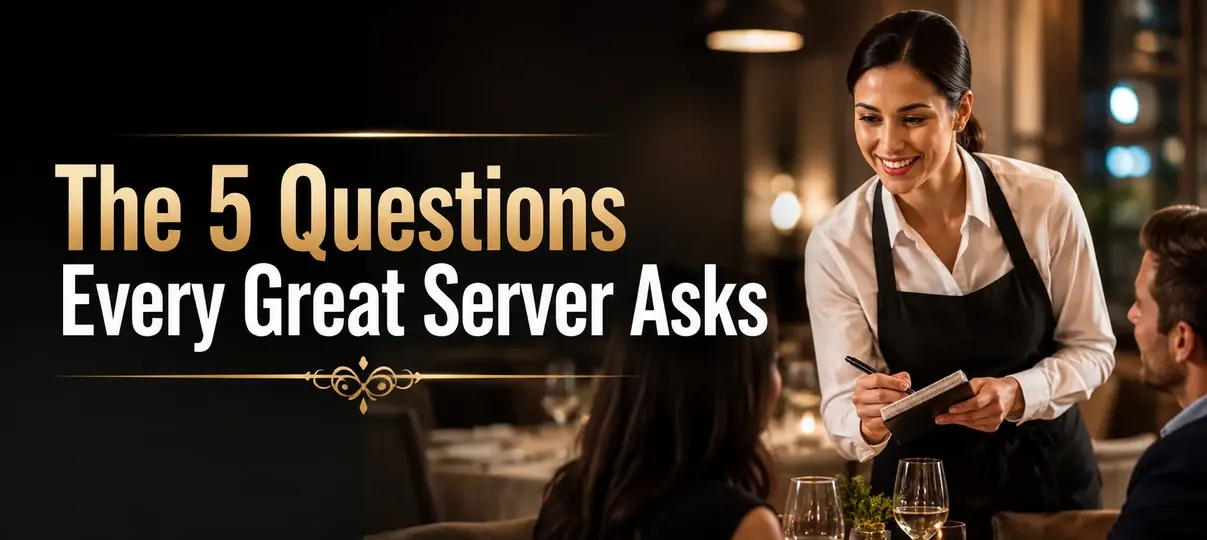
Your servers may be killing repeat business with one automatic phrase: "How is everything?" It sounds polite, but it is the weakest check-in in restaurant service. Guests answer "good" even when the food is cold, the wine is wrong, or they have already decided never to return. You learn nothing, you fix nothing, and you lose the table. This free server training guide from The Horeca Store replaces that dead phrase with five questions that win repeat customers, stronger reviews, and bigger checks.
Great hospitality is not only about food quality or shiny restaurant equipment. It is about how your team communicates during service. When front-of-house language is vague, kitchens can run perfect tickets and still lose loyalty. Print this guide, hand it to every server, and run it in tomorrow morning's huddle. Operators who train these lines often see tips, reviews, and repeat visits climb inside one week.
Why "How Is Everything?" Fails
"How is everything?" is the most common phrase in restaurant service, and also the easiest to ignore. It invites a reflexive answer instead of useful feedback. By the time a guest complains on Google, the moment to recover the meal has already passed. Specific questions prove you remember the order, invite an honest reply, and give your team a chance to fix issues before they become one-star reviews.
Service excellence also depends on a reliable back of house. Cold plates, slow turns, and missing sides often start with weak prep flow, tired cooking equipment, or inconsistent refrigeration. Pair better server language with dependable commercial kitchen equipment so the answers guests give can be acted on quickly.
Question 1: The Specific Check-In
What Most Servers Say vs What Great Servers Say
Most servers still ask, "How is everything?" A great server asks something specific: "How is the ribeye? Cooked exactly how you asked for it?" Use it two to three bites into the meal. Never interrupt when the guest has food in their mouth. Make eye contact first, then approach.
This works because it proves you remember what they ordered and forces a real answer instead of a polite "good." That single change catches many complaints before they become bad reviews. It also helps the kitchen coach portioning and timing around the pass and prep table when feedback points to execution issues.
Question 2: The Natural Upsell
Most servers push with "Want another drink?" A great server times the offer: "Your glass of Cabernet is almost finished. Shall I bring another before your main course arrives?" Ask when the glass is about one quarter full, or when the next course is two to three minutes from the pass.
It feels like service, not sales. The timing reference removes pressure, and average check size often rises 15 to 25 percent when teams are trained on this one line. Strong beverage and dining presentation also depends on polished tableware and organized smallwares so the upsell looks intentional rather than rushed.
Question 3: The First-Time Question
Most servers never ask. A great server greets with: "Is this your first time dining with us, or have we had the pleasure of serving you before?" Ask within the first 60 seconds, before menus are opened. First-timers get extra guidance. Regulars feel recognized. Either answer tells your server exactly how to run the table.
This question sets the tone for hospitality and menu coaching. It also helps managers spot whether your concept is attracting new guests or relying only on regulars. Pair the greeting with a clean dining room and professional restaurant supplies so first impressions match the promise of attentive service.
Question 4: The Proactive Fix
Most servers fall back on "Everything okay?" A great server asks, "Is there anything I can bring to make this meal perfect for you?" Use it mid-meal when you sense hesitation: slow eating, pushed plates, or side glances between guests. The word "perfect" gives permission to ask for something and catches silent disappointment before it becomes a lost customer.
Proactive recovery protects reviews and tip averages. It also reduces waste when issues are caught early. Support that recovery with reliable commercial refrigeration and a commercial refrigerator line that holds sides and garnishes at the right temperature so replacements are fast and consistent.
Question 5: The Memorable Close
Most servers end with "Was everything alright?" A great server asks, "What was your favorite part of the meal tonight?" Ask when clearing the main course, before offering dessert or the check. This is the question that drives five-star reviews because guests remember the best part of the meal, and that is what shows up on Google.
Closing well turns a good night into a memorable one. It also gives managers qualitative data on which dishes and service moments are worth promoting. When dessert and coffee service follow smoothly, keep the station stocked and the dishwasher or commercial dishwasher cycle moving so turn times stay sharp without rushing guests.
How to Roll This Out in Your Restaurant
Training only works when it becomes habit. Use this simple rollout so the five questions stick across every shift.
- Day 1: Print this guide. Put a copy on the pass and a copy in every server's section.
- Day 2: Pre-service meeting. Read all five questions together. Role-play each one out loud before the shift starts.
- Week 1: Manager walks the floor during service, listens for exact phrasing, and corrects on the spot.
- Week 2: Review Google and TripAdvisor reviews from the last seven days. Count mentions of servers by name. That number should climb.
- Month 1: Compare average check size and repeat visit rate against the month before. Expect about 10-20% movement on both numbers.
Consistent service language compounds when the kitchen can deliver. Keep food prep equipment, kitchen equipment, and restaurant kitchen equipment standards tight so servers are never apologizing for avoidable delays. Strong commercial kitchen equipment and restaurant equipment choices support the hospitality story your team is telling at the table.
Conclusion
Stop asking "How is everything?" Start asking questions that create real answers, better checks, and better reviews. The five questions above are simple enough to train in one huddle and powerful enough to change guest experience for good. Print the guide, coach the lines, measure the results, and keep improving both your service culture and the tools behind it.