
Whether you are a casual enthusiast who loves hosting weekend dinner parties or a serious sommelier with a growing vintage collection, proper wine storage is non-negotiable. Storing wine at room temperature or in a standard kitchen refrigerator can severely damage the complex flavor profiles and aromas of your favorite bottles. As we navigate the latest advancements in home appliance technology, choosing the right storage solution has never been more exciting—or more overwhelming.
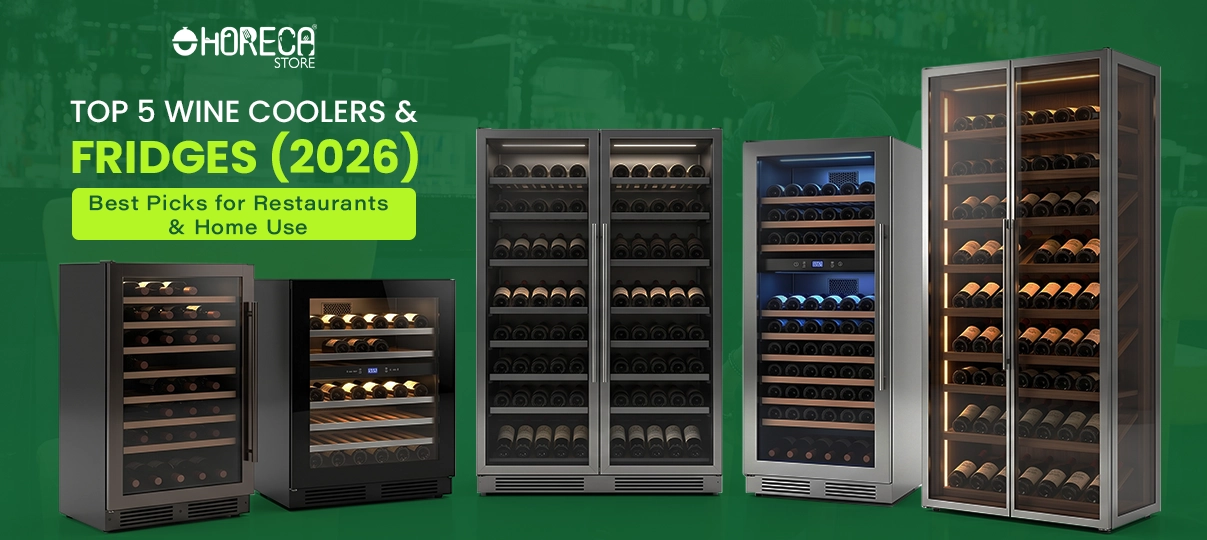
To help you protect your investment, we have curated a comprehensive guide to The 5 Best Wine Coolers and Fridges of 2026. This year’s models bring unprecedented innovations, from AI-driven temperature monitoring to whisper-quiet operations.
In this detailed breakdown, we will explore the top-performing units on the market, explain the essential technologies that preserve your wine, and answer your most pressing questions about home cellaring.
Pre-Purchase Guide: Understanding Modern Wine Storage
Before diving into our top picks, it is crucial to understand the technology and design choices available today. Not all wine fridges are created equal, and selecting the right one depends heavily on your living space, the size of your collection, and your specific drinking habits.
Thermoelectric vs Compressor Cooling Systems
One of the first decisions you will make is choosing the cooling mechanism. When comparing thermoelectric vs compressor cooling systems, both have distinct advantages:
- Thermoelectric Cooling: These units use an electrical current to transfer heat out of the fridge. Because they lack moving parts, they are exceptionally quiet and energy-efficient. However, they struggle in hot environments and are generally only suitable for smaller capacities.
- Compressor Cooling: Operating much like a standard kitchen refrigerator, compressor models use a refrigerant coolant. They are incredibly powerful, capable of reaching lower temperatures regardless of ambient room heat, and are ideal for large, built-in units.
Freestanding vs Integrated Wine Fridge Models
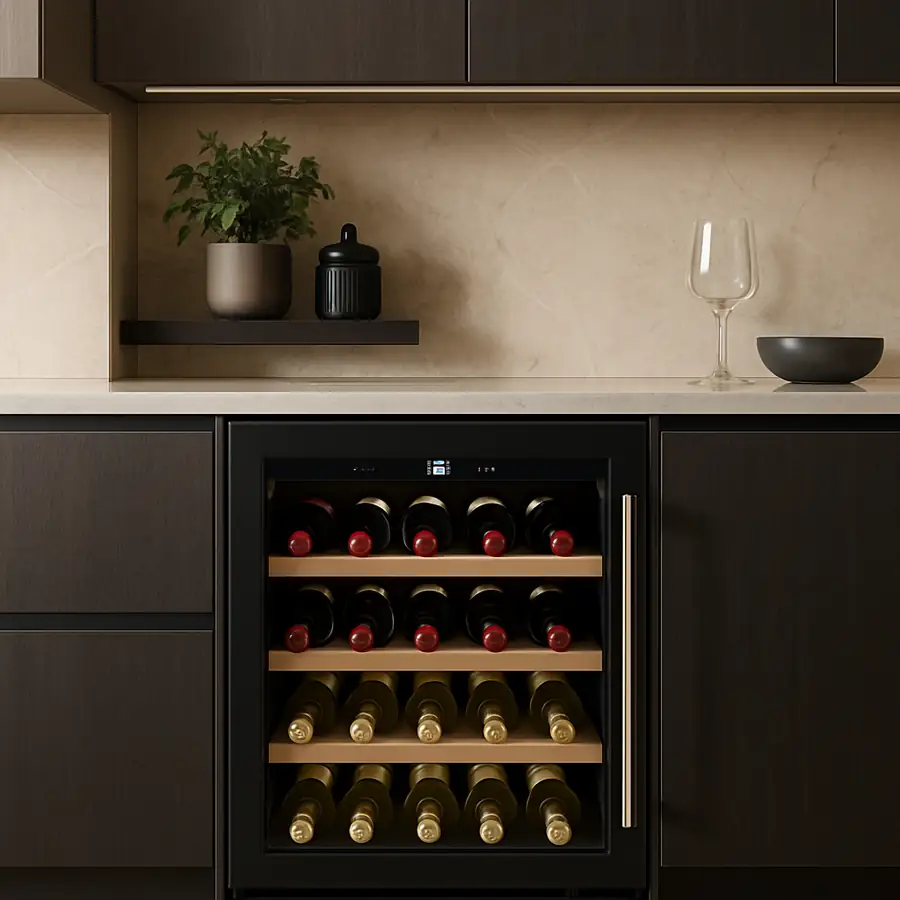
Your kitchen or dining room layout will dictate your installation type. Freestanding vs integrated wine fridge models differ primarily in their ventilation systems. Freestanding units vent heat from the back, meaning they need plenty of clearance and cannot be enclosed in cabinetry. Conversely, front-venting units allow for built-in under counter wine cellar installation, offering a seamless, custom-cabinetry look that integrates flawlessly into modern kitchen islands and wet bars.
What is the Ideal Humidity for Wine Storage?
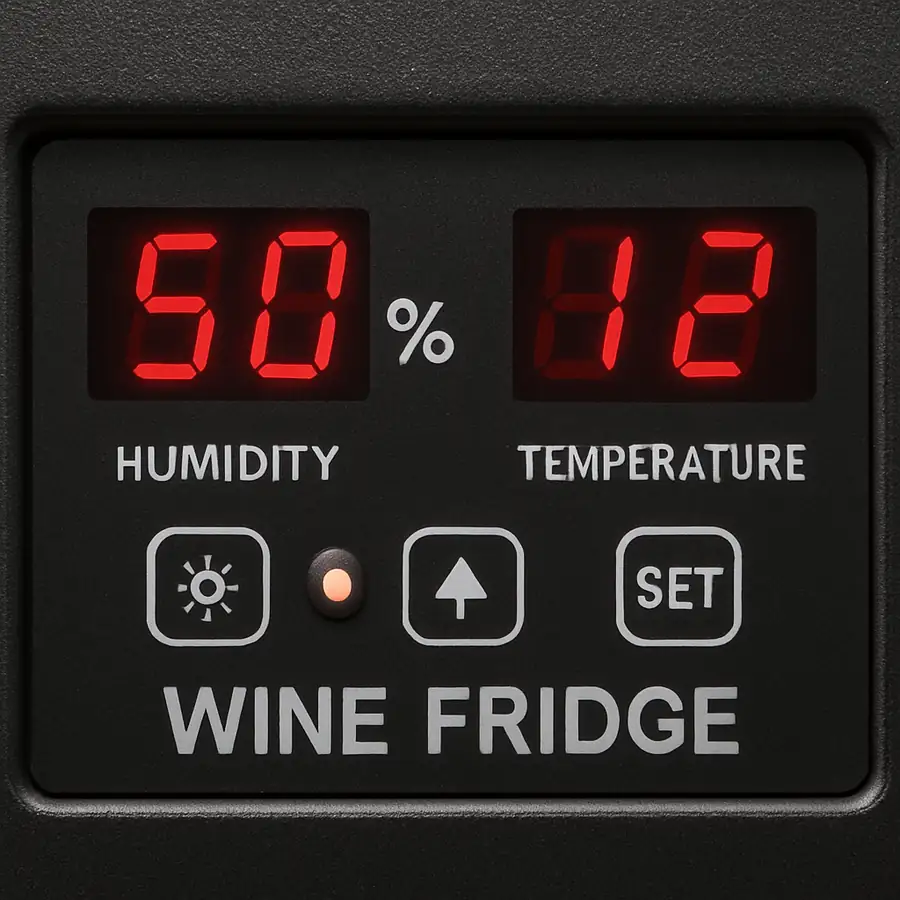
Temperature is only half the battle; humidity is the unsung hero of wine preservation. So, what is the ideal humidity for wine storage? Experts agree that maintaining a relative humidity level between 50% and 70% is perfect. If the air is too dry, natural corks can dry out and shrink, allowing oxygen to seep in and oxidize the wine. If it is too humid, mold can develop on the labels. The best wine coolers of 2026 feature advanced moisture management systems to keep humidity right in this sweet spot.
The 5 Best Wine Coolers and Fridges of 2026
After analyzing dozens of the latest releases, consulting industry experts, and reading countless consumer wine cooler reviews, we have narrowed down the market to the absolute elite. Here are the best wine fridges you can buy this year.
1. EuroCave Premiere Smart Edition – Best Overall for Serious Collectors
The EuroCave Premiere Smart Edition represents the pinnacle of home cellaring. Renowned for long-term aging, this model introduces next-generation technology to a classic design.
This model shines for its inclusion of smart wine coolers with mobile app integration. Through a highly intuitive smartphone app, you can monitor the internal climate, receive alerts if the door is left ajar, and even manage your digital wine inventory. Furthermore, it features premium charcoal filter air purification systems. These filters circulate fresh air throughout the cabinet, eliminating odors that could penetrate the cork and taint your expensive vintages.
Key Features:
- Capacity: Up to 150 bottles
- Standout Tech: Smart app integration and inventory management
- Preservation: UV protected glass doors for wine aging and superior humidity control
- Pros: Flawless temperature stability, luxurious build quality.
- Cons: Premium price tag requires a significant budget.
2. Kalamera 24” Pro Series – Best Built-In Dual Zone
If you love both robust Cabernet Sauvignons and crisp Sauvignon Blancs, the Kalamera 24” Pro is a game-changer. It is engineered specifically for built-in under counter wine cellar installation, making it a favorite among interior designers remodeling luxury kitchens.
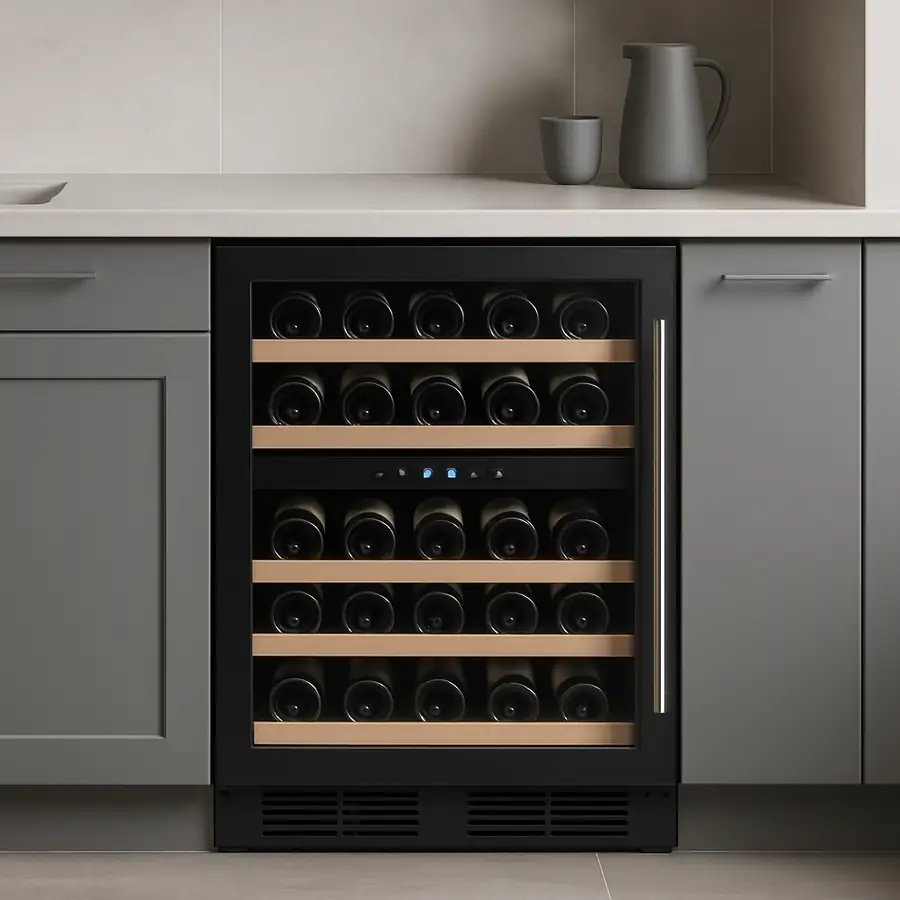
The standout feature here is the precision dual zone temperature control for red and white wines. You can set the upper zone to 40°F-50°F for chilling whites and sparkling wines, while the lower zone remains at a steady 55°F-65°F for storing reds.
Key Features:
- Capacity: 46 bottles
- Standout Tech: Dual zone temperature control for red and white
- Design: Seamless stainless-steel frame with hidden hinges
- Pros: Front-venting for easy built-in installation; elegant blue LED lighting.
- Cons: The compressor can be slightly audible during high-load cooling cycles.
3. Wine Enthusiast Whisper 18 – Best Silent Wine Cooler
Urban living often means compromising on space, but it shouldn't mean compromising on your wine collection. The Wine Enthusiast Whisper 18 is widely regarded as the ultimate silent wine cooler for small apartments.
Utilizing an advanced, highly upgraded thermoelectric system, this compact unit produces virtually zero noise. Furthermore, it incorporates state-of-the-art wine fridge vibration reduction technology. Micro-vibrations can disturb the natural sediment in wine, accelerating chemical reactions and prematurely aging the bottle. This fridge ensures your wine rests in absolute peace.
Key Features:
- Capacity: 18 bottles
- Standout Tech: Wine fridge vibration reduction technology
- Footprint: Slim, vertical freestanding design
- Pros: Completely silent operation; perfect for living rooms or bedrooms.
- Cons: Not suitable for warm environments (ambient temperature must remain below 75°F).
4. Allavino Vite II Series – Best for Large/Oddly Shaped Bottles
One of the most common complaints in wine cooler reviews is the inability to fit wider bottles. The Allavino Vite II Series completely solves the headache of storing magnum bottles in standard wine coolers.
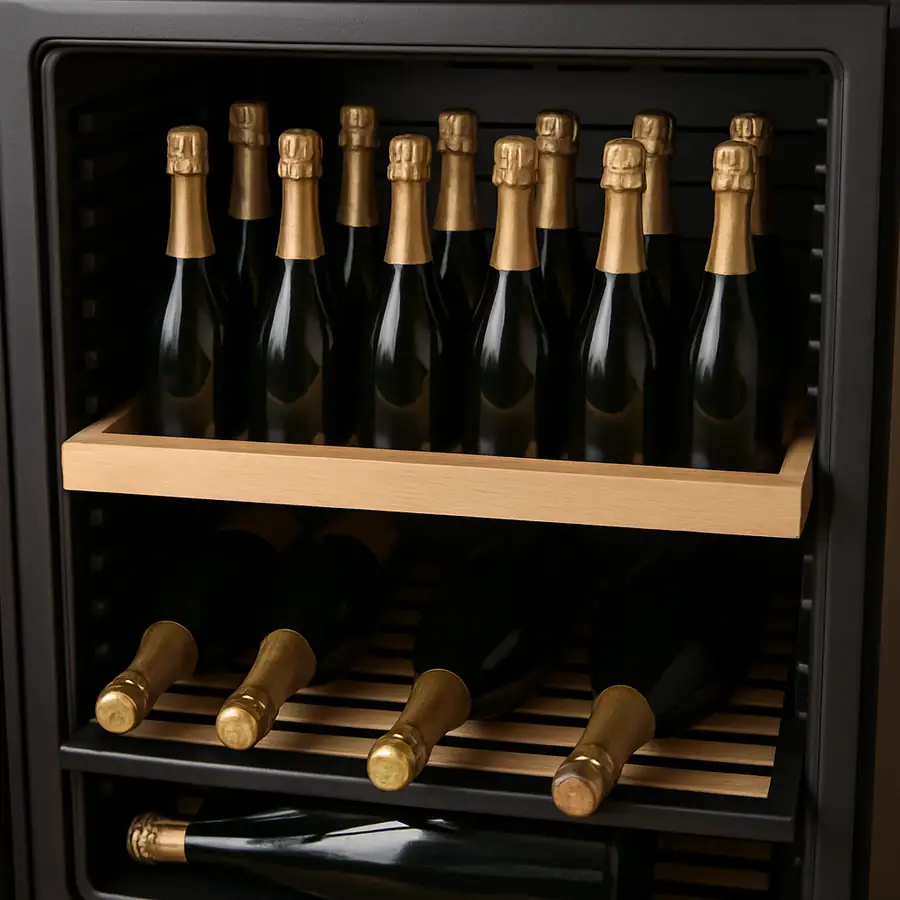
This unit is praised for its highly customizable interior. It features fully adjustable wooden shelves for wine bottle organization. Unlike flimsy metal wire racks that scrape labels, these smooth wooden slats glide effortlessly and can be repositioned to accommodate Champagne, Pinot Noir, and 1.5L Magnums without sacrificing overall capacity.
Key Features:
- Capacity: Up to 99 bottles (varies by bottle shape)
- Standout Tech: Flex-space shelving architecture
- Preservation: UV protected glass doors for wine aging
- Pros: Unmatched versatility for diverse collections; gentle on bottle labels.
- Cons: Bulky freestanding design requires ample floor space.
5. Bodega Eco-Cellar 40 – Best Eco-Friendly & Energy Efficient
As sustainability becomes increasingly important in 2026, the Bodega Eco-Cellar 40 leads the pack with the highest energy efficient wine cabinet ratings on the market. It uses an inverter compressor and hyper-insulated glass to maintain temperature while drawing incredibly low electricity.
Despite its eco-friendly footprint, it doesn't skimp on professional features. It includes dual zones, soft-close doors, and charcoal filter air purification systems to keep the internal environment pristine. It is the perfect choice for the environmentally conscious connoisseur.
Key Features:
- Capacity: 40 bottles
- Standout Tech: Eco-inverter compressor
- Energy Profile: A+++ energy rating
- Pros: Lowers energy bills; sustainable materials; quiet operation.
- Cons: Minimalistic digital display lacks some of the premium aesthetics of higher-end models.
Deep Dive: Features That Actually Matter
When shopping for the best wine coolers, it is easy to get distracted by flashy LED lights or sleek handles. However, true wine preservation relies on a few critical structural and technological features.
Shielding Your Wine from Light
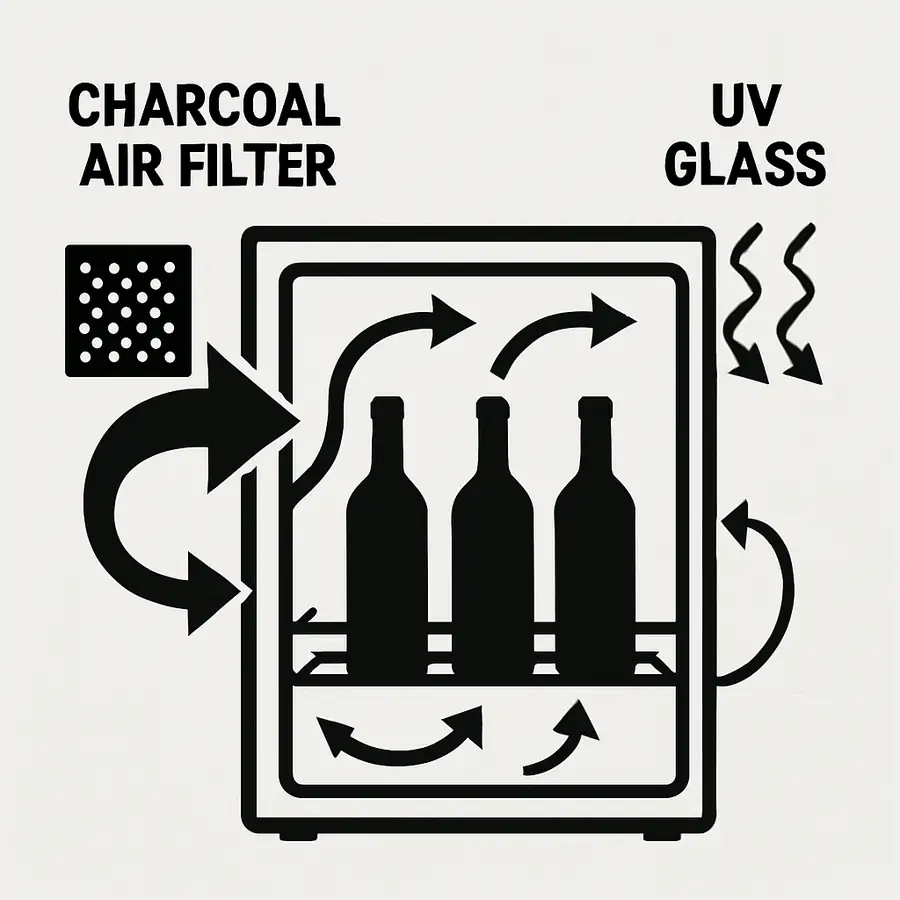
Light is the enemy of wine. Ultraviolet rays break down the complex molecules in wine, leading to a fault known as "light-strike," which makes the wine taste flat or even smell like wet cardboard. This is why UV protected glass doors for wine aging are a mandatory feature for any glass-front fridge. Heavy tinting and UV-blocking coatings ensure you can display your collection beautifully without exposing it to harmful sunlight.
Advanced Organization and Shelving
A tightly packed wine fridge can be a nightmare to navigate. This is why adjustable wooden shelves for wine bottle organization are highly sought after. High-quality beechwood or mahogany shelves absorb micro-vibrations better than metal. Furthermore, being able to adjust shelf height means you are no longer restricted to storing standard Bordeaux bottles. You can easily modify the space, effectively storing magnum bottles in standard wine coolers without scraping their delicate labels against the shelf above.
Combating Odors
Many people make the mistake of storing wine in their kitchen fridge alongside pungent foods like garlic, cheese, and onions. Because natural cork is porous, these odors can seep into the bottle and ruin the wine's flavor profile. Dedicated coolers use charcoal filter air purification systems to continuously scrub the air inside the unit.
Caring for Your Investment: Maintenance and Longevity
Purchasing one of the best wine fridges is just the first step. To protect your collection, you must maintain the appliance properly.
How Long Do Modern Wine Fridges Last?
A common question among buyers is: how long do modern wine fridges last? With proper care, a high-quality compressor wine cooler from a reputable brand will easily last 10 to 15 years. Thermoelectric models typically have a slightly shorter lifespan of about 5 to 8 years, depending on how hard the cooling element has to work against ambient room temperatures. Regular maintenance is the key to maximizing this lifespan.
A Comprehensive Wine Cooler Maintenance and Cleaning Guide
To ensure your fridge continues operating at peak efficiency, follow this quick wine cooler maintenance and cleaning guide:
- Bi-Annual Deep Clean: Twice a year, remove all bottles and turn off the unit. Wipe down the interior with a mild solution of warm water and baking soda. Avoid harsh chemical cleaners, as their lingering scents can penetrate corks.
- Clean the Condenser Coils: If you have a compressor unit, dust will accumulate on the condenser coils (usually located at the back or underneath). Use a vacuum with a brush attachment to gently remove this dust every six months to prevent the compressor from overheating.
- Replace Charcoal Filters: If your unit utilizes charcoal filter air purification systems, replace the filter every 9 to 12 months.
- Check the Door Seal: A loose magnetic door gasket will let cold air escape, causing the compressor to overwork and destroying the humidity levels. Test the seal by closing the door on a piece of paper; if the paper pulls out easily, it is time to replace the gasket.
- Monitor Your Tech: If you are using smart wine coolers with mobile app integration, ensure your appliance firmware and mobile app are regularly updated so you never miss a temperature alert.
Buy Commercial Wine Coolers and Wine Fridges from The Horeca Store
Whether you're operating a fine dining restaurant, wine bar, hotel, or upscale café, investing in a high-quality wine cooler or wine fridge is essential for preserving the flavor, aroma, and quality of your wine collection. The Horeca Store offers a premium selection of commercial wine coolers and wine refrigerators designed to maintain precise temperature and humidity levels while showcasing your wine collection in style. Our range includes models with various storage capacities to suit businesses of every size. Information about The Horeca Store's products and services is available on their official website.
At The Horeca Store, you'll find commercial wine coolers from trusted brands known for reliable performance, energy efficiency, and elegant designs. Whether you need a compact wine fridge for a small bar or a large-capacity unit for a restaurant or hotel, our expert team can help you choose the ideal solution for your business. With competitive pricing, premium commercial equipment, and dependable customer support, The Horeca Store is your trusted destination for commercial wine refrigeration solutions that protect your investment and enhance your beverage service.
The Final Pour: Making Your Choice
The landscape of home wine preservation in 2026 offers something for everyone. Whether you need a silent wine cooler for small apartments or require complex dual zone temperature control for red and white wines in a massive custom kitchen, today's appliances are smarter, more efficient, and more reliable than ever before.
When making your final decision, prioritize the features that align with your collecting habits. Invest in units with wine fridge vibration reduction technology to let your vintages rest, ensure you have UV protected glass doors for wine aging, and look for adjustable wooden shelves for wine bottle organization so your fridge can grow alongside your diverse collection.
By selecting one of these top-rated models and adhering to our wine cooler maintenance and cleaning guide, you guarantee that every time you pop a cork, you are experiencing the wine exactly as the winemaker intended. Cheers to finding the perfect home for your collection!