
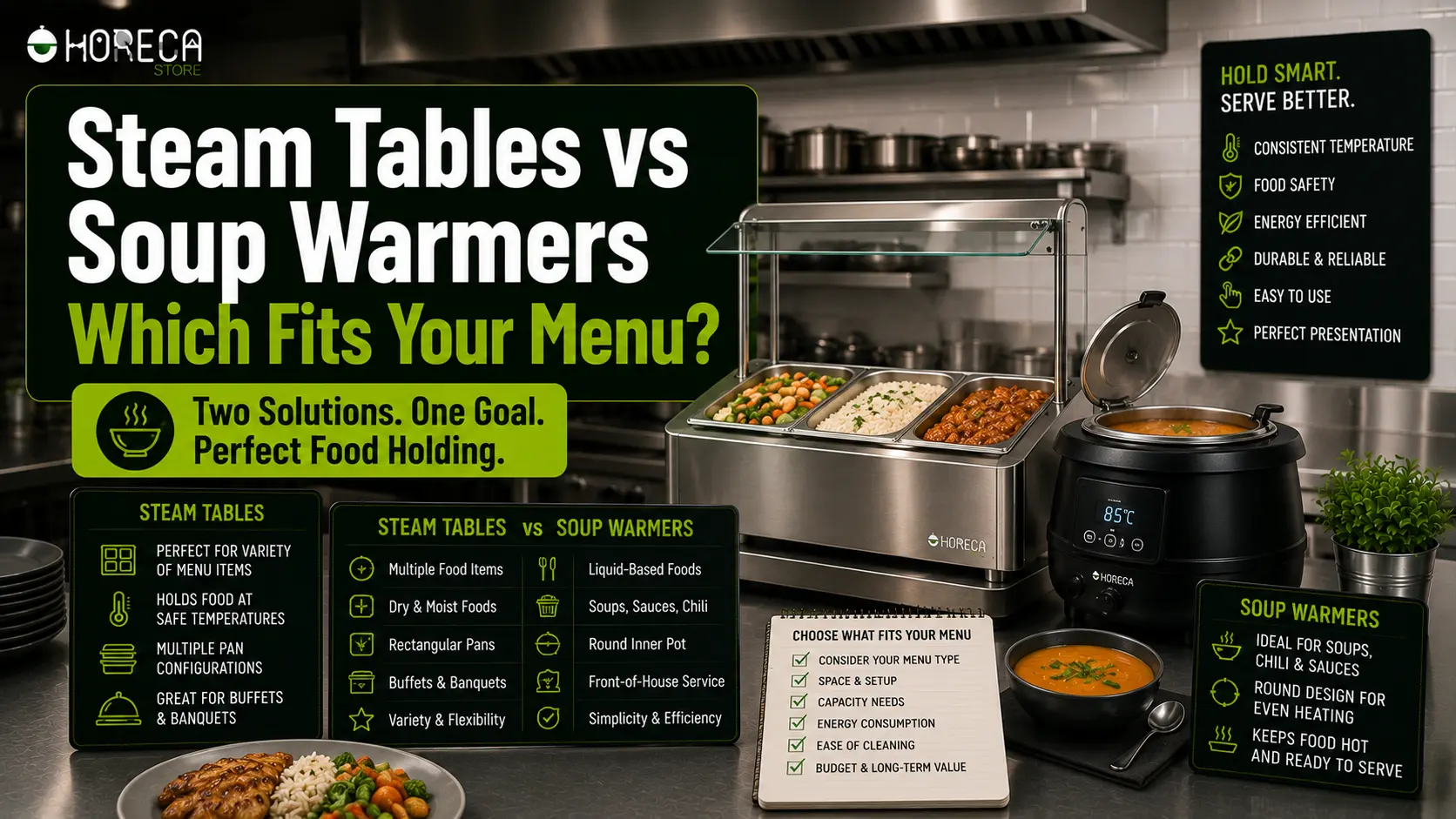
Choosing the right holding equipment is crucial for any restaurant. It ensures food quality and customer satisfaction. Steam tables and soup warmers are popular options.
Both have unique features and benefits. Steam tables are versatile and can hold various dishes. Soup warmers are specialized for liquid-based foods.
Understanding the differences can help you make an informed decision. Consider your menu, space, and budget. Each factor plays a role in selecting the best equipment.
Electric steam tables are ideal for indoor settings. Propane steam tables offer portability for outdoor events. Gas steam tables provide consistent heat for larger kitchens.
Soup warmers come in various sizes to fit different needs. They are perfect for soups, stews, and sauces. Regular maintenance is essential for both types of equipment.
This guide will explore the pros and cons of each option. It will help you decide which fits your menu best.
Understanding Food Holding Equipment: The Basics
Food holding equipment plays a key role in the foodservice industry. It keeps food warm, ensuring it's served at the right temperature. This is vital for customer satisfaction and food safety.
Several types of holding equipment are available, each serving different needs. The most common options include steam tables and soup warmers. Both have unique functions and features.
A steam table is great for large quantities of food. It's often used in buffets and catering events. Versatility is one of its strengths. Meanwhile, soup warmers are built specifically for liquid dishes. They preserve the taste and texture of soups and stews.
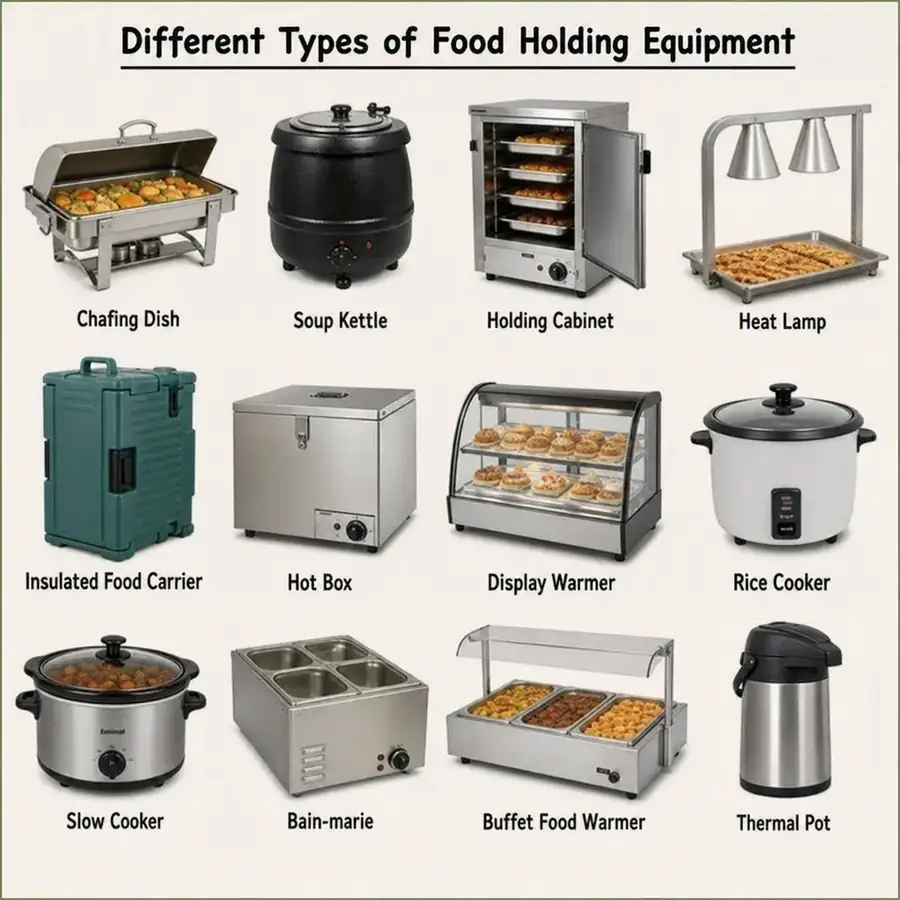
When choosing equipment, consider these factors:
- Type of food being served
- Available space and layout of the kitchen
- Energy source and efficiency
- Maintenance requirements
Understanding these basics can help in making the right choice. The goal is to match the equipment to your menu needs. Balancing functionality with efficiency ensures the best service experience for your patrons.
What Are Steam Tables? Types, Properties, and Uses
Steam tables are essential in the foodservice industry. They are used to keep cooked food warm and ready to serve. Available in various designs, they cater to different operational needs.
These tables consist of a heated base with wells for pans. The pans are usually filled with hot water. This setup provides consistent heat. Steam tables offer various benefits, notably keeping food from drying out.
There are several types of steam tables. They include electric, gas, and propane models. Each type suits different settings and preferences.
Common uses of steam tables include:
- Buffets in restaurants and hotels
- Catering events, both indoor and outdoor
- School cafeterias and institutional dining
- Food courts in malls or airports
Adaptability is one of the standout features of steam tables. They can hold entrees, sides, and sauces with ease. They are a go-to choice for maintaining quality and temperature, making them a reliable kitchen ally.
Electric, Gas, and Propane Steam Tables: Key Differences
Understanding the types of steam tables helps in making informed choices. Electric, gas, and propane steam tables each have unique advantages.
Electric steam tables are perfect for indoor settings. They require a steady power source. These units offer ease of use and maintenance, ideal for most kitchens.
Gas steam tables provide consistent heating. They are powered by natural gas, making them fit for large establishments. Gas models need proper ventilation due to their fuel type.
Propane steam tables offer portability. They are beneficial for outdoor events and caterings. Such models excel where electricity isn't always accessible.
Here's a brief comparison:
- Electric: Easy to use, needs power outlet
- Gas: Consistent heat, requires ventilation
- Propane: Portable, best for outdoor use
These differences help tailor selections according to the specific needs of your operation.
Steam Table Properties and How They Work
Steam tables are designed to maintain food temperature. They ensure food safety while preventing moisture loss. The use of water creates steam, which envelops the pans.
A critical property of steam tables is their ability to accommodate various pan sizes. This flexibility allows chefs to arrange dishes as needed. Temperature control is straightforward, supporting quick adjustments during service.
Key features include:
- Moisture retention: Prevents food from drying out
- Temperature uniformity: Ensures even heating
- Versatility: Adapts to different pan configurations
Such properties make steam tables essential for reliable food service.
Steam Table Calculations: Sizing, Temperature, and Water Levels
Precision is key for steam table efficiency. Calculating the right settings prevents food quality loss. This involves determining suitable sizes, temperatures, and water levels.
Temperature settings usually range from 140-170°F. This range keeps food safe and ready to serve. Proper water levels prevent the pans from scorching.
Considerations for optimal performance:
- Temperature: Adjust according to food type
- Water level: Maintain about 1 inch depth
- Pan size: Choose based on volume and menu needs
Executing these calculations ensures the steam table operates effectively.
Steam Table Examples and Applications in Restaurants
Steam tables have a broad range of applications in restaurants. They are ideal for large service operations and quick-serving environments.
Buffet-style setups are a common usage. Here, various dishes are kept warm for extended periods. Cafeteria-style dining also sees heavy use of steam tables, enabling fast, efficient service.
Restaurants regularly use steam tables for:
- Holding hot entrees and sides in buffets
- Preparing large batches for banquets
- Ensuring quick service in cafeterias and fast-food outlets
Such versatility makes steam tables a staple in commercial kitchens.
What Are Soup Warmers? Features, Types, and Best Uses
Soup warmers are kitchen devices specifically designed to heat and hold soups, stews, and other liquid dishes at a safe serving temperature. Unlike steam tables, they focus primarily on liquid-based foods, providing them with optimal care and maintenance.
These warmers often feature a simple design. Most come equipped with an inner pot or kettle, surrounded by a heating element, and often include a lid to retain heat and moisture. They may range from smaller models to more extensive units suitable for high-volume service.
Soup warmers also have adjustable temperature settings. This feature allows precise control, ensuring different types of soups are kept at their ideal temperatures. Their focus on liquids makes them highly efficient and energy-saving compared to general-purpose holding equipment.
Types of soup warmers include:
- Electric countertop models: Ideal for small spaces
- Drop-in units: Built into countertops for a seamless look
- Freestanding models: Larger capacity with versatility in placement
These devices are best used in settings where soups play a significant role on the menu, like diners, cafeterias, or specialized restaurants. They ensure soups remain hot, flavorful, and safe over time.
Comparing Soup Warmers to Steam Tables: Pros and Cons
When comparing soup warmers and steam tables, each has distinct advantages tailored to specific needs. Understanding these differences can guide the optimal choice for restaurant operators.
Soup warmers are excellent for specialized needs. They excel at maintaining the consistency and flavor of liquid dishes. They offer precise temperature controls which are essential for delicate soups. In contrast, steam tables provide a broader range of uses, accommodating different types of dishes, from meats to sides.
Key comparisons include:
- Precision: Soup warmers offer fine-tuned temperature control
- Versatility: Steam tables hold a wider variety of foods
- Energy use: Soup warmers often use less energy than steam tables due to targeted heating
The main downside of soup warmers is limited dish compatibility. On the other hand, steam tables can consume more energy due to their size and multipurpose design.
Selecting between them depends largely on menu focus and operational needs. If your menu relies heavily on soups and stews, investing in soup warmers could bring better results. For mixed service menus, steam tables provide necessary flexibility.
Menu Considerations: Which Equipment Fits Your Food Offerings?
Choosing between steam tables and soup warmers starts with evaluating your menu offerings. Each type of holding equipment has features suited to different culinary needs. If your menu includes a variety of dishes like entrees, sides, and sauces, steam tables offer flexibility and convenience. They can accommodate different pan sizes, making them versatile for diverse buffets or restaurant service lines.
For menus that emphasize soups or stews, soup warmers are likely more suitable. They maintain the quality and temperature of liquid-based dishes optimally. This choice ensures that soups retain their intended taste and texture throughout service. Understanding the core components of your menu helps make the right decision.
Consider these important questions when deciding on equipment:
- Is your menu diverse or focused on liquids?
- Do you prioritize versatility or specialization?
- What are your serving sizes and volumes?
Answering these questions can aid in identifying which equipment aligns best with your culinary goals. An ideal solution ensures consistency in serving, leading to satisfied customers and smooth operations. Balancing functionality with menu requirements is crucial for service success.
Space, Capacity, and Footprint: Planning for Your Kitchen
When selecting holding equipment, consider the space available in your kitchen. Both steam tables and soup warmers come in various sizes and configurations. Determining your kitchen’s layout can dictate which option suits you best. Prioritize equipment that fits seamlessly into the available space without disrupting workflow.
Capacity needs should also guide your decision-making process. A large restaurant may require multiple steam tables to efficiently serve customers. Smaller operations might find that a single soup warmer suffices, particularly if soups and stews are the primary offerings. Balancing capacity and kitchen space ensures efficient service and preparation.
Keep these factors in mind when planning your equipment layout:
- Kitchen layout and available space
- Anticipated service volume and peak times
- Compatibility with existing equipment and kitchen flow
Ensuring your equipment aligns with your kitchen space and capacity needs will streamline service, making your kitchen more efficient and effective.
Energy Efficiency and Cost: What to Expect
When choosing between steam tables and soup warmers, energy efficiency becomes a key consideration. Equipment that uses less energy reduces operational costs, benefiting your bottom line. Electric steam tables generally have a predictable energy usage, making budgeting easier.
Propane steam tables can be efficient but watch fuel costs, especially if usage is high. Evaluate the energy usage of both steam tables and soup warmers with respect to their expected operation. This ensures that you select cost-effective equipment that aligns with your budget goals.
To better manage energy and costs, consider the following:
- Assess energy consumption for each type
- Predict long-term operational costs
- Consider initial purchase vs. lifecycle cost
By balancing energy efficiency with cost considerations, you can invest in holding equipment that not only meets your operational needs but also aligns with financial constraints.
Food Safety, Temperature Control, and Compliance
In the foodservice industry, maintaining strict food safety standards is crucial. Both steam tables and soup warmers play vital roles in ensuring food remains safe for consumption. The ability to control temperature precisely helps prevent bacterial growth, which thrives between 40°F and 140°F.
Steam tables offer adjustable temperature settings that facilitate optimal food holding conditions. This flexibility is important for catering to diverse menu items. Proper temperature control ensures food safety compliance with health regulations.
For soup warmers, maintaining consistent heat is essential. This helps soups stay within safe temperature ranges. Different models may offer varied temperature control features, so choose one that fits your specific needs.
Here’s how to maintain food safety with holding equipment:
- Monitor temperatures regularly
- Adjust settings based on food type
- Ensure equipment is functioning correctly
By prioritizing temperature control, you can confidently meet compliance standards, keeping customers safe and satisfied.
Cleaning, Maintenance, and Staff Training
Proper cleaning and maintenance of steam tables and soup warmers are essential for hygiene and longevity. Regular upkeep helps prevent the buildup of food residues that can lead to contamination. It's crucial to follow manufacturer guidelines for cleaning to ensure that equipment remains in optimal condition.
Routine maintenance not only enhances performance but also extends the equipment's lifespan. Check for any wear and tear, especially in heating elements and controls. Regular inspections help identify issues early, minimizing disruptions during service.
Staff training on the proper use and care of holding equipment is vital. Well-trained employees can operate and maintain these tools effectively. This reduces the likelihood of accidents and improves overall efficiency.
Key aspects of staff training include:
- Understanding cleaning procedures
- Recognizing maintenance needs
- Operating equipment safely
Comprehensive staff training ensures smooth operation, keeps your kitchen running efficiently, and maintains high hygiene standards.
Innovations and Trends in Food Holding Equipment
The foodservice industry is evolving with innovations in holding equipment. Advances focus on enhancing efficiency, energy use, and food safety. These trends aim to streamline operations while maintaining top-quality food service.
New technology includes digital controls that offer precise temperature management. This feature helps prevent food from overcooking or cooling. Moreover, modern steam tables now come with smart connectivity. This allows for remote monitoring and adjustments, providing added convenience for busy kitchens.
Emerging trends also emphasize sustainability and environmental impact. Energy-efficient models are increasingly popular, reducing both costs and carbon footprints. Sustainable materials in manufacturing add to environmental efforts. Forward-thinking kitchens prioritize these innovations to remain competitive and responsible.
Key innovation aspects include:
- Digital temperature controls
- Remote monitoring capabilities
- Energy-efficient designs
Making the Right Choice: A Step-by-Step Decision Guide
Selecting the ideal holding equipment for your menu requires a systematic approach. Begin by assessing your menu offerings and identify the types of dishes you frequently serve. Evaluate whether they are best suited for steam tables or soup warmers, considering items like soups, sauces, and entrees.
Next, consider your space and capacity needs. Measure your kitchen space to determine where the equipment will fit without disrupting workflow. Calculate the capacity requirements to ensure the equipment can handle peak service times without difficulty.
Budget plays a crucial role in your decision. Compare the initial purchase costs and long-term operating expenses of each option. Factor in energy efficiency to gauge ongoing utility costs. Opt for equipment that balances initial investment and operational efficiency.
Key decision steps:
- Menu analysis
- Space and capacity evaluation
- Budget and cost assessment
- Energy efficiency consideration
By following these steps, you can choose equipment that aligns perfectly with your culinary and operational demands.
Steam Tables vs Soup Warmers: Which Holding Equipment Fits Your Menu
The Horeca Store choosing between steam tables and soup warmers depends on your menu, service style, and food holding requirements. Steam tables are ideal for buffets, cafeterias, and restaurants serving multiple hot dishes because they can hold large quantities of entrées, sides, and prepared foods at consistent temperatures. Soup warmers are better suited for cafés, delis, and restaurants that need to keep soups, sauces, and liquid-based foods ready for quick service. Understanding capacity, temperature control, and menu needs helps you select the right holding equipment.
The right food holding solution improves efficiency, maintains food quality, and supports faster service during busy hours. The Horeca Store offers a wide range of commercial kitchen equipment, including steam tables, soup warmers, food warmers, cooking equipment, and restaurant supplies for professional foodservice businesses. With quality products, competitive pricing, and reliable support, The Horeca Store helps restaurants, cafés, and catering operations choose equipment that keeps food fresh and service running smoothly.
Frequently Asked Questions About Steam Tables and Soup Warmers
Many readers wonder about the difference in energy usage between steam tables and soup warmers. Generally, steam tables tend to consume more energy, especially gas and electric models, due to their larger capacity and versatility.
Another common question concerns the ease of maintenance for these units. Both steam tables and soup warmers require regular cleaning. However, soup warmers, given their simplicity, might be slightly easier to clean due to their smaller size and fewer components.
Lastly, some are curious about the specific foods each equipment type can hold. While steam tables can accommodate a wide range of dishes, soup warmers are primarily designed for liquids. Depending on your menu needs, one may be more suitable than the other.
Key FAQs include:
- Which uses more energy?
- Ease of maintenance?
- Types of foods each holds?
Conclusion: Matching Equipment to Your Menu and Service Style
Choosing the right holding equipment can make a significant impact on your restaurant’s efficiency. Steam tables and soup warmers each have unique strengths. Your decision should primarily be based on your menu offerings and service style.
Consider how frequently your menu includes liquid-based dishes. If soups and stews dominate, then soup warmers are a logical fit. On the other hand, if your offerings are diverse, steam tables provide the versatility needed to maintain quality across a variety of dishes.
Reflect on these key considerations:
- Menu variety
- Space availability in your kitchen
- Budget constraints and energy efficiency goals