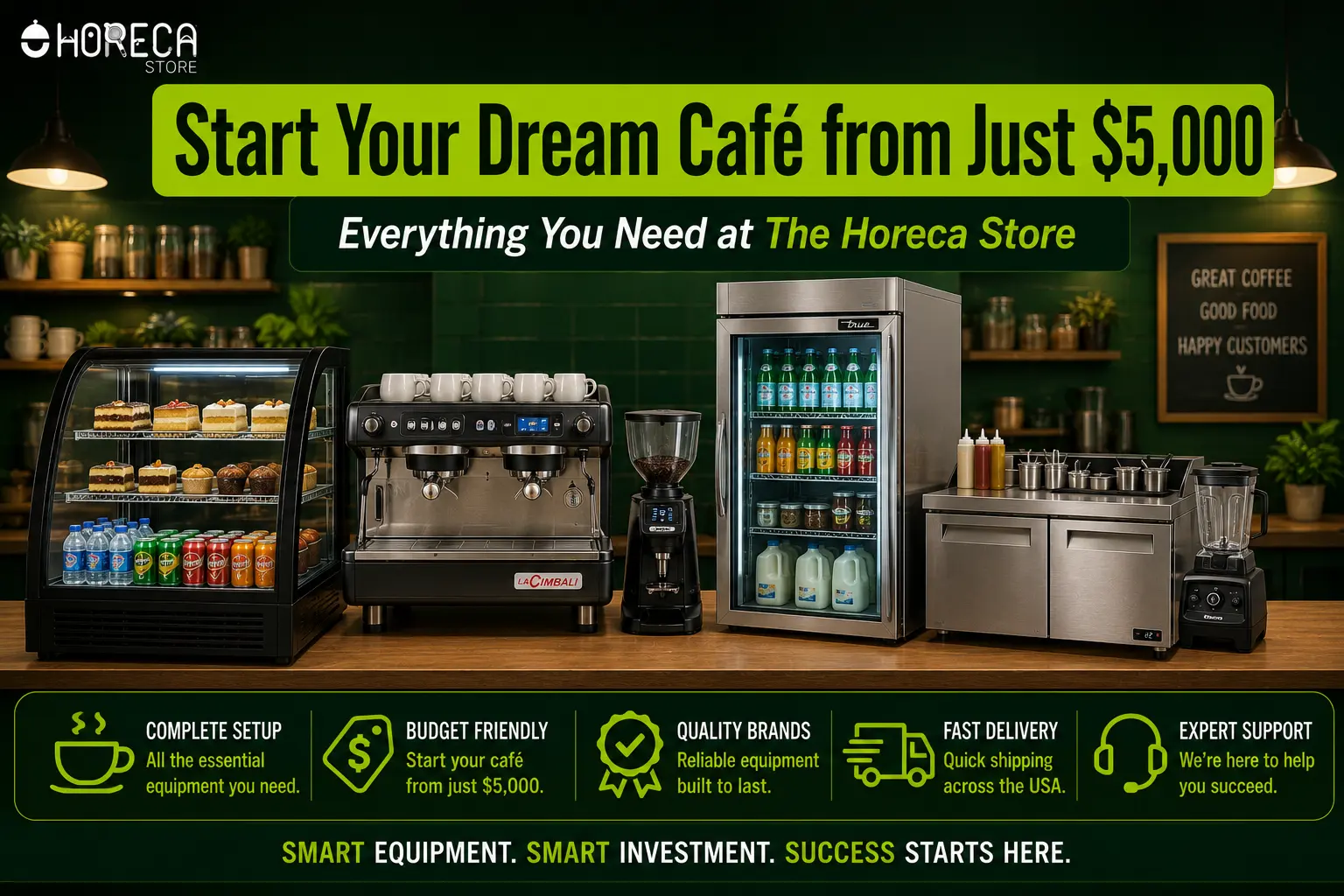
Opening a café is a dream shared by countless coffee enthusiasts, but the perceived financial barrier to entry often leaves that dream brewing indefinitely on the back burner. The prevailing myth in the hospitality industry is that you need tens of thousands of dollars just to unlock the front door and pull your first shot of espresso.
However, with strategic planning, a discerning eye, and the right supplier partnerships, you can launch a functional, professional, and profitable coffee business on a remarkably tight budget. If you are operating a pop-up, a mobile coffee cart, or a small neighborhood espresso bar, it is entirely possible to source your core café equipment on a budget of around $5,000.
In this comprehensive guide, we will walk you through exactly how to allocate your funds, where to find hidden gems, and how to partner with experts like The Horeca Store to equip your dream café without draining your life savings.
Navigating Your Initial Investment: Budgeting for Success
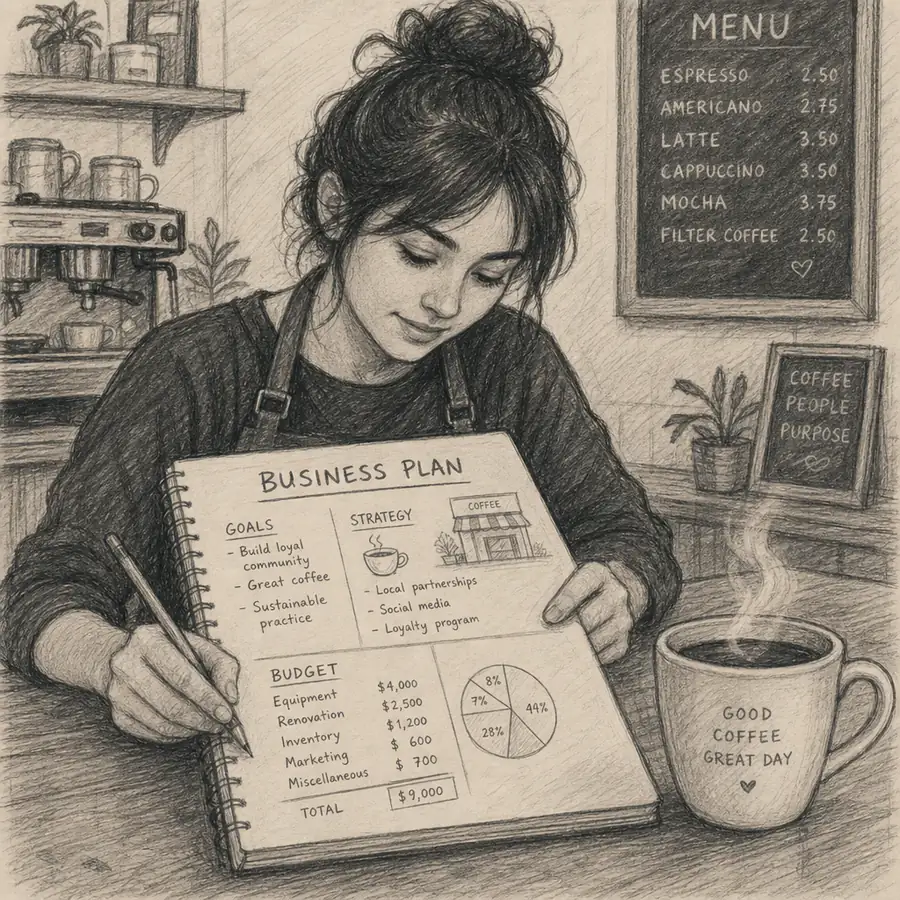
Before you start adding items to your digital shopping cart, you need a financial roadmap. One of the most common questions new entrepreneurs ask is how much to spend on coffee shop equipment. The answer depends entirely on your business model, expected daily volume, and menu complexity.
When your hard limit is $5,000, every single dollar must be justified. You cannot afford to purchase equipment that looks beautiful but fails to perform under pressure, nor can you overspend on brand-new, top-tier luxury machines when a well-maintained, pre-owned alternative will produce the exact same quality in the cup.
The Strategic $5,000 Allocation
To succeed with a micro-budget, you must adopt a lean startup mentality. Here is a realistic percentage breakdown of how you might allocate a $5,000 equipment budget:
- Espresso Machine (40% - $2,000): The heart of your operation. This will require strategic shopping for refurbished or high-end used models.
- Espresso & Filter Grinders (20% - $1,000): The unsung heroes of coffee quality. Never skimp here.
- Batch Brewer (10% - $500): For high-margin, fast-moving morning drip coffee.
- Refrigeration (15% - $750): Keeping your milk safe and accessible.
- Water Filtration (5% - $250): Protecting your machines and ensuring great taste.
- Accessories & Smallwares (10% - $500): Tampers, pitchers, knock boxes, and scales.
By adhering strictly to a budget like this, you prevent emotional spending and keep your focus on ROI (Return on Investment).
Building Your Essential Startup Coffee Shop Gear List
The key to outfitting a café on a shoestring budget is differentiating between "must-haves" and "nice-to-haves." It is easy to get distracted by automated milk frothers, high-tech puqpresses, and nitro cold brew taps. While these are fantastic tools, they are not necessary for opening day.
Your essential startup coffee shop gear list should be stripped down to the absolute necessities required to serve a classic coffee menu (espresso, milk-based drinks, and drip coffee).
The Non-Negotiables
- Espresso Machine: A reliable 1-group or 2-group machine.
- Espresso Grinder: A dedicated grinder capable of fine, consistent adjustments.
- Batch Brewer: For quick, high-volume drip coffee.
- Water Filtration System: To prevent scale buildup and ensure optimal flavor extraction.
- Undercounter Refrigerator: For milk and alternative milks.
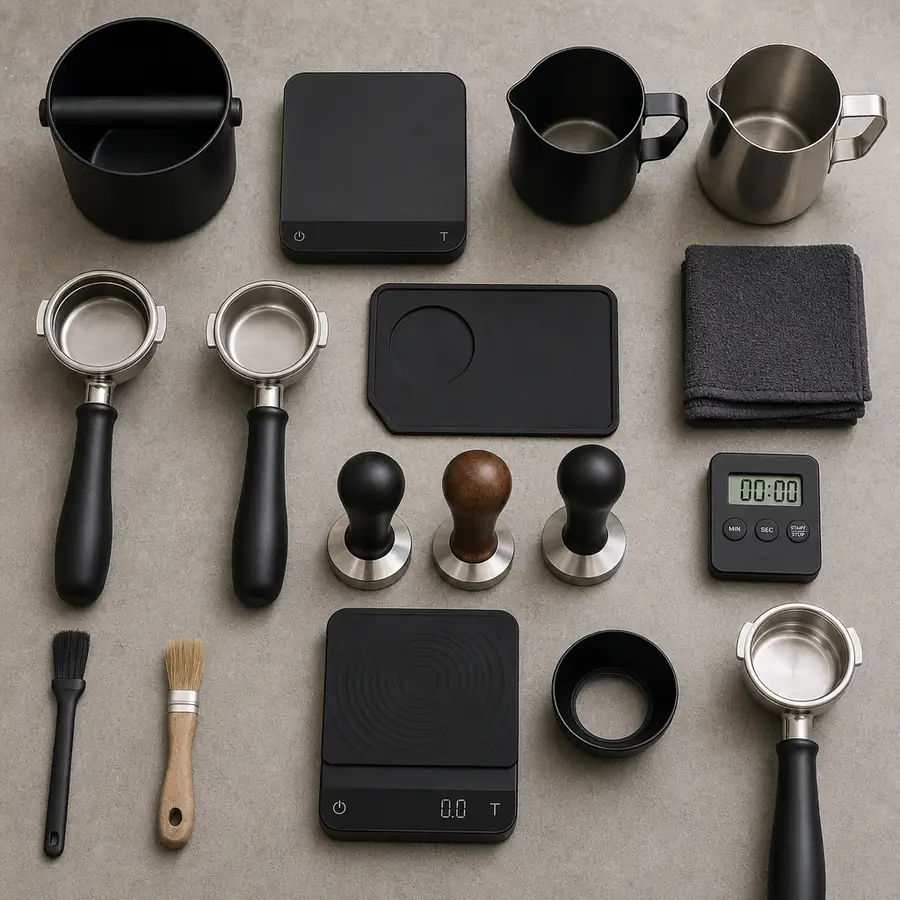
- Barista Basics: A high-quality tamper, a digital scale with a timer, milk steaming pitchers, a knock box, and cleaning brushes.
By sticking exclusively to this list, you preserve your capital for marketing, permitting, and high-quality coffee beans. You can always upgrade and add luxury tools once your café is generating a steady cash flow.
The Heart of the Café: Securing Your Espresso Machine
The espresso machine is the focal point of your café. It is your primary workhorse and your largest expense. Buying a brand-new, top-of-the-line commercial machine can easily cost between $10,000 and $20,000—shattering a $5,000 budget instantly. Fortunately, there are several savvy workarounds.
Navigating Prosumer vs. Commercial Gear
For small shops, mobile carts, or bakeries where coffee is a secondary offering, you might find yourself weighing prosumer vs commercial gear for small shops.
- Prosumer Machines: These are high-end home machines designed with commercial-grade components (like rotary pumps and dual boilers) but built for lower volume. Brands like La Marzocco (Linea Micra/Mini), Rocket, or Lelit offer incredible prosumer models. They are cheaper and run on standard 110V power. However, if you plan to serve back-to-back milk drinks for a line of 20 people, a prosumer machine will lose steam pressure and slow you down.
- Commercial Machines: Built for high volume, continuous use, and extreme durability. They feature massive boilers and robust heating elements.
If your core business is coffee, you need a true commercial machine. To get one on a budget, you have to look past the "brand new" sticker.
The Magic of Refurbished Equipment
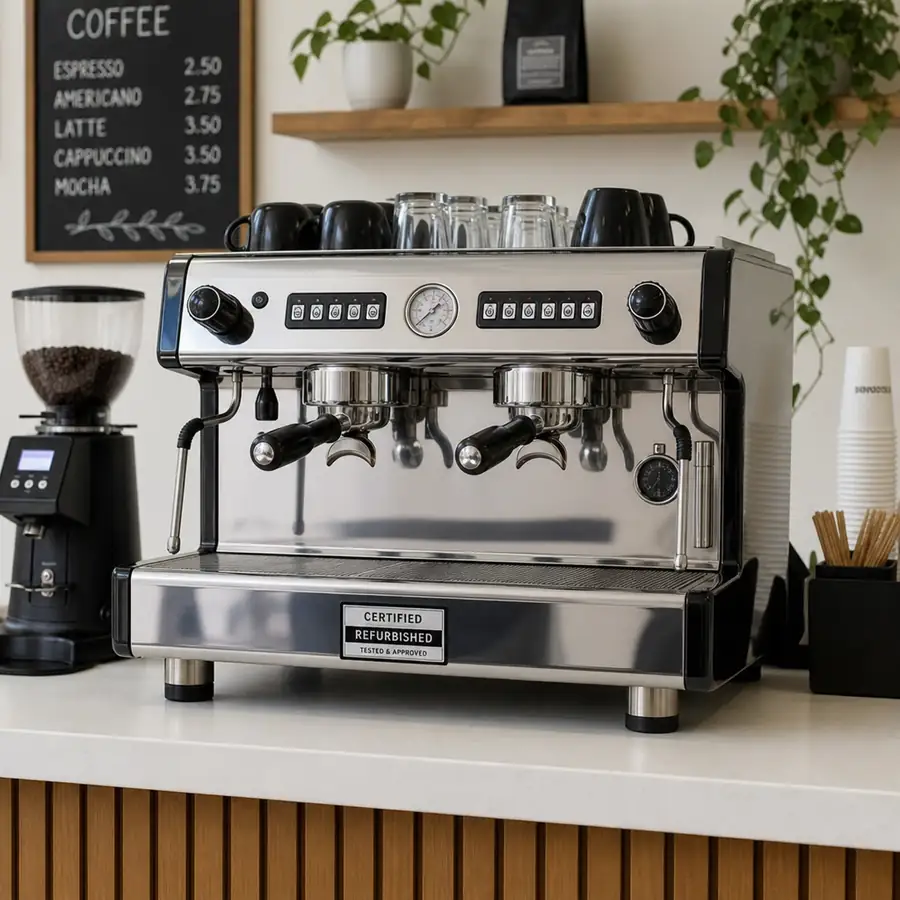
The absolute best way to stretch your budget is by investing in refurbished commercial espresso machines. When a restaurant closes, upgrades, or ends a lease, their equipment is often returned to dealers.
Instead of buying questionable used machines from online classifieds where you have no guarantee of the machine's internal health, look for certified refurbished espresso machine vendors. These professionals completely strip down the machines, descale the boilers, replace all gaskets and O-rings, rebuild the steam valves, and test the electronics.
Purchasing from certified vendors like The Horeca Store ensures you get a machine that operates like new, often at 40% to 60% off the original retail price, and typically accompanied by a limited warranty.
Finding Discounted Models
If you insist on buying new, keep an eye out for discount coffee machines. Vendors often discount last year's models, floor models, or machines with minor cosmetic blemishes (scratch-and-dent). A tiny scratch on the side panel of an espresso machine will not affect how your cappuccino tastes, but it can save you hundreds of dollars.
Grinders: The Unsung Heroes (Do Not Cut Corners Here)
Many novice café owners make the critical mistake of blowing their entire budget on an espresso machine and buying a cheap grinder with the leftovers. In reality, any seasoned barista will tell you that the grinder is more important than the espresso machine. A $15,000 espresso machine cannot fix inconsistently ground coffee, but a top-tier grinder can make a budget espresso machine shine.
Sourcing Best Value Commercial Espresso Grinders
When hunting for the best value commercial espresso grinders, you want to look for durability, burr size, and heat management.
- Flat vs. Conical Burrs: Flat burrs generally offer a more uniform particle size (great for traditional espresso), while conical burrs can operate at lower RPMs, reducing heat during high-volume rushes.
- Budget-Friendly Champions: Brands like Mazzer (specifically the Super Jolly or Major), Fiorenzato, and Eureka offer incredible value.
Because grinders are built like tanks, they are highly prime candidates for buying used. A used commercial grinder might look a bit battered on the outside, but if the motor runs smoothly, all you usually need to do is install a brand-new set of burrs (which costs between $40 and $80) to restore it to peak performance.
Batch Brews: High Margins, Low Cost
While espresso drinks are the glamorous stars of the café menu, standard drip coffee is the reliable profit engine. Drip coffee has incredibly high margins and requires very little labor—just brew a batch, and you can serve dozens of customers in seconds.
Selecting High-Output Low-Cost Batch Brewers
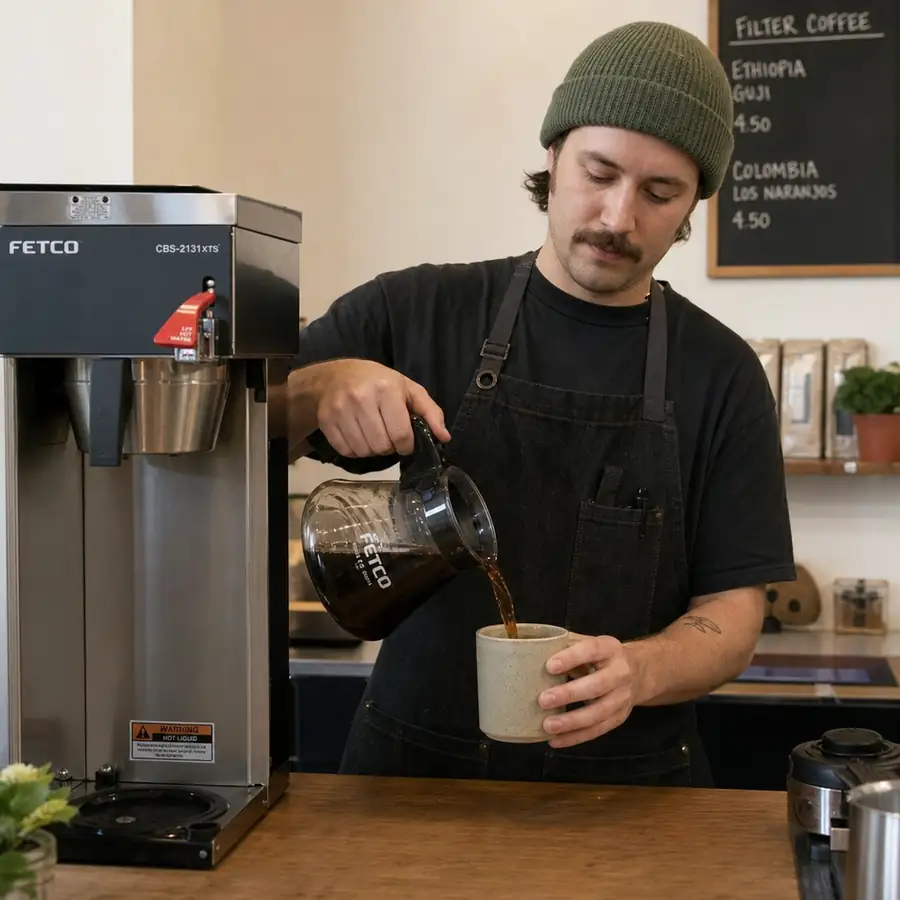
You do not need a fancy, pour-over robotic arm to serve great black coffee. What you need are high-output low-cost batch brewers. Brands like Fetco, Bunn, and Curtis are the industry standards.
When doing a commercial drip brewer price comparison, pay attention to the carafe style. You want a brewer that dispenses directly into a thermal carafe or airpot, rather than sitting on a glass hot plate. Hot plates "cook" the coffee, making it bitter after 20 minutes. Thermal carafes keep coffee hot and tasting fresh for hours without using additional electricity, saving you money on both wasted coffee and utility bills.
A solid, refurbished batch brewer can easily be found for $300 to $600, making it one of the fastest pieces of equipment to pay for itself.
Protecting Your Investment: Water and Maintenance
Buying affordable equipment is only half the battle; keeping it running without expensive emergency repair bills is how you survive your first year in business.
Cost-Effective Water Filtration Systems for Coffee
Coffee is 98% water. If your water tastes bad, your coffee will taste bad. More importantly, if your water is "hard" (full of calcium and magnesium), it will rapidly build up scale inside your espresso machine's boiler. Scale acts as an insulator, forcing your machine to work harder to heat the water, and eventually, it will clog valves and destroy your machine.
Do not skip water filtration to save money. It is the cheapest insurance policy you can buy. While massive Reverse Osmosis (RO) systems can cost thousands, there are highly cost-effective water filtration systems for coffee available for budget setups.
Look into inline scale-inhibiting carbon filter systems (like those from BWT or Everpure). These systems typically consist of a wall-mounted head and a replaceable cartridge. The initial setup is usually under $300, and it will save you a $1,500 boiler-descaling repair bill down the road.
Professional Espresso Machine Maintenance Tips
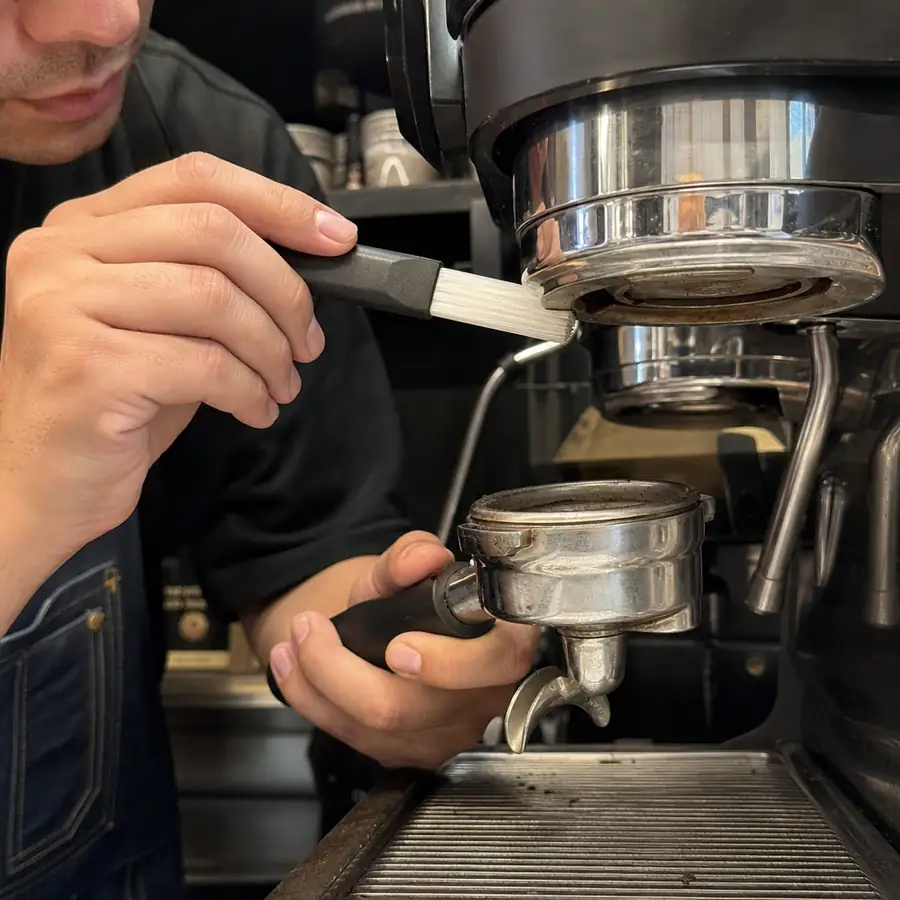
The best way to save money on equipment is to make it last. Implementing a strict maintenance schedule is non-negotiable. Here are some fundamental professional espresso machine maintenance tips that every budget-conscious owner should follow:
- Daily Backflushing: At the end of every day, backflush your espresso machine with a specialized espresso machine detergent (like Cafiza). This removes coffee oils that can go rancid and clog the group head.
- Weekly Soaking: Soak your portafilters and filter baskets in a detergent solution once a week to break down stubborn oil buildup. (Never soak the plastic handles, just the metal parts).
- Steam Wand Purging: Always purge and wipe your steam wand immediately after steaming milk. Milk protein bakes onto hot metal instantly; leaving it will ruin the wand and introduce bacteria.
- Quarterly Gasket Replacement: The rubber group gaskets that create a seal with your portafilter degrade over time due to heat. They cost about $5 each. Replace them every 3 to 4 months before they turn rock hard and cause leaks.
Keeping Things Cool: Refrigeration and Prep
While the coffee gear gets all the attention, your back-of-house and under-counter setup is equally vital for health and safety compliance.
Energy Efficient Commercial Refrigeration Options
Commercial refrigerators run 24/7, 365 days a year. A cheap, poorly insulated fridge might save you $200 upfront, but it will cost you $500 a year in excess electricity and spoiled milk when the compressor fails.
Look for energy efficient commercial refrigeration options. Undercounter, two-door refrigerators are usually sufficient for small to medium cafes, allowing you to store milk right at the barista's knees for fast access. Look for brands that utilize environmentally friendly refrigerants and have solid foam insulation.
Reliable Second-Hand Cafe Supplies
Refrigerators, stainless steel prep tables, three-compartment sinks, and handwash sinks do not impact the flavor of your coffee. Therefore, they are the perfect items to buy used.
You can find reliable second-hand cafe supplies by visiting local restaurant supply liquidators or browsing online marketplaces. Stainless steel is virtually indestructible; a used prep table simply needs a thorough sanitizing to be just as good as a new one. Scouring for these items second-hand can easily save you $1,000 or more on your build-out.
Smart Sourcing: How to Acquire Your Equipment
Knowing what to buy is only part of the equation. Knowing how to acquire it is where the real financial strategy comes into play. If you don't have the cash on hand, or if you want to preserve your $5,000 for operating capital, you have several avenues to explore.
Leasing vs. Buying Cafe Equipment
One of the most intense debates among new café owners is leasing vs buying cafe equipment.
- Buying: When you buy equipment outright (even used or refurbished), you own the asset. It goes on your balance sheet, and you don't have a recurring monthly payment draining your cash flow. If the business fails, you can sell the equipment to recoup some losses. However, it requires significant upfront capital.
- Leasing: Leasing allows you to acquire brand-new, top-tier equipment for a low monthly payment. Many leases include routine maintenance and repairs, offering incredible peace of mind. The downside? Over the course of a 3-year lease, you will ultimately pay much more than the machine's retail value, and at the end, you may not own it.
If your budget is strictly $5,000, buying strategically (refurbished/used) is usually the better long-term play, as eliminating monthly debt is crucial for surviving the lean early months of a new business.
Exploring Financing Options
If you decide you need slightly more capital to get the specific gear you want, there are numerous financing options for new restaurant equipment.
Traditional bank loans can be difficult for startups to secure, but equipment financing is different. Because the equipment itself serves as the collateral for the loan, lenders are often more willing to approve startups. Companies like The Horeca Store frequently partner with lending institutions to offer flexible, low-interest financing specifically for hospitality businesses, allowing you to break your payments into manageable monthly chunks while still working toward ownership.
Navigating Equipment Auctions
If you are incredibly brave and willing to roll the dice, you can hunt for gear on commercial kitchen equipment auction sites. When restaurants go bankrupt, liquidators auction off the assets to the highest bidder. You can sometimes snag a $10,000 espresso machine for $1,500.
However, auctions come with severe caveats:
- Sold "As-Is": You usually cannot plug the machine in or test it before buying. It might be missing internal parts, or the boiler might be cracked.
- No Warranties: Once you win the bid, it is yours. If it is broken, the repair costs are on you.
- Hidden Fees: Buyer's premiums (often 15-20% on top of your bid) and freight shipping can drastically inflate the final price.
Auctions are best left to those who have mechanical skills and the ability to repair espresso machines themselves. For the average café owner, buying from certified refurbished vendors is much safer.
The Hidden Costs: What to Watch Out For
When equipping your café on a budget, it is easy to fixate on the big-ticket items and forget the "death by a thousand cuts" that comes from smallwares and installation fees.
- Installation: A commercial espresso machine requires a dedicated 220V power line, a direct water line connection, and a drain. If your location is not currently plumbed and wired for this, plumbers and electricians can easily eat up $1,000 of your budget. Always check the existing utilities of your space before signing a lease.
- Smallwares: Pitchers, tampers, knock boxes, and shot glasses add up. While you shouldn't buy the cheapest plastic tamper available, you also don't need the $200 artisan wood-handled tamper on day one. Find the middle ground—sturdy, reliable stainless steel tools that get the job done.
- Shipping and Freight: Commercial equipment is heavy. An espresso machine must be shipped on a pallet via a freight truck. Always factor freight costs (which can range from $150 to $400) into your equipment budget. Partnering with a one-stop-shop like The Horeca Store can often save you money on consolidated shipping.
Building a Relationship with Your Supplier
Perhaps the most valuable piece of advice for outfitting a café on a budget is to stop looking at equipment vendors as mere transactions and start looking at them as business partners.
When you build a relationship with a comprehensive supplier like The Horeca Store, you gain access to industry knowledge that money cannot buy. A good supplier will:
- Talk you out of buying an expensive machine if a cheaper one fits your volume better.
- Alert you when a high-quality trade-in or refurbished unit hits their warehouse.
- Provide ongoing support, maintenance advice, and access to replacement parts.
- Offer bundle deals when you purchase your espresso machine, grinder, and refrigeration all at once.
Do not try to piece together your café from ten different random online sellers. Find a reputable supplier, tell them your exact budget, and let their experts help you engineer a package that works.
Summary: Bringing Your Dream to Life for $5,000
Let’s review how you can realistically pull this off.
You find an intimate, small-footprint location that already has the necessary plumbing and electrical work from a previous tenant. You reach out to The Horeca Store and explain your $5,000 budget constraint.
Together, you select a certified refurbished 2-group commercial espresso machine ($2,200) that has been fully rebuilt and comes with a 6-month warranty. You pair it with a used, heavy-duty flat burr commercial grinder ($600) and replace the burrs yourself ($50). For your morning rush, you pick up a refurbished thermal batch brewer ($450).
You protect this entire setup with a reliable inline water filtration system ($250). For your back-of-house, you find a scratched but highly energy-efficient under-counter refrigerator ($650). Finally, you spend your remaining budget ($800) on essential smallwares, knock boxes, scales, and freight shipping.
You have just fully equipped a commercial coffee bar for exactly $5,000. It isn't filled with brand-new, luxury equipment, but it is filled with reliable, professional gear capable of producing world-class coffee.
Start Your Café from Just $5,000 – Equip Your Dream Café for Less at The Horeca Store
Starting a café does not always require a massive equipment budget. With careful planning and a focus on essential equipment, entrepreneurs can build a lean café setup around a $5,000 equipment budget, particularly for a small coffee shop, pop-up, mobile coffee cart, or limited-menu operation. The key is to prioritize the equipment that directly affects daily operations, such as an espresso machine, commercial grinder, batch brewer, refrigeration, water filtration, and essential barista smallwares. The Horeca Store's café guide also highlights refurbished and strategically discounted equipment as ways to stretch a startup budget further.
The Horeca Store can help aspiring café owners find the equipment and solutions they need to build their business while keeping their initial investment under control. Instead of spending your entire budget on premium equipment, consider where new, refurbished, or value-focused options make the most sense for your operation. You can also explore financing solutions when you need additional purchasing flexibility, allowing you to preserve working capital for rent, permits, inventory, marketing, staffing, and other startup expenses. Whether you're opening a neighborhood coffee shop, launching a mobile café, or upgrading an existing beverage operation, explore The Horeca Store for commercial café equipment and practical solutions to help turn your café idea into reality.
Conclusion
Starting a café does not require a massive influx of venture capital or a lifetime of debt. By focusing strictly on your core needs, understanding the immense value of refurbished gear, and making smart choices regarding financing and maintenance, you can stretch your startup capital incredibly far.
Sourcing café equipment on a budget is an exercise in creativity and discipline. Prioritize the quality of your grinder and your water, opt for durable over flashy, and protect your investments with rigorous daily cleaning.
Your customers are not going to judge you based on whether your espresso machine came straight from the factory or from a certified refurbishment center. They are going to judge you on the warmth of your hospitality, the atmosphere of your space, and the quality of the coffee in their cup.
If you are ready to turn your café dream into a reality without breaking the bank, The Horeca Store is your ultimate partner. With an extensive selection of new, discounted, and certified refurbished equipment, flexible financing options, and expert guidance, we are here to help you build the coffee shop you’ve always wanted, for less than you ever thought possible. Explore our inventory today and take the first step toward pulling your very first shot.