
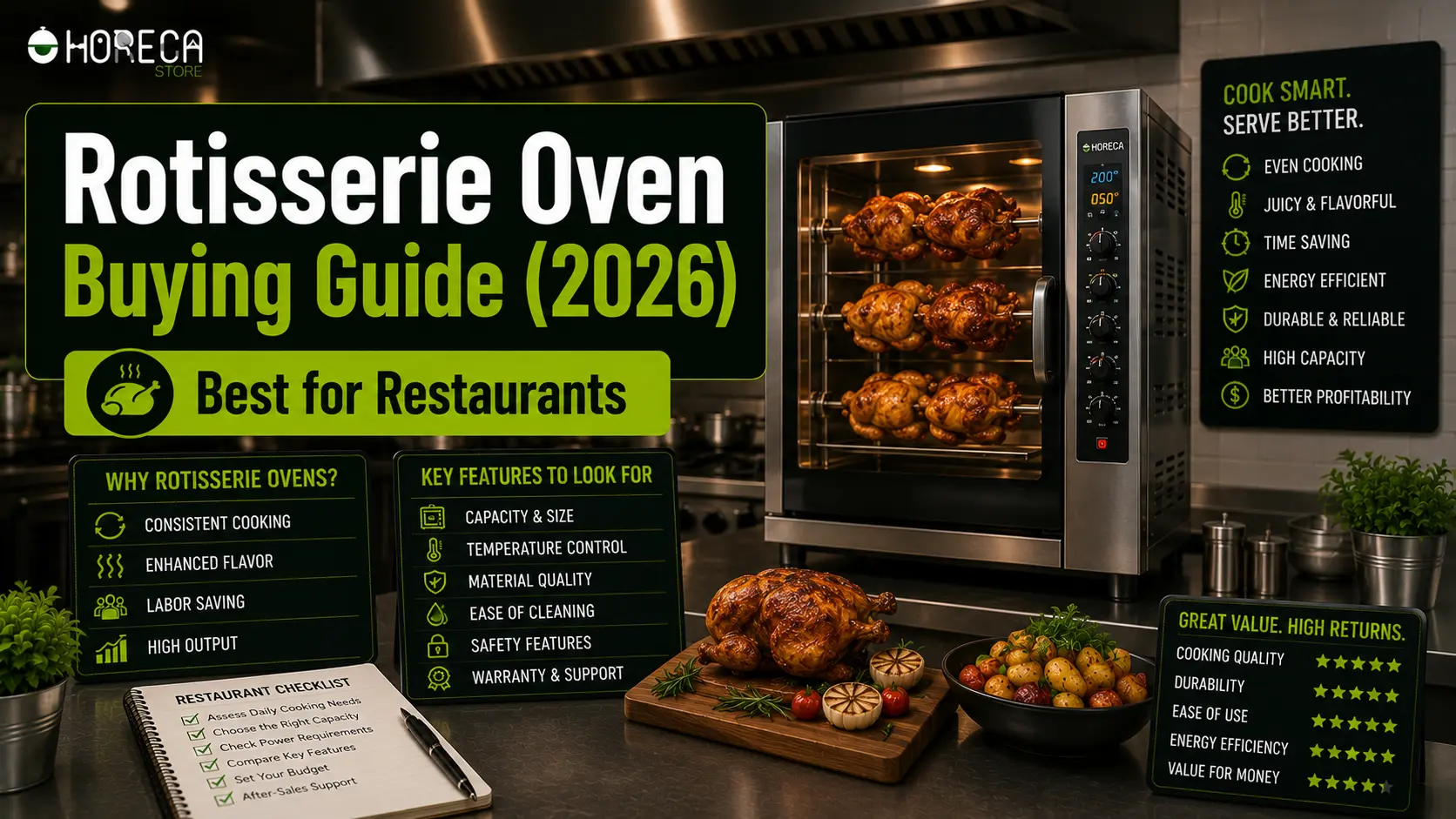
Choosing a rotisserie oven is not just a menu decision. It affects labor, ventilation, energy use, ticket speed, merchandising, and food safety. Use this rotisserie ovens for restaurants: buying guide 2026 as an operator-focused framework for comparing models before you commit capital, revise your kitchen layout, or add a new roasted chicken program.
For 2026, the best purchase is usually the oven that fits your peak-hour demand with the least operational friction. Restaurant operators continue to face pressure from food, labor, insurance, energy, and transaction costs, while many are investing in technology that improves efficiency and guest connections. That makes programmable controls, predictable throughput, lower idle energy, and easy cleaning more important than flashy capacity alone.
Start With the Menu and Service Model
Before comparing brands, define what the oven must do every day:
- Whole chickens for dine-in, takeout, catering, or grab-and-go retail
- Ribs, pork loins, turkey breasts, lamb, vegetables, or specialty proteins
- Batch cooking for lunch and dinner peaks
- Continuous front-of-house display cooking
- Back-of-house production with separate heated holding
A rotisserie oven used mainly as a display piece should be evaluated differently than one used as a production workhorse. Display units need visibility, lighting, glass access, and holding quality. Production units need capacity, recovery, cleaning speed, and durable drive components.
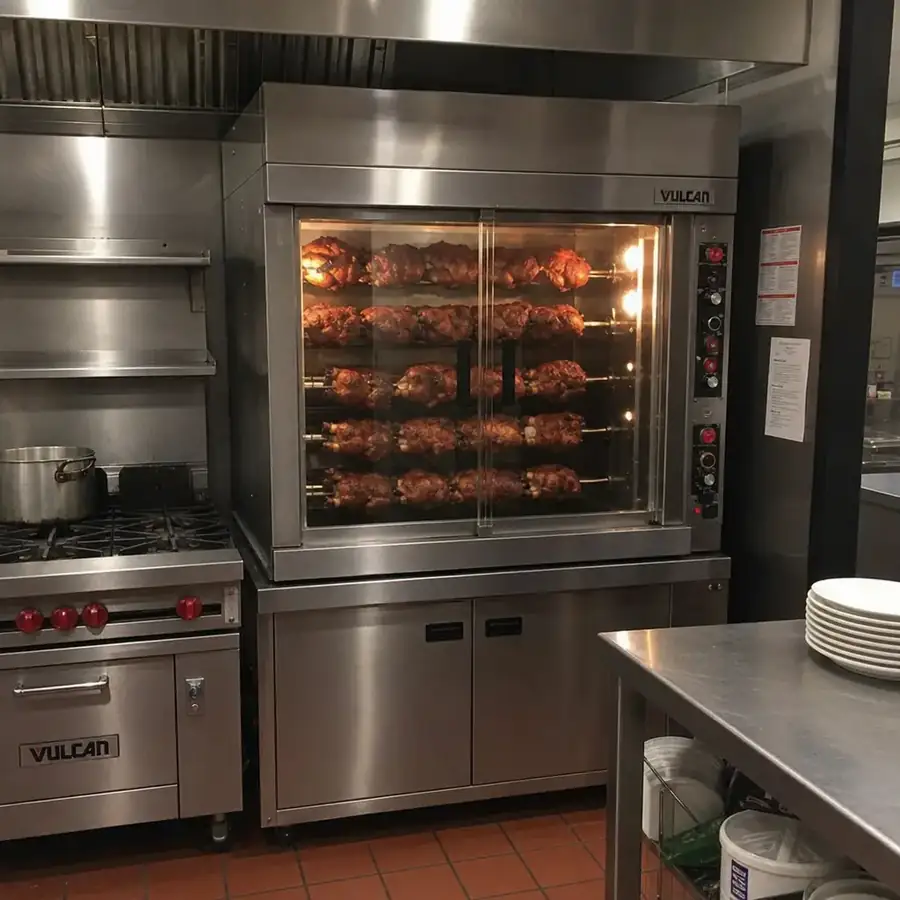
Sizing, Capacity, and Throughput Calculations
Do not size an oven by “birds per batch” alone. Capacity depends on bird weight, skewer spacing, basket design, airflow, cook cycle, loading time, unloading time, resting time, and how long finished product can be held without losing quality.
Use this practical formula:
Hourly portions = total units per batch × sellable portions per unit ÷ total cycle hours
For example, if an oven cooks 20 chickens, each chicken yields 4 portions, and the full cycle including load and unload time is 1.75 hours, the oven produces about 45 portions per hour. If your dinner peak requires 70 portions per hour, you either need a larger oven, overlapping batches, a second unit, or a production-and-hold strategy.
Build in a buffer for:
- Late deliveries or prep delays
- Larger-than-normal birds
- Catering orders
- Staff training time
- Cleaning windows
- Equipment downtime
A good rule for operators: size for your realistic peak period, not your average day.
Gas vs. Electric: Which Energy Type Fits Best?
Gas rotisserie ovens may fit kitchens already built around gas lines and traditional ventilation. Electric units may be easier to place in some layouts, especially where gas infrastructure is limited or where approved ventless configurations are possible. The right choice depends on local utility rates, available electrical service, gas capacity, ventilation costs, and menu volume.
Do not compare purchase price only. Compare:
- Utility cost per cook cycle
- Idle energy during slow periods
- Preheat behavior
- Maintenance requirements
- Ventilation and makeup-air cost
- Available rebates or efficiency incentives
ENERGY STAR notes that certified commercial kitchen equipment can reduce utility and maintenance costs, and eligible commercial ovens must meet cooking-energy efficiency and idle-energy requirements. While not every rotisserie oven category will map neatly to every ENERGY STAR oven listing, the same principle applies: idle energy matters when equipment stays on for long service windows.
Ventless vs. Hood Requirements
Ventilation is one of the biggest buying variables. Many commercial cooking appliances that produce grease vapors require Type I hood coverage, and NFPA 96 is the key standard for ventilation control and fire protection in commercial cooking operations. The 2024 International Mechanical Code also addresses Type I and Type II hoods and includes exceptions for factory-built commercial cooking recirculating systems listed and labeled to UL 710B, subject to installation and ventilation rules.
In plain language: “ventless” does not mean “no approval needed.” Confirm the exact model, listing, filtration system, fire suppression requirements, room ventilation, and local authority approval before purchase. Ask your dealer, mechanical contractor, fire suppression provider, landlord, and health department to review the cut sheet before money changes hands.
Footprint and Installation Details
Rotisserie ovens can create bottlenecks when operators forget about real working space. Measure more than the equipment width.
Confirm:
- Door swing and glass clearance
- Loading and unloading space
- Staff aisle width
- Service access panels
- Heat clearance from walls and adjacent equipment
- Floor strength and caster requirements
- Electrical voltage, phase, plug, and breaker needs
- Gas line size, regulator, and shutoff location
- Drainage or grease-management requirements, if applicable
- Hood overhang, fire suppression coverage, and makeup air
Controls and Programmability
Controls affect consistency as much as capacity. Basic manual controls may work for experienced teams with stable staffing. Programmable controls are usually better for multi-shift operations, high turnover, or multi-unit brands.
Look for:
- Recipe presets for different proteins
- Multi-stage cooking and holding programs
- Probe compatibility or temperature logging
- Auto-reverse or controlled rotation
- Audible and visual alerts
- Lockable manager settings
- Simple language options and clear icons
- Error codes your service company can diagnose quickly
In 2026, labor-saving controls are especially valuable because they reduce training time and help standardize quality across shifts.
Cleaning and Maintenance
Rotisserie programs generate grease. If cleaning is slow, staff will postpone it, product quality will fall, and service calls will rise.
Prioritize ovens with:
- Removable spits, baskets, racks, and drip trays
- Smooth interior surfaces
- Accessible glass panels
- Dishwasher-safe components where approved
- Clear daily cleaning instructions
- Grease collection that is easy to empty safely
- Drive motors and seals protected from buildup
NSF includes rotisseries within its food equipment standards portfolio, and the FDA Food Code requires food-contact surfaces to be clean to sight and touch while cooking equipment is kept free of encrusted grease and soil accumulation.
Create a maintenance calendar:
- Daily: remove grease, clean glass, wash removable food-contact parts, wipe exterior touchpoints.
- Weekly: inspect door gaskets, lamps, skewers, baskets, and drip systems.
- Monthly: check rotation mechanisms, fasteners, fans, filters, and calibration.
- Quarterly or semiannual: schedule professional inspection based on volume and warranty terms.
Food-Safety Considerations
For poultry programs, safety must be built into the workflow, not left to visual judgment. USDA FSIS recommends cooking whole chicken to a safe minimum internal temperature of 165°F, measured with a food thermometer in the innermost part of the thigh and wing and the thickest part of the breast. The FDA Food Code sets hot holding for time and temperature control for safety foods at 135°F or above, except for specific roast provisions.
Operationalize safety with:
- Written cook logs
- Calibrated thermometers
- Clear raw-to-cooked separation
- Dedicated utensils for cooked product
- Labeled hold times
- Batch tracking for display cases
- Correct cooling procedures for leftovers, if reused under your approved food-safety plan
Holding and Display
A rotisserie oven can sell with aroma and theater, but finished food still needs quality control. Decide whether the oven will hold product, transfer product to a heated display case, or feed a backline hot box.
Evaluate holding by testing product after 30, 60, and 90 minutes. Check skin texture, breast moisture, dark-meat quality, temperature stability, and appearance under lights. If grab-and-go is part of the model, packaging must preserve heat without trapping so much steam that the product becomes soggy.
Cost of Ownership
The lowest bid is rarely the lowest-cost oven. Estimate ownership with this formula:
Total cost of ownership = purchase price + freight + installation + ventilation or utility upgrades + energy + cleaning labor + filters and parts + service calls + downtime risk
Ask vendors for sample utility assumptions, replacement part pricing, filter costs, warranty exclusions, and expected preventive maintenance. If two ovens have similar capacity, the one that cleans faster and has stronger local service may be the better financial decision.
Warranty, Service Network, and Parts
Before buying, call the authorized service provider in your area. Ask whether they service the exact brand, how quickly they can respond, whether they stock common parts, and what after-hours support costs. A great oven with no local service network can become an expensive storage cabinet during a weekend failure.
Review warranty terms for:
- Parts and labor length
- Glass, lamps, gaskets, motors, controls, and wear items
- Travel charges
- Required installation conditions
- Preventive maintenance requirements
- Use of non-OEM parts or cleaners
Financing and Leasing
Financing can preserve cash, but compare the full obligation. Options may include equipment loans, fair-market-value leases, lease-to-own structures, dealer financing, or bundled installation packages. Match the term to the useful life of the oven and avoid financing soft costs so aggressively that you are still paying after the equipment is outdated or undersized.
2026 Trends to Watch
The strongest rotisserie oven trends are practical:
- More interest in energy-efficient cooking and lower idle costs
- Compact equipment for smaller footprints and nontraditional service formats
- Programmable controls that reduce training burden
- Ventless or recirculating configurations where listed and locally approved
- Better merchandising through glass, lighting, and front-of-house placement
- More attention to cleaning labor, grease management, and serviceability
These trends line up with broader 2026 restaurant priorities: cost control, labor efficiency, technology adoption, and value-driven operations.
Common Mistakes to Avoid
Avoid these purchasing errors:
- Buying based on maximum capacity without calculating peak-hour throughput
- Assuming ventless approval without checking local code and the AHJ
- Forgetting installation costs, electrical upgrades, gas capacity, or hood modifications
- Choosing a model staff cannot clean quickly
- Ignoring holding quality after the cook cycle
- Overlooking service availability and parts lead times
- Using residential-style assumptions for commercial food-safety workflows
- Failing to test your actual bird size, marinade, packaging, and hold time
Purchase Checklist
Before signing the quote, confirm:
- Required portions per peak hour
- Product mix and average food weight
- Batch time, load time, unload time, and holding plan
- Gas or electric utility readiness
- Hood, ventless listing, fire suppression, and local approval
- Footprint, clearances, aisle space, and service access
- Programmable controls and staff training needs
- Cleaning steps and removable component design
- Food-safety logging and thermometer process
- Display or holding performance
- Total cost of ownership
- Warranty terms and local service coverage
- Financing structure and payoff obligations
A rotisserie oven should make your operation more predictable, not more complicated. Choose the model that supports your menu, fits your building, protects food safety, and keeps pace with your busiest hour.
Rotisserie Ovens for Restaurants: Buying Guide 2026
The Horeca Store a commercial rotisserie oven is an excellent investment for restaurants, delis, cafés, and catering businesses looking to prepare flavorful roasted meats with consistent results. When choosing a rotisserie oven, consider factors such as cooking capacity, fuel type, temperature control, energy efficiency, construction quality, and ease of cleaning. The right oven helps improve cooking efficiency, increase menu options, and deliver evenly cooked products during high-volume service.
Selecting a reliable rotisserie oven can help restaurants enhance productivity and maintain consistent food quality. The Horeca Store offers a wide range of commercial cooking equipment, including rotisserie ovens, convection ovens, refrigeration units, and restaurant supplies designed for professional kitchens. With quality products, competitive pricing, and dependable support, The Horeca Store helps foodservice businesses choose equipment that supports efficient operations and long-term success.