
Opening a restaurant takes more than a strong concept and a good menu. You need a practical restaurant equipment checklist that connects your menu, service style, kitchen layout, storage needs, safety requirements, and budget before you spend money on food service equipment. This list breaks down the major categories, explains what each one does, and helps you build a smarter restaurant supply list without overbuying.
Once you have finalized your menu, equipment requirements, kitchen layout, exact dimensions, and budget, you can begin researching commercial equipment and supplies through restaurant suppliers such as The Horeca Store. That research phase is where you compare sizes, capacities, finishes, warranties, and delivery requirements so your opening purchases support the way your kitchen will actually operate.
What equipment does a startup restaurant need before opening?
Before opening, review restaurant equipment financing, a commercial kitchen layout, how to set up a commercial kitchen, and restaurant kitchen equipment cost.
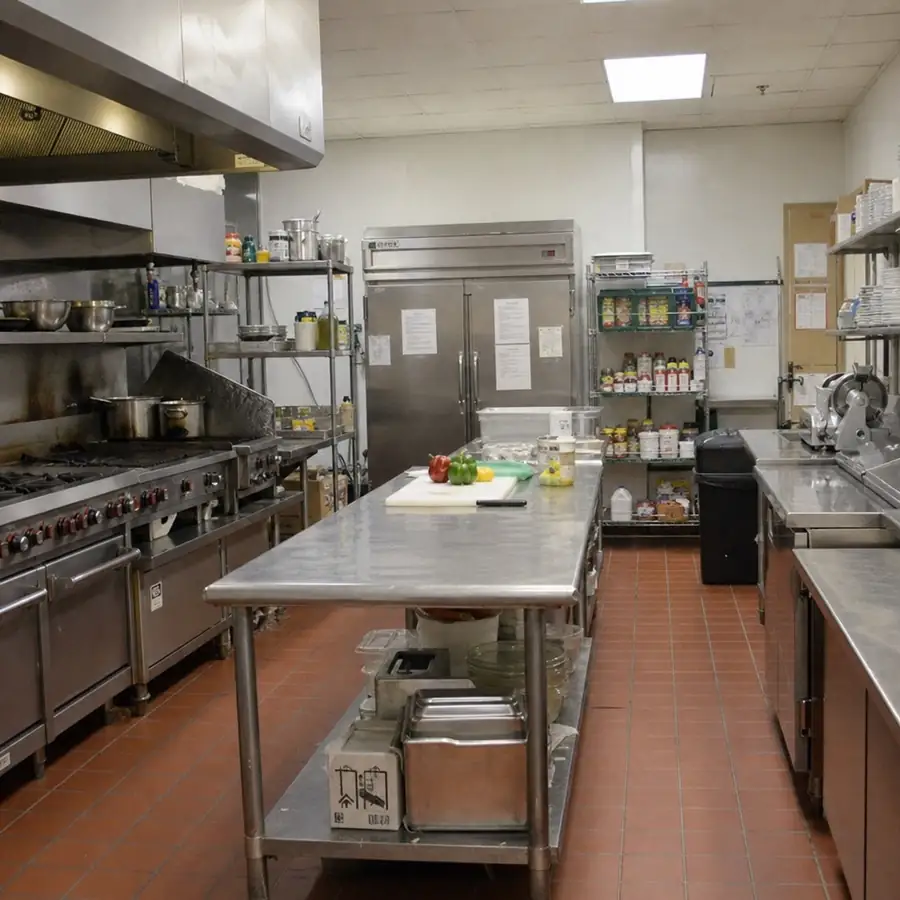
A startup restaurant needs equipment for receiving, storing, preparing, cooking, holding, serving, cleaning, and managing inventory. The right essential commercial kitchen equipment list for a startup restaurant depends on the menu, but most kitchens need refrigeration, freezers, cooking equipment, prep tools, work tables, smallwares, dishwashing supplies, storage, safety items, and front-of-house service supplies.
Use this list as a planning framework, not a one-size-fits-all shopping cart. A pizza shop, café, bakery, ghost kitchen, deli, and full-service restaurant may all need different equipment sizes and configurations. Start with the food you will make every day, then choose commercial kitchen tools that make those dishes safe, consistent, and efficient.
Before buying, confirm:
- Your menu and production volume
- Your kitchen floor plan and utility access
- Equipment dimensions and door clearances
- Ventilation, plumbing, electrical, and gas requirements
- Local health and fire code expectations
- Storage needs for dry, refrigerated, and frozen ingredients
- Delivery timelines and installation responsibilities
- Your opening budget and backup priorities
Core restaurant equipment categories to plan first
A strong restaurant inventory list starts with categories. Thinking by category helps you avoid a kitchen full of mismatched items, missing utilities, or equipment that does not fit your workflow.
Key equipment and supply categories include:
- Commercial refrigeration: Reach-in refrigerators, prep tables, undercounter units, walk-ins, and display refrigerators that keep ingredients cold and accessible.
- Commercial freezers: Upright, chest, undercounter, or walk-in freezers used to store frozen proteins, prepared items, desserts, bread, and backup inventory.
- Ice machines: Units that produce ice for beverages, food displays, bar service, catering, or prep needs.
- Commercial ovens: Convection ovens, combi ovens, deck ovens, pizza ovens, conveyor ovens, or ranges with oven bases, depending on the menu.
- Food preparation equipment: Mixers, slicers, processors, blenders, grinders, scales, cutting boards, and hand tools that reduce prep time and improve consistency.
- Stainless steel work tables: Durable prep surfaces for cutting, plating, staging, cooling, organizing, and holding small appliances.
- Restaurant equipment: The broader group of cooking, holding, storage, sanitation, and service equipment needed to run the operation.
- Commercial kitchen supplies: Smallwares, utensils, pans, containers, labels, cleaning tools, safety gear, and disposable or reusable service items.
These categories work together. For example, your prep table supports your food preparation equipment, your refrigeration supports mise en place, and your smallwares keep cooks from losing time searching for basic tools during service.
1. Commercial refrigeration keeps ingredients safe and service-ready
Commercial refrigeration plans often combine reach-in refrigerators, prep tables, walk-in coolers, and display cases.
Commercial refrigeration is one of the first categories to plan because it affects food safety, inventory control, kitchen layout, and daily prep speed. Your needs may include reach-in refrigerators, walk-in coolers, sandwich or pizza prep tables, undercounter units, refrigerated drawers, or display cases.
Choose refrigeration based on how your ingredients move through the kitchen. Bulk produce, dairy, proteins, sauces, and prepared items may need back-of-house cold storage, while line ingredients need quick access near cooking and assembly stations. If cooks must walk across the kitchen for every ingredient, service slows down and temperature control becomes harder.
Add these refrigeration items to your restaurant equipment checklist:
- Reach-in refrigerator for daily ingredients
- Walk-in cooler for bulk storage, if volume requires it
- Refrigerated prep table for sandwich, salad, pizza, or garnish stations
- Undercounter refrigerator for compact line storage
- Bar refrigerator or bottle cooler, if serving beverages
- Display refrigerator for grab-and-go items, desserts, or retail products
- Refrigerator thermometers and temperature logs
- Food storage containers that fit shelves and speed racks
When comparing options, check capacity, door swing, shelving, compressor location, temperature range, ventilation clearance, and cleaning access. Refrigeration is not just a purchase; it is part of your food safety system.
2. Commercial freezers protect backup inventory and batch production
Commercial freezers help restaurants manage bulk purchasing, prep-ahead production, frozen ingredients, desserts, bread, and emergency stock. Even a fresh-focused concept may need freezer space for backups, specialty products, or items that are not delivered daily.
Common startup freezer choices include upright reach-in freezers, chest freezers, undercounter freezers, and walk-in freezers. Upright models are easier to organize for frequent access, while chest freezers can offer useful bulk storage but may be harder to rotate. Undercounter freezers work well when line cooks need quick access in a tight space.
Include these freezer planning details:
- Estimate frozen inventory by menu item, not guesswork
- Leave space for safe air circulation and organization
- Use labeled, dated containers to support first-in, first-out rotation
- Consider backup freezer capacity for busy periods
- Confirm electrical requirements before ordering
- Plan shelving, racks, or bins before the first delivery arrives
Freezer space can disappear quickly during opening week. Build your restaurant inventory list with realistic storage assumptions so your team is not stacking unlabeled boxes wherever they fit.
3. Ice machines support beverages, displays, and prep work
Ice machines are easy to underestimate because they do not cook food, but they can be essential for beverage service, bar programs, catering, seafood displays, smoothie stations, and food cooling. If your concept serves fountain drinks, cocktails, iced coffee, or high-volume water service, ice production needs careful planning.
A startup restaurant may need a modular ice machine with a storage bin, an undercounter ice machine, or a specialty ice machine depending on available space and service demand. The type of ice matters too. Cube, nugget, flake, or gourmet ice can change drink presentation, melting speed, and customer experience.
Plan for:
- Expected ice usage during peak service
- Storage bin capacity
- Water filtration needs
- Drainage and floor sink placement
- Cleaning and maintenance access
- Ice scoops and sanitary storage
- Backup plans if the machine is down
Place the ice machine where staff can access it without crossing cooking lines or blocking dishwashing traffic. Ice is food-contact material, so sanitation and handling procedures matter from day one.
4. Commercial ovens should match the menu, not the wish list
Commercial ovens are central to many restaurant kitchens, but the best oven depends on what you cook. A bakery may need deck ovens or convection ovens. A pizzeria may need a deck, conveyor, or specialty pizza oven. A full-service kitchen may rely on convection ovens, combi ovens, or range ovens for roasting, baking, reheating, and batch production.
Avoid buying an oven simply because it looks versatile. Match the oven to your actual production needs, then confirm whether it requires ventilation, gas, electric service, water connection, or special installation. Capacity matters, but so does recovery time, cooking consistency, and how easily staff can load, unload, and clean it.
Common commercial oven options include:
- Convection ovens for baking, roasting, and even heat circulation
- Deck ovens for bread, pizza, and products needing a hot cooking surface
- Combi ovens for kitchens that need steaming, roasting, and controlled humidity
- Conveyor ovens for consistent, high-volume items
- Range ovens for smaller kitchens combining stovetop and oven use
- Holding or cook-and-hold ovens for low-temperature production
If your opening budget is tight, prioritize the oven that supports your highest-revenue or highest-volume menu items first. Secondary ovens can be added later if space, utilities, and sales justify the investment.
5. Ranges, griddles, fryers, and charbroilers form the hot line
The hot line also needs an exhaust hood sized for the ranges, griddles, fryers, and charbroilers.
The hot line is where many restaurants win or lose speed during service. Ranges, griddles, fryers, charbroilers, stock pot ranges, and specialty cooking equipment must be arranged around your actual ticket flow. A poorly designed line causes bottlenecks, wasted movement, uneven cooking, and frustrated staff.
A compact menu may only need a range, convection oven, and small fryer. A high-volume burger concept may depend on a wide griddle, fryers with enough basket capacity, and hot holding equipment. A steakhouse may prioritize charbroilers and finishing ovens. Your menu should decide the line, not the other way around.
Add these hot-line items as needed:
- Commercial range with burners or oven base
- Flat-top griddle for breakfast, burgers, sandwiches, or searing
- Fryer for fries, appetizers, chicken, seafood, or desserts
- Charbroiler for grilled proteins and vegetables
- Stock pot burner for soups, sauces, or large-batch boiling
- Salamander or cheese melter for finishing dishes
- Exhaust hood and fire suppression system where required
- Heat-resistant utensils, mitts, and cleaning tools
The goal is not to own every cooking appliance. The goal is to build a line that can produce your menu quickly, safely, and consistently at peak volume.
6. Food preparation equipment reduces labor and improves consistency
Food preparation equipment turns raw ingredients into ready-to-cook components. These tools are especially important when labor is limited, prep lists are long, or consistency matters across shifts. The right prep equipment can make portions more accurate, reduce repetitive hand work, and help staff finish prep before service begins.
Depending on your menu, your food preparation equipment may include a food processor, commercial mixer, slicer, immersion blender, blender, meat grinder, vegetable prep machine, dough sheeter, scale, or portioning tools. Each purchase should connect to a recurring prep task. If a task happens rarely, a lower-cost manual tool may be enough at opening.
Useful commercial kitchen tools for prep include:
- Chef knives, paring knives, serrated knives, and honing tools
- Color-coded cutting boards for food safety workflows
- Mixing bowls, measuring cups, and measuring spoons
- Portion scoops, ladles, tongs, whisks, and spatulas
- Food processors for chopping, slicing, shredding, and pureeing
- Mixers for dough, batters, whipped items, and fillings
- Slicers for meats, cheeses, and consistent cuts
- Digital scales for recipes, portions, and receiving checks
Plan storage for attachments, blades, guards, and cleaning parts. Prep equipment only saves time when staff can access it, clean it, and reassemble it without confusion.
7. Stainless steel work tables create flexible production space
Stainless steel work tables are some of the most useful items in a commercial kitchen because they support prep, staging, plating, cooling, sorting, and equipment placement. They are durable, relatively easy to clean, and available in many sizes and configurations.
Use stainless steel work tables wherever staff need a sanitary, sturdy surface. A prep cook may need a table near refrigeration and a sink. A pastry station may need a table with under-shelf storage. A line cook may need a narrow landing area beside a fryer or oven. The right table can reduce unnecessary steps and help organize the kitchen.
Consider these options:
- Flat-top work tables for general prep
- Tables with undershelves for pans, containers, or small equipment
- Equipment stands for mixers, slicers, or countertop appliances
- Tables with backsplashes for wall placement
- Mobile work tables for flexible layouts
- Overshelves for extra storage in tight kitchens
Measure carefully before ordering. A table that is too large can block traffic, while a table that is too small can force cooks to stack ingredients unsafely or work inefficiently.
8. Sinks and warewashing equipment keep the operation compliant
Warewashing should include a three-compartment sink and a commercial dishwasher with landing space.
Sinks and dishwashing systems are core parts of sanitation, not afterthoughts. Most restaurants need dedicated hand sinks, food prep sinks, mop sinks, and a three-compartment sink or commercial dishwasher setup. Exact requirements vary by location and concept, so confirm with local authorities before finalizing purchases.
A startup restaurant may use a high-temperature or chemical-sanitizing dishwasher, depending on utilities, ventilation, space, and operating preferences. Even with a dishwasher, you will still need landing tables, dish racks, bus tubs, glass racks, drying space, and chemicals. Dish flow should move from dirty receiving to washing, sanitizing, drying, and clean storage without crossing food prep areas.
Include these items in your sanitation section:
- Hand sinks in required locations
- Three-compartment sink with drainboards
- Prep sink for produce or food tasks
- Mop sink or janitorial sink
- Commercial dishwasher, if needed
- Dish tables, racks, and glass racks
- Detergent, sanitizer, test strips, and cleaning brushes
- Trash cans, recycling bins, and liners
- Floor mats and wet-floor signs
Sanitation equipment protects guests, staff, and your opening inspection. Build it into the floor plan before choosing cooking equipment, because plumbing and drainage can be difficult to change later.
9. Storage and shelving keep inventory visible and controlled
Good storage prevents waste, speeds up prep, and helps managers understand what is actually in the building. Your restaurant inventory list should include dry storage shelving, refrigerated shelving, freezer organization, ingredient bins, wall shelves, dunnage racks, and labeled containers.
Every ingredient needs a home. Dry goods should be off the floor, easy to rotate, and protected from contamination. Refrigerated and frozen items should be organized by food safety priority, usage rate, and prep schedule. Smallwares should be stored where they are used, not hidden in random boxes.
Startup storage essentials include:
- Wire shelving or solid shelving for dry storage
- Dunnage racks for heavy bulk items
- Ingredient bins for flour, sugar, rice, or grains
- Food storage containers with lids
- Labels, date stickers, and markers
- Sheet pan racks and speed racks
- Wall-mounted shelves for small spaces
- Lockable storage for higher-value items, if needed
A clear storage system makes receiving easier. When deliveries arrive, staff can quickly check quantities, store items correctly, and update the restaurant inventory list without disrupting prep.
10. Cookware, bakeware, and smallwares fill the daily gaps
Smallwares are the items cooks touch constantly: pans, pots, ladles, tongs, whisks, sheet pans, hotel pans, mixing bowls, strainers, squeeze bottles, measuring tools, and serving utensils. They are less expensive than major equipment, but missing smallwares can slow service just as much as a missing appliance.
Build your smallwares list from each station. The sauté station needs pans and spoons. The grill station needs tongs, scrapers, and resting pans. The pastry station may need scales, sheet pans, piping bags, and cooling racks. The expo station needs plating tools, towels, heat lamps, and garnish containers.
Common smallwares include:
- Stock pots, sauce pots, sauté pans, and frying pans
- Sheet pans, hotel pans, steam table pans, and lids
- Mixing bowls, colanders, chinois, and strainers
- Ladles, spoons, spatulas, tongs, turners, and whisks
- Squeeze bottles, bain-maries, and portion containers
- Cutting boards, knives, peelers, and thermometers
- Timers, scales, and measuring tools
- Towels, aprons, gloves, and basic protective gear
Order extras for high-use items. During opening week, tools move quickly between prep, line, dish, and storage, so a lean smallwares order can create unnecessary stress.
11. Holding, warming, and serving equipment protect food quality
Food does not go straight from cooking to the table in every operation. Many restaurants need hot holding, cold holding, steam tables, heat lamps, proofing cabinets, display warmers, soup warmers, or insulated carriers. These items help maintain quality and temperature during service, catering, pickup, or buffet-style operations.
Holding equipment is especially useful when menu items are batch-cooked or assembled during rush periods. It can also support takeout timing by keeping components ready without overcooking them. However, holding equipment cannot fix poor production planning. Use it for controlled service, not as a place for food to sit too long.
Consider adding:
- Hot holding cabinets for prepared items
- Heat lamps for expo stations
- Steam tables for cafeteria, buffet, or fast-casual service
- Soup kettles or warmers
- Proofing cabinets for dough-based concepts
- Cold wells or refrigerated displays
- Insulated food carriers for catering or delivery
Match equipment to service style. A counter-service operation may need different holding tools than a fine-dining restaurant that plates each order à la minute.
12. Beverage and bar equipment depends on your drink program
Beverage equipment can range from a basic coffee brewer to a full bar system. Your restaurant supply list should reflect the drinks you plan to sell, the speed you need, and the space available for staff to work comfortably.
A café may require espresso equipment, grinders, batch brewers, blenders, refrigeration, pitchers, tampers, knock boxes, and water filtration. A bar may need glass washers, ice bins, speed rails, bottle coolers, cocktail stations, garnish trays, sinks, and draft beer components. A quick-service restaurant may focus on fountain drinks, tea brewers, ice, cups, lids, and self-service stations.
Plan beverage equipment around:
- Drink menu complexity
- Peak-hour volume
- Ice needs
- Water filtration and drainage
- Glassware or disposable cup storage
- Cleaning and closing routines
- Staff reach and movement behind the counter
Beverage stations create revenue, but they also create clutter if not planned carefully. Give staff enough counter space, storage, and waste access to work quickly.
13. Front-of-house supplies complete the guest experience
Front-of-house supplies turn kitchen production into a complete dining experience. These items include dinnerware, glassware, flatware, menus, trays, condiment caddies, check presenters, napkins, tabletop items, host stand supplies, and takeout packaging. They should match your service style and be durable enough for daily use.
A casual restaurant may need baskets, trays, ramekins, and high-turnover glassware. A full-service restaurant may need coordinated plates, wine glasses, steak knives, linen or paper napkins, and server tools. A takeout-heavy concept may need reliable containers, bags, labels, tamper-evident packaging, and pickup shelving.
Include these front-of-house items:
- Plates, bowls, baskets, or serving boards
- Glassware, mugs, cups, and pitchers
- Flatware and steak knives
- Trays, tray stands, and bus tubs
- Napkins, placemats, and tabletop supplies
- Condiment containers and sauce cups
- Takeout containers, bags, labels, and utensils
- Host stand supplies and waitstation organization
Do not choose front-of-house supplies only by appearance. Consider storage space, breakage, dishwasher compatibility, replacement availability, and whether the items support your portion sizes.
14. Safety, cleaning, and maintenance supplies are opening-day essentials
Safety and cleaning supplies are part of your operating system. They help your team prevent accidents, maintain sanitation, and respond quickly when something spills, breaks, overheats, leaks, or fails. These items belong on your opening checklist, not on a last-minute shopping run.
Your list should include first-aid supplies, cut-resistant gloves, oven mitts, floor mats, wet-floor signs, fire extinguishers where required, chemical storage, cleaning brushes, sanitizer buckets, spray bottles, towels, brooms, mops, squeegees, and trash systems. Equipment maintenance items may include filters, descaler, lubricant, replacement gaskets, and manuals.
Create separate storage for:
- Food-contact cleaning tools
- Floor and drain cleaning tools
- Restroom supplies
- Chemical products and safety sheets
- Maintenance parts and manuals
- Personal protective equipment
- Waste and recycling supplies
A clean, safe restaurant is easier to manage when supplies are visible, labeled, and assigned to specific stations. Train staff on where items belong before opening service begins.
15. POS, office, and inventory tools connect the kitchen to the business
Restaurant equipment is not limited to the kitchen. Your operation also needs systems for ordering, payments, communication, inventory tracking, scheduling, accounting, and reporting. These tools help managers understand what is selling, what is running low, and where money is going.
A startup restaurant may need a POS system, receipt printers, kitchen display screens, cash drawers, card readers, label printers, office supplies, clipboards, inventory sheets, order guides, and storage for paperwork. If you run delivery or takeout, you may also need pickup shelving, tablet stands, packaging labels, and charging stations.
Inventory tools should connect directly to your restaurant inventory list. At minimum, track:
- Opening stock counts
- Vendor order guides
- Par levels for key ingredients
- Storage locations
- Prep quantities
- Waste and spoilage notes
- Weekly or monthly counts
- Smallwares and replacement needs
The sooner you build a repeatable inventory process, the easier it becomes to control ordering and reduce surprises after opening.
A practical startup checklist before you buy
Use this checklist after your menu is mostly final and before placing major orders. It helps turn a broad equipment wish list into a usable purchasing plan.
- Map the menu. List every dish, drink, side, sauce, garnish, and prep component you plan to sell.
- Identify production steps. Note what must be stored, washed, cut, mixed, cooked, held, plated, packaged, or served.
- Assign equipment to each step. Connect each task to a specific piece of food service equipment or a smallware item.
- Estimate peak volume. Think through your busiest hour, not your quietest shift.
- Measure the space. Confirm wall lengths, ceiling heights, doorways, aisles, and clearances.
- Check utilities. Verify gas, electric, water, drainage, ventilation, and fire suppression needs.
- Plan storage. Include dry, refrigerated, frozen, chemical, and smallwares storage.
- Confirm code requirements. Review health, fire, accessibility, and building requirements with the appropriate professionals.
- Prioritize must-haves. Separate opening-day essentials from nice-to-have upgrades.
- Research suppliers. Compare commercial kitchen supplies and equipment through suppliers such as The Horeca Store once your layout, dimensions, and budget are clear.
- Schedule delivery and installation. Make sure large items can enter the building and be placed safely.
- Train the team. Review operation, cleaning, storage, and shutdown procedures before service begins.
This process prevents two common startup mistakes: buying equipment that does not fit and forgetting small items that staff need every hour.
Simple equipment comparison notes for startups
Instead of choosing equipment by price alone, compare how each item affects workflow, maintenance, storage, and service. Use the following non-table comparison notes when reviewing your options.
Reach-in refrigerator
- Best for daily cold storage and frequent access
- Works well near prep or cooking stations
- Check shelf capacity, door swing, compressor placement, and clearance
- Useful for most restaurant types
Walk-in cooler
- Best for bulk refrigerated storage
- Useful for higher-volume restaurants or concepts with large deliveries
- Requires more planning for space, installation, flooring, and organization
- Often paired with reach-in units for line efficiency
Convection oven
- Best for roasting, baking, and even heat circulation
- Useful for restaurants, cafés, bakeries, and catering kitchens
- Check pan capacity, heat recovery, utility type, and ventilation needs
- Versatile, but not always the best choice for pizza or artisan bread
Commercial fryer
- Best for fries, chicken, seafood, appetizers, and fried desserts
- Requires attention to ventilation, oil filtration, cleaning, and safety
- Capacity should match peak order volume
- Not necessary for concepts without fried menu items
Food processor
- Best for chopping, slicing, shredding, pureeing, and batch prep
- Helps reduce repetitive knife work
- Check bowl capacity, attachments, cleaning steps, and storage needs
- Worth prioritizing when prep volume is high
Common startup equipment answers
How do I know what belongs on my restaurant equipment checklist? Start with your menu and list every task required to produce it. Then match each task to storage, prep, cooking, holding, serving, and cleaning equipment. This keeps the checklist grounded in operations instead of guesswork.
What is the difference between a restaurant supply list and a restaurant inventory list? A restaurant supply list usually covers what you need to buy, such as equipment, smallwares, cleaning products, and service items. A restaurant inventory list tracks what you have on hand, including ingredients, disposables, supplies, and sometimes smallwares or replacement parts.
Should a startup restaurant buy all new equipment? Not always. Some operators mix new, used, and refurbished items depending on budget, condition, warranty needs, and risk tolerance. Equipment tied to food safety, refrigeration, and mission-critical production deserves especially careful evaluation.
What equipment should I prioritize if my budget is limited? Prioritize items required for food safety, your core menu, sanitation, and legal operation. Refrigeration, required sinks, essential cooking equipment, basic prep tools, storage, and cleaning supplies usually come before specialty upgrades.
When should I start researching commercial kitchen supplies? Begin once your menu, layout, dimensions, utility needs, and budget are clear. At that point, you can compare equipment categories, sizes, and supply options through suppliers such as The Horeca Store with a more accurate understanding of what your restaurant actually needs.
The opening purchase list should support the way you operate
A useful restaurant startup equipment list is not just a catalog of products. It is a working plan for how food moves through your restaurant from delivery to storage, prep, cooking, service, cleaning, and reorder. When each item has a clear purpose, your kitchen becomes easier to train, inspect, and manage.
Before you place final orders, walk through a full service day on paper. Follow ingredients from receiving to storage, then from prep to the cooking line, then from plating to dish return. Any missing sink, shelf, pan, tool, trash station, or refrigerator will become obvious when you imagine staff doing the work.
Use the checklist above to build your final restaurant supply list, then review it with your chef, manager, contractor, and equipment supplier before opening. The best setup is not always the biggest or most expensive one; it is the one that fits your menu, your team, your space, and your first stage of growth.