
Overview -
Opening a restaurant is exciting, but it can also feel overwhelming. Licenses, kitchen planning, budgeting, and equipment decisions can quickly turn into expensive mistakes. This guide outlines a step-by-step framework used by real commercial restaurant setups, focusing on kitchen planning, equipment selection, and budgeting. Whether you’re opening a small café, full-service restaurant, or cloud kitchen, use this as your starting roadmap.
Step 1 — Define Your Concept & Kitchen Needs
Definition
Restaurant concept is the operational model of a foodservice business, including cuisine type, service style, volume expectations, and production workflow.
Key inputs to define upfront
- Cuisine type (e.g., fast casual, full service, specialty)
- Expected daily covers (average number of guests served per day)
- Service model:
- Dine-in
- Takeaway
- Delivery
- Hybrid
- Kitchen size and physical layout constraints
- Electrical capacity and gas availability
- Initial equipment and build-out budget range
Why this matters: Equipment size, power requirements, and workflow depend on these variables.
Step 2 — Essential Restaurant Equipment Checklist
Definition
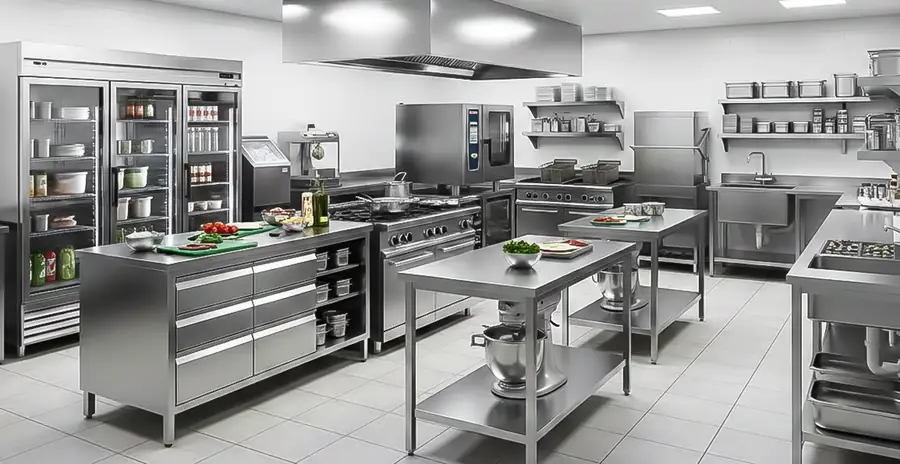
Commercial kitchen equipment refers to professional-grade appliances designed for continuous, high-volume foodservice use and regulatory compliance.
Refrigeration & Freezers
- Reach-in refrigerator
- Undercounter refrigerator
- Upright or chest freezer
- Prep table refrigerator
- Ice machine
Cooking Equipment
- Commercial range or burners
- Oven or combi oven
- Grill, griddle, or fryer (cuisine-dependent)
- Salamander or broiler
Food Preparation
- Stainless steel prep tables
- Food processors
- Mixers
- Cutting boards and commercial knives
Storage
- Dry storage shelving
- Walk-in shelving (if applicable)
- Food containers / GN pans
Dishwashing & Hygiene
- Commercial dishwasher
- 3-sink washing system (where required)
- Dedicated handwash station
Front-of-House (If Applicable)
- Display refrigeration
- Beverage coolers
- POS system
Safety & Utilities
- Fire suppression system
- Ventilation and exhaust hood
- Gas safety valves
- Electrical compliance components
Step 3 — How Much Does It Cost to Open a Restaurant?
Definition
Restaurant kitchen setup cost refers to the total capital required for equipment, installation, and compliance infrastructure (excluding rent and décor).
Typical cost ranges (equipment + core infrastructure)
Small restaurant / café
- Approx: $15,000 – $40,000
Mid-size restaurant
- Approx: $40,000 – $120,000
Large or premium dining
- Approx: $120,000+
Primary cost drivers
- Refrigeration systems
- Cooking line equipment
- Ventilation and hood installation
- Brand and performance tier of equipment
Note: Costs vary by country, compliance standards, and installation complexity.
Step 4 — Financing Options for Restaurant Equipment
Definition
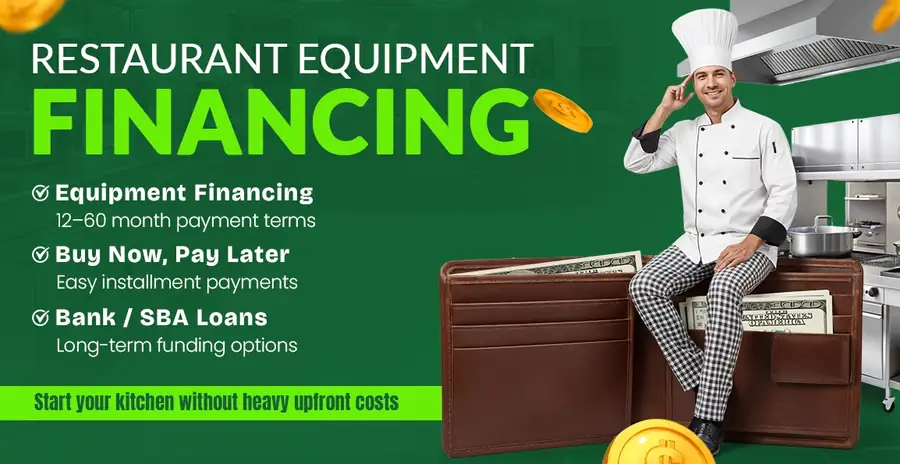
Restaurant equipment financing refers to structured payment options that allow businesses to acquire commercial equipment without full upfront payment.
Common financing methods
Equipment Financing / Leasing
- Payment terms: 12–60 months
- Fixed monthly payments
- Reduced upfront capital requirement
- Ownership may transfer at end of term (plan-dependent)
Buy Now, Pay Later / Installment Plans
- Short-term installment structures
- Split payments
- May be interest-free depending on provider
- Faster approval processes
Bank Loans or SBA Financing (U.S.)
- Traditional bank financing
- Startup or expansion loans
- Government-backed SBA programs (United States)
Why operators use financing
- Preserves cash for rent, staffing, and operations
- Avoids downsizing equipment quality
- Enables predictable monthly expenses
- Supports phased scaling
Step 5 — Common Mistakes to Avoid
Common restaurant setup mistakes
- Purchasing incorrect equipment sizes
- Using domestic appliances instead of commercial-grade units
- Ignoring electrical and gas load requirements
- Poor kitchen workflow planning
- Excluding delivery and installation costs
- Failing to account for maintenance and servicing
Step 6 — Operational Approach Used by Successful Owners
Typical success patterns
- Kitchen layout planned before equipment purchase
- Equipment selected based on workflow, not price alone
- Balance between cost, reliability, and performance
- Engagement with hospitality-focused suppliers
- Warranty and after-sales support secured
- Financing used strategically when appropriate
Key Takeaways for Restaurant Owners
- A restaurant kitchen setup must align with concept, volume, and workflow.
- Commercial-grade equipment is required for compliance and durability.
- Kitchen costs scale with size, complexity, and brand selection.
- Financing is a standard tool in restaurant operations, not an exception.
- Most setup failures stem from planning and specification errors, not food quality.
Get Restaurant-Ready with Disposable Food Containers from The Horeca Store
As you prepare to open your restaurant, investing in high-quality food packaging is just as important as selecting the right kitchen equipment. The Horeca Store offers a wide range of durable, food-grade disposable food containers that are ideal for takeaway, delivery, meal prep, and catering services. Designed to prevent leaks, preserve food freshness, and maintain food quality during transport, our containers help restaurants deliver a professional and reliable customer experience from day one.
Whether you're launching a café, cloud kitchen, quick-service restaurant, or fine dining establishment with takeaway options, The Horeca Store has disposable food containers in various sizes, shapes, and materials to suit every menu item. Along with premium food packaging, we also provide an extensive selection of restaurant supplies and commercial kitchen essentials, making us your trusted partner for setting up and growing your foodservice business. Explore our collection to find reliable, cost-effective solutions that support efficient operations and customer satisfaction.