
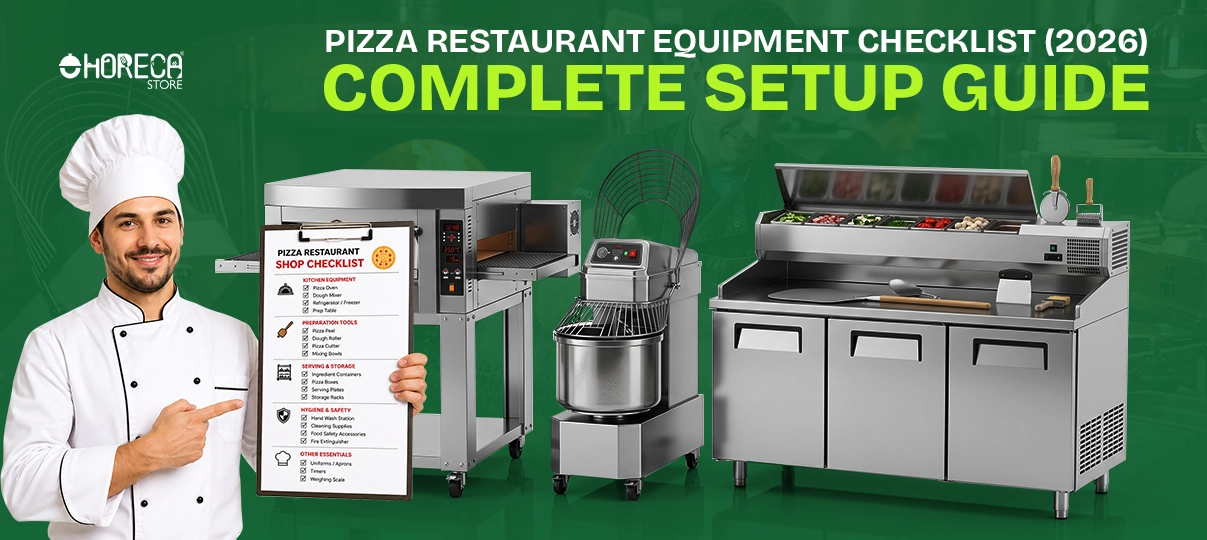
You’ve mastered your backyard pizza oven, and your friends are practically begging you to open a shop. Transitioning from crafting two perfect pies on a weekend to surviving a Friday night dinner rush requires an entirely different ecosystem of heavy-duty tools. According to veteran operators, the hardest lesson new owners learn is that passion cannot out-bake improper equipment.
The secret to surviving that sudden surge of hungry customers comes down to one critical metric: throughput. In the restaurant world, throughput simply means the number of pizzas you can successfully make and bake per hour without dropping your temperature or burning your crust. Industry data reveals that a profitable operation isn't just about achieving a single masterpiece; it’s about maintaining that exact same quality-at-scale when order ticket number sixty prints out.
To handle this massive volume, standard household kitchen supplies simply will not survive the heat or the local health inspector. When gathering the restaurant equipment needed to start a pizza business, every major purchase must be "commercial grade." This involves looking for a specific silver sticker called NSF Certification, which serves as a legal guarantee that your gear can withstand heavy industrial use and meets strict public health regulations for sanitation.
Navigating this heavy metal transition doesn't have to be overwhelming if you organize your future kitchen into three distinct areas. The three essential pillars of your new pizza business rely on Production (ovens and mixers), Preservation (commercial refrigeration), and Infrastructure (ventilation and prep tables holding the entire workflow together).
Choosing Your Fire: Deck Ovens vs. Conveyor Systems
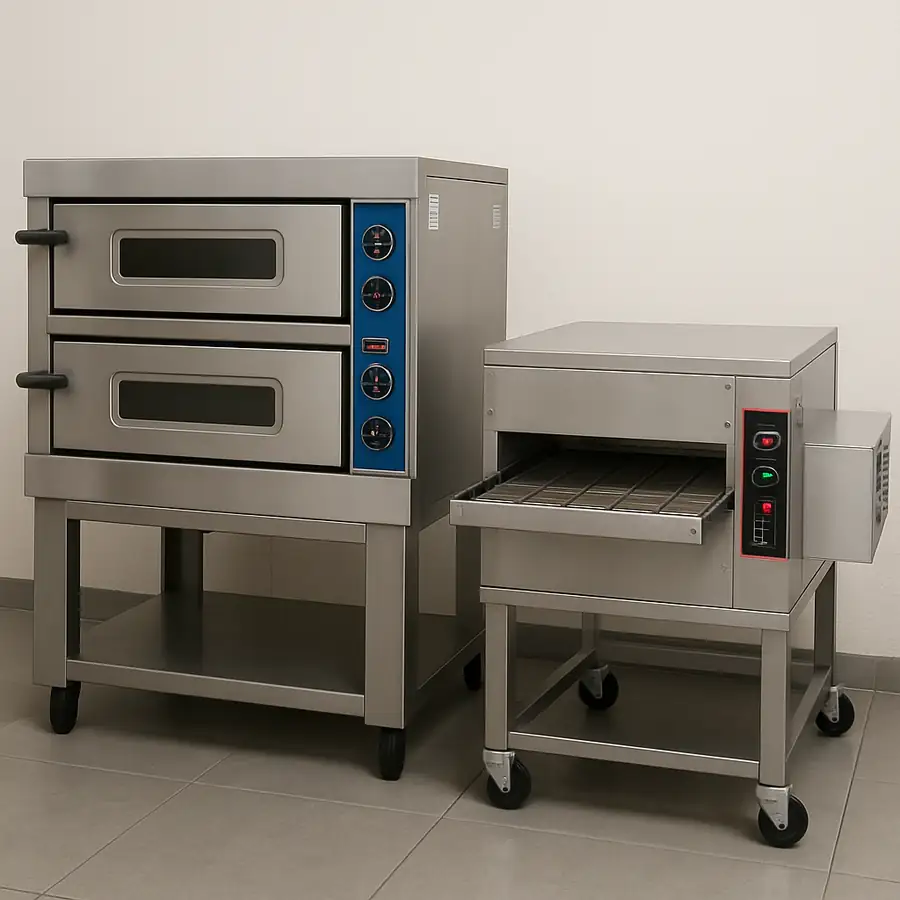
Baking one great pie at home is easy, but pushing out fifty on a Friday night introduces a critical challenge: recovery time. When you constantly open the oven door and slide in cold, raw dough, the temperature drops rapidly. Recovery time is simply how fast your equipment bounces back to its target baking temperature. If your oven is too slow, that 7:00 PM rush will result in pale, undercooked crusts and frustrated customers.
To combat this temperature drop, traditional shops rely on deck ovens, which use thick stone bases to store massive amounts of ambient heat. As the dough hits the hot stone, it bakes through direct contact and infrared heat—invisible waves that cook the pizza evenly from the bottom up. While they produce an artisan crust, they require a highly skilled cook who knows exactly when to rotate the pies.
If your business model demands maximum volume with minimal training, the conversation naturally shifts to the deck oven vs conveyor oven for throughput. Conveyor systems pull the pizza through a heated tunnel using forced hot air, known as convection, guaranteeing every pie finishes exactly the same way. Meanwhile, when comparing wood fired vs gas pizza ovens, gas offers predictable temperatures and lower operating costs, whereas wood provides unmatched authentic flavor but demands constant babysitting.
When evaluating commercial pizza oven types for small businesses, comparing your options comes down to matching your staff's abilities with your expected sales:
- Deck Ovens: High skill required; medium throughput; excellent for traditional crusts.
- Conveyor Ovens: Low skill required; maximum throughput; perfect for high-volume consistency.
- Wood-Fired Ovens: Expert skill required; low-to-medium throughput; ideal for premium, artisan flavors.
Choosing between these pizza ovens dictates your entire kitchen rhythm, but even the best oven cannot fix bad dough. Once you have secured your heat source, you need to rethink how you handle your raw ingredients before they ever hit the stone.
The Spiral Mixer Advantage: Why Your KitchenAid Isn't Enough
Your trusty countertop KitchenAid handles weekend pizza night beautifully, but commercial production demands serious mechanical power. When you calculate the ROI of large-batch mixing versus the grueling manual labor of making multiple small batches, upgrading becomes an obvious financial necessity. High-volume production requires massive torque, which is the twisting force needed to knead fifty pounds of stiff dough without burning out the motor.
The secret to protecting those massive batches lies in controlling friction heat, the warming effect caused by machinery tearing through heavy ingredients. Because yeast aggressively activates when warmed, excessive friction during mixing causes premature fermentation before the dough even reaches the cooler. To prevent this disaster, professionals rely on a rotating spiral hook that gently folds the mass rather than violently whipping it, keeping temperatures low while properly developing the gluten.
To successfully scale your signature crust, you must learn how to choose a spiral dough mixer based on its torque limits and ability to maintain your specific hydration consistency. This guarantees that your precise water-to-flour ratio blends flawlessly every single morning without overworking the flour. Afterward, the kitchen workflow might shift to industrial dough sheeters for uniform flatbreads or utilize essential smallwares like bench scrapers for manual hand-portioning.
Beautifully kneaded dough remains highly volatile until its internal temperature is completely stabilized. Once portioned, you must immediately halt that yeast activity by mastering the cold chain with dough retarders and make tables.
Mastering the Cold Chain with Dough Retarders and Make Tables
Beautifully mixed dough is just the beginning; now you must carefully control the yeast. While home bakers might leave dough on the counter to rise, professionals use a technique called "retarding" to purposefully slow down the process. By placing your portioned batches into temperature controlled dough proofing cabinets, you trigger "cold fermentation." This essential chilling phase allows the yeast to work slowly over several days, developing complex, bakery-style flavors without over-inflating the crust.
Moving that perfectly aged dough to the assembly line requires a highly efficient workspace. Imagine a frantic Friday night rush where every single second counts. Designing a space saving pizza prep station layout ensures your staff can stretch, sauce, and cheese without crossing paths or taking unnecessary steps.
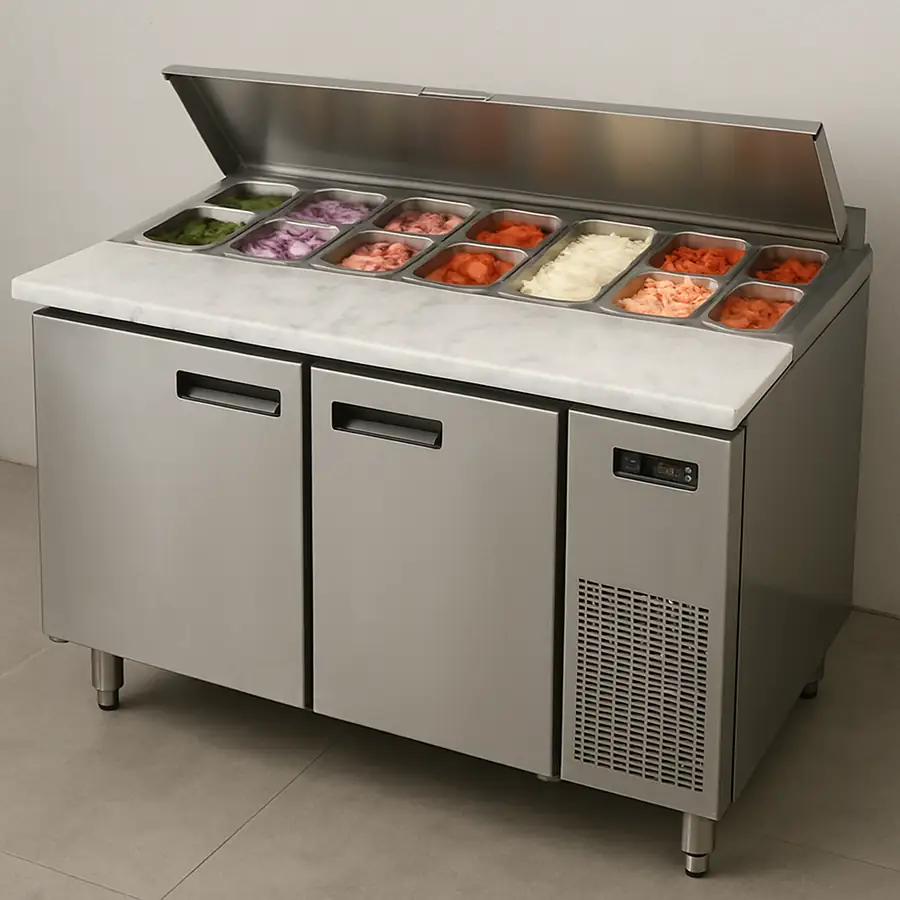
To anchor that workflow, investing in a high-quality refrigerated pizza make table with marble top solves multiple daily challenges simultaneously. When shopping for this central hub, prioritize these specific functional features:
- Marble Top: Stays naturally cool, ensuring delicate dough won't stick or prematurely rise during stretching.
- Refrigerated Rails: Upper compartments holding your toppings. Maintaining strict "rail temperature" (under 41°F) keeps ingredients crisp and satisfies health inspectors.
- Drawer Configuration: Under-counter storage that holds backup dough trays, allowing for rapid restocking during busy shifts.
Mastering this chilling and staging process guarantees that your last pie of the night tastes just as exceptional as your first. But keeping your dough safe is only half the battle when scaling up production. Maintaining exact sizing and speed during massive dinner rushes requires mechanical assistance from dough sheeters and dividers.
Scaling Consistency: The Role of Dough Sheeters and Dividers
Hand-stretching crusts at home is an artisan craft, but replicating that exact size two hundred times a night requires mechanical intervention. The first hurdle of scaling up is portioning massive batches uniformly. Automatic dough dividers instantly cut bulk dough into identical, perfectly weighed spheres. This eliminates tedious guesswork on the prep line and ensures every pizza starts with the exact same physical foundation.
When those uniform dough balls have rested, flattening them consistently presents the next major challenge during a dinner rush. Utilizing industrial dough sheeters for consistent crust thickness across every order transforms this bottleneck into a streamlined process. Precision rollers provide exact thickness gauging while gently degassing the dough—pressing out large, unwanted air bubbles—so the crust bakes evenly. Because the machine safely handles the complex physics of stretching, you can train entry-level staff to produce pro-level crusts in under an hour.
By integrating this specific restaurant equipment for pizza business operations, your team can focus on quality toppings instead of wrestling with unpredictable dough. Mechanical aids guarantee that a Tuesday afternoon pizza looks identical to a busy Friday night pie. Optimized prep stations must be supported by heavy-duty infrastructure to keep operations legal and safe: ventilation hoods, grease traps, and 3-phase power.
The Hidden Pillars: Ventilation, Grease Traps, and 3-Phase Power
Upgrading to a commercial space requires more than paying higher utility bills. When asking how much does pizza equipment cost for a startup, entrepreneurs often overlook hidden infrastructure expenses. Household outlets run on standard electricity, but industrial ovens need 3-phase power. Think of 3-phase power as a multi-lane highway for electricity; it delivers the heavy energy flow needed to prevent motor burnout during a Friday rush.
Above those ovens, managing heat and grease is your next hurdle. Navigating commercial kitchen ventilation requirements for pizzerias means choosing between a Type I or Type II hood. A Type I hood includes fire suppression and pulls out grease vapors, making it mandatory for baking meat-topped pizzas. A Type II hood simply removes heat and moisture, which is only legal if you exclusively bake grease-free items.
Plumbing presents another hidden challenge because you must manage "effluent"—the industry term for grease-filled wastewater. Calculating proper grease trap sizing for high volume pizza shops stops fat from destroying city sewers. Before signing a lease, verify your essential utility checklist:
- Voltage requirements: Confirm 3-phase power availability to avoid rewiring.
- Gas line BTUs: Ensure pipes deliver enough volume to heat ovens.
- Grease trap capacity: Match your tank to local plumbing codes.
This invisible infrastructure keeps your restaurant legal and safe. With the heavy engineering handled, the focus shifts to the hand-held instruments interacting directly with your food.
The Professional Toolkit: Beyond the Basic Pizza Peel
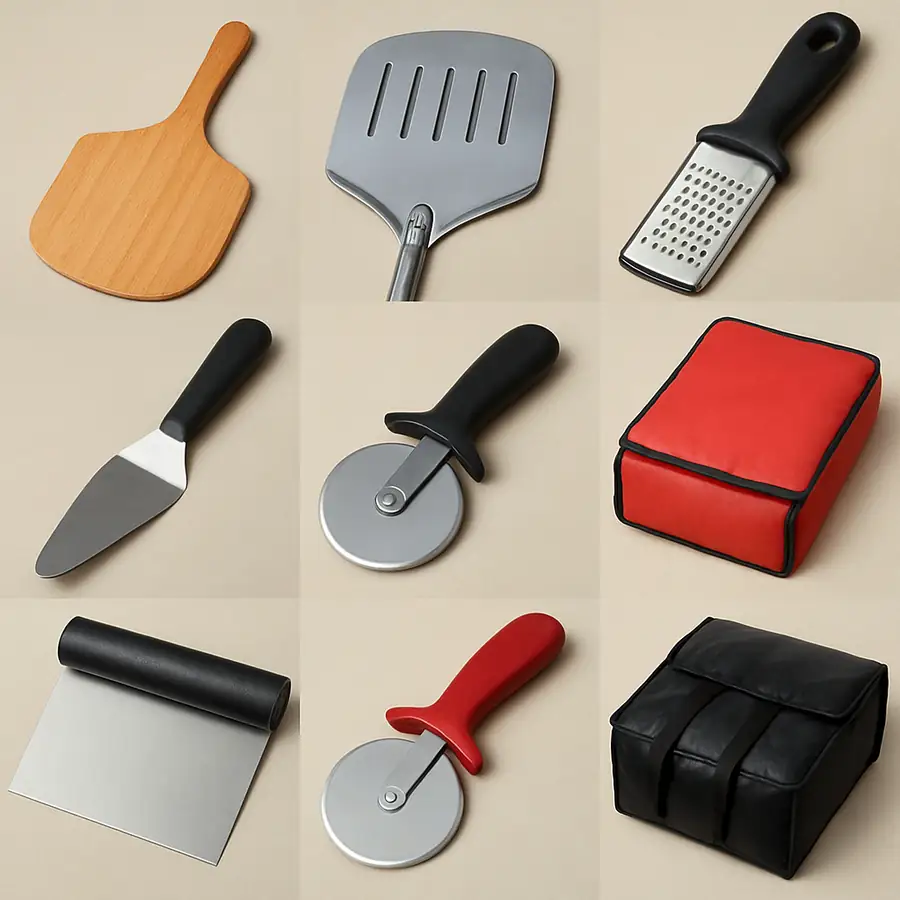
Stepping away from heavy infrastructure, the tools your staff hold directly shape the final product. While heavy duty stainless steel prep tables act as your sturdy staging ground, hand-held gear dictates your speed. Curating essential smallwares for professional pizza making ensures your team works smoothly during a chaotic Friday night rush.
Sliding a delicate, topping-heavy pie into a hot commercial oven requires specialized instruments. Standard wooden boards work at home, but professionals use two specific tools: a wide launching peel and a smaller, nimble turning peel. Upgrading to perforated peels—metal paddles featuring tiny holes—lets excess flour fall away before baking, which prevents bitter, burnt crust bottoms.
Moving perfect pizzas from the oven to the customer without making them soggy requires pizza delivery insulated bags and thermal transport. Simply trapping heat without venting steam destroys a crust's integrity. To maintain quality from kitchen to doorstep, your baseline toolkit should include:
- Perforated peels: For safe, flour-free oven maneuvers.
- Rocker cutters: To slice hot pies in one fast, clean motion.
- Vented thermal bags: To preserve temperature and crust crispness.
Keeping this gear flawless means creating a commercial kitchen equipment maintenance checklist. Basic preventive maintenance, like tightening rocker blades and wiping down thermal bag linings daily, stops small annoyances from becoming mid-rush disasters. With the operational ecosystem mapped out, the final step is navigating the financial realities of launching.
Your 2026 Launch Roadmap: Prioritizing Your Equipment Budget
You have moved past backyard baking and now understand the heavy-duty restaurant equipment needed to start a pizza business. Your next step is prioritizing purchases using an "Oven First" philosophy. Because the oven dictates your total pizza output, dedicate your primary budget here before allocating funds to smaller prep stations.
When calculating startup equipment costs, prioritize second-hand savings strategically. While used stainless steel tables offer great value, strictly follow the "Don't Buy Used" rule for refrigeration and electronics. A failing second-hand compressor will ruin your dough and completely halt your business on a busy weekend.
Once your kitchen is staged, execute a 48-hour "First Dough" stress test before opening day. Run your mixer at maximum capacity, fill your fridge to test temperature recovery, and push your oven to simulate a chaotic Friday night rush. This exposes hidden workflow bottlenecks before paying customers arrive.
You now understand commercial scaling well enough to start pricing out your kitchen ecosystem. Start by finding your ideal oven to anchor your budget. Each smart purchase builds the reliable foundation needed to turn your pizza passion into a profitable reality.
Restaurant Equipment Needed to Start a Pizza Business (Complete Guide 2026) from The Horeca Store
Starting a successful pizza business requires the right combination of commercial pizza equipment to ensure fast service, consistent quality, and efficient kitchen operations. Essential equipment includes pizza ovens, pizza prep tables, dough mixers, refrigeration units, food preparation tools, and storage solutions. The Horeca Store offers a complete range of professional restaurant equipment for pizza businesses, helping new and established pizzerias create a well-equipped commercial kitchen.
At The Horeca Store, we provide durable and reliable pizza restaurant equipment designed to handle the demands of busy foodservice operations. Whether you are opening a small pizzeria, expanding your restaurant, or upgrading your kitchen, our collection includes high-performance cooking and preparation solutions. With quality products, competitive pricing, and dependable service, The Horeca Store helps you build an efficient pizza kitchen ready for success in 2026.