
Restaurant equipment financing helps owners spread the cost of commercial kitchen equipment over time instead of paying the full purchase price upfront. Whether you are opening a café, expanding a hotel kitchen, replacing refrigeration, or upgrading a prep line, the right financing path starts with a clear equipment list, a realistic budget, and a careful comparison of lenders, lease structures, and loan requirements.
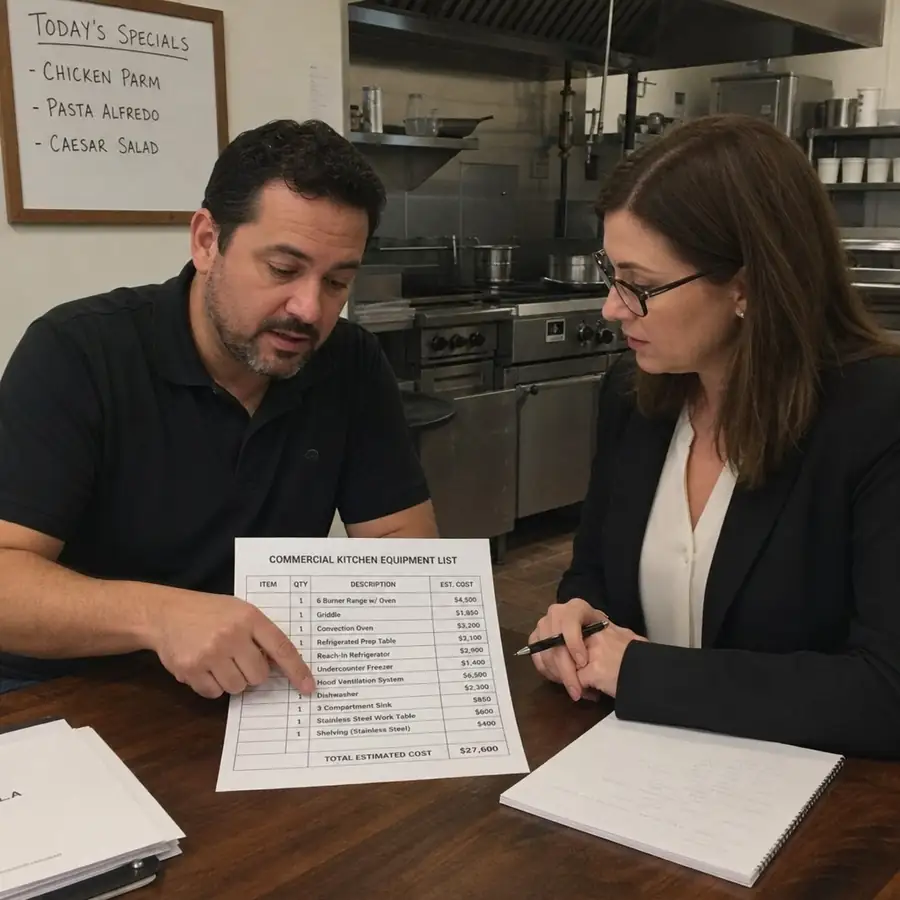
How do you finance commercial kitchen equipment?
You finance commercial kitchen equipment by listing refrigeration, a commercial range, fryers, prep tables, warewashing, and smallwares before comparing lenders.
You finance commercial kitchen equipment by identifying the exact items you need, collecting supplier quotes, comparing restaurant equipment loans, leases, SBA-backed loans, and other restaurant financing options, then applying with documents that show your business plan, credit profile, cash flow expectations, and intended use of funds.
For many operators, the best first step is not filling out an application. It is building a clean purchase plan. A lender may want to know whether funds will be used for ovens, refrigeration, dishwashing, prep tables, ice machines, POS hardware, smallwares, or installation-related costs. The more specific the list, the easier it becomes to compare equipment financing plans without guessing.
Before applying for financing, restaurant owners can review equipment categories from suppliers such as to understand which equipment they actually need and obtain product information for budgeting. This is especially useful for restaurant startup funding, where every purchase has to support the opening menu, expected volume, kitchen layout, and available cash.
A smarter path from equipment list to funding
A smarter path from equipment list to funding starts at The Horeca Store so quotes match real restaurant equipment and food preparation equipment.
Restaurant equipment financing is not one single product. It may include a restaurant equipment loan, restaurant equipment leasing, SBA-backed financing, commercial equipment financing from an online lender, bank financing, vendor-related lease discussions, or a combination of funding sources. Each option can affect cash flow, ownership, tax treatment, collateral, and replacement flexibility.
A practical financing workflow looks like this:
- Define the operating model. A bakery, ghost kitchen, bar, catering operation, and full-service restaurant need different equipment priorities.
- Separate essential equipment from nice-to-have upgrades. Opening-day equipment should support food safety, production, storage, and service.
- Collect product information and quotes. Itemized pricing helps lenders understand the use of funds.
- Compare financing paths. Review loans, leases, SBA options, and alternative restaurant financing options side by side.
- Check total obligations. Look beyond the monthly payment and review fees, early payoff terms, maintenance responsibilities, ownership terms, and required down payment.
- Apply only when the package is ready. A stronger file may include a business plan, equipment list, financial projections, credit history, and bank statements.
Businesses can use commercial equipment catalogs such as The Horeca Store to compare equipment types and build an itemized purchase list before discussing financing with lenders. That list can make conversations more productive because it turns a broad request like "we need kitchen equipment" into a specific budget for financing commercial kitchen equipment.
Financing options built around how restaurants operate
Financing options built around how restaurants operate should cover the cooking line, refrigeration, and a commercial dishwasher, not only the monthly payment.
Restaurant owners often compare several funding routes before choosing how to finance restaurant equipment. None is automatically best for every business, and eligibility may depend on credit history, time in business, revenue, collateral, industry experience, and lender rules.
Common restaurant equipment financing options include:
- Restaurant equipment loans. A lender provides funds to buy equipment, and the borrower repays over time. Depending on the structure, the equipment may serve as collateral.
- Equipment lease deals. Leasing may reduce upfront cost and may be useful when equipment needs regular replacement, but operators should review end-of-lease ownership, renewal, and return terms.
- SBA-backed loans. SBA-guaranteed loans are made by approved lenders, not directly by the SBA, and can be used for eligible business purposes under program rules. The SBA notes that 7(a) financing may be used to buy equipment, inventory, or real estate when eligibility requirements are met, while 504 loans can support long-term machinery and equipment with a useful remaining life of at least 10 years.
- Microloans and smaller funding sources. SBA microloans are designed for smaller needs and may be used for items such as supplies, furniture, fixtures, machinery, and equipment through intermediary lenders.
- Working capital or line-of-credit support. These may help with related opening costs, but they should not be confused with dedicated equipment loans for restaurants.
- Supplier quotes paired with lender review. Some operators gather quotes first, then take the package to banks, credit unions, SBA lenders, or restaurant equipment financing companies.
Flexible restaurant equipment financing can be helpful when a business wants to preserve cash for payroll, food inventory, marketing, permits, and opening reserves. Still, "flexible" should not mean vague. Review payment timing, total repayment obligation, collateral, personal guarantees, default terms, and whether the financing matches the equipment's useful life.
What restaurant owners should know before applying
What restaurant owners should know before applying is that lenders want itemized costs for refrigeration, dishwashing, prep tables, and beverage equipment.
A financing application is easier to evaluate when it tells a clear story: what you are buying, why it matters, how the equipment supports revenue, and how repayment may be handled. Lenders may ask for more detail from startups because there is no operating history yet. Existing restaurants may be asked to show bank statements, tax returns, profit and loss statements, or sales trends.
Prepare these items before comparing equipment financing for restaurants:
- Itemized equipment list with product categories, quantities, model information where available, and estimated costs.
- Supplier quotes or product pages to support the requested funding amount.
- Business plan explaining concept, menu, target market, staffing, location, and launch or expansion timeline.
- Use-of-funds summary showing what portion is for cooking, refrigeration, prep, dishwashing, furniture, smallwares, installation, or delivery.
- Financial projections that connect expected sales and expenses to repayment ability.
- Business and personal credit information because lenders commonly review credit risk.
- Bank statements, tax records, or financial statements when applicable.
- Ownership and entity documents such as business registration, licenses, or operating agreements.
- Collateral information if the lender requires additional security.
The SBA's Lender Match guidance says many lenders expect a business plan for startup funding, along with information about credit history, financial projections, collateral, industry experience, and the amount and use of funds. It also states that using Lender Match is not a loan application and does not guarantee a match or an offer.
Quick answers for financing decisions
Quick answers for financing decisions still depend on the essential restaurant kitchen equipment list and a realistic restaurant equipment quote.
What is restaurant equipment financing? Restaurant equipment financing is a funding arrangement used to acquire commercial kitchen equipment, furniture, fixtures, refrigeration, dishwashing systems, or related assets. It may take the form of a loan, lease, SBA-backed loan, or other commercial equipment financing structure. Approval, cost, and terms vary by lender and borrower profile.
Is it better to lease or finance restaurant equipment? Leasing may suit equipment that needs frequent upgrades or when lower upfront cost is important. Financing may suit operators who want ownership after repayment. The better option depends on cash flow, tax treatment, maintenance responsibilities, end-of-term terms, and how long the equipment is expected to remain useful.
Can SBA loans be used for restaurant equipment? Yes, SBA-backed loans may be used for eligible restaurant equipment when program and lender requirements are met. The SBA identifies 7(a), 504, and microloan programs that can support equipment-related business needs in different situations. Borrowers still apply through participating lenders or intermediaries, not by assuming automatic approval.
What documents are needed for equipment financing? Lenders may request an equipment quote, itemized purchase list, business plan, financial projections, bank statements, tax returns, credit history, ownership documents, and proof of business registration. Startups may need stronger planning materials, while established restaurants may need recent operating financials and clear evidence of repayment ability.
Can new restaurants finance kitchen equipment? New restaurants may be able to finance kitchen equipment, but eligibility is not guaranteed. Lenders may look closely at the owner's credit profile, restaurant experience, business plan, startup budget, collateral, and financial projections. Restaurant equipment financing for startups often requires more documentation than financing for an established operation.
A restaurant equipment financing case study framework
A restaurant equipment financing case study framework often starts with refrigeration, ranges, fryers, prep tables, smallwares, and dishwashing equipment.
Many operators search for a restaurant financing equipment case study because they want to see how a funding decision works in practice. Instead of inventing approval rates, timelines, or lender terms, use this realistic framework to model your own decision.
Imagine a new fast-casual restaurant preparing for buildout. The owner needs refrigeration, ranges, fryers, prep tables, smallwares, and dishwashing equipment. At first, the equipment list is too broad, so every financing conversation feels unclear. After reviewing product categories, the owner separates essential opening equipment from later upgrades and builds a staged purchase list.
The case study restaurant equipment financing process might look like this:
- Stage one: opening essentials. Refrigeration, cooking line, prep surfaces, warewashing, storage, and food safety items are prioritized.
- Stage two: service improvements. Beverage equipment, display cases, or specialty appliances are considered after the menu and sales pattern are clearer.
- Stage three: lender comparison. The owner compares restaurant equipment loans, equipment lease deals, SBA-backed options, and other financing for restaurants.
- Stage four: application package. The owner submits quotes, a business plan, projections, and a use-of-funds summary.
- Stage five: final review. The owner compares total repayment cost, ownership terms, maintenance obligations, and cash reserve impact before signing.
This restaurant case study financing equipment framework shows why preparation matters. A lender does not just see a list of appliances. They see how the equipment supports production capacity, menu execution, food safety, and the business's plan to generate revenue.
Bad credit and startup financing require careful expectations
Bad credit and startup financing require careful expectations, so keep the first package to opening essentials such as a commercial range, refrigeration, and warewashing.
Restaurant equipment financing bad credit searches are common because many owners worry that past credit issues will close every door. Cautious optimism is reasonable, but guaranteed language is not. Some lenders may consider applications with weaker credit if other factors are strong, such as collateral, down payment, revenue, industry experience, or a co-borrower, but options may be more limited or more expensive.
The SBA states that eligibility varies by lender and loan program, and that businesses generally must meet size standards, be able to repay, and have a sound business purpose. It also notes that the lender provides the full eligibility list for a specific loan.
If credit is a concern, focus on controllable preparation:
- Build a detailed, realistic equipment budget.
- Avoid applying for more than the business can justify.
- Explain how each item supports operations.
- Gather supplier quotes and product information.
- Review credit reports for accuracy before applying.
- Ask lenders about minimum credit score, cash flow requirements, collateral, fees, and prepayment terms.
No content on this page is individualized financial, tax, or legal advice. Restaurant owners should compare lenders carefully and consult qualified advisors when tax treatment, entity structure, guarantees, or cash-flow risk is material.
Tax and ownership questions should be reviewed early
Tax and ownership questions should be reviewed early, including whether a commercial dishwasher, ice machine, or walk-in refrigerators should be owned or leased.
Equipment purchases and leases may have different accounting and tax implications. The IRS provides guidance on depreciation and Section 179 rules for qualifying property, but deductions, limits, and eligibility can change by tax year and by business situation. Restaurant owners should confirm treatment with a tax professional rather than assuming a financing choice will produce a specific deduction.
This matters because the lowest monthly payment is not always the simplest long-term decision. Ownership, depreciation, maintenance responsibility, equipment replacement plans, and end-of-term lease obligations can all influence the real cost. When comparing commercial kitchen financing, ask for clear written terms and make sure the structure matches how long you expect to use the equipment.
Build your shortlist, then compare financing with confidence
Build your shortlist, then compare financing with confidence using a hotel kitchen equipment list, a bar equipment list, a catering equipment list, buying restaurant equipment guidance, and top tips for buying used kitchen equipment.
Strong restaurant equipment funding starts with practical equipment planning. Before you compare restaurant equipment financing companies or submit applications, organize the items that matter most to your kitchen: cooking capacity, cold storage, prep efficiency, sanitation, service speed, and safety.
Use this final checklist before contacting lenders:
- Confirm the menu and production workflow.
- List required equipment by category and priority.
- Collect product details and supplier quotes.
- Separate opening essentials from future upgrades.
- Estimate delivery, installation, utility, and maintenance considerations without inventing numbers.
- Decide whether ownership or leasing flexibility matters more for each item.
- Prepare business plan, projections, credit information, and use-of-funds notes.
- Compare loan and lease offers in writing before committing.
For neutral equipment research, operators can browse before speaking with lenders. Once the shortlist is ready, compare restaurant equipment financing options, ask direct questions, and choose the structure that may best support your opening, replacement, or expansion plan.