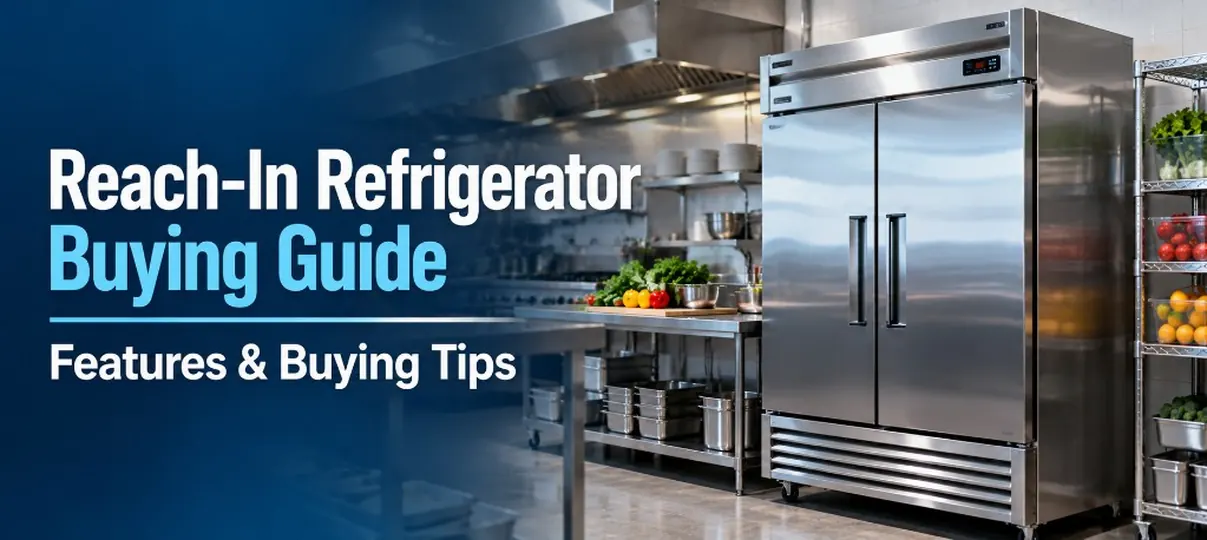
A reach-in refrigerator is one of the most practical cold-storage units in a working kitchen because it keeps chilled ingredients close, organized, and easy to access during service. This reach-in refrigerator buying guide walks through the choices that matter most: size, section count, door style, compressor location, construction, efficiency, and maintenance. If you are choosing a refrigerator for a café, bakery, restaurant, prep kitchen, or catering operation, the goal is simple: buy enough capacity for smooth workflow without wasting floor space, energy, or budget.
How do you choose the right reach-in refrigerator?
Also compare an undercounter refrigerator and a walk-in refrigerator when the line needs more than one cold zone.
Choose a reach-in refrigerator by matching the unit's usable capacity, footprint, door configuration, and service access to the way your kitchen actually works. A compact one-section model may be perfect for a small prep area, while a two-section or three-section reach-in refrigerator can support higher volume, more menu variety, and better ingredient separation. The best decision is not always the biggest cabinet; it is the model that stores what you need, fits your line, holds temperature reliably, and can be cleaned and serviced without disrupting the kitchen.
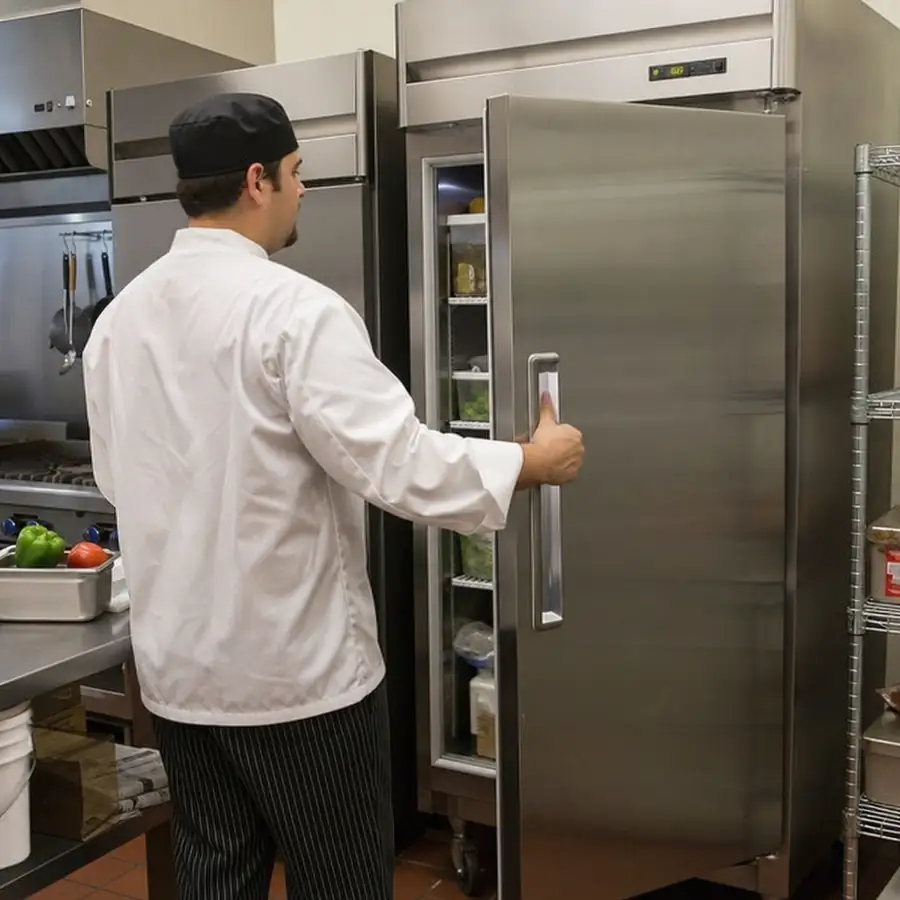
A good refrigerator buying guide should start with workflow. Think about who opens the doors, how often, what they need to grab, and where the unit sits in relation to prep tables, cooking equipment, and receiving areas. A reach-in unit near the line may need fast visual inventory and frequent access, while one in a back prep space may prioritize insulation, capacity, and durability.
Start with capacity, sections, and kitchen flow
Frozen backup usually belongs in a reach-in freezer or a walk-in freezer, not in the refrigerator cabinet.
Reach-in refrigerators are usually described by section count, door count, and cubic-foot capacity. Capacity ranges vary by manufacturer and configuration, but the practical question is always the same: can the unit hold your peak inventory without overcrowding shelves or blocking airflow? Overpacked shelves make it harder for cold air to circulate, which can lead to uneven temperatures and slower recovery after doors are opened.
A one door reach-in refrigerator can work well for smaller operations, tight prep stations, bakeries, coffee shops, or kitchens that only need dedicated storage for a narrow ingredient category. These units save floor space and are easier to place, but they can become frustrating if staff must constantly restock them from another area.
A two door reach-in refrigerator is often the balanced choice for mid-volume kitchens. It gives you more room to separate proteins, produce, dairy, sauces, or prepared items while keeping the footprint manageable. If you are choosing a refrigerator for daily production and service, this format often offers the best blend of access and storage flexibility.
A three door reach-in refrigerator is built for higher-volume kitchens that need more organization and larger chilled inventory at arm's reach. The advantage is not only capacity; it is the ability to assign sections by station, daypart, or ingredient type. The trade-off is space. You need to confirm door swing, aisle width, ventilation clearance, and delivery path before committing.
Use this quick sizing thought process before comparing models:
- List what must live in the reach-in refrigerator every day, not what might fit occasionally.
- Estimate peak storage needs after receiving, prep, and before service.
- Group items by station or use pattern so shelves are organized logically.
- Leave open space for airflow instead of planning to fill every inch.
- Measure floor space, ceiling height, doorway clearance, and aisle clearance.
- Account for casters, leveling legs, hinges, handles, and ventilation requirements.
This step prevents a common mistake: buying based on total cubic feet alone. Usable space depends on shelf layout, pan compatibility, door openings, and how your staff actually loads product.
Match the door style to daily access
A glass door refrigerator and a merchandiser refrigerator are the display options when staff need to see product.
Door style affects energy use, inventory visibility, speed, and staff behavior. A solid door reach-in refrigerator typically offers better insulation than a glass door model, making it a strong fit for back-of-house storage, hot kitchens, or areas where the unit is opened frequently during prep. Solid doors also hide visual clutter, which can be useful when the refrigerator sits away from customer view.
A glass door reach-in refrigerator helps staff see inventory before opening the cabinet. That can reduce unnecessary door-open time when team members are searching for bottled drinks, grab-and-go items, garnishes, or frequently used ingredients. The trade-off is that glass generally insulates less effectively than solid metal, so you should weigh visibility against energy efficiency and temperature recovery. Pair the reach-in with a commercial freezer or an undercounter freezer only after you separate fresh and frozen loads.
Dutch doors split the opening into upper and lower sections. A Dutch door reach-in refrigerator can reduce cold air loss because staff only open the part of the cabinet they need. This can be useful when certain shelves are accessed repeatedly throughout service. The limitation is that Dutch doors add hardware and may not suit every workflow, especially if staff often move large pans or bulky containers in and out.
When comparing door options, look beyond appearance:
- Self-closing doors help protect temperature when staff move quickly.
- Stay-open features can make restocking easier, but should not encourage doors to remain open during service.
- Magnetic door gaskets support a tight seal and are easier to inspect for wear.
- Recessed or protected gaskets may last longer in high-contact kitchens.
- Full-height doors simplify loading large items, while half doors help limit cold-air loss.
Door choice is really a workflow choice. If speed depends on seeing product immediately, glass may be worth considering. If energy retention and durability matter more, solid doors are often the safer choice.
Should you choose a top-mounted or bottom-mounted compressor?
Compressor choice sits inside the wider commercial refrigeration plan, next to the commercial refrigerator you already use.
Choose a top-mounted compressor reach-in refrigerator if your kitchen has dusty floors, flour-heavy prep, or frequent debris near the base of equipment. Choose a bottom-mounted compressor reach-in refrigerator if easier service access and cooler intake air near the floor are more important in your layout. Both designs can perform well, but the better option depends on heat, dust, cleaning routines, and where the refrigerator will sit.
A top-mounted compressor places the refrigeration system above the cabinet. This can help keep the compressor away from floor dust, grease, and mop water. In bakeries or dry prep environments where flour can collect near the floor, that separation may be valuable. The downside is service access can be less convenient, and the system may be exposed to warmer rising air in a hot kitchen.
A bottom-mounted compressor sits closer to the floor. This makes it easier for technicians or staff to access components for inspection and cleaning. It may also draw in cooler air from lower in the room, which can help in some hot spaces. However, floor-level placement means the condenser area can collect dust, food debris, and grease more quickly, so coil cleaning and floor maintenance matter.
Before choosing, ask these practical questions:
- Is the unit near ovens, fryers, ranges, or bakery equipment?
- Does the kitchen generate heavy flour, dust, or floor debris?
- Will staff be trained to clean around the base and monitor coils?
- Is there enough top clearance or rear clearance for airflow?
- Can service technicians access the compressor without moving other equipment?
This is where a reach-in refrigerator buying guide becomes practical instead of theoretical. Compressor location is not just a spec; it affects maintenance habits, service time, operating strain, and long-term reliability. The same service habit applies to ice machines and a worktop refrigerator on the line.
Construction details that affect durability
Nearby stainless steel work tables and a chef base refrigerator should be measured with the same aisle clearance.
A stainless steel reach-in refrigerator is popular for good reason. Stainless steel resists corrosion, cleans well, and stands up to the daily bumps, spills, and wipe-downs of a commercial kitchen. Some units use stainless steel on the exterior with aluminum or other materials inside, while heavier-duty models may offer stainless steel interiors for easier sanitation and longer wear.
Interior design matters as much as exterior finish. Smooth surfaces, rounded or welded corners, and removable shelf supports can make cleaning faster and reduce places where spills and debris collect. Adjustable shelving gives you more flexibility when menu items change, and heavy-duty shelves help support pans, containers, and dense ingredients without bowing.
Pay attention to these build features when comparing reach-in refrigerators:
- Stainless steel exterior: durable, easy to clean, and suitable for high-contact spaces.
- Stainless steel interior: stronger sanitation and corrosion resistance in demanding kitchens.
- Adjustable shelves: useful for changing pan heights, containers, and prep volumes.
- Shelf load rating: important if you store heavy sauces, dairy, meats, or bulk prep.
- Door hinges and handles: should feel sturdy and easy to use with busy hands.
- Casters or legs: affect cleaning access, mobility, floor clearance, and final height.
- Interior lighting: improves visibility and reduces searching time.
- Digital temperature display: makes monitoring easier during shifts.
Durability is not only about the outer shell. It is about how the cabinet handles repeated opening, loading, wiping, and temperature recovery day after day.
Energy efficiency is part of the purchase price
An energy efficient reach-in refrigerator may cost more upfront, but energy use, maintenance, and reliability shape the real cost of ownership. Look for strong insulation, tight door gaskets, efficient fans, accurate controls, and recognized efficiency certifications when available. Eco-friendly refrigerants such as R-290 are also common in modern reach-in refrigerators and can be part of a more efficient cabinet design.
Do not evaluate efficiency in isolation from usage. A glass door unit in a hot kitchen may work harder than a solid door unit in a cooler prep area. A poorly placed refrigerator next to heat-producing equipment can waste energy even if the model itself is efficient. Likewise, damaged gaskets or dirty condenser coils can erase the advantage of buying a better unit.
The most useful energy features are the ones staff can maintain:
- Self-closing doors that prevent accidental temperature loss.
- Clear temperature displays that make problems visible early.
- Quality gaskets that seal tightly and are simple to inspect.
- Shelving layouts that allow airflow around stored items.
- Compressor placement that suits the kitchen environment.
- Adequate ventilation clearance around the cabinet.
When comparing models at The HORECA Store or reviewing specifications from any supplier, look at the refrigerator as a working system. Cabinet design, staff habits, placement, and maintenance all influence energy performance.
Installation details buyers often overlook
Leave room for an exhaust hood and check the commercial kitchen layout before the cabinet is rolled in.
A reach-in refrigerator must physically fit the space, but it also needs room to breathe, open, and be serviced. Measure the installation area carefully and include the door swing, handle depth, caster height, and required clearance around vents. If the unit will be delivered through a narrow hallway or doorway, measure that path before purchase, not after delivery.
Electrical compatibility is another essential step. Check the voltage, plug type, circuit needs, and local installation expectations before choosing a refrigerator. Do not assume a larger reach-in unit will work on the same setup as a smaller model already in the kitchen.
Placement can also protect the compressor. Keep the unit away from high-heat equipment when possible, and avoid blocking ventilation panels. If the refrigerator sits in a tight line, make sure staff can still clean around it and inspect gaskets without moving half the kitchen.
A simple pre-purchase checklist can prevent expensive mistakes:
- Confirm exterior dimensions and usable interior capacity.
- Measure doorways, halls, corners, and elevator access if relevant.
- Verify door swing and aisle clearance during service.
- Check top, rear, and side clearance requirements.
- Confirm electrical requirements with the installation location.
- Plan space for cleaning coils, replacing gaskets, and servicing components.
- Make sure shelving fits the pans, containers, or boxes you actually use.
These details may feel less exciting than capacity or finish, but they determine whether the unit works smoothly once it arrives.
Maintenance habits that protect performance
Even the best reach-in refrigerators need routine attention. Maintenance is not just about avoiding breakdowns; it helps the cabinet hold temperature, recover quickly after door openings, and use energy more efficiently. Small habits can prevent larger service issues later.
Condenser coils should be kept clean according to the manufacturer's recommendations, especially in dusty, greasy, or flour-heavy kitchens. Door gaskets should be checked for cracks, looseness, and food buildup because a weak seal forces the system to work harder. Staff should also avoid blocking interior airflow with boxes, pans, or containers pressed against vents.
Build these habits into the kitchen routine:
- Wipe door gaskets and check for gaps or tears.
- Monitor the digital temperature display during each shift.
- Keep shelves organized so air can circulate.
- Clean spills quickly to prevent residue and odors.
- Keep the area around the compressor free of dust and debris.
- Avoid propping doors open during loading or prep.
- Schedule deeper inspections before peak seasons or high-volume periods.
If a reach-in refrigerator struggles to hold temperature, runs constantly, forms unusual frost, or needs repeated gasket and compressor-related service, it may be time to compare repair cost against replacement value.
The best model is the one that fits the operation
The shortlist should also include restaurant equipment such as a sandwich prep table if the station builds cold plates.
This reach-in refrigerator buying guide comes down to fit: capacity fit, space fit, workflow fit, and maintenance fit. A small café may get excellent value from a compact one-section unit with solid doors and adjustable shelves. A busy restaurant line may need a two-section reach-in refrigerator with quick access, durable hinges, strong shelving, and a compressor location suited to the heat and debris of the kitchen.
For higher-volume operations, a three-section model may improve organization and reduce constant restocking. For front-facing or fast-grab use, glass doors may help staff see inventory quickly. For back-of-house holding, solid doors and strong insulation may provide better long-term practicality.
The smartest approach is to compare reach-in refrigerators by total usefulness, not just size or price. Consider how the cabinet will be loaded, opened, cleaned, serviced, and monitored every day. If you are reviewing options through The HORECA Store, use this reach-in refrigerator buying guide as a checklist so each feature connects back to a real kitchen need.
Final takeaway
Put the cabinet in the restaurant kitchen equipment cost plan and add a walk-in cooler if deliveries outgrow the reach-in.
Choosing a refrigerator for a commercial kitchen is easier when you focus on the way your team works. Start with the right section count and usable capacity, then compare door style, compressor location, construction quality, energy features, and maintenance access. A well-chosen reach-in refrigerator supports faster service, safer organization, and fewer avoidable disruptions, making it a practical investment in the rhythm of the kitchen.